

What do you think?
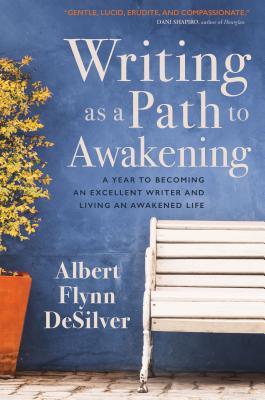
Writing as a Path to Awakening: A Year to Becoming an Excellent Writer and Living an Awakened Life
“In this gentle, lucid, erudite and compassionate guide, Albert Flynn DeSilver offers the wisdom and warmth of a true friend who has walked the path. One who reaches out a capable hand and offers it to the new writer, to the struggling writer, and says here, here, let me show you not only how to write, but how to live.”
—Dani Shapiro
"This is a wonderful collection of insights, practices, writing exercises, and meditations to help you get words on the page, not just as an accomplishment but as a way to discover who you really are."
—Susan Piver
The best writers say their work seems to come from a source beyond the thinking mind. But how do we access that source? -We must first look inside ourselves and be willing to touch that raw emotional core at the heart of a deeper creativity, - writes Albert Flynn DeSilver. In Writing as a Path to Awakening, this renowned poet, writer, and teacher shows you how to use meditation to cultivate true depth in your own writing--so your words reveal layers of profound emotional insight and revelation that inspire and move your readers.
Writing calls on us to fully engage our mind's cognitive powers, while meditation often asks us to let go of thinking and storytelling. Though these two practices may seem incompatible, Albert teaches that they can be powerfully complementary. With a mixture of engaging storytelling and practical exercises, Writing as a Path to Awakening invites you on a journey of growth and discovery--to enhance your writing through the practice of meditation while using the creative process to accelerate your spiritual evolution.
—Dani Shapiro
"This is a wonderful collection of insights, practices, writing exercises, and meditations to help you get words on the page, not just as an accomplishment but as a way to discover who you really are."
—Susan Piver
The best writers say their work seems to come from a source beyond the thinking mind. But how do we access that source? -We must first look inside ourselves and be willing to touch that raw emotional core at the heart of a deeper creativity, - writes Albert Flynn DeSilver. In Writing as a Path to Awakening, this renowned poet, writer, and teacher shows you how to use meditation to cultivate true depth in your own writing--so your words reveal layers of profound emotional insight and revelation that inspire and move your readers.
Writing calls on us to fully engage our mind's cognitive powers, while meditation often asks us to let go of thinking and storytelling. Though these two practices may seem incompatible, Albert teaches that they can be powerfully complementary. With a mixture of engaging storytelling and practical exercises, Writing as a Path to Awakening invites you on a journey of growth and discovery--to enhance your writing through the practice of meditation while using the creative process to accelerate your spiritual evolution.
208 pages, Paperback
First published August 31, 2017
About the author
Albert Flynn Desilver
12 books56 followersAlbert Flynn DeSilver is an internationally published poet, memoirist, novelist, speaker, and workshop leader. He served as Marin County’s very first Poet Laureate from 2008-2010. His work has appeared in more than 100 literary journals worldwide including ZYZZYVA, New American Writing, Hanging Loose, Jubilat, Exquisite Corpse, Jacket (Australia), Poetry Kanto (Japan), Van Gogh’s Ear (France), and many others. He is the author, most recently of Beamish Boy: A Memoir, Spring 2012, Letters to Early Street, Spring 2007 from La Alameda/University of New Mexico Press, and Walking Tooth & Cloud, January 2007 from French Connection Press in Paris. His new book "Writing as a Path to Awakening: A Year to Becoming an Excellent Writer and Living an Awakened Life," is due out from Sounds True September 1, 2017.
He has read and performed with many of America’s literary legends including Cheryl Strayed, Maxine Hong Kingston, Michael McCluer, Anne Waldman, Quincy Troupe, Kay Ryan, and many others.
He has taught writing and meditation workshops for twenty years––from the University of California-Davis to AWP in New York City to the British Institute in Paris.
He has read and performed with many of America’s literary legends including Cheryl Strayed, Maxine Hong Kingston, Michael McCluer, Anne Waldman, Quincy Troupe, Kay Ryan, and many others.
He has taught writing and meditation workshops for twenty years––from the University of California-Davis to AWP in New York City to the British Institute in Paris.
Ratings & Reviews
Friends & Following
Create a free account to discover what your friends think of this book!
Community Reviews
Displaying 1 - 30 of 30 reviews

sampled-no
October 21, 2018Dear future Emma, you're going to see that you sampled this book and decided no, and then you're going to second-guess your past self and think, "Yeah, but maybe now is the right time for me for this book and it will change everything about me and I'll finally be productive and fulfilled."
No. No, it's not, and no, it will not. You do not need this book. Do not buy this book. Do not buy any book. You are enough. Turn on your internet blocker right now, and walk away from the books, and just write. Go. Shoo.
No. No, it's not, and no, it will not. You do not need this book. Do not buy this book. Do not buy any book. You are enough. Turn on your internet blocker right now, and walk away from the books, and just write. Go. Shoo.

May 20, 2017
I received an ARC of this book for free in return for an honest review.
Writing As A Path To Awakening is not your typical writing book, but just as important as your classic instructional books about writing.
While I would not classify it directly as a self-help book, and still as a writing book, I find it more of a transformational book than anything else, that is, if you are willing to let it transform you.
Meant to be read, and worked on throughout the course of one year, it challenges the reader to connect with their inner wisdom and allow themselves to connect with the flow of creativity that makes any artist, and not just writers, become the creative vessel they are meant to be.
It also expects the reader to have an open mind – and maybe reach a little further into a type spirituality that is not a usual part of their daily faith experience – but it is not meant to convince you of a wisdom you don’t already know is the truth.
I felt right at home reading this book. Writing As A Path of Awakening challenges any reader to create your own living, and writing guidelines, but showcases the Authors own set of established “writing” rules. From being committed to truth to exploring the compassion for all things (even for the antagonists of our own creative expressions, and stories) it sets high examples of how to integrate one's values and non-negotiables into one's writing.
If you are serious about writing, not only as a craft but making the act of writing your job – no matter what form this written content may take – you should take the time to commit to spending a year with this book and this Author.
Writing As A Path To Awakening is not your typical writing book, but just as important as your classic instructional books about writing.
While I would not classify it directly as a self-help book, and still as a writing book, I find it more of a transformational book than anything else, that is, if you are willing to let it transform you.
Meant to be read, and worked on throughout the course of one year, it challenges the reader to connect with their inner wisdom and allow themselves to connect with the flow of creativity that makes any artist, and not just writers, become the creative vessel they are meant to be.
It also expects the reader to have an open mind – and maybe reach a little further into a type spirituality that is not a usual part of their daily faith experience – but it is not meant to convince you of a wisdom you don’t already know is the truth.
I felt right at home reading this book. Writing As A Path of Awakening challenges any reader to create your own living, and writing guidelines, but showcases the Authors own set of established “writing” rules. From being committed to truth to exploring the compassion for all things (even for the antagonists of our own creative expressions, and stories) it sets high examples of how to integrate one's values and non-negotiables into one's writing.
If you are serious about writing, not only as a craft but making the act of writing your job – no matter what form this written content may take – you should take the time to commit to spending a year with this book and this Author.

September 18, 2017
I don’t often read writing guides because I don’t usually like them. I’ve had bad experiences in the past where after I read a writing guide I feel like I’m doing everything wrong and I become consumed with self doubt. I’m also a writing coach, and I’ve worked with a number of writers who have had the same kind of bad experiences. So whenever I happen across a new writing guide that’s just come out you could say I’m skeptical, to say the least.
But something told me things would be different with this one. The title for one thing: Writing as a Path to Awakening. Now, I’m VERY interested in anything to do with awakening. I’ve been going through my own sometimes-fun-and-sometimes-arduous spiritual journey for over a decade now and I’m always interested in reading anything that might help me along the path. I also consider writing to be a core element of my spiritual practice, so the fact that DeSilver’s title combined two of my favorite flavors in this way was a very good sign.
And I wasn’t disappointed.
DeSilver’s book is a kick in the writing-as-spiritual-practice pants. I was intrigued by the first chapter and floored by the second and third. THIS is a book that speaks my language. From messy traumatic past to grateful loving present, Albert Flynn DeSilver and I are definitely on the same page.
What I also loved about this book was that I can clearly see how it can work for a writer at any stage of the game. Whether you’re just starting out (tinkering with a few poems, maybe considering writing a book someday) or you’ve already published five bestsellers and you’re fired up to get started on the sixth, I truly think DeSilver’s book is valuable for any writer, walking any part of the path.
It is for sure a book I’m going to revisit many times. If you’re serious about waking up and making this whole writing thing happen, I suggest you visit this book—and revisit it—yourself.
But something told me things would be different with this one. The title for one thing: Writing as a Path to Awakening. Now, I’m VERY interested in anything to do with awakening. I’ve been going through my own sometimes-fun-and-sometimes-arduous spiritual journey for over a decade now and I’m always interested in reading anything that might help me along the path. I also consider writing to be a core element of my spiritual practice, so the fact that DeSilver’s title combined two of my favorite flavors in this way was a very good sign.
And I wasn’t disappointed.
DeSilver’s book is a kick in the writing-as-spiritual-practice pants. I was intrigued by the first chapter and floored by the second and third. THIS is a book that speaks my language. From messy traumatic past to grateful loving present, Albert Flynn DeSilver and I are definitely on the same page.
What I also loved about this book was that I can clearly see how it can work for a writer at any stage of the game. Whether you’re just starting out (tinkering with a few poems, maybe considering writing a book someday) or you’ve already published five bestsellers and you’re fired up to get started on the sixth, I truly think DeSilver’s book is valuable for any writer, walking any part of the path.
It is for sure a book I’m going to revisit many times. If you’re serious about waking up and making this whole writing thing happen, I suggest you visit this book—and revisit it—yourself.

September 10, 2017
Writing as a Path to Awakening
A Year to Becoming an Excellent Writer and Living an Awakened Life
by Albert Flynn DeSilver
Sounds True Publishing
Self-Help
Pub Date 01 Sep 2017
I am reviewing Writing as a Path to Awakening through Sounds True Publishing and Netgalley:
This book reminds us that as writers/authors we need to fully engage our minds cognitive powers. The author describes the practice of writing as a exploration of consciousness. The book is broken up into separate chapters for each month of the year including writing excercises.
The author reminds us too of keeping our imaginations active.
This book would work great for a creative resource for writers and authors, and could be used in a Creative Writing classroom.
I give Writing As A Path to Awakening five out of five stars.
Happy Reading
A Year to Becoming an Excellent Writer and Living an Awakened Life
by Albert Flynn DeSilver
Sounds True Publishing
Self-Help
Pub Date 01 Sep 2017
I am reviewing Writing as a Path to Awakening through Sounds True Publishing and Netgalley:
This book reminds us that as writers/authors we need to fully engage our minds cognitive powers. The author describes the practice of writing as a exploration of consciousness. The book is broken up into separate chapters for each month of the year including writing excercises.
The author reminds us too of keeping our imaginations active.
This book would work great for a creative resource for writers and authors, and could be used in a Creative Writing classroom.
I give Writing As A Path to Awakening five out of five stars.
Happy Reading

Read
January 12, 2018I admit to more of a scan and a cherry-pick of points that grabbed my attention than a read.
I may or may not reborrow from the library at some stage but I think I pickup up the pertinent points that I would apply to me and my writing life. Some good reminders for me but nothing startlingly new, just seemed to confirm what I know within myself. Best point I saw was that obvious truth.....Writers write.
Definite self-help book genre.
I may or may not reborrow from the library at some stage but I think I pickup up the pertinent points that I would apply to me and my writing life. Some good reminders for me but nothing startlingly new, just seemed to confirm what I know within myself. Best point I saw was that obvious truth.....Writers write.
Definite self-help book genre.
March 7, 2018
Did not enjoy this as much as I thought I would.... Just okay did not complete it just skimmed.

September 28, 2021
Starting writing in September is a good feeling. Like a mug of hot something, to keep the cozy from draining into a cold stream, my dreams begin to fly.
September 22, 2017
What a lovely book! Wonderful blend of meditation and writing instruction.

December 22, 2017
I've never read a writing book before, so I wasn't sure what to expect with this one. I was pleasantly surprised when I first skimmed through it, that I decided to read it all before applying the suggestions of writing each day. I love how it encourages you to look within and really get to know yourself. This isn't a book about just learning how to write - it's a spiritual practice!
October 7, 2017
Thank you Albert.
If you could hear the heavy, solemn sound of my voice, born of sincerity – if you could see my eyes right now, filled with a soft, deep, vast gratitude – if you could enter into my chest and mindheart, then I would have to say just these three words in response to your book that is now mine –
Thank you Albert.
Now that this book is mine, not made by me but by a power divine, I can gush at its utter beauty the way I gushed with fascination at my new born niece, a fresh package of divinity.
See, this is what your book has done to me. I don’t want to write a well thought out, erudite, balanced review. The only thing I want to do, without having done any of the meditations and writing exercises yet, is to talk to you directly – to bring my true, natural, beautiful self to you as effortlessly as I can, and simply say –
Thank you Albert.
I could tell you that I have finished journeying through the twelve months you created within a few days, riding on the wings of your words so filled with grace that they took me to the sky I love, they took me to the sky within. I could tell you that I collected so many jewels on this journey as I kept highlighting lines to revisit, that at times it seemed I will turn the whole page and book orange. I could tell you that I intend to embark on this journey with you once again, to do at least some of the writing exercises – for sure the ones on editing, on death and sanctuary, on the elements and senses – but all this telling is immaterial.
The only thing material is gratitude – and being One.
If you could hear the heavy, solemn sound of my voice, born of sincerity – if you could see my eyes right now, filled with a soft, deep, vast gratitude – if you could enter into my chest and mindheart, then I would have to say just these three words in response to your book that is now mine –
Thank you Albert.
Now that this book is mine, not made by me but by a power divine, I can gush at its utter beauty the way I gushed with fascination at my new born niece, a fresh package of divinity.
See, this is what your book has done to me. I don’t want to write a well thought out, erudite, balanced review. The only thing I want to do, without having done any of the meditations and writing exercises yet, is to talk to you directly – to bring my true, natural, beautiful self to you as effortlessly as I can, and simply say –
Thank you Albert.
I could tell you that I have finished journeying through the twelve months you created within a few days, riding on the wings of your words so filled with grace that they took me to the sky I love, they took me to the sky within. I could tell you that I collected so many jewels on this journey as I kept highlighting lines to revisit, that at times it seemed I will turn the whole page and book orange. I could tell you that I intend to embark on this journey with you once again, to do at least some of the writing exercises – for sure the ones on editing, on death and sanctuary, on the elements and senses – but all this telling is immaterial.
The only thing material is gratitude – and being One.

October 22, 2017
***This book was reviewed for San Francisco Book Review and Sounds True Publishing Via Netgalley
DeSilver’s Writing as a Path to Awakening elicits a beautiful dialogue with the soul. Writing can help you find who you truly are. Combined with techniques of mindfulness and meditation, it can be a powerful catalyst. This book will teach you how to combine those things to spark your own internal growth and transformation.
The book is divided by month, though it is more important to follow one chapter after another, than it is to match to the literal month. Each builds upon the previous chapters. The choice of month as chapter title follows the magickal dormancy of winter, through spring’s burgeoning, summer’s bounty, and fall’s reflection back to winter’s slumber to process the lessons learned. The chapters have meditation tasks and writing tasks to put the lessons to practical use.
I was slow reading this book because, of course, I had to do the tasks. Many were familiar to me, in terms of meditation. The writing tasks were helpful in getting me to let go of some of the resistance I've been feeling in my own writing life.
April is my birth month, and this was one of my favourite chapters. April’s Blossoming dealt with poetry. I have a much greater appreciation for the power of poetry in my greater age than I did in college. I ended up adding several more poetry books to my Kindle thanks to this chapter! I loved the poem DeSilver shared by nine year old Caroline Calhoun. The creative power of children is never to be underestimated, and always to be learned from.
May’s Imagination builds on April’s tasks, and several of the May tasks were quite similar to those I would give my own students, when I still taught. June’s Amusement recalled me to the lessons for my Patron, Loki. Oft reviled as a deity of lies and deceit, one of Loki’s earliest, and most appropriate, epitaphs is Lord of Laughter, and His lessons include how to laugh with life, and find amusement no matter the circumstances, for laughter is healing. July’s Audacity is another Loki oriented month!
These spring and summer chapters were my favourites, but each of them have pertinent and useful lessons. A healthy and full writing path is by default a spirit-laden one. Any true spiritual path exudes creativity for it is our birthright as humans. Sometimes we just need a jumpstart to jog us out of our stupor. Writing as a Path to Awakening offers just such a jolt.
📚📚📚📚📚 A definite must for any writingcraft collection!
DeSilver’s Writing as a Path to Awakening elicits a beautiful dialogue with the soul. Writing can help you find who you truly are. Combined with techniques of mindfulness and meditation, it can be a powerful catalyst. This book will teach you how to combine those things to spark your own internal growth and transformation.
The book is divided by month, though it is more important to follow one chapter after another, than it is to match to the literal month. Each builds upon the previous chapters. The choice of month as chapter title follows the magickal dormancy of winter, through spring’s burgeoning, summer’s bounty, and fall’s reflection back to winter’s slumber to process the lessons learned. The chapters have meditation tasks and writing tasks to put the lessons to practical use.
I was slow reading this book because, of course, I had to do the tasks. Many were familiar to me, in terms of meditation. The writing tasks were helpful in getting me to let go of some of the resistance I've been feeling in my own writing life.
April is my birth month, and this was one of my favourite chapters. April’s Blossoming dealt with poetry. I have a much greater appreciation for the power of poetry in my greater age than I did in college. I ended up adding several more poetry books to my Kindle thanks to this chapter! I loved the poem DeSilver shared by nine year old Caroline Calhoun. The creative power of children is never to be underestimated, and always to be learned from.
May’s Imagination builds on April’s tasks, and several of the May tasks were quite similar to those I would give my own students, when I still taught. June’s Amusement recalled me to the lessons for my Patron, Loki. Oft reviled as a deity of lies and deceit, one of Loki’s earliest, and most appropriate, epitaphs is Lord of Laughter, and His lessons include how to laugh with life, and find amusement no matter the circumstances, for laughter is healing. July’s Audacity is another Loki oriented month!
These spring and summer chapters were my favourites, but each of them have pertinent and useful lessons. A healthy and full writing path is by default a spirit-laden one. Any true spiritual path exudes creativity for it is our birthright as humans. Sometimes we just need a jumpstart to jog us out of our stupor. Writing as a Path to Awakening offers just such a jolt.
📚📚📚📚📚 A definite must for any writingcraft collection!
August 26, 2018
To be honest, I bought this book because I turned 70 a month ago and I realized that there were things I have remembered vividly and things I have either remembered hazily or have forgotten. And the people and events that I have retained vivid memories of are spread throughout my 70 years rather than just the memories of early childhood. Most of the time we think that we store memories as either “good” or “bad” memories. However the memories that I remember the most vividly are not easily categorized as either good or bad. Also, there seems to be a great deal of variety in the type of content of each vivid memory. In some I seem to remember the events cinematically, where I remember it visually and even remember conversations, but with little awareness of what I was feeling at the time nor why the remembered event was so important to me. I remember other events as deeply personal and emotional.
I wanted to explore those vivid memories in order to understand the reasons I “tagged” those people and those events as worthy of remembering. I wanted a book that would help me to “frame” this investigation in the light of an imagined “path of awakening” and that I also wanted to write down what I find might find out.
Written by Albert Flynn DeSilver’s book “Writing as a Path to Awaken” at first seemed tailor-made for my purpose. And in some ways that was true, but in other ways it seemed to present obstacles to my purpose. The book is structured around an entire calendar year (January through December) with a different theme and exercises for each month. For whatever reason, I found this structure to be unnecessary and that it interfered with what I wanted from the book. However, the exercises and insights contained within that structure were helpful and appreciated.
For reasons stated above, I spent the most time on the last chapter: December whose theme was “Writing, Living, Dying, Becoming” and September whose theme was “The Essence of Story: A Journey to the Center of Self.” These themes are explored deeply and I gained welcome insights.
The intertwining of creativity and of spirituality have long been explored. Many artists, writers, musicians and others have reported that the creative impulse seems to arise not unlike the arising of spiritual insight. Both creativity and spirituality seem to arise from within us, rather that us obtaining either from outside sources. So to me it is of interest to me engage creativity and spirituality together and I applaud the author for this book’s purpose.
But I gave this book 3 stars really because it wasn’t the exact book I wanted for my stated purpose and I realize that is a bit unfair. However, I am glad to have read it and I hope to find other books that help me continue my quest.
I wanted to explore those vivid memories in order to understand the reasons I “tagged” those people and those events as worthy of remembering. I wanted a book that would help me to “frame” this investigation in the light of an imagined “path of awakening” and that I also wanted to write down what I find might find out.
Written by Albert Flynn DeSilver’s book “Writing as a Path to Awaken” at first seemed tailor-made for my purpose. And in some ways that was true, but in other ways it seemed to present obstacles to my purpose. The book is structured around an entire calendar year (January through December) with a different theme and exercises for each month. For whatever reason, I found this structure to be unnecessary and that it interfered with what I wanted from the book. However, the exercises and insights contained within that structure were helpful and appreciated.
For reasons stated above, I spent the most time on the last chapter: December whose theme was “Writing, Living, Dying, Becoming” and September whose theme was “The Essence of Story: A Journey to the Center of Self.” These themes are explored deeply and I gained welcome insights.
The intertwining of creativity and of spirituality have long been explored. Many artists, writers, musicians and others have reported that the creative impulse seems to arise not unlike the arising of spiritual insight. Both creativity and spirituality seem to arise from within us, rather that us obtaining either from outside sources. So to me it is of interest to me engage creativity and spirituality together and I applaud the author for this book’s purpose.
But I gave this book 3 stars really because it wasn’t the exact book I wanted for my stated purpose and I realize that is a bit unfair. However, I am glad to have read it and I hope to find other books that help me continue my quest.

July 11, 2018
Despite the fact that I absolutely LOVED the premise, I struggled to get into the book. The author has interesting, relatable ideas about blending writing and spirituality, but initially the number of times he urges us to buy his other products (workshops! speaking engagements! online classes!) was a huge turn-off. Despite that, I persevered, but I never warmed up to the author overly much. I found his writing beautiful, but the tone kept me as a reader at a distance. It was almost as though he was more interested in showing off his poetic skill (which, to give credit where it's due, is impressive) than engaging me as a reader.
I enjoyed the structure of the book -- using each month of the year to connect to a different literary theme and writing idea was a fresh take I hadn't come across before. But some of the chapters dragged on, and the meditations did nothing for me. (Besides, it's damn hard to both meditate and read along with a meditation; and since I wasn't listening to the audio book, it would have taken too much effort to record myself reading the meditation and then go through it on my own.) I've been meditating for years, and I have a solid practice in place. Unfortunately, neither the meditations nor the writing exercises interested me enough to actually do anything with them.
Ultimately, this is an original take on a subject that's been approached from many angles over the years. Unfortunately, it's also utterly forgettable.
I enjoyed the structure of the book -- using each month of the year to connect to a different literary theme and writing idea was a fresh take I hadn't come across before. But some of the chapters dragged on, and the meditations did nothing for me. (Besides, it's damn hard to both meditate and read along with a meditation; and since I wasn't listening to the audio book, it would have taken too much effort to record myself reading the meditation and then go through it on my own.) I've been meditating for years, and I have a solid practice in place. Unfortunately, neither the meditations nor the writing exercises interested me enough to actually do anything with them.
Ultimately, this is an original take on a subject that's been approached from many angles over the years. Unfortunately, it's also utterly forgettable.

November 19, 2022
It’s turned out that my former late-night writing advice reading has turned into an all-hours kind of reading, but I can’t be bothered, as I’ve taken several insights into my own writing practice. Thus, I went back again to the library stacks, looking for something that might align with Writing Down the Bones, another writing book I read a bit earlier this year. The main thesis DeSilver presents is one of connecting meditation and the writing process as a path toward awareness. While I felt the text was a bit bloated and that DeSilver would have benefitted from editing down to just the essentials, there were some solid takeaways:
“…by activating the truth of who you are in a voice and body, you have begun to remember and re-activate your full potential for all those things.”
In writing: “express your heart’s desire with full abandon.”
“Devotion is concentrated intentional action.”
“You can always create a new story of possibility for yourself. We are always the sum total of how and what we think of ourselves – the stories we tell ourselves about ourselves.”
3 stars (really 3.5). I found myself wanting to finish the book faster than it would allow. That’s never a good sign. Still, the encouragement of the final chapter, to die to the old stories of one’s life and wake up to the new potentialities that unfold in a process of writing and meditation were very useful indeed. There were definitely some benefits pulled from the bloat.
“…by activating the truth of who you are in a voice and body, you have begun to remember and re-activate your full potential for all those things.”
In writing: “express your heart’s desire with full abandon.”
“Devotion is concentrated intentional action.”
“You can always create a new story of possibility for yourself. We are always the sum total of how and what we think of ourselves – the stories we tell ourselves about ourselves.”
3 stars (really 3.5). I found myself wanting to finish the book faster than it would allow. That’s never a good sign. Still, the encouragement of the final chapter, to die to the old stories of one’s life and wake up to the new potentialities that unfold in a process of writing and meditation were very useful indeed. There were definitely some benefits pulled from the bloat.

December 5, 2020
I love this book. And even though it took me over two years to finish it (!) I know I will return to it again and again. It is structured with month-by-month exercises, prompts, activities, and beautiful passages to help you go deeper into your writing and the art of writing what's in the soul of your existence. (I started it one year, got to April, then lost it under my bed. Found it again and had to catch back up on the proper month!) I do recommend you follow it calendrically; I also recommend you put your writings for this book in a special journal reserved just for it. Could be very insightful to look back after 12 months and see the progressions you've made. Enjoy!

April 14, 2018
This book was easy to read and I enjoyed the structure spanning over a twelve month journey. The author used each month of the year, starting with January as a way to connect literary themes and writing. The exercises were okay, but none of them were new ideas to me, really. I checked this out from the library and new by the title that it would probably be a little new age-based (whatever that really means). I struggled to connected with this author, but can appreciate the style and structure of the book.

November 1, 2020
"Your success is directly proportionate to your level of devotion, practice, consistency, and persistence." Writing as a Path to Awakening will help you achieve this success. Chapters are organized by month and encourage you to write. Each month you tackle something different, sometimes relating to that month or time of year. It could be a poem, a journal entry, or a formal essay. To get the most out of this book, you need to take your time, savoring each month's message, and then get to work and actually write the assignment(s). This book would be fun for a writing group.
June 27, 2023
This book started strong and absolutely ran out of steam. The main takeaway for me- read by skimming, swimming and submerging- as the different levels at which you can explore books. He has a great imagination but most of the book just seemed like reading his free writes and I do not even reread my free writes!
November 10, 2017
Liked the breakdown using months, but it wasn't what I had in mind and what I was looking for. Each month has a story, some instruction, and writing prompts/exercises. I see this as a more writing prompt book.

April 6, 2018
This is not your typical “how to write book.” The author mixes practical writing advice with meditation and writing exercises. Some of the advice we have heard before, but it is told in a different and more meaningful way. Every writer will find something in this book.

April 14, 2024
More of a self help book versus a writing guide.
There are exercises which help with writing but do they? I stopped reading it about 3/4 of the way through. I will keep it. Underlined things and may reference.
It just went on and on. …..
There are exercises which help with writing but do they? I stopped reading it about 3/4 of the way through. I will keep it. Underlined things and may reference.
It just went on and on. …..

January 1, 2019
Review pending.
January 20, 2019
Good prompts for writing. Seeing the individual months as themes.

March 12, 2019
“Writing is a medium for telling the truth.”

February 13, 2020
I delayed reading this book for probably two years *face palm* and LOVED IT. It was even better than I expected, profoundly inspiring and full of exciting writing exercises.

February 28, 2020
A book that takes the writer month by month thru different topics sand also is filled with wonderful writing by the author.
July 30, 2019
Being a fan of Julia Cameron, I'm a great believer that writing is spiritual work. I've experienced that in my life. This is why this book's premise appealed to me enormously.
This is one of those books that is meant to be read, and worked on through the course of one year. So there are themes and exercises for each month of the year. I admit I didn't follow the book through the year, but I selected some exercises and reflections to undertake to experience the book better.
The book encourages you to move out of your comfort zone as a writer and explore the soul of your writing.
By looking deep within ourselves, we are able to express our emotions in a more real way and connect much better with our readers. <
If you are committed to your own development as a human being and a writer, I'd recommend this book.
I received an ARC of the book via NetGalley in exchange for an I hope to get myself a hard copy of the book and follow it the way it's meant to be read.
Read more here: https://thefrangipanicreative.com/wri...
This is one of those books that is meant to be read, and worked on through the course of one year. So there are themes and exercises for each month of the year. I admit I didn't follow the book through the year, but I selected some exercises and reflections to undertake to experience the book better.
The book encourages you to move out of your comfort zone as a writer and explore the soul of your writing.
By looking deep within ourselves, we are able to express our emotions in a more real way and connect much better with our readers. <
If you are committed to your own development as a human being and a writer, I'd recommend this book.
I received an ARC of the book via NetGalley in exchange for an I hope to get myself a hard copy of the book and follow it the way it's meant to be read.
Read more here: https://thefrangipanicreative.com/wri...

March 7, 2023
Writing as a Path to Awakening: Writing as a Path to Awakening: A Year to Becoming an Excellent Writer and Living an Awakened Life by Albert DeSilver
208 Pages
Publisher: Sounds True Publishing, Sounds True
Release Date: August 31, 2017
Nonfiction, Self-Help, Empowerment, Confidence Building, Writing, Meditation
The book is divided into the following chapters.
Preface: (Premise, Promise, and Precepts)
Winter
Chapter 1: January (Rebirth)
Chapter 2: February (Becoming) – Reading on the Path to Awakening
Spring
Chapter 3: March (Emergence) – Practice and Process
Chapter 4: April (Blossoming) – Poetry: The Language of Possibility
Chapter 5: May (Imagination) – The Art of the Image
Summer
Chapter 6: June (Amusement) – Surprise, Humor, Taking the Vow, and Calling Forth the Muse
Chapter 7: July (Audacity) – Absolute Daring … Telling/Writing the Truth
Chapter 8: August (Devotion) – Permission to Flow
Autumn
Chapter 9: September (Revelation) – The Essence of Story: Journey to the Center of Self
Chapter 10: October (Abundance) – The Five Senses and The Embodied Self
Chapter 11: November (Reflection) – Editing and The Art of Revision
Winter
Chapter 12: December (Sanctuary) – Writing, Living, Dying, and Becoming
Full Circle
Each chapter has a summary of the topic followed by a writing assignment and meditation. As you travel through each month, the writing becomes more structured and complex. He encourages the reader to spend time listening and reading more to become a better writer. He states that you do not have to be published to be considered a writer; you just need to write. If you have wanted to begin a writing schedule or aspire to be published, this book will give you motivation.
208 Pages
Publisher: Sounds True Publishing, Sounds True
Release Date: August 31, 2017
Nonfiction, Self-Help, Empowerment, Confidence Building, Writing, Meditation
The book is divided into the following chapters.
Preface: (Premise, Promise, and Precepts)
Winter
Chapter 1: January (Rebirth)
Chapter 2: February (Becoming) – Reading on the Path to Awakening
Spring
Chapter 3: March (Emergence) – Practice and Process
Chapter 4: April (Blossoming) – Poetry: The Language of Possibility
Chapter 5: May (Imagination) – The Art of the Image
Summer
Chapter 6: June (Amusement) – Surprise, Humor, Taking the Vow, and Calling Forth the Muse
Chapter 7: July (Audacity) – Absolute Daring … Telling/Writing the Truth
Chapter 8: August (Devotion) – Permission to Flow
Autumn
Chapter 9: September (Revelation) – The Essence of Story: Journey to the Center of Self
Chapter 10: October (Abundance) – The Five Senses and The Embodied Self
Chapter 11: November (Reflection) – Editing and The Art of Revision
Winter
Chapter 12: December (Sanctuary) – Writing, Living, Dying, and Becoming
Full Circle
Each chapter has a summary of the topic followed by a writing assignment and meditation. As you travel through each month, the writing becomes more structured and complex. He encourages the reader to spend time listening and reading more to become a better writer. He states that you do not have to be published to be considered a writer; you just need to write. If you have wanted to begin a writing schedule or aspire to be published, this book will give you motivation.

March 5, 2020
Perfectly reasonable way to approach writing, just not one that especially grabs me personally

Want to Read
January 13, 2019Left of page 19 1/13/19. Has monthly format, which is a bit inconvenient for a book borrowed from a library. Hope to pick it back up next month.
Displaying 1 - 30 of 30 reviews