

What do you think?

Obsidian and Blood #2
Harbinger of the Storm
The second book in the critically acclaimed Obsidian and Blood trilogy: The year is Two House, and the Emperor of the Mexica has just died. The protections he afforded the Empire are crumbling, and the way lies wide open to the flesh-eating star-demons--and to the return of their creator, a malevolent goddess only held in check by the War God's power. The council should convene to choose a new Emperor, but they are too busy plotting against each other. And then someone starts summoning star-demons within the palace, to kill councilmen... Acatl, High Priest of the Dead, must find the culprit before everything is torn apart.
322 pages, Paperback
First published January 6, 2011
About the author
Aliette de Bodard
272 books2,273 followersAliette de Bodard lives and works in Paris. She has won three Nebula Awards, an Ignyte Award, a Locus Award, a British Fantasy Award and four British Science Fiction Association Awards, and was a double Hugo finalist for 2019 (Best Series and Best Novella).
Her most recent book is Fireheart Tiger (Tor.com), a sapphic romantic fantasy inspired by pre colonial Vietnam, where a diplomat princess must decide the fate of her country, and her own. She also wrote Seven of Infinities (Subterranean Press), a space opera where a sentient spaceship and an upright scholar join forces to investigate a murder, and find themselves falling for each other. Other books include Of Dragons, Feasts and Murders and its standalone sequel Of Charms, Ghosts and Grievances, (JABberwocky Literary Agency, Inc.), fantasy books of manners and murders set in an alternate 19th Century Vietnamese court. She lives in Paris.
Her most recent book is Fireheart Tiger (Tor.com), a sapphic romantic fantasy inspired by pre colonial Vietnam, where a diplomat princess must decide the fate of her country, and her own. She also wrote Seven of Infinities (Subterranean Press), a space opera where a sentient spaceship and an upright scholar join forces to investigate a murder, and find themselves falling for each other. Other books include Of Dragons, Feasts and Murders and its standalone sequel Of Charms, Ghosts and Grievances, (JABberwocky Literary Agency, Inc.), fantasy books of manners and murders set in an alternate 19th Century Vietnamese court. She lives in Paris.
Ratings & Reviews
Friends & Following
Create a free account to discover what your friends think of this book!
Community Reviews
Displaying 1 - 30 of 110 reviews

September 7, 2023
Ah, to have lived in ancient Mexica times, when everything was naught but utter fluffiness, peace, and harmony, no one was into evil scheming or anything (no no no absolutely not), the gods were harmless as fish and most benevolent indeed, everyone had everyone else's best interest in mind, and pets where super cute and cuddly and stuff!
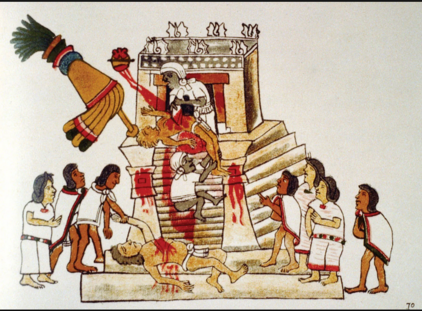
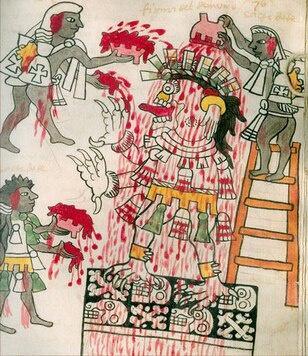
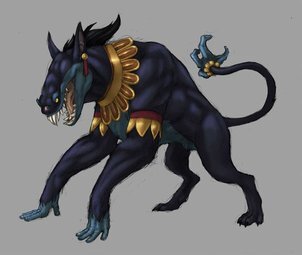
See what I mean? This sure beats those horrible times we live in, doesn't it? It looks a lot more fun anyway.
Anyhoo and stuff, this was a slightly scrumptious follow-up to Servant of the Underworld. Aliette de Bodard does the historical fantasy meets mystery meets gloriously weird ancient Mesoamericanshit stuff meets action aplenty meets delicious political shit duplicity meets magic meets gore and murder and betrayal oh my thingie wondrously well. Her writing is a lot more detailed than what I typically enjoy but lo and behold, it's never boring or info-dumpy (shocking that). The world she created here is fascinating, captivating, exciting, more original than 90.124569% of Fantasy books out there, and a delight to read. (Well some people might think the story does not really qualify as "delightful"—what with all the bloodshed and sacrifices and stuff—but what can I say, people are weird sometimes 🤷♀️.)
Long story short:

P.S. Pretty sure Machiavel learned all he knew from his Aztec ancestors. Because yes, it is a truth historically acknowledged that he was of Mexica descent 😬.
P.P.S. No earlobes were harmed in the writing of this book. Not the author's anyway. Hopefully.
· Book 1: Servant of the Underworld ★★★★
· Book 3: Master of the House of Darts ★★★★
See what I mean? This sure beats those horrible times we live in, doesn't it? It looks a lot more fun anyway.
Anyhoo and stuff, this was a slightly scrumptious follow-up to Servant of the Underworld. Aliette de Bodard does the historical fantasy meets mystery meets gloriously weird ancient Mesoamerican
Long story short:
P.S. Pretty sure Machiavel learned all he knew from his Aztec ancestors. Because yes, it is a truth historically acknowledged that he was of Mexica descent 😬.
P.P.S. No earlobes were harmed in the writing of this book. Not the author's anyway. Hopefully.
· Book 1: Servant of the Underworld ★★★★
· Book 3: Master of the House of Darts ★★★★

July 8, 2014
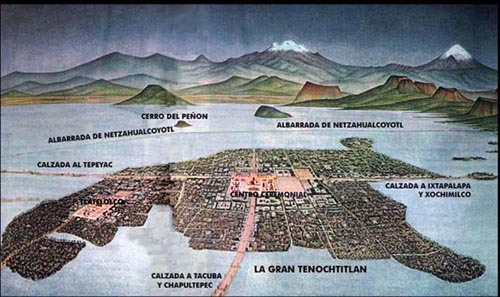
I loved researching and writing ethnographies in anthropology class; the idea of describing cultural norms in the hopes of understanding as well as to speculating on their function in society. A study of a culture’s biology, if you will. Aliette de Bodard’s series Obsidian and Blood (Bodard’s site) reminds me of an ethnography, but instead of the dry, pseudo-scientific tone discussing a culture in general, Bodard gives us the personal perspective of Acatl, High Priest of the Dead, as he seeks to protect his country from the fallout of a leader’s death. It’s the best kind of cultural story-telling, immersing me in a time and I place I can barely imagine and yet offering non-judgemental insight on ways of thinking and ancient lives.
I have more off-topic photos, links and on-topic musings at my blog, where I reside sans censorship:
https://clsiewert.wordpress.com/2014/...

February 13, 2017
So my review for the first book in this series begins, “It took me forever to read Servant of the Underworld, and I don’t know why. It’s great.”
That was two years ago.
Yeah.
I’ve had Harbinger of the Storm all that time, thanks to my wonderful subscription to Angry Robot Books … I’ve just been very, very, very negligent in actually reading these books! And I don’t know why, because they are great! Aliette de Bodard is such a smart writer. It’s totally my bad.
Unlike in the real world where I am a garbage person, only one year has gone by in Tenochtitlan. Revered Speaker Axayacatl has just died. This is a problem, because the Revered Speaker’s power is what keeps star-demons and other bad things that go bump in the night at bay. With him dead, the council must invest a new Revered Speaker as soon as possible. Except someone summons a star-demon and uses it to kill a council member! And the top suspects are the people most likely to succeed as Revered Speaker! Acatl, High Priest of the Dead and Resident Detective Busybody (that part is not his official title) decides to investigate, while also trying to keep the wards barely protecting the Fifth World from completely disappearing.
So, yeah. Investigating a murder and trying to save the world. No big.
I remember literally nothing from the first book save what I wrote in my review, so I’m not going to compare Harbinger of the Storm to it. Fortunately, this book feels very much like a standalone adventure. While you can get a lot from reading the first book, skipping it is not a problem here. De Bodard dribbles enough exposition in to let you into this world—though, to be honest, you probably won’t fully understand it. Just as with her science fiction, de Bodard is excellent at dropping the reader into an alien society and not burdening them with a pretense of knowledge. She has recreated the Mexica for us, but she is not pretending to explain them to us. There is a lot we have to infer, or just accept that we don’t get.
The magic in this series is so interesting. De Bodard takes a very literal interpretation of the Aztec religion. As such, magic and tradition (which are really one and the same) suffuse this entire book. Acatl slashes his earlobes every morning to make offerings to Mictlan. To everything there is a ritual, a time. Each character in this book has a purpose, a role, a way of fitting into the order of being in this universe. As I mentioned above, these roles and relationships are sometimes inscrutable to the reader, at least at first—to Acatl, it’s obvious that such-and-such falls into the purview of the She-Snake, or that Teomitl can or cannot do something because of his status in the Imperial Family. Reading this novel is like reading an Agatha Christie book if you’ve never been exposed to British society in any way—and I like that.
Magic also plays a central role to the mystery in Harbinger of the Storm. I can’t recall the last time I read an honest-to-goodness magical mystery—excepting, of course, urban fantasy, because that is kind of urban fantasy’s thing. I like that you can’t separate these plot elements here: the motives behind the murders are entirely predicated upon the Aztec belief system and the fact that it is not only desirable but necessary for Tenochtitlan to have the patronage and favour of a powerful god lest the world be destroyed.
Now, Acatl is not a great detective. He isn’t a great politician, either. It’s entertaining, in fact, how dense he can be about some things—but he redeems himself; he realizes his mistakes and is always trying to rectify them. This humility endears him to me, even as he blunders around and makes a fool of himself. And there is also a heroism to him; he is willing to sacrifice himself or take great risks if he thinks it means there is even a chance of saving his world. This is particularly significant juxtaposed with the various antagonists; even though some of them are not responsible for the murders per se, de Bodard is careful to underscore how each and every one of them has their own plots, their own schemes, their own agendas. The seriousness of the politics at the heart of this novel is palpable; people who enjoy contemporary political/suspense thrillers could do well to check out historical versions like these.
I want to touch on the historicity of Harbinger of the Storm, but first an aside about the characters. There’s a curious dearth of major female characters here! Of the three named women who have any real role in the plot, two (Ceyaxochitl and Xahuia) are sidelined fairly early on. The third, Acatl’s sister Mihmatini, gets a much juicier role in this book than she had in the first, but she too is put on a bus two thirds of the way through the book! I’m not sure what to make of this, given de Bodard’s prominent women of the Xuya stories (I don’t buy the setting/time period as an excuse). My only guess is that, as in the case of Mihmatini, de Bodard tried to place women in important positions of power but had trouble configuring the plot in such a way that they had much involvement in the story. Still, it’s a facet of this book that I found particularly unsatisfying.
In contrast, the amount of work that has gone into reifying the Aztecs here is quite satisfactory! Harbinger of the Storm comes with not one but two (somewhat repetitive) notes in the end matter explaining how de Bodard went about her research and some of the liberties that she took with her source material. I always find this part of historical fiction fascinating. Authors usually list a couple of books they found useful, but how many give you a full bibliography at the end? The amount and depth of de Bodard’s research is breathtaking, and it clearly pays off in her worldbuilding. In this particular case, I liked hearing a little about how she borrowed some of these characters (like Teomitl) from history and the extent to which she had to dramatize things.
Historical fiction has always been a genre that I enjoy but do not prioritize. And when I do read historical fiction, the stories are often set in Britain (because I find British history fascinating) or similarly Eurocentric or white-dominated spaces. Harbinger of the Storm is a refreshing departure from such fare. Rigorous in its research and magnificent in its magic and mystery, it is a fun read that will keep you on your toes as you wonder what gods and men might possibly throw at Acatl next.
My reviews of Obsidian and Blood:
← Servant of the Underworld

That was two years ago.
Yeah.
I’ve had Harbinger of the Storm all that time, thanks to my wonderful subscription to Angry Robot Books … I’ve just been very, very, very negligent in actually reading these books! And I don’t know why, because they are great! Aliette de Bodard is such a smart writer. It’s totally my bad.
Unlike in the real world where I am a garbage person, only one year has gone by in Tenochtitlan. Revered Speaker Axayacatl has just died. This is a problem, because the Revered Speaker’s power is what keeps star-demons and other bad things that go bump in the night at bay. With him dead, the council must invest a new Revered Speaker as soon as possible. Except someone summons a star-demon and uses it to kill a council member! And the top suspects are the people most likely to succeed as Revered Speaker! Acatl, High Priest of the Dead and Resident Detective Busybody (that part is not his official title) decides to investigate, while also trying to keep the wards barely protecting the Fifth World from completely disappearing.
So, yeah. Investigating a murder and trying to save the world. No big.
I remember literally nothing from the first book save what I wrote in my review, so I’m not going to compare Harbinger of the Storm to it. Fortunately, this book feels very much like a standalone adventure. While you can get a lot from reading the first book, skipping it is not a problem here. De Bodard dribbles enough exposition in to let you into this world—though, to be honest, you probably won’t fully understand it. Just as with her science fiction, de Bodard is excellent at dropping the reader into an alien society and not burdening them with a pretense of knowledge. She has recreated the Mexica for us, but she is not pretending to explain them to us. There is a lot we have to infer, or just accept that we don’t get.
The magic in this series is so interesting. De Bodard takes a very literal interpretation of the Aztec religion. As such, magic and tradition (which are really one and the same) suffuse this entire book. Acatl slashes his earlobes every morning to make offerings to Mictlan. To everything there is a ritual, a time. Each character in this book has a purpose, a role, a way of fitting into the order of being in this universe. As I mentioned above, these roles and relationships are sometimes inscrutable to the reader, at least at first—to Acatl, it’s obvious that such-and-such falls into the purview of the She-Snake, or that Teomitl can or cannot do something because of his status in the Imperial Family. Reading this novel is like reading an Agatha Christie book if you’ve never been exposed to British society in any way—and I like that.
Magic also plays a central role to the mystery in Harbinger of the Storm. I can’t recall the last time I read an honest-to-goodness magical mystery—excepting, of course, urban fantasy, because that is kind of urban fantasy’s thing. I like that you can’t separate these plot elements here: the motives behind the murders are entirely predicated upon the Aztec belief system and the fact that it is not only desirable but necessary for Tenochtitlan to have the patronage and favour of a powerful god lest the world be destroyed.
Now, Acatl is not a great detective. He isn’t a great politician, either. It’s entertaining, in fact, how dense he can be about some things—but he redeems himself; he realizes his mistakes and is always trying to rectify them. This humility endears him to me, even as he blunders around and makes a fool of himself. And there is also a heroism to him; he is willing to sacrifice himself or take great risks if he thinks it means there is even a chance of saving his world. This is particularly significant juxtaposed with the various antagonists; even though some of them are not responsible for the murders per se, de Bodard is careful to underscore how each and every one of them has their own plots, their own schemes, their own agendas. The seriousness of the politics at the heart of this novel is palpable; people who enjoy contemporary political/suspense thrillers could do well to check out historical versions like these.
I want to touch on the historicity of Harbinger of the Storm, but first an aside about the characters. There’s a curious dearth of major female characters here! Of the three named women who have any real role in the plot, two (Ceyaxochitl and Xahuia) are sidelined fairly early on. The third, Acatl’s sister Mihmatini, gets a much juicier role in this book than she had in the first, but she too is put on a bus two thirds of the way through the book! I’m not sure what to make of this, given de Bodard’s prominent women of the Xuya stories (I don’t buy the setting/time period as an excuse). My only guess is that, as in the case of Mihmatini, de Bodard tried to place women in important positions of power but had trouble configuring the plot in such a way that they had much involvement in the story. Still, it’s a facet of this book that I found particularly unsatisfying.
In contrast, the amount of work that has gone into reifying the Aztecs here is quite satisfactory! Harbinger of the Storm comes with not one but two (somewhat repetitive) notes in the end matter explaining how de Bodard went about her research and some of the liberties that she took with her source material. I always find this part of historical fiction fascinating. Authors usually list a couple of books they found useful, but how many give you a full bibliography at the end? The amount and depth of de Bodard’s research is breathtaking, and it clearly pays off in her worldbuilding. In this particular case, I liked hearing a little about how she borrowed some of these characters (like Teomitl) from history and the extent to which she had to dramatize things.
Historical fiction has always been a genre that I enjoy but do not prioritize. And when I do read historical fiction, the stories are often set in Britain (because I find British history fascinating) or similarly Eurocentric or white-dominated spaces. Harbinger of the Storm is a refreshing departure from such fare. Rigorous in its research and magnificent in its magic and mystery, it is a fun read that will keep you on your toes as you wonder what gods and men might possibly throw at Acatl next.
My reviews of Obsidian and Blood:
← Servant of the Underworld

February 3, 2015
Harbinger of the Storm takes place a year and a half after the events in Servant of the Underworld where you are first introduced to Acatl, High Priest for the Dead. Acatl is too honest to play games and yet he is dragged into one in this book.
The Reverend Speaker is dead and the city desperately needs a new one if they want to protect themselves from the star demons and who knows what other monstrosities are waiting for the way to open. Acatl is summoned to the Imperial Palace to start the preparations for the funeral. The death was natural but that is the only thing in this book that goes Acatl's way.
the procedure for the new Revered Speaker should already be under way, but it seems too many people are involved. And Acatl hates those games.
At the same time a minor noble, a councilman, is murdered in the palace and the way he is killed shouldn't be possible within the wards. Acatl is again the one who is in the middle of the storm.
I loved this book as much as I loved the first one. There are conspiracies, but none that you would guess at first. There are gods and Acatl and Teomitl even travel to investigate. The case seems too hard because there are too many people involved.
Acatl is not a warrior. He isn't even especially gifted in a way some of the other characters are. To top it all his 'protector Lord Death had made it abundantly clear that He would not interfere in the affairs of humans.' However, Acatl is special in a way none of his peers are and it could be the reason they dislike him. Acatl cannot be bought and that plays a great role in this book.
Teomitl, his student and the Revered Speaker's brother plays a great role in this book too. I adore Teomitl.
Harbinger of the Storm is a great mystery full of intrigue and magic, capricious gods, conspiracies and murders and so much more.
The Reverend Speaker is dead and the city desperately needs a new one if they want to protect themselves from the star demons and who knows what other monstrosities are waiting for the way to open. Acatl is summoned to the Imperial Palace to start the preparations for the funeral. The death was natural but that is the only thing in this book that goes Acatl's way.
the procedure for the new Revered Speaker should already be under way, but it seems too many people are involved. And Acatl hates those games.
At the same time a minor noble, a councilman, is murdered in the palace and the way he is killed shouldn't be possible within the wards. Acatl is again the one who is in the middle of the storm.
I loved this book as much as I loved the first one. There are conspiracies, but none that you would guess at first. There are gods and Acatl and Teomitl even travel to investigate. The case seems too hard because there are too many people involved.
Acatl is not a warrior. He isn't even especially gifted in a way some of the other characters are. To top it all his 'protector Lord Death had made it abundantly clear that He would not interfere in the affairs of humans.' However, Acatl is special in a way none of his peers are and it could be the reason they dislike him. Acatl cannot be bought and that plays a great role in this book.
Teomitl, his student and the Revered Speaker's brother plays a great role in this book too. I adore Teomitl.
Harbinger of the Storm is a great mystery full of intrigue and magic, capricious gods, conspiracies and murders and so much more.

Read
June 4, 2019Second in this terrific, gnarly, blood-drenched series about an alt-Aztec empire where magic and the gods are real, and a very thin line indeed separates the world from annihilation. Politics, murder mystery, fantasy, all with a powerfully realised historical feel from a period we don't often see (possibly because the MC's religious self-mutilation and frequent sacrifices of animals, and indeed the social element of human sacrifice, would be a a *tad* hard to pull off for lesser writers) and two likeable characters at the cenre of the maelstrom. Very much enjoying these.

July 1, 2013
All of my reservations from reading the previous book re: potential appropriation and exoticisation stand, but in terms of the content and storyline, the way Aliette de Bodard brings the world to life, I am really enjoying these. There are a few spots of clunky exposition ("as you know because you have lived here all your life, [x] is the domain of [x] god"), but for the most part it's smooth sailing. I do like that there's a continuing narrative going on here, a story arc that carries between books as well as plots that are somewhat resolved within the space of the book.
I am a little annoyed at the relative dearth of female characters. There are three mortal female characters at the start of this book, that I can think of, and only one of them makes it to the end as a significant character -- and even then, she's not necessarily holding onto the power and autonomy she displayed in the first book. And yes, yes, I know that we usually expect to see women in the background in Western medieval fantasy, and I have no idea actually about the treatment of Aztec women, but... I don't know. I still feel the lack.
I am a little annoyed at the relative dearth of female characters. There are three mortal female characters at the start of this book, that I can think of, and only one of them makes it to the end as a significant character -- and even then, she's not necessarily holding onto the power and autonomy she displayed in the first book. And yes, yes, I know that we usually expect to see women in the background in Western medieval fantasy, and I have no idea actually about the treatment of Aztec women, but... I don't know. I still feel the lack.

May 21, 2024
I think this was a great sequel, equally immersive and Acatl was equally grumpy and sometimes petty in the best places in my opinion. The author is also following history, with the fantasy aspects, and tries to fill in things that aren't known because no records describe what happened and I really liked what she came up with.

April 21, 2014
Acatl is Tenochtitlan’s High Priest of the Dead: coroner, funeral director, keeper of the unseen boundaries between the the world of spirits and the world of men--and reluctant detective, when the need arises. He’s a humble, soft-spoken man who’s grown considerably into his duties since last we met him, but now he’s confronted by a new and terrifying challenge.
The Revered Speaker, ruler of Tenochtitlan, is dead, and court intrigue swirls around the naming of his successor. Acatl would prefer to be left out of the political maneuvering, but when one council member is murdered--and more horrifying deaths follow--he has no choice. The murderer has violated the ancient barriers and employed a forbidden magic that threatens to wipe Tenochtitlan and its inhabitants from the face of the earth and usher in the next epoch of history, ready or not.
But how can the priest of a second-rate deity stand against a horde of demons hungry for an apocalypse of blood and fire?
In Harbinger of the Storm, the second volume of Aliette de Bodard’s Obsidian and Blood trilogy, we move deeper into the inner workings of her circa-1400s Aztec society, as seen through the eyes of her unlikely hero, Acatl. This is a world where magical power is tangible, a thread woven through every activity of life, no matter how simple, and the strongest magic derives its power from blood sacrifice. The Aztec society exists in a symbiotic relationship with gods and goddesses who depend on humanity’s devotion while manipulating it to serve their own imponderable agendas. Both men and gods are in turn subject to a fate beyond their control but enigmatic in its vision of the future. War and violence are expected, existence is haunted by fear and uncertainty, and comfort is found only in the daily routines and rituals, constantly seeking the gods’ capricious favor.
Acatl is a man of unique spiritual sensitivity, comfortable in his own skin and in the small universe of his priestly duties, who finds himself pulled out of his comfort zone with distressingly accelerating regularity. He becomes entangled in a confusing royal succession disputed by factions whose motivations and loyalties simultaneously define the complex web of alliance that holds Tenochtitlan together and threaten to tear it asunder. He’s the only man at court without political ambition or instinct, and he must somehow keep these forces in balance, solve the perplexing murders, and, just maybe, survive. It’s a classic fish-out-of-water scenario, where an outmatched individual must find the strength and ingenuity to defeat an overwhelming adversary. Acatl is humble, principled, and determined to protect the people who look to him for leadership. It is those traits, not physical power, genius, charisma, or even magical talent, that see him through. He possesses great courage, but he reminds us that courage and fearlessness aren’t necessarily the same thing. He’s an appealing protagonist, very much in the spirit of Ellis Peters’ Brother Cadfael or G.K. Chesterton’s Father Brown.
Like the first volume, this story is free of explicit content, with little on-stage violence, but there’s also no flinching from the truth that Aztec religious rites often involved human sacrifice, and there’s blood just about everywhere in the temple precincts, dried or dripping. Acatl’s rites for Michtlantechuhtli, the Lord of Death, however, don’t involve human sacrifice, since his clients are already dead and there’s not much point in it. While wearily accepting that it’s the way of things in his culture, it’s clear Acatl would be quite happy if the gods who demand human sacrifice gave up their thirst for blood altogether.
This is a fine story, well-researched, enjoyable as both a mystery and a window into a vanished culture unfamiliar to most of us. Give it a read, but start with the first book, Servant of the Underworld, which introduces Acatl and his community, since the second volume moves at a fair clip and doesn’t dwell much on backstory, though it stands well on its own. As you might expect, it ends on a note that makes it clear that the resolution is only temporary, and more danger and mystery awaits Acatl and his allies in the final volume, Master of the House of Darts.
The Revered Speaker, ruler of Tenochtitlan, is dead, and court intrigue swirls around the naming of his successor. Acatl would prefer to be left out of the political maneuvering, but when one council member is murdered--and more horrifying deaths follow--he has no choice. The murderer has violated the ancient barriers and employed a forbidden magic that threatens to wipe Tenochtitlan and its inhabitants from the face of the earth and usher in the next epoch of history, ready or not.
But how can the priest of a second-rate deity stand against a horde of demons hungry for an apocalypse of blood and fire?
In Harbinger of the Storm, the second volume of Aliette de Bodard’s Obsidian and Blood trilogy, we move deeper into the inner workings of her circa-1400s Aztec society, as seen through the eyes of her unlikely hero, Acatl. This is a world where magical power is tangible, a thread woven through every activity of life, no matter how simple, and the strongest magic derives its power from blood sacrifice. The Aztec society exists in a symbiotic relationship with gods and goddesses who depend on humanity’s devotion while manipulating it to serve their own imponderable agendas. Both men and gods are in turn subject to a fate beyond their control but enigmatic in its vision of the future. War and violence are expected, existence is haunted by fear and uncertainty, and comfort is found only in the daily routines and rituals, constantly seeking the gods’ capricious favor.
Acatl is a man of unique spiritual sensitivity, comfortable in his own skin and in the small universe of his priestly duties, who finds himself pulled out of his comfort zone with distressingly accelerating regularity. He becomes entangled in a confusing royal succession disputed by factions whose motivations and loyalties simultaneously define the complex web of alliance that holds Tenochtitlan together and threaten to tear it asunder. He’s the only man at court without political ambition or instinct, and he must somehow keep these forces in balance, solve the perplexing murders, and, just maybe, survive. It’s a classic fish-out-of-water scenario, where an outmatched individual must find the strength and ingenuity to defeat an overwhelming adversary. Acatl is humble, principled, and determined to protect the people who look to him for leadership. It is those traits, not physical power, genius, charisma, or even magical talent, that see him through. He possesses great courage, but he reminds us that courage and fearlessness aren’t necessarily the same thing. He’s an appealing protagonist, very much in the spirit of Ellis Peters’ Brother Cadfael or G.K. Chesterton’s Father Brown.
Like the first volume, this story is free of explicit content, with little on-stage violence, but there’s also no flinching from the truth that Aztec religious rites often involved human sacrifice, and there’s blood just about everywhere in the temple precincts, dried or dripping. Acatl’s rites for Michtlantechuhtli, the Lord of Death, however, don’t involve human sacrifice, since his clients are already dead and there’s not much point in it. While wearily accepting that it’s the way of things in his culture, it’s clear Acatl would be quite happy if the gods who demand human sacrifice gave up their thirst for blood altogether.
This is a fine story, well-researched, enjoyable as both a mystery and a window into a vanished culture unfamiliar to most of us. Give it a read, but start with the first book, Servant of the Underworld, which introduces Acatl and his community, since the second volume moves at a fair clip and doesn’t dwell much on backstory, though it stands well on its own. As you might expect, it ends on a note that makes it clear that the resolution is only temporary, and more danger and mystery awaits Acatl and his allies in the final volume, Master of the House of Darts.

June 13, 2014
I cant say exactly why I didn't like this as much as the first book in the series. Maybe it's just slightly staler, maybe the mystery was a little too complicated, maybe the cast of characters is a little too small. It just didn't feel quite right. Like an undercooked meal. In a book like this, a murder mystery set in a fantastical version of the Aztek Empire, there's a bit of a delicate balancing act. You need a compelling mystery, because that's what's driving the plot, but the setting is so alien and strange you need to devote some time to that as well. I guess I feel like de Bodard underserved both those aspects. The mystery never really grabbed my interest, and the world, while interesting, never quite felt real or lived in. I just don't quite understand how this place works in a day to day sense, or even how it survives, when such cruel and capricious gods take such an active role in it.
It wasn't terrible by any means, but I had to force myself to finish it.
It wasn't terrible by any means, but I had to force myself to finish it.

August 18, 2021
I liked it, I think it was an improvement from the first.
But, I got to admit, the amount of blood sacrifice in this one got distracting. Acatl (main character) keeps cutting his earlobes. Why? How? How do you keep having room to cut again? Is reality worth cutting your earlobes?
And there was mention of priests with blood matted hair. Can you imagine what this place must smell like? There is so much blood sacrifice going on, this whole city must smell like a slaughter house.
Anyway, the mystery and investigation were very interesting in here (poor Acatl, only man in the city concerned about star demons eating everyone). And it was a really interesting twist tying into the whole necessity of sacrifice in Aztec mythology.
I really appreciate the setting here. Everything feels very immersed in the magic of the world. And the people's relationship with the Aztec gods is interesting. I get the impression that the gods are just a part of the environment. That people might not actually like them but they just have to deal with them regardless. Makes for an interesting situation.
But, I got to admit, the amount of blood sacrifice in this one got distracting. Acatl (main character) keeps cutting his earlobes. Why? How? How do you keep having room to cut again? Is reality worth cutting your earlobes?
And there was mention of priests with blood matted hair. Can you imagine what this place must smell like? There is so much blood sacrifice going on, this whole city must smell like a slaughter house.
Anyway, the mystery and investigation were very interesting in here (poor Acatl, only man in the city concerned about star demons eating everyone). And it was a really interesting twist tying into the whole necessity of sacrifice in Aztec mythology.
I really appreciate the setting here. Everything feels very immersed in the magic of the world. And the people's relationship with the Aztec gods is interesting. I get the impression that the gods are just a part of the environment. That people might not actually like them but they just have to deal with them regardless. Makes for an interesting situation.

May 9, 2017
Kind of like an Urban Fantasy in a Aztec setting. A priest of the Dead doing his best Harry Dresden trying to solve a string of murders in a Imperial Palace. It would be annoying to have to cut your earlobes every day. Very original fantasy trilogy.

September 20, 2017
Enjoyed this one more than the first....probably because I was more familiar with the setting, magic and behaviours this time round. Will certainly read the next book in this series.

January 25, 2019
Second book in her Aztec themed fantasy series. I'm loving the mythology woven into these novels. If you're tired of the usual Celtic fantasies, these are for you.
March 30, 2024
The second mystery set in a fantasy world based on Aztec mythology. I love the descriptions in this, and the sense of the gods as real, arbitrary and dangerous beings.

October 9, 2025
I got bored to be honest...
July 22, 2022
Very enjoyable. Good writing and narration. Ms de Bodard has created a fascinating peek into the ancient Aztec world. Highly recommend.

November 22, 2011
I have an embarrassing confession to make--while I enjoy Aliette de Bodard's Obsidain and Blood series, I'm not sure I will continue reading them for one simple fact that I will get to in a minute. The author has written an accurate depiction of the Aztec empire, with the caveat that any kind of magic the Aztecs believed in exists for purposes of the story. This is a very cool take on a historical fantasy, and I love the way de Bodard depicts the truly bloody world of the Aztecs.
However, because of this accuracy, the characters have names such a Actal, Ithtaca, Ceyachochitl,and Ayaxacatl. These are the easy names. Plus, many of the characters have titles, such as a servant of the House of Tears, or the House of Darts. Hell, the House of Pies might have been in there somewhere, because after a time my mind was spinning with all the confusing nomenclature.
I'm quite used to reading fanciful names after a lifetime of sf and fantasy, but this book almost overwhelmed me this time around. If you are looking for a deft "Brother Cadfael in Aztec times" fantasy, de Bodard might be for you. I still enjoy the series and hope that my inability to track things is mostly due to teaching junior high kids right before the holidays, leading to a zombie-like state not terribly conducive to close reading. Next book I'll read in the summer, when I'm fresh. Perhaps then, names like Miclantecutli (the god of the dead) won't bother me so much. I managed to do just fine with the first novel, so here's hoping.
However, because of this accuracy, the characters have names such a Actal, Ithtaca, Ceyachochitl,and Ayaxacatl. These are the easy names. Plus, many of the characters have titles, such as a servant of the House of Tears, or the House of Darts. Hell, the House of Pies might have been in there somewhere, because after a time my mind was spinning with all the confusing nomenclature.
I'm quite used to reading fanciful names after a lifetime of sf and fantasy, but this book almost overwhelmed me this time around. If you are looking for a deft "Brother Cadfael in Aztec times" fantasy, de Bodard might be for you. I still enjoy the series and hope that my inability to track things is mostly due to teaching junior high kids right before the holidays, leading to a zombie-like state not terribly conducive to close reading. Next book I'll read in the summer, when I'm fresh. Perhaps then, names like Miclantecutli (the god of the dead) won't bother me so much. I managed to do just fine with the first novel, so here's hoping.
October 27, 2018
I think for both this book and the first in the series, if there was a 3.5 star option I would pick it. The first one I enjoyed enough to bump up to 4, but this one not quite so much. For one, a lot more people die, which is just not my first choice in entertainment. But I mean, I can't complain that the book shouldn't be violent, it's set in an Aztec empire where all the gods are real and demand blood sacrifice, that's how it works. It's just not so much for me.
For another, I never felt as drawn into the plot or invested in the stakes. Which you'd think I would be, since the stakes are that the entire world could end. But that's sort of the problem. In the very first chapter you learn that the Revered Speaker's death means the world is vulnerable to being eaten by demons. So, there are various complications along Acatl's quest to save the world from being eaten by demons, but like, I knew from that first chapter that the world would get really really close to being destroyed and then be saved, because it's not the kind of book that ends with total apocalypse. Even if I didn't already know there's another sequel. Each new angry god and metaphysical concept isn't a heightening of the tension so much as a new potential source of confusion. Whereas Servant of the Underworld started out small scale, with one woman and one man's life at stake, and then gradually opened out into a wider danger, which is a structure that works better for me. Still, I like Acatl's awkward and utterly unambitious self, and I cared very much about his relationships with Ceyaxochitl and Teomitl.
For another, I never felt as drawn into the plot or invested in the stakes. Which you'd think I would be, since the stakes are that the entire world could end. But that's sort of the problem. In the very first chapter you learn that the Revered Speaker's death means the world is vulnerable to being eaten by demons. So, there are various complications along Acatl's quest to save the world from being eaten by demons, but like, I knew from that first chapter that the world would get really really close to being destroyed and then be saved, because it's not the kind of book that ends with total apocalypse. Even if I didn't already know there's another sequel. Each new angry god and metaphysical concept isn't a heightening of the tension so much as a new potential source of confusion. Whereas Servant of the Underworld started out small scale, with one woman and one man's life at stake, and then gradually opened out into a wider danger, which is a structure that works better for me. Still, I like Acatl's awkward and utterly unambitious self, and I cared very much about his relationships with Ceyaxochitl and Teomitl.

December 24, 2010
...I found Harbinger of the Storm to be a worthy successor to what I consider to be a very successful début. The emphasis in this book has shifted a bit from a murder mystery to political intrigue but the setting hasn't lost any of its appeal in the process. The novel zooms out a bit to allow room for more religious and political aspects of Aztec society to slip into the story. Despite my preoccupation with the historical aspects of the novel, Harbinger of the Storm is mostly a race against the clock to deflect a supernatural attempt to end the empire and the world. De Bodard manages to work a great sense of urgency into the story, making it a very fast read. She has once again managed to deliver a very interesting book. I'm looking forward to reading the third, as of yet unnamed, book in this series.
Full Random Comments review
Full Random Comments review

November 21, 2015
First, a note. I see this book refereed to everywhere as fantasy. To me, it felt more like magical realism. After all, even though we don't know all that much about the Aztecs, they did live and build a complex society. Moreover, this series seems to have more to say that does most of what we find in the fantasy genre. That said, de Bodard's books are decidedly bloody--lots of sacrifices--but also fascinating. She clearly did a huge amount of research into Aztec religion, culture, and politics, then used her knowledge to bring it all to life. I can't speak to the accuracy of the content, but de Bodard provides not only acknowledgement of changes she made for the sake of the story, a list of characters, a glossary, and a guide to Nahuatl pronunciation, but also a reading list, giving a reader some confidence that these fictional tales are build on knowledge. This particular book, second in the series, focuses on the religion and politics of succession.

January 8, 2017
The second book was a pleasant continuation of the world and characters to which we were introduced in the first. The plot's twists and turns were well-orchestrated and we got to deepen our knowledge of the city's politics. The story was satisfying overall, however it dawned on me that all the recurring characters are kind of one-dimensional, or seem more like tools to add to Acatl's experiences instead of people in their own right. Mihmatini in particular only ever appears when she's needed to fill a plot hole, then she's kind of put aside and forgotten the rest of the time, which leaves some weak spots in the plot.
May 1, 2018
I quite liked the first book in this series, but while I did read this one through to the end, it never really grabbed me. While the first one was a detective story with fantasy trimmings, this one required taking out a temporary subscription to a convoluted theological system which I couldn't summon up much interest in. The hero bumbles around like a housefly trying to find an open window, the other characters are one-dimensional - and the one female character who *might* be interesting is rushed backstage where she doesn't even get to make noises off.

March 15, 2021
What seemed like a cool world and an unusual magic system were unable to overcome less than interesting characters and a dull mystery. I like the first one but the novelty wore off, I suppose.

November 15, 2013
Since I really, truly got into reading genre fiction, particularly fantasy and science-fiction, a favorite personal game of mine has been: what would happen if I found myself transported into the world of the book I was reading? Would I be able to live in it permanently? Would it be a better to just go for a visit? Or is it so very unsafe that I wouldn't last a minute before something or someone killed me in a horrific manner? And since I got into historical fiction I've begun including time periods in this game: vacations in eleventh-century Kyoto during the springtime, a side-trip to tenth-century Baghdad for the libraries and the poetry - but I would never set foot in twelfth-century Western Europe, not with the Black Death dropping people left, right, and center.
Recently, though, I read Servant of the Underworld, the first novel in Aliette de Bodard's Obsidian and Blood trilogy, which is set in fifteenth-century Mexico. Rooted in the rich and bloody well of Aztec history and mythology, de Bodard builds a world where magic runs rampant, the gods are fickle at best and cruel at worst, and where blood - both animal and human - literally maintains the balance of the universe. However, despite all the bloodshed, de Bodard creates a world filled with life: a world where culture thrives, and where political games are played at the highest levels of society. Through the eyes of Acatl, High Priest of the Dead and the novel's protagonist and narrator, this magical version of Tenochtitlan at the height of the Aztec Empire's power comes to life.
It is this world that the reader re-enters in Harbinger of the Storm, the second novel in the trilogy. It's been a year since the events of Servant of the Underworld, and Axayacatl, the Revered Speaker (and therefore the Emperor of the Mexica Empire) is dead. This leaves Tenochtitlan leaderless and therefore vulnerable in a political sense, but there is more to it than that. While alive, the Revered Speaker represented the power of Huitzilpochtli, the Southern Hummingbird, the chief protector god of the Mexica Empire. Without a Revered Speaker, Huitzilpochtli's power is diminished, and therefore leaves the Fifth World wide open to attack from other gods and entities that might want to bring it to an end.
As High Priest of the Dead, Acatl's main duty is to see to Axayacatl's funeral, preparing his body while ensuring his soul travels to Mictlan, the realm of the dead (and of his god, Mictlantecuhtli) without much incident. However, Acatl finds himself caught up in a deep court scandal when a councilman is found dead under mysterious, magical circumstances - circumstances that point to the coming of an entity that no one could ever hope to defeat, and that could spell the end of the world itself. Once again, it falls to Acatl, his friends, and even a few enemies, to figure out what is going on before it is too late.
Despite the magic and the setting, the novel is still, technically, a murder mystery, so I try to judge Harbinger of the Storm as such. In that sense, Harbinger of the Storm is pretty average as far as these kinds of things go, though I think it was better-plotted than Servant of the Underworld. I wondered why that was the case, so I took a quick peek through Servant of the Underworld, and realized that the reason why Harbinger of the Storm seems to be more thoroughly-plotted is because Servant of the Underworld was more focused on world-building. This is no surprise, since de Bodard is trying to establish the setting of her novel as quickly and as best as she can without getting in the way of the plot, but the fact remains that some room for building plot had to be sacrificed in favor of world-building.
This is no longer a problem in Harbinger of the Storm. With the world already firmly established in the first novel, de Bodard uses this newfound freedom to good use, creating a plot that twists and turns in a way that the plot of Servant of the Underworld did not. World-building is not completely abandoned, of course: Harbinger of the Storm expands the world to include places outside of Tenochtitlan (the city of Texcoco), and new strata of society (court life comes into much greater focus and plays a key role), but the plot is much more in focus than it was in the first novel.
Fortunately, though the plot is really average in comparison to other murder mysteries (albeit superior to the first book in the trilogy), the characters remain as interesting and fun to read as ever. Though Acatl has learned to accept his duties as High Priest of the Dead, he's still a bit of a grouch about it, and still as awkward about politics as he was in the first book - actually, more so now in this novel than the first one, because the depth of his involvement in the court changes drastically in Harbinger of the Storm. He's not the most competent of investigators at times: he doubts himself a lot, and makes mistakes, but I like him precisely because he makes those mistakes without being a bumbling idiot. I will always have room in my heart for the genius savant, but I can also appreciate an investigator who's not as competent as he might want to be.
Acatl is a great example of that. What he lacks in sheer genius, he makes up for with sheer determination and courage, along with a deep sense of justice and compassion for those he believes are innocent and have been wronged. He sees what's wrong, and though he's not necessarily the right person for the job, he's going to do it anyway because he knows taking action is the right thing to do. Sherlock Holmes could have probably just looked at the first victim, sniffed the air a little, and figured out precisely what was going on, but then, Sherlock Holmes isn't really all that human. Acatl is completely, thoroughly human, and yet he tries to be superhuman anyway, because if he doesn't at least try, then everything goes to pieces.
Like in the previous novel, I really like how the gods are so "human," so to speak, in Harbinger of the Storm. There is no such thing as a completely benevolent god in de Bodard's version of the Aztec world: one god may be amenable to cooperating with humans, but something could set that god off, and the next thing one knows, said god is on the warpath and hellbent on destroying the world. Much of the Aztec world as it's portrayed in the Obsidian and Blood trilogy is dedicated to maintaining that balance, to ensuring that the gods are satisfied enough to keep the universe running, and it's that balance that Acatl himself strives to maintain in the face of everything that stands in his way. Harbinger of the Storm proves this to be very true, particularly when the reader begins to figure out just what is really happening in the plot and approaches the climax.
Another interesting development in this novel is the quality of de Bodard's writing. I mentioned in my review for Servant of the Underworld that her language had become more workmanlike and less lyrical, especially in comparison to her short stories. This remains true of the language in Harbinger of the Storm, but I did notice that her more lyrical language comes through more more often and in more obvious ways than in Servant of the Underworld. Again, I attribute this to the fact that there is no urgent need to world-build anymore in Harbinger of the Storm, so de Bodard has greater freedom to write the story as she pleases. The writing overall still hews very closely to the writing in Servant of the Underworld, but only because Acatl is still the narrator, and therefore the quality of his voice has to be maintained. Nevertheless, de Bodard's poetry and lyrical language come through in a few spots, and they're a delight to come across in the course of reading the novel.
Overall, Harbinger of the Storm is pretty par for the course as a murder mystery, but one that functions better than its predecessor. And with most of the world-building out of the way, de Bodard is able to build a more interesting, more layered plot - not as layered as some of the other mysteries that I've read, but still a pretty good read. It also helps that the world itself is pretty well-built and well-established as of Servant of the Underworld, which leaves de Bodard free to not only craft a better plot, but to build her characters up further. This is especially true in Acatl's case: Servant of the Underworld might be considered his coming-of-age, but Harbinger of the Storm is where he finds his metier - whether he likes it or not. He's certainly no Sherlock Holmes, but that hardly matters: de Bodard has built his character in such a manner that the reader will probably like him for the grumpy, stubborn old man that he is. That, really, is all I need to see this series through to the very end - well, that and the explosive events of the climax of Harbinger of the Storm. And if the reader feels the same way as I do, then going on to the last book of the trilogy, Master of the House of Darts, will not be a chore at all.
However, readers who didn't like Servant of the Underworld for reasons of plot and language (particularly the names) will simply find more of the same in Harbinger of the Storm, and though it would be wise to give the novel a chance, if it still doesn't change the reader's mind, then it might be a good idea to skip the last book entirely unless one is determined to see the series through to the bitter end.
Recently, though, I read Servant of the Underworld, the first novel in Aliette de Bodard's Obsidian and Blood trilogy, which is set in fifteenth-century Mexico. Rooted in the rich and bloody well of Aztec history and mythology, de Bodard builds a world where magic runs rampant, the gods are fickle at best and cruel at worst, and where blood - both animal and human - literally maintains the balance of the universe. However, despite all the bloodshed, de Bodard creates a world filled with life: a world where culture thrives, and where political games are played at the highest levels of society. Through the eyes of Acatl, High Priest of the Dead and the novel's protagonist and narrator, this magical version of Tenochtitlan at the height of the Aztec Empire's power comes to life.
It is this world that the reader re-enters in Harbinger of the Storm, the second novel in the trilogy. It's been a year since the events of Servant of the Underworld, and Axayacatl, the Revered Speaker (and therefore the Emperor of the Mexica Empire) is dead. This leaves Tenochtitlan leaderless and therefore vulnerable in a political sense, but there is more to it than that. While alive, the Revered Speaker represented the power of Huitzilpochtli, the Southern Hummingbird, the chief protector god of the Mexica Empire. Without a Revered Speaker, Huitzilpochtli's power is diminished, and therefore leaves the Fifth World wide open to attack from other gods and entities that might want to bring it to an end.
As High Priest of the Dead, Acatl's main duty is to see to Axayacatl's funeral, preparing his body while ensuring his soul travels to Mictlan, the realm of the dead (and of his god, Mictlantecuhtli) without much incident. However, Acatl finds himself caught up in a deep court scandal when a councilman is found dead under mysterious, magical circumstances - circumstances that point to the coming of an entity that no one could ever hope to defeat, and that could spell the end of the world itself. Once again, it falls to Acatl, his friends, and even a few enemies, to figure out what is going on before it is too late.
Despite the magic and the setting, the novel is still, technically, a murder mystery, so I try to judge Harbinger of the Storm as such. In that sense, Harbinger of the Storm is pretty average as far as these kinds of things go, though I think it was better-plotted than Servant of the Underworld. I wondered why that was the case, so I took a quick peek through Servant of the Underworld, and realized that the reason why Harbinger of the Storm seems to be more thoroughly-plotted is because Servant of the Underworld was more focused on world-building. This is no surprise, since de Bodard is trying to establish the setting of her novel as quickly and as best as she can without getting in the way of the plot, but the fact remains that some room for building plot had to be sacrificed in favor of world-building.
This is no longer a problem in Harbinger of the Storm. With the world already firmly established in the first novel, de Bodard uses this newfound freedom to good use, creating a plot that twists and turns in a way that the plot of Servant of the Underworld did not. World-building is not completely abandoned, of course: Harbinger of the Storm expands the world to include places outside of Tenochtitlan (the city of Texcoco), and new strata of society (court life comes into much greater focus and plays a key role), but the plot is much more in focus than it was in the first novel.
Fortunately, though the plot is really average in comparison to other murder mysteries (albeit superior to the first book in the trilogy), the characters remain as interesting and fun to read as ever. Though Acatl has learned to accept his duties as High Priest of the Dead, he's still a bit of a grouch about it, and still as awkward about politics as he was in the first book - actually, more so now in this novel than the first one, because the depth of his involvement in the court changes drastically in Harbinger of the Storm. He's not the most competent of investigators at times: he doubts himself a lot, and makes mistakes, but I like him precisely because he makes those mistakes without being a bumbling idiot. I will always have room in my heart for the genius savant, but I can also appreciate an investigator who's not as competent as he might want to be.
Acatl is a great example of that. What he lacks in sheer genius, he makes up for with sheer determination and courage, along with a deep sense of justice and compassion for those he believes are innocent and have been wronged. He sees what's wrong, and though he's not necessarily the right person for the job, he's going to do it anyway because he knows taking action is the right thing to do. Sherlock Holmes could have probably just looked at the first victim, sniffed the air a little, and figured out precisely what was going on, but then, Sherlock Holmes isn't really all that human. Acatl is completely, thoroughly human, and yet he tries to be superhuman anyway, because if he doesn't at least try, then everything goes to pieces.
Like in the previous novel, I really like how the gods are so "human," so to speak, in Harbinger of the Storm. There is no such thing as a completely benevolent god in de Bodard's version of the Aztec world: one god may be amenable to cooperating with humans, but something could set that god off, and the next thing one knows, said god is on the warpath and hellbent on destroying the world. Much of the Aztec world as it's portrayed in the Obsidian and Blood trilogy is dedicated to maintaining that balance, to ensuring that the gods are satisfied enough to keep the universe running, and it's that balance that Acatl himself strives to maintain in the face of everything that stands in his way. Harbinger of the Storm proves this to be very true, particularly when the reader begins to figure out just what is really happening in the plot and approaches the climax.
Another interesting development in this novel is the quality of de Bodard's writing. I mentioned in my review for Servant of the Underworld that her language had become more workmanlike and less lyrical, especially in comparison to her short stories. This remains true of the language in Harbinger of the Storm, but I did notice that her more lyrical language comes through more more often and in more obvious ways than in Servant of the Underworld. Again, I attribute this to the fact that there is no urgent need to world-build anymore in Harbinger of the Storm, so de Bodard has greater freedom to write the story as she pleases. The writing overall still hews very closely to the writing in Servant of the Underworld, but only because Acatl is still the narrator, and therefore the quality of his voice has to be maintained. Nevertheless, de Bodard's poetry and lyrical language come through in a few spots, and they're a delight to come across in the course of reading the novel.
Overall, Harbinger of the Storm is pretty par for the course as a murder mystery, but one that functions better than its predecessor. And with most of the world-building out of the way, de Bodard is able to build a more interesting, more layered plot - not as layered as some of the other mysteries that I've read, but still a pretty good read. It also helps that the world itself is pretty well-built and well-established as of Servant of the Underworld, which leaves de Bodard free to not only craft a better plot, but to build her characters up further. This is especially true in Acatl's case: Servant of the Underworld might be considered his coming-of-age, but Harbinger of the Storm is where he finds his metier - whether he likes it or not. He's certainly no Sherlock Holmes, but that hardly matters: de Bodard has built his character in such a manner that the reader will probably like him for the grumpy, stubborn old man that he is. That, really, is all I need to see this series through to the very end - well, that and the explosive events of the climax of Harbinger of the Storm. And if the reader feels the same way as I do, then going on to the last book of the trilogy, Master of the House of Darts, will not be a chore at all.
However, readers who didn't like Servant of the Underworld for reasons of plot and language (particularly the names) will simply find more of the same in Harbinger of the Storm, and though it would be wise to give the novel a chance, if it still doesn't change the reader's mind, then it might be a good idea to skip the last book entirely unless one is determined to see the series through to the bitter end.

July 29, 2025
9 / 10 ✪
https://arefugefromlife.wordpress.com...
Alcatl, High Priest for the Dead, feels it the moment the change occurs. The heavens press closer to the Fifth World, and the star demons rush forth to gorge themselves on the blood of the mortal world. Below, She of the Silver Bells stirs in her prison. Axayacatl, the Revered Speaker, Guardian of Tenochtitlan, is dead.
In order to keep the star demons out of the Fifth World, a new Revered Speaker must be chosen—but the council tarries. Priests and councilmen alike jockey for power, playing political games while the denizens of Tenochtitlan tremble beneath the weight of the stars. Alcatl proves the exception, of course, but he must do his own part before the farce can move forward. After all, everyone knows who the new Revered Speaker will be.
And yet the games of power continue, as someone manages to summon a star demon to Earth and uses it to kill a council member. This is not possible—SHOULD not be possible—so Alcatl is called to investigate. But before long, another councilman lies dead and a third vanishes, and the High Priest for the Dead is no further along.
With the star demons set to invade the Fifth World and the council still delaying, Alactl must do everything in his power to stop the murders, expose the culprits, persuade the council to elect a new Revered Speaker, and save the Fifth World. All before demons beset the Fifth World and an ancient goddess is released from her eternal prison, bringing about the end of everything.
So, no pressure.
—
Second book of Aliette de Bodard’s very literal realization of the Aztec world kicks off with a bang. Higher stakes, more thorough mystery, same old Alcatl. Dude’s not the greatest detective ever, leaping from Points A to Z with only the barest scraps of evidence—but you know what? I actually appreciated this. After all, I’m not the greatest detective, either. And I can’t jump ahead in the plot based on evidence the reader isn’t even prithee to. Still, Alcatl is a bit slow, but for the most part this is explained away as his disdain for political maneuvering and games. His fellow high priests are much more deft than he, and often answer Alcatl’s questions with riddles and derision. Furthermore, Alcatl isn’t the most respected priest ever. Born a commoner, most feel he has been elevated well above his station. Even his former apprentice, the prince Teomitl, has seen his reputation tarnished with association to Alcatl.
And yet, that’s exactly why the task falls to Alcatl in the first place. He has no ambition, plays no political games; he’s already too far above his class, there’s no further he can rise. That’s another point in his favor. The perfect character: he can’t demand answers, despite some magic, some association, some power, he often has to muddle through in the dark. And as someone constantly in a state of flux, I can relate very well.
Far from strictly “realistic”, Aliette de Bodard’s pre-Columbian Teochtitlan assumes a very literal interpretation of the histories, complete with magic, gods, demons, and multiple worlds beyond that of ‘men. While it’s unlikely to be well-thought-of by historical “purists”, this is an excellent work of historical fantasy, but without much of the real “fantasy” elements. It’s just historical, but with the assumption that all the so-called mythology of the Aztecs was real—or real enough to its people. After all, perception shapes reality, and who can say what was or wasn’t reality back when magic and monsters still roamed the globe?
Unlike Book #1, I found the pacing more consistent. The looming arrival of star demons puts a clock on everything, but it also creates tension. The author doesn’t feel the need to escalate every so often to keep the reader entertained, so, for the most part, we are carried right along on a steady flow of mystery, intrigue, and the occasional off-screen murder. But when the sand begins to run down—when all hell breaks loose, neither does de Bodard attempt to shut Pandora’s Box, instead just letting chaos reign.
While I had no problem keeping a hold of the plot, I did occasionally lose track of just who everyone was. The unfamiliar, foreign names got a bit muddled. But this wasn’t helped by the lack of a searchable guide; I was listening via audiobook. So it’s really my own fault. Still, as John Telfer puts in such a magnificent performance as Alcatl, I mostly didn’t mind. There was a bit of muddling through the confusion, followed by realization, then quick re-immersion into the story. Those brief moments of break from immersion chafed, but only so long as it took to reenter the tale.
TL;DR
Learning from the mistakes of its predecessor, Harbinger of the Storm smooths out plot-holes and pacing, creating a thoroughly entertaining mystery amidst a tense atmosphere, before letting chaos—and action—reign at the outset. Pre-Columbian Azteca is vividly realized, and very literally so—with the inclusion of magic and gods, demons and sacrifices. If nothing else, it once again captures the sheer amount of blood spilled by this empire of old. But more, I found this sequel far more immersive than its predecessor, despite the lack of consistent female leads. The mystery is deep and imaginative, and the story entertaining through to its very end. An underrated gem, this is—thoroughly recommended!
Audio Note: As previously noted, John Telfer gives a magnificent performance as Alcatl, often even portraying the High Priest’s more…. frustrating traits, his ignorance or stubbornness. The attention to detail is impressive, and the level that he went (or seemed to go) to to assume the role of Alcatl was above and beyond just reading a story. Like Homer, a narrator must become his story to achieve audience immersion. And Telfer comes very close to perfection in this.
https://arefugefromlife.wordpress.com...
Alcatl, High Priest for the Dead, feels it the moment the change occurs. The heavens press closer to the Fifth World, and the star demons rush forth to gorge themselves on the blood of the mortal world. Below, She of the Silver Bells stirs in her prison. Axayacatl, the Revered Speaker, Guardian of Tenochtitlan, is dead.
In order to keep the star demons out of the Fifth World, a new Revered Speaker must be chosen—but the council tarries. Priests and councilmen alike jockey for power, playing political games while the denizens of Tenochtitlan tremble beneath the weight of the stars. Alcatl proves the exception, of course, but he must do his own part before the farce can move forward. After all, everyone knows who the new Revered Speaker will be.
And yet the games of power continue, as someone manages to summon a star demon to Earth and uses it to kill a council member. This is not possible—SHOULD not be possible—so Alcatl is called to investigate. But before long, another councilman lies dead and a third vanishes, and the High Priest for the Dead is no further along.
With the star demons set to invade the Fifth World and the council still delaying, Alactl must do everything in his power to stop the murders, expose the culprits, persuade the council to elect a new Revered Speaker, and save the Fifth World. All before demons beset the Fifth World and an ancient goddess is released from her eternal prison, bringing about the end of everything.
So, no pressure.
—
Second book of Aliette de Bodard’s very literal realization of the Aztec world kicks off with a bang. Higher stakes, more thorough mystery, same old Alcatl. Dude’s not the greatest detective ever, leaping from Points A to Z with only the barest scraps of evidence—but you know what? I actually appreciated this. After all, I’m not the greatest detective, either. And I can’t jump ahead in the plot based on evidence the reader isn’t even prithee to. Still, Alcatl is a bit slow, but for the most part this is explained away as his disdain for political maneuvering and games. His fellow high priests are much more deft than he, and often answer Alcatl’s questions with riddles and derision. Furthermore, Alcatl isn’t the most respected priest ever. Born a commoner, most feel he has been elevated well above his station. Even his former apprentice, the prince Teomitl, has seen his reputation tarnished with association to Alcatl.
And yet, that’s exactly why the task falls to Alcatl in the first place. He has no ambition, plays no political games; he’s already too far above his class, there’s no further he can rise. That’s another point in his favor. The perfect character: he can’t demand answers, despite some magic, some association, some power, he often has to muddle through in the dark. And as someone constantly in a state of flux, I can relate very well.
Far from strictly “realistic”, Aliette de Bodard’s pre-Columbian Teochtitlan assumes a very literal interpretation of the histories, complete with magic, gods, demons, and multiple worlds beyond that of ‘men. While it’s unlikely to be well-thought-of by historical “purists”, this is an excellent work of historical fantasy, but without much of the real “fantasy” elements. It’s just historical, but with the assumption that all the so-called mythology of the Aztecs was real—or real enough to its people. After all, perception shapes reality, and who can say what was or wasn’t reality back when magic and monsters still roamed the globe?
Unlike Book #1, I found the pacing more consistent. The looming arrival of star demons puts a clock on everything, but it also creates tension. The author doesn’t feel the need to escalate every so often to keep the reader entertained, so, for the most part, we are carried right along on a steady flow of mystery, intrigue, and the occasional off-screen murder. But when the sand begins to run down—when all hell breaks loose, neither does de Bodard attempt to shut Pandora’s Box, instead just letting chaos reign.
While I had no problem keeping a hold of the plot, I did occasionally lose track of just who everyone was. The unfamiliar, foreign names got a bit muddled. But this wasn’t helped by the lack of a searchable guide; I was listening via audiobook. So it’s really my own fault. Still, as John Telfer puts in such a magnificent performance as Alcatl, I mostly didn’t mind. There was a bit of muddling through the confusion, followed by realization, then quick re-immersion into the story. Those brief moments of break from immersion chafed, but only so long as it took to reenter the tale.
TL;DR
Learning from the mistakes of its predecessor, Harbinger of the Storm smooths out plot-holes and pacing, creating a thoroughly entertaining mystery amidst a tense atmosphere, before letting chaos—and action—reign at the outset. Pre-Columbian Azteca is vividly realized, and very literally so—with the inclusion of magic and gods, demons and sacrifices. If nothing else, it once again captures the sheer amount of blood spilled by this empire of old. But more, I found this sequel far more immersive than its predecessor, despite the lack of consistent female leads. The mystery is deep and imaginative, and the story entertaining through to its very end. An underrated gem, this is—thoroughly recommended!
Audio Note: As previously noted, John Telfer gives a magnificent performance as Alcatl, often even portraying the High Priest’s more…. frustrating traits, his ignorance or stubbornness. The attention to detail is impressive, and the level that he went (or seemed to go) to to assume the role of Alcatl was above and beyond just reading a story. Like Homer, a narrator must become his story to achieve audience immersion. And Telfer comes very close to perfection in this.

April 29, 2018
I enjoyed this overall, but found it slow in parts, especially the beginning. I think de Bodard's style is probably just a bit more verbose and descriptive than I prefer. This is the second of the Acatl mysteries, and it's been long enough since I read the first that I don't think I can offer any valid comparison between the two. I'm not really feeling like an in depth review, so this may not be super coherent or present a good case.
The good: Aztecs! There's something particularly intriguing about those cultures who mainly left us art and monumental architecture. I've been fascinated by the Aztecs, the Mayans, along with ancient Egypt since I was a kid. The latter is of course well represented in fiction, the mesoamerican cultures less so, and that makes this trilogy something to appreciate, and de Bodard seems to have done her homework.
Mystery! A mystery element makes every genre better :) Here however, I actually feel a bit conflicted about the fantasy element. There's a very strong mystery aspect to these novels, the magical crimes are largely initiated by humans for human reasons, but then the solving of the puzzle and identification of the human criminal is not sufficient to put things right as the gods or monsters invoked must be defeated or persuaded to show mercy. This might be a plus for some readers, but I found myself thinking it somewhat undermined the intellectual reward of the mystery. The Aztec deities and beliefs are interesting and an excellent source for a fantasy novel, but I found myself wishing, or wondering at times what this book would be like if it were written with an atheists assumption of their religion as a false belief. I think I want to have my cake and eat it too here.
The only other "bad" element for me, aside from the pacing as I mentioned above, is related to the magic itself. These are Aztecs, and of course their magic involves bloodletting and sacrifice. It's not like the good guys are going around doing human sacrifices but there's a lot of bloodletting and killing of animals for magical purposes. I don't recall if I had any particular reaction to it when I read the first book, but it bothered me occasionaly in this one. It also made me wonder how the hell all these people didn't die of sepsis or some other horrible infection. The novelty of an Aztec based fantasy novel may have distracted me from it in the first book, or perhaps there was less on page? I don't know, but if the idea of reading about that bothers you these may not be the stories for you.
The good: Aztecs! There's something particularly intriguing about those cultures who mainly left us art and monumental architecture. I've been fascinated by the Aztecs, the Mayans, along with ancient Egypt since I was a kid. The latter is of course well represented in fiction, the mesoamerican cultures less so, and that makes this trilogy something to appreciate, and de Bodard seems to have done her homework.
Mystery! A mystery element makes every genre better :) Here however, I actually feel a bit conflicted about the fantasy element. There's a very strong mystery aspect to these novels, the magical crimes are largely initiated by humans for human reasons, but then the solving of the puzzle and identification of the human criminal is not sufficient to put things right as the gods or monsters invoked must be defeated or persuaded to show mercy. This might be a plus for some readers, but I found myself thinking it somewhat undermined the intellectual reward of the mystery. The Aztec deities and beliefs are interesting and an excellent source for a fantasy novel, but I found myself wishing, or wondering at times what this book would be like if it were written with an atheists assumption of their religion as a false belief. I think I want to have my cake and eat it too here.
The only other "bad" element for me, aside from the pacing as I mentioned above, is related to the magic itself. These are Aztecs, and of course their magic involves bloodletting and sacrifice. It's not like the good guys are going around doing human sacrifices but there's a lot of bloodletting and killing of animals for magical purposes. I don't recall if I had any particular reaction to it when I read the first book, but it bothered me occasionaly in this one. It also made me wonder how the hell all these people didn't die of sepsis or some other horrible infection. The novelty of an Aztec based fantasy novel may have distracted me from it in the first book, or perhaps there was less on page? I don't know, but if the idea of reading about that bothers you these may not be the stories for you.

November 29, 2017
After Servant of the Underworld ended with such high stakes, I was really curious going into the second book about how those stakes would go up. After all, the first book ended with the apocalyptic end of the Fifth World so the Sixth World could rise. Hard to see where to go next from there. In my view, Harbinger of the Storm does a pretty good job of raising the stakes. Now it's not just the Fifth World, but also the anger of his society's patron god that Acatl has to contend with! It's heady stuff.
As with the first book, I'm really interested in how Aliette de Bodard evokes that noir atmosphere while working in a very un-noir setting. There’s the character tropes: secrets everywhere, nobody is innocent, nobody is what they seem, unsavory allies. But there's also a shift in setting, locating almost everything in the royal palace instead of throughout the city. That, plus the constant focus of all the characters on wards -- creating them, maintaining them, the danger of their destruction -- creates this very claustrophobic atmosphere. Confinement is all they have to keep themselves safe and even that isn't enough; what was supposed to be kept away finds them inside. The atmosphere of confinement is built so wonderfully that, even though the confinement is repeatedly shown to be incomplete and easily ruptured, the point when the narrative breaks out of the palace and the city and its wards still feels quite wrong and terribly dangerous. They aren’t supposed to be outside! It isn’t safe.
Another point about Acatl, our poor protagonist. I quite like how fallible he is, especially his constant lapses of memory. It can be frustrating to see in a mystery protagonist, and one could argue that, without easy external memory like a notebook or smartphone, Acatl's memory should sharpen to compensate, but I like it anyway. I feel like it would still be hard investigating a mystery with only his memory to aid him. It's an interesting little poke at mystery genre conventions.
All of the praise I had in my post on the first book carries over.
As with the first book, I'm really interested in how Aliette de Bodard evokes that noir atmosphere while working in a very un-noir setting. There’s the character tropes: secrets everywhere, nobody is innocent, nobody is what they seem, unsavory allies. But there's also a shift in setting, locating almost everything in the royal palace instead of throughout the city. That, plus the constant focus of all the characters on wards -- creating them, maintaining them, the danger of their destruction -- creates this very claustrophobic atmosphere. Confinement is all they have to keep themselves safe and even that isn't enough; what was supposed to be kept away finds them inside. The atmosphere of confinement is built so wonderfully that, even though the confinement is repeatedly shown to be incomplete and easily ruptured, the point when the narrative breaks out of the palace and the city and its wards still feels quite wrong and terribly dangerous. They aren’t supposed to be outside! It isn’t safe.
Another point about Acatl, our poor protagonist. I quite like how fallible he is, especially his constant lapses of memory. It can be frustrating to see in a mystery protagonist, and one could argue that, without easy external memory like a notebook or smartphone, Acatl's memory should sharpen to compensate, but I like it anyway. I feel like it would still be hard investigating a mystery with only his memory to aid him. It's an interesting little poke at mystery genre conventions.
All of the praise I had in my post on the first book carries over.

December 30, 2025
Oof! I don't think I have ever 5-starred a first book in a trilogy, then 1-starred the second, and then removed the third and final book from my TBR.
I loved the first book, but I could never get interested enough in this one, so it was DNF-ed after about 25%. Doing my due diligence, I read a lot of reviews of this one, mostly to see if I was being hasty or not in my decision. I decided I was not. All the things I loved from book#1 were here, so why did I not finish? Well, I already knew the details, right? I don't re-read. And the mystery was just overly convoluted and lacked any energy or stakes. We know there is a book#3, so... Then there is Acatl. His character worked in book#1, different plot trajectory, newness of the world, etc. But he hasn't matured or adjusted or anything since. Bumbling but successful? Um, no. The marginalization of the few female characters doesn't help, even accounting for a realistic man-runs-the-shows cultural aesthetic. In some sense, this reminds me of most serial mysteries (though i do like a few writers' output). Even when I love the first book, successive books tend to die on the vine. The stories become background/secondary to character dramarama, which I despise. Or there are twists, which I see as plot devices failing to hide a mundane, unoriginal plot/mystery. This book feels like that, and I just don't do the "started, must finish, to respect the author" trek. So. Fabulous fictional/factual world that used up its greatness in book#1. But if you like mysteries with a heavy dose - repetitive, though - of that aforementioned fabulous, you may just love this second-of-three. I am likely to start researching for some amazing books about Mesoamerican and Andean cultures, pre-Conquest of course.
I loved the first book, but I could never get interested enough in this one, so it was DNF-ed after about 25%. Doing my due diligence, I read a lot of reviews of this one, mostly to see if I was being hasty or not in my decision. I decided I was not. All the things I loved from book#1 were here, so why did I not finish? Well, I already knew the details, right? I don't re-read. And the mystery was just overly convoluted and lacked any energy or stakes. We know there is a book#3, so... Then there is Acatl. His character worked in book#1, different plot trajectory, newness of the world, etc. But he hasn't matured or adjusted or anything since. Bumbling but successful? Um, no. The marginalization of the few female characters doesn't help, even accounting for a realistic man-runs-the-shows cultural aesthetic. In some sense, this reminds me of most serial mysteries (though i do like a few writers' output). Even when I love the first book, successive books tend to die on the vine. The stories become background/secondary to character dramarama, which I despise. Or there are twists, which I see as plot devices failing to hide a mundane, unoriginal plot/mystery. This book feels like that, and I just don't do the "started, must finish, to respect the author" trek. So. Fabulous fictional/factual world that used up its greatness in book#1. But if you like mysteries with a heavy dose - repetitive, though - of that aforementioned fabulous, you may just love this second-of-three. I am likely to start researching for some amazing books about Mesoamerican and Andean cultures, pre-Conquest of course.
February 11, 2019
I never realized how fascinating Aztec mythology was until I started reading this series. It's always great to get more insight into these capricious, bloodthirsty gods and what motivates them, in addition to seeing more of the weird and wild supernatural creatures that populate this world.
I also liked that more often than not there's no such thing as a good option, that the only way for the characters to move forward is to sacrifice things that are precious to them, and that generally the best they can hope for is to make it to the end of the day without the whole world ending (and, provided they're very, very lucky, not die). Whether that means pledging the rest of your life to something you emphatically don't want to do, convincing a very angry god that your people deserve a second chance, or even just putting aside your personal differences and forcing yourself to work with someone you find personally repulsive, absolutely nothing in this world comes cheap.
My primary complaint is pretty much the same one I had about the last book, which is that the complicated political entanglements with multiple factions backstabbing and plotting around each other could get pretty confusing and hard to follow. I've always had issues with following political maneuvering in fiction, though (and I definitely felt for Acatl in that regard), so that might just be me.
I also liked that more often than not there's no such thing as a good option, that the only way for the characters to move forward is to sacrifice things that are precious to them, and that generally the best they can hope for is to make it to the end of the day without the whole world ending (and, provided they're very, very lucky, not die). Whether that means pledging the rest of your life to something you emphatically don't want to do, convincing a very angry god that your people deserve a second chance, or even just putting aside your personal differences and forcing yourself to work with someone you find personally repulsive, absolutely nothing in this world comes cheap.
My primary complaint is pretty much the same one I had about the last book, which is that the complicated political entanglements with multiple factions backstabbing and plotting around each other could get pretty confusing and hard to follow. I've always had issues with following political maneuvering in fiction, though (and I definitely felt for Acatl in that regard), so that might just be me.
June 11, 2026
This series is starting to grow on me. This sequel is essentially a 'whodunnit ' set in the alternate version of the Mexica-Aztec empire .It's about a high priest who tries to solve gruesome murders, while keeping horrific gods & goddesses and star-demons from invading the realm . All this is done while trying to avoid being backstabbed by untrustworthy ,power-hungry politicians who are battling for the throne.
The biggest obstacle (for me) are the Aztec names. There are many characters with complicated names like Cuauhtemoc, Axayacatltzin, etc. So one needs to stay alert to keep up who's who.
My father's field of interest was (still is ) Meso-American cultures. I gave him a my copy of the first novel to see what he though of it After one or two chapter, he gave me a short 'lecture ' on the writer's flawed use of the Nahuatl language. However I think 90% of the readers won't know enough about the Nahuatl language to notice these flaws.
Anyway.....Besides the historical/ linguistic inaccuracies and somewhat shallow characters ,the world building is fascinating . At the end of the day it's a intriguing mystery filled with magical battles, Gods, demons, noble allies and cunning foes.
The biggest obstacle (for me) are the Aztec names. There are many characters with complicated names like Cuauhtemoc, Axayacatltzin, etc. So one needs to stay alert to keep up who's who.
My father's field of interest was (still is ) Meso-American cultures. I gave him a my copy of the first novel to see what he though of it After one or two chapter, he gave me a short 'lecture ' on the writer's flawed use of the Nahuatl language. However I think 90% of the readers won't know enough about the Nahuatl language to notice these flaws.
Anyway.....Besides the historical/ linguistic inaccuracies and somewhat shallow characters ,the world building is fascinating . At the end of the day it's a intriguing mystery filled with magical battles, Gods, demons, noble allies and cunning foes.
Displaying 1 - 30 of 110 reviews