Sally Hemings is a novel, but its basis is in fact-as proven by DNA tests on the descendants of Thomas Jefferson and the mysterious woman who bore him seven children.
Barbara Chase-Riboud's moving and controversial novel recreates the love story of Thomas Jefferson, third President of the United States and author of the Declaration of Independence, and his beautiful quadroon slave, Sally Hemings. Spanning two continents, sixty years, and seven presidencies, Sally Hemings explores the complex blend of love and hate, tenderness and cruelty, freedom and bondage, that made their lifelong liaison one of the most poignant and unforgettable chapters in American history.
An American novelist, poet, sculptor and visual artist, perhaps best known for her historical fiction. Much of her work has explored themes related to slavery and exploitation of women.
Chase-Riboud attained international recognition with the publication of her first novel, Sally Hemings, in 1979. The novel has been described as the "first full blown imagining" of Hemings' life as a slave and her relationship with Jefferson.[1] In addition to stimulating considerable controversy, the book earned Chase-Riboud the Janet Heidinger Kafka Prize for the best novel written by an American woman and sold more than one million copies in hardcover.[2] She has received numerous honors for her work, including the Carl Sandburg Prize for poetry and the Women's Caucus for Art's lifetime achievement award.[1] In 1965, she became the first American woman to visit the People's Republic of China after the revolution.[3] In 1996, she was knighted by the French Government and received the Ordre des Arts et des Lettres.[4] She divides her time between Paris and Rome.
The only child of Vivian May Chase, a histology technician and Charles Edward Chase, a contractor.[5] Chase-Riboud displayed an early talent for the arts and began attending the Fleisher Art Memorial School at the age of 8. She also excelled as an art student at the Philadelphia High School for Girls (now combined with Central High School). Between 1947 and 1954, she continued her training at the Philadelphia Museum School of Art and won an award from Seventeen for one of her prints, which was subsequently purchased by the Museum of Modern Art.[5] Chase-Riboud went on to receive a Bachelor of Fine Arts from the Tyler School at Temple University in 1957. In that same year, she won a John Hay Whitney fellowship to study at the American Academy in Rome for 12 months. There, she created her first bronze sculptures and exhibited her work at the Spoleto Festival in 1957, as well as at the American Academy and the Gallery L'Obeliso the following year.[6] During this time, she traveled to Egypt, where she discovered non-European art.[6] In 1960, Chase-Riboud completed a Master of Fine Arts from Yale University.
After completing her studies, Chase-Riboud moved to Paris.
I have always been interested in Jefferson as a person, not as much as a President, although that may sound strange. He was conflicted, as evidenced in his stand on slavery, being against it in principle, yet unable to divest himself of the ones he had. The story of Sally's life, as told here, even though a work of fiction, does play on the known facts of her life, & could almost BE biographical in nature. I was glad to see all of the rumors finally put to rest by DNA evidence that revealed that the Hemings clan's descendants ARE in fact related to the great man. I don't understand why there was all the secrecy to begin with, it was no secret that the masters of the plantations & their sons often had slave mistresses that bore their children.
July 4th of this year found me seperated from fireworks and backyard barbecue, alone and in my livingroom with the laptop, and a History Channel marathon of The American Revolution. While running wild on Twitter and Facebook, I got to know better the editor of the brilliant new ezine, Specter Magazine, a Mr. Thomas D. DeMary II. I don't recall the exact details of the twit-conversation any longer, but the end result was that he had to pony up and buy me a book of my choosing off Amazon.com.
Seeing as it was July 4th, I went Founding Father themed, and chose a title related to Thomas Jefferson. A paperback novel by Barbara Chase Riboud about the controversial enslaved mistress of Mr. Jefferson, Sally Hemings.
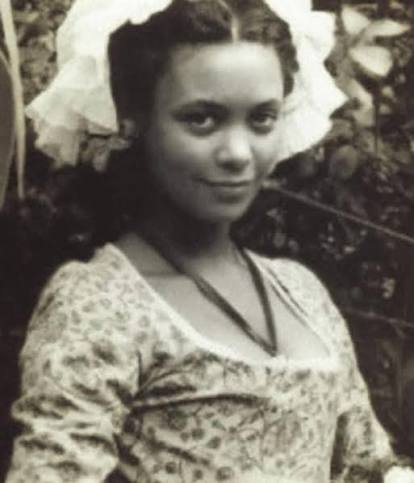
I've always been fascinated by Sally Hemings, the young one quarter African slave-girl who became the 15 year old mistress of Thomas Jefferson while he was stationed in Paris--Sally serving his daughters Martha, and Maria. She was the half-sister of Jefferson's dead wife Martha Wayles, and by all spoken accounts (for no portrait of Sally Hemings is known to survive)a beautiful young woman and the spitting image of her half sister. The fact that she was the aunt of the girls she was slave to, half sister to the dead Mistres of Monticello, and bound concubine of Thomas Jefferson whether she liked it or not seemed to sum up to me the epitome of slavery's absurdity.
The legend of the Hemings scandal, a huge story at the time Jefferson served as President of the United States, and chronicled by her own son Eston Hemings in an autobiography, faded over the decades. Covered in dust and the eventual sainting of Jefferson into a flawless man of marble.
This novel, I was pleasantly surprised to find, meticulously researched and wonderfully written, chips away the marble and granite of the beloved Thomas Jefferson, and breathes life into the breast of a slave girl who had only previously been immortalized in rude poems and brushed aside as a figment of legend.
The novel opens with a census taker in 1830 Virginia meeting an aged but still beautiful Sally Hemings, a freewoman living near the grounds of Monticello with two of her sons by Jefferson. The book almost lost me at the gate when the paragraphs breathlessly worship at the altar of Sally's "white" beauty. Great emphasis is devoted to her unlined skin, though she is past 50, her ivory complexion, her ebony hair and golden eyes that glow like a gemstone. Descriptive passages like this can sometimes leave me cold, as if to say the only woman worth writing about is one that never ages and is impossibly beautiful. I was afraid that this novel would go the way of a lurid romantic bodice ripper.
Sticking with it, however, paid off beautifully. Very swiftly Chase-Riboud takes the story of the infatuated census taker and the ageless Sally and smashes them together with a hard unflinching look of the the subject of slavery, race despite skin color, and Sally's complete embracing of her own identity as a woman of African heritage. Sally is an ageless doll at the opening, but that impossible beauty is quickly stripped away, as she begins to shed the skin of her emotional enslavement to the memory of Thomas Jefferson and Monticello.
Told from a variety pf viewpoints, but mostly through Sally's, the novel jumps back and forth in time, and with great skill creates a Sally Hemings that is full blooded and real. One feels great sympathy for the fifteen year old Sally in Paris, beautiful and naive, and overcome with the love that Jefferson offers. Freedom from slavery in Paris is within her grasp, but adolescent infatuation is a stronger force that binds her to Jefferson and condemns her to a lifetime of slavery returned to Virginia. At no point is she a helpless, dim-witted concubine mistress as popular tales of the time had her. She is an intelligent, assertive, graceful woman who runs Monticello, and deftly dodges the venom sent her way by Jefferson's oldest daughter Martha.
Jefferson is shown as both the intelligent, innovative man he is famous for being, but his flaws are also not skimmed over. His inability to spend or save money properly, the hypocrisy of his idea of a free America but yet allowing slavery to fester and spread, and his selfishness in binding Sally Hemings and her children to him without ever giving them anything more than his curt acknowledgment.
This book is an important one, controversial at the time for its unflinching look at slavery, race relations, and the fallibility of a Founding Father.
Read the modern paperback edition of this book as it has an afterword by the author in it, detailing the pains she took in research, and the pain she endured upon publication of the book for being an African American woman who would dare pull back the curtain on the boudoir of an American Icon.
An incredible novel, and the best example I have yet encountered of the historical fiction genre, or "faction". The author grounded as much of her work as possible in primary source documents (sources disclosed at the end of the work) and filled in with imagination what remains unknown in the historical record. The fact that this work was conceived more than 20 years before DNA tests virtually confirmed the premise that this book is written on (that Thomas Jefferson had a long term sexual relationship which more probable than not resulted in 6 living children with the enslaved half-sister of his dead wife) speaks to the author's ingenuity and boldness. At the time it was published, this work flew in the face of the historical establishment who did not want to entertain the possibility (at least publicly) that the 3rd and revered president of the United States managed to live a hypocritical and much frowned upon lifestyle, despite the presence of rumors that heavily circulated during his lifetime.
It should be noted that not all entities are yet willing to buy into this preponderance of the evidence. On a July, 2007 visit to Monticello my tour guide addressed the Thomas/Sally issue by stating that there was in fact a good deal of evidence that it was Thomas’ brother Peter Jefferson who had fathered Sally’s children. I feel that when the Monticello foundation and mainline historians (Joseph Ellis, for example) finally cease to view human actions that do not necessarily coincide with the expected societal ideals, both modern and historic, as “scandals” the historical record and interpretation thereof will finally yield the complex nature of human relationships and actions.
Hemings and Jefferson loved each other but Heming was in no way "free to love."
"Sally Hemings" by Barbara Chase-Riboud was an insightful novel depicting the life and times of Sarah "Sally" Hemings as a slave, concubine and "enslaved" mistress to our third POTUS, Thomas Jefferson. Although the story started off slow in the beginning, it picked up and kept me spellbound due mainly to the author's poetic and creative writing style.
Slavery is a hard topic to write about I feel be it in fiction or non-fiction but Chase-Riboud wrote this historical novel extremely well based on some relevant and memorable factual census details of the historical period along with the main character's somewhat scandalous 38 year relationship due to the thinking of the time which is why I gave this story a 5 star must read rating.
Read this one... because Sally Hemings set conditions before returning back to Monticello with Jefferson which achieved freedom for her children and later herself after Jefferson's death.
Bulgarian review first, followed by the English translation below
Томас Джеферсън е на 33 години, когато написва следния параграф към Декларацията за независимост, който никога не е включен в окончателната одобрена версия през 1776 г.: “He (английският крал) has waged a cruel war against human nature itself, violating its most sacred rights of life and liberty in the persons of a distant people who never offended them, captivating and carrying them into slavery...”
В бляскавата биография на този баща - основател, енциклопедична личност и два пъти президент на САЩ присъства едно “малко” изключение от проповядваните принципи. Като плантатор от Вирджиния, част от имуществото му включва и стотина роби, значителна част от тях - зестра на рано починалата му съпруга Марта. Част от тази зестра е и 2-годишната Сали Хемингс. Внучка на африканка, дъщеря на мулатка и бял плантатор (бащата на същата тази госпожа Марта Джеферсън), Сали е от онзи вид движима собственост, която е доста бяла и кръвно свързана със собствениците си.
През 1789 г. в Париж избухва френската революция, където Джеферсън е посланик при двора на Луи XVI, a 15-годишната Сали Хемингс става негова любовница и майка на 7 деца през следващите 38 години - до смъртта му. Джеферсън, на свой ред, е на 45.
Всички шумотевици около личния живот на Клинтън, Тръмп и Сие са просто дреболии в сравнение с този американски скандал, разразил се из пресата на САЩ през 1802 г.
Барбара Чейс-Рибод използва източници от епохата и спомени от потомците на Хемингс, за да изгради със светска елегантност драматична романизация на тази връзка. Разказът предава гледната точка най-вече на самата Сали, но и коментарите на прочути съвременници като Джон Куинси Адамс, Арон Бър и други.
Платното на живота в една плантация е изключително богато. Кръвните и робските връзки са заплетени, оцеляването в тези мини-кралства по стар библейско-патриаршески модел изисква много издържливост и дипломация от страна на робите, и много силна самозаблуда от страна на господарите. Авторката си е свършила работата в проучването на епохата, навързала е неусетно малките подробности, изграждащи мащабна картина. Героите са плътни, разкъсвани от противоречията си и стремежа си към нещо по-добро. Всеки мъчителен избор дърпа дълбоко заровена струна.
Има ли място за любов и щастие в това дяволско кълбо от противоречия и несправедливост? Авторката завърта перспективата от различни ъгли. Джеферсън никога не се жени повторно за друга жена, и през всичките им съвместни 38 години Сали Хемингс остава единствената, с която живее. На скандала отговаря единствено с пълно мълчание. Но тази жена до смъртта му фигурира в инвентарния опис на имуществото му, съществуването и е заметено под килима на южняшкото благоприличие, а повечето от децата и напускат щата млади, сменят имената си и съдбата им е неизвестна. Любовта, защото в тази версия на историята има и много любов, е отровена и открадната от страна на собственика от обектите му на собственост. И тъкмо това е най-тъжното и ужасното в тази дълбоко лична и семейна история. Заедно с факта, че след смъртта на Джеферсън всички негови роби отиват на търг, за да покрият натрупаните му преживе дългове.
През 1998 г. ДНК тест доказва кръвното родство между потомците на Хемингс и Джеферсън, макар и в наши дни то все още яростно да се отрича от някои американци. Явно забравили, че на този свят светци няма и двуличието е разпространена черта дори сред бащите-основатели. Това обаче не променя с нищо ценностите, завещани от тях.
4,5 ⭐️
Thomas Jefferson was 33 years old when he wrote the following paragraph for the Declaration of Independence, which was never included in the final approved version in 1776: “He (the English King) has waged a cruel war against human nature itself, violating its most sacred rights of life and liberty in the persons of a distant people who never offended them, captivating and carrying them into slavery...”
In the brilliant biography of this Founding Father—an encyclopedic mind and two-time U.S. President—there exists one "small" exception to the principles he preached. As a Virginia planter, part of his assets included a hundred slaves, a significant portion of whom were the dowry of his early-deceased wife, Martha. Part of this dowry was the 2-year-old Sally Hemings. The granddaughter of an African woman, daughter of a mulatto woman and a white planter (the father of that same Mrs. Martha Jefferson), Sally was the kind of chattel that was quite white and blood-related to its owners. In 1789, the French Revolution broke out in Paris, where Jefferson was ambassador to the court of Louis XVI, and 15-year-old Sally Hemings became his mistress and mother to seven of his children over the next 38 years—until his death. Jefferson, in turn, was 45.
All the fuss surrounding the private lives of Clinton, Trump, and Co. are mere trifles compared to this American scandal that erupted in the U.S. press in 1802.
Barbara Chase-Riboud uses contemporary sources and memoirs from Hemings' descendants to build, with worldly elegance, a dramatic novelization of this relationship. The narrative conveys the perspective mostly of Sally herself, but also the comments of famous contemporaries like John Quincy Adams, Aaron Burr, and others.
The canvas of plantation life is exceptionally rich. Blood and slave ties are tangled; survival in these mini-kingdoms under an old biblical-patriarchal model requires much endurance and diplomacy from the slaves, and very strong self-delusion from the masters. The author has done her job in researching the era, seamlessly weaving the small details that build a large-scale picture. The characters are flesh and blood, torn by their contradictions and their striving for something better. Every painful choice pulls a deeply buried string.
Is there room for love and happiness in this devilish knot of contradictions and injustice? The author twists the perspective from different angles. Jefferson never remarried, and throughout their 38 years together, Sally Hemings remained the only woman he lived with. He responded to the scandal only with total silence. But this woman appeared in the inventory of his property until his death; her existence was swept under the rug of Southern decorum, and most of her children left the state young, changed their names, and their fates remain unknown. Love—because in this version of the story, there is also much love—is poisoned and stolen by the owner from his objects of property. And that is precisely the saddest and most horrific part of this deeply personal and family story. Along with the fact that after Jefferson's death, all his slaves went to auction to cover the debts he had accumulated during his lifetime.
In 1998, a DNA test proved the blood relationship between the descendants of Hemings and Jefferson, although in our day it is still fiercely denied by some Americans. Apparently forgetting that there are no saints in this world and duplicity is a common trait even among the Founding Fathers. This, however, does change the values they bequeathed to us.
As a general rule, I rarely do re-reads. That's because I have plenty of other books on my TBR List, clamoring for my attention.
But a few weeks ago, the Barbara Chase-Riboud historical novel, "SALLY HEMINGS" came to mind and rooted itself there. I had previously read it almost 40 years ago when I was in high school. While idly checking through Amazon.com, I saw that an updated edition of "SALLY HEMINGS" had been published. I thought that maybe by reading it, I would learn something more about this African American woman and her connection to Thomas Jefferson that had been dismissed by most Jeffersonian scholars and American historians as untrue when the novel was first published in 1979. And thus, I set myself to re-reading "SALLY HEMINGS."
Reading the novel was a rediscovery for me. Most of its details had been lost to me over time. So, I felt very much like I was reading it for the first time. Reacquainting myself with Sally Hemings' life - from her meeting with a census taker in her cabin on the Monticello estate in Albemarle County, Virginia, in 1831 to her journey to Paris as a 14 year old in 1787 with one of Thomas Jefferson's daughters (Maria - who also happened to be Sally Hemings' niece because Jefferson's dead wife was also Hemings' half-sister!; Jefferson in 1787 was the U.S. Minister to France), who was in Hemings' charge --- was a wholly absorbing and fascinating experience.
In the hands of an inept writer less knowledgeable on the subject of slavery and its place as a deeply entrenched fixture in the life, culture, and economy of early America, this novel could have ended up as an overworked melodrama. Chase-Riboud takes the reader on a wide-ranging journey through Sally Hemings' life and the lives of the slaves on Jefferson's estates, as well as many of her family members -- both black and white. She also provides an in depth look at Thomas Jefferson in terms of his relationships with his family and slaves that also reinforce what is known of the historical Thomas Jefferson from people who knew him (e.g. John & Abigail Adams, their son John Quincy Adams, the painter John Trumbull, and Aaron Burr). I especially liked learning something about the lives of the children Thomas Jefferson had with Sally Hemings. This is a novel I recommend to anyone who not only enjoys a good, engaging story - but also is open to learning a more complete history of the impact that slavery and racism had in the lives of several of the 'Founding Fathers' from the very inception of the United States as a democratic republic in 1789.
One more thing worthy of mention: There is also an Afterword in which Chase-Riboud goes into some detail about the struggles she experienced in writing "SALLY HEMINGS" and trying to get it published in 1979. She also enlightens the reader about the efforts of many of America's Jeffersonian scholars and historians of the early Republic years to discredit Chase-Riboud, her novel, and the possibility that an intimate and longstanding relationship existed between Thomas Jefferson and Sally Hemings. (Since January 2000, the Thomas Jefferson Memorial Foundation has accepted the findings of a DNA study, "combined with multiple strands of currently available documentary and statistical evidence that Thomas Jefferson fathered Eston Hemings, and that he most likely was the father of all six of Sally Hemings's children appearing in Jefferson's records.")
This is a historical novel, very well researched and based on actual events. This book was the most tragic of love stories and an excellent depiction of the life and times of the Jefferson Administration.
I felt very connected to Miss Hemmings but I can't imagine choosing to remain enslaved, even to stay with the man I loved. To watch her children "walk off" the plantation and go on to live as White Americans must have wrenched her heart, knowing that she could never see them again, lest it be revealed that they were actually born slaves. Wow!
It is well documented and the creative license that Ms. Chase-Riboud took could not have been too far off of actual events. Excellent work. I loved it!
I read "SALLY HEMINGS" as a high school student in the early 1980s. At that time, this novel (many of whose elements are based on a true story) was considered controversial. They were many Jeffersonian scholars, historians, and several descendants of Thomas Jefferson who did not want to believe, much less acknowledge, that Jefferson had had relations with one of his slaves and fathered 6 children. I avidly read this novel, enjoyed it, and feel that it helped stimulate further my then budding interest in historical fiction.
I have been struggling with my white privilege and have been reading history to find my place in the story. I'm glad I read this novel for its content and interpretation of events. Reads more like history than a novel. Can't imagine the idea of owning another human being, much less rationalizing it in any way. The scars of those days continue to run deep in our culture. When and how will it end?
A solid 4.5 stars. Thanks to the publisher, Chicago Review Press , for the copy won by me through Goodreads. I was vaguely familiar with the name Sally Hemings and professed a mild curiosity to learn more about her and her relationship with Thomas Jefferson, under the mistaken impression that she was his daughter. I have often found that the beginning of historical novels can sometimes bore me as they can be stuffed full of information pertaining to dates, governance, and other aspects pertaining to the story. For me, good historical novels do not have to be summarized in the first two paragraphs. Barbara Chase-Riboud has written a thoughtful book that gives us more than just the facts; she gives us life. We glean insights, details, and very specific dates as “Sally Hemings” unfolds before us like a spring trickling into a dancing brook and further over the rocks and branches and debris dropped in its path. By the end I was so enamored of her beauty that the gut-wrenching end seemed to have a visceral effect on my soul. Let us just say that I gained a whole lot more than I ever bargained for. Highly recommended for any history buffs.
Around page 247, I read this line coming from Sally Hemings, "A feeling almost of elation filled me. We had the power of love on our side. We were stronger and better than the monstrous iniquity we had sprung from." It was at the moment that this novel officially "jumped the shark" (although there were some pretty bad moments earlier in the book) from historical fiction to sappy, over-sentimentalized storytelling. A shame since it did seem rather solidly researched.
This book is ideal for any book club meeting today.
I must have first read this novel back in the late eighties--I picked it up after I read Chase-Riboud's book Valide (also good). This is a novel that has stuck with me over the years and I've kept a paperback version around in case I'd get around to re-reading. (I've only recently discovered the joy of rereading. Only Jane Austen warranted an annual rereading, but now that I've hit fifty, it is time to see what other books and authors have held up.)
This book should be re-discovered and the time to do it is now. The themes of slavery, race, sexual abuse of women by men in power...themes we are still arguing about and sorting our way through. Not to mention hypocrisy, mental health, family violence, and maybe the biggest one--the idea of America and our struggle to be the better version of ourselves. Chase-Riboud hits all of these themes with intelligence and insight.
This all takes place in the book through the complicated and hidden relationship between Sally Hemings and Thomas Jefferson. Sally was a slave and the half-sister of Jefferson's wife and bore Jefferson several children. The book time jumps between an older Hemings and Sally, a young woman who becomes Jefferson's mistress in Paris, and then returns home to Virginia to become a mother and the mistress of Monticello, but always, always a slave, whose one job is to ensure her own children will be free.
I visited Monticello this past summer, before the events at University of Virginia and Charlottesville. Having seen the house and plantation up close made the re-reading of this book even more a pleasure as Chase-Riboud's attention to detail comes through. Now because of the events--it is even clearer that we still have housekeeping to do of our own as a country. But isn't only the events in Charlottesville, but also #MeToo and the stories by women of sexual assault and the secrets powerful men can keep, that are touched on by this book. Sally was a victim, but so were all the others that surrounded Jefferson who had to keep the secret or look the other way.
И това е една от темите, която живо ме интересува (без да знам по каква причина) Американския Юг и аболюционизма като цяло, смесените раси (ще да е заради това), макар да въври малко назад след източната обсебеност. Но за съжаление тези книги са кът, така че с е радвам, че попаднах на една от многобройните книги за Сали Хемингс. Не вярвам да видим нещо подобно на български, защото мисля и не безизвестната "12 години в робство" нямаме превод или поне не скорошен. Последното излезе "Подземната железница", та не пропускайте. Да се върнем на Сали, африканка колкото и Пушкин, тя пленява сърцето на двойно по-възрастния от нея вдовец и неин господар, на нря й е простено тя е млада(и леко глупава), на 15?! И, да, Томас Джеферсън е забележителен човек, той е мъж, и мъж на времето си. Така че внимавайте как се отнасяте с това "връщане към традициите", че традициите за Юга са били господаря да опраши всяка желана робиня, а после да преследва и бичува понякога собствените си деца. Яко, а? Тук, разбира се, няма такова нещо, Джеферсън като умел политик подлъгва и нея, и себе си, за да остави пред себе си и Сали напуска Франция, малко преди Революцията, не знам дали съдбата ѝ би била по-хубава, ако беше останала, но със сигурност не би останала в историята. Все пак, той не се жени отново, а остава отчасти неин (неговата истинска любов е политиката), тя е негова по закон. Поне не продава собствените си деца, нито пък нея под обществен натиск, за разлика от семейството ѝ, сестра ѝ е насилвана, един от племенниците бичуван няколко пъти после цялото ѝ семейство разпродадено из Юга и макар всичките деца на Сали да са прекалено бели (ама наистина много повече от колкото учебника ми по биология за 9 клас позволява), но те имат късмет минават за бели, по-тъмните роднини са продадени. Винаги от филмите съм смятала голямата дъщеря Марта за злодей(ка), но макар и авторката да го намеква, сега осъзнавам, че тя държи на наследството си, като син на баща си, не напуска къщата завинаги след сватбата често си идва уж на гости, прави деца с индианска кръв и не мисля, че гневът към Сали е на расова основа по-скоро а ревност, така че я оневинявам. А и като всяка жена в лош брак тя страда. Но сериозно, намеците дъщерите ѝ били тъмнокоси, децата на Салито червенокоси вече почваше да дразни. Авторката пише разпокъсано, сменя гледните точки странно, та затова ѝ взимам звездичка, трябваше редакторът да се погрижи за това. Но душевният свят на героите е интересен и Джеймс е описан прекрасно. Лицемерието на господин президента, макар и казано ясно не донатяква, за мен той просто е бил млад и пламенен и после като улегнал мъж и е искал облагите на своята раса и пол, но все пак не може да се отрече какво е направил за свободата и напредъка в американското общество. Да си роб е лошо, но няма по-лошо от да си жена и робиня, от Сали би излязъл наистина добър политик и може би из наследниците вече има. Феминизмът е също застъпен. Да, белите деца на Сали са доказателство за родова връзка (това не е минало от мода гледайки британското кралско семейство), но сега вече е научно доказано, че от гените бягство няма и дори и другите наследници са такива на президент, което предполагам много дразни все още някои нискообразовани групи в САЩ. И последно, но не на последно място: Благодаря на Емилия за книгата.
The story of Sally Hemings is an American classic. The suspected love affair between Thomas Jefferson and his slave is no secret, nor has it really ever been. The narrative has existed in whispered conversations, writings and films throughout history.
Truthfully, Sally’s story isn’t at all unique; a slave owner who has a black slave as a mistress and fathers children with her. However, Sally Hemings, by Barbara Chase-Riboud tackles this American scandal with a sense of humanity. Riboud tells the story of a woman committed to the master she is bound to, despite ample opportunity to a life of freedom.
While plenty of scholars and historians have speculated and offered theories on the relationship between the third President of the United States, Thomas Jefferson, and one of his slaves, Sally Hemings, Riboud’s storytelling adds elements of love, desire, and audacity to an otherwise common occurrence in the 1700 and 1800s. The complexities of status, historical context and the political correctness of such an open relationship draws the reader in.
Riboud delves into the minds of both Sally Hemings and Thomas Jefferson. At times it’s hard not to empathize with Sally for seemingly not knowing that she deserved better but then you’d have to remind yourself; she was a slave. Thomas Jefferson, on the other hand, confounds the reader by his elusiveness. His stance on slavery contradicts his possession of slaves, particularly Sally Hemings. Riboud is able to tell their story with a delicacy that denotes the love Thomas Jefferson had for his slave and she for him. Yet, she does not shy away from the harsh reality of slavery for those outside of Monticello.
Riboud’s Sally Hemings is a must read. There is plenty of historical context to engage the history buffs, while not overwhelmingly so that the storyline is lost. While the story of Sally Hemings has never really been a secret, it remains a great American scandal.
For all its flowery prose and seemingly passionate subject matter, this book fell flat for me. What drew Sally and Jefferson together? I still don't understand, other than the sexual relationship between white master and black slave being commonplace in that time. I found that the characters lacked dimension. Sally vacillates between being fervently in love with and despising Jefferson (as she should). But I didn't feel any reason for her changing emotions. I understood logically why she would be angry at Jefferson for his choices regarding her children, or why she and Martha were at odds, but I couldn't connect with her at all on an emotional level. The changing narration perspectives were confusing. Why does Sally get first person narration in some portions, but in others, her happenings and feelings are exposed by an omniscient third person narrator? Why is it important that we understand a single portion of a chapter from Harriet's point of view? This book was well written, and obviously well researched. But it didn't leave me wanting to learn anything more about its protagonists, and I feel that as a historical fiction novel, it should have. I was happy to finish this one and I don't believe I'll be picking it up again.
A little rough going in the beginning, well-written but not spectacular and the structure isn't perfect, but definitely worth reading because it is so insightful. Really brings home the "banal evil" of slavery and has given me a better understanding of the south. Interestingly, I don't think it was particularly insightful into Jefferson's character, but that perhaps was not the intent of the author.
One of the interesting historical details is the inclusion of the George Sweeney murder trail. Sweeney definitely murdered his uncle, George Wythe a prominent judge and signer of the Declaration of Independance, but walked away a free man because a crucial witness happened to be a black woman and was not allowed by law to testify against a white man. Someone should write that story!
This is too romanticized for me. Major ick factors involved especially since Sally was only 15 at the time of her first liason with Jefferson. How do we know that it was a true love relationship and not that Sally felt coerced into submitting to her master's will? DNA evidence still hasn't proven that Jefferson was the father of all her children, so how do we know that Hemings and Jefferson's first child was a love child?
I finished reading Sally Heming last night. It was a truly exceptional work. There was a lot of research that went into the writing of this book. It's common knowledge, I believe, that our third President, Thomas Jefferson, had a 38 year affair with his young house slave, Sally Hemings. This author, Barbara Chase-Riboud, told us about his life, his trips, his love for Sally and brought us to his death.
This is a novel, not a biography, and the reader needs to keep that in mind. The story of Jefferson's relationship with Sally Hemings is fascinating in and of itself, so the novel is one way to begin to access it. But I found the writing to be awkward and her use of past and present to be confusing.
Wer war diese unbekannte Sally Hemings? Eine wunderschöne Frau, die 1773 als Tochter eines Weißen und einer Sklavin in Virginia auf die Welt kam. Sie hatte eine fast helle Hautfarbe und wurde die Geliebte des Präsidenten Thomas Jefferson.
Und Gott wusste, wie viel Sklaverei in der Liebe lag... Seite 70
Viele Geschichten der obersten Persönlichkeiten werden lange unter Verschluss gehalten. so auch diese Geschichte von der fast weißen Sklavin Sally Hemings, die eine tiefe Liebe zu ihrem Herren Thomas Jefferson gehegt haben muss. Denn sie verließ Virginia nicht, obwohl ihr damaliger Herr verstorben und sie somit die Freiheit erlangt hatte. Sie blieb und wer ein Jahr in Virginia bleibt, der ist wieder Sklave. Sie wollte das Land, in dem sie groß geworden ist, wo ihr Geliebter begraben liegt, nicht verlassen. Hier wo sie all ihr Leben verbracht hat, ihre Kinder zur Welt kamen und sie in einem großen Anwesen fast was zu sagen hatte, konnte und wollte sie nicht gegen die Freiheit eintauschen. Eigenwillig und stolz
In diesem Roman wird von der eigenwilligen und stolzen Frau erzählt, die an der Seite von Thomas Jefferson gelebt hat, ohne das es an die Öffentlichkeit kam. Dabei hatte Sally schon als Jugendliche die Möglichkeit in Paris ihr Sklavendasein zu beenden. Als jugendliche kam sie mit der Tochter von Jefferson zusammen nach Paris. Sally bekam Französisch unterrichtet, sie trug schöne Kleidung und ihr Bruder, der als "Butler" den Präsidenten begleitet hat, ging in eine Kochlehre, die ihm in Frankreich alle Türen geöffnet hätte. Aber die beiden fuhren nach mehr als einem Jahr mit der Familie Jefferson wieder nach Amerika zurück in die Sklaverei. Dort blieben sie bis an ihr Lebensende. Sally gebar Thomas Jefferson sechs Kinder ...
In dem Roman wird die Geschichte (nicht dauerhaft) von einem jungen Mann erzählt, der die schöne Sklavin in ihrer Kate auf dem Anwesen Monticello in Virginia besucht. Auch er erliegt dem Charme der selbstsicheren und wenn auch alten Frau. Er besucht sie immer öfter und kommt selber in Verruf, was ihn aber nicht stört. Verbotene Liebe
Für mich sind solche Bücher immer wieder spannend. 200 Jahre wurden die Beweise unter Verschluss gehalten. Keiner sprach darüber, was sich auf dem Anwesen Monticello in Virginia abgespielt hatte. Nun hat Barbara Chase-Riboud aus den Fakten einen Roman gemacht der mitreißen sollte, der die Geschichte neu schreiben könnte. Aber mir hat es nicht immer gefallen diese Geschichte zu lesen. Zeitweise war es mir ein bisschen zu langatmig, zu verwirrend und ich konnte die Reaktionen Sallys nicht nachvollziehen (das hat allerdings das Leben geschrieben und ist nicht der Schriftstellerin anzukreiden). Dass die Geschichte immer wieder von dem jungen Mann Langdon erzählt wird, lockert es ein bisschen auf. Aus seiner Sicht erzählt er von Sally, die ihn maßlos fasziniert hat. Sie ist einfach sehr eloquent, kann sich ausdrücken und umschmeichelt ihr Gegenüber. Die Geschichte hat das Leben geschrieben, die Autorin B. Chase-Riboud hat sie in ein Buch gebannt. Wenig weiß man von Sally Hemings. Sally, wie auch Thomas Jefferson haben ihre komplette Korrespondenz dem Feuer übergeben, sie vernichtet, weshalb man sich bestimmt auch einiges zusammenreimen musste.
Ich konnte nur immer wieder den Kopf schütteln. Kann Liebe wirklich so blind machen? War das Abhängigkeit, Erpressung? Und natürlich auch Sklaverei! Sally hätte ein anderes Leben führen können, hat sie aber nicht. Der Roman selber hat mich jetzt nicht überzeugt. Ich fand es manches Mal zu träge, langatmig. Im nächsten Kapitel ging es dann plötzlich wieder etwas schneller voran und war unterhaltsam. Schwierig zu sagen, was mich bei der Stange gehalten hat.
I wanted to like this book more. I found it so disturbing at times I didn’t want to read it. Shear determination is all that kept me reading. I know the author couldn’t really tell Sally Hemings’ thoughts nor know the motivation behind anyone’s actions but it was a distressing read. Can’t really say I don’t recommend it; it was probably just more truths than I wanted to read about. Don’t think I’ve ever taken a month to finish a book either!
As interesting as this subject matter is, I found it difficult to get through. I'm not sure why, but that's why I graded it as I did. I'm not sure I would recommend it.
Definitely, the most challenging and successful literary achievement of the 20th century. Fawn Brodie's biography of Jefferson brought the controversy to the surface in a serious manner in 1974. Barbara Chase-Riboud popularized Hemings' life story and when the readership realized that Sally Hemings was the half-sister of Jefferson's deceased wife, the story could not thereafter be put back in a cage. Chase-Riboud's novel sold over a million copies shortly after its release.
This novel jumps around in different "eras" in the life of Sally Hemings. Usually I prefer non-linear storytelling, but the flow of this historical novel felt a little disjointed to me. I was most intrigued during the part of Jefferson's life that he spends in Paris, evidently when the intimate relationship between him and Sally Hemings first began. When the "family" and the story return to Monticello, the flow and pacing change dramatically. Perhaps this was purposeful, to reflect the dramatic change in the daily of Sally Hemings. There were gaps that needed filling. I'm sure the historical record has many gaps, but as this was a book of fiction its seems that those gaps could have been filled. In addition, the relationship between the lawyer/census taker and Sally Hemings is very curious. I'm sure the author used it as a hook for the reader to visit Sally's reflections on her life, but it just didn't work for me. This book is almost exclusively centered around the life of slaves (and around one, in particular) in the late 18th to mid-19th century world, so naturally, there is virtually no true joy to be found in Sally Hemings life as told from her imagined voice. I do understand that the indignities and inhumanity of slavery make "joy" in short supply. But, as a reader, that joyless main character's voice diminished from the narrative arc, making the finishing of these almost 400 pages somewhat tedious. What kept me reading to the end was the continuing enigma that was the intimate life of Thomas Jefferson.
The book reveals another side of one - of the many ongoing - dastardly era(s) of slavery. As much as Sally Hemings savored her life as Jefferson's mistress, she also became acutely aware of its dark nature, its inherent causes. Hemings was able to be spared some of the cruelties of living like a slave, but she knew what slavery offered: physical suffering, family dislocation and dysfunction, and an inhumanity toward the individual. One of the strongest traits this book offers is the author's treatment of time sequences. Those eras, some within flashbacks, tie the plot together. Although some of the episodes become a bit monotonous toward the end of the book, one can only admire the endurance of Hemings and her unwillingness to have any part of her motherhood or spirit dominated by Thomas Jefferson, as their relationship forms the core of the book. Given the fact that Jefferson, through DNA, was proven to have this intimate relationship with his slave, imagine the news and social media today if such a story ever came out about a president. Different times. Jefferson was able to continue to serve public office, even after the story was broken by James Callender. Too bad there wasn't more in this book about Jefferson's inner feelings, even though readers will have a superficial idea about his thoughts.
A controversial love story not always told. I enjoyed the historical aspects of this book and the complex blend of love and hate, and freedom and bondage when our young nation and its leaders were struggling to define "freedom". Who was Sally Hemings? A complex exceptional woman. History and humanity are often complicated. Haunting. I was left with much to consider.
I picked up this book because the musical Hamilton brought the name “Sally” to my attention, and I wanted to find out more. This was a fascinating book - engaging to read and informative to the era. I read in other places that this author does a lot of research on her subjects, so I feel like I now how a bigger picture of who Thomas Jefferson was through the story of the slave he loved
"Her silence was what had kept her alive and sane in this world where everything had been taken from her except these last two sons. And even they knew little about her life. Slaves revealed as little as possible about their origin and background to their children. It was an old trick. Not to speak was not to put into words the hopelessness of having no future and no past."