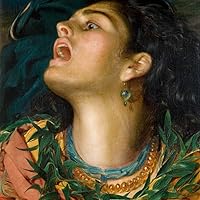
Written with an exciting combination of narrative flair and historical authority, this interpretation of the tragic life of Catherine Howard, fifth wife of Henry VIII, breaks new ground in our understanding of the very young woman who became queen at a time of unprecedented social and political tension and whose terrible errors in judgment quickly led her to the executioner’s block.
On the morning of July 28, 1540, as King Henry’s VIII’s former confidante Thomas Cromwell was being led to his execution, a teenager named Catherine Howard began her reign as queen of a country simmering with rebellion and terrifying uncertainty. Sixteen months later, the king’s fifth wife would follow her cousin Anne Boleyn to the scaffold, having been convicted of adultery and high treason.
The broad outlines of Catherine’s career might be familiar, but her story up until now has been incomplete. Unlike previous accounts of her life, which portray her as a naïve victim of an ambitious family, this compelling and authoritative biography will shed new light on Catherine Howard’s rise and downfall by reexamining her motives and showing her in her context, a milieu that goes beyond her family and the influential men of the court to include the aristocrats and, most critically, the servants who surrounded her and who, in the end, conspired against her. By illuminating Catherine's entwined upstairs/downstairs worlds as well as societal tensions beyond the palace walls, the author offers a fascinating portrayal of court life in the sixteenth century and a fresh analysis of the forces beyond Catherine’s control that led to her execution—from diplomatic pressure and international politics to the long-festering resentments against the queen’s household at court.
Including a forgotten text of Catherine’s confession in her own words, color illustrations, family tree, map, and extensive notes, Young and Damned and Fair changes our understanding of one of history’s most famous women while telling the compelling and very human story of complex individuals attempting to survive in a dangerous age.
Gareth Russell is an historian and broadcaster. He is the author of "Queen James," (a BBC History Book of the Year, a Daily Mail Book of the Year, a Waterstones Best History Book 2025, an Esquire Book of the Year, a Historia Book of the Year, an Amazon Editors' Pick for Best New History Book; published as "The Six Loves of James I" in Canada and the USA), "The Palace" (Amazon Editor's Pick for Best New History, A Waterstones Best Book of 2023, BBC History Book of the Year, Town and Country Must-Read, an Aspects of History Best Book of 2023), "Do Let's Have Another Drink" (A Times Book of the Year, 2022), "The Ship of Dreams" (A Daily Telegraph Best History Book, 2019), and "Young and Damned and Fair."
He divides his time between Belfast and London.
In 2026, his book "Queen James" was adapted into a documentary by the BBC.
Of the six wives of Henry VIII, Catherine Howard is usually the least enviable and least admired of the lot. Portrayed by contemporary and modern writers as a vixen, temptress, whore, idiot, pawn, simpleton, innocent and thought of as empty-headed, frivolous, lewd, lascivious, faithless, deceptive, ignorant, only in Gareth Russell's extremely engaging and readable biography do we finally achieve a comprehensive picture of the elusive fifth consort of Henry. Throughout Russell weighs various theories about her (from her actual year of birth, to whether or not she and Culpeper consummated their relationship), then uses multiple pieces of historical evidence to show the weaknesses of each and advances what he considers the most likely theory from the available evidence. But there's no agenda here: Russell neither seeks to restore Catherine's good name at the expense of the various men who abused and exploited her, nor does he slander hers and dismiss her on account of her actions at Lambeth and later at court. Instead Russell truly seeks to consider Catherine objectively and carefully and come to understand her, and that he does so means we do so as well, and all the better than I was consistently entertained and informed throughout.
Russell is able to situate Catherine's circumstances and character against the larger backdrop of daily life and expectations for the aristocrats and courtiers of Tudor England, and brings forth a fully imagined world with its rules and laws, writ and unspoken and revised, made by God, man, and sometimes both, and how and why Catherine's eventual downfall could only come to pass from a particular set of political and social circumstances of Henry VIII's court. And as good as his early chapters are, tracing Catherine's early childhood and coming of age and early predilections for lightly bending or bucking the established codes of conduct, his reconstruction of the whirlwind of activity and investigation is absolutely fantastic. While Catherine shared the fate of her cousin, Anne Boleyn, and the downfalls of both queens cost men their lives, Russell shows just how diligently and thoroughly and carefully the king's counsellors proceeded with the inquest into Catherine's relations with Dereham, and later with Culpeper, in stark contrast to the Boleyn proceedings in which by some contemporary and most modern sources show just how politically engineered Anne's downfall was. And even then, without a retroactively applying attainder that applied to Catherine's actions and more insidiously her intentions, Catherine may never have been executed.
We also get fascinating insights into Catherine's character, something rarely introduced beyond the broad biographical strokes in many other popular histories of the period or Tudor fiction. We see Catherine's extreme aversion to being slighted, her preferred role as pursued and then empowered to end her own affairs. We see Catherine's insecurities about performing the role and duties as queen to perfection, especially since Henry's fourth wife Anne of Cleves still lives and somewhat intimidates and threatens her, and her devotion to ensuring all her public displays are executed flawlessly and gracefully. We see how a girl of little personal means (though with a good family name) immediately pays back Dereham as soon as she begins to advance at court, wishing to no longer be in debt and release ties to him and move forward to her new place in the world. We see a bit of her stubborn and cruel side in her interactions with Lady Mary, Henry's daughter, and Catherine has two of Mary's maids dismissed (again a bit outside prevailing social codes of conduct). And we also see her wish to be liked and well-regarded, and the eventual fragile truce and exchange of presents between Catherine and Mary nod to that as well.
Catherine Howard is fully realized in Russell's hands: a woman in a difficult age, a woman of an important aristocratic family but neither a willing tool nor an innocent pawn of their plots for power, and her downfall a thing of circumstance, bad luck, and poor decision making in one: Russell neither blames nor absolves her, but shows perfectly how truly tragic Catherine's tale is, and how difficult it was to thrive and survive some of the schizophrenic political winds of the time (and political and personal will of the king) for a flawed human like Catherine. I'd love to read future biographies by Russell, whether Tudor centric or otherwise, and heartily recommend this book to Tudor enthusiasts looking for something new, authoritative and truly objective, in a time where so many books come with preconceived notions and evidence is outlined to reinforce existing prejudices or stacked to support one theory above all: instead take the journey with Russell and come to know Catherine Howard in life and death.
-received an ARC on edelweiss thanks to Simon & Schuster
3.5 An ominous beginning. A very young Catherine Howard, marries Haney VIII, on the same day his former favorite Cromwell is beheaded. This man child of a king has discarded precious wives like used candy wrappers, and keeps his court in a state of fear. He rewards greatly but punishes in horrific ways.
One probably would not be reading this unless they were a Tudor fan or have a interest in this much married King and his unfortunate wives. Catherine Howard was the last to lose her head, but why she did, when the King was so obviously besotted, the things she did wrong and if in anyway her fate could have had a different ending is the subject of this book. It is well done, almost exhaustively so, many details, at times I thought too many as the author takes many side roads, exhaling the background of anyone important that came in contact with her whether they led to her downfall or not. There were some new details, things I hadn't read previously, some new ways of looking at things, so this was well worth the read. Liked how the author explained the political intrigues at the time, Catherine's daily life, and her childhood. A childhood, which in the end, her poor decisions or youthful mistakes, would prove to be impossible to overcome. A good, solid addition to the Tudor lexicon.
I have to admit I never thought I'd want to read another bio of one of Henry VIII's wives again (agh, the Tudors yet again, agh!), and especially not Catherine Howard - I mean, how could there possibly be anything new or interesting to say about a young woman who was dead when she was barely out of her teens? But I've enjoyed reading Gareth Russell's blog and one or two of his previous books, so when I received an advance copy of Young, Damned and Fair (thank you to the publisher!) I decided to give it a try, and I'm so glad I did. Russell has that quality I so love in historical biographers of being even-handed and non-judgemental, and while he's clearly sympathetic to Catherine, he doesn't go too far in the opposite direction and gush all over her or act as though she was some kind of perfect saint. He also has a knack of looking at what seem to be well-established 'facts' with a fresh and original perspective. Things you think you know about Catherine, such as her relationships with Manox and Dereham or her presumed foolish habit of taking people who knew too much about said relationships into her household as queen, are examined and dissected and shown to be rather less than certain 'facts' after all. I do love biographies that demolish long-held and cherished myths about historical figures as fiction, or at least as exaggeration. As well as being a remarkably detailed biography of Catherine - my goodness, I've learnt so much about her and decided I like her a great deal, when previously I was completely 'meh' - Russell's work is a vivid portrayal of the world she lived in, the high society of Tudor England with its obsession with etiquette, ritual and formality, a world in the throes of religious reformation, the fascinating and frightening later years of Henry VIII's reign. Russell has also done a considerable amount of research on Queen Catherine's household, much of it contained in an appendix, which I'm sure will be of great value to future writers and researchers. There's also a very long and thorough bibliography, and everything is scrupulously footnoted (proper footnotes with actual page numbers so you can check the sources yourself). In short, it's rigorously academic but also highly readable; it's not often I stay up late into the night to read non-fiction because I can't bear to put it down, but I did with this one. Young, Damned and Fair is everything a historical biography should be. Highly recommended.
This is now my go-to book on Catherine Howard. It is detailed, meticulously researched and well-referenced. It also has the benefit of Gareth's engaging reading style.
As queen, Anne Boleyn did well by her extended family, capturing a post in Calais for her mother’s brother who was Catherine Howard’s debt-ridden father. Catherine was then sent as a ward to the estate of her step-grandmother to be prepared for court life. By day she learned the art of conversation, music, protocol, obedience and ceremony. Other young wards lived there too in close quarters; their evenings were unsupervised. Catherine was beautiful and popular. It was here, in the care of the Duchess of Norfolk, that the seeds for her rise and downfall were sown.
Garreth Russell tells Catherine’s short and sad story with material on the daily aspects of her life and the politics swirling around her. This teenager had a household of over 200 staff. She had 6 (or was it 8?) women to dress her choosing from many gowns, jewels and other furnishings. She probably knew little of the varying strategic importance of Cleves or of Archbishop Crammer motives.
Russell introduces new (to me) elements: He ties the Cromwell downfall to the Howards and that some of the blame fell on Catherine. Anne of Cleves has been portrayed as satisfied with her situation but Russell shows her as miserable, alcoholic and disappointed that she would not be restored with Catherine’s downfall. Henry openly cried about Catherine’s infidelity, Russell notes that his grief may have been exacerbated by not having the next wife already lined up as was his custom.
In many places Russell interjects the distrust people had for Henry and his cruelty. On the last page Russell calls Catherine's career a "window into the mesmerizing brutality of Henrican England."
One chapter is devoted to the Northern Progress. After the Pilgrimage of Grace, Henry thought he could build support by bringing the court (and a military display) to the area. While there he had hoped to meet the King of Scotland (his nephew) but James was coy. Russell shows how they traveled, what they brought, the game they hunted and the many places they stayed.
The investigation into Catherine’s “past” is shown to be very thorough. Russell sifts through the testimony and in the end tells the future/fate of those interviewed. Some who testified to avoid torture were rewarded with beheading. Catherine received no guidance and surely did not understand her legal position.
Catherine’s life, until her queenship, seemed of little value. Her father, one of many children in the time of primogeniture, had to fend for himself. Her mother died in her childhood, and Catherine’s birth was unrecorded… we don’t know the year she was born and she probably never knew her birth date. She seemed to be pretty much on her own with little (no?) guidance from the Duchess who was supposed to be educating her. Catherine clearly did not learn the high value placed on chastity for noble women. You have to wonder what she was told of her cousin, Anne Boleyn.
There are good color plates and a discussion about the provenance of the paintings attributed to Catherine. The genealogy charts are clear. The notes are extensive.
This is a very readable presentation of the author’s research. Recommended for Tudor readers.
Honestly, it pains me in a way to rate this 2 stars because you can tell it's well written and really well researched. However, to me it started off as a 3-4 star book, it was interesting and focused on Catherine. Yet, as I went on, I felt the book lost focus and became more of a story about Henry VIII, or became heavily sidetracked by every single person who would be mentioned, giving their entire history. This book would be an amazing snapshot of the TIME that Catherine Howard existed in. Overall, it was just too sidetracked with telling everything else that I feel I know little to nothing more about Catherine Howard than I did before I began reading, which was very little.
Catherine Howard, the fifth wife of King Henry VIII, is generally portrayed as the young, superficial, fluttery, promiscuous, stupid, slut of the six wives. Although her image has been receiving some rehabilitation; it rather continues in this strain. Historian Gareth Russell questions these views and dives into finding out who Catherine truly was as both an individual and public figure in opposition to the frilly girl in, “Young and Damned and Fair: The Life of Catherine Howard, Fifth Wife of King Henry VIII”.
In the introduction to “Young and Damned and Fair”, Russell explains that his thesis and aim are not to divulge in an all-inclusive, comprehensive biography of Catherine but to instead offer a macro-view of the tug and pull of her environment and those around her in order to explain her personality and actions (a sort of nature vs. nurture approach). At first, Russell is certainly heavy-handed in this stylistic tactic and seems to barely discuss Catherine more so focusing on the Tudor history around her. This deems for a slow and auspicious beginning resulting in “Young and Damned and Fair” to be described as ‘meh’. On the other hand, the infused moments of pure Catherine glory are insightful and captivating even for those familiar with her story. This lays the foundation of a strong piece.
Despite Russell’s own claim to not fully focus on Catherine; he eschews this as the book progresses and Catherine is stripped away and revealed more-and-more. Russell’s writing is genuinely compelling, riveting, and this fresh angle at a biography works in his favor. Similar studies would be brushed off as lacking direction but with ascending page, Russell gets better-and-better.
For those readers who prefer a sleuth-like approach to history with heavy research, myth-busting, and in-depth analysis of traditional claims; much satisfaction will be found in “Young and Damned and Fair”. Russell’s level of research and putting together of puzzle pieces is downright astonishing and mesmerizing. One can’t help but view Catherine in a new light and therefore get to know her organically and better than from a straight-forward biography re-telling.
Although, “Young and Damned and Fair” progressively gains strength; it does still suffer from some issues of tangents and back-and-forth jumps in chronology which could cause some confusion for those new to the topic trying to take in the timeline of events. On the positive end, Russell’s writing is so intriguing and almost narrative in its core that even these portions are engaging and highly readable.
There are passages in which Russell argues standard stereotypes or facts concerning Catherine or her life but he doesn’t simply state any biased views but stays middle-plane and derives everything into its exponential parts. Naturally, the heavy focus is on Catherine’s queenship and her alleged infidelity. Although a familiar aspect of Catherine’s life, Russell excels at presenting the information in a refreshing light. “Young and Damned and Fair” is just delicious!
Russell’s exploration on Catherine’s downfall and execution is heavily investigative and reads like a modern-day court documentary with no leaf left unturned. Readers will gain insight into the execution of Henry’s fifth wife like never before which brings a new level of understanding. “Young and Damned and Fair” is riveting and a page-turner.
The conclusion of “Young and Damned and Fair” is well-developed and thoroughly connects all points discussing Catherine’s execution into a final chapter concerning the aftermath of Catherine’s death on the figures involved plus a light, psychological wrap-up. Russell leaves the writing on a strong note both with the content and stylistically. This is not only suitable but quite memorable.
Russell infuses “Young and Damned and Fair” with fruitful supplements: an appendix of the ladies of Catherine’s household/court, a chronological timeline of her demise, maps, genealogical charts, and two sections of color photo plates.
“Young and Damned and Fair” is a remarkable piece recommended for all Tudor fans and readers interested in the wives of Henry VIII. Russell’s work begins slowly but evolves into a solid work rooted in academia but told with storytelling flair. Russell reexamines Catherine and gives ‘biography’ a whole new meaning with a heavily investigative edge. “Young and Damned and Fair” is extraordinary and very much recommended.
I'm sorry, but I really don't know what everyone sees in this book or why it blew up.
Russell focuses on everything but Catherine Howard, and seems to question every single word she spoke or wrote so much more than anyone else's. When she says something, she's definitely lying about it. When anyone else says something about her, they're definitely telling 100% the truth. His thesis is: "Catherine Howard was so much more than hot — but also, when it comes down to it, she was really hot."
I can't really evaluate this from a historian's POV, since I'm not too familiar with most of the sources, but I think this book would've been more aptly titled "The World around Catherine Howard." Because, in the end, it's not about her at all. It goes off the rails at every opportunity to talk about anything else.
The paragraph that Russell spends detailing how a physical and emotional romantic relationship was DEFINITELY CONSENSUAL (we are repeatedly told this) between a 13 year old and a man who was "at the very least" 18 completely turned me off the rest of the book. It was honestly hard to read anything afterwards and not bring my bias from the twenty-first century into it. That's likely a fault of mine, I'm willing to admit, but this is my subjective review.
Also, it's very weird to make a crack about how a 15 year old was certainly giving oral sex to an older man! Russell continually included scripts and lines of dialogue between Catherine and the various men in her life, based on... I don't know what. The men's memories? Other people's memories when they weren't involved? Because it certainly wasn't coming from Catherine, considering by his own admission, her own words about her experiences certainly can't be trusted!
Having recently finished the Wolf Hall trilogy, I was craving some more Tudor history and turned from fiction, to fact. This begins where that, fictional, work, finished, with the execution of Cromwell (incidentally, the same day that Henry married Catherine) and, as such, continued the narrative in my mind. Indeed, this book is every bit as gripping, especially as I knew much less about Catherine Howard, the fifth wife of Henry VIII.
After the death of Jane Seymour, mother of his son, Edward, Henry VIII had a short lived marriage with Anne of Cleves. It was a disaster, and Henry, as was his way, cast around for a way to rid himself of what he saw as a distasteful union. Having done so and packed her off, to live comfortably out of sight, he already had his sights on young Catherine. The details of their courtship are quite bare, but, at some point, she had caught his eye – young, slim and pretty – and he quickly made her his next Queen.
The Howards were, apparently, rightly concerned about the King’s new infatuation, for Catherine had a past. Having lived with the Dowager Duchess of Norfolk, she had what the author suggests was a teenage infatuation with her music master and then a more serious relationship with Francis Dereham, a member of her grandmother’s household. In a similar way to Anne Boleyn, with Henry Percy, this was seen as serious enough to be considered a pre-contract. Although the author considers suggestions that Catherine was a victim, who fell prey to older, this is discounted – certainly in the case of Dereham - and the author argues that there is enough evidence to imply that the relationships were consensual.
Catherine was, it must be remembered, very young at this time and still a teenager when she married Henry. She began an intrigue with Thomas Culpeper, aided by Lady Rochester, the widow of George Boleyn. Although Russell does not accept that she was a victim, he is sympathetic to her plight, as a very young woman, who was indiscreet and immature. Sadly, this indiscretion was dangerous, especially with a volatile and insecure Henry. It is apparent that Henry was already viewed as a ‘monster,’ by many and that his behaviour could quickly turn from love to hatred.
Undoubtedly, this book does make Catherine come alive. A young woman who, despite her rash behaviour, seemed to be kind and thoughtful. Despite her age, she was keen to meet Henry’s children and to mend bridges with Mary, with whom she had an, initially, difficult relationship. When Anne of Cleves visited the Court, both Anne and Catherine were overly polite, warm and effusive to each other – although the author also debunks myths about her accepting her fate willingly, suggesting that she was open to a reunion with Henry after Catherine’s arrest.. Catherine could have took joy in her success at winning the king from her, and made Anne feel her failure, but she pressed gifts onto her and tried to put her at ease. She was young, but foolish, rather than wilful or spiteful. Henry, though, was not a forgiving man. Overall, a really fascinating, well written and gripping biography and I am glad I read it and learnt more than this young, and so often over-looked, Queen.
Since that frigid day in 1542 when Queen Katherine Howard ascended the scaffold to her death, the life of this tragic figure has been poked and prodded, twisted and stretched to fit into whatever narrative is in vogue. Was she naïve or just stupid? A tart or a victim? Desperate or arrogant? We may not ever know the truth of what happened between the queen and her husband's gentleman or her motivations for the relationship, but Gareth Russell's finely drawn portrait of this oft misunderstood woman seeks to tease out the answers and offers readers a tantalizing glimpse of the true Katherine; a complex human buried beneath a mountain of archetypes.
As someone who collects nearly every book on the subject of the Tudors in the name of research, I often find myself reading the same details in every tome and it becomes easy to wonder what can be rediscovered after so many historians have regurgitated the same facts over and over again. If you feel that way as well, then I must insist that you get your grubby paws on this book, post haste! Russell breathes new life into the Tudor world as we know it and I found myself eagerly devouring every delectable morsel, only becoming aware at the end of the page that I had just learned at least five new things without even realizing it.
Russell's take on Henry VIII's fifth queen is nothing short of brilliant. His observations of the machinations that led to her downfall are thoroughly considered and vetted through the most accurate resources and they are never colored through his own life experience as a man in the 21st century. His voice is omniscient and unprejudiced, as all historians' should be, yet it's clear that he intimately understands the way that Katherine's mind, as a woman of the 16th century, operates. Most impressively, Russell walks that fine line of academic and popular history with expert precision.
Young, Damned, and Fair is stunning and it will make the reader sit up and take notice of this exceptional historian. Gareth Russell is a fount of historical knowledge and I can't wait to see he gifts us with next.
Shout out to Simon and Schuster and Gareth Russell for the opportunity to read this book and offer an unbiased review.
July 28, 1540, was a momentous day in England-Cromwell was beheaded and Henry VIII married Catherine Howard. She was probably about 18 years old; he was middle aged , obese, and ulcerated. A match made in heaven. Catherine was a grandchild of the Duke of Norfolk and was brought up in the home of her grandmother, the Dowager Duchess, a grossly negligent chaperone. She was reared with proper manners and poise but could be intemperate and impatient especially when her pride was insulted. Having grown up under the shadow of her cousin Anne Boleyn's execution, one would have thought she would have been more prudent. Alas, no lessons were learned. In Young and Damned and Fair we read in great detail of the feckless behavior of an immature girl who who was not prepared to be a queen but was also not a pawn. Russell meticulously researches her journey from poor relation to pinnacle and back keeping to a smooth narrative style timeline. Excellent work, Russel! I think nonfiction has discovered a new talent.
1.5/5.0. The writing style was engaging, the book was clearly well-researched, and Russell didn’t shy away from admitting when a theory or a claim about Catherine Howard was too ambiguous to form a concrete conclusion. I generally enjoyed this book for its merits, especially in analyzing the inner-workings of Catherine’s household as Queen and her interpersonal relationships before marrying Henry VIII.
Russell’s theory that Catherine and Culpepper had never slept together (but intended to if they hadn’t been found out) was interesting but I really was not convinced of it based on the evidence that he presented. My favourite aspects of the book were the deep-dives into the lives and personalities of Catherine’s friends, maids, and ladies.
I wasn’t as bothered by the 5+ page tangents about random people in Catherine’s life as some of the other reviewers of this book. But I do find it odd that in a book purportedly about Catherine Howard, I finished this book knowing more about the men in her life and Lady Rochford than about Catherine herself. She seemed to be a side character in her own biography which certainly isn’t a good indication of Russell’s connection with the subject despite his clear knowledge and research of the time period.
There were hints of misogyny scattered throughout the book that were hard to ignore, however, hence the rating being slightly lower than it would be otherwise. Russell does a fantastic job of interpreting interrogations, letters, and documents, but where he falters is a clear ignorance of the nuances surrounding grooming, sexual abuse, and consent.
In any other book, this may not have been so disturbing but in a story like Catherine Howard’s (where this trauma is so pivotal to her character and motivations), it’s a glaring oversight. It was absurd that Catherine’s claims about Dereham abusing her were dismissed by Russell as “improbable” and “thoroughly unbelievable” to favour a scenario where each of the infamous men associated with her engaged in fully consensual relationships with Catherine, who was decades younger.
I don’t believe he even mentioned Catherine’s specific age at the time of the “affairs” taking place; this omission seems deliberate considering Russell’s insistence that they were consensual relationships. At best, it’s misleading and ignorant. At worst, it’s a purposeful attempt to back his arguments up by defending the integrity of proven predators. Regardless of Russell’s intent, this choice is blatantly disrespectful of Catherine’s life and legacy. It was similarly jarring to read Russell question why Catherine, if she had been abused by Dereham, would bring him into her household… mere chapters after detailing how Dereham attempted to blackmail, abuse, pressure, coerce, intimidate, and manipulate her on numerous occasions over the years.
The grooming of Catherine Howard by Manox (around ten years her senior) and Dereham (nearly forty years old) while she was disturbingly young during their respective “relationships” was completely glossed over. Despite the author’s baseless insistence that Manox was “at maximum” five years older than her, he provides dubious evidence to support this claim that can easily be disproven by looking at other sources. It seems that he was struggling to defend the age difference and by association, his own theory that Catherine was a willing participant in all of her “relationships.” Considering his conclusion that Catherine’s misfortunes were pretty much all her own fault, I’m not surprised that victim-blaming and dishonest twisting of the facts was the approach he took.
Only at one point in the second-to-last chapter did Russell draw attention to how young Catherine was, likely not even having turned 20 at the time of her execution. The author seemed to jump through hoops to justify not just Manox and Dereham’s fixations on a child but to insist that Catherine had essentially led them on and discarded them both when she was bored or had her eyes set on someone else. Russell seems to completely lack the understanding of these issues necessary to accurately write a book centering on someone who survived them.
The continuous disregard for Catherine’s own voice and claims throughout the book left me feeling disgusting about reading it. Russell simultaneously objectifies her throughout the book while discrediting her as an unreliable, flighty, habitual liar. I was baffled at the random script-like interludes of private, intimate supposed-conversations between Catherine and Dereham/Culpepper. The sourcing was also so inconsistent despite the lengthy bibliography that I almost wished there were in-text citations to set apart Russell’s theories and imagined scenarios from the facts. Young and Damned and Fair was definitely an interesting read— it’s been on my list for so long that I’m just glad to have gotten the chance to read it now!
Edit: Upon re-reading my review, I’m lowering my rating to a 1.5/5.0. The flaws in the book’s content and interpretation of Catherine are just too significant to overlook for the sake of an engaging writing style.
This entire review has been hidden because of spoilers.
A truly terrific reexamination of the life of this misunderstood and poorly perceived Queen.
Catherine Howard is without doubt the most poorly viewed of all Henry VIII's wives. often viewed as a slut, nymphomaniac, airhead, even an 'empty headed wanton' as one historian has called her.
This is more than a biography of Catherine. It is a study of the world of Catherine Howard. From her family background to the workings of the Tudor court. It includes details of the locations visited by Catherine, as well as family trees.
Russell deals with the many theories around Catherine, her upbringing, relationships pre-Henry and whether or not she and Culpepper consummated their relationship. Providing thorough evidence for both sides of the argument, before stating his own theory backed up by meticulous evidence.
Like Eric Ives with Anne Boleyn, Anne Somerset with Elizabeth I and Antonia Fraser on Marie Antoinette, Gareth Russell has written the definitive book on Catherine Howard and deserves to be seen as the authority on this subject.
In declining a trial, she threw herself at her husband's feet, and he trampled on her.
29/04/2021 EDIT: I've recently been recalling this book after several rewatches of Six and doing some of my own thinking. It's come to memory that several times in the book, Russell states that Katherine's relationships to the grown men she was later convicted with was entirely consensual, even though she would've had to be around THIRTEEN YEARS OLD,,,,,, and that when she's questioned for it, he says that her own claims that she'd been forced into it are false.
I don't know how I could have missed this. How could anyone think that a 13-year-old could've consented to enter sexual relationships with fully grown adult men?? I'm sorry dear Katherine. You deserved so much better.
Therefore, despite my previously charmed thoughts on Russell's writing style, I can't possibly think this of the book as anything as high as its new standing now.
It provides a good overview of Catherine Howard's life and death and the context around it. I think providing further context for the world in which she lived if actually the best thing this book does. That might be the only reason I'd recommend the book, though.
My main issues with this are mostly organizational in nature. First off, I'll admit that I listened to this book on audio and maybe that isn't ideal for like intense research purposes, but I do own the physical book as well and looked through it as I listened. I say this because one of the things that bothers me the most is the way the book doesn't really address what sources its using in the text. Like, yes, sources are cited. There is a whole section of end notes that address exactly where noted information came from, chapter by chapter. But, reading the book made for a very strange experience, because the text itself never really indicated what source it was using other than those end notes, except in very rare instances.
For example, there would be extended passages that are framed as direct quotes. The text would not explain before or after where these quotes originate from. There might be a little number at the end directing me to the end note that cites the source for me to seek out to explain it, but there should be more indication than that. With the subject, it very much matters where a quote came from. I frankly do not know how seriously to take an extended quoted account because I don't know if it came from Catherine herself, or Francis Dereham, or one of the other women in the house, or if it was just made up whole cloth later on. I don't know if this information was given freely, if it came from the trial, or if its literally just something that is rumored to be said. And again, yes there are technically citations, but investigating every single one of these citations every time something like this happens (and it did often!) is tedious for the reader. A brief "According to..." would at least give me some inkling on how seriously to take this information, and if I wanted to investigate more, then *that* is what the end notes are for. And again, I was listening to this, so if I didn't also own the physical book, I wouldn't even have the end notes! I would have no way of figuring out where most of this information came from, which is just bad writing in my opinion.
Ok another issue I have is the kind of bias here. I am reluctant to just outright dismiss a book for not coming to the same conclusions I already had on the topic, because I am admittedly very bias on the topic of Catherine Howard's sexual history. I did come into this believing that she was groomed and sexually assaulted. This book tries to argue that she wasn't. Having read this, I'm still completely of the belief that she was sexually groomed and I probably would be regardless of what this book said, and I will admit that outright. However, this book didn't so much argue that she wasn't and just kinda said she wasn't and then didn't analyze the situation at all.
The book at least addresses its view on this almost immediately and explains that Catherine Howard supposedly consented to every sexual experience she had, starting at the age of 13. And you see, the problem is that it didn't really address the "starting at the age of 13" part of this. Because we know her relationship with Mannox started when she was probably 13 (we don't know exactly when she was born, but regardless she would have been very young at the time). According to this book, she consented to this entirely and also Mannox may not have been as old as some accounts give. He might have been as young as 18 at the time when he was sexually involved with (probably) 13 year old Catherine Howard.
That is about as much analyzing as the book gives on the topic. Now, doing things like diagnosing historical figures is kinda ethically dubious in my opinion. But there is a difference between saying for certain that a historical figure conformed to a modern concept that they'd have no awareness of, and using modern knowledge to analyze historical events. It's not unreasonable to use modern knowledge of childhood development to recognize that someone having sexual experiences as young as 13, and with a much older partner, will at the very least impact that person's development and how they view sex. I don't think its unreasonable to at the very least entertain the fact that the reason we understand in modern days that a 13 year old cannot consent to sex is because they do not have fully developed brains and we know having sexual experiences that young will likely negatively effect their mental development. You do not have to say with 100% certainty that Catherine Howard viewed the experience as assault or that she wasn't "willing" in so much as a 13 year old can be willing, but you shouldn't just outright ignore modern understandings of psychology because you want to make the point that she wasn't groomed. And for the record, the explanation for why she wasn't groomed was basically just the book going "this is what happened actually" and then describing a situation that is the definition of sexual grooming.
And just to head off "it was a different times, they all got married at 12." No, that is a myth for most time periods, but definitely a falsehood when it comes to Tudor England. Most people (men and women) weren't sexually active until their late teens or early 20s, which was also when they tended to get married. We literally have marriage records of entire populations, this is an easily disprovable claim, and even if it weren't that wouldn't mean that people were less likely to be negatively impacted by having sex at a young age. Human brains don't change that quickly. We just didn't understand them nearly as well back then.
So yeah. This book was fine. I wouldn't recommend it to most people, but it does admittedly provide good context the events of Catherine Howard's life. I just have issues with it, but that's largely a me problem.
Pretty good re-take on the life of Catherine Howard, however, there is a glaring omission that the author only mentions and dismisses in one sentence-Catherine Howard was basically an orphan who had no close adults watching over her personal health and wellbeing. Reading between the lines it is glaringly obvious that no one watched over Catherine as tween or teenager. If there were men going in and out of the dormitory where she slept as young as 12 years old, and was engaging in sexual activity as young as 14, that's a huge red flag.
If "later" in her life, and by later I mean 16-17 years old, when she is sent to Anne of Cleves court and again is propositioned by older men, including a 49 year old Henry VIII, is it not obvious that this girl was what we would call today "groomed"? She gives in to inappropriate sexual behavior because this girl was NEVER given a role model, or even a proper guardian!
Later, (and by later I mean MAYBE this girl was 19, but most likely 17-18 years old!!) when she is now wife of 50 year old Henry VIII, and another older man in Henry's council flirts with her, gives her gifts, and visits her in the night...yet again Catherine is FAILED by the ADULTS around her when her 30-something Lady in Waiting HELPS her cheat on the king!! Instead of saying "hey honey, for your own good, stay away from these men..." NO, a grown woman helps a fucking child meet up with an older man who is not her husband. My god.
Oh yea and how again the author dismisses the guy who FUCKING STALKS HER AND BLACKMAILS HER BECAUSE SHE BROKE UP WITH HIM BEFORE MEETING THE KING. THIS GUY FUCKING STALKS HER!!!! Threatens her by telling her if she refuses to employ him in her household when she is Queen, he'll tell everyone he had sex with her (when she was probably 15!!!). The author tries very very very hard to not call this man a stalker and instead emphasizes how stupid Catherine is!!! Can you fucking believe this???
I think the author is twat especially when he wraps up his book at the end and blames Catherine's death on Catherine, and not THE HORRENDOUS PATRIARCHY THAT SEXUALLY ASSULTED, BULLIED, BLACK MAILED AND MURDERED HER.
While I have read multiple Tudor novels, I don't really have any nitty-gritty knowledge - just more of the general facts about Henry's reign until the death of Jane Seymour. The only thing I know about Catherine Howard is that she was queen for a very short time, and that she's usually portrayed as an air-head and a ninny.
Despite Catherine's short reign and life, Russell's biography at ~500ish pages seems intimidating. It's anything but.
Russell's writing is highly readable, and though I'm not well versed in other Catherine Howard biographies, he often examines ideas and theories that have been previously taken as fact, disproving them through a logical analysis. This will no doubt make the information feel fresh and new, even to someone who has read previous biographies of the young queen. While sometimes he is not able to offer up a concrete theory or fact in its place due to the lack of information and surviving documents regarding Catherine, Russell doesn't shy away from admitting when there is simply not enough evidence to draw from. However in some cases, he proposes his own suggestions about people or events, and this is done through a detailed examination of other available documentation and the idea of what seems most likely.
He also doesn't shy away from admitting that Catherine's downfall as queen was most likely brought about by her own actions, however this does not automatically equate to being an 'airhead'. While her actions perhaps were foolish, there is also a thorough exploration of her character and characteristic from what evidence that does survive. This instead suggests an elegant and well-poised young woman, whose actions as queen - with the exception of the ill-fated affair with Thomas Culpeper - were beyond reproach.
I really enjoyed this one, and at times it didn't even feel like a non-fiction book. Russell managed to hold my attention right until the last page. 4.5 stars.
Another so so so so good book I finished within a couple days. Again, I am faced with the challenge of writing a proper review, seeing as how I barely stopped to take any notes during the course of my reading. THAT should definitely tell you something at least. Really fantastic look at Catherine Howard as a person, not just the flighty, moron she is so often portrayed as. Full review to come.
This is interesting and very easy reading. This author has a unique perspective on this much maligned queen. I like that the author gives an overview of the period, the dress the various settings, etc. I've read this author before and found the he bends facts to fit whatever theory he thinks fits. I don't mind the authors perspective, in fact I appreciate it. I don't like the omission of or bending of facts. Also some of what the author reports like fact no actual records exist of and he's basically reporting on supposition and gossip. Again which I have no problem with as long as it's not presented as facts. No one actually knows what Catherine and Culpepper said to each other yet the author provides a script for a secret and private meeting😬 Also the author's blatant sexism is ludicrous. If something is wrong now, it was always wrong. It really doesn't matter if it used to be common or even legal. Wrong is wrong and folks are responsible for their actions. Surely that can be both placed in it's appropriate period AND declared wrong. In this case Manox was at minimum 5 yrs older-likely more, grown, married man employed as a tutor for Catherine who was 13 or 14. He knew he was wrong and taking advantage or he would have proudly gone to her family. Oh wait he was already married and cheating on his wife. How can a child be held to the same responsibilities as an adult? Today a teacher, even if the student is an adult, can be fired for a 'relationship' with a student. Most especially if that student is an 8th grader😬 For some reason the author pretends that Catharine attended a modern sex ed class in which she was taught birth control. Look Catherine was poor but from a well connected, established, aristocratic family. She wasn't taught what likely would've been considered knowledge for sex workers or courtesans. Aristocratic women WANTED to have babies, that was their job and job security. No doubt kids explore everywhere but the idea that someone had a Tudor period sex ed before Catherine was 13 is laughable and not based on history I've ever heard of. Again I don't doubt that the Dowager Duchess's household was set up with the girls sleeping quarters basically a love pad. I just doubt that Catherine had large amounts of birth control knowledge. It just wasn't that common. What was available was limited to married women. My guess is the men pulled out🤷🏽♀️ they were under considerable pressure not to make babies and had much more access to knowledge of birth control. Manox molested Catherine. She may even have sexually acted out with Dereham (Durham🤔) as a result of whatever abuse occurred. Or maybe she just was horny and interested. Whatever the case may be I feel the author unfairly blames Catharine. She had a rough and unstable childhood. We know how this plays out because these things still happen today. I don't know about her relationship with Culpepper. Culpepper was an unrestrained asshat but I think she was in love with him. I certainly think she was cheating with Culpepper. I'm not sure how or why she thought she would ever not be caught. Ir why she thought a murderer who had murdered his first 2 wives (Henry moved Katherine of Aragon to increasingly unmaintained castles in an effort to hasten her death, which the unsanitary living quarters did eventually accomplish and of course Anne Boleyn). Some say Jane Seymour was provided substandard care in childbirth and lack of care contributed to her death. Either way Catherine was reckless with Culpepper. No doubt about it. I don't see Catherine as a perpetual victim but I also think it's not cool to blame someone for their own abuse. It's kinda fucked up. Now his expanded research, apparently pulled Starkey's books, was interesting. I just sm surprised he waited until Culpepper to point out that marrying Catharine who was from an aristocratic family would have been the main reason Dereham/Durham pursued Catharine romantically. Men of that period were looking to marry 'up' just like women were. Not sure how Dereham expected to support a wife but clearly he was looking to move up by his relationship with her. Same with Culpepper. The author concedes that but doesn't tie it to Dereham and possibly even Manox. Manox had a wife but many women died in childbed.
I enjoy English history a great deal. It can be dry and boring in certain respects but for the most part it is fully illustrative of every vice and character flaw known to human nature. There is murder in every imaginable form, sex, intrigue, comedy, disloyalty, cowardice, and in virtually every generation. The only other history that compares is that of the Catholic Church which I also enjoy reading. In this book we have the brief history of Catherine Howard the fifth of Henry VIII's six wives and it does not disappoint.
After Jane Seymour, Henry's third wife, dies giving birth to Edward VI Henry finds himself with a bedroom vacancy and he is not one to tolerate loneliness. Thomas Cromwell, Henry's trusted advisor and fixer searches for a suitable political match for his king. Eventually, Anne of Cleves, a German noblewoman, is designated as a suitable match and a political asset as her brother is in a position to make things difficult for France should war become necessary. Sadly, Anne's attractiveness is apparently overstated by Cromwell and others and Henry is not pleased with his new fiancé. But this isn't meant to be a love match, it's politics so Henry goes through with the wedding but the marriage is a bust. When the continental war possibilities are pacified and Cleves' usefulness is no longer needed then neither is his sister. A bureaucratic maneuver is made to have the marriage with Anne annulled in very short order and Anne is rather richly bought off quietly settled at the Palace of Richmond outside London. Once again Henry has an empty bed and goes on the hunt but this time Cromwell is no longer available and will soon lose his head, a common occurrence during Henry's reign. Henry lays eyes on a new addition to his court a young, very young, lady in waiting and niece to one of the two most senior noblemen in England, the Duke of Norfolk. The lady is Catherine Howard.
Catherine's age is uncertain but it is universally regarded to be quite young, probably not 20 when the king notices her and takes a fancy to this very lovely girl. What Henry wants Henry gets and it doesn't take a great deal to get Catherine and on the day Cromwell meets the headsman at the Tower Catherine weds Henry. In contemporary terms Catherine would probably be regarded as the trophy wife of a grossly overweight middle-aged man that happens to be the most powerful man in the country. Catherine is now the most powerful woman in England and she enjoys the good life but she is young and foolish and very reckless. She is also brings to court the indiscretions of earlier youthful daliances and tries to pursue romance in the backstairs of assorted palaces and manor houses in which she and her staff reside. She learns the hard way that such indiscretions in a queen are not simple matters but are capital offenses for herself, her family, and many around her including innocents. It is a sad story of a foolish girl in a world she was ill-equipped to enter and survive and whose stupidity led not only to her death but to that of many others.
Catherine's story is replete with all the expected elements of English history. There is plenty of political maneuvering, quicky trials and executions, sexual trysts, oafish conduct. etc. However, what I wasn't expecting was the wealth of detail concerning court life in the Renaissance England of Henry VIII. Now one of the drawbacks to English history is the labyrinth of family relationships that is always involved with English nobility. Of course this puzzle of parentage is present in this book but not to the usual intricate level of most such histories. In all honesty though I guess I would have to admit that unless you are interested in English history then this book would probably not appeal to you. You would also probably not be as fascinated as I was by learning about the court hierarchy and etiquette in use during this period of history. So I suppose you deserve a bit of warning regarding this book but it is still an interesting story and worth reading.
"Catherine's career offers a window into the mesmerising brutality of Henrician England as it lurched through the final decade of Henry's reign and the first of the English Reformation. In this world, Catherine Howard did not have the impact of other English queens, before or after,...but that augments, rather than lessens, her tragedy."
Poor Catherine Howard. Alison Weir repeatedly called her "empty-headed" in her book about Henry VIII's wives, and that pretty much sums up how she's been viewed over the centuries. The frivolous, petty, promiscuous wife that was too stupid to not get caught, too stupid to not learn a lesson after her cousin Anne Boleyn's execution. Russell gives us a completely different Catherine. A young woman who could perform her duties as queen with grace and skill. Who navigated the murky waters of court etiquette meticulously, determined to get it absolutely right. A woman so concerned about doing the wrong thing in public that she rehearsed her own execution. Yet Russell also shows us the other side of Catherine. The woman who loved to dance and laugh in her apartments. As a result, this book is remarkably well-written and extraordinarily balanced. Given the lack of source material, this is no small feat.
He relies heavily on context and background, and this runs the risk of making the text incredibly dry and dull - but he pulls it off, very successfully. The result is a biography not just of Catherine Howard, but of her world. Of the people around her, the court she inhabited, the country she was born in. This was so fascinating, and a unique approach to telling one woman's story. When he goes off on a tangent - say about the life and marriage of Catherine's aunt, or what happened to all her ladies in waiting after her death - it feels relevant. It never feels like it is deviating from the main argument or story being told.
I had one single issue with this book. Over the last few years, Catherine has repeatedly been presented as a victim of molestation and abuse. Russell doesn't agree with this, and I honestly don't know how I feel about it. It means that he doesn't present her as a victim, as some other biographies have done. In a way, he gives her back her own agency, because so many other biographies have presented her as being coerced and forced. Russell suggests that maybe she was just as willing as Mannox or Dereham. But it still feels an awful lot like grooming to me, however anachronistic that may be. Historians (almost all but Alison Weir...) condemn Thomas Seymour for the way he acted with the young Elizabeth I, so what makes Catherine Howard any different? The fact that she was a few years older? I don't know if I'm convinced. To be clear though, Russell does not blame Catherine. He does not judge the fact that she may or may not have gone willingly with Mannox and Dereham. Still, I remain conflicted on this one.
Yet overall, it was a fascinating read. Well-written, and a somewhat unique approach to Catherine's life. The narrative was so easy to follow that pretty much anyone with even the tiniest interest in Tudor England wouldn't get lost or bogged down in the details. This is definitely an absolute must for anyone even remotely interested in Tudor history.
I was STOKED to read this book. Having just finished Gareth Russell's book on the Titanic, I was so thrilled to see that he had written a book on Catherine Howard, the much vilified fifth wife of Henry VIII. I did not expect to come away from this book as disgusted as I am. The one silver lining is that I checked the book out of the library and didn't waste any of my money on this trash.
Gareth Russell does his research. That is undeniable. Gareth Russell also has no problem with victim-shaming and glossing over facts that don't support his opinion. Like other reviews, I was appalled by Russell's exoneration of Francis Dereham and Henry Manox. As far as Russell is concerned, these two men were seduced and led on by Catherine Howard, made victims by her womanly wiles and deceit. What Russell ignores is that Catherine was little more than a child when these relationships began, somewhere between 12 and 15 when Manox first pursued her (and Dereham shortly thereafter). These men were not her peers; Dereham was fifteen to twenty years her elder, and Manox likely had ten-ish years on her. These relationships are picture perfect examples of grooming and child sexual abuse. Manox was even Catherine's tutor. Manox and Dereham were nothing more than predators, and the fact that Russell sympathizes with and tries to exculpate them, at the expense of Catherine's reputation, is abhorrent. Their behavior was abusive then, and it would certainly be considered abusive now.
I can't imagine that I would ever attempt to stomach reading another of Russell's books after this train wreck.
It's a surprise to discover this author is biased against his subject. The opening is keen with details. We enter Tudor England with the background richly painted for us. The subtle parallels between the Henrician schism and Brexit are extremely well drawn. Then we reach Henry Mannox, and are told he absolutely didn't groom or sexually assault Catherine. To assume otherwise, we are told, is to ignore all evidence about Catherine's character. A 13 or 14 year old has a sexual relationship with her music teacher, who might have been 18... but maybe older, we don't know. We're also told Catherine's guardian caught them kissing, slapped her, told them they'd never be alone again, but didn't sack him. The idea this is a teenage girl seperated from her parents, with no adults close who care enough to do anything, being groomed by an older man with authority doesn't seem plausible to the auther. That's flat out disturbing. There's a point where an academic, no matter how gifted, loses the humanity of their subject. It's terrible to find that's happened here. Gareth Russell goes into spectacular detail and really does seem to have a passion for 16th century England. What he's lacking is a soul. A very tough book to finish. Just too many red flags.
This entire review has been hidden because of spoilers.
Highly enjoyable read. Russell is a good writer, and he has uncovered enough new material about Catherine to make some plausible guesses as to motivations for her behavior. However, and it is a big "however", there is simply no reason for her to have embarked upon the flirtation with Culpepper other than Catherine's youth. Well, her youth and the culpability of Jane Boleyn, who was old enough and more importantly, experienced enough with the pitfalls of Henry's court to have offered better counsel than (paraphrasing) "Sure, kid, I'll smuggle him in to see you!" Also, I found Russell's dismissal of "sexual abuse" between Manox and Catherine, Dereham and Catherine to be based upon a limited understanding of the term. She was a child, after all, and whether she wanted the two men who pursued her, and in one case slept with her, doesn't mean that she was fully capable of making an informed decision. Still less able to let Henry VIII know that she wasn't a virgin when he married her. Which brings up an interesting question. Did Henry actually know what being a female virgin was? He claims to have known that Katherine of Aragon and Anne of Cleves were not intact when he married them, and was almost certainly wrong about both of them. Did Catherine herself not think he would be able to tell on their wedding night?
But there are small quibbles. Russell has written a very good popular history of Catherine's life and times.
I am not going to explain for if I do I might write a research paper on it here, it is very misogynistic and most opinions are shown as facts, it is clear to see author’s biases affecting the portrayal of all characters. I also do not understand people who said this was good writing, yes it is decent but thats as far as it goes. Also, if you are impressed by a bibliography you should see academic writings, at least it will be fully academic rather than a writing hiding its misogyny in ‘oh but it is the way it is cause men have said so’. I really need to stop giving male authors one chance after another, I keep getting disappointed. All academics; if one is presenting research they need to present it as research with correct references and citations and academic language, if not they need to call it historical fiction/reimagining and don’t coat it in half baked professionality to make oneself sound more important.
Anyway I am going to stop here. Don’t celebrate mediocrity, Katherine deserves better, so do you.
In the soap-opera saga that is the history of Henry VIII's reign, Catherine Howard often gets short shrift. In the best case she's dismissed as a flighty, sex-crazed adulteress; in the worst she's lumped with Anne Boleyn in the 'beheaded' category, with no identity beyond one of six, without even a name. Gareth Russell seeks to bring Catherine out from the shadows in this new biography, and in many respects he does an admirable job. He explores Catherine's childhood and upbringing in great depth, shedding new light on the lives of those who grew up away from the Tudor court. He has a fine turn of phrase, and a real knack of personalising and enlivening his narrative - this is lively history, not a dry dusty recitation of facts.
In only one area do I feel I can fault this biography, and this is in his failure to even explore, let alone explain, Catherine's motivations. Her actions before marriage may be one thing, but why would she have been so careless, so reckless, as to pursue love affairs under the very nose of her husband? And a husband who was the king and had already executed one wife already? It makes no sense that she would court her own destruction as she did, knowing full well the potential consequences and the likelihood of exposure, given that she was the Queen and privacy a very scarce resource indeed. But Russell never once stops to wonder why.
The answer to Catherine's behaviour surely lies in her upbringing - a young beautiful girl growing up cossetted and pampered in a lax moral environment, with almost no discipline, oversight or role models, exposed to men who preyed on and exploited her, manipulated her to their own ends. Russell seems to take Catherine's behaviour as a teenager almost for granted, sees her as a fully willing participant in all her relations with men - but even in the Tudor world young aristocratic women did not habitually embark on multiple sexual affairs with men. And whilst many young women were married at an age we would consider abhorrent now, for a young Tudor girl to willingly lose her virginity at 13 suggests something deeply wrong, and a reprehensible lack of care and dereliction of duty in those responsible for her. There is surely some deeper psychological impetus at play with Catherine - some linking of sexual desire and masculine approval, a desire to please. One must remember too how young she was - scarcely 21 when she was executed.
But Russell touches on none of these issues. Whilst he never judges or dismisses her as flighty or promiscuous, the very lack of any notion that Catherine's behaviour may have been downright unusual and worth exploring in more detail is telling. Catherine's sexual behaviour marks her out as highly unusual amongst her peers, and that may well be a clue to explaining the tragedy of her life. What Catherine did that led to her tragic execution is one thing; but exploring why is, to me at least, a far more intriguing bit of research. But perhaps it takes a woman to see...
Recently, I had the pleasure of meeting Gareth Russell at an authors event in London so when I found out that he was bringing a book out on Catherine Howard I knew I had to pick it up. And let me tell you – I am SO glad that I did.
It’s not often these days that I will sit down and read much in the way of Tudor history, despite the fact that I have plenty of Tudor books sat on my shelf. I’ll stick my nose in every now and then, sure, but every so often a book pops up that makes me remember just why I like Tudor history so much and pulls me back in. Young & Damned & Fair is one of these books, a diamond in the myriad of Tudor non-fiction that’s out there these days. I’ve heard people say that Tudor history has been done to death but let me tell you, Russell’s book blows that out of the water and offers a new look at one of history’s most tragic Queen’s.
From the moment I picked this up, I couldn’t put it down. Russell’s writing style made me feel less like I was reading a heavy biography and more like I was reading something that had been written for the reader to enjoy. From the first word you find yourself immersed in the world of the Tudor court and that is simply because of the wealth of research that Russell has put into this work. Everything is taken as is. Assumptions are something that just aren’t there in this. Here we see every character of the Tudor court with their flaws written out for all to see – these people come across as human which is incredibly rare in biographies of Catherine Howard. Either Catherine is vilified as a young teenaged whore or those she had dealings with are seen as demons who deserved everything they got. Nothing is black and white in this book. Which is precisely as it would have been.
Having read other biographies on Catherine, and read about her in books on Henry VIII’s six wives, I can one hundred percent tell you all that this book deserves to be seen as the bible on Catherine Howard and her life. It is superbly well researched and excellently written – I can see this book opening up the door to Tudor history for a lot of people, and Gareth Russell deserves some high praise for this wonderful piece of work.
This was interesting and well-written. I didn't know much about Catherine Howard going in, so I can't really judge how factually accurate this was, but I did get the impression that the author did meticulous research, and I appreciated that for the most part he provided different theories and the basis for them rather than trying to push an agenda.
One thing where I think this biography falls flat is on the discussion of wether or not Catherine was a willing participant in her affairs or if she was, as she at one point claimed, coerced/manipulated into them. This is also the one area where the author was clearly trying to state his own opinion of what happened, so I don't think it's a coincidence that it was the worst bit.
The claim that it's not possible that Catherine was coerced because she flirted with the men involved and was the one to call off the affairs completely overlooks the fact that relationships can be abusive and that both of the men involved didn't accept the break-ups and went to great lengths to pressure her back into a relationship with them.
This even before we look at Catherine's age at the time most of these incidents occurred. The author claims that this can't be child abuse that went unrecognized due to the mores of the time period, because the Tudors recognized that Elizabeth the first being molested by her guardian was child abuse. Catherine's case is more complicated than that of Elizabeth - because she was closer in age to the men involved (it's unclear exactly how much closer) and their social superior - but that doesn't mean that abuse and grooming can be dismissed out of hand.
Overall, I thought this was an interesting biography, but that it missed out on the opportunity to delve deeper in some themes that are worthy of discussion.