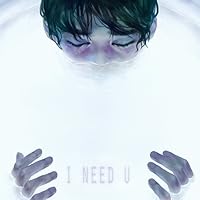
Yuki has not slept in two months. He's been infected with genuine insomnia -- a condition that is spreading throughout the city's high-profile businessmen. At first, this is a condition worth boasting about: the less Yuki sleeps, the better he feels, and he gathers with the city's elite in clubs and bars to compare how long they've been awake. It is only when he visits a sanatorium that Yuki is told his memory is quickly deteriorating, and, suddenly, Yoshida's fragmented style starts to make sense...
Dream-like, sensual and unnerving, these offerings by Kyoko Yoshida, a Japanese author writing in English, surprise the reader with their texture and imagery. Spring Sleepers, the title story, frames insomnia as the contemporary condition the narrative sliding from metropolitan hyperawareness to delirious exhaustion in the space of a few pages. Spring Awakening, a koan-like mediation, describes a newly born eel emerging from then returning to its home. Finally, Yoshida reflects on her time spent in Norwich, the City of Writing.
UPDATE: Re-read this last night with friends and it might now be my favourite of the Keshiki books—by turns sensuous, funny, and unsettlingly surreal. It somehow manages to feel almost exactly like a dream WITHOUT being irritating like someone telling you in great detail about the weird and stupid dream they had the night before.
Premise: Young man boasts about how he's never felt better since he stopped being able to sleep—but when his doctor sends him to a clinic, he realises his insomnia is slowly chipping away at his mind, starting from his memory, then moving on to his very grip on reality.
Thoughts: After an intriguing page spent in the company of an eel, 'Spring Sleepers' starts off in earnest, with a rich, sensory description of a Spring landscape ("the skyline of the mountains was blurred by the powder-fine loess brought by winds from the Gobi, but nearer, there was the smell of ashes, mist, violets under clover, and the Chinese milk vetch"), a club ("Warm plum wine and the last hot sake of the year were served in Portuguese hand-blown glasses"), and two handsome young businessmen, Yuki and Haru ("Tucking strands of hair over his pretty face behind his ear, Haru turned back to Yuki and pulled a finely latticed fan out of his purple kimono sleeve"). But as Yuki's mental health deteriorates in the course of the story, so does the world he inhabits become more abstract and surreal ("The airport was busy with segments of lines, yields, parallel circles, perpendicular lines, acute angles, obtuse angles, circles bouncing around murmuring a foreign tongue, flamboyant triangles, and shivering squares"), until, finally a snowstorm comes to "white out the sight". Though my attention did wander at times, 'Spring Sleepers' is a fun, weird ride—sort of like a cross between the film A Cure for Wellness and the game Jazzpunk.
𝑺𝒑𝒓𝒊𝒏𝒈 𝑺𝒍𝒆𝒆𝒑𝒆𝒓𝒔 is an amusing short story that centres on chronic insomniac 𝑌𝑢𝑘𝑖, a man who has been ordered by his doctor to visit a sanatorium to cure his restlessness. The frighteningly 𝐬𝐮𝐫𝐫𝐞𝐚𝐥 𝐨𝐯𝐞𝐫𝐥𝐚𝐩 𝐛𝐞𝐭𝐰𝐞𝐞𝐧 𝐭𝐡𝐞 𝐜𝐨𝐫𝐩𝐨𝐫𝐞𝐚𝐥 𝐚𝐧𝐝 𝐬𝐮𝐛𝐜𝐨𝐧𝐬𝐜𝐢𝐨𝐮𝐬 𝐫𝐞𝐚𝐥𝐦 forms the basis of the story as Yoshida pointedly contrasts the dreary life of an overly-alert workaholic with the queer state of sleeplessness.
Yoshida’s writing is captivatingly expressive. The narrative is perfused with vivid descriptions and extraordinary interactions as we accompany Yuki on his bizarre journey to the sanatorium. Our poor protagonist is eventually so overpowered by insomnia that his memory takes a hit and 𝐞𝐯𝐞𝐫𝐲𝐝𝐚𝐲 𝐨𝐛𝐣𝐞𝐜𝐭𝐬, 𝐩𝐥𝐚𝐜𝐞𝐬 𝐚𝐧𝐝 𝐩𝐞𝐨𝐩𝐥𝐞 𝐛𝐞𝐜𝐨𝐦𝐞 𝐞𝐧𝐭𝐢𝐫𝐞𝐥𝐲 𝐧𝐨𝐧𝐬𝐞𝐧𝐬𝐢𝐜𝐚𝐥 𝐚𝐧𝐝 𝐚𝐛𝐬𝐭𝐫𝐚𝐜𝐭. 👁👄👁
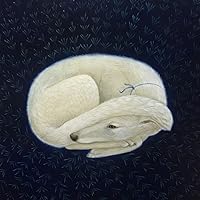
☆☆☆ ja puoli. Jos Haruki Murakamin hämärät maailmat kiinnostavat, tämä lyhyt novelli voisi sopia lukulistalle. Nuori Yuki ei ole nukkunut pariin kuukauteen. Lääkäri kehottaa häntä lähtemään parantolaan, sillä nukkumattomuus aiheuttaa lääkärin mukaan pahoja muistikatkoja. Tämän jälkeen alkaa tapahtua todella kummallisia asioita. Mikä on totta ja mikä unta? Tunnelma oli ihanan painostava, vaikka välillä taas tuntui, että en ymmärrä mitään. Plussaa kolmesta venäjänvinttikoirasta ♡
This short story has part of the feel of a nonconventional, surreal indie RPG. In the sense a generally vague character wanders between loosely related and symbolically-heavy landscapes, talks to characters who remark somewhat randomly on what's near them, or on the player character.
Of course, this story has the logic of a dream in which certain ideas or symbols re-emerge later on, recontextualized. Character come back, transformed. Terms that seem important are discarded, then re-emerge later.
It made me think about what the advantages to transposing this to a game would be. In a game, the pace of the 'plot' through random symbols/places, who gets talked to, can be set by the player. "I did this, and then I walked over here and did that" - that sort of self-narrative can work even in totally random landscapes.
But the form of writing lets the author hyper-focus on certain visual details. But overall, in this story the character was too vague to work with the scattered dream landscape, even after reading twice. Things often felt like sorting through a feed of algorithmically-recommended images on a social media side. A few of the images 'stuck' with me (the airplane landing into a town with a large clock tower), though. Anyways, I appreciate the story's experimentalism and unique structure.
I’m enjoying this series of Japanese short stories, this one is about a man who becomes the victim of insomnia so he travels to a sanatorium to try to find a cure. After this it becomes surreal and it is not clear in general what is really happening and what is a dream or magical realism, he meets some strange people and starts to sort of hallucinate and see people and stick people and things in 2D, I liked the way this was written and would read more by this author.
Spring Sleepers is a deliriously deceptive read. And one that constantly made me question whether the main protagonist was actually; asleep, dreaming or a totally wired awake insomniac that we’re lead to believe.
Either way, Yoshida certainly offers up an interesting take on the ways of the modern world -particularly hustle culture. But, as with the previous Japanese short from the series, this was way to short to have a lasting impact.
i swear japanese writers have the unparalleled ability to write incredibly surreal stories that suspend between the realms of dreams and reality. spring sleepers begins with one of the most beautiful, atmospheric paragraphs ever, which i am a sucker for, so that was a plus point from the start.
the reader follows yuki as he slowly loses his sanity and ability to differentiate the real and the conjured due to his lack of sleep. this book presents something that seems scarily possible because insomnia is such a common experience, and sleep is, indeed, essential for the consolidation of memory. so it was not hard to put myself into yuki’s shoes, and i felt a sudden fear of not being able to sleep ever again, which will likely live in the back of my head for the next few days because i am an insanely paranoid person.
although some parts gave me a sense that the author was trying too hard to be abstract and came off as a little too disjointed to me, i think spring sleepers depicted the unravelling of one’s mind well. it also left the reader with questions unanswered at the end, which can be a risk, but i think it was a risk worth taking for this book because the ending was probably my favourite part.
This was fantastic for me. I've never read anything quite like this. The insomniac is only 1/10 of the story. It's (expectedly) surreal and you get lost in-between worlds, confused whether the character is asleep/dreaming or awake, whether these are reflections or confabulations. The closing by the writer was brilliant in explaining how a writer's world is exactly like the character's, especially those of multicultural ones, and those whose works are translated (as well as those who do the translating). It's labyrinthine, words are lost, but when you learn "to slow down and listen to the pause between words and the silence between one language and another," you find yourself at home in this strange land.
This entire review has been hidden because of spoilers.
Søvnløshed i Japan ifølge Kyoko Yoshida: En sygdom, der smitter ved fysisk berøring, og gradvis sletter den søvnløses hukommelse, mens han forsvinder længere og længere ind i en verden, hvor virkelighed og drøm flyder sammen og opløses.
This short story is somewhere between a 2 1/2 and 3 star read for me. I found the theme of insomnia interesting, but the execution was (I assume) full of metaphors, either that or our protagonist was sent crazy by his months without sleep and was hallucinating. Very open to interpretation, even the ending. I have said before I am a very literal reader, so this type of story often misses the mark for me. More a me issue than an issue with the story.
i like odd stories. i like absurd stories. i like irresolution.
this story felt like 5 or 6 chunks of flash fiction by 5 or 6 different writers stitched together. barely stitched together, because they resist connection. if i just wasn't getting it, i would have unrated this story, but i don't think there's getting to be gotten.
The covers of these little books are irresistible. The story inside is good too, but short, short, short. So if you don't mind paying six quid for fifteen minutes' worth of reading this is an aesthetically pleasing way of doing it.
this is exactly how my dreams go. just read it like it's one of those diary entries people try to write to record their dreams right after they wake up, and it's pretty fun.