

What do you think?

Gorda
Noko Hanazawa tiene sobrepeso. No es para tanto, al fin y al cabo hace su vida con normalidad, tiene novio y un buen trabajo. Pero debajo de esa capa de mujer fuerte se esconde una joven en constante lucha consigo misma. Para Noko, ganar peso significa perder un poquito de felicidad, un poquito de integridad laboral. Su lucha es la de otras muchas mujeres: una lucha en la que sobreponer tu confianza y amor propio a una sociedad que mira por encima del hombro puede convertirse en una auténtica odisea.
264 pages, Hardcover
First published July 25, 2002
About the author
Moyoco Anno
148 books206 followersSee also: 安野モヨコ
Moyoko Anno (安野 モヨコ) is a Japanese manga artist and a fashion writer, with numerous books published in both categories. Her manga and books have attained considerable popularity among young women in Japan. Though she primarily writes manga of the josei demographic, her most popular series, Sugar Sugar Rune, (serialized in Nakayoshi) is targeted at primary school-aged girls. In a recent Oricon poll, she was voted the number eight most popular manga artist among females and thirteen in the general category. Her manga Happy Mania was made into a television series in 1998, followed by Hataraki Man in October 2007. Sakuran was made into a movie in 2006.
In the movie Japan Sinks, she has a cameo role alongside her husband; their characters were also married. The movie was directed by Shinji Higuchi, who, like her husband Hideaki Anno, is a co-founder of Gainax.
Anno won the 29th Kodansha Manga Award for children's manga in 2005 for Sugar Sugar Rune.
Visit her blog: http://www.annomoyoco.com/blog/
Moyoko Anno (安野 モヨコ) is a Japanese manga artist and a fashion writer, with numerous books published in both categories. Her manga and books have attained considerable popularity among young women in Japan. Though she primarily writes manga of the josei demographic, her most popular series, Sugar Sugar Rune, (serialized in Nakayoshi) is targeted at primary school-aged girls. In a recent Oricon poll, she was voted the number eight most popular manga artist among females and thirteen in the general category. Her manga Happy Mania was made into a television series in 1998, followed by Hataraki Man in October 2007. Sakuran was made into a movie in 2006.
In the movie Japan Sinks, she has a cameo role alongside her husband; their characters were also married. The movie was directed by Shinji Higuchi, who, like her husband Hideaki Anno, is a co-founder of Gainax.
Anno won the 29th Kodansha Manga Award for children's manga in 2005 for Sugar Sugar Rune.
Visit her blog: http://www.annomoyoco.com/blog/
Ratings & Reviews
Friends & Following
Create a free account to discover what your friends think of this book!
Community Reviews
Displaying 1 - 30 of 302 reviews

November 1, 2014
This was a difficult read.

December 3, 2015
[A note: this review will contain depictions of nude women from the work being reviewed. Discretion is left to the reader.]

The Ancient Near East was a land filled with gods and cosmologies at war with all others. The inhabitants of every nook and cranny had their own deities and their own religious customs and their own emphases. And as with the religions of today, the zealous devotees of one god were not particularly interested in tolerating the gods of their neighbours. It made sense for a culture to have a god different from that of a neighbouring culture—after all, if you wished to war with and then absorb a neighbour, it didn’t make much sense to pray to a god you both worshipped and/or served. Gods of seas, gods of rivers, gods of land, gods of fire, gods of sky, gods of clouds, gods of rain, gods of sex and of war and of death and of life and of alacrity. Take your pick. Different gods for different needs. And all the different practices that go along with those needs.
Still, almost across the board in the Ancient Near East, there was a great commonality. These gods received some form of visible rendition. Idols proliferated. Carved images, painted figurines, metaphorical representations. It’s probable that no Philistine actually thought Dagon looked like a hybrid between a fish and a dude, but people need something to hold on to, a little prop to turn mere metaphor into something vaguely solid and believable. But not the people of Israel. Their god, Yahweh, disallowed physical representation of deity (we even see this carried forth into the Islamic antipathy toward the visual expression of Moses, Jesus, Mohammed—and really, any of their prophets). The thing was: Yahweh was considered too vast and magnificent to be represented by something as inarticulate as an image. When the Israelites were cursed at the foot of Sinai for building a golden calf, it wasn’t for following another god; instead, they had minimized Yahweh by creating a Yahweh-idol that magnified only his strength (what a calf was known for in that culture). The problem with the golden calf or bull was that it crafted an inadequate portrait of Yahweh.

[FYI: The images in this review read right-to-left, the Japanese way!]
And that’s the trick. Art objectifies its subject. Inherently.[1] The nature of illustration, of painting, of cartooning is to take things—whether animal, vegetable, mineral, or ideal—from their multifaceted, multidimensional, highly nuanced reality and smash them down into a flat, inadequate representation of their actual selves.
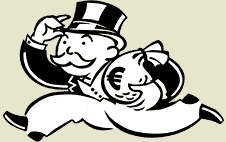
But we’re generally okay with this because, thinking people that we are,[2] we recognize that the intention of objectification is not to explore with ultimate depth and patience the full expression of the object of our objectification. When I draw a woman or a chair or a political ideology, I can reasonably only investigate a fractional portion of her/its multitude of properties. If I draw a Dollar Sign or the Uncle Pennybags[3] or an Illuminati Pyramid With An Eye and call it “capitalism,” you might get some sense of some portion of what I’m intending to describe about the economic ideology, but only that. And we’re usually okay with this because we recognize that the work of art was never intended to entirely explain capitalism. We might object to what I’ve said about capitalism, but our objection will always be because we think the aspect represented was poorly described, not because we expected the representation to entirely explore or explain the theory.

In the present circumstance in which the world finds itself circa the beginning of the third millennium AD, sexual objectification (esp. of women) has come under particular scrutiny—not so much because of its nature, but because the context in which it occurs plays into a harmful societal condition leading generally to a misogynistic culture that renders the female experience of life particularly less readily enjoyable than the male experience of the same.[4] There is nothing exactly insidious about the objectification of women in and of itself. As art the Mona Lisa is inherently an objectification—though not one we readily recognize as being harmful. The problem, then, is twofold: 1) the overwhelming singlemindedness in the tendency to reduce women for objectification along a single vector (sexual availability); and 2) the tendency for the members of the contemporary society to forget that objectification is meant only to convey a narrow portion of the object’s properties thereby allowing that narrow perception to govern the conception of the whole.

In short, women are largely and forcefully objectified along sexually titillating lines and the consumers of that objectification begin to perceive women wholly through sexual filters, breaking the tacit agreement that objectification is only meant to convey limited facets. This breach of the normal experience of objectification (say, the kind we comprehend easily when viewing a child’s drawing of a cactus or a dog) actually meets up well with the trouble Yahweh had with objectifications of his own self. In portraying Yahweh as a calf, a symbol of strength in the Ancient Near East, the fear was that his Israelite worshipers would begin to view him wholly as a a deity of bullish strength (much as the fire-and-brimstone preachers of legend gleefully viewed the Christian god principally as a being of wrath and terror). So the tendency of people to break the good-faith agreement between the objectification and the object is not new, and special care must be taken in the dismantlement of the problem.
Moyocco Anno’s In Clothes Called Fat intimately concerns a world maintained and partly governed by the sexual objectification of women and reads as a good companion to Kyoko Okazaki’s Helter Skelter. The book revolves wholly around how the principal identity of a woman is founded in her attractiveness. Every new chapter (save for the finale) is abstractly heralded by the depiction of a lean, beautiful, and often nude woman—who is not (until the last chapter) the protagonist. The entire ecosystem of Anno’s story is populated by an ethos and ethic developed around the desirability of women.
Noko is fat. She works in a business office, has a small taste of office social life, and keeps a handsome longterm boyfriend. But she is definitely fat. And while Anno’s portrayal of her obesity waxes and wanes, she is defined (and irrevocably so) by her weight. Early on, she deliciously describes herself: “It’s like I’m wearing a leotard of flesh that can never be removed.” Her position with regard to her social circle, female co-workers, boss, and boyfriend are all exactly circumscribed by the way she looks. She lives in a world where the sexual objectification of the female has run amok. That is, of course, to say: she lives in a world crisply reflective of our own.

I’m not certain of the intricacies of Japanese culture and how measured their reaction to an obese woman would be, but while the American reaction (probably) wouldn’t be outright bullying outside the cesspit interactions of YouTube and online forums, her measure as a woman would certainly be underlined and calcified by her weight. We value women in accord to their attractiveness. We believe that a woman can have use without looking good, but we’re more willing to believe her useful if she’s attractive. And then if she is attractive, we’re more willing to forgive her inadequacies. In this manner, In Clothes Called Fat reflects even the American ideologies pretty well and should make for a fairly seamless read for the Western reader.
Anno delves into the experience and mystery of the culture’s fascination with beauty through unsparing episodes from Noko’s life. Her sex life, the bullying she experiences at work, her abortive attempts at self control. Noko is victimized by her own lack of self-confidence and inability to truly grasp the manner of the world about her. A dietician describes Noko: “Her soul is obese.” Anno allows the reader to dwell in Noko’s thoughts, giving us insight enough into the protagonist’s sense of the world and herself.[5]
The principle conflict seems to be the question of whether Noko will be able to lose weight, thereby gaining confidence and a place in society, but Anno is canny enough to avoid a problem/solution pairing so pedestrian. Instead, In Clothes Called Fat wonders if it really is the clothes that make the man, postulating instead that no woman can successfully survive the ravaging of society and escape with her true self intact.[6]
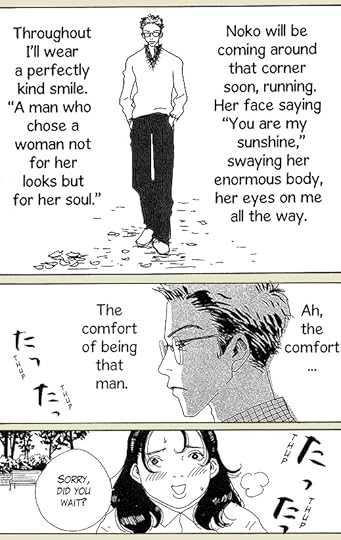
Visually, In Clothes Called Fat engages Anno’s theme through the ready visual objectification (and sexual objectification) of its characters. Noko spends substantial time in the narrative naked, often having sex and one time having her body poured over and lusciously examined by a paramour. Mayumi too is forcefully depicted as almost pure sex appeal and her identity is determined by her fulfillment of the male sex fantasy. Anno’s figurework resembles the loose grotesques present in Kyoko’s Okazaki’s books and whether intentional or not, this works to diffuse much of what would otherwise be titillating in the book. Both Noko and Mayumi are thoroughly and consciously rendered as sex objects, but we can almost immediately understand it as holding narrative heft (as opposed to much of what we’ve come to expect from the depiction of women in the visual arts).
This is not a relishment in sexual objectification but labours instead as an indictment of it.[7] By the epilogue, we are neither pleased nor amused by the ends of any of the characters nor in the circumstances that prompt those ends. We do not enjoy or approve of Noko’s closing determination, but we can understand her resignation because we’re neither stupid nor blind to the way of the world.
In Clothes Called Fat does that thing the best books do. It prompts renewed thoughtfulness about the world, the nature of civilization, and our place in both. We shouldn’t expect that Moyocco Anno will change the world with this small graphic novel, but we might as well hope. And at the least we can allow ourselves to be affected and renovated.
_______
[Review courtesy of Good Ok Bad.]
_______
Footnotes
1) And actually, literally, while we’re at it.
2) Even if only on a subconscious level much of the time…
3)
4) In the same way that the group of kids who will get stung by bees at birthday parties can be said to have a less enjoyable experience than the group who doesn’t get stung—even if through luck, circumstance, and outlook the bee-stung kids eventually happen to experience more joy at said parties unrelated to the bee stings.
5) In an interesting turn, Anno presents three other minor point-of-view characters (Mayumi, Noko’s antagonist co-worker; Saito, Noko’s boyfriend; and Kiyo, Noko’s dietician), allowing the world to be fleshed out in still more interesting ways.
6) It even hints that men too are damaged by the sexual objectification of women by temporarily engaging Saito’s personal struggles and inadequacies, completely invisible to Noko.
7) Which is totally the kind of thing that a lot of untalented, thoughtless sexual objectification pretends to attain.
The Ancient Near East was a land filled with gods and cosmologies at war with all others. The inhabitants of every nook and cranny had their own deities and their own religious customs and their own emphases. And as with the religions of today, the zealous devotees of one god were not particularly interested in tolerating the gods of their neighbours. It made sense for a culture to have a god different from that of a neighbouring culture—after all, if you wished to war with and then absorb a neighbour, it didn’t make much sense to pray to a god you both worshipped and/or served. Gods of seas, gods of rivers, gods of land, gods of fire, gods of sky, gods of clouds, gods of rain, gods of sex and of war and of death and of life and of alacrity. Take your pick. Different gods for different needs. And all the different practices that go along with those needs.
Still, almost across the board in the Ancient Near East, there was a great commonality. These gods received some form of visible rendition. Idols proliferated. Carved images, painted figurines, metaphorical representations. It’s probable that no Philistine actually thought Dagon looked like a hybrid between a fish and a dude, but people need something to hold on to, a little prop to turn mere metaphor into something vaguely solid and believable. But not the people of Israel. Their god, Yahweh, disallowed physical representation of deity (we even see this carried forth into the Islamic antipathy toward the visual expression of Moses, Jesus, Mohammed—and really, any of their prophets). The thing was: Yahweh was considered too vast and magnificent to be represented by something as inarticulate as an image. When the Israelites were cursed at the foot of Sinai for building a golden calf, it wasn’t for following another god; instead, they had minimized Yahweh by creating a Yahweh-idol that magnified only his strength (what a calf was known for in that culture). The problem with the golden calf or bull was that it crafted an inadequate portrait of Yahweh.
[FYI: The images in this review read right-to-left, the Japanese way!]
And that’s the trick. Art objectifies its subject. Inherently.[1] The nature of illustration, of painting, of cartooning is to take things—whether animal, vegetable, mineral, or ideal—from their multifaceted, multidimensional, highly nuanced reality and smash them down into a flat, inadequate representation of their actual selves.
But we’re generally okay with this because, thinking people that we are,[2] we recognize that the intention of objectification is not to explore with ultimate depth and patience the full expression of the object of our objectification. When I draw a woman or a chair or a political ideology, I can reasonably only investigate a fractional portion of her/its multitude of properties. If I draw a Dollar Sign or the Uncle Pennybags[3] or an Illuminati Pyramid With An Eye and call it “capitalism,” you might get some sense of some portion of what I’m intending to describe about the economic ideology, but only that. And we’re usually okay with this because we recognize that the work of art was never intended to entirely explain capitalism. We might object to what I’ve said about capitalism, but our objection will always be because we think the aspect represented was poorly described, not because we expected the representation to entirely explore or explain the theory.
In the present circumstance in which the world finds itself circa the beginning of the third millennium AD, sexual objectification (esp. of women) has come under particular scrutiny—not so much because of its nature, but because the context in which it occurs plays into a harmful societal condition leading generally to a misogynistic culture that renders the female experience of life particularly less readily enjoyable than the male experience of the same.[4] There is nothing exactly insidious about the objectification of women in and of itself. As art the Mona Lisa is inherently an objectification—though not one we readily recognize as being harmful. The problem, then, is twofold: 1) the overwhelming singlemindedness in the tendency to reduce women for objectification along a single vector (sexual availability); and 2) the tendency for the members of the contemporary society to forget that objectification is meant only to convey a narrow portion of the object’s properties thereby allowing that narrow perception to govern the conception of the whole.
In short, women are largely and forcefully objectified along sexually titillating lines and the consumers of that objectification begin to perceive women wholly through sexual filters, breaking the tacit agreement that objectification is only meant to convey limited facets. This breach of the normal experience of objectification (say, the kind we comprehend easily when viewing a child’s drawing of a cactus or a dog) actually meets up well with the trouble Yahweh had with objectifications of his own self. In portraying Yahweh as a calf, a symbol of strength in the Ancient Near East, the fear was that his Israelite worshipers would begin to view him wholly as a a deity of bullish strength (much as the fire-and-brimstone preachers of legend gleefully viewed the Christian god principally as a being of wrath and terror). So the tendency of people to break the good-faith agreement between the objectification and the object is not new, and special care must be taken in the dismantlement of the problem.
Moyocco Anno’s In Clothes Called Fat intimately concerns a world maintained and partly governed by the sexual objectification of women and reads as a good companion to Kyoko Okazaki’s Helter Skelter. The book revolves wholly around how the principal identity of a woman is founded in her attractiveness. Every new chapter (save for the finale) is abstractly heralded by the depiction of a lean, beautiful, and often nude woman—who is not (until the last chapter) the protagonist. The entire ecosystem of Anno’s story is populated by an ethos and ethic developed around the desirability of women.
Noko is fat. She works in a business office, has a small taste of office social life, and keeps a handsome longterm boyfriend. But she is definitely fat. And while Anno’s portrayal of her obesity waxes and wanes, she is defined (and irrevocably so) by her weight. Early on, she deliciously describes herself: “It’s like I’m wearing a leotard of flesh that can never be removed.” Her position with regard to her social circle, female co-workers, boss, and boyfriend are all exactly circumscribed by the way she looks. She lives in a world where the sexual objectification of the female has run amok. That is, of course, to say: she lives in a world crisply reflective of our own.
I’m not certain of the intricacies of Japanese culture and how measured their reaction to an obese woman would be, but while the American reaction (probably) wouldn’t be outright bullying outside the cesspit interactions of YouTube and online forums, her measure as a woman would certainly be underlined and calcified by her weight. We value women in accord to their attractiveness. We believe that a woman can have use without looking good, but we’re more willing to believe her useful if she’s attractive. And then if she is attractive, we’re more willing to forgive her inadequacies. In this manner, In Clothes Called Fat reflects even the American ideologies pretty well and should make for a fairly seamless read for the Western reader.
Anno delves into the experience and mystery of the culture’s fascination with beauty through unsparing episodes from Noko’s life. Her sex life, the bullying she experiences at work, her abortive attempts at self control. Noko is victimized by her own lack of self-confidence and inability to truly grasp the manner of the world about her. A dietician describes Noko: “Her soul is obese.” Anno allows the reader to dwell in Noko’s thoughts, giving us insight enough into the protagonist’s sense of the world and herself.[5]
The principle conflict seems to be the question of whether Noko will be able to lose weight, thereby gaining confidence and a place in society, but Anno is canny enough to avoid a problem/solution pairing so pedestrian. Instead, In Clothes Called Fat wonders if it really is the clothes that make the man, postulating instead that no woman can successfully survive the ravaging of society and escape with her true self intact.[6]
Visually, In Clothes Called Fat engages Anno’s theme through the ready visual objectification (and sexual objectification) of its characters. Noko spends substantial time in the narrative naked, often having sex and one time having her body poured over and lusciously examined by a paramour. Mayumi too is forcefully depicted as almost pure sex appeal and her identity is determined by her fulfillment of the male sex fantasy. Anno’s figurework resembles the loose grotesques present in Kyoko’s Okazaki’s books and whether intentional or not, this works to diffuse much of what would otherwise be titillating in the book. Both Noko and Mayumi are thoroughly and consciously rendered as sex objects, but we can almost immediately understand it as holding narrative heft (as opposed to much of what we’ve come to expect from the depiction of women in the visual arts).
This is not a relishment in sexual objectification but labours instead as an indictment of it.[7] By the epilogue, we are neither pleased nor amused by the ends of any of the characters nor in the circumstances that prompt those ends. We do not enjoy or approve of Noko’s closing determination, but we can understand her resignation because we’re neither stupid nor blind to the way of the world.
In Clothes Called Fat does that thing the best books do. It prompts renewed thoughtfulness about the world, the nature of civilization, and our place in both. We shouldn’t expect that Moyocco Anno will change the world with this small graphic novel, but we might as well hope. And at the least we can allow ourselves to be affected and renovated.
_______
[Review courtesy of Good Ok Bad.]
_______
Footnotes
1) And actually, literally, while we’re at it.
2) Even if only on a subconscious level much of the time…
3)
4) In the same way that the group of kids who will get stung by bees at birthday parties can be said to have a less enjoyable experience than the group who doesn’t get stung—even if through luck, circumstance, and outlook the bee-stung kids eventually happen to experience more joy at said parties unrelated to the bee stings.
5) In an interesting turn, Anno presents three other minor point-of-view characters (Mayumi, Noko’s antagonist co-worker; Saito, Noko’s boyfriend; and Kiyo, Noko’s dietician), allowing the world to be fleshed out in still more interesting ways.
6) It even hints that men too are damaged by the sexual objectification of women by temporarily engaging Saito’s personal struggles and inadequacies, completely invisible to Noko.
7) Which is totally the kind of thing that a lot of untalented, thoughtless sexual objectification pretends to attain.

June 1, 2019
4.5 stars.
Loved it! So relatable to anyone who is uncomfortable in their own skin.
What I didn't like though was that it basically tells you that if you throw up what you eat, you too can be skin and bones.
Not true. So not true. With Bulimia, most are just as ill, but most people's weight stays in the healthy weight range. I've meet enough people, (and been through personally), while being in hospital, who are going through this, and most are not deadly thin. Yet this book I understand is just about one person's experience, but it needs to be said that this is a rare case. It does read as a 'how to' story.
So aslong as the reader is aware of what they are getting into, it's fine. Just, those going through their own ED, just be prepared. And consider if it really is a good idea for you to read this or not. Expecually if you are in recovery as this is extremely triggering.
Loved it! So relatable to anyone who is uncomfortable in their own skin.
What I didn't like though was that it basically tells you that if you throw up what you eat, you too can be skin and bones.
Not true. So not true. With Bulimia, most are just as ill, but most people's weight stays in the healthy weight range. I've meet enough people, (and been through personally), while being in hospital, who are going through this, and most are not deadly thin. Yet this book I understand is just about one person's experience, but it needs to be said that this is a rare case. It does read as a 'how to' story.
So aslong as the reader is aware of what they are getting into, it's fine. Just, those going through their own ED, just be prepared. And consider if it really is a good idea for you to read this or not. Expecually if you are in recovery as this is extremely triggering.

December 30, 2017
I'm noticing that most reviewers are saying they couldn't relate to the characters and I wanted to protest that. As other reviewers have said, this book is undoubtedly valuable because of its raw, honest take on its main theme - the objectification of women. It's easy to dismiss the main character's experiences as a caricature, exaggerated, or symbolic of the book's theme of objectification.
While those are valid views, I want to emphasize that Noko's extreme experiences do exist in reality and must not be brushed away as unrealistic and unrelatable just because every woman does not go through them. I related to Noko; in fact I have never related more to a character in a graphic novel. I haven't been diagnosed with an eating disorder, but I have experienced a lot of what Noko has with regards to emotional eating, my body being a focal point in relationships with others, and growing up fat in a fatphobic society (outside Japan, I must add - it infuriates me to see people pass this off as a cultural aspect of East Asian countries only).
The only reason I am giving it 4 stars instead of 5 is because the ending left me a bit confused about the author's intentions. I do not like to search for a moral or a thesis at the end of a book like this. However, the story ended on the comment made by the dietician that Noko's 'soul was obese', and that she would continue the cycle. I don't know why a book would spend its entirety showing the realities of an eating disorder to then pass it off as a character flaw, implying that it would all go away if Noko wanted to change it. I am confused because the book does not outright state this, but still leaves an uneasy aftertaste of victim blaming - I can't tell if this was just the character of the dietician speaking, or the author. I may understand it better after another read, but for now I am dissatisfied.
While those are valid views, I want to emphasize that Noko's extreme experiences do exist in reality and must not be brushed away as unrealistic and unrelatable just because every woman does not go through them. I related to Noko; in fact I have never related more to a character in a graphic novel. I haven't been diagnosed with an eating disorder, but I have experienced a lot of what Noko has with regards to emotional eating, my body being a focal point in relationships with others, and growing up fat in a fatphobic society (outside Japan, I must add - it infuriates me to see people pass this off as a cultural aspect of East Asian countries only).
The only reason I am giving it 4 stars instead of 5 is because the ending left me a bit confused about the author's intentions. I do not like to search for a moral or a thesis at the end of a book like this. However, the story ended on the comment made by the dietician that Noko's 'soul was obese', and that she would continue the cycle. I don't know why a book would spend its entirety showing the realities of an eating disorder to then pass it off as a character flaw, implying that it would all go away if Noko wanted to change it. I am confused because the book does not outright state this, but still leaves an uneasy aftertaste of victim blaming - I can't tell if this was just the character of the dietician speaking, or the author. I may understand it better after another read, but for now I am dissatisfied.

October 19, 2015
This manga was a vile piece of garbage that would likely be very damaging in the hands of someone struggling with an eating disorder.

September 12, 2019
No se que pensar realmente del cómic, no puedo hacer una reseña objetiva por ahora, me ha dejado muy desconcertada.

May 14, 2021
This manga was…a lot. I understand the author's message, but there were just so many things wrong with the actual execution that it really hindered the story. I think one of the major gripes I had with the story is just how bleak everything was. From the supporting cast to the ending, it really felt like everything in Noko’s life was set up for her to fail. I’m not saying that stories have to be filled with sunshine and rainbows to be enjoyable, but I feel like even in times of tragedy and darkness humans can find some glimmer of hope to continue going on but there was none of that here.

August 6, 2014
If there is a manga that really establishes Anno Moyoco as the spiritual successor to Okazaki Kyoko, it is certainly In Clothes Called Fat. The subject matter, the darkness of human nature, and even the composition of scenes are reminiscent of her former employer–and yet very much all her own. Anno’s art is richer and more detailed than Okazaki’s, giving it a more polished look while still capturing the free spirit captured in the “sketch-like” style. It has clear influences from a great women’s manga creator, but also it’s obvious that Anno learned a lot and built on that knowledge, particularly when it comes to constructing the main character.
Noko is that woman that lives inside of many of us. She can’t quite figure out where she fits in the world, so when she finds one place that feels comfortable, she attaches herself to it, refusing to let go. Additionally, she has inexplicable and yet completely familiar relationship with food. For those who don’t eat to the point of compulsion, it may be difficult to really identify with Noko’s feeling that eating will make her feel better, fill her time, or make her stronger. However, for those who struggle with the same issues, it will be familiar (perhaps to the point of being a bit of a binge trigger)–and just as frustrating as facing it yourself. There isn’t a reason for Noko’s compulsive eating. She wasn’t abused or stressed as a child. Her friend mentions that she was always bigger than most girls. It’s just the way she is. At this point in her life she is facing some adversity due to her weight, but the story suggests that her girth came first. It’s hard to explain to others the compulsion to eat, particularly when there isn’t a “valid” excuse for it. That even when full your body just yearns for a particular flavor or even a specific mouth movement is incomprehensible to those who lack those urges. Anno does a good job creating a character that embodies that type of compulsive eater. Sometimes she’s eating due to depression or stress, but it’s also just a part of who she is, for better or for worse.
While Noko’s eating issues are well-constructed, her overarching personality and those of other characters are a bit lacking in depth. They end up being caricatures, even if she does insert interesting motives and/or details to their lives. This might just be the result of the story being told in just 262 pages, but I do wish we could have better understood certain characters, particularly Mayumi and Tabata.
The art has a certain simplicity to it, and is reminiscent of 90s josei style, but at the same time avoids looking sloppy or cartoonish in its simplistic execution. Anno’s art looks consistently professional, even with the series being one of her earlier endeavors. In fact, if it weren’t for looking at the copyright information, I never would have guessed that the series was 17 years old. Aside from the lack of the prominence of mobile phones, all elements of the story hold very much true in 2014 as they did in 1997. In fact, I thought it was a throwback to that era not a product of the era until well after I finished reading it (and honestly, until I began working on this paragraph). That also explains the particularly noticeable comparisons to Okazaki’s works as the timing was much closer to when Anno worked as her assistant.
Overall, In Clothes Called Fat is another excellent entry into both josei manga as well as the oeuvre of Anno Moyoco. It’s story of a young woman adrift in her life and struggling to find happiness (fat or not) is one that can speak to a lot of readers. While it has its weaknesses, particularly in overall depth of characters, it still an engaging read that is difficult to put down. If you’re fond compelling stories with flawed characters, In Clothes Called Fat should not be missed.
Noko is that woman that lives inside of many of us. She can’t quite figure out where she fits in the world, so when she finds one place that feels comfortable, she attaches herself to it, refusing to let go. Additionally, she has inexplicable and yet completely familiar relationship with food. For those who don’t eat to the point of compulsion, it may be difficult to really identify with Noko’s feeling that eating will make her feel better, fill her time, or make her stronger. However, for those who struggle with the same issues, it will be familiar (perhaps to the point of being a bit of a binge trigger)–and just as frustrating as facing it yourself. There isn’t a reason for Noko’s compulsive eating. She wasn’t abused or stressed as a child. Her friend mentions that she was always bigger than most girls. It’s just the way she is. At this point in her life she is facing some adversity due to her weight, but the story suggests that her girth came first. It’s hard to explain to others the compulsion to eat, particularly when there isn’t a “valid” excuse for it. That even when full your body just yearns for a particular flavor or even a specific mouth movement is incomprehensible to those who lack those urges. Anno does a good job creating a character that embodies that type of compulsive eater. Sometimes she’s eating due to depression or stress, but it’s also just a part of who she is, for better or for worse.
While Noko’s eating issues are well-constructed, her overarching personality and those of other characters are a bit lacking in depth. They end up being caricatures, even if she does insert interesting motives and/or details to their lives. This might just be the result of the story being told in just 262 pages, but I do wish we could have better understood certain characters, particularly Mayumi and Tabata.
The art has a certain simplicity to it, and is reminiscent of 90s josei style, but at the same time avoids looking sloppy or cartoonish in its simplistic execution. Anno’s art looks consistently professional, even with the series being one of her earlier endeavors. In fact, if it weren’t for looking at the copyright information, I never would have guessed that the series was 17 years old. Aside from the lack of the prominence of mobile phones, all elements of the story hold very much true in 2014 as they did in 1997. In fact, I thought it was a throwback to that era not a product of the era until well after I finished reading it (and honestly, until I began working on this paragraph). That also explains the particularly noticeable comparisons to Okazaki’s works as the timing was much closer to when Anno worked as her assistant.
Overall, In Clothes Called Fat is another excellent entry into both josei manga as well as the oeuvre of Anno Moyoco. It’s story of a young woman adrift in her life and struggling to find happiness (fat or not) is one that can speak to a lot of readers. While it has its weaknesses, particularly in overall depth of characters, it still an engaging read that is difficult to put down. If you’re fond compelling stories with flawed characters, In Clothes Called Fat should not be missed.
November 28, 2020
A really important topic but the depiction could have been better. The story is quite realistic but just because of this I wouldn't call it a good manga. Just didn't work out for me.

February 9, 2016
Re-Read Review: Warnings for sexual and unsexual nudity, emotional eating, bulimia, shaming during sex, workplace bullying, cheating, something like a sugar daddy thing IDK, and forced eating.
One of the first Josei titles I ever picked up I think, this book (for all its warnings) is a nostalgic reread for me. The one thing that really jumped out at me was how, despite everything happening feeling like the real world, this book felt like a horror title. I'm a bit on the fence on if I would call it body horror. On the one hand, nothing feels monstrous, but there is a lot of haggard looking bodies. So the body horror of the reality of society's obsession with thinness? I feel like this is not a special sort of insight, but what can I say, I don't feel like I caught on to this the first time I picked it up.
Even without that realization this book felt like a real game changer in my reading because I don't think I had ever heard of Josei before. And while I don't ID as a woman anymore, and demographics are a bit full of shit, I really appreciate that this kind of manga exists. I'm even happier now that it feels like the translation of Josei titles has increased. And, moving away from this as a manga, but even as a comic book this felt like something completely different from anything else I had read up to that point.
My background with this book aside, let's get back onto script and look at the creator's biography. Moyoco Anno has written a few manga series including Sugar Sugar Rune, Happy Mania, and Flowers & Bees among others. The only one I'm kind of interested in picking up as of this moment is actually Insufficient Direction, which is a memoir like story about Moyoco's husband Hideaki who created Neon Genesis Evangelion. Apparently, according to Wikipedia, she has been on work hiatus since 2008 for health reasons. But in October apparently someone announced that her manga Memoirs of Amorous Gentlemen will be the first Japanese manga to be adapted into a Broadway musical. Interesting!
Flipping over to the Goodreads' description:" From the pen of Moyoco Anno comes a stunning tale of self-image and self-loathing. In Clothes Called Fat details the lives of young women earnestly revealing the struggles women may have with their bodies and sexuality.
Noko appears to be living a great life, she's got a good job and a loving boyfriend, but beneath a thin veneer is a young woman who is struggling with her self-image and self-confidence as she fights to keep her weight down. To Noko, being 5 pounds overweight means being miles away from happiness in her lovelife and in her work-place."
The art style of this manga feels very quick and loose, similar to Erica Sakurazawa if you've ever picked up her work. I really think this start style, peppered with lots and lots of nudity I can't show, really reinforces the themes in the book.
As far as gender and sexuality goes this is a very cis hetero book. That, among other before mentioned reasons, is a very good reason this is not a must read by any means. That said, it does bring some struggles into sharp focus that are often brushed over that does effect people of all genders and sexuality.
Race is not touched on in this story and class is not really portrayed in any fulsome way.
Ability vs disability, in this case bulimia in particular, is obviously central to the story. And while I do think this book is anti diet culture and does not set out to endorse bulimia it doesn't feel like own voices or the portrayal of a genuine experience. It feels like fiction, which I guess is why I wanted to stress this realization of the horror elements of the story.
Originally I rated this book four out of five stars and I think I'm going to stick to that.
Original Review: Considering how much I enjoyed this work, I couldn't help but feel like it was a tad bit simplistic - especially when it came to the dialog. I have no idea if this was in translation or not, this is the first story I've read by Moyoco Anno and I will definitely be checking out more.
Weight, body image and eating disorders are issues that a lot of us deal with on a daily basis, so it's easy to trivialize. That said, I can't recall ever reading a comic that dealt with this subject so head on or in so mature a fashion before so this is certainly not a trivial work. And this story is Mature with a pretty capital M. This world is dark, this story is grotesque - there is a whole lot of unflattering/unsexualized nudity, and everyone is kind of stupid and/or shit to each other. There are no easy answers and there are no good people.
The artwork in Clothes Called Fat was really interesting as well. Loose and minimalist, it definitely pushed the feeling of grotesqueness to a whole new level. Noko's eyes get bigger and bigger as she gets smaller and smaller, really emphasizing the transformation she is undergoing. Using such exaggerated forms, Anno is drawing a lot of attention to the female form without exploiting it as a sexual object.
Deeply flawed in every way imaginable, the women of In Clothes Called Fat are their own kind of amazing. I've complained before about female on female hate before, and while this story includes a lot of the same relationships elements as say Absolute Boyfriend Volume 2, the exaction could not be more different. For one, the cast of ICCF is almost exclusively female, so there is a lot more going on then just one woman bullying another. Noko and Mayumi do not exist in a vacuum. While there is certainly no lack of men around them, a majority of the key characters are a wide assortment of female characters - each of which has their own perspective on what Noko should do.
Finally, focusing in on our main character Noko, I really appreciated how the ending worked out for her. At first it is very hard to like anything about Noko, and that is sort of the point. Anno is in many ways holding up a mirror to us and showing us a rather grotesque but all too realistic depiction of how people really act. But now having finished I find a lot to appreciate about Noko. Despite her less then stellar choices as she tries to lose weight, I really appreciate that they are all her own choices. Everyone around her has an opinion on how she should look and act but Anno gives Noko the strength to face her own daemons in her own way. While not protecting Noko from the harm she is doing herself, or encourage or condoning the girls character, Anno lets her live her life.
One of the first Josei titles I ever picked up I think, this book (for all its warnings) is a nostalgic reread for me. The one thing that really jumped out at me was how, despite everything happening feeling like the real world, this book felt like a horror title. I'm a bit on the fence on if I would call it body horror. On the one hand, nothing feels monstrous, but there is a lot of haggard looking bodies. So the body horror of the reality of society's obsession with thinness? I feel like this is not a special sort of insight, but what can I say, I don't feel like I caught on to this the first time I picked it up.
Even without that realization this book felt like a real game changer in my reading because I don't think I had ever heard of Josei before. And while I don't ID as a woman anymore, and demographics are a bit full of shit, I really appreciate that this kind of manga exists. I'm even happier now that it feels like the translation of Josei titles has increased. And, moving away from this as a manga, but even as a comic book this felt like something completely different from anything else I had read up to that point.
My background with this book aside, let's get back onto script and look at the creator's biography. Moyoco Anno has written a few manga series including Sugar Sugar Rune, Happy Mania, and Flowers & Bees among others. The only one I'm kind of interested in picking up as of this moment is actually Insufficient Direction, which is a memoir like story about Moyoco's husband Hideaki who created Neon Genesis Evangelion. Apparently, according to Wikipedia, she has been on work hiatus since 2008 for health reasons. But in October apparently someone announced that her manga Memoirs of Amorous Gentlemen will be the first Japanese manga to be adapted into a Broadway musical. Interesting!
Flipping over to the Goodreads' description:" From the pen of Moyoco Anno comes a stunning tale of self-image and self-loathing. In Clothes Called Fat details the lives of young women earnestly revealing the struggles women may have with their bodies and sexuality.
Noko appears to be living a great life, she's got a good job and a loving boyfriend, but beneath a thin veneer is a young woman who is struggling with her self-image and self-confidence as she fights to keep her weight down. To Noko, being 5 pounds overweight means being miles away from happiness in her lovelife and in her work-place."
The art style of this manga feels very quick and loose, similar to Erica Sakurazawa if you've ever picked up her work. I really think this start style, peppered with lots and lots of nudity I can't show, really reinforces the themes in the book.
As far as gender and sexuality goes this is a very cis hetero book. That, among other before mentioned reasons, is a very good reason this is not a must read by any means. That said, it does bring some struggles into sharp focus that are often brushed over that does effect people of all genders and sexuality.
Race is not touched on in this story and class is not really portrayed in any fulsome way.
Ability vs disability, in this case bulimia in particular, is obviously central to the story. And while I do think this book is anti diet culture and does not set out to endorse bulimia it doesn't feel like own voices or the portrayal of a genuine experience. It feels like fiction, which I guess is why I wanted to stress this realization of the horror elements of the story.
Originally I rated this book four out of five stars and I think I'm going to stick to that.
Original Review: Considering how much I enjoyed this work, I couldn't help but feel like it was a tad bit simplistic - especially when it came to the dialog. I have no idea if this was in translation or not, this is the first story I've read by Moyoco Anno and I will definitely be checking out more.
Weight, body image and eating disorders are issues that a lot of us deal with on a daily basis, so it's easy to trivialize. That said, I can't recall ever reading a comic that dealt with this subject so head on or in so mature a fashion before so this is certainly not a trivial work. And this story is Mature with a pretty capital M. This world is dark, this story is grotesque - there is a whole lot of unflattering/unsexualized nudity, and everyone is kind of stupid and/or shit to each other. There are no easy answers and there are no good people.
The artwork in Clothes Called Fat was really interesting as well. Loose and minimalist, it definitely pushed the feeling of grotesqueness to a whole new level. Noko's eyes get bigger and bigger as she gets smaller and smaller, really emphasizing the transformation she is undergoing. Using such exaggerated forms, Anno is drawing a lot of attention to the female form without exploiting it as a sexual object.
Deeply flawed in every way imaginable, the women of In Clothes Called Fat are their own kind of amazing. I've complained before about female on female hate before, and while this story includes a lot of the same relationships elements as say Absolute Boyfriend Volume 2, the exaction could not be more different. For one, the cast of ICCF is almost exclusively female, so there is a lot more going on then just one woman bullying another. Noko and Mayumi do not exist in a vacuum. While there is certainly no lack of men around them, a majority of the key characters are a wide assortment of female characters - each of which has their own perspective on what Noko should do.
Finally, focusing in on our main character Noko, I really appreciated how the ending worked out for her. At first it is very hard to like anything about Noko, and that is sort of the point. Anno is in many ways holding up a mirror to us and showing us a rather grotesque but all too realistic depiction of how people really act. But now having finished I find a lot to appreciate about Noko. Despite her less then stellar choices as she tries to lose weight, I really appreciate that they are all her own choices. Everyone around her has an opinion on how she should look and act but Anno gives Noko the strength to face her own daemons in her own way. While not protecting Noko from the harm she is doing herself, or encourage or condoning the girls character, Anno lets her live her life.

February 23, 2021
"Un giorno ho cominciato a mettere su peso... e da allora non ho fatto altro che ingrassare.
È come se indossassi uno spesso vestito di carne... che non posso mai togliermi."
«...Hai detto che se fossi dimagrita e diventata bella, saresti stata finalmente felice.
Guardati allo specchio! Sei pelle e ossa... ti si vedono tutte le articolazioni... Non sei per niente bella! Non puoi essere felice!
Torna grassa! E torna da me! È quello il tuo corpo... quella bella carne morbida e fresca!».
"Il grasso non se ne va mai... l'immagine di una donna grassa resta per sempre nella testa della gente... nei loro pensieri io sono sempre quella ragazza grassa... non vogliono accettare che sia dimagrita!"
Fa male. È doloroso il percorso di vita di Noko, impiegata d'ufficio e fidanzata da otto anni con Toshihiko. A parte questo su di sé non può dir altro che è grassa. E così tutte le persone a lei più vicine.
È spaventoso e reale al tempo stesso il fatto che dal 2002 (2006 in Italia) non sia cambiato nulla. Una donna riesce a realizzarsi ed essere apprezzata(=invidiata) soltanto se magra e bella. Se può permettersi di comprare biancheria intima in un luogo diverso dai grandi magazzini; se può passarla liscia sul posto di lavoro perché l'errore può delegarlo alla collega cicciona. Cicciona, per cui stupida e debole e tutto può scivolarle addosso senza lasciar segni. Saranno subito coperti, la sera di rientro a casa, da un bel piatto di pastasciutta e qualche biscotto. Chi non è mai passat* per queste dinamiche non comprende che le persone in sovrappeso potrebbero essere quelle che portano i carichi maggiori sul fronte psicologico. A chi ha subito derisione per via del peso, si è abbuffat* e poi ha rimesso nel water le calorie di troppo (io no, per questo ed il fatto che Noko subisca il tradimento in quanto grassa e non aver compreso il ruolo di Tabata, che non do il massimo dei voti) e ciononostante non si senta mai abbastanza per la società, è rivolto questo manga autoconclusivo. La persona obesa, pur dimagrendo faticosamente, sarà sempre bollata tale. Sia dagli altri che nello specchio. Noi non siamo il nostro corpo!
"Io non sono mai nuda. Porto un vestito di grasso."
È come se indossassi uno spesso vestito di carne... che non posso mai togliermi."
«...Hai detto che se fossi dimagrita e diventata bella, saresti stata finalmente felice.
Guardati allo specchio! Sei pelle e ossa... ti si vedono tutte le articolazioni... Non sei per niente bella! Non puoi essere felice!
Torna grassa! E torna da me! È quello il tuo corpo... quella bella carne morbida e fresca!».
"Il grasso non se ne va mai... l'immagine di una donna grassa resta per sempre nella testa della gente... nei loro pensieri io sono sempre quella ragazza grassa... non vogliono accettare che sia dimagrita!"
Fa male. È doloroso il percorso di vita di Noko, impiegata d'ufficio e fidanzata da otto anni con Toshihiko. A parte questo su di sé non può dir altro che è grassa. E così tutte le persone a lei più vicine.
È spaventoso e reale al tempo stesso il fatto che dal 2002 (2006 in Italia) non sia cambiato nulla. Una donna riesce a realizzarsi ed essere apprezzata(=invidiata) soltanto se magra e bella. Se può permettersi di comprare biancheria intima in un luogo diverso dai grandi magazzini; se può passarla liscia sul posto di lavoro perché l'errore può delegarlo alla collega cicciona. Cicciona, per cui stupida e debole e tutto può scivolarle addosso senza lasciar segni. Saranno subito coperti, la sera di rientro a casa, da un bel piatto di pastasciutta e qualche biscotto. Chi non è mai passat* per queste dinamiche non comprende che le persone in sovrappeso potrebbero essere quelle che portano i carichi maggiori sul fronte psicologico. A chi ha subito derisione per via del peso, si è abbuffat* e poi ha rimesso nel water le calorie di troppo (io no, per questo ed il fatto che Noko subisca il tradimento in quanto grassa e non aver compreso il ruolo di Tabata, che non do il massimo dei voti) e ciononostante non si senta mai abbastanza per la società, è rivolto questo manga autoconclusivo. La persona obesa, pur dimagrendo faticosamente, sarà sempre bollata tale. Sia dagli altri che nello specchio. Noi non siamo il nostro corpo!
"Io non sono mai nuda. Porto un vestito di grasso."

March 22, 2020
Dentro de la historia creo que lo que hacen bien es reflejar el problema alimenticio de la bulimia, anorexia y megarexia. El paso de un estado a otro de la protagonista me pareció natural y creible por lo que el manga logró hacer lo que se proponía. 👍

October 12, 2018
I have been destroyed.
December 22, 2025
such a hard and slightly disturbing read. but nonetheless, so incredibly fascinating.

May 28, 2023
Heavy stuff here.
The protagonist is a woman that feels that her weight is putting her behind in several aspects of life, so we watch her going through a struggle to lose weight.
To make things worse, she has a boyfriend that doesn't support her and cheats with her colleague from work.
As if this was not enough, she is also bullied at work.
It's a difficult journey to go through. Trying to regain control of her life.
A very real story of struggle centered in weight loss.
The protagonist is a woman that feels that her weight is putting her behind in several aspects of life, so we watch her going through a struggle to lose weight.
To make things worse, she has a boyfriend that doesn't support her and cheats with her colleague from work.
As if this was not enough, she is also bullied at work.
It's a difficult journey to go through. Trying to regain control of her life.
A very real story of struggle centered in weight loss.

August 9, 2016
This was very uncomfortable to read. The subject matter was difficult to swallow, but enjoyed the message all the same. The reason it is getting a 3 star is because of a few things. I didn't connect with any of the characters at all. I felt like the art was very messy and discontinuous at times, which lead me to reread entire pages.

March 30, 2015
So hit-or-miss with Moyoco Anno. This was a definite miss. Everything was aw...ful.

October 30, 2014
Noko is a binge-eater, she suffers from major depression due to crippling insecurity issues and the stress of being bullied at work. To cope with her depressive episodes she eats and eats and continues to eat until she can forget everything. As Noko’s binge eating spirals out of control so too does her weight, which makes her feel even more insecure about her body. Noko is trapped in a vicious cycle of shame over her body and gorging herself. She is emotionally dependent on her boyfriend, Saitou, who is manipulative and uses her.
Already suffering from binge-eating disorder, Noko decides to lose weight to solve her problems with other people. In her frenzy she becomes bulimic. In Clothes Called Fat is by no means an easy read – it tackles eating disorders with brutal honesty. It shows that eating disorders aren’t simply dieting, but are actually severe mental illnesses that can quickly turn deadly and destroy the lives of those suffering from them. Having struggled with eating disorders all of my life, this manga really struck a chord with me.
I think I would have liked this manga more if certain characters and plot points weren’t so absurd. There is a clear antagonist that’s just out to make the main character’s life miserable and the plot with her is just so over the top it borders on not being believable. Side characters like Tabata and Fujimoto are almost comical and serve strange purposes in the story. I understand why some of these characters were introduced, as anyone losing weight will know there will always be mixed reactions from other people. There are those that will be discouraging of a person’s weight loss for various selfish reasons such as insecurity, a fetish, and in worse cases to keep someone down so that they can feel superior.
If the story had focused more on Noko’s private inner journey and less on the drama of these other characters this would have been a perfect manga. The aesthetician’s commentary about Noko’s destructive weight gain and weight loss is startlingly honest: that Noko is doomed because she is so wrapped up in how others perceive her and because of that she will continue to harm herself. This manga is definitely not a feel-good weight loss and redemption story; it is dark, cynical, and quite frankly a wake-up call about the dangers of weighing happiness and self-worth on looks.
Already suffering from binge-eating disorder, Noko decides to lose weight to solve her problems with other people. In her frenzy she becomes bulimic. In Clothes Called Fat is by no means an easy read – it tackles eating disorders with brutal honesty. It shows that eating disorders aren’t simply dieting, but are actually severe mental illnesses that can quickly turn deadly and destroy the lives of those suffering from them. Having struggled with eating disorders all of my life, this manga really struck a chord with me.
I think I would have liked this manga more if certain characters and plot points weren’t so absurd. There is a clear antagonist that’s just out to make the main character’s life miserable and the plot with her is just so over the top it borders on not being believable. Side characters like Tabata and Fujimoto are almost comical and serve strange purposes in the story. I understand why some of these characters were introduced, as anyone losing weight will know there will always be mixed reactions from other people. There are those that will be discouraging of a person’s weight loss for various selfish reasons such as insecurity, a fetish, and in worse cases to keep someone down so that they can feel superior.
If the story had focused more on Noko’s private inner journey and less on the drama of these other characters this would have been a perfect manga. The aesthetician’s commentary about Noko’s destructive weight gain and weight loss is startlingly honest: that Noko is doomed because she is so wrapped up in how others perceive her and because of that she will continue to harm herself. This manga is definitely not a feel-good weight loss and redemption story; it is dark, cynical, and quite frankly a wake-up call about the dangers of weighing happiness and self-worth on looks.
February 9, 2021
Primero que nada, avisaré de que este manga tiene varios tw: gordofobia, bulimia, bullying, relaciones tóxicas, sexshaming ...
Afortunadamente, cada vez es más común ver en libros, películas, series de televisión, etc; representación de situaciones antes no tan comunes; personajes que se alejan de los cánones de belleza, diversidad funcional, se da visibilidad a temas como enfermedades (mentales o no), etc.
Creo que Gorda hubiese sido una buena manera de abordar estos temas, pero en mi opinión, no lo es. Me hubiese gustado más enfoque desde el punto de vista de la salud mental, y que la protagonista tuviese alguna evolución a nivel psicológico, peeeero no es así. El epílogo me ha dejado muy fría, no sé. Parece que quisiese dar una moraleja, pero no queda nada claro tampoco.
Además todos son extremadamente crueles con ella, en algunos puntos me costaba hasta leerlo porque me incomodaba mucho. Aunque también es verdad que no es lo mismo ser gordo en España, que ser gordo en Japón...
Y nunca suelo opinar sobre los dibujos o el estilo básicamente porque no entiendo y no se distinguir más allá de "me gusta o no me gusta cómo está dibujado". Pero en este caso sí, lo digo, no me han gustado nada los dibujos.
Afortunadamente, cada vez es más común ver en libros, películas, series de televisión, etc; representación de situaciones antes no tan comunes; personajes que se alejan de los cánones de belleza, diversidad funcional, se da visibilidad a temas como enfermedades (mentales o no), etc.
Creo que Gorda hubiese sido una buena manera de abordar estos temas, pero en mi opinión, no lo es. Me hubiese gustado más enfoque desde el punto de vista de la salud mental, y que la protagonista tuviese alguna evolución a nivel psicológico, peeeero no es así. El epílogo me ha dejado muy fría, no sé. Parece que quisiese dar una moraleja, pero no queda nada claro tampoco.
Además todos son extremadamente crueles con ella, en algunos puntos me costaba hasta leerlo porque me incomodaba mucho. Aunque también es verdad que no es lo mismo ser gordo en España, que ser gordo en Japón...
Y nunca suelo opinar sobre los dibujos o el estilo básicamente porque no entiendo y no se distinguir más allá de "me gusta o no me gusta cómo está dibujado". Pero en este caso sí, lo digo, no me han gustado nada los dibujos.

August 25, 2023
"In Clothes Called Fat" es una obra que me llegó profundamente. La dismorfia corporal apesta, ¿verdad? Moyoco Anno nos presenta una visión cruda de los desafíos que enfrenta alguien atrapado en su apariencia y nos adentra de manera contundente en esa realidad. A medida que avanzas en la historia –y al igual que la protagonista– te enfrentas a la presión social y reflexionas sobre la importancia de aceptarnos a nosotros mismos en un mundo que constantemente nos juzga por nuestra apariencia física.
September 30, 2021
Read it. Worth experiencing it. Dark. Cruel. Real.
What it is:
Captured life of a woman who resorts to food instead of
solving her own problems.
Good and Bad:
Respect for the art and conciseness. I look forward to reading more of his/her work.
Its strength is its weakness: skewed perspective of protagonist portrays only flaws.
What is learned:
cautionary tale: wake up. quit being obsessive. what seems a good opportunity may present another hell.
What it is:
Captured life of a woman who resorts to food instead of
solving her own problems.
Good and Bad:
Respect for the art and conciseness. I look forward to reading more of his/her work.
Its strength is its weakness: skewed perspective of protagonist portrays only flaws.
What is learned:
cautionary tale: wake up. quit being obsessive. what seems a good opportunity may present another hell.

March 6, 2017
No sé si esperaba más de esta obra o qué me ha pasado, pero el último capítulo y sobretodo el epílogo me ha dejado muy vacía.
Aun así, creo que esta obra merece ser leída por todos cuanto puedan hacerlo.
Aun así, creo que esta obra merece ser leída por todos cuanto puedan hacerlo.

April 6, 2020
This was...odd? I am very glad to see eating disorders, body image, and self-esteem being discussed through manga, but this was so miserable and every character was so cruel and it just didn't work for me.
November 13, 2022
Content warning for Eating Disorder and bullying/abuse
I don’t know how to feel about this one honestly. About the ED, it hit really close home, with the body dysmorphia and bulimia, but it felt like the other characters were unrealistically evil and mean in some point.
I don’t know how to feel about this one honestly. About the ED, it hit really close home, with the body dysmorphia and bulimia, but it felt like the other characters were unrealistically evil and mean in some point.
August 30, 2026
Maybe my opinion will change later, but I honestly feel like this could've been a lot better... also the art style wasn't really doing it for me. I think depicting eating disorders is really important--and that this manga is quite brave to go after a topic like this with the rawness it did; especially in East Asian society where I feel like women in general are pressured to lose as much weight just to appear healthy/pretty despite how destructive it could be. However, I wish we gotten more with the ending because usually with these types of stories, we wish to see the heroine overcome these struggles--but this was not at all the case as she goes back to her old ways and she never learns how to think about her body without her motivations being obstructed by others. Don't get me wrong, sometimes this does just so happen to be the case, but the ending fell flat for me because we don't look into her mind nearly enough by that last chapter. Maybe it would have also been nice for her to think, "what does it matter," just to challenge her world view. This manga wasn't bad, just not something I would deem worth while honestly
This entire review has been hidden because of spoilers.
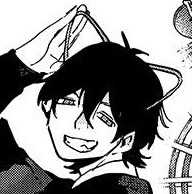
April 25, 2026
“I don’t feel naked, clad in clothes called fat as I am.”
che dire… sapevo già in partenza che non sarebbe stata una lettura semplice ma non pensavo sarebbe stata così too much😭🩷
5⭐️
che dire… sapevo già in partenza che non sarebbe stata una lettura semplice ma non pensavo sarebbe stata così too much😭🩷
5⭐️
April 19, 2021
ENGLISH REVIEW:
This manga tells the story of Noko, who suffers from depression, insecurity problems, mobbing at work and a related compulsive binge eating problem that forms a vicious cycle. She is emotionally dependent on her boyfriend, who knows her weaknesses and manipulates her to stay by his side. Noko decides to lose weight in an attempt to solve her problems with herself and the people around her. Thus, she develops bulimia.
The manga shows this quite honestly, presenting the issue of eating disorders with a lot of sincerity. However, I think the author confuses the clinical pictures of bulimia and anorexia, because in bulimia there is usually no excessive weight loss as a result of purging periods after binge eating. Excessive and rigid weight loss is more characteristic of anorexia, whereas in bulimia weight changes are not excessive.
It is not a work that shows a redemption of the protagonist, but rather tells us a somewhat dark story, which makes a wake-up call to all those people who base their happiness and self-esteem on how they look in the eyes of others and their comments.
As negative points of the manga we must point out the confusion between bulimia and anorexia already explained above in this text and the drawing style, which I did not like very much.
REVIEW EN ESPAÑOL:
Este manga nos cuenta la historia de Noko, la cual sufre de depresión, problemas de inseguridad, acoso laboral y un hábito de ingesta de comida compulsiva relacionado con todo ello que forma un círculo vicioso. Es emocionalmente dependiente de su novio, el cual conoce sus debilidades y le manipula para que siga a su lado. Noko decide perder peso en un intento de resolver sus problemas consigo misma y con las personas de su entorno. Así, desarrolla bulimia.
El manga muestra esto de forma bastante honesta, presentando el tema de los desórdenes alimentarios con mucha sinceridad. No obstante, creo que la autora confunde los cuadros clínicos de la bulimia y la anorexia, pues en la bulimia no suele existir una disminución excesiva del peso a consecuencia de los periodos de purga tras los atracones de comida. La disminución excesiva y rígida del peso es más característica de la anorexia, mientras que en la bulimia los cambios de peso no son excesivos.
No es una obra que muestre una redención de la protagonista, sino que más bien nos cuenta una historia un tanto oscura, que hace una llamada de atención a todas aquellas personas que basan su felicidad y autoestima en cómo lucen ante los ojos de los demás y sus comentarios.
Como puntos negativos del manga destaca la confusión entre bulimia y anorexia nerviosa ya explicada arriba en este texto y el estilo de dibujo, el cual no me ha gustado mucho.
This manga tells the story of Noko, who suffers from depression, insecurity problems, mobbing at work and a related compulsive binge eating problem that forms a vicious cycle. She is emotionally dependent on her boyfriend, who knows her weaknesses and manipulates her to stay by his side. Noko decides to lose weight in an attempt to solve her problems with herself and the people around her. Thus, she develops bulimia.
The manga shows this quite honestly, presenting the issue of eating disorders with a lot of sincerity. However, I think the author confuses the clinical pictures of bulimia and anorexia, because in bulimia there is usually no excessive weight loss as a result of purging periods after binge eating. Excessive and rigid weight loss is more characteristic of anorexia, whereas in bulimia weight changes are not excessive.
It is not a work that shows a redemption of the protagonist, but rather tells us a somewhat dark story, which makes a wake-up call to all those people who base their happiness and self-esteem on how they look in the eyes of others and their comments.
As negative points of the manga we must point out the confusion between bulimia and anorexia already explained above in this text and the drawing style, which I did not like very much.
REVIEW EN ESPAÑOL:
Este manga nos cuenta la historia de Noko, la cual sufre de depresión, problemas de inseguridad, acoso laboral y un hábito de ingesta de comida compulsiva relacionado con todo ello que forma un círculo vicioso. Es emocionalmente dependiente de su novio, el cual conoce sus debilidades y le manipula para que siga a su lado. Noko decide perder peso en un intento de resolver sus problemas consigo misma y con las personas de su entorno. Así, desarrolla bulimia.
El manga muestra esto de forma bastante honesta, presentando el tema de los desórdenes alimentarios con mucha sinceridad. No obstante, creo que la autora confunde los cuadros clínicos de la bulimia y la anorexia, pues en la bulimia no suele existir una disminución excesiva del peso a consecuencia de los periodos de purga tras los atracones de comida. La disminución excesiva y rígida del peso es más característica de la anorexia, mientras que en la bulimia los cambios de peso no son excesivos.
No es una obra que muestre una redención de la protagonista, sino que más bien nos cuenta una historia un tanto oscura, que hace una llamada de atención a todas aquellas personas que basan su felicidad y autoestima en cómo lucen ante los ojos de los demás y sus comentarios.
Como puntos negativos del manga destaca la confusión entre bulimia y anorexia nerviosa ya explicada arriba en este texto y el estilo de dibujo, el cual no me ha gustado mucho.
April 6, 2023
This was incredibly difficult to read.

September 3, 2018
La había visto en casi todas las secciones de manga de las diferentes bibliotecas a las que iba, y al final lo tomé prestado sin tener ni idea de cómo se abordaba el tema o de qué trataría exactamente. Todas las personas que hayan tenido crisis de identidad, problemas de imagen o hayan mantenido una relación tóxica con la comida debido a la presión social o a la ansiedad, leerán muchos de sus (espero) antiguos pensamientos en las palabras de la protagonista. Tengo 24 años y en toda mi vida no había leído nada parecido con lo que pudiera identificarme y creo que si me hubiera encontrado con esto de adolescente me habría ayudado a procesar y entender mejor ( y más rápido) porqué me había relacionado con la comida de esa forma (aunque no se llegue al desorden alimenticio).
Bastantes novelas que tratan enfermedades mentales e incluso la anorexia se han hecho conocidas a lo largo de los años y han ayudado a personas que lo sufrían a verse identificados en la ficción o en la experiencias de otros y así ser capaces de hablar acerca de ello. Creo que es necesario que la novela empiece a abordar este tema de forma integrativa, que se hable de la relación obsesiva y tóxica con la comida, de los problemas de identidad derivados de los cánones de belleza o de las exigencias sociales...
Respecto a la trama en sí; empieza y se desarrolla de manera interesante pero acaba por dejarte un poco huérfano de sentido, como si la autora no hubiera tenido una idea completa al empezarlo y lo hubiera acabado sin más. Lo cual es una pena, porque tenía buenos elementos que explotar.
Bastantes novelas que tratan enfermedades mentales e incluso la anorexia se han hecho conocidas a lo largo de los años y han ayudado a personas que lo sufrían a verse identificados en la ficción o en la experiencias de otros y así ser capaces de hablar acerca de ello. Creo que es necesario que la novela empiece a abordar este tema de forma integrativa, que se hable de la relación obsesiva y tóxica con la comida, de los problemas de identidad derivados de los cánones de belleza o de las exigencias sociales...
Respecto a la trama en sí; empieza y se desarrolla de manera interesante pero acaba por dejarte un poco huérfano de sentido, como si la autora no hubiera tenido una idea completa al empezarlo y lo hubiera acabado sin más. Lo cual es una pena, porque tenía buenos elementos que explotar.

Read
January 24, 2023Mi è molto piaciuta la prima parte, dove si rappresentano tutte le pressioni che subisce una donna grassa, e perché dimagrire diventa così importante come obiettivo.
Molto peggio la seconda parte, con uno sviluppo e una risoluzione che mi sono sembrati un po' affrettati, e in cui purtroppo si sente di più il peso dei 26 anni passati dalla prima pubblicazione.
Tutto sommato interessante, vorrei leggere altri josei di Moyoco Anno... Ricordo di aver letto Sugar Sugar al liceo (Sugar Sugar Rune, Volume 1), e di averlo trovato molto interessante come shoujo, quindi sono abbastanza sicura di potermi aspettare opere anche migliori di questa.
La mia prima lettura dell'anno è stata ispirata dai consigli su TikTok di Eleonora C. Caruso, che vorrei seguire in questi primi mesi dell'anno. Ma chi può saperlo, alla fine finisco sempre per leggere sull'onda degli impulsi del momento, e i propositi vadano a farsi benedire.
Molto peggio la seconda parte, con uno sviluppo e una risoluzione che mi sono sembrati un po' affrettati, e in cui purtroppo si sente di più il peso dei 26 anni passati dalla prima pubblicazione.
Tutto sommato interessante, vorrei leggere altri josei di Moyoco Anno... Ricordo di aver letto Sugar Sugar al liceo (Sugar Sugar Rune, Volume 1), e di averlo trovato molto interessante come shoujo, quindi sono abbastanza sicura di potermi aspettare opere anche migliori di questa.
La mia prima lettura dell'anno è stata ispirata dai consigli su TikTok di Eleonora C. Caruso, che vorrei seguire in questi primi mesi dell'anno. Ma chi può saperlo, alla fine finisco sempre per leggere sull'onda degli impulsi del momento, e i propositi vadano a farsi benedire.
Displaying 1 - 30 of 302 reviews