

What do you think?
Doctrine of Labyrinths #4
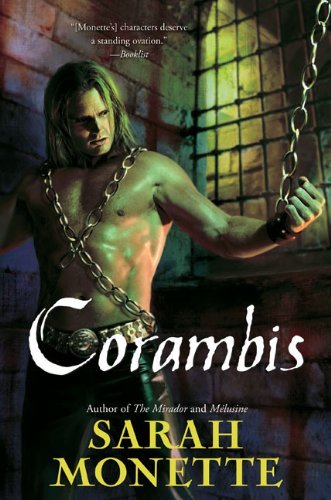
Corambis
In the spellbinding conclusion to the brilliant fantasy series, Doctrine of Labyrinths, two brothers discover their ultimate destiny.
Exiled from Melusine for the crime of heresy, Felix Harrowgate and his half-brother Mildmay journey to the land of Corambis to face judgement from a ruling body of wizards. Both brothers carry memories, regret, and-hidden deep in their hearts-hope.
Exiled from Melusine for the crime of heresy, Felix Harrowgate and his half-brother Mildmay journey to the land of Corambis to face judgement from a ruling body of wizards. Both brothers carry memories, regret, and-hidden deep in their hearts-hope.
432 pages, Hardcover
First published March 3, 2009
About the author
Sarah Monette
90 books1,029 followersMy pseudonym is Katherine Addison. Katherine reviews nonfiction. Sarah reviews fiction. Fair warning: I read very little fiction these days.
I was born and raised in Oak Ridge, Tennessee, one of the secret cities of the Manhattan Project. I studied English and Classics in college, and have gone on to get my M.A. and Ph.D. in English Literature. My first four novels were published by Ace Books. I have written two collaborations with Elizabeth Bear for Tor: A Companion to Wolves and The Tempering of Men. My short stories have appeared in lots of different places, including Lady Churchill's Rosebud Wristlet, Weird Tales, and Strange Horizons; I've published two collections of short stories, Somewhere Beneath Those Waves and The Bone Key. I collect books, and my husband collects computer parts, so our living space is the constantly contested border between these two imperial ambitions.
I was born and raised in Oak Ridge, Tennessee, one of the secret cities of the Manhattan Project. I studied English and Classics in college, and have gone on to get my M.A. and Ph.D. in English Literature. My first four novels were published by Ace Books. I have written two collaborations with Elizabeth Bear for Tor: A Companion to Wolves and The Tempering of Men. My short stories have appeared in lots of different places, including Lady Churchill's Rosebud Wristlet, Weird Tales, and Strange Horizons; I've published two collections of short stories, Somewhere Beneath Those Waves and The Bone Key. I collect books, and my husband collects computer parts, so our living space is the constantly contested border between these two imperial ambitions.
Ratings & Reviews
Friends & Following
Create a free account to discover what your friends think of this book!
Community Reviews
Displaying 1 - 30 of 167 reviews

August 4, 2012
Corambis
Or
Felix Tries Not To Be A Dick For a Change and Seriously Who Designed This Cover?
This was an excellent conclusion to the series. There are dark parts in the story telling, but over all things end on an unapologetically happy note. Which feels right and fair for everything these characters put up with.
I was dubious about having a third narrator again. But Kay was less intrusive to the story than Mehitabel. His sections, while present, work to explain the political and social system we find ourselves in. His story also does not distract from the main plot of the book. Most importantly, Kay's sections also consisted of considerably less of the novel than Mehitabel's, giving plenty of time for Felix and Mildmay to tell their story.
And by Felix and Mildmay, I mostly mean Felix. This, in a lot of ways, was truly his book and he plays the central character. Don't pick up the last book expecting lots and lots of Mildmay. He's present, he's awesome as ever, but the story is primarily about Felix. I have always liked Felix, so this was a pleasure for me. People who didn't like Felix as much may not enjoy this book, depending on what aspects of his personality they do or don't like. He spends a lot of the story double guessing himself, so if you didn't like wishy washy Felix, you may not enjoy this. On the other hand, if you hated him because of the way he treated Mildmay, you may enjoy this book. People who hated Felix will have to make their own call on that one. As someone who liked Felix, the book gets an A plus.
I've been checking a lot of books out of the library recently, but this is series I actually want to own and have on my shelf. I loved the intricate writing, the distinct voices, and I was absolutely addicted to this series while reading it. Now I have to find something else to do with my weekends since I finished all four books. Oh well, back to paranormal books, I suppose.
Or
Felix Tries Not To Be A Dick For a Change and Seriously Who Designed This Cover?
This was an excellent conclusion to the series. There are dark parts in the story telling, but over all things end on an unapologetically happy note. Which feels right and fair for everything these characters put up with.
I was dubious about having a third narrator again. But Kay was less intrusive to the story than Mehitabel. His sections, while present, work to explain the political and social system we find ourselves in. His story also does not distract from the main plot of the book. Most importantly, Kay's sections also consisted of considerably less of the novel than Mehitabel's, giving plenty of time for Felix and Mildmay to tell their story.
And by Felix and Mildmay, I mostly mean Felix. This, in a lot of ways, was truly his book and he plays the central character. Don't pick up the last book expecting lots and lots of Mildmay. He's present, he's awesome as ever, but the story is primarily about Felix. I have always liked Felix, so this was a pleasure for me. People who didn't like Felix as much may not enjoy this book, depending on what aspects of his personality they do or don't like. He spends a lot of the story double guessing himself, so if you didn't like wishy washy Felix, you may not enjoy this. On the other hand, if you hated him because of the way he treated Mildmay, you may enjoy this book. People who hated Felix will have to make their own call on that one. As someone who liked Felix, the book gets an A plus.
I've been checking a lot of books out of the library recently, but this is series I actually want to own and have on my shelf. I loved the intricate writing, the distinct voices, and I was absolutely addicted to this series while reading it. Now I have to find something else to do with my weekends since I finished all four books. Oh well, back to paranormal books, I suppose.

April 11, 2009
This goes off in a completely different direction from the first three books; the setting is somewhere new, and nearly all the characters (save for Felix and Mildmay) are new. Yet I found it a very satisfying conclusion to the series, because although it introduces new elements and a new story arc, it also resolves Felix and Mildmay's character arcs and relationships in a believable and pleasing way. (I do miss Mehitabel, though!)

January 24, 2017
3,5 stars.
Well, going back to the beginning. The first book was awesome. I loved it to death and more. The second book was extremely good. The third book was a disaster (all IMHO, mind you!) And the last book... I loved the first half of it almost as much as I loved the first and the second book. It focused on Felix and Mildmay, it was intense, there was so much angst you could drown in it twice and a half, and yet there were sparkles of hope as well... And the third p.o.v., Kay's, was not annoying, well, since Kay was in the situation of extreme suffering and yeah, I cared what was happening to him.
And then it all kinda... I don't know what... petered out. Kay's p.o.v. became just page count (well, I want to say it again: it all is just my opinion, I can totally imagine other readers loving it all). There were too many characters I didn't care about doing things I didn't find interesting. Felix and Mildmay's relationship... you know, if it were a contemporary book, they'd probably go to psychotherapy (and you're right, I do sound as unenthusiastic as I seem). Anyway, they were working on their relationship, they figured out their mistakes and will try to be better. And it was good, I'm happy for them...
Who am I kidding? I want passion, I want suffering, I want catharsis. The ending was so anti-climatic I'm trying hard to find something to say about it. It ended. I'm ready to move on and start reading other books.
And it shouldn't be like that! I spent more than a week with these characters, there should be a... a sillage after that in my mind. I do love it, lingering on the characters after I finish reading, imagining their lives after the word "end". I don't want to do it here. It's all so... bland, I don't know. Maybe I didn't like the ending, too.
A couple more things I'd like to mention. Why the f*ck was that incest thing necessary? Please, I've read all four books, I still don't see any importance of it. I don't want to guess the author's motivations because I won't be nice about it. Anyway, it was the gun that didn't shoot and just got rusty hanging on the wall. Stanislavsky is disappointed.
Another thing... I think SM is really bad with romance. Any romance, m/m or m/f. Not her strong suit. I don't mind it per se because - you cannot have everything, I know it. Just saying.
So well. I'm happy I read the first two books. And there was no way I wouldn't read the third and the fourth one. But... I just hate it how often - almost every time! - a fantasy series stars stellar and finish up disappointing. IMHO again.
P.S. I suddenly wondered if it'd make a difference for me if it were not the last book of the series. If I knew the author planned another book (even if it never was written). And the answer is yes. If the ending of the book is just a stage in Felix's and Mildmay's life, a temporary situation before they move on - I would find it pacifying and would be content with it. But since the ending of the book is the CONCLUSION of the series - and so, supposedly, what we have there is the prediction of their future... no, I dislike this kind of future for them. It's lukewarm future.
Well, going back to the beginning. The first book was awesome. I loved it to death and more. The second book was extremely good. The third book was a disaster (all IMHO, mind you!) And the last book... I loved the first half of it almost as much as I loved the first and the second book. It focused on Felix and Mildmay, it was intense, there was so much angst you could drown in it twice and a half, and yet there were sparkles of hope as well... And the third p.o.v., Kay's, was not annoying, well, since Kay was in the situation of extreme suffering and yeah, I cared what was happening to him.
And then it all kinda... I don't know what... petered out. Kay's p.o.v. became just page count (well, I want to say it again: it all is just my opinion, I can totally imagine other readers loving it all). There were too many characters I didn't care about doing things I didn't find interesting. Felix and Mildmay's relationship... you know, if it were a contemporary book, they'd probably go to psychotherapy (and you're right, I do sound as unenthusiastic as I seem). Anyway, they were working on their relationship, they figured out their mistakes and will try to be better. And it was good, I'm happy for them...
Who am I kidding? I want passion, I want suffering, I want catharsis. The ending was so anti-climatic I'm trying hard to find something to say about it. It ended. I'm ready to move on and start reading other books.
And it shouldn't be like that! I spent more than a week with these characters, there should be a... a sillage after that in my mind. I do love it, lingering on the characters after I finish reading, imagining their lives after the word "end". I don't want to do it here. It's all so... bland, I don't know. Maybe I didn't like the ending, too.
A couple more things I'd like to mention. Why the f*ck was that incest thing necessary? Please, I've read all four books, I still don't see any importance of it. I don't want to guess the author's motivations because I won't be nice about it. Anyway, it was the gun that didn't shoot and just got rusty hanging on the wall. Stanislavsky is disappointed.
Another thing... I think SM is really bad with romance. Any romance, m/m or m/f. Not her strong suit. I don't mind it per se because - you cannot have everything, I know it. Just saying.
So well. I'm happy I read the first two books. And there was no way I wouldn't read the third and the fourth one. But... I just hate it how often - almost every time! - a fantasy series stars stellar and finish up disappointing. IMHO again.
P.S. I suddenly wondered if it'd make a difference for me if it were not the last book of the series. If I knew the author planned another book (even if it never was written). And the answer is yes. If the ending of the book is just a stage in Felix's and Mildmay's life, a temporary situation before they move on - I would find it pacifying and would be content with it. But since the ending of the book is the CONCLUSION of the series - and so, supposedly, what we have there is the prediction of their future... no, I dislike this kind of future for them. It's lukewarm future.

May 23, 2013
Reread, 2020: My opinion is largely unchanged from my first reading. If the payoff/comfort comes too easy in this volume, it's still satisfying because the journey towards it has been a protracted struggle. This affects all elements, unfortunately including this book's climax. But I love it as often as not. Take as example the delightful conversation about the conflicting magical systems operating as magical metaphors, not prescriptive but descriptive (and therefore limited). It's obvious in retrospect of the generous, indulgent location-hopping throughout the series, but--like the character growth--it's been a long journey getting there for the characters themselves, so it's satisfying to see them achieve it.
My only real change of opinion is Kay. Giving him a dialect is more effective than the techniques used to make Mehitabel's voice distinct, nonetheleast because of the way that language and politics dovetail in this series. The tropes surrounding him--how he frames his disability, his fiancée's characterization--are predictable, but he still comes to feel like a distinct, complete person.
Original review, 2013: Exiled from Mélusine, the wizard Felix and his brother Mildmay journey towards Corambis, a foreign nation recently sundered by civil war. If the Doctrine of Labyrinths has been a protracted hurt/comfort fic, then Corambis is the comfort. New narrator Kay is another complex and strongly voiced character, but he fails to be as compelling or introduce as much diversity as the missing Mehitabel. The pacing is uneven, reliant on coincidence with all the plot pushed to the beginning and end of the book. The middle is given to interpersonal relationships, and this has always been the series's strength. Corambis is a slow journey towards self-acceptance and healing, and while it's predictable and manipulative, that doesn't matter: the previous three books have fostered an intense emotional investment in the characters, and their hard-won happiness is rewarding despite any flaws.
I've made a number of criticisms of this series without even touching on its potentially problematic representation of homosexuality and (sexual) abuse, and they all stand. The Doctrine of Labyrinths is an uneven effort, but it's also a unique one: Monette's mastery of character, voice, and place shines through obscure delivery and occasional absences of plot, and the effect is deeply personal and evocative. I'm sorry to see this series end, but it ends on a high note. I recommend it.
My only real change of opinion is Kay. Giving him a dialect is more effective than the techniques used to make Mehitabel's voice distinct, nonetheleast because of the way that language and politics dovetail in this series. The tropes surrounding him--how he frames his disability, his fiancée's characterization--are predictable, but he still comes to feel like a distinct, complete person.
Original review, 2013: Exiled from Mélusine, the wizard Felix and his brother Mildmay journey towards Corambis, a foreign nation recently sundered by civil war. If the Doctrine of Labyrinths has been a protracted hurt/comfort fic, then Corambis is the comfort. New narrator Kay is another complex and strongly voiced character, but he fails to be as compelling or introduce as much diversity as the missing Mehitabel. The pacing is uneven, reliant on coincidence with all the plot pushed to the beginning and end of the book. The middle is given to interpersonal relationships, and this has always been the series's strength. Corambis is a slow journey towards self-acceptance and healing, and while it's predictable and manipulative, that doesn't matter: the previous three books have fostered an intense emotional investment in the characters, and their hard-won happiness is rewarding despite any flaws.
I've made a number of criticisms of this series without even touching on its potentially problematic representation of homosexuality and (sexual) abuse, and they all stand. The Doctrine of Labyrinths is an uneven effort, but it's also a unique one: Monette's mastery of character, voice, and place shines through obscure delivery and occasional absences of plot, and the effect is deeply personal and evocative. I'm sorry to see this series end, but it ends on a high note. I recommend it.

September 3, 2018
So, here we finally finish up what is surely the darkest series I have read in a really long time, a series so dark I'm actually really surprised I finished it. That doesn't by any means mean it was a bad series, it just means that it's dark enough that, looking back, I'm surprised I didn't say, "You know what, this personally isn't for me, I'm going to stop." It's a series full of violence and trauma, and that's not something I'm big on. Nevertheless, I finished it, and for the most part I enjoyed it a lot more than I expected.
And I want this to be clear: I'm knocking a star off this book and rating it 3 stars instead of 4 stars because it absolutely does not feel like the end of the series, despite the fact that it was published 9 years ago and I think it's pretty clear that another book isn't coming out at this point. Felix and Mildmay's story does not feel wrapped up in any way shape or form. It's not like there is a huge, unbearable cliffhanger, but nothing feels property done, either. We aren't left on a satisfying note.
Other than that, it is a good book. It continues to not be a romance in any shape or form despite being categorized as a "Romance > M M Romance," and as with some of the previous books, there isn't even any romance in the book to make the label make sense. I'm not sure if GoodReads is causing weirdness with the categorization or what. But this book is 100% not a romance. If you want a romance, this book will profoundly disappoint you and make you unhappy. There's a lot that goes on, but it's not romance.
It's also a book, as I said, that is full of trauma. The book has on page, graphic rape, and one of the characters is put through what I would describe as psychological torture. It's not a gentle book, so be ready if you're planning to go in.
The world building is absolutely fascinating, and I love the way that different parts of the world have both different cultures and different levels of technology. That's just fun.
And I want this to be clear: I'm knocking a star off this book and rating it 3 stars instead of 4 stars because it absolutely does not feel like the end of the series, despite the fact that it was published 9 years ago and I think it's pretty clear that another book isn't coming out at this point. Felix and Mildmay's story does not feel wrapped up in any way shape or form. It's not like there is a huge, unbearable cliffhanger, but nothing feels property done, either. We aren't left on a satisfying note.
Other than that, it is a good book. It continues to not be a romance in any shape or form despite being categorized as a "Romance > M M Romance," and as with some of the previous books, there isn't even any romance in the book to make the label make sense. I'm not sure if GoodReads is causing weirdness with the categorization or what. But this book is 100% not a romance. If you want a romance, this book will profoundly disappoint you and make you unhappy. There's a lot that goes on, but it's not romance.
It's also a book, as I said, that is full of trauma. The book has on page, graphic rape, and one of the characters is put through what I would describe as psychological torture. It's not a gentle book, so be ready if you're planning to go in.
The world building is absolutely fascinating, and I love the way that different parts of the world have both different cultures and different levels of technology. That's just fun.

October 12, 2025
Content warnings: If I had a quarter for every time a in this series, I would have $.50. The first time, I can see the argument for why the assault is part of the story and the work that it's doing for plot and character. This time . . . I don't know. Much harder sell. It's my main quibble with this book and series as a whole. If you find sexual violence triggering, I would skip.
Corambis is a suitable culminating book to the Doctrine of Labyriths series. It has the sprawling style only loosely concerned with plot that I've come to expect from Sarah Monette, but as with her work as Katherine Addison, I enjoy her point of view so much I don't mind the meandering pace.
Felix continues to be his insufferable self and Mildmay is definitely the second banana in this offering. I liked the progression for both of them, and the culminating plot and fallout is more satisfying here than in Book III.
I do miss Mehitabel from Books II and III. There's a new wing woman for our troubled brothers in this book and she's lovely, but nowhere near as deep a character. I appreciate why Tabby didn't join them this time, but I do wish there'd been a way to include her. Le sigh.
The real standout is Kay, a character new to the series and who has much in common with Thara Celehar, a hero whose journey was yet ahead of Monette/Addison when she finished this work.
I thought at first that Kay was entering as a love interest, but his presence is more subtle and more interesting because Monette makes other choices for him.
Of all the books in the series, this is the one that I might consider adding to my permanent collection. The character resolution between Felix and Mildmay is well earned and satisfying when it arrives.
Corambis is a suitable culminating book to the Doctrine of Labyriths series. It has the sprawling style only loosely concerned with plot that I've come to expect from Sarah Monette, but as with her work as Katherine Addison, I enjoy her point of view so much I don't mind the meandering pace.
Felix continues to be his insufferable self and Mildmay is definitely the second banana in this offering. I liked the progression for both of them, and the culminating plot and fallout is more satisfying here than in Book III.
I do miss Mehitabel from Books II and III. There's a new wing woman for our troubled brothers in this book and she's lovely, but nowhere near as deep a character. I appreciate why Tabby didn't join them this time, but I do wish there'd been a way to include her. Le sigh.
The real standout is Kay, a character new to the series and who has much in common with Thara Celehar, a hero whose journey was yet ahead of Monette/Addison when she finished this work.
I thought at first that Kay was entering as a love interest, but his presence is more subtle and more interesting because Monette makes other choices for him.
Of all the books in the series, this is the one that I might consider adding to my permanent collection. The character resolution between Felix and Mildmay is well earned and satisfying when it arrives.

March 8, 2009
I have very mixed feelings about this book, probably because I love the first three of the series soooo much and it's been a while since I've read them. That's the problem with huge fantasy epics, you forget stuff and then want to dive in without being properly oriented to what's going on.
Also, I read this on a Kindle which is nice but you don't have a map (if there was one in the hardback version). A map would have helped reading this book a lot. Hell, I like maps in every book I read, regardless of genre :)
The good stuff: I love these characters, I love how this series is not really categorizable, I love how she deals with homosexual characters in an interesting way, I love the introspection and the deepness of world-building.
The stuff I want to avoid talking about but must to review it is that this book was a bit of a disjointed ending to an AMAZING series. I felt like the world we got dropped into, one with mechanics and steam etc etc, was a little bit jumping the shark from the first three. Better this had been a start to another trilogy in this "steampunky" universe our heroes got taken to. I missed the secondary characters from the last book (which ended on a heartwrenching note, amazing), and I was slightly confused about why we actually were living through the new character's eyes, even to the end. The first half was very engrossing because it was a lot of Felix and Mildmay (or more Felix actually), but the storylines seemed to drift from where they wanted to go midway through, and instead into a metaphysical realm that was a bit hard to follow and connect with as a reader (Only my personal opinion).
I will definitely read other things this author has to offer, she reminds me of Jaqueline Carey a lot, and I would encourage trying this series despite the strange turn book 4 took.
Also, I read this on a Kindle which is nice but you don't have a map (if there was one in the hardback version). A map would have helped reading this book a lot. Hell, I like maps in every book I read, regardless of genre :)
The good stuff: I love these characters, I love how this series is not really categorizable, I love how she deals with homosexual characters in an interesting way, I love the introspection and the deepness of world-building.
The stuff I want to avoid talking about but must to review it is that this book was a bit of a disjointed ending to an AMAZING series. I felt like the world we got dropped into, one with mechanics and steam etc etc, was a little bit jumping the shark from the first three. Better this had been a start to another trilogy in this "steampunky" universe our heroes got taken to. I missed the secondary characters from the last book (which ended on a heartwrenching note, amazing), and I was slightly confused about why we actually were living through the new character's eyes, even to the end. The first half was very engrossing because it was a lot of Felix and Mildmay (or more Felix actually), but the storylines seemed to drift from where they wanted to go midway through, and instead into a metaphysical realm that was a bit hard to follow and connect with as a reader (Only my personal opinion).
I will definitely read other things this author has to offer, she reminds me of Jaqueline Carey a lot, and I would encourage trying this series despite the strange turn book 4 took.
This entire review has been hidden because of spoilers.

Read
April 15, 2025Doktrine su mi objašnjene kao whump fic (guglajte dalje na sopstvenu odgovornost, prvi hit je AO3 kategorija, zatekao sam neki Sasuke/Naruto fic i pobegao). Prvi put sam čuo za to, lepo kad naučiš nešto novo =] Ali da, u Doktrinama svi pate i povređeni su i povređuju druge i sebe i tako u krug. Izgleda mi da je i autorki bilo dosta, jer ova knjiga je kao neki auto au, kao da je napisala fic na sopstveni roman u kome likovi mogu da se bave sobom i izlaskom iz kruga nasilja, vraćanjem u "normalu" i oporavkom. S druge strane, nije joj bilo dosta, Felix je opet dobio svoju porciju žuči, neki novi likovi takođe, al makar je Mildmay bolje prošao. Felix je u #3 bio supermoćni genije koji savladava na prethodnoj stranici nepoznate filozofije i škole magije, ovde je to bolje balansirano rekao bih...
TLDR: fenomenalan serijal
TLDR: fenomenalan serijal
June 9, 2025
Corambis reminds me vaguely of The Goblin Emperor, which was the first book I read by the author and obviously the way way more popular one (and although I was probably too young to read DOL when they first came out - not that that ever stopped me before - how sad am I that I didn't find them before now? VERY SAD. That is the answer. I've been missing out all these years!).
It's relatively quiet, the plot is (mostly) calmer, there's a lot of academic pondering and theoretical discussions of magic (which I love), there is emotional growth and catharsis, all wrapped up in a steampunk setting that highlights engines and politics and some cool new speech patterns. After the nonstop trauma beatdown this series has been, I think it's a welcome change of pace, if a strange sort of ending for the quartet seeing as how it introduces an entirely new setting, plot, and characters. It made it a bit less emotionally satisfying because there's not as much depth, given that it spends a lot of time setting up new relationships, which was a bit sad, and I miss the previous characters. But also, there's something beautiful about getting out of the claustrophobic setting of the Mirador.
Of course, the heart of the series is truly Felix and Mildmay and their relationship, and there really is beautiful growth and healing here. If The Mirador was Mildmay's book with his arc of growth, Corambis is Felix's. Having spent so much time with these characters, the bittersweet but mostly happy payoff is well-deserved.
Lest you think it's all roses (this is probably not a spoiler because it's so vague but just in case)
The plot is, as was the case for the previous books, sort of meandering and awkwardly-paced. I didn't mind honestly, because the focus is really on the characters, but then again I'm a sucker for character-driven fantasy and I'll forgive a poor plot (was there even a plot? I'm not sure. Did I care? Hell no).
Overall, the series is sometimes uneven and has its flaws, but it is marvelous in its uniqueness and beautiful in a lot of its character development, and the examination of relationships. Also, the writing is almost always top-notch, and I can say without a doubt this is one of the best examples of distinct voice I've ever read. I may be like 15 years late to the party, but I'll sorely miss this world and the characters.
But seriously. Go read this series.
It's relatively quiet, the plot is (mostly) calmer, there's a lot of academic pondering and theoretical discussions of magic (which I love), there is emotional growth and catharsis, all wrapped up in a steampunk setting that highlights engines and politics and some cool new speech patterns. After the nonstop trauma beatdown this series has been, I think it's a welcome change of pace, if a strange sort of ending for the quartet seeing as how it introduces an entirely new setting, plot, and characters. It made it a bit less emotionally satisfying because there's not as much depth, given that it spends a lot of time setting up new relationships, which was a bit sad, and I miss the previous characters. But also, there's something beautiful about getting out of the claustrophobic setting of the Mirador.
Of course, the heart of the series is truly Felix and Mildmay and their relationship, and there really is beautiful growth and healing here. If The Mirador was Mildmay's book with his arc of growth, Corambis is Felix's. Having spent so much time with these characters, the bittersweet but mostly happy payoff is well-deserved.
Lest you think it's all roses (this is probably not a spoiler because it's so vague but just in case)
The plot is, as was the case for the previous books, sort of meandering and awkwardly-paced. I didn't mind honestly, because the focus is really on the characters, but then again I'm a sucker for character-driven fantasy and I'll forgive a poor plot (was there even a plot? I'm not sure. Did I care? Hell no).
Overall, the series is sometimes uneven and has its flaws, but it is marvelous in its uniqueness and beautiful in a lot of its character development, and the examination of relationships. Also, the writing is almost always top-notch, and I can say without a doubt this is one of the best examples of distinct voice I've ever read. I may be like 15 years late to the party, but I'll sorely miss this world and the characters.
But seriously. Go read this series.
December 9, 2010
I read this because I had thoroughly enjoyed the previous 3 books in the series but I think this one is not nearly as good. It's not bad but it is not as deeply engaging. I felt like I had come to know and care about the characters through the first 3 books but by in this one they were too different and capricious. The ending was ultimately somewhat unsatisfying. I think the problem was that in the other books Felix and Mildmay are interacting fully with other characters and in this book the other characters feel very tangential to the larger point of finally getting these brothers to admit they care for each other. The storyline feels very isolated. Monette also introduces an entirely different world (Corambis and Caloxa) with steam engines and universities and it is not as engaging as Melusine. It's not a steampunk book so the attempts feel clumsy. I think this book is worth reading just to finish the series. The beginning of the series is SO GREAT that I felt disappointed but it's not a terrible book just not on the level of the others.

June 15, 2008
Perfect ending to the Doctrine of Labyrinths series and incontestably the number one fantasy of 09 so far for me, though there are many books to come.
Also a daring book as it's pretty much a standalone, taking place far away from Melusine in Corambis, and having only Mildmay and Felix as recurring characters.
Corambis is a very different setting too with trains, subway, magic as technology, and an Aristocratic Republic to boot, just ending a brutal three year old insurrection from its southern province formerly known as the kingdom of Caloxa which was a medieval like state with very different magic and has been conquered only 40 years before.
Felix was presented as "Caloxan"" by Malkar to the Mirador Court in the series beginning, and that is basically the only tenuous connection between the first 3 volumes and this one.
Outstanding and the best of series, a truly mature novel that marks the culmination of one of the best fantasy series of the past 4 years

February 11, 2024
loved this fucked up series😌
can't believe monette invented aroace romantasy in 2005
can't believe monette invented aroace romantasy in 2005

May 12, 2026
Ok, well, the ending to this series was so good, I cried.

June 30, 2011
An excellent finale to Felix and Mildmay's story, although I personally wouldn't mind if there was going to be another book. Or an epilogue or something with a fluffy ending.
Compared to the third book, this one is almost simple. Normally, that is not necessarily a good thing, but the previous one was so chock full of details and history and genealogy and ghosts and stories and spies and murky shadows and unexplored hallways, that this book almost radiates with its clean, good story line. It is a relief to leave all those other people, dead or alive, behind in Melusine. Not only for the reader, but for Felix and Mildmay as well. The distance they put between themselves and their past and all the drama in the Mirador allows them to gain much needed perspective on their previous lives. Both gain the kind of insight in themselves that comes with making a new start in a new place. Sure, you carry your baggage with you, but without other people around who expect you to be who you've always been, that baggage isn't quite as heavy a burden and you have the freedom to make different choices. A large part of the story is about the main characters finding those things out.
Add all the excitement of a new country, new customs (good and bad), new politics, new characters and new technology in all its steampunkish glory and this becomes a very satisfying read.
What I need though is a map of this world. If ever a series needed a map, this is it. Milmay has maps. Why don't I get one?
Compared to the third book, this one is almost simple. Normally, that is not necessarily a good thing, but the previous one was so chock full of details and history and genealogy and ghosts and stories and spies and murky shadows and unexplored hallways, that this book almost radiates with its clean, good story line. It is a relief to leave all those other people, dead or alive, behind in Melusine. Not only for the reader, but for Felix and Mildmay as well. The distance they put between themselves and their past and all the drama in the Mirador allows them to gain much needed perspective on their previous lives. Both gain the kind of insight in themselves that comes with making a new start in a new place. Sure, you carry your baggage with you, but without other people around who expect you to be who you've always been, that baggage isn't quite as heavy a burden and you have the freedom to make different choices. A large part of the story is about the main characters finding those things out.
Add all the excitement of a new country, new customs (good and bad), new politics, new characters and new technology in all its steampunkish glory and this becomes a very satisfying read.
What I need though is a map of this world. If ever a series needed a map, this is it. Milmay has maps. Why don't I get one?

March 4, 2018
The conclusion to Monette's series really got under my skin. This is the redemption book, and we see real development of the two main characters and their relationship. This book also gives us one of the most cool magic systems I have encountered. Throughout the books, Felix is constantly studying different types of magic systems from different regions, just as one would study different religions. He believes that the underlying reality of magic will never be known; rather, it's the metaphors that different cultures create to model that unknowable reality that determine the magic's capacity. Felix says, "There are bad metaphors, dangerous metaphors, destructive metaphors-- but not wrong metaphors. Thaumaturgical theory, in the broadest sense, is about manipulating our metaphors and, ideally, making sure that the metaphors we use are good ones." This explains different schools of wizardry, but also leaves open the possibility of completely new metaphors. I think it is amazingly cool!

May 27, 2013
What am I going to do now this series has finished? I feel somehow at a loss. Yes, all four books were that good. Corambis was a fitting conclusion to a truly wonderful story. I'd say epic, as well, only that might lead some people to think of the wrong sort of epicness. The writing from the first page of Melusine to the last page of Corambis was simply superb, and the scholarship and erudition inspiring. This is a many-layered story, with many-layered characters, and layered writing, and that's what makes it so incredible.
January 25, 2015
The last book of the series is the only one that isn't quite depressing. I love it, and I love how Felix Harrowgate slowly and painfully reclaims his empathy.
Also, I'm a big fan of Ferrand Carey, the Duke of Murtagh. No really edifying reason, though. I just like heroic bears. :)
Also, I'm a big fan of Ferrand Carey, the Duke of Murtagh. No really edifying reason, though. I just like heroic bears. :)

October 15, 2018
An excellent ending to a very enjoyable series. I'm so happy with the resolution, growth and sense of hope at the end this series. The plot stuff isn't always stellar but the thoughtful, nuanced exploration of both main characters as well as the emotional engagement makes this for a thoroughly worthwhile read.

March 25, 2022
This is the conclusion of the story of Mildmay and Felix and I suppose I am somewhat conflicted about it. Maybe I just don't want it to end except that I wouldn't want it to not end... And I like the ending, it's earned after all the things these guys have gone through, but somehow it was a rather mellow ending.
January 20, 2026
I loved this series with all my heart, and this, despite being completely different, was a perfect conclusion.
This entire review has been hidden because of spoilers.

March 13, 2018
Edit: As I have finished this book for a second time now, I can only say that I agree with all of my earlier statements! One thing I would like to add: for all the talk about labyrinths, I am still not entirely sure why labyrinths were so important to so many people. Though, I suppose, it doesn't matter a lot, and I'll be almost happy to let the matter lie. I think one of the reasons the magic in these books works for me is because I don't completely understand how it works the way it does. And you know what, I am fine with that too.
---
I finished this book about an hour and a half ago and I am so proud of myself for not crying (yet!) Also beware of spoilers??
I'm actually surprised to say I enjoyed this book most of all four, something I had not expected. At all. Corambis just about proves that you can get Felix out of Mélusine, but you can't get Mélusine out of Felix, the poor bastard. But boy, how he improved to be a better person, I'm so proud of him! Mildmay is still the perfect sinnamon roll (is2g he is one of the most gentle people i have ever read about and i have read a few hundred books, he deserves an award or something for sticking with his brother)
Kay, on the other hand, felt a little one-sided to me?? Not that I disliked him or anything, but he was so focused on being blind and the negative side effects that it felt repetitive at times. I mean, I understand he couldn't go around the being blind thing, and how he had to get used to it (and will face many obstacles yet to come), but the subjects during Kay's POV were 50% being blind and 50% something else. (i might just be rude here ^^') He did have good insights though, and with him, Mildmay, Felix and Corbie, unraveling the secrets of the bog people wouldn't have been that hard. Sadly, we'll never get to see that.
Another good thing is that Key didn't become a love interest for our dearest Felix. Ever since the book talked about him being a "violet" guy/boy/youknowit, I feared that he and Felix would get together. Oh how fate has proven me terrifically wrong :D Also that Mildmay wasn't interested in a relationship! I truly think he didn't have nightmares about Ginevra anymore, though both guys are prone to every weird nightmare you can think of... I bet you can tell I feel for them, right?
I must say, like the three other books, that names/places/historic events/etc still are hella confusing... In Corambis less so, fortunately, because there are less characters of importance, but still confusing.
Another confusing thing were those dreams!! Did the books ever say what those dreams meant because I don't get it???
Bless Felix for trying to not hate himself and bless Mildmay for supporting him all the way (and the other way around)!
Now, let's drown my feelings about this book in the next one :')
---
I finished this book about an hour and a half ago and I am so proud of myself for not crying (yet!) Also beware of spoilers??
I'm actually surprised to say I enjoyed this book most of all four, something I had not expected. At all. Corambis just about proves that you can get Felix out of Mélusine, but you can't get Mélusine out of Felix, the poor bastard. But boy, how he improved to be a better person, I'm so proud of him! Mildmay is still the perfect sinnamon roll (is2g he is one of the most gentle people i have ever read about and i have read a few hundred books, he deserves an award or something for sticking with his brother)
Kay, on the other hand, felt a little one-sided to me?? Not that I disliked him or anything, but he was so focused on being blind and the negative side effects that it felt repetitive at times. I mean, I understand he couldn't go around the being blind thing, and how he had to get used to it (and will face many obstacles yet to come), but the subjects during Kay's POV were 50% being blind and 50% something else. (i might just be rude here ^^') He did have good insights though, and with him, Mildmay, Felix and Corbie, unraveling the secrets of the bog people wouldn't have been that hard. Sadly, we'll never get to see that.
Another good thing is that Key didn't become a love interest for our dearest Felix. Ever since the book talked about him being a "violet" guy/boy/youknowit, I feared that he and Felix would get together. Oh how fate has proven me terrifically wrong :D Also that Mildmay wasn't interested in a relationship! I truly think he didn't have nightmares about Ginevra anymore, though both guys are prone to every weird nightmare you can think of... I bet you can tell I feel for them, right?
I must say, like the three other books, that names/places/historic events/etc still are hella confusing... In Corambis less so, fortunately, because there are less characters of importance, but still confusing.
Another confusing thing were those dreams!! Did the books ever say what those dreams meant because I don't get it???
Bless Felix for trying to not hate himself and bless Mildmay for supporting him all the way (and the other way around)!
Now, let's drown my feelings about this book in the next one :')
October 10, 2017
I so loved reading this tetralogy. It was one of those “I want to read these books ALL THE TIME but I also never want them to end”. Luckily, the four books together were over 2000 pages so they lasted for quite a while.
Magic (so Felix claims) works, or is explained, through metaphors. And therefore The Doctrine of Labyrinths is a very apt name for the book series. It was through following the characters - the two main characters, but also the many side characters - through their trials, through their mazes, avoiding or seeking the heart of the labyrinth, wrong turns and right turns, gathering magic all the while, that I came to care for them so deeply.
I often thought about it - and I hope you know I mean this as true praise - as reading really good fanfiction. Centered round the emotions and reactions of characters one has become deeply invested in: their stupid, conditioned choices and their stupid not-talking-to-each-other and their getting lost in the labyrinth even though they took the only road they could have taken - and then the honesty and openness, when the clouds do part, being all the more important.
Sidenote: there’s a critics’ term, probably male critics’, not certain if it’s Swedish or more widespread, of “housemaid reading” - “pigläsning”. It means involving your feelings in your reading, reading emotionally, considering your emotional attachment to the characters and the story, and not only your intellectual appreciation and understanding of the text. … So, I guess, the opposite of how you read male, white Nobel Prize winners. (No offence to Eyvind Johnson, Albert Camus, and some others. I got emotionally attached to your stories and your characters.)
Sidenote 2: It wasn’t until the second half of the second book that I realised that The Doctrine of Labyrinths can be read not only as really good fanfiction, but, in a way, as a very advanced AU of my incredibly preferred fanfic: Holmes & Watson. (This is not to suggest that the world-building is lacking: it is wonderful, and, to use a word from one review, luscious. And certainly multi-faceted and carrying its own weight.)
Sidenote 3: There have been reviews of this series that haven’t liked the POV-switching, and I’d worried beforehand that this would mean that the author would forget whose POV we were in in a particular scene - but the switches are clearly marked and I think they work very well dramaturgically.
Magic (so Felix claims) works, or is explained, through metaphors. And therefore The Doctrine of Labyrinths is a very apt name for the book series. It was through following the characters - the two main characters, but also the many side characters - through their trials, through their mazes, avoiding or seeking the heart of the labyrinth, wrong turns and right turns, gathering magic all the while, that I came to care for them so deeply.
I often thought about it - and I hope you know I mean this as true praise - as reading really good fanfiction. Centered round the emotions and reactions of characters one has become deeply invested in: their stupid, conditioned choices and their stupid not-talking-to-each-other and their getting lost in the labyrinth even though they took the only road they could have taken - and then the honesty and openness, when the clouds do part, being all the more important.
Sidenote: there’s a critics’ term, probably male critics’, not certain if it’s Swedish or more widespread, of “housemaid reading” - “pigläsning”. It means involving your feelings in your reading, reading emotionally, considering your emotional attachment to the characters and the story, and not only your intellectual appreciation and understanding of the text. … So, I guess, the opposite of how you read male, white Nobel Prize winners. (No offence to Eyvind Johnson, Albert Camus, and some others. I got emotionally attached to your stories and your characters.)
Sidenote 2: It wasn’t until the second half of the second book that I realised that The Doctrine of Labyrinths can be read not only as really good fanfiction, but, in a way, as a very advanced AU of my incredibly preferred fanfic: Holmes & Watson. (This is not to suggest that the world-building is lacking: it is wonderful, and, to use a word from one review, luscious. And certainly multi-faceted and carrying its own weight.)
Sidenote 3: There have been reviews of this series that haven’t liked the POV-switching, and I’d worried beforehand that this would mean that the author would forget whose POV we were in in a particular scene - but the switches are clearly marked and I think they work very well dramaturgically.

March 5, 2018
All the tension between Mildmay and Felix, every harsh word, argument, physical altercation... all of it was finally paid off in the last book in the series, when Felix is arguably at his lowest (knowing exile, compared to his earlier unknowing madness) and decides that it's time he tried harder to be a decent person.
His faults and his transgressions are not wiped away--quite the opposite, in fact. He's less able to forgive himself for what he's done than others are, especially Mildmay. It comes out, in a short but beautifully emotional conversation between the two of them, that basically Felix did so much to push his brother away because he couldn't believe anyone could ever accept him as he was, and the fact that Mildmay did felt undeserved, unwarranted.
I am wholeheartedly satisfied with this conclusion, and it was a real pleasure to watch the two of them interact like friends, even like family, rather than brothers-by-chance who were thrown together by circumstance.
On top of that, what made this final book a standout for me in the series was a twist on worldbuilding I'm not sure I've ever seen. The first three books seemed to have the same rough level of technology as say, Edwardian England--carts and horses and boats for travel, at best. Then, in exile, Felix and Mildmay go to a country totally unknown to them, and there are trains! Corambis has a higher level of technology, and while steampunk is nothing new (and technically they're steam- and magic-powered) I've never read anything involving higher technology without alien visitation being involved.
Also, Monette uses a very similar structure for the books throughout this series, many seemingly unrelated plot threads that gradually (or suddenly, in some cases) come together in a spectacular ending. While I criticized the previous book for doing this badly, here, it's handled much better. While I couldn't see all the specifics of how the ending would play out, I did at least get some sense of where things were going, instead of being bewildered about the importance of a character or an incident for most of the book.
I look forward to rereading the entire series in the future, hopefully picking up more of what confused me the first time, now that I know how it all works out.
His faults and his transgressions are not wiped away--quite the opposite, in fact. He's less able to forgive himself for what he's done than others are, especially Mildmay. It comes out, in a short but beautifully emotional conversation between the two of them, that basically Felix did so much to push his brother away because he couldn't believe anyone could ever accept him as he was, and the fact that Mildmay did felt undeserved, unwarranted.
I am wholeheartedly satisfied with this conclusion, and it was a real pleasure to watch the two of them interact like friends, even like family, rather than brothers-by-chance who were thrown together by circumstance.
On top of that, what made this final book a standout for me in the series was a twist on worldbuilding I'm not sure I've ever seen. The first three books seemed to have the same rough level of technology as say, Edwardian England--carts and horses and boats for travel, at best. Then, in exile, Felix and Mildmay go to a country totally unknown to them, and there are trains! Corambis has a higher level of technology, and while steampunk is nothing new (and technically they're steam- and magic-powered) I've never read anything involving higher technology without alien visitation being involved.
Also, Monette uses a very similar structure for the books throughout this series, many seemingly unrelated plot threads that gradually (or suddenly, in some cases) come together in a spectacular ending. While I criticized the previous book for doing this badly, here, it's handled much better. While I couldn't see all the specifics of how the ending would play out, I did at least get some sense of where things were going, instead of being bewildered about the importance of a character or an incident for most of the book.
I look forward to rereading the entire series in the future, hopefully picking up more of what confused me the first time, now that I know how it all works out.

October 18, 2023
The brothers travel to a new city where Felix is meant to submit himself to the local magicians who I guess are supposed to make him behave/not kill anyone else. Mildmay is following Felix like a dog, which seems to be his lot at this point in the narrative. We get a new POV in Kay, a (former) margrave who lost his military leader/unrequited love in a failed magical engine ritual that left him blind.
A lot of things happen. Felix makes an unexpected, brief, and I felt unlikely return to prostitution which goes disastrously wrong, though it does point to the power of ritual. Felix becomes a popular university professor, because of course he does.
Mildmay limps, and that's about all he does.
After a lifetime of being a man of action, Kay has to get used to being blind. Kay's brother-in-law wants to marry him off to a widow, though Kay is gay. It wasn't clear to me who knew and who didn't, or whether the brother-in-law or future wife would care. The society seemed reasonably tolerant.
The botched magical military maneuver continues to affect the land, the grazing animals, and the population. Felix attempts to counteract the previous ritual and .
The brothers, along with Kay, are moving to a new location with a lighthouse. Sure. Okay. I'd totally read another book in this series, but I wish Mildmay would get back some of his earlier spark. I wish Felix would have maybe a little less charisma and a little more common sense and consideration. I liked this book less because I knew it was the end of the series and none of that is going to happen in a future book.
A lot of things happen. Felix makes an unexpected, brief, and I felt unlikely return to prostitution which goes disastrously wrong, though it does point to the power of ritual. Felix becomes a popular university professor, because of course he does.
Mildmay limps, and that's about all he does.
After a lifetime of being a man of action, Kay has to get used to being blind. Kay's brother-in-law wants to marry him off to a widow, though Kay is gay. It wasn't clear to me who knew and who didn't, or whether the brother-in-law or future wife would care. The society seemed reasonably tolerant.
The botched magical military maneuver continues to affect the land, the grazing animals, and the population. Felix attempts to counteract the previous ritual and .
The brothers, along with Kay, are moving to a new location with a lighthouse. Sure. Okay. I'd totally read another book in this series, but I wish Mildmay would get back some of his earlier spark. I wish Felix would have maybe a little less charisma and a little more common sense and consideration. I liked this book less because I knew it was the end of the series and none of that is going to happen in a future book.

July 17, 2021
The Final Adventure of Two Redheaded Brothers Who Desperately Need Therapy and One of Them is a Wizard, with bonus Bitter Angry Blind Guy. I didn't find this tale as compelling as the previous volumes of the series, possibly because the pacing was super odd (it took about half the novel for the brothers' narrative to hook up with the third narrator's, and even then it took another long stretch before it became clear what they had to do with each other), and also because I didn't find the setting nearly as compelling as that of the prior books. Magic plus trains and murderous engines is pretty cool, but the culture of Corambis itself seemed much less complex and colorful than Melusine or even Troia, the Island of Magical Redheads.
Of course it's still a good read, most especially as Felix comes to terms with himself and his situation and starts to finally recover from his various traumas, and Monette is such a skilled writer that even the long stretches of not much happening are compelling and enjoyable. Yet, as a series conclusion it's so ... sort of odd and not what one would expect that I closed the book with a feeling of, "... huh. Was that it?"
Highlights for me included Mildmay learning to read, and the expansion of the magic system, which may be the best thought-out system I've read (or at least my favorite, and the one that makes the most intuitive sense). (I would still totally read a series about Mildmay the Sleuth solving mysteries and busting heads, though, I'm just saying.)
Of course it's still a good read, most especially as Felix comes to terms with himself and his situation and starts to finally recover from his various traumas, and Monette is such a skilled writer that even the long stretches of not much happening are compelling and enjoyable. Yet, as a series conclusion it's so ... sort of odd and not what one would expect that I closed the book with a feeling of, "... huh. Was that it?"
Highlights for me included Mildmay learning to read, and the expansion of the magic system, which may be the best thought-out system I've read (or at least my favorite, and the one that makes the most intuitive sense). (I would still totally read a series about Mildmay the Sleuth solving mysteries and busting heads, though, I'm just saying.)

September 14, 2008
Fantasy. This is the fourth and final book of Mildmay and Felix's adventures and it assumes you just finished reading the previous three within the past hour. If you haven't, I suggest you get right on that because there's a lot of name-dropping and it went straight over my head as I can only vaguely recall the events of the past books.
I definitely feel like I would have been more engaged with Felix if I could remember all his past traumas, but there are just so many. As for this book -- nothing happens. There's a lot of travelling and hotel rooms, and eventually there's a thing that has to be done, but the story lacks a central conflict. I could have lived with that, but there's not enough character development to make up for all the floundering around. A new guy, Kay, is introduced, but all I got from him was a sense of stoutness. I did like Corbie, what little we saw of her. Mildmay's still Mildmay, but at one point Felix's magic [redacted:] and Felix doesn't even react! It wasn't until pages later that I realized something (supposedly) awful had happened. This is a lackluster and pointless finish to a series plagued with pacing problems.
Three stars. It's not terrible, but it's not great either. Read it just to be done with it. (And maybe because someone will write us Felix/Mildmay slash.)
I definitely feel like I would have been more engaged with Felix if I could remember all his past traumas, but there are just so many. As for this book -- nothing happens. There's a lot of travelling and hotel rooms, and eventually there's a thing that has to be done, but the story lacks a central conflict. I could have lived with that, but there's not enough character development to make up for all the floundering around. A new guy, Kay, is introduced, but all I got from him was a sense of stoutness. I did like Corbie, what little we saw of her. Mildmay's still Mildmay, but at one point Felix's magic [redacted:] and Felix doesn't even react! It wasn't until pages later that I realized something (supposedly) awful had happened. This is a lackluster and pointless finish to a series plagued with pacing problems.
Three stars. It's not terrible, but it's not great either. Read it just to be done with it. (And maybe because someone will write us Felix/Mildmay slash.)

January 2, 2010
Another fantastic novel by Sarah Monette. Honestly, I think I'm biased because I love her character so much that I'd read any story about them, even if the plot wasn't that good. But Monette's characters are really her strongest trait I think. Her characters are human, imperfect, damaged and hurting, but not like so many emo!wannabe characters you find in every book nowadays. Felix and Mildmay's pains and hurts are real, easy to relate to, even if it's unlikely anyone of us has had to live through so many horrors as they have.
This (unfortunately last) novel is about healing. Mildmay and Felix's relationship has always been a very difficult and troubled one, as can be expected from two persons with such dark pasts, but in this novel, they find a way to accept the past for what it is and move on.
I think this novel has a lot more dialogue than any of the previous books, and it reads maybe too easily. I mean, I was loving every bit of it, but it feels like there's not enough. Not enough at all ! It can't possibly be the last we read of Felix and Mildmay and Kay and all the other characters, right ? I pray that Monette is once again inspired to write in this wonderful universe. More more more !
This (unfortunately last) novel is about healing. Mildmay and Felix's relationship has always been a very difficult and troubled one, as can be expected from two persons with such dark pasts, but in this novel, they find a way to accept the past for what it is and move on.
I think this novel has a lot more dialogue than any of the previous books, and it reads maybe too easily. I mean, I was loving every bit of it, but it feels like there's not enough. Not enough at all ! It can't possibly be the last we read of Felix and Mildmay and Kay and all the other characters, right ? I pray that Monette is once again inspired to write in this wonderful universe. More more more !

February 15, 2021
I think my biggest complaints with this book are the cover and the fact that the ending felt just a bit anti-climatic.
But, I can cast those aside because we got conversations! We got healing! We got acknowledgment of pain! We got CHARACTER GROWTH! We also got a new setting that I think was very necessary for these two brothers to break free from the trauma of their past and truly begin to live lives not constantly weighed down and warped by their past sins.
Kay's POV was okay, it took me bit to get used to the dialect Monette employs, but it's basically a light version of what she used in the Goblin Emperor so I didn't have too much trouble. One again, Milday and Felix's POVs were what grabbed my attention, especially when they had these conversations that didn't end in screaming matches, but instead improved their relationship. Baby steps.
I greatly enjoyed the journey the Doctrine of Labyrinths took me on, for all its dark content and staggering amounts of PAIN.
I'm glad I read this series and while I wished we got a bit more catharsis wrt to the ending, which as I mentioned was somewhat anti-climatic, I'm not disappointed.
But, I can cast those aside because we got conversations! We got healing! We got acknowledgment of pain! We got CHARACTER GROWTH! We also got a new setting that I think was very necessary for these two brothers to break free from the trauma of their past and truly begin to live lives not constantly weighed down and warped by their past sins.
Kay's POV was okay, it took me bit to get used to the dialect Monette employs, but it's basically a light version of what she used in the Goblin Emperor so I didn't have too much trouble. One again, Milday and Felix's POVs were what grabbed my attention, especially when they had these conversations that didn't end in screaming matches, but instead improved their relationship. Baby steps.
I greatly enjoyed the journey the Doctrine of Labyrinths took me on, for all its dark content and staggering amounts of PAIN.
I'm glad I read this series and while I wished we got a bit more catharsis wrt to the ending, which as I mentioned was somewhat anti-climatic, I'm not disappointed.

June 5, 2017
This series just about blew me away. Most of the fantasy series I've found in the last couple years fall under the "Grimdark" genre, and it was enlightening to find this. (There is commentary from the author that claims these books are as dark and grim as they come, but there is entirely too little bloodshed, the characters are too sympathetic and relatable, and the overall world is too vivid and realistic with the possibility of being nice, for me to consider this grimdark.)
The books are written from a shifting first person perspective, and Monette gives excellent voicing to her characters. The writing itself is intentional and engaging; I found all of the books hard to put down. The story is deep and compelling, and while I found a lack of character growth in the first three books, the fourth book finally brought about some of the resolutions I thought were coming earlier in the stories.
The books are written from a shifting first person perspective, and Monette gives excellent voicing to her characters. The writing itself is intentional and engaging; I found all of the books hard to put down. The story is deep and compelling, and while I found a lack of character growth in the first three books, the fourth book finally brought about some of the resolutions I thought were coming earlier in the stories.

January 20, 2013
It's been a long journey of four books and we get another ugly cover--I don't know what Ace Books was thinking and what kind of audience they were aiming for in those covers, but it's honestly so unfortunate.
Anyway, after all the murders and the exile and whatever wrong things that would happen to Felix and Mildmay, we are seeing the light at the end of the tunnel. It's a gradual thing, but they talk to each other more, they make an effort not to hurt each other even if they can, and Felix is starting to forgive himself.
Having Felix and Kay Brightmore as bookends, if you will, works perfectly: they are both 'monsters' and have hurt people, each in their own way and for their own reasons, and they're also both looking for their own reasons to live.
Which is how stories work and labyrinths also: you do have to go through the thorny bits to be able to get out.
Anyway, after all the murders and the exile and whatever wrong things that would happen to Felix and Mildmay, we are seeing the light at the end of the tunnel. It's a gradual thing, but they talk to each other more, they make an effort not to hurt each other even if they can, and Felix is starting to forgive himself.
Having Felix and Kay Brightmore as bookends, if you will, works perfectly: they are both 'monsters' and have hurt people, each in their own way and for their own reasons, and they're also both looking for their own reasons to live.
Which is how stories work and labyrinths also: you do have to go through the thorny bits to be able to get out.
Displaying 1 - 30 of 167 reviews