In a time of climate change and mass extinction, how we garden matters more than "An outstanding and deeply passionate book." ―Marc Bekoff, author of The Emotional Lives of Animals Plenty of books tell home gardeners and professional landscape designers how to garden sustainably, what plants to use, and what resources to explore. Yet few examine why our urban wildlife gardens matter so much―not just for ourselves, but for the larger human and animal communities. Our landscapes push aside wildlife and in turn diminish our genetically programmed love for wildness. How can we get ourselves back into balance through gardens, to speak life's language and learn from other species? Benjamin Vogt addresses why we need a new garden ethic, and why we urgently need wildness in our daily lives―lives sequestered in buildings surrounded by monocultures of lawn and concrete that significantly harm our physical and mental health. He examines the psychological issues around climate change and mass extinction as a way to understand how we are short-circuiting our response to global crises, especially by not growing native plants in our gardens. Simply put, environmentalism is not political; it's social justice for all species marginalized today and for those facing extinction tomorrow. By thinking deeply and honestly about our built landscapes, we can create a compassionate activism that connects us more profoundly to nature and to one another.
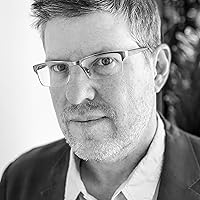
Benjamin Vogt has a PhD in English from the University of Nebraska-Lincoln and an MFA from The Ohio State University. His writing and photography have appeared in over 60 publications from journals and magazines to anthologies. Benjamin writes a native plant gardening column at Houzz.com and speaks nationally on sustainable and wildlife landscapes. He owns Monarch Gardens LLC, a prairie garden design firm. Benjamin and his wife live in Lincoln, Nebraska where they dream of reviving 20-40 acres to prairie, and creating a one acre native plant display garden with artist residency.
A surprisingly deep and thorough look at ecological philosophy and the anthropogenic forces on our environment and our climate. All of this through the lens of "the garden" as created space, as natural setting. Natural spaces/wildness and its role in such social justice movements, activism, and even religion - all subjects covered in this book.
Vogt's intelligent writing challenged me in a pretty radical way and I am grateful for that. I suspect several more readings and ruminations of the text.
4.5 stars, only because I think the book needed more chapters and a little better organization. I felt sometimes there was too much bouncing around between thoughts. I also think there could have been a little more direction at the end, a clarion call sort of statement with direction for how to proceed.
Otherwise, this book is an interesting mix of gardening, ecology, and philosophy, with a smidge of religion. It would honestly be over any beginning gardener's head but is perfect for those with years of experience under their belts with a willing mind to do the work to change their gardening philosophy. Pair it with a Dr. Tallamy book and you would be good to go.
A good followup book to write would be some kind of Gaia's Garden-esque ecology focused garden primer for gardeners.
Read this profound take on the ethics of gardening. It's actually so much more than that and a book I shall reread because it's so deep. I was digging (ha!) his ideas about plants not being art and how we - nature and humans - coexist so all decisions need to be made with that in mind, when Chapter 3 blew me away with discussion of shame, guilt, meta meditation and unethical amnesia. Wow! I expected to be drawn to the social justice aspect of Chapter 4 and felt inspired by Vogt's message. I especially like how even though he isn't necessarily optimistic, he is not giving up the fight.
I was fortunate to hear Vogt talk at a bookstore and found him funny and humble, yet forthright, all of which made me appreciate his book even more. It's a manifesto for our times.
Good overview of the state of thinking on ecological ethics in the landscape industry at the moment. Overall, engaging and well-written. I appreciate Ben’s chapter on the relationship between religious belief systems and ecological thinking - that’s an aspect that isn’t often addressed in the industry. Some thought provoking parallels between landscape design and activism.
Some lovely garden writing is interspersed in rather poorly organized ecological science and philosophy. Citations are lacking for many of the claims, and digressions sometimes go rather far afield. Apparently Vogt taught at a college and disagreed with the use of trigger warnings to assist students with PTSD. I completely agree with the author's premise that native plants are important for ecological restoration, but some of the arguments could have been made more clearly and persuasively.
On some occasions, I believe that Vogt swings his arguments too far, but the underlying messages of his ideas are an interesting contribution to the discussion of nature and design. Overall a decent read with well-worded arguments, but perhaps a little too precocious for my liking.
Vogt's arguments are compelling and his writing is beautiful. This book is relevant not just for gardeners but for anyone who cares about the future of the natural world.
This book changed my life. Native plants are so important to our ecosystems that we need to focus solely on native plants!
I am not a home owner, but I do have a Community Garden plot. This book is not about our food gardens. It's about landscaping and flower gardens. And in those places, we need to avoid the exotics and the invasives. BV puts out the argument, and perfectly convinces me. I have been researching the plants I have in my garden plot...
As a vegan, I thought I was doing good to let the Borage grow wild in my plot. I saw how much it was loved by the European Honey Bees, and the occasional native Bumble Bees! But it turns out, Borage is native to the eastern Mediterranean. Nothing to do with my local US Pacific Northwest region, the occasional Bumble Bees were just a happy happenstance.
And it's the native bugs and the native bees that we need to be supporting. 90% of song birds feed bugs to their babies... no bugs, no baby birds. And humans have been hard on bugs, pesticides galore. Insect populations are crashing, bird populations are crashing.
An example. I recently discovered the Red Flowering Currant, native in my area. The flowers nectar supports hummingbirds and other pollinators and the berries are eaten by several other birds and mammals. The leaves are eaten by 25 different species of butterfly and moth caterpillars! In contrast, the Butterfly Bush, an exotic plant from Asia might attract a few large butterflies but most pollinators tongues aren't long enough to get to the nectar... And Butterfly Bush supports zero caterpillars. It's pretty much useless!
So, native plants support our native bugs! I haven't figured out what will replace the Borage in my garden plot. But I'm learning more and more about native plants. The Pacific NW is a unique ecosystem, the natives aren't really listed at nurseries or seed catalogs. But I'm learning! And will apply what I learn about native plants and bugs!
Interesting book that certainly challenged my perspective on gardens. As my city intends to build some parks/gardens, the author provided me some alternative ideas vs the standard garden store options. It's a long list, but many interesting excerpts are below.
- There are two core philosophies that describe how we interact with and engage nature and environment. The first is deep ecology… deep ecology wants to revamp the human systems that deny cultural diversity and biodiversity in nature… the second philosophy is shallow ecology, which promotes technological fixes to environmental issues… primarily looks to humans for understanding and direction. P4. - So many of our landscapes are in no man's land, scarred and abused, forgotten and misunderstood… p10. - Our suburban and urban planting areas are especially devoid of life, ecological function, and a sense of ethical interaction with the world… p10. PJK. Hmmm. Never thought about this before. - Parking lots rush oily water filled with trash to clog storm drains and foul streams and lakes, instead of settling toward bioswales or rain gardens to be cleaned and filtered by plants evolved to do the job for free. P11. PJK. Very aware of this... but how to get local residents to understand nature's filtering process. - Gardens matter because they bring birds and butterflies closer to us, they help release endorphins that make us feel happy… p24. - When we learn what our landscapes can do, how they can directly help wildlife and serve as ethical symbols for people - when we learn how essential native plants are, how gardens can sequester carbon and provide pollen and serve as larval hosts and rebuild our homes - then the choices we make after these revelations carry even more weight. P24. PJK. The science is there... but how to get suburbanites to understand that large sterile landscapes are good for nature. - While definitions of what makes a plant native vary based on belief and profession, I define native plants as preindustrial revolution - that is, plants and given environment that were present, and part of the functioning ecology and biodiversity, before western civilization plowed them up and/or altered the chemistry of the atmosphere with exhaust from fossil fuels. P31. PJK. Great definition of "native". - The results in this moderate sample size in one region ( the northeast) showed that the all-native landscapes supported 8 times the number of caterpillars, birds, and bird species of conservation concern. P38-39. - 87% of the world's flowering plants, including most of our primary food crops, require insects to reproduce. A healthy minority of those flowering plants have some degree of specialist relationship with native bees meaning that a native bee times its emergence from the nest to coincide with a specific plants bloom. P40. PJK. Wish people understood the huge impact insects have in our world. - Bumblebees are critical pollinators, able to muscle into closed flowers like blue wild indigo, turtle head, and gentian, while also performing buzz pollination; these bees may deliver 15 to 20 pollen grains each time they visit a flower, which compares to only three to four grains on honey bees. P40. PJK. Never realized why bumblebees are out there! - We've been duped by “save the bees” campaigns that show images of European honey bees or graphics of honeycomb. We don't really need honey bees in North America for pollination. The primary group that needs honey bees is an industrial agriculture system that has come to depend upon them… We put great stress on these bees, shipping them around the nation, treating them like machine parts with dollar values as their primary worth. Worse, honey bees out compete native bees for forage… p41. PJK. Very interesting. I need to learn more. - Viewing a garden from a distance is akin to holding a book without reading the words… gardens should be experienced so close you risk getting stung or bitten… p63. - For the Romans, garden landscapes were about possession, status, and replicating scenes from myths and literature that, when copied throughout the empire, induced a sort of public order in tandem with their grid pattern cities. P109. - Taking cues from formal Roman design, the cloister gardens of medieval European monasteries were places of shelter refuge from the violence and uncertainty of the time - a way to keep unfettered and dangerous nature at bay. P109. - Art, science, and literature all contributed to geometric landscapes where social and artistic expression benefitted the educated. P110. - We go to nature, whether it's in a park or garden, to escape, to be cloistered, and to briefly be reminded of our shared lineage - even if that nature isn't wild but designed or accessed primarily for our own needs. P110. - Rousseau shifted landscape experience from purely artistic and literary to something more patriotic: landscapes to honor the common national experience, such as memorials for the dead, and eventually, the idea of public parks were all good enjoy the beauty of the countryside set apart from the cacophony of cities. P111. - Planting design is, fundamentally for people… Anything which fails to interest or place them will lose support, as local governments that have created untidy “wildlife areas” in parks have found out to their cost. P118. - It's brutally clear at this point in our planetary history that we need to rethink garden design. It cannot be solely or primarily for humans. We need places that provide habitat for people and other species so that we interact with wildness once again, realizing its value not just for ourselves but for itself. P119. - We have to make smart plant choices, ensuring our gardens perform well visually and as mutually supportive communities that require less human management. P121. - By using native plant species, especially those of local genetic origin, we could give our landscapes a leg up on adaptation to bring wildness into our lives, bridging the many natures of our existence. Plants would not be just pretty - they would also be useful as they clean the environment, preserve precious topsoil, increase our mental health, decrease our dependence on fossil fuels, insisting wildlife via multiple functions. P127.
Benjamin Vogt’s A New Garden Ethic: Cultivating Defiant Compassion for an Uncertain Future is a unique call to awareness of our personal choices. How, what, when, and why we garden as we’ve been conditioned to, has an impact on the planet. Vogt’s grounding as a poet, essayist, photographer, and wildlife landscape designer serves his narrative blend of research about plants, gardening, ecological systems, and climate change with beautifully written, accessible language that also highlights his own experiences. His is a voice evocative of Henry David Thoreau, or even John Muir. Vogt says: “In a time of climate change and mass extinction, who we garden for matters more than ever.” I’m grateful for the book’s message about us checking in with our human arrogance regarding how we treat species outside our own—plants and other living things. I will carry this awareness in my travels, as well as in how I tend to my own potted-plant urban, concrete-jungle terrace garden. An important book that I hope many of you will read.
I finished reading this book several days ago, but it will stay with me, I know, for a long time. It isn't simply a gardening book, but a passionate and compelling appeal for awareness. It's a kind of guide, an attempt to reconnect us to the living outdoors. In all the hue and cry over the havoc being wrecked on our beautiful planet, this beautifully written book gives real facts, many of them heartbreaking, all of them fascinating. I was brought to tears. I wrote in the margins, and a kind of resolve hardened as I read. Recently I built a little house and named her the Bee. Now this book will be my guide to building her garden. I urge you to have a look even if you don't garden. For the care of our earth ... for the love of her....
I won this book via Goodreads First Reads. I am an ECE Administrator and I look forward to adding this book to our lending library for parents and staff at my school.
I read this book as part of my local civic garden center book club. I was about 1/2 way through when we met as a group and I admitted to others that the reason I showed up was that I was in a state of profound grief over the human impact on our living world far beyond the “save our planet by recycling” trope. Let’s say that Benjamin Vogt caught my attention and it did not digest well. While he jumped in with both feet to begin a grand experiment, my approach would better be described as tiptoeing into a conversion to natives which has been exactly as one would expect: half-baked.
Fortunately, Vogt offers actionable values to takeaway and incorporate for anyone who is willing to take more control of their patch of this world by letting go. Worth a read if you are interested in change and social justice as it applies to all living beings no matter what kingdom the insects, animals and plants belong to; which translates to as “no matter what kingdom we dominant humans have classified them as belonging to.” This may be worth having on your shelf as a future refer-back-to resource.
This felt to me like a very important and informative book to read, which in no way took anything away from my complete enjoyment of it. Benjamin Vogt is passionate and dedicated to contributing to the environment around him as well as the greater picture, by way of sustainability and sensibly encourages a collective dedication to daily wildness! He calls on us to be conscious of what, where, how and just who it is we plant our gardens for, how very connected to nature and to each other we all are, and how very much it matters. Fantastic book, very much appreciated!
Good book on the WHY of rewilding/and how your garden fits into the bigger picture of our planetary needs. He does vacillate on being "YOU MUST 100% USE NATIVE PLANTS OR YOU SUCK" with "finding your way to native plants is good and more is better and 100% is key." The latter feels inviting, especially to a person new to all of this. The former feels daunting and exclusive. I get his perspective (which is well laid out in this book) but I'm not a member of the landscaping society, just someone who bought a house, has a lot of lawn and invasives, and wants to learn more...
I purchased thinking it would be a ‘how’ more than a ‘why’ book for gardening with native plants. Even though it wasn’t what I expected, I was pleasantly surprised and reading helped me flesh out my own thoughts about how to be an ethical gardener and why it’s a worthy pursuit. A great read and I’m looking forward to Vogt’s next book which I believe comes out soon. Would recommend for anyone wondering what impact a garden can have on the health of the planet and its inhabitants, including us.
This is an important book. We need to understand the critical value of native plants -- locally native species -- and why they are critical to environmental health, wildlife and human survival. Part philosophy, part gardener, part ecologist, Vogt echoes Aldo Leopold's plea for a land ethic that we can practice in our own immediate neighborhoods, and ideally nationwide.
Really excellent perspective on the role of gardening in the climate change conversation. Gardening not just for oneself, but for other species - this should be an important new paradigm shift not just for professional designers, but for everyone with a yard. Beautifully written and well researched. Everyone should read this book, but especially midwesterners!
native oklahoman's insights draw from a convergence of many naturalists and philosophers and theologians and others of recent decades who challenge us to see and live in default changing ways through the seemingly smallest decisions. Continuing the line of Sara Stein, Doug Tallamy, Wendell Berry, Ken Druse, and merging with liberation theology in a call to decolonize our lives and lawns.
Really thought-provoking and hopeful in a sort of wistful way. I don't agree with all of the author's points, and I think he has a tendency to make supporting arguments that sometimes lack evidence. But the main premise is a compelling one and I think this is a book everybody could get a lot from, especially if you have some garden space of your own.
This is really interesting but for a striving personality like mine, it’s too stressful. I just want to plant pretty, helpful plants! Does every decision have to be an ethical one? It exhausted me, but has lots of merits for those who aren’t overthinkers like me.
A very good book that I skimmed only because so much of Vogt's thinking and sources are identical to my own. If you don't understand what the native plant folks are on about, this is for you. A wonderful offering to our time and place - one that is sorely needed.
By no means the last word on the subject, but full of thinking points that'll be useful to readers (especially in North America) who are starting their journey into gardening as if wild species matter.
I struggle to find words to do this book justice. Just go read it,--and experience for yourself the magic it has to offer for anybody who encounters it with an open heart and open mind.