

What do you think?

Leaf
When a polar bear arrives unexpectedly in the woods, the animals fear and avoid him, suspecting him to be dangerous - and his habit of collecting leaves only adds to their distrust. Then one day, they watch as he attempts to fly over the water with wings made of colorful leaves...just trying to go home.
Maybe he needs some help?
Maybe he needs some help?
26 pages, Hardcover
First published October 10, 2017
About the author
Sandra Dieckmann
26 books53 followersSandra Dieckmann is an illustrator, author and maker. Her work is deeply inspired by all that's weird and wonderful in nature, drifting thoughts and dreams. She is best known for her colourful and patterned, often intricate renderings but works in a multitude of media from pencil and paint to digital and clay. A lot of her work is self initiated and sold online in her busy Etsy shop, as well as through various worldwide stockists. Sandra's work has also been applied to a wide selection of international commissions and projects including book illustration, editorial, apparel and much more. She was born in the north of Germany but lives and works in East London.
Her first book as author and illustrator LEAF was published by Flying Eye Books in June 2017. In 2018 it was nominated for the Kate Greenaway Medal, long listed for the Klaus Flugge Prize and short listed for the Waterstones Children's book prize. Her next picture book is expected to be out in the summer of 2018.
www.sandradieckmann.com | @sandradieckmann
Her first book as author and illustrator LEAF was published by Flying Eye Books in June 2017. In 2018 it was nominated for the Kate Greenaway Medal, long listed for the Klaus Flugge Prize and short listed for the Waterstones Children's book prize. Her next picture book is expected to be out in the summer of 2018.
www.sandradieckmann.com | @sandradieckmann
Ratings & Reviews
Friends & Following
Create a free account to discover what your friends think of this book!
Community Reviews
Displaying 1 - 30 of 165 reviews

April 28, 2017
I was looking for something comforting and light to read when I couldn't fall asleep in the middle of the night, and then I see the completely stunning cover of this picture book and was instantly enchanted...

When a polar bear arrives unexpectedly in the woods, the animals fear and avoid him, suspecting him to be dangerous - and his habit of collecting leaves only adds to their distrust. Then one day, they watch as he attempts to fly over the water with wings made of colorful leaves...just trying to go home.
Maybe he needs some help?
This tale of acceptance gently highlighting the plight of polar bears in today's changing climate had me enraptured from start to finish.
I genuinely can't stop thinking of the utterly vibrant illustrations in here. Like, I tried to close my eyes after reading and all I could see were the lively colors springing up in my mind over and over. Here's a handful of examples of said occurrence:

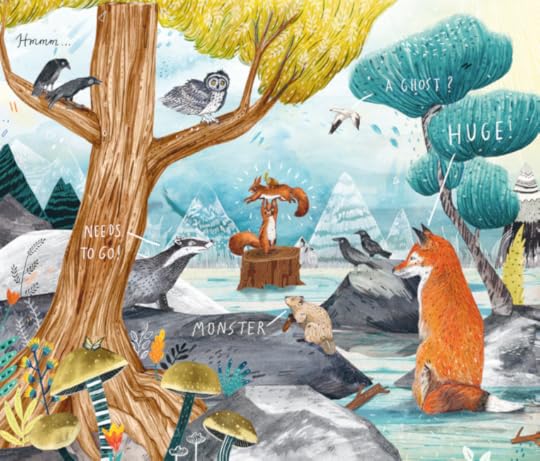
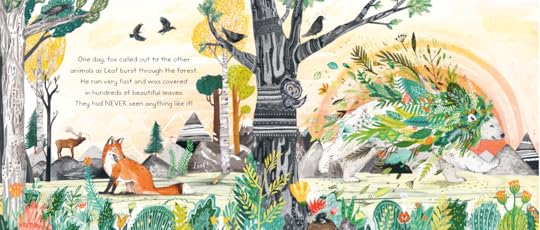
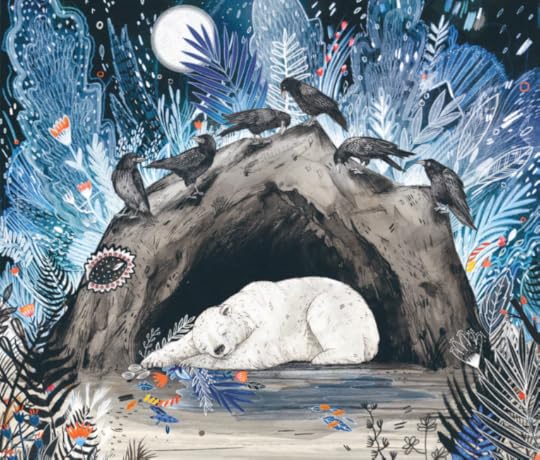
Sandra Dieckmann's debut picture book about helping outsiders is one heart-warming tale I'd highly recommend.
ARC kindly provided by the publisher in exchange for an honest review.
Expected publication: October 10th, 2017
4/5 stars
Note: I'm an Amazon Affiliate. If you're interested in buying Leaf, just click on the image below to go through my link. I'll make a small commission!

Support creators you love. Buy a Coffee for nat (bookspoils) with Ko-fi.com/bookspoils

When a polar bear arrives unexpectedly in the woods, the animals fear and avoid him, suspecting him to be dangerous - and his habit of collecting leaves only adds to their distrust. Then one day, they watch as he attempts to fly over the water with wings made of colorful leaves...just trying to go home.
Maybe he needs some help?
This tale of acceptance gently highlighting the plight of polar bears in today's changing climate had me enraptured from start to finish.
I genuinely can't stop thinking of the utterly vibrant illustrations in here. Like, I tried to close my eyes after reading and all I could see were the lively colors springing up in my mind over and over. Here's a handful of examples of said occurrence:
Sandra Dieckmann's debut picture book about helping outsiders is one heart-warming tale I'd highly recommend.
ARC kindly provided by the publisher in exchange for an honest review.
Expected publication: October 10th, 2017
4/5 stars
Note: I'm an Amazon Affiliate. If you're interested in buying Leaf, just click on the image below to go through my link. I'll make a small commission!
Support creators you love. Buy a Coffee for nat (bookspoils) with Ko-fi.com/bookspoils

September 23, 2021
Lovely illustrations but a lacking story. I started again to see if I missed something, wasn't any better the second time.

October 11, 2021
When a strange white bear comes ashore and takes up residence in the local cave, all of the woodland residents thereabouts are disturbed. Frightened of this solitary newcomer, at first they see only the danger he represents, and are blind to the distress he is clearly demonstrating, through his odd behavior. It falls to the crows, who had been advocating talking to the stranger, to bring the polar bear and the woodland residents together, leading to better understanding and compassion, when the latter discover that their ursine guest was transplanted unwillingly from his home, and is missing his family...
The first book I have read from author/illustrator Sandra Dieckmann, Leaf is a title that I picked up at my public library, drawn in by its beautifully distinctive cover art. This makes sense, as it is published by the London-based Flying Eye Books, whose picture-book catalog invariably features titles with appealing artwork. The story itself is inspired by issues of climate change, and highlights the importance of communication, when attempting to resolve communal problems, as well as the deleterious effects of being displaced. Although I do sometimes wonder about the wisdom of using polar bears as the poster children for climate change concern - yes, polar ice is shrinking, but at the same time, polar bear populations are booming, so make of that what you will - I do think these are important things to think about. Dieckmann's story is engaging, and I was rooting for the animals to get together (however unnatural this scenario might be, in the real world) and come up with a solution. The artwork itself is, as promised by the cover, simply gorgeous. The color palette itself is lovely, and the composition of each page just magical. I would definitely seek out other books from this artist! Recommended to picture-book readers who appreciate beautiful artwork, or who are seeking stories about welcoming newcomers, and avoiding jumping to conclusions about them.
The first book I have read from author/illustrator Sandra Dieckmann, Leaf is a title that I picked up at my public library, drawn in by its beautifully distinctive cover art. This makes sense, as it is published by the London-based Flying Eye Books, whose picture-book catalog invariably features titles with appealing artwork. The story itself is inspired by issues of climate change, and highlights the importance of communication, when attempting to resolve communal problems, as well as the deleterious effects of being displaced. Although I do sometimes wonder about the wisdom of using polar bears as the poster children for climate change concern - yes, polar ice is shrinking, but at the same time, polar bear populations are booming, so make of that what you will - I do think these are important things to think about. Dieckmann's story is engaging, and I was rooting for the animals to get together (however unnatural this scenario might be, in the real world) and come up with a solution. The artwork itself is, as promised by the cover, simply gorgeous. The color palette itself is lovely, and the composition of each page just magical. I would definitely seek out other books from this artist! Recommended to picture-book readers who appreciate beautiful artwork, or who are seeking stories about welcoming newcomers, and avoiding jumping to conclusions about them.

April 29, 2017
Is it just me or are pictures books becoming more and more beautiful these days. I've noticed it with a lot of the books we have coming into the library, and now this book, Leaf, is absolutely, strikingly gorgeous. And not just the illustrations but the story and message, too.
Set in the wild wood, the animals who call this rugged land their home are surprised and a little wary when a new animal arrives. He is big, white, and has lots of teeth. But stranger still is his habit of collecting leaves. So they name him Leaf. But as the animals watch Leaf they finally become brave enough to ask him his story.
You know a book has you hooked when your heart is in your throat and you are really, really hoping it doesn't have a sad ending. At its heart Leaf has a number of simple but key messages to draw out - reaching out to outsiders, loneliness, and protecting the environment. Leaf collects leaves to make wings so that he can fly home to his family from whom he was separated because of the melting ice. And that's all it says. There is no lecturing or overt nagging, just a simple message conveyed through the eyes of a lonely polar bear. It provokes key discussion and questions about why the ice has melted, how Leaf might have become separated from his family, what the animals did to help, and what else could be done to help.
But while the story is heartwarming and beautiful, it is the imagery in this book that captures the reader's attention. The colour palette is stunning. I want to surround myself with these colours. The blues, teals, greys and blacks of the story are striking, especially with the use of patterns and layered detail. Set against this vibrant backdrop are pops of colour, from the textured orange of the fox's fur to the greens, yellows, and coral of the leaves. Movement is also beautifully conveyed through the pictures, especially as Leaf runs through the forest, a vibrant mantle of leaves around his neck flowing out behind him.
Leaf is a pleasure to read aloud. There not too many words to detract from the images and emphasis and call outs are added to make this a simple but very powerful book.
Animal lovers will adore this book, but I can't see anyone not liking it. Leaf is a story of loneliness and fear, bravery and wanting to go home. Its poignant message is an important one, and one that is very easy to share when it is packaged as beautifully as in this wonderful book.
The publishers provided an advanced readers copy of this book for reviewing purposes. All opinions are my own.
Find more reviews, reading age guides, content advisory, and recommendations on my blog Madison's Library.
Set in the wild wood, the animals who call this rugged land their home are surprised and a little wary when a new animal arrives. He is big, white, and has lots of teeth. But stranger still is his habit of collecting leaves. So they name him Leaf. But as the animals watch Leaf they finally become brave enough to ask him his story.
You know a book has you hooked when your heart is in your throat and you are really, really hoping it doesn't have a sad ending. At its heart Leaf has a number of simple but key messages to draw out - reaching out to outsiders, loneliness, and protecting the environment. Leaf collects leaves to make wings so that he can fly home to his family from whom he was separated because of the melting ice. And that's all it says. There is no lecturing or overt nagging, just a simple message conveyed through the eyes of a lonely polar bear. It provokes key discussion and questions about why the ice has melted, how Leaf might have become separated from his family, what the animals did to help, and what else could be done to help.
But while the story is heartwarming and beautiful, it is the imagery in this book that captures the reader's attention. The colour palette is stunning. I want to surround myself with these colours. The blues, teals, greys and blacks of the story are striking, especially with the use of patterns and layered detail. Set against this vibrant backdrop are pops of colour, from the textured orange of the fox's fur to the greens, yellows, and coral of the leaves. Movement is also beautifully conveyed through the pictures, especially as Leaf runs through the forest, a vibrant mantle of leaves around his neck flowing out behind him.
Leaf is a pleasure to read aloud. There not too many words to detract from the images and emphasis and call outs are added to make this a simple but very powerful book.
Animal lovers will adore this book, but I can't see anyone not liking it. Leaf is a story of loneliness and fear, bravery and wanting to go home. Its poignant message is an important one, and one that is very easy to share when it is packaged as beautifully as in this wonderful book.
The publishers provided an advanced readers copy of this book for reviewing purposes. All opinions are my own.
Find more reviews, reading age guides, content advisory, and recommendations on my blog Madison's Library.

February 10, 2023
One look at the stunning endpaper with the bookplate -- "This book belongs to:" and I'm impressed. Germany has such a tradition of brilliant illustrations, and I've never seen this before in a children's storybook. Seems like my eyes and mind and heart will be in good hands.
Reading now, I see this story's about being frightened of a stranger, one who's all alone.
What a beautiful sequence of story and visuals as the other animals are deciding whether or not to care, whether or not to help.
OH, HOW I LOVE THE ENDING.
No spoiler from me, no no.
But here's the deal, Sandra Dieckmann and other Goodreaders, I have a very unscientific way of registering the impact on me of children's books. This one didn't just make me tear up. This one caused a quiet kind of sobbing. And a deep kind of joy, as well.
Unexpected plot development, character development, a moral that all humans would do well to learn from. And all of this not just beautifully illustrated but told with such delicacy.
WUNDERSCHOEN!
Reading now, I see this story's about being frightened of a stranger, one who's all alone.
What a beautiful sequence of story and visuals as the other animals are deciding whether or not to care, whether or not to help.
OH, HOW I LOVE THE ENDING.
No spoiler from me, no no.
But here's the deal, Sandra Dieckmann and other Goodreaders, I have a very unscientific way of registering the impact on me of children's books. This one didn't just make me tear up. This one caused a quiet kind of sobbing. And a deep kind of joy, as well.
Unexpected plot development, character development, a moral that all humans would do well to learn from. And all of this not just beautifully illustrated but told with such delicacy.
WUNDERSCHOEN!

May 23, 2022
4.5/5
HERMOSO
HERMOSO

August 24, 2017
Oh my goodness. My son (3.5) and I both loved this story. The drawings are amazing. I wish I had prints of this on my wall! On top of that, crows? I love crows and so I loved that they saved this story. I'd love to see a sequel or more about these animals on both sides.
There is something so beautiful and sad about Leaf. My son kept asking why he was jumping off the cliff and I was all like "Uh, I think polar bears like to swim?" but then when we both realized he just wanted to go home...oh it kinda broke my heart to see him flying off the edge hoping his leaves would float him home. Oh. My. God. Talk about sad. But it ends well and will give you an opportunity to talk to your child about kindness and fear. Not judging others by first impressions alone, but getting to know them. Also, crows effing rule.
This book was provided to me by the publisher Flying Eye Books in return for an honest review.
There is something so beautiful and sad about Leaf. My son kept asking why he was jumping off the cliff and I was all like "Uh, I think polar bears like to swim?" but then when we both realized he just wanted to go home...oh it kinda broke my heart to see him flying off the edge hoping his leaves would float him home. Oh. My. God. Talk about sad. But it ends well and will give you an opportunity to talk to your child about kindness and fear. Not judging others by first impressions alone, but getting to know them. Also, crows effing rule.
This book was provided to me by the publisher Flying Eye Books in return for an honest review.

November 2, 2017
A heart warming story to let children know about the effect of global warming on animals.

July 7, 2017
The illustrations in this picture book are so beautiful and the story's so sweet. It honestly almost made me cry. 5 stars.

March 17, 2021
Beautiful illustrations & colours. Teaches children about climate change & to be more kind

August 14, 2018
The story isn’t much of anything, but the artwork is absolutely stunning. I’d have any page on my wall.

May 6, 2017
One day, a polar bear washes up on the edge of the wild wood. Never seen such an animal, all the other animals of the wild wood run away from him. Eventually, the animals named the polar bear Leaf, because they want him to leave.
Leaf spends his days, alone in his dark cave. The animals are afraid of him and run away when they see him, they don’t talk to him but they talk about him.
Eventually, the other animals of the wildwood learn that Leaf just wants to go home. An icy place which is melting, which is how he ended up drifting so far away and ending up in the wild wood.
This story is incredibly sweet, and a little sad. I thought it was a great little story, filled to the brim with gorgeous pictures, and a story that resonates. Sandra Dieckmann highlights the plight that polar bears a facing today. Due to the changing climate, polar bears are losing their home, and though this tale has a happy ending, there is no happy ending for the Polar Bears in real life. But not only does this book touch upon climate change, but also about refugees.
Leaf didn’t want to leave his home, he had no control over it. But when he entered into the Wildwood, he wasn’t treated kindly. The other animals were scared and didn’t want him there, and they called him names. Leaf’s treatment is reminiscent of the treatment that can be seen in real life.
All in all, Dieckmann’s book is amazing. It’s such a simple and beautiful tale, but yet so impactful. This is a great book for children, but for anyone really.
Recived for review by publisher
Leaf spends his days, alone in his dark cave. The animals are afraid of him and run away when they see him, they don’t talk to him but they talk about him.
Eventually, the other animals of the wildwood learn that Leaf just wants to go home. An icy place which is melting, which is how he ended up drifting so far away and ending up in the wild wood.
This story is incredibly sweet, and a little sad. I thought it was a great little story, filled to the brim with gorgeous pictures, and a story that resonates. Sandra Dieckmann highlights the plight that polar bears a facing today. Due to the changing climate, polar bears are losing their home, and though this tale has a happy ending, there is no happy ending for the Polar Bears in real life. But not only does this book touch upon climate change, but also about refugees.
Leaf didn’t want to leave his home, he had no control over it. But when he entered into the Wildwood, he wasn’t treated kindly. The other animals were scared and didn’t want him there, and they called him names. Leaf’s treatment is reminiscent of the treatment that can be seen in real life.
All in all, Dieckmann’s book is amazing. It’s such a simple and beautiful tale, but yet so impactful. This is a great book for children, but for anyone really.
Recived for review by publisher

February 23, 2018
Great illustrations!
Note: I accessed a digital review copy of this book through Edelweiss.
Note: I accessed a digital review copy of this book through Edelweiss.

March 21, 2018
Stunning illustrations, warm and full of colour! And the story gently reminds us to be nice to strangers, instead of fearing them. I will definitely be on the lookout for Dieckmann's next creation!
August 23, 2019
A beautiful story highlighting the importance of not judging people or leaving them out. This book will help to teach children the importance of including others and talking to people if they seem sad or alone. The children in the class could recreate the page where the animals give their opinion of what should happen to Leaf. This could be done as a conscience alley to show the different perspectives.

August 29, 2018
Leaf is a great book for PSHE, it teaches the importance of getting to know new people and not judging. It teaches that others have different skills and we can learn from each other. The beautiful illustrations could also be inspiration for an art project, or wall display. Furthermore, this introduced scope for discussion on global warming and habitats.

November 8, 2018
A beautiful book with gorgeous illustrations that provides much thought provoking discussions about current issues about climate change, conservation and friendship. The important message in the story about supporting our neighbours human and animal, to help the endangered species such as Leaf the polar bear, can hopefully make a change if we work together. An enjoyable book to share.
January 17, 2019
Such an important message within the book, judging someone without knowing anything about them and being unkind to them is entirely unnecessary. This would be a great book within PSHE lesson to show the children the importance of communicating and ensuring people are happy rather that judging people without speaking to them first.
February 4, 2019
Very good book. Fantastic illustrations , the moral message is very important- difference and accepting all faces of society. I think it's a book to have in the classroom as many children could relate to the book - fitting in, belonging. Also I felt there was an underlying message of being lost and relocated ?

February 21, 2018
This book has a lovely tale about a polar bear who ends up in the wrong habitat and needs to get home.
The illustrations are very different and have lots of elements to them which children would enjoy looking at.
The illustrations are very different and have lots of elements to them which children would enjoy looking at.

March 10, 2019
A lovely book about a polar bear trying to get back home and the animals that learn to crack through their initial distrust towards this strange invader.

January 27, 2025
Muy cute

May 4, 2017
The pictures were absolutely amazing.

May 21, 2018

This review was originally written for The Baby Bookworm. Visit us for new picture books reviews daily!
Hello, friends! Our book today is Leaf by Sandra Dieckmann, a clever yet poignant tale about fear of the unfamiliar.
The crows saw him first, drifting toward the shore one moonlit night on a raft of rapidly melting ice. He took shelter in the old empty cave that the other animals steered clear of, and the whispers started soon after. He looked so different from the other animals, and even from the lush and colorful land around them, this great white bear. And he acted so strangely, wandering the forest every day and collecting leaves. The other animals called him Leaf, not because of his odd habit, because they wanted him to LEAVE. Too loud, too different – the other animals were so sure he didn’t belong, and felt threatened by his presence. But as the crows argue for compassion, Leaf does something entirely unexpected that just may encourage the animals to consider changing their point of view.
Simply lovely. While the story seems rather straightforward, there’s a lot going on here – through Leaf’s plight and the reactions of his new neighbors, readers learn lessons in empathy, consideration, helping others, and – most notably – caution against fear of otherness (even the choice of the polar bear, a species rapidly losing its habitat, is not an accident). It encourages us not to judge someone simply because they look, sound, or act differently from us, especially as they may have very good reasons, and may even need our help but don’t know how to ask. The art is simply stunning, an intricate symphony of color around the stark white polar bear, both engaging young eyes and providing a visual example of how Leaf differs from the new world he finds himself in. The length is great, and JJ loved all the animals and vibrant colors. A sweet story with some wonderful lessons, and it’s Baby Bookworm approved!
Be sure to check out The Baby Bookworm for more reviews!
June 26, 2017
Leaf by Sandra Dieckmann, a book for children and adults alike, explores some topical issues.
One day, the polar bear Leaf arrives at the coast of the temperate climate wilderness. The first reaction of the animals is fear and confusion, but eventually, they overcome their own fears, and they help Leaf. I really appreciate this, especially now with the refugee crisis. I think to be afraid of the unknown is a normal thing for humans, but often I see not the most helpful attitude towards this fear. We should not shun each other for that; we should approach each other with an open mind and willingness to talk and listen. If there is anyone who deserves to be condemned, it's the politicians who feed and then build their careers on this fear instead of doing something meaningful.
The book also touches on the environmental changes going on right now; there is, after all, a polar bear appearing in a temperate climate forest.
Despite exploring some serious issues, the book is not at all preachy. It's a beautiful and touching (yes, I cried) story, and the art is breathtaking! :)
One day, the polar bear Leaf arrives at the coast of the temperate climate wilderness. The first reaction of the animals is fear and confusion, but eventually, they overcome their own fears, and they help Leaf. I really appreciate this, especially now with the refugee crisis. I think to be afraid of the unknown is a normal thing for humans, but often I see not the most helpful attitude towards this fear. We should not shun each other for that; we should approach each other with an open mind and willingness to talk and listen. If there is anyone who deserves to be condemned, it's the politicians who feed and then build their careers on this fear instead of doing something meaningful.
The book also touches on the environmental changes going on right now; there is, after all, a polar bear appearing in a temperate climate forest.
Despite exploring some serious issues, the book is not at all preachy. It's a beautiful and touching (yes, I cried) story, and the art is breathtaking! :)
August 9, 2017
When a strange creature arrives, the other animals are scared and won't go near him. Instead they watch from a safe distance as the creature gathers leaves together and then jumps off a cliff. Eventually the crows pick up enough courage to talk to the strange creature and so they learn the polar bear's sad story of melting ice and drifting away from home and family.
Sandra Dieckmann's background as an artist is obvious from the quality of the illustrations. They are the highlight of this book with their rich colours and intricate patterns and textures - I could quite happily hang any of them on my wall. The story is fable-like with its message of helping outsiders and also serves to highlight the plight of polar bears. The animals are realistically portrayed and their thought/speech is represented by the use of text boxes. This story is well-told and stunning illustrated but the text on the last page is a disappointment with its promise of a happily ever after ending that just doesn't make sense.
Reviewed by Penny Guy (Bookrapt)
Sandra Dieckmann's background as an artist is obvious from the quality of the illustrations. They are the highlight of this book with their rich colours and intricate patterns and textures - I could quite happily hang any of them on my wall. The story is fable-like with its message of helping outsiders and also serves to highlight the plight of polar bears. The animals are realistically portrayed and their thought/speech is represented by the use of text boxes. This story is well-told and stunning illustrated but the text on the last page is a disappointment with its promise of a happily ever after ending that just doesn't make sense.
Reviewed by Penny Guy (Bookrapt)

July 1, 2023
Es un cuento infantil súper lindo de un oso polar perdido. Es refrescante y entretenido. Además que las ilustraciones le dan el toque para imaginarte la historia.
Es ideal para leer con nuestros chiquitos y también grandotes.
Es ideal para leer con nuestros chiquitos y también grandotes.
November 6, 2017
A gorgeous tale of sweet polar bear who is lost because his home is melting. Touches on climate change and bullying in a way that is accessible for every age.

October 29, 2020
I am surprised that I have never heard of Leaf by Sandra Dieckmann as it was nominated for the Kate Greenaway Medal, was long listed for the Klaus Flugge Prize, and it was short listed for the Waterstones Children’s Book prize and AOI World Illustration Award. I was able to listen to it on youtube as a read aloud.
This fantasy text revolves the personification of animals. One day, a new animal that the other animals have never seen before moves to the forest, arriving on a sheet of ice. They refer to him the entire book as “the creature” and “the beast.” The animals begin calling him “leaf” because of the weird habit that he has of always eating leaves and because they want him to “leave.” They argue about different ways to get him to leave the forest, but they can not come to a consensus. Eventually, they agree that because he looks so sad and lonely, they will listen to his story. This act changes their entire outlook towards the “creature.”
While the illustrations are breathtaking, the message of this story is even stronger. Readers of all ages can relate both to the isolation that the “creature” has felt as well as being on the opposing side when you are the one doing the isolating. Through the personification of the animals, readers of all ages are reminded of the importance of not “judging a book by its’ cover” and really taking time to hear people’s stories. There is so much about people that you do not know until you make the active choice to get to know them and hear them out. This text also would be helpful to use in younger grades for writing instruction as the animals use speech bubbles. In older grades, students can write their own versions of this story, choosing their own new “creature” that moves to a new habitat and is not accepted by the animals that already live there.
This fantasy text revolves the personification of animals. One day, a new animal that the other animals have never seen before moves to the forest, arriving on a sheet of ice. They refer to him the entire book as “the creature” and “the beast.” The animals begin calling him “leaf” because of the weird habit that he has of always eating leaves and because they want him to “leave.” They argue about different ways to get him to leave the forest, but they can not come to a consensus. Eventually, they agree that because he looks so sad and lonely, they will listen to his story. This act changes their entire outlook towards the “creature.”
While the illustrations are breathtaking, the message of this story is even stronger. Readers of all ages can relate both to the isolation that the “creature” has felt as well as being on the opposing side when you are the one doing the isolating. Through the personification of the animals, readers of all ages are reminded of the importance of not “judging a book by its’ cover” and really taking time to hear people’s stories. There is so much about people that you do not know until you make the active choice to get to know them and hear them out. This text also would be helpful to use in younger grades for writing instruction as the animals use speech bubbles. In older grades, students can write their own versions of this story, choosing their own new “creature” that moves to a new habitat and is not accepted by the animals that already live there.

November 19, 2022
Quería leer este libro dado que había leído otra obra de la autora, Où es-tu loup ?, por lo que quería conocer más de ella. Y puedo decir que con tan sólo dos libros se ha vuelto mi autora favorita de libros infantiles, porque tanto el dibujo y la narrativa son extraordinarias. Es cierto que no tienen ese toque lúdico de otros autores (Anthony Browne o Judith Kerr), pero el mensaje, la profundidad, la ilustración son fuera de serie.
Por supuesto, los libros son personales y la lectura depende mucho de la vivencia de cada persona, por lo tanto obras como Leaf nos llegan más si sentimos más de cerca la separación, y lo complejo que son las adaptaciones. Un libro no sólo para hablar sobre un oso polar en un bosque, lo cual ya lo hace curiosos, sino también sobre el cuidado de nuestro planeta.
Por supuesto, los libros son personales y la lectura depende mucho de la vivencia de cada persona, por lo tanto obras como Leaf nos llegan más si sentimos más de cerca la separación, y lo complejo que son las adaptaciones. Un libro no sólo para hablar sobre un oso polar en un bosque, lo cual ya lo hace curiosos, sino también sobre el cuidado de nuestro planeta.
Displaying 1 - 30 of 165 reviews