

What do you think?

The Trial of Lady Chatterley's Lover
When Penguin released a new, unexpurgated edition of D.H. Lawrence’s Lady Chatterley’s Lover in 1960, they were charged with the crime of publishing obscene material and made to defend the book’s literary merit in court. Thus began one of the most famous trials of the 20th century.
There to take it all in was Sybille Bedford. With her trademark wit and flair, she presents us with a play-by-play of the trial: from the prosecution’s questioning of the novel’s thirteen ‘unvarying’ sex scenes and 66 swear words, to the dozens of witnesses who testified – including the Bishop of Woolwich and E. M. Forster.
Bedford gives us a timeless and dramatic account that captures one of the most fascinating and absurd moments in both legal and publishing history, when attitudes and morals shifted forever.
There to take it all in was Sybille Bedford. With her trademark wit and flair, she presents us with a play-by-play of the trial: from the prosecution’s questioning of the novel’s thirteen ‘unvarying’ sex scenes and 66 swear words, to the dozens of witnesses who testified – including the Bishop of Woolwich and E. M. Forster.
Bedford gives us a timeless and dramatic account that captures one of the most fascinating and absurd moments in both legal and publishing history, when attitudes and morals shifted forever.
80 pages, Paperback
Published January 1, 2016
About the author
Sybille Bedford
51 books100 followersSybille Bedford, OBE (16 March 1911 – 17 February 2006) was a German-born English writer. Many of her works are partly autobiographical. Julia Neuberger proclaimed her "the finest woman writer of the 20th century" while Bruce Chatwin saw her as "one of the most dazzling practitioners of modern English prose.
Works
The Sudden View: a Mexican Journey - 1953 - (republished as A Visit to Don Otavio: a Traveller's Tale from Mexico, a travelogue)
A Legacy: A Novel - 1956 - her first novel, a work inspired by the early life of the author's father, which focuses on the brutality and anti-Semitism in the cadet schools of the German officer class.
The Best We Can Do: (The Trial of Dr Adams) - 1958 - an account of the murder trial of suspected serial killer John Bodkin Adams
The Faces of Justice: A Traveller's report - 1961 - a description of the legal systems of England, Germany, Switzerland, and France.
A Favourite of the Gods - 1963 - a novel about an American heiress who marries a Roman Prince
A Compass Error - 1968 - a sequel to the above, describing the love affairs of the granddaughter of that work's protagonist
Aldous Huxley: A biography - 1973 - the standard, authorized biography of Huxley
Jigsaw: An Unsentimental Education - 1989 - a sort of followup to A Legacy, this novel was inspired by the author's experiences living in Italy and France with her mother
As It Was: Pleasures, Landscapes and Justice - 1990 - a collection of magazine pieces on various trials, including the censorship of Lady Chatterley's Lover, the trial of Jack Ruby, and the Auschwitz trial, as well as pieces on food and travel.
Pleasures and Landscapes: A Traveller's Tales from Europe - a reissue of the above, removing the legal writings, and including two additional travel essays.
Quicksands: A Memoir - 2005 - A memoir of the author's life, from her childhood in Berlin to her experiences in postwar Europe.
Works
The Sudden View: a Mexican Journey - 1953 - (republished as A Visit to Don Otavio: a Traveller's Tale from Mexico, a travelogue)
A Legacy: A Novel - 1956 - her first novel, a work inspired by the early life of the author's father, which focuses on the brutality and anti-Semitism in the cadet schools of the German officer class.
The Best We Can Do: (The Trial of Dr Adams) - 1958 - an account of the murder trial of suspected serial killer John Bodkin Adams
The Faces of Justice: A Traveller's report - 1961 - a description of the legal systems of England, Germany, Switzerland, and France.
A Favourite of the Gods - 1963 - a novel about an American heiress who marries a Roman Prince
A Compass Error - 1968 - a sequel to the above, describing the love affairs of the granddaughter of that work's protagonist
Aldous Huxley: A biography - 1973 - the standard, authorized biography of Huxley
Jigsaw: An Unsentimental Education - 1989 - a sort of followup to A Legacy, this novel was inspired by the author's experiences living in Italy and France with her mother
As It Was: Pleasures, Landscapes and Justice - 1990 - a collection of magazine pieces on various trials, including the censorship of Lady Chatterley's Lover, the trial of Jack Ruby, and the Auschwitz trial, as well as pieces on food and travel.
Pleasures and Landscapes: A Traveller's Tales from Europe - a reissue of the above, removing the legal writings, and including two additional travel essays.
Quicksands: A Memoir - 2005 - A memoir of the author's life, from her childhood in Berlin to her experiences in postwar Europe.
Ratings & Reviews
Friends & Following
Create a free account to discover what your friends think of this book!
Community Reviews
Displaying 1 - 30 of 31 reviews

November 17, 2016
In 1960 it was Penguin Books 25th jubilee, the 75th anniversary of the birth of D.H. Laurence and the 30th anniversary of his death. Penguin decided to publish an unexpurgated version of, “Lady Chatterley’s Lover,” to celebrate, but found themselves prosecuted for obscenity in the first full-scale literary trial in British history. From the 20th October to the 2nd November, 1960, Sybille Bedford sat in the Old Bailey; commissioned by Esquire magazine to write a piece on the trail. This was, though, not just another article – it was something she felt passionate about – saying later she was shaking with, “anguish and fury.”
This is a fascinating account of the trial, which was written immediately afterwards and so it has a real sense of the time and place. The argument rested on two points; firstly, whether the book was obscene or not and whether, if it was considered obscene, it was justified for being worthwhile and in the public good? Would the novel, if you read it, “deprave and corrupt,” readers? Did it have literary merit?
Really, the only thing I was aware of before reading this, was the famous quote from Mr Justice Byrne, asking, “Is it a book you would wish your wife or your servant to read?” In fact, the statement before that was even worse – “would you approve of your own son and daughter – because girls can read as well as boys(!) – reading this book?” While the prosecution flung the swear words around the court room, the defence had endless witnesses; literary critics, professors, schoolmasters, clergymen and even authors as eminent as E.M. Forster, to take the stand and defend the novel. A wonderful account of this, so important, trial, which follows events to their conclusion.
This is a fascinating account of the trial, which was written immediately afterwards and so it has a real sense of the time and place. The argument rested on two points; firstly, whether the book was obscene or not and whether, if it was considered obscene, it was justified for being worthwhile and in the public good? Would the novel, if you read it, “deprave and corrupt,” readers? Did it have literary merit?
Really, the only thing I was aware of before reading this, was the famous quote from Mr Justice Byrne, asking, “Is it a book you would wish your wife or your servant to read?” In fact, the statement before that was even worse – “would you approve of your own son and daughter – because girls can read as well as boys(!) – reading this book?” While the prosecution flung the swear words around the court room, the defence had endless witnesses; literary critics, professors, schoolmasters, clergymen and even authors as eminent as E.M. Forster, to take the stand and defend the novel. A wonderful account of this, so important, trial, which follows events to their conclusion.

June 6, 2020
We live in an age of moral panic, they say. Every snippet of scandal or controversy is tripled by rage and fury, often taking on unforeseen dimensions. People are quick to judge, reluctant to forgive and slow to understand. We are always are tempted to think our lifetimes are exceptional, as if people’s actions are progressive inventions. They’re not. Despite some exceptional leaps of originality, much remains the same. People’s actions are not new, but rather an eternal return. Well, a return, at least.
The quickness to judge, the moral panic, the squeamishness certain themes invoke, the lack of vocabulary to discuss sex and, more importantly, the meshing of class, education, and power is as pertinent now as it was in 1960 when Lady Chatterley’s trial took place.
Make no mistake: Constance is being judged here. More so than D.H Lawrence. He’s treated by all involved as a famous writer worth our whiles. Even the prosecution is careful not to ascribe to Lawrence the same accusations of depravity and lewdness they so vehemently attribute to his book. But Constance Reid is fair game. She’s a fictional character and a woman to boot. Lady Chatterley can be maligned, insulted, twisted. In this trial, she’s a she-devil, a witch of ancient times. I was half expecting the Counsel for the persecution to demand a red A to be branded on her forehead. Adulteress. How dare she? And how dare she enjoy it?
There are other issues at play. Penguin is trying to follow through with publishing Lady Chatterley’s Lover at a price easily afforded by everyone. That’s always been Penguin mission. Good books at reasonable, accessible prices. This chafes the Counsel for the Prosecution, Mr Griffith-Jones, a relic of Victorian times – friendly reminder this trial takes place in 1960 – who honest-to-God thinks the lower classes must be protected from this kind of smut as they will not have the required capacity to understand the advertised subtleties of the novel. Mr Griffith-Jones, the prosecutor, and Mr. Gardiner, the defense counselor, turn out to be the most interesting characters in this pantomime.
Gerald Gardiner was a Labour Party member who would go on to become Lord Chancellor. His defense of Penguin comprised the notion that Lady Chatterley’s Lover was a work of art. That the book had literary and sociological value, that it had something to say about personal relationships and the societal mores of Britain. The book, in short, ought to be published because it was relevant. Griffith-Jones, on his part, argued that the book was unnecessarily lewd and that its crudeness was gratuitous: famously, he enumerates the times the words fuck and cunt appear in it. But his most extraordinary argument is that the book should not be read by anyone other than “experts” on literary matters because the common man in the street would take it for what Griffith-Jones thought it was, an above average pornographic romance glorifying adultery. So Lady Chatterley’s Lover becomes, in this convoluted logic, a novel so complex that it can only be understood by a literature PhD, as well as nothing but a smut fest in which the plot is a filler between sex scenes.
Griffith-Jones asks in his introductory remarks: “Is it a book you would wish your wife or your servant to read?” In his closing argument, Gerald Gardiner answers: “I don’t want to upset the prosecution by suggesting there are a number of people who do not have servants.”
This is the key of the matter. R vs Penguin Books Ltd is not about a book. It’s a testament to how British society got away from the upper classes who presumed to understand it. The jury only took three hours to decide that the book should be published as a mass paperback. And why wouldn’t they? Why would any middle class or working class person in Britain in 1960 be shocked at the word fuck in a novel? In a world where Elvis existed and the Beatles were three years from their first album, who would think that a book so tame as Lady Chatterley’s Lover should not be widely available in bookshops?
The quickness to judge, the moral panic, the squeamishness certain themes invoke, the lack of vocabulary to discuss sex and, more importantly, the meshing of class, education, and power is as pertinent now as it was in 1960 when Lady Chatterley’s trial took place.
Make no mistake: Constance is being judged here. More so than D.H Lawrence. He’s treated by all involved as a famous writer worth our whiles. Even the prosecution is careful not to ascribe to Lawrence the same accusations of depravity and lewdness they so vehemently attribute to his book. But Constance Reid is fair game. She’s a fictional character and a woman to boot. Lady Chatterley can be maligned, insulted, twisted. In this trial, she’s a she-devil, a witch of ancient times. I was half expecting the Counsel for the persecution to demand a red A to be branded on her forehead. Adulteress. How dare she? And how dare she enjoy it?
There are other issues at play. Penguin is trying to follow through with publishing Lady Chatterley’s Lover at a price easily afforded by everyone. That’s always been Penguin mission. Good books at reasonable, accessible prices. This chafes the Counsel for the Prosecution, Mr Griffith-Jones, a relic of Victorian times – friendly reminder this trial takes place in 1960 – who honest-to-God thinks the lower classes must be protected from this kind of smut as they will not have the required capacity to understand the advertised subtleties of the novel. Mr Griffith-Jones, the prosecutor, and Mr. Gardiner, the defense counselor, turn out to be the most interesting characters in this pantomime.
Gerald Gardiner was a Labour Party member who would go on to become Lord Chancellor. His defense of Penguin comprised the notion that Lady Chatterley’s Lover was a work of art. That the book had literary and sociological value, that it had something to say about personal relationships and the societal mores of Britain. The book, in short, ought to be published because it was relevant. Griffith-Jones, on his part, argued that the book was unnecessarily lewd and that its crudeness was gratuitous: famously, he enumerates the times the words fuck and cunt appear in it. But his most extraordinary argument is that the book should not be read by anyone other than “experts” on literary matters because the common man in the street would take it for what Griffith-Jones thought it was, an above average pornographic romance glorifying adultery. So Lady Chatterley’s Lover becomes, in this convoluted logic, a novel so complex that it can only be understood by a literature PhD, as well as nothing but a smut fest in which the plot is a filler between sex scenes.
Griffith-Jones asks in his introductory remarks: “Is it a book you would wish your wife or your servant to read?” In his closing argument, Gerald Gardiner answers: “I don’t want to upset the prosecution by suggesting there are a number of people who do not have servants.”
This is the key of the matter. R vs Penguin Books Ltd is not about a book. It’s a testament to how British society got away from the upper classes who presumed to understand it. The jury only took three hours to decide that the book should be published as a mass paperback. And why wouldn’t they? Why would any middle class or working class person in Britain in 1960 be shocked at the word fuck in a novel? In a world where Elvis existed and the Beatles were three years from their first album, who would think that a book so tame as Lady Chatterley’s Lover should not be widely available in bookshops?

April 1, 2018
Through 2018 eyes, the idea that the public needed to be protected from the content of 'Lady Chatterley's Lover' by D.H. Lawrence appears ludicrous.
Sybille Bedford who attended the 1960 trial, and wrote 'The Trial of Lady Chatterley's Lover' at the time, really brings it all to life.
The dour prosecution barristers tried to demean the literary merits of 'Lady Chatterley's Lover', apparently convinced that the content was likely to deprave a reader, and so they also chose to bully and harangue the defence witnesses.
In contrast, the defence were generally relaxed and humorous. As Sybille Bedford observed, "They had come (at their own expense and risk) because they felt it their duty to do so; they were people of patent honesty and honour, people of splendid goodwill ... and, of course, considerable abilities." There was no doubt that the prosecution and the Bench were flabbergasted to be hearing numerous apparently respectable professional men and women defending the book.
In hindsight, the unequivocal defence of those many, varied and totally sincere witnesses explains why the prosecution failed.
I was interested to note how contemporary some of the points raised by the prosecution, and in the judge’s summing up, seem. The Judge suggesting that the jury should not pay heed to experts echoes Michael Gove’s similar assertion during the EU referendum. Likewise, the notion of a nanny state looms large, specifically that we cannot trust individuals to understand literature, and draw their own conclusions. We must shield them from potentially dangerous works of art.
'The Trial of Lady Chatterley's Lover' is a mere 80 pages and, very succinctly, evokes a landmark trial along with all the relevant evidence. That it all still resonates nearly 70 years later suggest that perhaps we haven't made as much progress as we could and should.
4/5

Sybille Bedford who attended the 1960 trial, and wrote 'The Trial of Lady Chatterley's Lover' at the time, really brings it all to life.
The dour prosecution barristers tried to demean the literary merits of 'Lady Chatterley's Lover', apparently convinced that the content was likely to deprave a reader, and so they also chose to bully and harangue the defence witnesses.
In contrast, the defence were generally relaxed and humorous. As Sybille Bedford observed, "They had come (at their own expense and risk) because they felt it their duty to do so; they were people of patent honesty and honour, people of splendid goodwill ... and, of course, considerable abilities." There was no doubt that the prosecution and the Bench were flabbergasted to be hearing numerous apparently respectable professional men and women defending the book.
In hindsight, the unequivocal defence of those many, varied and totally sincere witnesses explains why the prosecution failed.
I was interested to note how contemporary some of the points raised by the prosecution, and in the judge’s summing up, seem. The Judge suggesting that the jury should not pay heed to experts echoes Michael Gove’s similar assertion during the EU referendum. Likewise, the notion of a nanny state looms large, specifically that we cannot trust individuals to understand literature, and draw their own conclusions. We must shield them from potentially dangerous works of art.
'The Trial of Lady Chatterley's Lover' is a mere 80 pages and, very succinctly, evokes a landmark trial along with all the relevant evidence. That it all still resonates nearly 70 years later suggest that perhaps we haven't made as much progress as we could and should.
4/5

April 1, 2018
Very interesting account of the trial to determine whether or not Lawrence's book was obscene.

February 21, 2020
I’m very glad I came across this while I was also reading Lady Chatterley’s Lover for the first time—nothing could’ve been more helpful in my research for my next blog post on the challenges and trials against Lawrence’s book in the 20th century. And Bedford did it with both an amusing and journalistic voice. I found her to have more ‘authority’ than Mervyn Griffith-Jones—and even Justice Byrne himself, who did not even thank the jury after the verdict.
After this, I had to watch David Tennant’s re-enactment of Richard Hoggart’s testimony in The Chatterley Affair, which he did beautifully!
After this, I had to watch David Tennant’s re-enactment of Richard Hoggart’s testimony in The Chatterley Affair, which he did beautifully!

March 2, 2022
I was fifteen or sixteen I think when I first heard of “Lady Chatterley’s Lover” from my mother. I think she read it and enjoyed it a lot. She even told me what it was about. It was her way of educating me about sex, I suppose. I went on to read it at the age of eighteen and while it didn’t change my life, it certainly had some impact.
Lady Chatterley’s Lover isn’t a book about sex, as much as it is about relationships and what binds people together or makes them search for love from other people. It is full of sex and words that we now so casually use like “fuck”. It was for this reason it was banned in the country to which the writer belonged. There was then the famous trial that took place in 1960, the trial of Penguin under the Obscene Publications Act 1959, which was a major event of its times.
This book is about that trial. Bedford was a first-hand witness to the trial. She saw it unravel and documented it. She speaks of the claustrophobia of Courtroom 1 at the Old Bailey. She presents everything that took place – word for word, play by play – from the prosecution’s objections of 13 sexual scenes to the listing of 66 instances of swear words to the testimony of dozens of witnesses including E.M. Forster.
The essay is honest and transparent. It doesn’t judge but just presents what happened and the outcome of it – of course the book won, and all those readers who were given the chance to read it.
The Trial of Lady Chatterley’s Lover should be read by all, to understand why books are banned, and shouldn’t be. It should be read to make sense of what is moral and immoral, and how fact and fiction merge together to create a space which should be devoid of judgement.
Lady Chatterley’s Lover isn’t a book about sex, as much as it is about relationships and what binds people together or makes them search for love from other people. It is full of sex and words that we now so casually use like “fuck”. It was for this reason it was banned in the country to which the writer belonged. There was then the famous trial that took place in 1960, the trial of Penguin under the Obscene Publications Act 1959, which was a major event of its times.
This book is about that trial. Bedford was a first-hand witness to the trial. She saw it unravel and documented it. She speaks of the claustrophobia of Courtroom 1 at the Old Bailey. She presents everything that took place – word for word, play by play – from the prosecution’s objections of 13 sexual scenes to the listing of 66 instances of swear words to the testimony of dozens of witnesses including E.M. Forster.
The essay is honest and transparent. It doesn’t judge but just presents what happened and the outcome of it – of course the book won, and all those readers who were given the chance to read it.
The Trial of Lady Chatterley’s Lover should be read by all, to understand why books are banned, and shouldn’t be. It should be read to make sense of what is moral and immoral, and how fact and fiction merge together to create a space which should be devoid of judgement.

November 18, 2016
I haven't read much about the Lady Chatterley trial so I was pleased to come across this little book which really gives a flavour of the scene at the Old Bailey. Sybille Bedford attended the trial and her observant and witty comments bring the scene to life. The dour prosecution barristers and the rather more relaxed and humorous defence barristers and witnesses troop through these pages.
I hadn't appreciated how many well known people appeared as witnesses for the defence or the fact that Penguin actually co-operated with the prosecution so that it became a test case brought under the new obscenity law passed the previous year. I thought the trial raised a great many interesting points about the way sex is treated both in literature and in life. It also made me think differently about those famous four letter words.
Originally those words were merely used for talking about sex but the way they have been misused as expletives and insults have almost obliterated their original meanings. There were no everyday, inoffensive words to describe sexual behaviour in the 1960s anymore than there are in the twenty first century. D H Lawrence's book was an attempt to reclaim the four letter words for normal use in describing sexual behaviour.
This book reminded me that the sex in Lady Chatterley's Lover in fact only takes up ten percent of the book which reduces the whole issue almost to the level of a storm in a teacup. The details of this famous trial have a lot to say about the way we describe sexual behaviour even today as there is still no middle way between clinical anatomical details and prurient sniggers and four letter words which have acquired so many other layers of association since their Anglo Saxon origins that they have almost lost their original meanings.
This is an interesting and thought provoking book about what proved to be a landmark trial.
I hadn't appreciated how many well known people appeared as witnesses for the defence or the fact that Penguin actually co-operated with the prosecution so that it became a test case brought under the new obscenity law passed the previous year. I thought the trial raised a great many interesting points about the way sex is treated both in literature and in life. It also made me think differently about those famous four letter words.
Originally those words were merely used for talking about sex but the way they have been misused as expletives and insults have almost obliterated their original meanings. There were no everyday, inoffensive words to describe sexual behaviour in the 1960s anymore than there are in the twenty first century. D H Lawrence's book was an attempt to reclaim the four letter words for normal use in describing sexual behaviour.
This book reminded me that the sex in Lady Chatterley's Lover in fact only takes up ten percent of the book which reduces the whole issue almost to the level of a storm in a teacup. The details of this famous trial have a lot to say about the way we describe sexual behaviour even today as there is still no middle way between clinical anatomical details and prurient sniggers and four letter words which have acquired so many other layers of association since their Anglo Saxon origins that they have almost lost their original meanings.
This is an interesting and thought provoking book about what proved to be a landmark trial.

November 6, 2021
Sybille Bedford's article about the obscenity trial of Penguin Books who dared to publish an uncensored version of Lady Chatterley's Lover in 1961 begins wonderfully. She immerses the reader in the drama of the court room. The tension between the stuffy judge and prosecuting counsel on the one hand and the defence witnesses on the other is palpable.
Bedford's stance, in favour of Penguin, is never in doubt. An objective account this is not. She writes in a lively style, quoting heavily from the courtroom proceedings yet never shying away from an opportunity to lightly skewer "Mr Mervyn Griffith-Jones, Second Senior Counsel to the Crown at the Central Criminal Court, Eton, Cambridge, Coldstream Guards, and a veteran of many previous obscenity cases."
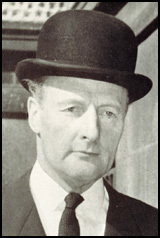
Counsel for the Prosecution
But sadly the second half of Bedford's account is rushed. At one point she simply names several witnesses in a list, including some intriguingly high-profile figures such as Sir Stanley Unwin, giving us no clue as to the contents of their testimony.
As this article first appeared in a magazine, it is not beyond the realms of possibility that the entire text is available for free online. If so, that's the way others might want to read it. This little Daunt Books paperback is neatly presented but nothing special. The pink-ish cover looks grubby. The text itself is less than 80 pages long and in a large font. The introduction by Thomas Grant adds little.
It is a quick read and documents a socially significant trial, albeit in a cursory way. It will appeal to readers interested in the intersection between literary freedom of expression and the law, but such readers will probably be more interested in something with greater depth and detail.
Bedford's stance, in favour of Penguin, is never in doubt. An objective account this is not. She writes in a lively style, quoting heavily from the courtroom proceedings yet never shying away from an opportunity to lightly skewer "Mr Mervyn Griffith-Jones, Second Senior Counsel to the Crown at the Central Criminal Court, Eton, Cambridge, Coldstream Guards, and a veteran of many previous obscenity cases."
Counsel for the Prosecution
But sadly the second half of Bedford's account is rushed. At one point she simply names several witnesses in a list, including some intriguingly high-profile figures such as Sir Stanley Unwin, giving us no clue as to the contents of their testimony.
As this article first appeared in a magazine, it is not beyond the realms of possibility that the entire text is available for free online. If so, that's the way others might want to read it. This little Daunt Books paperback is neatly presented but nothing special. The pink-ish cover looks grubby. The text itself is less than 80 pages long and in a large font. The introduction by Thomas Grant adds little.
It is a quick read and documents a socially significant trial, albeit in a cursory way. It will appeal to readers interested in the intersection between literary freedom of expression and the law, but such readers will probably be more interested in something with greater depth and detail.
April 17, 2026
This is one of those books I think is supremely important to read - this, for me, goes back to Oscar Wilde's (and this is a fitting comparison to make to discuss another book on trial) statement that books that the world calls immoral are only books which show the world its own shame - and I am also, on a lesser yet still important way, reminded of Lord Byron, writing his Don Juan in 1822, maintaining that his poem is a "most moral" work, at a time when only fellow poet Shelley allowed any genuine appreciation for it. This is the trial of D. H. Lawrence's "Lady Chatterley's Lover," another very important book to read at least once in one's life. The verdict of the jury - "NOT GUILTY!" after a whole exhibition of repression, and extreme reaction against genuine and thoughtful and truthful arguments made against considering Lady Chatterley an obscene book, comes almost as an ironic punchline. I enjoyed this very much, I found it a very necessary read.
September 6, 2021
This made me love the book even more.

December 22, 2025
The most famous line from the 1960 trial of Lady Chatterley's Lover for obscenity is of course, 'Is it a book you would wish your wife or your servant to read?' (p. 12 in the Daunt edition of this account of the trial by Sybille Bedford, and it's worth noting that there were three women in the jury). But the following two exchanges strike me as more extraordinary. Both are from the prosecution's cross-examination of expert witnesses on the book's quality called by the defence (the prosecution called no expert witnesses of its own):
Mr Griffith-Jones ...: 'Professor, just let me make sure what your ideas of beauty are?' He reads. [Bedford does not specify which passage, but presumably one of the sex scenes.]
Professor Pinto: 'An able piece of realism.'
Mr Griffith-Jones (furiously): 'Cunt! Cunt! Cunt! Cunt! Fuck! Fuck! Fuck! Fuck!' [pp. 45–6]
And:
Mr Griffith-Jones then read that extrtaordinary passage about the source of life. Again he read as though it were some foreign text; again the court sat rapt. '"The weight of a man's balls" – puritanical?'
'Yes, it is puritanical in its reverence.'
'Reverence for what?' screamed Mr Griffith-Jones. 'The balls?'
'Indeed, yes,' said Mr Hoggart gently. [p. 66]
Surely the effect of this was to make the prosecution, and not Lawrence's book, appear ridiculous?
The main problem with this account is its brevity. Published contemporaneously with the trial by someone who attended, it makes no attempt to contextualise it, or even to provide an exhaustive summary (admittedly there must have been quite a lot of repetition in the testimony of the large number of defence witnesses). I'm surprised that no one has written a more recent cultural history dealing with that larger context, including the significant changes to the law just prior to the trial that permitted a defence based on literary quality or importance. Maybe there's a better account in more general histories of the legal notion of obscenity, perhaps with chapters dedicated to this and other obscenity trials (e.g. for Last Exit to Brooklyn a few years prior to Chatterley and Oz magazine several years after).
Mr Griffith-Jones ...: 'Professor, just let me make sure what your ideas of beauty are?' He reads. [Bedford does not specify which passage, but presumably one of the sex scenes.]
Professor Pinto: 'An able piece of realism.'
Mr Griffith-Jones (furiously): 'Cunt! Cunt! Cunt! Cunt! Fuck! Fuck! Fuck! Fuck!' [pp. 45–6]
And:
Mr Griffith-Jones then read that extrtaordinary passage about the source of life. Again he read as though it were some foreign text; again the court sat rapt. '"The weight of a man's balls" – puritanical?'
'Yes, it is puritanical in its reverence.'
'Reverence for what?' screamed Mr Griffith-Jones. 'The balls?'
'Indeed, yes,' said Mr Hoggart gently. [p. 66]
Surely the effect of this was to make the prosecution, and not Lawrence's book, appear ridiculous?
The main problem with this account is its brevity. Published contemporaneously with the trial by someone who attended, it makes no attempt to contextualise it, or even to provide an exhaustive summary (admittedly there must have been quite a lot of repetition in the testimony of the large number of defence witnesses). I'm surprised that no one has written a more recent cultural history dealing with that larger context, including the significant changes to the law just prior to the trial that permitted a defence based on literary quality or importance. Maybe there's a better account in more general histories of the legal notion of obscenity, perhaps with chapters dedicated to this and other obscenity trials (e.g. for Last Exit to Brooklyn a few years prior to Chatterley and Oz magazine several years after).

September 28, 2023
An eloquent and witty summing up of the famous trial by someone who was very much on top of her subject and in control of her style. If it was written as well today it would be by someone of the ability and stature of, say, Ian Hislop.
I’d happily recommend it to anyone who wants to know what it was all about in 80 lucid ages (in this rather handsomely bound paperback bought for slightly more than the 3/6 Penguin was proposing to sell the 200,000 copies of Lady Chatterley’s Lover they had already printed and stock-piled before the trial.
Incidentally, Penguin had never put the book on sale; they had merely handed over a few copies to a policeman (the only prosecution witness). They wanted the trial to test the Obscene Publications Act (1959).
Is it an obscene book? Would an answer to this question by a matter of fact or a matter of opinion? A jury can only decide on matters of fact. Therefore it was probably wrong to put it before a jury. But that is a matter of opinion.
Ms Bedford was anxious for the correct verdict. The jury found the correct verdict (given their misplaced task) and I would have joined in the ripple of applause that broke out in Old Bailey Courtroom Number One. Verdict: sexual intercourse can begin for Philip Larkin and the great unwashed are allowed to read books.
I’d happily recommend it to anyone who wants to know what it was all about in 80 lucid ages (in this rather handsomely bound paperback bought for slightly more than the 3/6 Penguin was proposing to sell the 200,000 copies of Lady Chatterley’s Lover they had already printed and stock-piled before the trial.
Incidentally, Penguin had never put the book on sale; they had merely handed over a few copies to a policeman (the only prosecution witness). They wanted the trial to test the Obscene Publications Act (1959).
Is it an obscene book? Would an answer to this question by a matter of fact or a matter of opinion? A jury can only decide on matters of fact. Therefore it was probably wrong to put it before a jury. But that is a matter of opinion.
Ms Bedford was anxious for the correct verdict. The jury found the correct verdict (given their misplaced task) and I would have joined in the ripple of applause that broke out in Old Bailey Courtroom Number One. Verdict: sexual intercourse can begin for Philip Larkin and the great unwashed are allowed to read books.

April 2, 2018
This is a short little book, which gives a comprehensive journey through the infamous and titular trial of D. H. Lawrence’s Lady Chatterley’s Lover. The narration is clear, precise and engaging. Bedford provides the information and whilst still retaining an engaging presentation and discussion of the nature of law, set in a simmering courtroom where sex and morality need to be examined and cross-examined. There are times where the information feels brief, such as a swift passing by of many witnesses such as E. M. Forster, but as complete and detailed overview of the 1960s case of obscenity Bedford does spectacularly.

August 11, 2023
Sybille Bedford attended the trial of the publishing house Penguin when they were accused of obscenity by releasing the famous novel by D.H. Lawrence. This is a summary of the trial she was there to report on. It features the famous quote about would you let your wife or servant read this book :) It was a landmark trial and we all know the outcome as we've been able to read and enjoy Lady Chatterley's Lover from then on.

December 3, 2016
Quite extraordinary, very worth reading. Both humorous and illuminating, it gives a window on how society changes and stays the same. From a bishop defending the book to the prosecuting QC (Eton etc...) advising the jury to ignore elites, the ironies of real life are beyond fiction.

November 23, 2017
It was pretty fun for an account of court proceedings - well written and witty. I doubt I'll read it again, or widely recommend it, but it was interesting all the same.

December 31, 2017
Absolutely scandalous.

March 9, 2019
The true account of one of the most influential trials in the history of England and Wales. Lucidly told.

April 5, 2020
Interesting little book, worth reading

January 8, 2021
Brilliant!
July 13, 2021
"They were dealing with something pressed into a Procrustean framework devised for something else; they were dealing with what was in reality an issue of judgement or opinion by a procedure created for the pinning down of fact" (57).
Funny, in the push-air-through-your-nose way.
Funny, in the push-air-through-your-nose way.

January 14, 2023
A big thanks to my bookseller at kirkgate market for recommending this to me! “A gossip book” he described it as, and so it was.
July 12, 2023
This made reading the book worth it.

March 23, 2025
SO GOOD

Read
October 12, 2025Came upon this when reading Erika Mann's letters... and oh lordy, it still feels relevant 💀

February 13, 2026
Love the layout of this, easy to read and kinda funny bc of it

February 21, 2017
I found this very interesting as I had never read an observer's account of a court case before, particularly one where the crown is essentially prosecuting a book. I wonder if, based on this, an actual case could be made against Fifty Shades of Grey. However, I suspect that unless the prosecution was very careful they may end up looking ridiculous as they do here.
Especially pleased to have discovered something a bit different as this was a free book given away during the London Bookshop Crawl 2017
Especially pleased to have discovered something a bit different as this was a free book given away during the London Bookshop Crawl 2017

February 22, 2017
A fascinating account of the trial and an insight into social attitudes of the time.

February 19, 2017
Found it in the law school library, not much about the law though. Mostly about what the various witnesses said on the literary merit of the book, whose discussions of extramarital affairs and sex are enlightening.

February 12, 2018
A short, compelling account of the obscenity trial against Penguin for publishing the unexpurgated Lady Chatterley’s Lover in 1960. The prosecution’s case is poorly executed and hopelessly out of step with a society undergoing shifts in structure and attitude (“would you let your wife or servants read this book?”). Bedford sketches the participants wittily and well - their strengths, weaknesses and arguments (Lawrence a kind of Puritan for a fully lived, natural experience rather than writing to titilate) - and, with an outsider’s eye, the strange mechanisms of an English courtroom.
Displaying 1 - 30 of 31 reviews