Jump to ratings and reviews
Rate this book

Дом, где разбиваются сердца

Rate this book
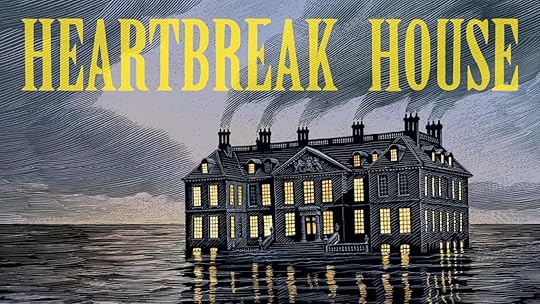
Пьеса об английском обществе периода Первой мировой войны, написанная, по признанию автора, под влиянием произведений А. П. Чехова. Внешне благополучное общество мало-помалу морально разлагается. Здесь нет ни одного положительного персонажа — каждый герой либо лицемерен, либо просто зол, либо слаб характером.

170 pages, Kindle Edition

First published January 1, 1919

126 people are currently reading
2475 people want to read

About the author

George Bernard Shaw

1,990 books4,125 followers
George Bernard Shaw was an Irish playwright, socialist, and a co-founder of the London School of Economics. Although his first profitable writing was music and literary criticism, in which capacity he wrote many highly articulate pieces of journalism, his main talent was for drama. Over the course of his life he wrote more than 60 plays. Nearly all his plays address prevailing social problems, but each also includes a vein of comedy that makes their stark themes more palatable. In these works Shaw examined education, marriage, religion, government, health care, and class privilege.

An ardent socialist, Shaw was angered by what he perceived to be the exploitation of the working class. He wrote many brochures and speeches for the Fabian Society. He became an accomplished orator in the furtherance of its causes, which included gaining equal rights for men and women, alleviating abuses of the working class, rescinding private ownership of productive land, and promoting healthy lifestyles. For a short time he was active in local politics, serving on the London County Council.

In 1898, Shaw married Charlotte Payne-Townshend, a fellow Fabian, whom he survived. They settled in Ayot St. Lawrence in a house now called Shaw's Corner.

He is the only person to have been awarded both a Nobel Prize for Literature (1925) and an Oscar (1938). The former for his contributions to literature and the latter for his work on the film "Pygmalion" (adaptation of his play of the same name). Shaw wanted to refuse his Nobel Prize outright, as he had no desire for public honours, but he accepted it at his wife's behest. She considered it a tribute to Ireland. He did reject the monetary award, requesting it be used to finance translation of Swedish books to English.

Shaw died at Shaw's Corner, aged 94, from chronic health problems exacerbated by injuries incurred by falling.

Ratings & Reviews

What do you think?
Rate this book

Friends & Following

Create a free account to discover what your friends think of this book!

Community Reviews

5 stars
748 (26%)
4 stars
955 (34%)
3 stars
765 (27%)
2 stars
238 (8%)
1 star
75 (2%)
Displaying 1 - 30 of 150 reviews
Profile Image for AiK.
726 reviews269 followers
January 9, 2024
Сам Шоу обозначил свое творение, как "фантазия в русском стиле на английские темы", но думается, что только из-за желания подчеркнуть приверженность чеховским принципам драматургии.
В пьесе имеется несколько слоев. Один состоит из фабулы, достаточно сложной и простой одновременно, второй из символов, третий из аллюзий. Фабульный слой уже несёт смысловую нагрузку. Хорошенькие женщины ищут богатых мужей и готовы выйти замуж без любви из страха нищеты, чтобы "не штопать перчатки", если кратко, и дополнительно, в доме, где разбиваются сердца, утаить ничего невозможно. Каждый оказывается не тем, кем кажется. Беспринципность Элли показывается в нескольких плоскостях - она позволяет закормить себя сказками Гектору, он же Марк Барнсли, она раздумывает выходить замуж за Менгена, узнав, что он небогат и не владелец компаний, и наконец, она объявляет, что отдала свое сердце капитану Шатоверу. Все это девушка решает за несколько часов, проведенных в доме. Символический слой пьесы обосновывается временем написания. Она была начата в 1913 году, дом в форме корабля символизирует Великобританию, общество в доме - общество страны. Также как собравшимся в доме все равно, что будет с ними в результате бомбардировок со стороны немецкой авиации, также равнодушие и апатия овладели страной. Обитатели дома не питают уважения ни к себе, ни к другим. Третий слой, очевидно, аллюзивно-мифологический и вытекает из древнегреческих имён героев и концепции дома-ковчега.
Меня впечатлило, что Бернард Шоу сотрудничал с Лондонской Школой экономики, а по некоторым данным, даже был одним из ее основателей. Это говорит о многом, во всяком случае, о том, что он неплохо разбирался в политических и экономических науках. Думается, что просто литератор не был бы удостоен такой чести.
Profile Image for Kenny.
599 reviews1,498 followers
September 22, 2025
We know now that the soul is the body, and the body the soul. They tell us they are different because they want to persuade us that we can keep our souls if we let them make slaves of our bodies.
Heartbreak House ~~~ George Bernard Shaw


1

One of my reading goals has been to revisit Shaw. I choose Heartbreak House as my starting point; I was not disappointed.

To sum it up ~~ A rich Shavian comedy about human folly and the charming and self-absorbed gentry (which would soon give way to an uncharming and self-absorbed celebrity culture), with nods to Wilde. No one quite does love triangles like Shaw. Looking forward to exploring more of the Shavian wit.

As George Bernard Shaw himself observed:
"How is this going to end?"
"It won't end. Life goes on."

1
Profile Image for Buck.
157 reviews1,039 followers
January 1, 2010
1 pint of Amsterdam Blonde
2 bottles of Sleeman’s Cream Ale
2 gin and tonics
3 shots of rye on the rocks
1 glass of champagne
1 bottle of Moosehead

Such was my alcohol consumption this New Year’s Eve. And yet, as you can plainly see, I remain strangely, depressingly lucid, but with a haunting premonition of a bloated, gassy hangover and a sort of lingering foretaste of a vomitous breakfast in a greasy spoon among the pallid reflections of last night’s beautiful young things, some of them still wearing the same clingy outfits they sported so proudly, so hopefully in the club a few hours before.

In other words, it’s time for Drunk Book Review, a curious GR sub-genre pioneered (to the best of my knowledge) by that gifted and exemplary Minnesotan, Ceridwen C.

Well, then. Heartbreak House.

Not that it’s any of your business, but I came home alone tonight, as I often do, being shy and introverted and basically unfit for human intercourse (in the old sense; look it up, dimwits) so I’m not in the best frame of mind to comment on this play, which is loquacious, expansive and suffused with sex. I’m not sure where Shaw stood on the sexuality continuum, and it doesn’t matter, because the cynical old rogue knew a thing or two about men and, more surprisingly, three or four things about women (not all of them nice). His men are magnificent bastards. They stride around being handsome, telling lies, doing stuff. But deep down, they’re confused, sentimental creatures. The women, however. Wow. Not so much. Fucking ice water in their veins. They’ll smile and flirt and pout but, whatever you do, don’t be around when they decide to get vicious.

So, how much of this is accurate and how much an amalgam of Edwardian gender stereotypes and Shaw’s own peculiar hang-ups? You’re asking the wrong guy, citizen. What is this, a call-in show? Work it out for yourselves.

Actually, the whole war-of-the-sexes thing is probably the least interesting angle of this multi-faceted play. But if I told you it was a tragic Chekhovian farce transplanted to the English countryside in which brilliant, frivolous people demonstrate the crushing futility of human existence—that wouldn’t be much of a hook, would it?

It’s quarter to six in the morning where I am and my buzz is pretty much gone. Drunk Book Review has morphed into Tired and Crapulous Book Review (hey, new trend!). I’m going to take a pee and an aspirin (I do everything zeugmatically at this hour) and subside gratefully into the old queen size. And tomorrow? It’s a new year, yes, but will it be a new day? We shall see. Be cool, everyone, but care.
Profile Image for Preetam Chatterjee.
6,833 reviews366 followers
July 25, 2023
In this play Shaw attacks not only redundancy or people of wealth, but also the lack of purpose. He is here confronting the unkindness, the cold-heartedness, the insensitive financial competition, and the political negativity brought into existence by 19th century science and economics with their doctrines of unrestricted wealth and the struggle for existence. He is confronting the lack of religious motive, which resulted in the "half century of the drift to the abyss", taking Europe to the First World War. This play is without doubt one of the great works of the 20th century for the reason that it sets the indispensable problem of the time in a burning light. Even if ‘Heartbreak House’ is not the greatest work of Shaw, it at least brings to the stage, in Captain Shotover, one of the most prodigious characters in English drama. Captain Shotover's oddness and unconventionality gives him the quality of peculiarity needed to raise him to more than normal stature and to turn his sayings into the oracular speeches of a prophet, a prophet who is as proficient in derisive wit as also candid wisdom. Captain Shotover is not only a visionary but also a comic character of the first order.
Profile Image for Boadicea.
187 reviews59 followers
September 29, 2021
A House Party like no other!

I was reminded of Graham Greene's rather odd book, "Dr Fischer of Geneva or The Bomb Party" by this play which is also quite unusual.

Written in 1910, it was not published until 1919 and premiered in New York the following year. Modelled on Checkov's "Cherry Orchard", it's a somewhat more bombastic allegory of Edwardian upper crust English society between the dilettante set of Heartbreak House and the country set of Horseback Hall as the 1st World War approaches.

In typical Shavian fashion, it's prefaced by pamphlets expostulating on the lunacy of English society, the stupidity and immorality of capitalism, Lloyd George's government, and the mayhem of the 1st world war. He also reveals the financial difficulties of the London stage in producing anything other than lighthearted inconsequential productions during wartime. The inability of London theatre to make money from his productions drove him to seek audiences and philanthropists overseas who could afford to stage them at a loss.

Essentially there are 4 love triangles all told; a complex intermeshing of stories that revolve around a country house where an engaged couple have been invited for the weekend; where the host is an 88 year old eccentic inventor and retired sea captain whose living room/stage is shaped like the stern of a ship and his 2 married daughters represent Bohemian values on 1 hand and the upper crust colonial type on the other. There's a philandering son-in-law, an industrialist who's fleecing his father-in-law to be, but is himself beholden to others, a would-be incompetent burglar and a flute-playing jealous suitor.

I think it would benefit a stage production to play it out to its best, as it reads slightly awkwardly on the page!
Profile Image for Huda Aweys.
Author 5 books1,454 followers
April 1, 2015
(منزل القلوب المحطمة)
هي نبؤة او قل أمنية لبرنارد شو بالقضاء على نفوذ الرأسمالية في انجلترا حينذاك عمد من خلالها الى تعرية المجتمع الانجليزي و كشف مساوئه و عوراته ، و قد مثل انجلترا هنا بالسفينة أو بـ(منزل القلوب المحطمة)ذلك المنزل الذي تصور له ديكور و هيكل أشبه بما للسفينة
و من هنا يستطيع القارئ أن يحسن تأويل الشخصيات التي مثلت شرائح هي أحسن ما في المدنية الإنجليزية (من وجهة نظر برنارد شو كما أخبر بذلك داخل النص) .. كـ(مانجمان) رجل الأعمال و السمسار الرأسمالي الذي عبر برنارد شو من خلاله عن الوجه القبيح للرأسمالية الفاحشة ... سواء الإمبريالية منها .. ام الفردية
*****
إيلي : .. ان المال الذي خسره والدي كان مالك الذي أعرته اياه
مانجان : كان مالي ؟! .. انه مازال مالي هو و كل ماخسره الآخرون

*****
مانجان : لقد بدأ أبوكي مشروعا جديدا ، أما أنا فلا ابدأ مشروعات جديدة ابدا و انما ادع غيري من الناس يبدأونها انهم يضعون فيها كل اموالهم و اموال اصدقائهم و يفنون ارواحهم و أجسادهم لمحاولة انجاحها انهم اولئك الذين نطلق عليهم اسم (المتحمسين) ، و لكن اول جهد منهك للمشروع يكون أكثر مما يحتملون ، و ليس لديهم خبرة مالية كافية فلا يمر عام او ما يقرب من ذلك حتى يجدوا أنفسهم امام أحد امرين .. اما أن يفلسوا و يضيع كل مالهم ، و اما أن يصفوا اعمالهم ببيعها الى مجموعة جديدة من الناس مقابل اسهم عادية قليلة مؤجلة .. هذا اذا اسعدهم الحظ و نجحوا في الحصول على أي شئ على الإطلاق و غالبا ما يحدث الشئ نفسه للمجموعة الجديدة فهم يضعون في المشروع مزيدا من المال و يستمرون في العمل عامين آخرين ثم قد يضطرون الى بيعه الى مجموعة ثالثة ، فإذا كان المشروع كبيرا حقا فإن المجموعة الثالثة تضطر ايضا الى بيعه تاركة خلفها مالها و مجهودها ، و هنا يبدأ دور رجل الأعمال الحقيقي .. يبدأ دوري أنا ، و لكني أمهر من غيري فلا مانع عندي من أن أضحي بقليل من المال لبدأ المشروع ، لقد عرفت مدى قدرة أبيكي ، رأيت أن لديه فكرة سليمة و أنه ��يفني نفسه في العمل اذا وجد الفرصة و لا حظت انه طفلا في مجال الأعمال و كنت متأكدا تماما من أن مصاريفه ستزيد عن طاقته و أنه سيتعجل النجاح و لن ينتظر حتى يكون سوقا لبضاعته ، و كنت أعلم أن أضمن طريقة لتحطيم رجلا لا يعرف كيف يدبر المال أن أعطيه شيئا من المال فشرحت فكرتي لبعض أصدقائي في حي المال ، فدبروا المبلغ لأني لا أجازف بالمال في سبيل فكرة و ان كانت فكرتي الخاصة ، و لم يكن أبوكي و اصدقائه اللذين خاطروا بأموالهم معه يزيدون في نظري عن كومة من الليمون المعتصر

*****
افتعل برنارد شو هنا ايضا بعض الحوارات الفلسفية التي اعجبتني ، عن السعادة و الحياة و الحب التي كانت ما بين اليسا (ايلي) و القبطان منها ، كما انه لم ينسى أن يضفي لمسته الخاصه على النص من خلال عرض افكاره تلك عن التحرر الجنسي و تبادل الأزواج هنا ايضا و من جديد ليضبط حبكاته و اسقاطاته من خلالها ! ، و ان لم يكن ذاك هو الدافع الرئيسي لعرضها بالطبع فبهذه الاسقاطات و الحبكات و بدونها هو دائما جاهز لبث افكاره المريضة تلك
!
Profile Image for El.
1,355 reviews491 followers
July 28, 2013
I was pleasantly surprised to open this play and find the author's Preface which was not entirely about the play itself. Refreshing, really, because those pesky Prefaces and Introductions can contain spoilers which leads to the reader feeling pretty bummed out. But then I read the Goodreads description of the book and was spoiled anyway because whoever wrote it SUCKS.

Do not be discouraged by the Preface. I almost was because it took me three nights just to read it which, in the long run, is silly since I read two and a half acts of the actual play just today in one sitting. But Shaw had a lot of feelings and he wanted to express them all, whether they were about his play, or about the war, or about demoralization, or about the judicial system... dude, just shut up and write a book like normal people.

The play itself was actually okay. I'm not a great play-reader, which is part of the reason I changed my major from Theater in college in the first place. I don't mind the rest of the process, but I tend to feel plays should be performed and not read. And now that I'm way out of practice with the whole thing, reading a play at times can be somewhat torturous.

I had trouble getting into this play - I'd say it started to come together for me somewhere in the second Act and made all of its sense in the third. And then my edition included the General Introduction to Shaw and the Introduction to the play itself, and some Notes, and all of it was done well enough that the play really came together and I gained a better appreciation for it in the end.

Had I actually been able to see a performance of the play, which I've never had the opportunity, I have a feeling the appreciation would have been immediate.
Profile Image for Manik Sukoco.
251 reviews28 followers
January 1, 2016
Bernard Shaw's 1919 play, "Heartbreak House," is a bitterly angry black comedy - a satire against a British imperial culture in the first two decades of the 20th century that gave rise to the excesses of the first World War, and which could (and would) do a lot worse if given the chance. Consciously drawing on a healthy and proud tradition of Irish satirists, including Jonathan Swift and Oscar Wilde, Shaw brings us into a declining English country house, which seems to be run by no one in particular for a party of apocalyptic (in)significance. The house is home to the Shotover family, the eighty-eight year old patriarch Captain Shotover, his daughter, Hesione Hushabye, and her husband Hector. Over the course of three acts, Shaw explores the 'fascinating' qualities and inhabitants of the boat-like house, and its broader implications as a kind of ship of state.
The play opens as a young woman, Ellie Dunn, arrives at the house, ostensibly the guest of Hesione. With no one to greet her, and her bags left on the front porch of the house, Ellie finds her way into the boat-like drawing room, where she meets the indefatigable Nurse Guinness, and the inscrutable Captain Shotover, who is in the midst of his latest plan to usefully dispose of the hoard of dynamite he keeps in the garden. Gradually, the party fills out as Hesione, Hector, Lady Utterword (nee Shotover), Randall Utterword (the melancholy brother-in-law), Mazzini Dunn (soldier of freedom and Ellie's father), and Boss Mangan (capitalist and Ellie's intended) arrive at this bizarre house. Hesione plans to break off Ellie's engagement to the much older Mangan, and free her to follow the course of romance, while Utterwood and Hector variously pursue their sister-in-law. Of course, Shaw does not let his characters, nor his audience, off with a simple comedy of manners.
Shaw uses the play to expose the play of civilization, in which we all have a part, but with much more comic viciousness than Wilde, and with (possibly) more brute directness than Swift. The most explicit butt of Shaw's circuitous and rapid-fire dialogues is Mangan, whose gruff capitalist demeanor and pursuit of money and reputation is ultimately the guidepost of society as Shaw envisions it. As the lowest common denominator, Mangan's crudity reflects upwards at the socially climbing Ellie, the egregious nonchalance of Hesione, and the almost intentional insanity of Captain Shotover. Shaw implies that if Mangan and his ilk are running the show, then everyone who is not working to change it is complicit in its depredations. Listless bohemians, like Hesione and Hector, give the lie to their apparent graces, in an effort to maintain sanity in the midst of their perpetual confinement with each other. Lady Utterword's complaisance belies her loveless existence, and Mazzini Dunn's servility is the mark of an idealist who has given up his ideals in favor of subsistence. Is the refinement we everyday pretend to, nothing more than a thin veneer for the animal instincts that, if broached, would expose us as Swiftian Yahoos, as Shaw implies in his Preface, or as mere children, left in charge of ever more dangerous means of annihilating everyone and everything?
The tool of satire, in the hands of a master like Shaw, compels us to examine our own lives, and the ways we live them. Does Shaw call us to action, or merely to honest self-reflection? Either way, even at this late date, nearly a century later, we are still living in "Heartbreak House" - and Shaw's challenge to us is more urgent than ever. Ultimately, Shaw's message is that we are not dead yet - only asleep; can we awaken before it is too late? If we are monstrous enough to blow up the preacher's house, in the early 20th century or the early 21st, then each of us must be our own Savior - a notion which should be as empowering as it is horrifying.
Profile Image for Ira Bespalova.
118 reviews84 followers
February 2, 2011
The only reason I gave it four stars is that I'm not into plays very much. Still I realize that the book is one of the greatest of its time with loads of genuinely funny dialogs and monologues and effervescent jokes.
The action takes place on the eve of World War I. And as it had been previously mentioned "lampoons British society as it blithely sinks towards disaster". Somehow I don't quite agree with that. Even though the story deals with Britain and the British, the whole situation, the relationships between those people can be projected into other countries and cultures as well. The author wanted to point out the ignorance and indifference showed by the upper class to the World War I and its consequences. The main issues of the play are self-indulgence and lack of understanding of the high-class characters. I guess it's true for most other countries. The rich lived not noticing what was happening around. This fact has led to many conflicts throughout the history.
Apart from animate characters there is an inanimate one, that is the House which is often called the Ship in the play. The ship must be guided properly by sane people, the same stands for the society. It's an interesting metaphor. It's not new though. The ship of state is a famous metaphor put by Plato. It implies that the steering of a ship is just like any other "craft" or profession - in particular, that of a politician.
The book is definitely worth reading, it gives a lot of food for thought.
Profile Image for sanni.
85 reviews7 followers
December 28, 2020
i cannot believe bri-ish “people” enjoy this. i was so bored by it that anyone who enjoyed this is automatically disgusting to me now.
Profile Image for Yuliya Baranova.
39 reviews2 followers
January 23, 2020
Пьеса просто поращительна! После прочтения дико захотелось сходить на спектакль. Должно быть весело.

Короткое произведение задело очень много социальных тем, которые актуальны сейчас, в моем возрасте и в моем времени. От социально-политических сложностей, до отнощений в семье, от финансов до культурного образования.

Интересно, что вступление к пьесе - это отдельная статья, которая объясняет и рассказывает (хоть и не полностью) аллегории, укрытый смысл героев и диалогов. Статья дает зарисовку того времени и погружает в атмосферу довоенной-военной-послевоенной Британии.

Очень удивило, что я реально смеялась с некоторых шуток и полновтью увлеклась описанной ситуацией. Захотелось разобрать на цитаты.

"Когда наши родственники дома, нам приходится постоянно помнить об их хороших качествах – иначе их невозможно было бы выносить. Но когда их нет с нами, мы утешаем себя в разлуке тем, что вспоминаем их пороки."

"Люди старого уклада думают, что у человека может существовать душа без денег. Они думают, что чем меньше у тебя денег, тем больше души. А молодежь в наше время иного мнения. Душа, видите ли, очень дорого обходится. Содержать ее стоит гораздо дороже, чем, скажем, автомобиль. Она поглощает и музыку, и картины, и книги, и горы, и озера, и красивые наряды, и общество приятных людей,- в этой стране вы лишены всего этого, если у вас нет денег. Вот потому-то наши души так изголодались."

"Меня с детства учили быть приличным. Я не возражаю против того, чтобы женщины красили волосы, а мужчины пили, – это в человеческой натуре. Но совсем не в человеческой натуре рассказывать об этом направо и налево... Как можно сохранять хоть какое-нибудь уважение к себе, если мы не стараемся показать, что мы лучше, чем на самом деле."

"Молчите! Молчите! Пусть сердца разбиваются в тишине.."

"-Что за непонятная манера вести себя? Что с ним такое, с этим человеком?
-У него разбивается сердце, вот и все."

"Неужели я разбила ваше сердце? Я не знала, что оно у вас есть. Разве я могла это знать?"

"Странное это ощущение – боль, которая милосердно уводит нас за пределы наших чувств. Когда сердце разбито, все корабли сожжены, тогда уж все, все равно. Конец счастья и начало покоя."
Profile Image for ☄.
392 reviews18 followers
January 11, 2022
CAPTAIN SHOTOVER: the captain is in his bunk, drinking bottled ditch-water; and the crew is gambling in the forecastle. she will strike and sink and split. do you think the laws of God will be suspended in favor of england because you were born in it?

lord but i love a good first world war allegory <3
Profile Image for Aaron.
124 reviews37 followers
September 24, 2009
This play starts out as a traditional British class comedy, then the twist happen. The twist is that [SPOILER ALERT:] the rest of the book is awful. Just consider the dialogue that ends the first act:
CAPTAIN SHOTOVER: What a house! What a daughter!
MRS HUSHABYE: What a father!
HECTOR: What a husband!
MH: What do men want? They have their food, their firesides, their clothes mended, and our love at the end of the day. Why are they not satisfied? Why do they envy us the pain with which we bring them into the world, and make strange dangers and torments for themselves to be even with us?
CS: I builded a house for my daughters, and opened the doors thereof, That men might come for their choosing, and their betters spring from their love; But one of them married a numskull;
H: [taking up the rhythm:] The other a liar wed;
MH: And now must she lie beside him, even as she made her bed.

And there are whole acts left after that passage.

While I found the essay that sets up the play better written, its tone of I-know-people-who-fought-in-the-war-had-it-worse-than-those-on-the-home-front-but-nobody-has-suffered-more-than-me-because-I-HAD-TO-WRITE-PLAYS was infuriating.
Profile Image for Mitchell.
324 reviews6 followers
January 16, 2023
Read for book group. Even though Shaw in his subtitle implies that this is is in imitation of Chekhov, to me it is much more in the spirit, if not the genius, of The Importance of Being Earnest.

Profile Image for Rebecca Joseph.
28 reviews43 followers
July 23, 2017
In Heartbreak House, a handful of well attired, and dishonest, men and striking, not to mention cunning, women, are thrown together in the nautically inspired household of an eccentric old captain.

Each person's selfishness slowly comes to the forefront and what we once thought about them at the start is turned on its head. The play is an interesting perusal into the meaningless pursuits in pre-war England.
Profile Image for Mark Harris.
Author 2 books20 followers
May 24, 2019
Interesting. I don't think I quite get it. The first 1/3 of the book is political essays about WWI and other topics. The second 2/3 is a rather dark and odd (tragi-)comedy of manners involving quite a few characters to keep track of. I'm sure I'd benefit from seeing the play performed.
Profile Image for Ray LaManna.
716 reviews69 followers
November 21, 2018
This play is partly a comedy about a crazy family and partly a deeper philosophical reflection about the lack of attention to the needs of the world around us.
Profile Image for Levon.
131 reviews1 follower
June 11, 2024
Actually! I really liked this book! Slay the wealthy!
Profile Image for S. Z. Umi.
22 reviews
December 10, 2025
this is like. a funnier version of inspector calls. i did get lost between the characters though
Profile Image for Maya.
93 reviews
Read
April 5, 2024
lit but thank god we got passed (!!!!!!)
Profile Image for Jon.
46 reviews
September 20, 2020
Heartbreak House (“HH”) by Bernard Shaw (“GBS”) is a selection on my 2020 Reading Challenge list. {SPOILER ALERT} British critics refer to George Bernard Shaw as Bernard Shaw. My edition of HH is British, but I will use “GBS” to connote Bernard Shaw. As always, my comments have some spoilers.
1. I rated this with 5 stars out of 5. I have devoted little time in my reviews to plays like HH. It is a comedy, and like many comedies, it has historical references unique to its own time. So I did not expect it to be as relevant to today as other works. But I know what a superb writer Shaw is, from his celebrated plays like “Pygmalion,” “Candida,” “The Devil’s Disciple,” and “Major Barbara.” And I am pleased that it exceeded my expectations. In the simplest terms, it tells me a lot about the leisure activities, and their accompanying deceptions and delusions, within much of the ruling classes of Europe just before the outbreak of World War I. And make no mistake about this play: it is all about the complete shattering of those deceptions and delusions, and the desperate need for our destroyed delusions in the face of the war’s horrible reality. So I will call it a black comedy dipped into the sulfuric acid of intense irony.

2. It begins with a lengthy preface identifying all the players throughout England and much of Europe as World War I (“the war to end all wars”) commenced. I was at first caught off guard about this piece of European history prefacing a comedy. But it all came together in his subsection of the preface entitled “The Next Phase,” and “The Ephemeral Thrones and the Eternal Theater,” and finally “How War Muzzles the Dramatic Poet.” Several quotes from these subsections are appropriate to explain why GBS delayed production of the play until after the Armistice: “In the meantime, there is, for him [referring to the American President Woodrow Wilson} another history to write; for me, another comedy to stage. Perhaps, after all, that is what wars are for, and what historians and playwrights are for. If men will not learn until their lessons are written in blood, why, blood they must have, their own for preference”; “…..Prime Ministers and Commanders-in-Chief have passed from a brief glory as Solons and Caesars into failure and obscurity as closely on one another’s heels as the descendants of Banquo; but Euripides and Aristophanes, Shakespear and Moliere, Goethe and Ibsen remain fixed in their everlasting seats…”; and “….what would have been the effect on the nation? That is why comedy, though sorely tempted, had to be loyally silent; for the art of the dramatic poet knows no patriotism; recognizes no obligation but truth to natural history; cares not whether German or England perish;…..and thus becomes in time of war a greater military danger than poison, steel, or trinitrotoluene. That is why I had to withhold Heartbreak House from the footlights during the war; for the Germans might on any night have turned the last act from play into earnest, and even then might not have waited for their cues.”

3. The heart of the story is the love interest between Ellie Dunn and Mangan. That creates a wonderful kind of fantasy about the chance of the marriage of the lower orders and wealthier capitalist dreams. But wait. Mangan turns out to be a fraud. So maybe it is the love interest between Ellie Dunn and Captain Shotover. But then that May-December non-romance has problems too, with her being his “white wife” and his fondness for rum to stay sober. Or maybe it is Hesione’s interest in trapping various men in her schemes. Or Addy’s interest in much the same thing. Or whatever! These various affairs are all part of the class struggles (as imagined by these clueless people) that GBS forces them all to portray, and yet all they do is create a miasma of utterly useless activities that leads merely to more histrionics. All these motivations at the center of HH have a limited life, because they are all playthings to keep these people too occupied from leading normal lives. And I think that is GBS’ point.

4. It is no accident that there are two casualties following the bombings of the cave in the gravel pit in Act Three: Mangan and the burglar. As Mazzini and Lady Utterword summarize the loss, Mangan and the burglar are both “burglars and two practical men of business.” We see GBS throwing his socialist axe into the mix on this conclusion.

5. There are too many hysterically funny scenes for me to recount. Here is one, about the burglar, who is caught upstairs in an attempted diamond theft (Act 2). He complains not that he has been caught, but rather that Mazzini used one of Hector’s dueling pistols to stop him and that it nearly took the skin off his ear. He then pleads to a “fair cop” and to be arrested immediately, saying “Ten little shining diamonds! Ten long black years!” and when they resist the complications of court proceedings, he exclaims, “No, I must work my sin off my conscience….I shall have my reward above.” As they continue to protest, the burglar even says, “It’s compounding a felon, you know.” At which point, Mangan expresses the ultimate irony in exasperation: “The very burglars can’t behave naturally in this house.” We all know what ultimately happens here, of course, when the burglar extorts money from them all to buy his silence. And taking up the collection for him is another absurd thing to see.

6. A second scene that is hilarious for me is the clash between Ellie and Mangan, coupled with the clash between Mangan and Mrs. Hushabye in Scene 2. After the constant derision, Mangan shouts out “Am I never to have the last word?” Shotover suddenly appears at the starboard garden door and says, “There is a soul in torment here. What is the matter?” Mangan replies that “The girl doesn’t want to spend her life wondering how long her gloves will last.” Of course, Shotover concludes the scene by saying, “Don’t wear any.” There you have it: an inane conversation concluded by a sound conclusion that is just as inane.

7. Shotover is a fascinating character for me. He is merely a vestige of a former age, as a retired sea captain who has created in his Sussex home what he thinks is a reasonable alternative to the ships he commanded. He is constantly cranky, and impressively wise (with some visionary ideas), and generally kept afloat with three bottles of rum a day. Although a realist, Shotover strives to attain the seventh degree of concentration, which I understand to be perfect tranquility. He also spends much of his time experimenting with death-dealing inventions, especially dynamite. The captain once sailed his ship, the “Dauntless,” around the world. Although he appears to live without rhyme or reason, he is well aware of what is going on under and above. He also displays beneath his pachydermatous appearance a tender heart and all the wisdom of GBS himself. It may be that GBS wrote him in as a speaker for himself. Although Shotover is the ultimate source of chaos, by confusing Mazzini Dunn for Billy Dunn, by ignoring the arrival of his long-lost daughter Lady Ariadne Utterword, and by spewing forth random comments as he wanders aimlessly on and off the stage, I think the Captain is the only one who remains oblivious to the frenzy of Heartbreak House: "I've stood on the bridge for 18 hours in a typhoon," he declares. "Life here is stormier; but I can stand it."

8. I think Shotover carries the heart of whatever moral there may be in HH. From his viewpoint as the last vestige of the old order, Shotover recognizes the problem most lucidly of all. He sees his daughters and their men living foolish lives of romance and sentiment and snobbery. And he sees the younger generation, turning from their romance and sentiment and snobbery to money and comfort and hard common sense. But I think he is sure that only by shunning these petty concerns can one hope not merely to survive but to live. He conveys both this integrity and plenty of salty humor through a slow, shuffling gait and simultaneously gruff and affectionate delivery. Shotover seems reconciled to having carved out a lifestyle for himself in a world in which he is merely a vestige of a former age. He is reconciled to it only by keeping to his own kind of delusion in which he blows up the entire world.

9. For anyone unsure about the subtitle of HH as “A Fantasia in the Russian Manner on English Themes,” it merely is homage to Anton Chekhov. The imprint of Chekhov's style is apparent in GBS's reliance on dialogue, rather than physical action or plot development, to express characterization and the atmosphere of pre-war England.

10. This play has been subject to numerous interpretations since its first performance in 1920. GBS's final act is especially ambiguous and leaves the audience pondering whether GBS fostered hopes for the establishment of a new post WWI social order or whether, like Chekhov, he foresaw only a grim continuation of existing institutions. To my thinking, GBS merely presented all the delusions that he saw for the present, especially facing mass destruction akin to the explosions at the very end of Act 3, leaving us only a choice among those many delusions. Or to put it differently, the play's central metaphor is civilization as a ship about to crash upon the rocks. It is also about love and marriage and money and, for the first time, old age. There is also something akin to intellectual exhaustion in HH. GBS, as a socialist, reformer, educator, orator, and vigorous pamphleteer, was confronting the likelihood that society's ills were not to be healed by a rational philosophy. This exhaustion may be in common with other writers who had done their major work before 1914, such as Henry James among them, and the outbreak of the war came as a ''devastating'' shock to GBS. It signaled the death of optimism.


Profile Image for Ash.
191 reviews44 followers
February 26, 2025
**Spoilers only discussed at the bottom of the review. Also, please note that the play spoils Othello for those who have not read it yet**

*Read as part of the Pygmalion and Three Other Plays edition (https://www.goodreads.com/review/show...)*


Heartbreak House is a confusing beast if you know nothing about its surrounding context, a trait I imagine most readers coming into it will endure. Of course, the counterargument is that Shaw (as with all his other plays) scribed a preluding essay explaining such context; however, I’ve always been of the persuasion that a work of art should be able to stand on its own merits separate from the need of additional material.

Well, Shaw fully violated that principle here. Heartbreak House begins like any other English romance -- rich people debating over the actions of a young lover, the lover in question being Ellie Dunn. She’s been invited to the wealthy heiress Hushabye’s abode to discuss her impending marriage to a vastly-older gentleman named Mangan. How Hushabye knows anything about Dunn’s affairs is never made clear, and the reason it’s never made clear is because of their macro purpose within the tale: representations of English society post-World War I. See, Shaw was reportedly disappointed with how his peers were reacting to a horrifying conflict that had claimed the lives of millions of their denizens, and so each person here is less an individual and more a stand-in for some archetype aimed at being parodied.

As such, Heartbreak House, in the same vein as V for Vendetta, is difficult for a yank like myself to review courtesy of it indulging quite heavily in British society, particularly a sect of British society during a specific stretch of British history.

What I can say is I believe Shaw succeeded, not enough to warrant an evergreen label, but certainly enough to label this a worthwhile read. For starters, it’s quite ambitious, running over three large acts that blend so smoothly together, they read less like acts in a play and more like chapters in a novel.

Secondly, the characterizations are not only constructed without over-lampooning, but also done with a grace interwoven alongside personal problems depicted in the tale; with the former, it can get tiring hearing nothing but mocking diatribes of a despised individual -- yes, it may seem funny the first 2 or 3 times, but by the third or fourth it turns exhausting (see Shaw’s own Doctor’s Dilemma for ample proof of this).

With the latter, I was genuinely spellbound by how Shaw was capable of both introducing a discussion about one topic & swapping to another without giving readers whiplash. To avoid extensive spoiling, one great example occurs during a discussion between Hushabye & Dunn concerning Dunn’s engagement to Mangan that cogently shifts towards a discourse about the purpose of marriage & meaning of life without money. Every character seemingly gets a chance at shining in this department, and the fact that Shaw was able to craft distinct voices for each person says a lot about his talents.

Unfortunately, where I felt Heartbreak House dropped the ball was when it tried to incorporate surreality into its framework, this decision involving two major aspects in the middle & end that completely broke the text’s immersive factor in favor of the kind of overt-lampooning I stated Shaw deliberately avoided earlier(+). Why he chose to renege on this naturalism, I cannot say, but, in my opinion, it absolutely was for the worse.

In terms of characters, Heartbreak House, as a I said before, succeeds at distinguishing each persona whilst gifting them some unique history or quirk that pulls them back towards the pale of tropism. Dunn, as I alluded to above, appears, at first glance, as the starry-eyed naive newcomer to adult life, counterposed against the “veteran” leadership of Hushabye, only for both to contain ulterior depth contingent on their respective motivations/histories respectively. Hushabye’s husband, Hector, is introduced as a free-spirited man you wouldn’t think much about until later revelations unveil his casanova undertakings. Heck, one of my favorite developments was a minor household caretaker named Nurse Guinness, who initially comes across as the kind of hard-nosed, don’t take sh#t from no one, family custodian, yet who, you guessed it, is eventually disclosed as having had an interesting past!

The sole personI did not find myself enjoying, consistently anyway, was the patriarch Captain Shotover. He was apparently intended as a stand-in for Shaw, yet, if that were true, let this be a lesson for future authors in avoiding that tactic as Shotover was utterly annoying to read, speaking in a nautical cant that was clearly beyond the pale of Shaw’s skills. He serves as the drunk fool that occasionally mutters bits of wisdom (these bits no doubt parlayed from prior trauma); however, not only is it a chore to get to these moments, but they’re not particularly insightful. One rant he goes on towards Dunn, for instance, entails the “grand” revelation that a man’s interest in the world erupts from “his interest in himself,” which I say “no sh#t”? People are of course primarily motivated by self-interest, that self-interest theoretically expanding into other venues of drive.

But look, I’m admittedly half-baking this review as I cannot pretend to know the intricacies of what Shaw was noting at the time. Yes, the English elite were no doubt reeling like idiots post-war, whether it was politicians like Mangan, businessmen like Mazzini, or the heiresses of industrialists ala the two feuding sisters (Hushabye & Utterwood) -- they were more concerned about who was f#cking who & not the plight of the working-class: individuals that, in turn, had to develop their own parasitic methods (Dunn & the Burglar) to make-it past socioeconomic barriers.

Again, I’m just spitballing. Maybe I’m completely off the mark and Shaw had a wholly-different message in mind (those familiar with UK history may find better nuance). For all other parties, I still recommend reading Heartbreak House as Shaw’s writing is a definite return-to-form following the dreadful Doctor’s Dilemma; you may just be confused about certain thematics, and outright lost during those two big plot drops touched on in the spoilers below.


**SPOILERS**
+The first is the appearance of this burglar, who reveals he’s not actually a burglar but a man who pretends to be a burglar so that he can beg for money from the rich people he’s not really robbing. This occurs in the midst of an intimate conversation between Hushabye, Mangan, and Dunn, ruining the mood whilst turning the play into a surreal comedy.

The second, however, makes even this look tame in which an air raid manifests out of nowhere, resulting in two of the characters getting killed & the others complaining about being bored. Again, I get the intentions behind such a shenanigan, but when it makes your work seem more absurd than entertaining, it’s gone beyond the limits of humor.
This entire review has been hidden because of spoilers.
Profile Image for Jessica.
384 reviews14 followers
February 25, 2020
I haven’t read a Shaw play yet (the count is up to three so far) without feeling startled or challenged. It’s exceedingly difficult to describe the effect of the third act on my impression of the whole. There I was, wrestling with themes like material vs. spiritual poverty, hypocrisy, tactical duplicity, heartbreak and disillusionment, resistance vs. complacency, thinking the “drumming in the sky” a symbolic sign of looming thunder – and then the bottom dropped out. All the ingredients constitute a typically Shavian ideological sparring match (although it struck me, little as I’ve gotten through Shaw’s bibliography, that he...I would have written, retracted, but more like, suspended his commitment to the gender relations and socioeconomics advanced in Man and Superman and Major Barbara, respectively), until the rug is swept out from under it and all readings go haywire. It’s so bizarre and unusual a sensation to have meaning radically upended by a kind of hellish intervention, like a deus ex machina turned inside out, that I was left entirely stunned. Of course, I’m still unsure what to do with this play, aside from adding it to a list of unforgettables.

NB: What usually goes without saying applies strictly here: DO NOT read the preface before finishing the main text.
Profile Image for Hilary "Fox".
2,154 reviews68 followers
May 9, 2009
Heartbreak House was not what I would consider the best of George Bernard Shaw's plays. The Preface, in particular, was difficult to get through, but after a time it began to get interesting. The idea of the play was to write about World War I from a civilian's perspective -- the point of view of one seeing the War as a novelty rather than the tragedy that it truly was. The play takes place over (two? one?) night at a country manor in the shape of a ship, symbolic of a leisurely Europe sailing into the new century. The play covers the mundane topics of everyday life in Britain in the time, various satirical references to the young lady's marrying for wealth and wealth alone. Each character is torn down to the bare minimum of what they are, ending in an amusing scene in which the "practical businessman" deigns it proper to strip bare since already he has been stripped to his mere morality. The play ends with shots being fired and bombs being dropped near the house, the War that nobody mentioned prior to this point in the play being brought home and perhaps knocking the unaware to their senses as to what really matters.
Profile Image for Gregory Allan.
154 reviews
August 12, 2020
Felt a but drawn out. The beginning intro written by Shaw was all about people, life, WWI and politics. He was a political activist which shows so much in his writing his adoration, understanding and beliefs which just baffle my simple mind but are interesting to read.

This book seemed to drag for me but had some interesting moments and of course the Captain was my favourite character, just quite mental.
Profile Image for Haoyan Do.
214 reviews17 followers
May 17, 2018
The only reason I give it a four-star is because it doesn't have a plot. However it's a very interesting play, not as absorbing as "The Devil's Disciple", but interesting nonetheless. Lady Utterword expresses her preference for a regular house several times, but her expression somehow enhances the allure of the heartbreak house. We probably all want to experience the heartbreak house, at least once in our life time. We probably can also call it the anarchy house where nothing is organized. Meal, sleep arrangement, conversation all come in as if by impromptu impulse.

I have been reading the preface, which is longer than the play itself and in many ways even more interesting than the clever banters in the play. Judging from the preface, I probably have misunderstood the play. The heartbreak house is all about the inadequacy of its inhabitants.
Displaying 1 - 30 of 150 reviews

Can't find what you're looking for?

Get help and learn more about the design.