

What do you think?
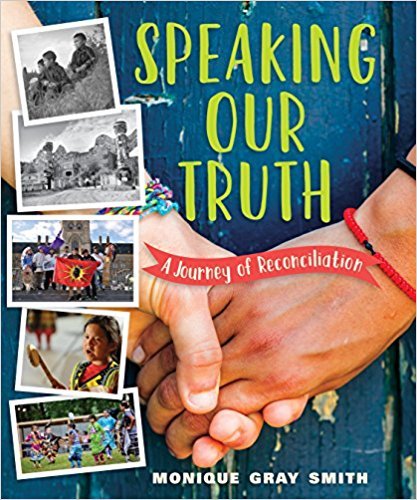
Speaking Our Truth: A Journey of Reconciliation
Canada's relationship with its Indigenous people has suffered as a result of both the residential school system and the lack of understanding of the historical and current impact of those schools. Healing and repairing that relationship requires education, awareness and increased understanding of the legacy and the impacts still being felt by survivors and their families. Guided by acclaimed Indigenous author Monique Gray Smith, readers will learn about the lives of Survivors and listen to allies who are putting the findings of the Truth and Reconciliation Commission into action.
160 pages, Hardcover
Published September 19, 2017
Ratings & Reviews
Friends & Following
Create a free account to discover what your friends think of this book!
Community Reviews
Displaying 1 - 30 of 65 reviews

October 14, 2017
I just reread Secret Path by Gord Downie and Jeff Lemire and Wenjack by Robert Boyden that would be useful to read in conjunction with this YA non-fiction book that tries to put as positive a spin as it can on the horrific history of Canadian Residential Schools. I read it for my Fall 2017 YAL class.
For those who don't know, these schools were for close to 150 years the places where the Canadian government placed children they had taken by force from First Nations families, by force. They were denied the clothing, the spiritual beliefs, the language of their people. This process of cultural genocide, also practiced during this time in the U. S., destroyed indigenous families, with ripple effects for generations to follow.
Downie/Lemire's book and Boyden's book are fictional, more poetic; Smith's book has a spiritual spine to it, but features, for a YA audience, some historical background, the stories of survivors, and some hopeful stories of truth and reconciliation. It's very informative, with lots of resources.
For those who don't know, these schools were for close to 150 years the places where the Canadian government placed children they had taken by force from First Nations families, by force. They were denied the clothing, the spiritual beliefs, the language of their people. This process of cultural genocide, also practiced during this time in the U. S., destroyed indigenous families, with ripple effects for generations to follow.
Downie/Lemire's book and Boyden's book are fictional, more poetic; Smith's book has a spiritual spine to it, but features, for a YA audience, some historical background, the stories of survivors, and some hopeful stories of truth and reconciliation. It's very informative, with lots of resources.

October 22, 2019
This non-fiction book is aimed at students in middle school, but could easily be read by adults if they want an unbiased guide to the thorny and complex issue of reconciliation. It deals with this shameful period in Canadian history in a straightforward way, and asks readers to take their own steps towards fostering reconciliation. The hardcover book is beautifully designed with lots of photographs, both current and historic, plus suggested activities. Kudos to the author.
August 18, 2017
This book was a revelation! Every Canadian needs to read this and put reconciliation into practice! It provides insightful history and recommendations towards a more equitable future for all, and I hope fellow settlers pay attention to how we can be better allies together.

March 18, 2019
Annotation originally published 18 March 2018 at Falling Letters.
Speaking Our Truth is a comprehensive text primarily directed to a non-Indigenous audience that describes Canada’s residential school history and the ongoing process of reconciliation. The book addresses the questions of where we have come from, where we stand today, and where we go from here. This is not an impersonal textbook – Smith has both settler and Indigenous heritage; her voice is present throughout the book, as are the voices of many Indigenous and settler children and adults. The book’s design has been well considered, as it uses a consistent vivid colour palette throughout with sidebars of quotes, definitions, reflections, and photographs to support the main text. The final part of the book offers practical steps that children can take to engage in reconciliation, making this text a great choice for youth who should not only learn about their country’s history but also about what needs to be done going forward. Age 9+.
Speaking Our Truth is a comprehensive text primarily directed to a non-Indigenous audience that describes Canada’s residential school history and the ongoing process of reconciliation. The book addresses the questions of where we have come from, where we stand today, and where we go from here. This is not an impersonal textbook – Smith has both settler and Indigenous heritage; her voice is present throughout the book, as are the voices of many Indigenous and settler children and adults. The book’s design has been well considered, as it uses a consistent vivid colour palette throughout with sidebars of quotes, definitions, reflections, and photographs to support the main text. The final part of the book offers practical steps that children can take to engage in reconciliation, making this text a great choice for youth who should not only learn about their country’s history but also about what needs to be done going forward. Age 9+.

August 29, 2017
The horror that was the residential schools is explored in this book that talks about what happened and what can be done to reconcile all that has gone before, for previous generations, and existing generations, by talking to survivors of the residential school system, as well as with youths of today who are only now learning about this horrid history.
For thos who don't know, the residential schools are schools where the Canadian government took children of First Nations' people, by force, and put them in to schools where they had their hair cut, had their clothes taken away, as well as their language, which they were punished if the spoke. They were not allowed home, except the summer, and sometimes not even then. this went on for generations. This distoryed families, for many generations, as well as obliterated the structure of the First Nations peoples.
Good book for those who want a thorough overview of what can be done, and what has been done, and what needs to be done.
Thanks to Netgalley for making this book available for an honest review.
For thos who don't know, the residential schools are schools where the Canadian government took children of First Nations' people, by force, and put them in to schools where they had their hair cut, had their clothes taken away, as well as their language, which they were punished if the spoke. They were not allowed home, except the summer, and sometimes not even then. this went on for generations. This distoryed families, for many generations, as well as obliterated the structure of the First Nations peoples.
Good book for those who want a thorough overview of what can be done, and what has been done, and what needs to be done.
Thanks to Netgalley for making this book available for an honest review.

December 19, 2018
This book was chosen for a book group in my contemplative community of SoulStream. As a group of about 15, we read the book together, sharing online our responses to what we read, each opening up to the Truth and Reconciliation movement in our own unique way.
In recognition that the hard historical facts of Indigenous colonization have been glaringly absent in the education curriculum for so many of us and our children, this book was written as a textbook for the classroom. The emphasis on children for children gives this book a unique flavour that matches how my journey into reconciliation has been experienced alongside children.
A highlight for me was Orange Shirt Day - http://www.orangeshirtday.org/ - as it was celebrated in Quesnel at the end of September. A group of 100's gathered to recognize the impact of residential schools in our province and country. Together, adults and children walked along a downtown corridor to the horns of passing cars and trucks, proud to be united as one body to speak up for this important cause.
In recognition that the hard historical facts of Indigenous colonization have been glaringly absent in the education curriculum for so many of us and our children, this book was written as a textbook for the classroom. The emphasis on children for children gives this book a unique flavour that matches how my journey into reconciliation has been experienced alongside children.
A highlight for me was Orange Shirt Day - http://www.orangeshirtday.org/ - as it was celebrated in Quesnel at the end of September. A group of 100's gathered to recognize the impact of residential schools in our province and country. Together, adults and children walked along a downtown corridor to the horns of passing cars and trucks, proud to be united as one body to speak up for this important cause.

May 30, 2019
This is a great example of how to do middle grade non-fiction on tough topics. It does a masterful job of not shying away from the horror of the residential school experience and the lasting impact it has had on individuals and communities, while staying developmentally appropriate and grounded in a place of love and respect and hope for the future. The author connects to the topic with personal history, it centers youth, it uses primary sources, gives kids things they can do to help with reconciliation, and has excellent back matter. The book is, appropriately, very focused on Canada, but is still a compelling read for non-Canadians. All this in a beautifully published book, with thick pages, an abundance of color photographs, excellent editing, thoughtful and unique graphic design elements, etc.- I wish more publishers were making similar investments in own voices content. Highly recommended for ages 10-14.
August 28, 2021
I completed U of A’s Indigenous Canada course this summer online, and I found this book to be a great summary of everything I learned, even if this only really scrapes the surface. My son is starting to read parts of this now, and I am really thankful that resources like this exist for our young people. Extra resources at the back of this book are also helpful - it gives me great direction for my journey. Highly recommend, especially if you need a short overview of residential schools and reconciliation.
October 6, 2022
From one of my favourite First Nations authors, Monique Gray Smith provides an honest, detailed, simple and moving account of the history of Residential Schools in Canada and the negative effects on multigenerational of Indigenous Peoples in Canada. I recommend this book to anyone who is looking for both a personal accounting from survivors and ultimately, a resource that helps non-Indigenous people to understand the devastating effects, and to take positive steps towards truth and reconciliation.

August 10, 2020
A must-read for all Canadians. This book was written primarily for young people, but would also be a wonderful place to start for adults who are wondering where to begin their reconciliation journey. I have been sharing this book with my 11 year old, which has led to some interesting and heartfelt conversations about systemic racism. Highly recommended.

October 12, 2022
Nonfiction about Indigenous culture, a history of colonialism, and reconciliation and recovery. The page layout provided chunks that were easy to digest, while also offering reflection questions. It featured full interviews from Survivors and others, as well as with kids. The intended audience sits somewhere around Grade 6, I think, but it's good for adults who need somewhere to start.

November 13, 2017
Priceless resource for talking about Residential Schools and Canada's Reconciliation process with young people--the United States should take notes. Earnestly, thoughtfully, truthfully written for indigenous and non-indigenous youth alike, the book incorporates many opportunities for reflection and self-care. This should be a classroom text!
January 13, 2018
This is an excellent book that should be required reading for all Canadian students. It deals with a tragic period in Canadian history in a way that is straightforward and yet compassionate - asking all readers to take their own steps towards fostering reconciliation. There are many stories and suggested activities and I hope each school has purchased several copies and teachers are actively using it in the classroom!

Want to Read
September 25, 2017Note: I received a digital review copy of this book from the publisher through NetGalley.
September 26, 2017
It is a very informative book about the history of residential school system in Canada.

April 1, 2019
I was fortunate to be able to read a copy of this book from Netgalley in exchange for an honest review. (I had to find a hard copy to read as the ebook just doesn't work with all the text features.)
Monique Gray Smith explores Reconciliation in four main sections. In the first she looks at why a reconciliation journey is necessary. In the second, she analyzes Canadian history with respect to Indigenous peoples. In the third section she examines where we are at now. The fourth component queries just what reconciliation might mean and what it entails.
I appreciate the layout of this book. it's full of different nonfiction text features. There are plenty of captioned photographs. Different coloured sidebars are filled with different kinds of information. Indigo inserts provide additional information. Green inserts explain vocabulary. A map shows the location of all the residential schools in Canada. Reflection pieces, composed of text within orange circles, asks readers to contemplate what they have just read. Each section is highlighted with titles and subtitles. Words in bold print can be found in the glossary at the end of the book. The back matter also includes acknowledgements, online resources, a reading list, a list of residential schools, an index and information about the author.
Even though this is book for intermediate and teen age children, don't assume it's an easy read. While it doesn't reveal the graphic details of the abuse suffered by so many children, I was still forced to put the book down at times and take a break. Granted, I have listened to the first hand accounts of survivors and survivors of survivors. Perhaps it's this background knowledge that made reading it difficult, but I suspect that if you are human, you would be troubled. It's not a comfortable topic.
While I thought I knew a lot about residential schools, I was still suprised by information in this book. Given todays attitudes around accumulation as wealth, I found this sentence particularly profound, "Wealth was often determined by how much a person or family could give away and share with other families and community members." If only we determined wealth like this today. I knew that these schools had been around for a long time, but hadn't put put the 165 years into the context of seven generations of children being taken away from their parents. Sherman Alexie, in his book, You Don't Have to Say You Love Me, claims that if you wanted to create as dysfunctional a society as possible, you would take the children away from their families, subject them to all kinds of abuse, return them home again, and repeat for generation after generation. Monique Gray Smith shows us what this looks like in reality.
In the last section when the author speaks to what reconciliation means, I had a hard time. I agree that love and mutual respect have to be in the solution, but it seems simplified. I want direct action. I especially appreciated the words of Carey Newman, "When you read the definition of reconciliation, it is one of coming back, the reinstatement of the relationship. I have a problem with that because there wasn't really good relationships to begin with, so let's call it conciliation." As I think about reconciliation in the context of living in Canada today, I’m certain that doing nothing about lack of safe drinking water on reserves, underfunding indigenous education compared to that of other children, ignoring indigenous rights and land claims, (as with the Site C Dam and oil pipelines,) is not only NOT reconciliation, it’s a continuation of the system that brought it in. We have a long way to go before we really come to a place where the human rights of indigenous peoples in this country are respected. Until we get there, we aren't close to conciliation.
Monique Gray Smith explores Reconciliation in four main sections. In the first she looks at why a reconciliation journey is necessary. In the second, she analyzes Canadian history with respect to Indigenous peoples. In the third section she examines where we are at now. The fourth component queries just what reconciliation might mean and what it entails.
I appreciate the layout of this book. it's full of different nonfiction text features. There are plenty of captioned photographs. Different coloured sidebars are filled with different kinds of information. Indigo inserts provide additional information. Green inserts explain vocabulary. A map shows the location of all the residential schools in Canada. Reflection pieces, composed of text within orange circles, asks readers to contemplate what they have just read. Each section is highlighted with titles and subtitles. Words in bold print can be found in the glossary at the end of the book. The back matter also includes acknowledgements, online resources, a reading list, a list of residential schools, an index and information about the author.
Even though this is book for intermediate and teen age children, don't assume it's an easy read. While it doesn't reveal the graphic details of the abuse suffered by so many children, I was still forced to put the book down at times and take a break. Granted, I have listened to the first hand accounts of survivors and survivors of survivors. Perhaps it's this background knowledge that made reading it difficult, but I suspect that if you are human, you would be troubled. It's not a comfortable topic.
While I thought I knew a lot about residential schools, I was still suprised by information in this book. Given todays attitudes around accumulation as wealth, I found this sentence particularly profound, "Wealth was often determined by how much a person or family could give away and share with other families and community members." If only we determined wealth like this today. I knew that these schools had been around for a long time, but hadn't put put the 165 years into the context of seven generations of children being taken away from their parents. Sherman Alexie, in his book, You Don't Have to Say You Love Me, claims that if you wanted to create as dysfunctional a society as possible, you would take the children away from their families, subject them to all kinds of abuse, return them home again, and repeat for generation after generation. Monique Gray Smith shows us what this looks like in reality.
In the last section when the author speaks to what reconciliation means, I had a hard time. I agree that love and mutual respect have to be in the solution, but it seems simplified. I want direct action. I especially appreciated the words of Carey Newman, "When you read the definition of reconciliation, it is one of coming back, the reinstatement of the relationship. I have a problem with that because there wasn't really good relationships to begin with, so let's call it conciliation." As I think about reconciliation in the context of living in Canada today, I’m certain that doing nothing about lack of safe drinking water on reserves, underfunding indigenous education compared to that of other children, ignoring indigenous rights and land claims, (as with the Site C Dam and oil pipelines,) is not only NOT reconciliation, it’s a continuation of the system that brought it in. We have a long way to go before we really come to a place where the human rights of indigenous peoples in this country are respected. Until we get there, we aren't close to conciliation.

December 10, 2019
Book: Speaking our truth: a journey of reconciliation
Author: Monique Gray Smith
What it's about: “Canada's relationship with its Indigenous people has suffered as a result of both the residential school system and the lack of understanding of the historical and current impact of those schools. Healing and repairing that relationship requires education, awareness and increased understanding of the legacy and the impacts still being felt by survivors and their families. Guided by acclaimed Indigenous author Monique Gray Smith, readers will learn about the lives of Survivors and listen to allies who are putting the findings of the Truth and Reconciliation Commission into action.”
Why I read it:
I have such deep regret that I didn't learn more about Canada's tragic history (with lasting trauma, impact and relevance) when I was younger, either through school (the last federally-run residential school didn't close until 1996) or on my own. Only in the past decade have I learned more. Though I read everything I can now, I always appreciate more background knowledge, both for myself and as a parent who needs to teach/share/answer questions/ensure my kids have a better chance to know and make better. I read this was a good resource, and it was prominently on display at our library.
What I thought: I think it's an accessible first read for youth. As an adult, parts of it for me felt too simplified or just lacking in detail outside of what I already know. It was still gut wrenching and uncomfortable to absorb. It helped me have a better understanding. In a classroom, the book would be an excellent resource alongside discussion, further research and projects. (Some resources here: http://orcabook.com/speakingourtruth/... and http://orcabook.com/speakingourtruth/... ) Completely recommend.
Quote that stood out: I returned it too long ago! But what I carry with me is how this world might have/could have/should have been different.
Author: Monique Gray Smith
What it's about: “Canada's relationship with its Indigenous people has suffered as a result of both the residential school system and the lack of understanding of the historical and current impact of those schools. Healing and repairing that relationship requires education, awareness and increased understanding of the legacy and the impacts still being felt by survivors and their families. Guided by acclaimed Indigenous author Monique Gray Smith, readers will learn about the lives of Survivors and listen to allies who are putting the findings of the Truth and Reconciliation Commission into action.”
Why I read it:
I have such deep regret that I didn't learn more about Canada's tragic history (with lasting trauma, impact and relevance) when I was younger, either through school (the last federally-run residential school didn't close until 1996) or on my own. Only in the past decade have I learned more. Though I read everything I can now, I always appreciate more background knowledge, both for myself and as a parent who needs to teach/share/answer questions/ensure my kids have a better chance to know and make better. I read this was a good resource, and it was prominently on display at our library.
What I thought: I think it's an accessible first read for youth. As an adult, parts of it for me felt too simplified or just lacking in detail outside of what I already know. It was still gut wrenching and uncomfortable to absorb. It helped me have a better understanding. In a classroom, the book would be an excellent resource alongside discussion, further research and projects. (Some resources here: http://orcabook.com/speakingourtruth/... and http://orcabook.com/speakingourtruth/... ) Completely recommend.
Quote that stood out: I returned it too long ago! But what I carry with me is how this world might have/could have/should have been different.

July 8, 2021
This book is beautifully written. It is aimed at middle grade students, but as an adult I truly appreciated everything I learned from the author. I didn't know about Residential schools just a few years ago.
I pledge to continue my journey of Reconciliation:
"I love Canada.
I love the Canada I was brought up believing in.
I love the Canada we are TRYING to be.
But... I don't love a lot of the things Canada has done and continues to do.
This year I stand in solidarity with the Mi'kmaw whos unceeded ancestral land I live on, and with the Cree and Metis I lived amongst in Manitoba and Saskatchewan while teaching and living in their communities.
I didn't know much about the Residential School system when I lived there, but I could definitely see the intergenerational trauma reflected in my students and coworkers, even if I didn't at the time understand what I was seeing. I am still learning and so can you.
Canada, today we know better, so today and all the days to come we can do better.
We tell our students they can become more. We teach them the power of YET. We teach them compassion for all.
Let's show them that we can follow through on these lessons and do better, be better as a country.
Next Canada day, let's be proud of the changes we make over the next 365 days. Please honour the Truth and Reconciliation Calls to Action."
I pledge to continue my journey of Reconciliation:
"I love Canada.
I love the Canada I was brought up believing in.
I love the Canada we are TRYING to be.
But... I don't love a lot of the things Canada has done and continues to do.
This year I stand in solidarity with the Mi'kmaw whos unceeded ancestral land I live on, and with the Cree and Metis I lived amongst in Manitoba and Saskatchewan while teaching and living in their communities.
I didn't know much about the Residential School system when I lived there, but I could definitely see the intergenerational trauma reflected in my students and coworkers, even if I didn't at the time understand what I was seeing. I am still learning and so can you.
Canada, today we know better, so today and all the days to come we can do better.
We tell our students they can become more. We teach them the power of YET. We teach them compassion for all.
Let's show them that we can follow through on these lessons and do better, be better as a country.
Next Canada day, let's be proud of the changes we make over the next 365 days. Please honour the Truth and Reconciliation Calls to Action."

April 3, 2018
⭐️⭐️⭐️⭐️⭐️/5 for this amazing nonfiction book about the residential schools in Canada that were so devastating for indigenous families in the 1800s through the 196”s, forcibly removing children from their families and attempting to erase their culture. The lasting impact of Canada’s racist past is detailed clearly here, as are the attempts of the Truth and Reconciliation Commission to come to grips with that past. I can’t help wondering when we will reconcile with our racist past (and present) here in America. This book will be an incredible discussion starter in classrooms. Our students are ready for this heavy work and they deserve our faith.
_*_*_*_*_*
Thanks to my Canadian IG friend @the_neverending_stack for convincing me to read this book with her powerful review.
_*_*_*_*_*
#bookstagram #book #reading #bibliophile #bookworm #bookaholic #booknerd #bookgram #librarian #librariansfollowlibrarians #librariansofinstagram #booklove #booktography #bookstagramfeature #bookish #bookaddict #booknerdigans #booknerd #ilovereading #instabook #futurereadylibs #ISTElibs #TLChat
_*_*_*_*_*
Thanks to my Canadian IG friend @the_neverending_stack for convincing me to read this book with her powerful review.
_*_*_*_*_*
#bookstagram #book #reading #bibliophile #bookworm #bookaholic #booknerd #bookgram #librarian #librariansfollowlibrarians #librariansofinstagram #booklove #booktography #bookstagramfeature #bookish #bookaddict #booknerdigans #booknerd #ilovereading #instabook #futurereadylibs #ISTElibs #TLChat

July 23, 2018
How do you write a book that honestly portrays the horror that was residential schools in Canada in an age appropriate fashion for young people, while providing hope for the future? What a massive undertaking! This book is a great place for learners to start. The deeper thinking questions are wonderful for individual contemplation or group discussion and for those who want to dig further into this issue there are many suggested resources.
While discussing the wrongs that were committed through residential schools, a student once asked me, “So you aren’t proud to be Canadian?” This book reminds me of what I tried to convey to him. You can still be proud of your country, and I am, but we need to also acknowledge the mistakes of the past and ensure that this type of atrocity doesn’t happen again.
While discussing the wrongs that were committed through residential schools, a student once asked me, “So you aren’t proud to be Canadian?” This book reminds me of what I tried to convey to him. You can still be proud of your country, and I am, but we need to also acknowledge the mistakes of the past and ensure that this type of atrocity doesn’t happen again.
November 5, 2021
This book was purposely written for middle school aged students. It should be read by all.
It is a well-written and an easily followed encapsulation of the residential school history along with the connection to the Truth and Reconciliation results and their 94 recommendations.
The author interviewed young people and included many of their responses to her interviews with them. She also included quotes from those involved in the TRC.
For young people, she has definitions to difficult words, suggestions on what to think about along with open ended questions for the reader to ponder. There are many photos as well as links to websites and places to further your research.
It is a well-written and an easily followed encapsulation of the residential school history along with the connection to the Truth and Reconciliation results and their 94 recommendations.
The author interviewed young people and included many of their responses to her interviews with them. She also included quotes from those involved in the TRC.
For young people, she has definitions to difficult words, suggestions on what to think about along with open ended questions for the reader to ponder. There are many photos as well as links to websites and places to further your research.
March 27, 2023
A book about the journey to reconciliation. By examining the trauma surrounding Canada’s history of systematic racism and residential schools, this book aims to create a better understanding and awareness of the impacts of colonization. While Smith spells out the realities of Canada’s settler history, she compassionately leaves room for the reader to reflect on their own knowledge and identity in this context. She shares the teachings she’s learned from her elders and gives a voice to survivors. Smith writes for children and does a remarkable job communicating to them the importance of reconciliation.

October 30, 2020
This was geared to younger school-age readers, but it was such a great resource to get people thinking about reconciliation between indigenous and non-indigenous groups. This was also set in and based on Canadian reconciliation efforts, so for American readers it doesn't have links to any resources or projects in the USA. Still, considering many of the same things happened to indigenous groups in other countries, it is a good springboard to learning about what has happened in other colonized countries and how reconciliation can proceed.
April 17, 2018
After seeing Monique speak at an Aboriginal Education Symposium, I decided to read her book. It is a comprehensive book using language simple enough for young readers and in my opinion, should be an important addition to the Canadian school curriculum. Truth and Reconciliation cannot happen if our young people (and everyone else, for that matter) do not learn about Canada's history of the persecution of our Indigenous peoples.

May 6, 2021
I learned a lot about the horrors and brutality of the Residential Schools in Canada and the evil racism that guided the actions of supposedly Christian people. The trauma of these Native children had incredibly far-reaching, ongoing repercussions. It’s shameful that this history was so recent, ending in practice only a generation ago — but so deep that it will not end in the lives and memories of those who must still find a way to live positively.

January 14, 2022
Speaking Our Truth is a tender introduction to the history of Residential Schools and the journey of reconciliation. It covers a surprising amount of content in a relatively short length of time, and while it is painful it is also filled with hope. While I've read a few books on the subject, along with many articles and a handful of videos, I was surprised to find that this introductory work included things I hadn't heard about. This is an essential resource that ought not to be missed.
February 4, 2022
Speaking Our Truth ( Journey of Reconciliation) is authored by Monique Gray Smith and published by Orca Book Publishers. The text is well-written, well-researched, age appropriate , and informative. It is a valuable resource for schools with discussion questions. The author's hope and my own is that this can continue the ongoing dialogue needed in reconciliation. Though the details are shocking the author tells the story with sensitivity and genuine caring. She shares stories of hope and transformation since reconciliation began. We are encouraged to go further. A book valuable for every Canadian School.

December 8, 2022
This is an important book -- it explains a lot of challenging concepts and explores the hard truths of North American history in a way that is accessible and understandable to young readers. It's also a kind, thoughtful, challenging roadmap of the work we need to do as a species to do better in the future. While it is written about Canadian residential schools, it definitely transfers to the US as well.

November 11, 2023
You have to have a high tolerance for Political Correctness while reading this book. If you do, you can learn a lot about this process of Truth and Reconciliation between the Canadian First Peoples and the majority Canadians. (It's a similar process that took place in South Africa between the Black persons and the Europeans during Apartheid.) The book is aimed to students in the middle grades, about ages 12-14. It has good historical information for all ages!

June 7, 2018
This is an excellent book for intermediate and middle grade students to learn more about residential schools and reconciliation. It's presented in a highly readable fashion, and has a lot of personal stories and reflections from children and adults. Even for adults, if you don't know a lot about the state of Indigenous affairs in Canada, this is a great primer.
Displaying 1 - 30 of 65 reviews