What do you think?
Rate this book


632 pages, Hardcover
First published September 22, 2016
The parchment leaves of the manuscript, as we saw earlier, are extremely fine and of tissue thinness, and they pick up the vibration and hummed and fluttered in time with the music. At the moment, it was if the sixth-century manuscript on its cushion had come to life and was taking part in the service. It occurred to me that maybe ancient Christian manuscripts always did that, for their parchment is generally much finer than in later books, and perhaps one for carrying early Gospel Books in processions at all was because this effect is astonishingly powerful and moving.-- about Gospels of Saint Augustine, 7th c. brought to England by Saint Gregory
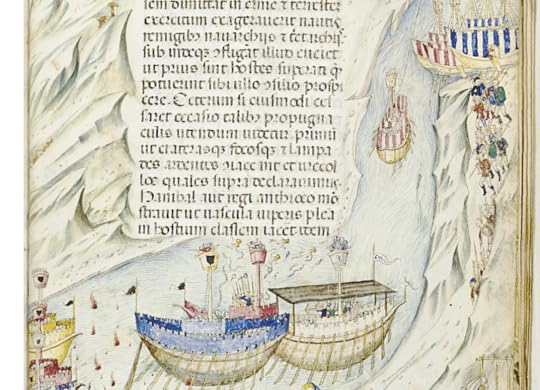
Parchment is protein, edible to rodents. Probably when theook was neglected in the eighteenth century at Hengwrt, the upper conrers of all pages were nibbled away. (I see the glimmerings of a children’s story in there somwhere called The Rat Who Ate the Hengwrt Chaucer.) (pg 436)Now, I can imagine one might prefer a more objective, authorless presentation of the manuscripts than what De Hamel writes. For my part, I enjoyed living vicariously through De Hamel and exploring the manuscripts through his eyes. I appreciated his sense of humour. Even more so, I appreciated the sections where he acknowledged he wasn’t an expert on a particular point or that a particular matter icauses debate among experts. I found a couple takes (on general matters) a little questionable, but at least he doesn’t assert them as fact. He makes clear the differences between his personal opinion and generally accepted fact. Uniquely for a book about medieval manuscripts, he paints a vivid picture of what it is like to actually visit an institution and physically handle a manuscript, including the particulars of staff interactions and building design. Meetings with manuscripts, indeed.
What, then, was the compilers’ source of the poems and songs? This may be the unique collection gathered together for the first time, but the individual pieces were culled from earlier lives. Specialists in medieval music and literature have worked themsleves into frenzies of speculation on the poems’ origins and dates, arguing righteously with each other. These are dangerous waters of academia into which I am reluctant to dip as much as a toe. Scott Schwartz, a practicing lutenist, calls these the ‘Carmina Piranha’ with good reason. (pg 159)Delving into twelve manuscripts means this book is packed full of fascinating information. For example, I was always impressed to read about how researchers are able to track the travels of a manuscript over hundreds of years or narrow down its authorship. (“Considering the absolute rarity of any records and manuscripts from the seventh century to the eighth, this chapter has already benefited from some truly extraordinary coincidences of survival.” pg 84). This is one of those fields where we have discovered much, yet much more remains to be discovered.