

What do you think?

Stolen Words
How do you say grandfather in Cree?
When a little girl comes home from school one day and asks her grandpa how to say something in his Cree language, he is sad that he cannot teach her. He tells her that his words were stolen from him when he was taken to live at a residential school as a boy. The little girl then sets out to help her grandpa find his language again.
When a little girl comes home from school one day and asks her grandpa how to say something in his Cree language, he is sad that he cannot teach her. He tells her that his words were stolen from him when he was taken to live at a residential school as a boy. The little girl then sets out to help her grandpa find his language again.
24 pages, Hardcover
First published September 1, 2017
Ratings & Reviews
Friends & Following
Create a free account to discover what your friends think of this book!
Community Reviews
Displaying 1 - 30 of 358 reviews

April 7, 2017
I didn’t think I would be fully reviewing this picture book because of the short length of it (only thirteen pages), but I’ve found myself thinking about it quite a lot after putting it down. When We Were Alone by David Alexander Robertson and Jenny Kay Dupuis's I Am Not a Number are two reads that aquatinted me on the hard-hitting subject of this book: the intergenerational impact of Canada's residential school system, which separated young Indigenous children from their families.
I went into this not expecting much, but Stolen Words completely blew me away. The illustrations by Gabrielle Grimard in particular because of how hauntingly beautiful they were:

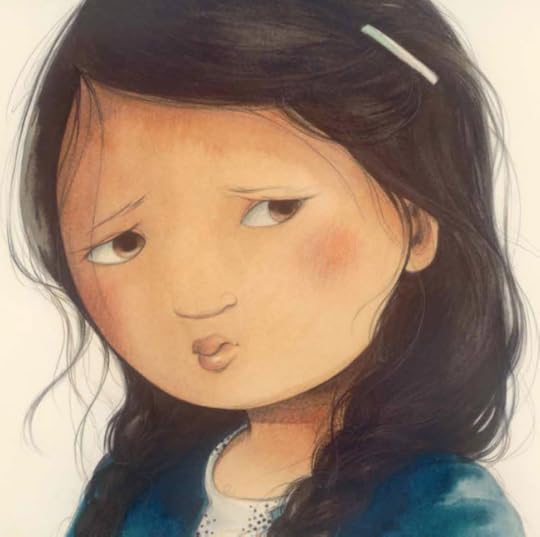
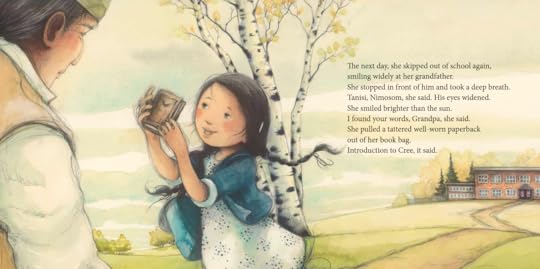
I found myself fighting tears with the above.


Before reading I’d been worried about whether Stolen Words was an #ownvoices story, but thankfully with a little research on the author's website I found that Florence is a writer of Cree and Scottish heritage based in Toronto. She was close to her grandfather as a child, a relationship that sparked her interest in writing about Aboriginal themes and characters.
Needless to mention, this is a vitally important picture book from a much-needed voice.
ARC kindly provided by the publisher in exchange for an honest review.
Expected publication: September 5th, 2017
4/5 stars
Note: I'm an Amazon Affiliate. If you're interested in buying Stolen Words, just click on the image below to go through my link. I'll make a small commission!

Support creators you love. Buy a Coffee for nat (bookspoils) with Ko-fi.com/bookspoils

I went into this not expecting much, but Stolen Words completely blew me away. The illustrations by Gabrielle Grimard in particular because of how hauntingly beautiful they were:
I found myself fighting tears with the above.
Before reading I’d been worried about whether Stolen Words was an #ownvoices story, but thankfully with a little research on the author's website I found that Florence is a writer of Cree and Scottish heritage based in Toronto. She was close to her grandfather as a child, a relationship that sparked her interest in writing about Aboriginal themes and characters.
Needless to mention, this is a vitally important picture book from a much-needed voice.
ARC kindly provided by the publisher in exchange for an honest review.
Expected publication: September 5th, 2017
4/5 stars
Note: I'm an Amazon Affiliate. If you're interested in buying Stolen Words, just click on the image below to go through my link. I'll make a small commission!
Support creators you love. Buy a Coffee for nat (bookspoils) with Ko-fi.com/bookspoils
August 25, 2019
This is a powerful and beautiful picture book about how language was stolen from Canada’s indigenous children at church-run residential schools, which sought to “beat the Indian out of the Indian.” With its text appropriately written in Plains Cree (followed by English), the book tells the story of a little First Nations girl who delightedly runs home to show her beloved grandfather the dream catcher she has made at school. She asks to call him by the Cree name for grandfather, but he cannot tell her the word. He explains—and the accompanying illustrations beautifully and symbolically communicate—that his words were stolen by the Catholic brothers in the cold lonely place he was taken to as a child. In a touching development, the little girl resolves to do something so that her grandfather’s words can be restored to him.
I found this a profoundly moving piece, focusing as it does on the importance of language and the bond between grandparents and grandchildren. Genuine hopefulness about the future is communicated.
I hope this book will make its way onto the Ontario Library Association’s Silver Blue Spruce Picture Book Awards. It is a lovely and worthy addition to the growing body of works for children about indigenous experience.
I found this a profoundly moving piece, focusing as it does on the importance of language and the bond between grandparents and grandchildren. Genuine hopefulness about the future is communicated.
I hope this book will make its way onto the Ontario Library Association’s Silver Blue Spruce Picture Book Awards. It is a lovely and worthy addition to the growing body of works for children about indigenous experience.

June 27, 2019
Absolutely heartbreaking & beautiful!
Exquisite illustrations that accompany the tone of the story perfectly.
I really hope someone does a read-a-long or audio version of this.
It would have been wonderful to hear the Cree whispered in a grandfatherly voice.

Thank you NetGalley and Second Story Press for my DRC.
Exquisite illustrations that accompany the tone of the story perfectly.
I really hope someone does a read-a-long or audio version of this.
It would have been wonderful to hear the Cree whispered in a grandfatherly voice.
Thank you NetGalley and Second Story Press for my DRC.

November 2, 2019
Stolen Words / kimotinaniwiw itwewina is an emotionally satisfying children’s book about language, here Plains Cree, and the effects of its loss. A young girl has made a dream catcher at school one day and happily brings it home to show her family. As she shows it to her grandfather she asks him how to say grandfather in Cree. His long hesitation is followed by the admission that he has lost his words, that his words were taken away from him, and other children like him, who were taken from their homes and put into residential schools when they were young. This 7 year old girl sees the hurt in her grandfather and manages to find a way to help him, a way that brings them even closer.
The art work throughout Stolen Words is beautiful while also serving to convey the plot, metaphorically at times. The faces are open, show emotion. The story is written in Plains Cree and English, and a listing of several Cree words used in the book is provided at the end along with a pronunciation guide and useful definitions. Many children would enjoy this book even without a cultural tie. The story is so human; the illustrations will draw them and their parents in. This is a book that also can spark meaningful family conversations.
Recommended.
A copy of this book was provided by Second Story Press through NetGalley in return for an honest review.
The art work throughout Stolen Words is beautiful while also serving to convey the plot, metaphorically at times. The faces are open, show emotion. The story is written in Plains Cree and English, and a listing of several Cree words used in the book is provided at the end along with a pronunciation guide and useful definitions. Many children would enjoy this book even without a cultural tie. The story is so human; the illustrations will draw them and their parents in. This is a book that also can spark meaningful family conversations.
Recommended.
A copy of this book was provided by Second Story Press through NetGalley in return for an honest review.

April 6, 2017
A short but extremely powerful book about a young girl and her grandfather. Her grandfather's language - Cree - was taken from him as a child, and now his granddaughter wants to help him reclaim it.
I don't think a book this short has ever had such an emotional effect on me. I was blinking back tears for the entire thirteen pages. It's truly disturbing that this tale was the reality for many indigenous children.
I don't think a book this short has ever had such an emotional effect on me. I was blinking back tears for the entire thirteen pages. It's truly disturbing that this tale was the reality for many indigenous children.
October 18, 2018
Tears. A beautiful book; so powerful, so heart warming *and* heart-wrenching. I sense the author had lots and lots to say and worked very hard to pare it down, distill it, until only the most intense essence was left. And yet it's not depressing, and the illustrations are help lighten it as the ones that refer to the past misery are muted and so not quite in your face.
Highly recommended to all, even preschool I think, and not just families & classrooms.
.....
The themes of Stolen Words are very much similar to those of When We Were Alone, but the former is lighter, more hopeful. The latter is also gorgeous and intense, but more detailed and more wistful, almost sad. I recommend both, actually... or at least one of them, to everybody.
Highly recommended to all, even preschool I think, and not just families & classrooms.
.....
The themes of Stolen Words are very much similar to those of When We Were Alone, but the former is lighter, more hopeful. The latter is also gorgeous and intense, but more detailed and more wistful, almost sad. I recommend both, actually... or at least one of them, to everybody.

May 13, 2017
I was at a conference recently, perusing one of the many bookstores, when I caught sight of an adorable little book. Brightly yellow and red, it was one of the cardboard ones they make so babies can chew on them without tearing the paper. I picked it up, turning it over in my hands. It was a 'First Words' book, but instead of having just English words, it had English, French, and Cree.
I remember standing in that bookstore, turning this book over and over in my hands, looking at this beautiful little book and realising how privileged I really am, and always have been. I'm as white as they come (my skin looks like uncooked chicken, ok?), but I've always had an immense interest, appreciation and reverence for other cultures. Even still, I'd never even thought how lucky I was to grow up with all my books, my precious books, written in my language. My music, in my language. My signs, in my language.
And that is why I love Second Story Press. They are tackling the real issues, and they are tackling them where it counts: through children's books. Stolen Words is my fourth Second Story Press book that I've read, and each of them are absolutely brilliant. They are teaching kids, encouraging kids, and empowering kids to embrace who they truly are, and who their friends truly are.
Stolen Words is a really touching story about a little girl and her grandfather, who was placed in residential school when he was younger, and lost his language as a result. The illustrations through Stolen Words are truly gorgeous, and add to the haunting but evocative nature of the story. It also gives the reader their own introduction to Cree, and ends the story with hope.
Second Story Press and Melanie Florence are on the right track with books like these. Just like that 'First Words' book that I held for a good five minutes in that bookstore, Stolen Words not only educates children, but it also awakens adults like you and me to realise and face parts of ourselves that we didn't know existed. And, really, isn't that what great literature does? Great literature helps us to embrace who we are, and forces us to reconcile and realise who we are not. Stolen Words does exactly that.
Thank you to the publisher and to NetGalley for providing me with a free copy for my fair and honest review.
I remember standing in that bookstore, turning this book over and over in my hands, looking at this beautiful little book and realising how privileged I really am, and always have been. I'm as white as they come (my skin looks like uncooked chicken, ok?), but I've always had an immense interest, appreciation and reverence for other cultures. Even still, I'd never even thought how lucky I was to grow up with all my books, my precious books, written in my language. My music, in my language. My signs, in my language.
And that is why I love Second Story Press. They are tackling the real issues, and they are tackling them where it counts: through children's books. Stolen Words is my fourth Second Story Press book that I've read, and each of them are absolutely brilliant. They are teaching kids, encouraging kids, and empowering kids to embrace who they truly are, and who their friends truly are.
Stolen Words is a really touching story about a little girl and her grandfather, who was placed in residential school when he was younger, and lost his language as a result. The illustrations through Stolen Words are truly gorgeous, and add to the haunting but evocative nature of the story. It also gives the reader their own introduction to Cree, and ends the story with hope.
Second Story Press and Melanie Florence are on the right track with books like these. Just like that 'First Words' book that I held for a good five minutes in that bookstore, Stolen Words not only educates children, but it also awakens adults like you and me to realise and face parts of ourselves that we didn't know existed. And, really, isn't that what great literature does? Great literature helps us to embrace who we are, and forces us to reconcile and realise who we are not. Stolen Words does exactly that.
Thank you to the publisher and to NetGalley for providing me with a free copy for my fair and honest review.

April 6, 2017
With tears still in my eyes after reading, this I want to get my feelings down about this sweet, short picture book. So simple, only 13 pages long, but with such impact, I might as well as read a whole novel.
A little girl comes home from school and asks her grandfather how to say grandfather in Cree, since they are of those people. Alas, her grandfather has lost all his words, because he was forbidden to speak them when he went to residential school. He explains this in such simple ways, but gets the idea across:
Such a powerful way to explain what happened, with lovely pictures, the words becoming a cadged bird as they flew from their mouths.
Is this book relevant? Damn right it is. Is this book needed? Damn right it is. Does this book made you cry and rage at the same time. Damn right it does.
With stories in the news such as this one, where a senator says that residential schools weren't all bad? Sheesh, we need a whole boat load of books like this.
Highly, highly recommend this book to all libraries, homes, and schools, both in Canada, and the US. This history needs to be told, and told again.
Thanks to Netgalley for making this book available for an honest review. Thank you Second Story Press for publishing these, and other important books.
A little girl comes home from school and asks her grandfather how to say grandfather in Cree, since they are of those people. Alas, her grandfather has lost all his words, because he was forbidden to speak them when he went to residential school. He explains this in such simple ways, but gets the idea across:
"[They took me] away to a school that was cold and lonely, where angry white faces raised their voices and their hands when we used our words," he answered. "They took our words and locked them away, punished us until we forgot them, until we sounded like them."
Such a powerful way to explain what happened, with lovely pictures, the words becoming a cadged bird as they flew from their mouths.
Is this book relevant? Damn right it is. Is this book needed? Damn right it is. Does this book made you cry and rage at the same time. Damn right it does.
With stories in the news such as this one, where a senator says that residential schools weren't all bad? Sheesh, we need a whole boat load of books like this.
Highly, highly recommend this book to all libraries, homes, and schools, both in Canada, and the US. This history needs to be told, and told again.
Thanks to Netgalley for making this book available for an honest review. Thank you Second Story Press for publishing these, and other important books.

October 28, 2018
A young girl asks her grandfather what the word for grandfather is in Cree in this poignant picture-book examination of the cross-generational legacy of Canada's residential schools for First Nations people. He is forced to explain that he doesn't know - his words were stolen from him when he was still a young boy, sent off to an abusive institution where he was punished for speaking his own language. Sad and concerned, the little girl takes steps to help him regain what was taken from him...
Winner of the Second Story Press Aboriginal Writing Contest, Stolen Words was inspired by author Melanie Florence's relationship with her own grandfather, who was Cree. Like Nicola Campbell's picture-books about the residential school experience, Shi-shi-etko and Shin-chi's Canoe , it addresses some very un-gentle realities in a gentle way, making it a good introduction to this troubling aspect of Canadian (and American) history. The hopeful ending, in which the granddaughter helps her grandfather to begin to regain what he has lost, hints at the idea that the younger generation might be able to undo some of the cultural damage done by the residential schools. The artwork by Gabrielle Grimard is absolutely lovely, with a subtle and very appealing color palette, and expressive faces on both nôsisim (granddaughter) and nimosôm (grandfather). Recommended to anyone looking for children's stories about the indigenous experience in Canada, and the residential school experience specifically.
Winner of the Second Story Press Aboriginal Writing Contest, Stolen Words was inspired by author Melanie Florence's relationship with her own grandfather, who was Cree. Like Nicola Campbell's picture-books about the residential school experience, Shi-shi-etko and Shin-chi's Canoe , it addresses some very un-gentle realities in a gentle way, making it a good introduction to this troubling aspect of Canadian (and American) history. The hopeful ending, in which the granddaughter helps her grandfather to begin to regain what he has lost, hints at the idea that the younger generation might be able to undo some of the cultural damage done by the residential schools. The artwork by Gabrielle Grimard is absolutely lovely, with a subtle and very appealing color palette, and expressive faces on both nôsisim (granddaughter) and nimosôm (grandfather). Recommended to anyone looking for children's stories about the indigenous experience in Canada, and the residential school experience specifically.

November 18, 2017
A beautiful book to open the discussion of residential schools and reconciliation with your little ones.

August 15, 2019
*thank you to Netgalley, Melanie Florence and Second Story Press for a copy of this book in exchange for an honest review*
5 stars.
I don't give out 5 stars easily but WOW, does this book deserve it!! I want to buy this so I can have an actual copy and just give it a huge hug! This story is so sad but beautiful. The gift given from granddaughter to grandfather in the end was a real tear jerker. The question asked, the answer received. The emotions it makes you feel. Such simplicity yet so very heartfelt. The illustrations are so perfect to the story. They compliment each other so well. This is one of those books you will treasure for ever and will have a special place in your heart.
A huge thank you not only to the author for allowing me to read this, but for writing it.
5 stars.
I don't give out 5 stars easily but WOW, does this book deserve it!! I want to buy this so I can have an actual copy and just give it a huge hug! This story is so sad but beautiful. The gift given from granddaughter to grandfather in the end was a real tear jerker. The question asked, the answer received. The emotions it makes you feel. Such simplicity yet so very heartfelt. The illustrations are so perfect to the story. They compliment each other so well. This is one of those books you will treasure for ever and will have a special place in your heart.
A huge thank you not only to the author for allowing me to read this, but for writing it.
February 6, 2018
This very short children’s book with abosolutely beautiful illustrations is a historically based in its telling of how First Nations’ Peoples were treated all over North America within the Indian School System in the last century and how the now elders feel about it.
No matter how you personally may feel about history, it is important to know about. Melanie Florence approaches this subject with eyes and heart wide open in this small book. 5/5
No matter how you personally may feel about history, it is important to know about. Melanie Florence approaches this subject with eyes and heart wide open in this small book. 5/5
November 6, 2019
Teaching children about difficult times in the past can be a challenge. How do you explain to a little one that in the past kids were taken from their homes and put into residential schools? I would have thought it was almost impossible to do so elegantly and with a positive ending, until now. Melanie Florence has taken an embarrassing and awful piece of Canadian past and framed it in such a way that children can consume and understand. I'm very impressed with this picture book and it's ability to convey the sadness of the past; but still give hope for the future.
The illustrations are well done and I like the idea of the words (shown in bird forms) being trapped in a cage. I think this type of obvious pictorial helps children understand that the words were out of reach. Without getting into the nuances of how trauma makes us forget things.
Easily the best part of Stolen Words is the last bit when the little girl 'returns' the words to her Grandfather. It's considerate and bittersweet. The only thing I wish is that there was a phonetic explanation at the end of the book in an appendix or afterword that taught adults how to say the Cree words. I struggled to determine how to say the Cree words and you know that children being read to will want to know. (I always remember a child I was babysitting many years ago telling me I read Dr. Seuss wrong because that's not how Mommy said things). However there is the marvelous internet to help look up the Cree words and be sure to know how to say them. This little bit of homework really brings Stolen Words up to a high level for a children's book. Overall this is an easy 5 stars; not because it's well written but because it's important that we teach the next generation what not to do.
Please note: I received an eARC of this book from the publisher via NetGalley. This is an honest and unbiased review.
The illustrations are well done and I like the idea of the words (shown in bird forms) being trapped in a cage. I think this type of obvious pictorial helps children understand that the words were out of reach. Without getting into the nuances of how trauma makes us forget things.
Easily the best part of Stolen Words is the last bit when the little girl 'returns' the words to her Grandfather. It's considerate and bittersweet. The only thing I wish is that there was a phonetic explanation at the end of the book in an appendix or afterword that taught adults how to say the Cree words. I struggled to determine how to say the Cree words and you know that children being read to will want to know. (I always remember a child I was babysitting many years ago telling me I read Dr. Seuss wrong because that's not how Mommy said things). However there is the marvelous internet to help look up the Cree words and be sure to know how to say them. This little bit of homework really brings Stolen Words up to a high level for a children's book. Overall this is an easy 5 stars; not because it's well written but because it's important that we teach the next generation what not to do.
Please note: I received an eARC of this book from the publisher via NetGalley. This is an honest and unbiased review.

September 9, 2017
A gorgeous book in illustrations, language, and sentiment. When a Cree girl asks her grandfather about the language, she learns why he doesn't remember it anymore (from the boarding school days when culture and language was taken away from the Native Americans). A powerful, beautiful, heartwarming story that will be important to share with kids of all cultures.
Pair with When We Were Alone, I Am Not a Number, and other books relating the boarding school experience, or Hungry Johnny and My Heart Fills with Happiness to relate to contemporary culture of First Nations people. This is a must read/must share book!
Pair with When We Were Alone, I Am Not a Number, and other books relating the boarding school experience, or Hungry Johnny and My Heart Fills with Happiness to relate to contemporary culture of First Nations people. This is a must read/must share book!

April 15, 2017
A short but extremely powerful book about the impact on the residential schools not only on the children that lived in them, but on the future generations. A young girl asks her grandfather how to say Grandfather in Cree, his native language. Unfortunately, he does not know. When he was forced to live and attend the residential schools, his language was taken from him. He very simply states how this happened and you can not help but feel his pain, both physical and emotional. His granddaughter wants to help him regain the Cree language and finds him an old Cree dictionary and they learn together. This is a very moving story. It is simple, yet powerful. This is a dark spot on Canadian History which is just beginning to be recognized and spoken about openly. An excellent book to be in every school library to share this experience and learn from it. The publisher generously provided me with a copy of this book via Netgalley.

October 8, 2017
Beautifully illustrated and a moving story about a grandfather's reluctance to discuss his childhood with his granddaughter and how her empathy allows him to finally acknowledge his past with her!
A heartfelt picture book that will elicit alot of discussion in and out of a classroom.
Highly recommended!
🌟🌟🌟🌟🌟
A heartfelt picture book that will elicit alot of discussion in and out of a classroom.
Highly recommended!
🌟🌟🌟🌟🌟

May 16, 2017
Such a beautiful book! This emotional little story shows a grandfather explaining to his granddaughter that he cannot teach her to speak his native language, Cree, because he has forgotten it. As a boy, he was placed in an Indigenous boarding school, separated from his culture, torn from his family, and punished if he spoke Cree.
In just a few poignant words, this book had me crying. It deals with a very dark issue in such a sweet and loving way, and shows that while cruelty may impact our heritage, there is also healing to be found. The story is told in a simple way that is appropriate for young children, but also has an emotional impact for good.
The illustrations are just lovely! Every line seems to hold emotion and beauty in it, from the gnarled old grandfather with so much pain and regret in his face, to the sweet smile of his innocent little granddaughter, struggling to understand that there could be pain or cruelty in the world somewhere. There is a graceful movement to the illustrations that draws you ever deeper into the story.
After reading this I immediately began searching for more information about the Cree people, the schools that stole their children, the teachers that stole their language, and what I found horrified me. History is so brutal. Then I reread this little book again with new knowledge and understanding of what is hidden between the lines, and started crying again. I read it three times!
The very first line of this book is "She came home from school today." Just a sweet little girl walking from school to her happy home with her loving grandfather. She came home. But when he was a boy, her grandfather didn't come home from his school.
Every word in this book is purposeful and full of meaning. Brilliant writing! So touching.
The importance of heritage, family culture, and language in creating our identity is beautifully prominent in this book, told from the perspective and understanding of a little child.
Disclaimer: I received an ecopy of this book from the publisher in exchange for a free and honest review. All the opinions stated here are my own true thoughts and are not influenced by anyone.
In just a few poignant words, this book had me crying. It deals with a very dark issue in such a sweet and loving way, and shows that while cruelty may impact our heritage, there is also healing to be found. The story is told in a simple way that is appropriate for young children, but also has an emotional impact for good.
The illustrations are just lovely! Every line seems to hold emotion and beauty in it, from the gnarled old grandfather with so much pain and regret in his face, to the sweet smile of his innocent little granddaughter, struggling to understand that there could be pain or cruelty in the world somewhere. There is a graceful movement to the illustrations that draws you ever deeper into the story.
After reading this I immediately began searching for more information about the Cree people, the schools that stole their children, the teachers that stole their language, and what I found horrified me. History is so brutal. Then I reread this little book again with new knowledge and understanding of what is hidden between the lines, and started crying again. I read it three times!
The very first line of this book is "She came home from school today." Just a sweet little girl walking from school to her happy home with her loving grandfather. She came home. But when he was a boy, her grandfather didn't come home from his school.
Every word in this book is purposeful and full of meaning. Brilliant writing! So touching.
The importance of heritage, family culture, and language in creating our identity is beautifully prominent in this book, told from the perspective and understanding of a little child.
Disclaimer: I received an ecopy of this book from the publisher in exchange for a free and honest review. All the opinions stated here are my own true thoughts and are not influenced by anyone.
May 9, 2017
As a young girl, my grandmother would speak to us grandchildren in Spanish. She would always ask us to respond to her in the same language. It was her way of preserving home for us. Later I found she was in a rebellion against losing her mother tongue. She grew up in the generation where Spanish was not allowed in public or private schools.
Her hands swelled with blisters when the nuns would ask each child to extend their hands over the desk only to be met with a whiplike slap of a yard stick. English was the only language allowed. The educational system was determined to eradicate the words of the generation which carried Spanish in their bones if they had to beat it out of them.
I don’t remember if my first language was Spanish or English. What I do know is I’ve always been able to read, write, and speak in both languages. I can weave them together like a basketweaver makes baskets to carry the fruit of our labor. That labor has been me birthing a generation that no longer holds Spanish in their bones nor on their skin.
Stolen Words is a powerful account of a little girl and her grandfather. When she asks her grandfather to say something in his mother tongue of Cree, he cannot remember how. He shares with her how it was stolen. Without glossing over the reality of what assimilation costs us, Florence maintains truth while keenly aware of her audience.
The story ends on a hopeful note when the granddaughter helps the grandfather remember his words with a book her teacher helped her obtain. Together, we too learn a few Cree words. My favorite illustrated page is the one with the words flying in the wings of birds released from their cage in the Cree book.
This book is educational, truthful, and dire in preserving the heritage of indigenous people like the Canadian tribe of Cree. I highly recommend it be read to children at any age. It is sure to be a classic.
Her hands swelled with blisters when the nuns would ask each child to extend their hands over the desk only to be met with a whiplike slap of a yard stick. English was the only language allowed. The educational system was determined to eradicate the words of the generation which carried Spanish in their bones if they had to beat it out of them.
I don’t remember if my first language was Spanish or English. What I do know is I’ve always been able to read, write, and speak in both languages. I can weave them together like a basketweaver makes baskets to carry the fruit of our labor. That labor has been me birthing a generation that no longer holds Spanish in their bones nor on their skin.
Stolen Words is a powerful account of a little girl and her grandfather. When she asks her grandfather to say something in his mother tongue of Cree, he cannot remember how. He shares with her how it was stolen. Without glossing over the reality of what assimilation costs us, Florence maintains truth while keenly aware of her audience.
The story ends on a hopeful note when the granddaughter helps the grandfather remember his words with a book her teacher helped her obtain. Together, we too learn a few Cree words. My favorite illustrated page is the one with the words flying in the wings of birds released from their cage in the Cree book.
This book is educational, truthful, and dire in preserving the heritage of indigenous people like the Canadian tribe of Cree. I highly recommend it be read to children at any age. It is sure to be a classic.

July 1, 2019
This is a difficult book for me to rate. It has one glaring problem. It's not the lovely, heart-warming story. It's not the warm, pretty illustrations. It's not the interesting glossary/pronunciation guide for the Plains Cree words. Actually, it's the English text... and in a book that's all about the importance of language and tradition, I found the writing choices rather appalling.
Each page features a section of the story written in Plains Cree and then one in English. The problem is that, in the English version, there are no quotation marks at all. In a book that heavily features a conversation between a grandfather and granddaughter, this is a really weird choice. I had trouble at times figuring out what was speech and what was straight narrative... until I realized that the Plains Cree text was properly punctuated! It also used italics to set off the foreign words, making the Plains Cree text clearer and more technically correct than the English text. It's just too bad I don't speak Plains Cree, or I could've read that version!
The illustrations are wonderful, and the story is both sad and ultimately hopeful. It gently introduces young children to the history of residential schools without getting too graphic or scary. The story is simply about recovering something that was lost (in this case, language), and the little girl gives her grandfather a wonderful gift.
I really wish I could've rated this one higher. But picture books that try to get artsy with the English language are one of my pet peeves. You don't go messing with grammar and punctuation when your audience is still learning the conventions of the language. Leave that stuff for YA and adult books.
Thank you to NetGalley and Second Story Press for providing a digital ARC.
Each page features a section of the story written in Plains Cree and then one in English. The problem is that, in the English version, there are no quotation marks at all. In a book that heavily features a conversation between a grandfather and granddaughter, this is a really weird choice. I had trouble at times figuring out what was speech and what was straight narrative... until I realized that the Plains Cree text was properly punctuated! It also used italics to set off the foreign words, making the Plains Cree text clearer and more technically correct than the English text. It's just too bad I don't speak Plains Cree, or I could've read that version!
The illustrations are wonderful, and the story is both sad and ultimately hopeful. It gently introduces young children to the history of residential schools without getting too graphic or scary. The story is simply about recovering something that was lost (in this case, language), and the little girl gives her grandfather a wonderful gift.
I really wish I could've rated this one higher. But picture books that try to get artsy with the English language are one of my pet peeves. You don't go messing with grammar and punctuation when your audience is still learning the conventions of the language. Leave that stuff for YA and adult books.
Thank you to NetGalley and Second Story Press for providing a digital ARC.
June 12, 2019
Wow that was a good and emotional story. A book about natives Americans and how their culture/language was taken from them. The facts are there, but it isn’t an over dramatic story, there is light and hope and family love. The book is presented in Cree and English, obviously most reader won’t understand Cree or try to learn it, but I like the way its presented anyway, with the overall story being about the language it just reflect the storyline and offer a good perspective or vision of what their language look and might sound like. Well done!

April 9, 2017
A beautiful illustrated book. A touching, powerful short story about a little girl and her grandfather, who was taken away from his home and separated from his family as a child, whose culture and language were stolen.
It reflects the pain of Indigenous people, and makes clear that your language is much more than a bunch of words for it's part of your identity.
It reflects the pain of Indigenous people, and makes clear that your language is much more than a bunch of words for it's part of your identity.
September 29, 2017
Absolutely beautiful!!!!! Also made me cry at work :)

November 14, 2017
Powerful and heart-breaking. Highly recommend for every primary and junior classroom or school library.

March 29, 2025
A heartbreaking graphic novel with serene and beautiful illustrations saying a difficult and important story — what happens when you lose your own language because people felt it was inferior.

September 30, 2017
I was initially incredibly moved by Stolen Words, and wrote a glowing review. Upon further reflection, I want to change my review. I have thought about this book more, I have read other children's books about residential school survivors (in their own words), I have read other reviews of this book, and I have gotten to a place where I have thoughts that differ from my initial reaction.
The illustrations here are beautiful. This opinion has not changed. Gabrielle Grimard is an incredibly talented illustrator. Within the story, there are still some things that I enjoyed from the writing. Melanie Florence has told a story for the purposes of her own healing, as someone who was denied access to a part of her heritage because of the residential school system. I hope that it brought her some closure. She has told it from the perspective of a granddaughter whose grandfather was a residential school survivor, based upon her own relationship with her grandfather. I think that this takes a look at the impact of the descendants of survivors, which isn't something I have seen many picture books do. The residential school system impacted generations beyond those who actually attended them, and this is a story demonstrating that impact.
That said, as someone who is not a survivor herself, Florence has taken the story of surviving a residential school and turned it into something of a fairy tale. At first I thought this was a lovely way to introduce a difficult topic to children. Upon further reflection, I see that this is potentially a harmful way to deal with the subject. The residential school system was a horrific atrocity, and although a picture book should be accessible to children, this went a step too far. Rather than being accessible to children, it has turned the real suffering of real people into a bit of folklore. At the end, everything is tied up with a neat little bow.
While I wouldn't necessarily advise against reading this, as I do think aspects of it have merit, and it is a touching little tale, I would recommend reading it in combination with a story from the perspective of a survivor. I found the story moving, but that is in the context of my being an adult with a background knowledge of what happened at the residential schools, and how survivors themselves struggles afterwards.
This story would serve better impact if combined with a story that provided context for the realities of what happened within the residential school system. Children shouldn't be given room to believe that the story is a fairy tale. I bought my little niece a copy before my opinion on the matter had changed, but I would still read this to her, perhaps by pairing it with something like When I Was Eight, which is targeted to the same age group.
The illustrations here are beautiful. This opinion has not changed. Gabrielle Grimard is an incredibly talented illustrator. Within the story, there are still some things that I enjoyed from the writing. Melanie Florence has told a story for the purposes of her own healing, as someone who was denied access to a part of her heritage because of the residential school system. I hope that it brought her some closure. She has told it from the perspective of a granddaughter whose grandfather was a residential school survivor, based upon her own relationship with her grandfather. I think that this takes a look at the impact of the descendants of survivors, which isn't something I have seen many picture books do. The residential school system impacted generations beyond those who actually attended them, and this is a story demonstrating that impact.
That said, as someone who is not a survivor herself, Florence has taken the story of surviving a residential school and turned it into something of a fairy tale. At first I thought this was a lovely way to introduce a difficult topic to children. Upon further reflection, I see that this is potentially a harmful way to deal with the subject. The residential school system was a horrific atrocity, and although a picture book should be accessible to children, this went a step too far. Rather than being accessible to children, it has turned the real suffering of real people into a bit of folklore. At the end, everything is tied up with a neat little bow.
While I wouldn't necessarily advise against reading this, as I do think aspects of it have merit, and it is a touching little tale, I would recommend reading it in combination with a story from the perspective of a survivor. I found the story moving, but that is in the context of my being an adult with a background knowledge of what happened at the residential schools, and how survivors themselves struggles afterwards.
This story would serve better impact if combined with a story that provided context for the realities of what happened within the residential school system. Children shouldn't be given room to believe that the story is a fairy tale. I bought my little niece a copy before my opinion on the matter had changed, but I would still read this to her, perhaps by pairing it with something like When I Was Eight, which is targeted to the same age group.

June 7, 2017
**I received an advanced digital copy of this book from NetGalley in return for my honest review.
Stolen Words (September 2017), by Melanie Florence, looks at the Indian Residential School program in Canada that ran for over 100 years. This book is aimed at a younger audience and focuses on the lasting impact of the schools rather than the actual experience of being in the school (for a great book on that, check out I Am Not a Number). Stolen Words showcases the relationship between a little girl and her grandfather. When she asks him how to say grandfather in their native language of Cree, he sadly tells her that he doesn’t remember, that he “lost” his words a long time ago. He then explains to her how when he was a child he was taken away to a school, spoke to them in “words we did not know,” and if punished them for using Cree words. Illustrator Gabrielle Grimard did a mesmerizing job of illustrating the book, especially depicting how it felt like their voices were whisked away from them. The pain of what the grandfather went through is palpable, and there is beauty in the child helping him regain his language and share in their cultural history.
For my complete review, please click visit http://bit.ly/2rAStNh.
Stolen Words (September 2017), by Melanie Florence, looks at the Indian Residential School program in Canada that ran for over 100 years. This book is aimed at a younger audience and focuses on the lasting impact of the schools rather than the actual experience of being in the school (for a great book on that, check out I Am Not a Number). Stolen Words showcases the relationship between a little girl and her grandfather. When she asks him how to say grandfather in their native language of Cree, he sadly tells her that he doesn’t remember, that he “lost” his words a long time ago. He then explains to her how when he was a child he was taken away to a school, spoke to them in “words we did not know,” and if punished them for using Cree words. Illustrator Gabrielle Grimard did a mesmerizing job of illustrating the book, especially depicting how it felt like their voices were whisked away from them. The pain of what the grandfather went through is palpable, and there is beauty in the child helping him regain his language and share in their cultural history.
For my complete review, please click visit http://bit.ly/2rAStNh.

July 19, 2019
This is a beautifully illustrated, wonderfully written children's book about a young girl and her grandfather. They are Cree and she asks him how to say something in Cree one day, only to find out that his language was stolen from him when he was taken from his family and sent to a government school as a child. She helps him find his words again when a teacher helps her find a Cree dictionary.
The text is written in one font in Cree, and then in English. The back of the book teaches a few Cree words with pronunciation.
This is an important part of our nation's history, and one that is too often left out of our history books. Our family has been active in volunteering at local Dakota historical sites for many years and it has always been difficult to find children's materials that accurately tell this terrible part of our history or to find picture books about Native American children, especially modern Native American children. The subject is handled sweetly but soberingly, and the love between the child and her grandfather is touching. Highly recommended.
My rating system:
1 = hated it
2 = it was okay
3 = liked it
4 = really liked it
5 = love it, plan to purchase, and/or would buy it again if it was lost
I read a temporary digital ARC of the book for the purpose of review.
The text is written in one font in Cree, and then in English. The back of the book teaches a few Cree words with pronunciation.
This is an important part of our nation's history, and one that is too often left out of our history books. Our family has been active in volunteering at local Dakota historical sites for many years and it has always been difficult to find children's materials that accurately tell this terrible part of our history or to find picture books about Native American children, especially modern Native American children. The subject is handled sweetly but soberingly, and the love between the child and her grandfather is touching. Highly recommended.
My rating system:
1 = hated it
2 = it was okay
3 = liked it
4 = really liked it
5 = love it, plan to purchase, and/or would buy it again if it was lost
I read a temporary digital ARC of the book for the purpose of review.
April 12, 2017
I was given the privilege of previewing this outstanding children's book through Netgalley. This is my first experience and I couldn't be more impressed! This book touches on a subject few have likely thought about, losing your cultural language, and it is deeply moving.
Several years ago, I had a temporary position for the "Through African Eyes" exhibit held at the Nelson Atkins Museum where I learned alot about the unwelcome colonization and forced assimilation imposed on the Africans. One quote in the exhibit really stood out to me, even bolder than the art. It talked about how the children were taken from them all day and when they returned in the evenings they were too tired to learn their ways.
My children are part Alaskan Native and I feel they have also been cheated of cultural heritage and language because they aren't considered enough blood quantum at 1/8th to be given a certificate of Indian blood. Because they are disqualified as being Indian enough they aren't eligible to learn from their Yupik tribe. These blood quantum requirements came from the government. It is so sad to me.
This was a lovely short story that packed a punch and was illustrated beautifully to effectively convey an important message.
Several years ago, I had a temporary position for the "Through African Eyes" exhibit held at the Nelson Atkins Museum where I learned alot about the unwelcome colonization and forced assimilation imposed on the Africans. One quote in the exhibit really stood out to me, even bolder than the art. It talked about how the children were taken from them all day and when they returned in the evenings they were too tired to learn their ways.
My children are part Alaskan Native and I feel they have also been cheated of cultural heritage and language because they aren't considered enough blood quantum at 1/8th to be given a certificate of Indian blood. Because they are disqualified as being Indian enough they aren't eligible to learn from their Yupik tribe. These blood quantum requirements came from the government. It is so sad to me.
This was a lovely short story that packed a punch and was illustrated beautifully to effectively convey an important message.

August 21, 2017
When his seven-year-old granddaughter comes home from school excited about what she's been learning and asks her grandfather how to say his name in Cree, the man cannot tell her. All he remembers is how the teachers at his boarding school didn't allow him and the other school children to speak their own language, which consisted of what he considered to be "harsh, sharp words" (unpaged). The child is moved by what he shares and returns the next day with a language book with introductory Cree that her teacher found in the library. The man is touched and overjoyed since he now has a way to find the words that were stolen from him and share them with the next generation. Softly-colored illustrations that depict the emotions of both characters complement a powerful story about the Canadian boarding schools and cruel practices that attempted to erase a culture completely. Readers will certain ponder the impact of losing one's Mother Tongue and being removed from one's family. The illustration showing the children as their words leave their tongues and as the teachers "locked them away" (unpaged) is represented vividly with a birdlike figure being thrust into a cage.

October 2, 2017
This book was my most anticipated book from last weekend's Word on the Street Toronto event. I had the pleasure to meet Melanie Florence, although briefly and picked up a copy of her beautiful book for our shelves.
Stolen Words is the story of a Grandfather and his Nôsisim. She wants him to teach her his language, Cree. The problem is Grandpa's words were stolen a long time ago when he was sent away to a school where he was punished for using his words. The next day the little girl comes home with a worn paperback called Introduction to Cree to share with her Nimosôm. Now he can teach her his words.
Word of warning, you will probably want to give this one a good read through a few times before sharing it as it is a highly emotional story, but so perfect for our youngest learners. I would share it with children in Pre-K and up. Gabrielle Grimard's illustrations are haunting and beautiful and convey the darkness and light of the story. It's the perfect story to share today and every day to let our children know, at their comprehension level, about Canada's past so that we can move towards a better future for every child.
Stolen Words is the story of a Grandfather and his Nôsisim. She wants him to teach her his language, Cree. The problem is Grandpa's words were stolen a long time ago when he was sent away to a school where he was punished for using his words. The next day the little girl comes home with a worn paperback called Introduction to Cree to share with her Nimosôm. Now he can teach her his words.
Word of warning, you will probably want to give this one a good read through a few times before sharing it as it is a highly emotional story, but so perfect for our youngest learners. I would share it with children in Pre-K and up. Gabrielle Grimard's illustrations are haunting and beautiful and convey the darkness and light of the story. It's the perfect story to share today and every day to let our children know, at their comprehension level, about Canada's past so that we can move towards a better future for every child.
Displaying 1 - 30 of 358 reviews