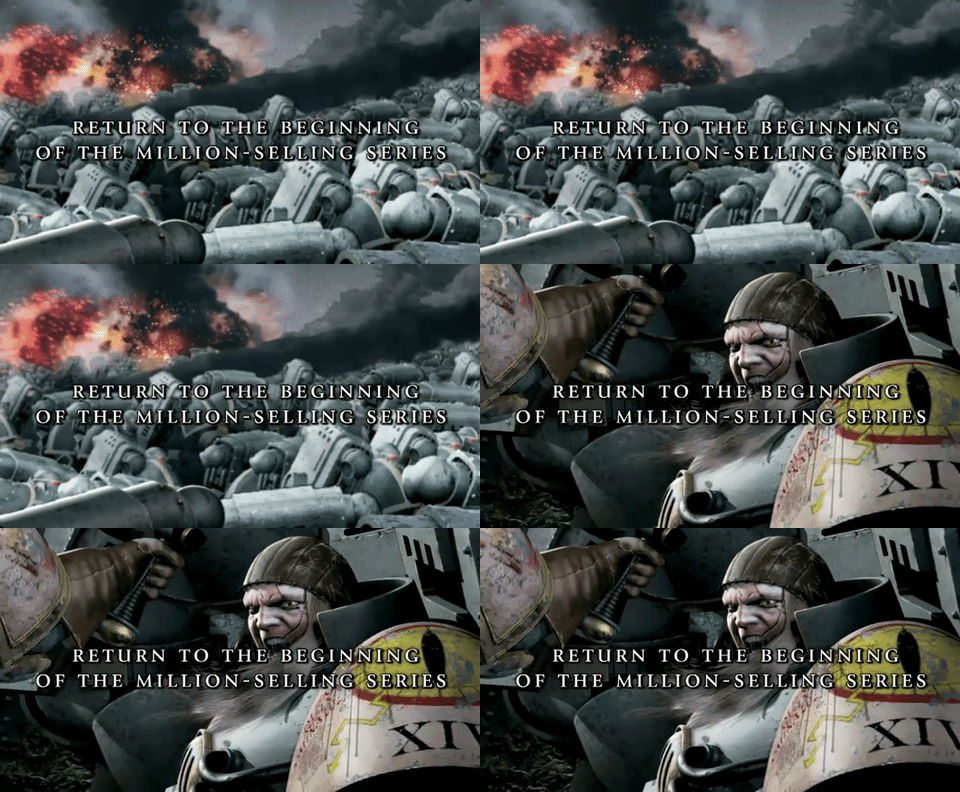
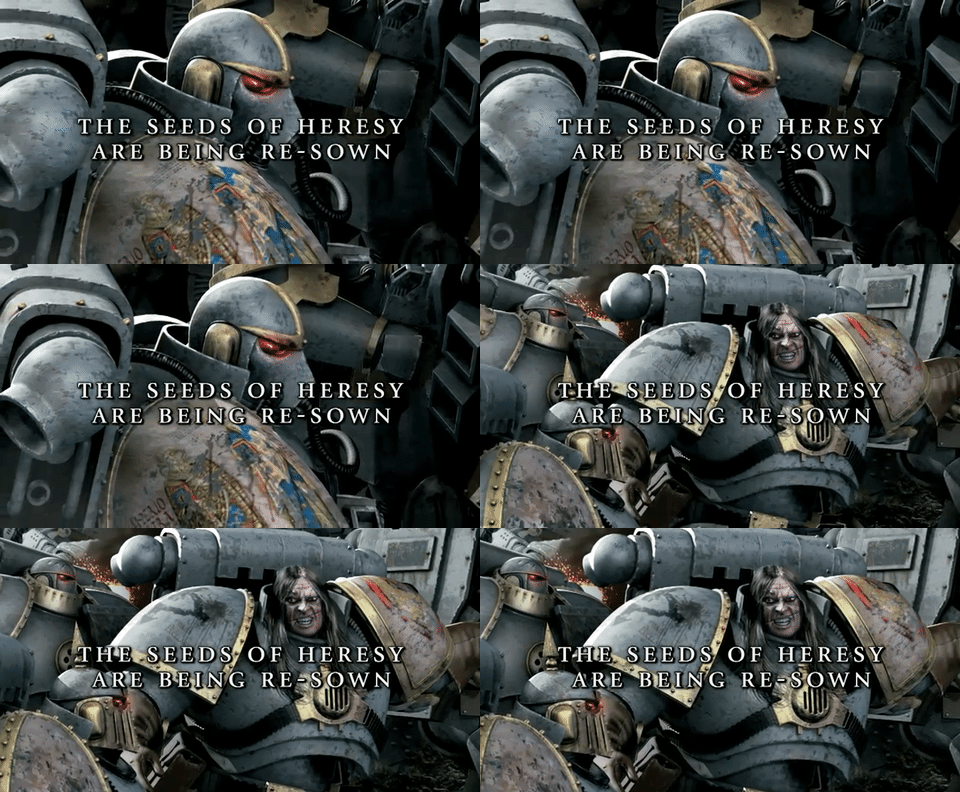
Es sollte der Beginn eines glorreichen neuen Zeitalters werden. Nach langen Jahrtausenden der Finsternis und der Konflikte haben die Armeen des Imperators der Menschheit in einem Großen Kreuzzug von noch nie dagewesenen Ausmaßen eine Welt nach der anderen zurückerobert. Die Space-Marine-Legionen etablierten sich als die mächtigste Militärstreitmacht, die jemals unter einem geeinten Banner marschiert war, und jede von ihnen wurde von einem der gottgleichen Primarchs angeführt - den scheinbar unsterblichen Söhnen des Imperators. Die Menschheit schien bereit, erneut über die Sterne zu herrschen. Doch dann kam Horus. Der edle Kriegsherr und verabscheute Erzverräter. Dieser einzigartige Sammelband kehrt zu den Anfängen der Bestsellerreihe und der Horus-Häresie zurück und wirft neues Licht auf die Ereignisse, die ihr vorausgingen. Enthalten sind die Romane >Aufstieg des Horus<, >Falsche Götter< und >Galaxis in Flammen<, sowie zusätzliche Geschichten, welche die Bühne für diesen unvorstellbaren Konflikt bereiten.
The first Horus Heresy omnibus is an awesome read.
But for the first short story, I've already read and re-read the other ones included here, but having all of them in the same volume and reading them again in chronological order was a fantastic experience. If you love military science fiction space opera, "sword and bolter" sagas and lovecraftian cosmic horror you really need to start reading the Horus Heresy, and this huge omnibus is just the perfect starting point.
“I was there the day Horus slew the Emperor.”... Still best opening ever after ten years of readings.
This was a wild ride of emotions. I am still trying to process it all. So, being a fan of Warhammer 40K I had known of the Horus Heresy and it's monumental importance for the setting. If you follow any of the voluminous background history of 40K, you know how it will ultimately end(you can compare this to watching SW Prequels and seeing Anakain's high moments but you know how hard he's gonna fall). We see the Imperium of Man in it's glory days. We see the Emperor of Mankind himself walk among the stars, leading his legions in the Great Crusade to conqueror the galaxy. The bright optimism is initially ever present and you feel yourself pulled to the Imperium's victories and high moments. But at the same time, you can't help but feel an ironic and hypocritical undertone: what makes this so called "Emperor" have the right to conqueror numerous autonomous worlds? Worlds that simply want to be left alone? How many civilizations has the Emperor's legions eradicated only to place their vision of a bright future? These questions the reader will wrestle with and are echoed through the main protagonist, Gavriel Loken. The majority of the first three Horus Heresy books are through his perspective as he sees the slow and gradual changes to his legion, the Luna Wolves. Gavriel wrestles with the conflict of conscience as he must choose his loyalty: to his Emperor who he swore to uphold his empire, or his brother in arms, those whom he's bled and fought with? To whom does the right to guide the future belong to? Bureaucratic clerks who have not been on the front lines to establish the new order, or the soldiers and generals who built the new system on the blood and toil of millions? Crusade's End is a great omnibus which also includes 3 short stories: The Wolf of Ash and Fire, Death of a Silver Smith and Lord of the Red Sands. Each of these short stories aids the narrative within the trilogy and foreshadows future events. The Wolf of Ash and Fire is an excellent prologue to the main story as we see the Emperor himself and Horus Lupercal, primarch of the Luna Wolves, engaged in battle. The story belies the tragedy for what will happen as you truly see Horus love his father, the Emperor, and how wonderful of a team they worked together. Several other prominent characters in the first book, "Horus Rising" are also introduced and their roles are explained further in the story. Death of a Silver Smith was an odd story and I had to reread it to understand it. But we see in this story just how worlds apart are the ordinary humans to the Astartes, the Space Marines. I personally enjoy the little snippets we get of pre-Unity Earth and the Great Crusade. It's such a distinct and unique period and I hope that someday that time could be explored. Lord of the Red Sands is from the perspective of Angron, Primarch of the World Eaters legion. If any of the Emperor's sons has been slighted by their father, it was this man. He had previously seen the death of all those he loved from orbit as the Emperor whisked him away from his adoptive planet and gave him a legion to command. Angron is extremely resentful of the Imperium, having experienced at first hand the lash of tyranny and the Emperor no different than the tyrant warlords from the world he was raised upon. It proves ironic, then, that he rationalizes his joining in the rebellion as an act of "freedom", yet we see Angron is not a free man-- he is enslaved to his anger and resentment and he ironically can only find peace within himself upon the field of battle. I'm eager to see how the other books in the Horus Heresy stack up. Before reading the starting trilogy, I had read a few that were chronologically further in the war, but it's bittersweet to see the rise and fall of the Imperium and how this monumental civil war leads to the grim dark future of the 41st millennium.
This entire review has been hidden because of spoilers.
Originally read the Omnibus some time ago, being the door that opens me to the world of Warhammer 40K. I am one of those fortunate enough to not really have any idea about the lore behind the tabletop game and just randomly decided to pickup this omnibus at a bookstore since I was curious about what is all the fuss behind it (this coming the hype behind the tabletop wargame rather than strictly the story it tells).
The fall from grace of a jealous creation that seeks to overthrow his creator and in the process dooms the whole race he was created to protect. A nice point of view provided by one of his close confidants, not knowing the gravity of the events that will drive humanity to its knees not seen since the shamefully hidden history of Old Night.
A definite must read for 40k fans, though the omnibus itself is a bit unwieldy due to its weight and size.
This is the book if you want to get into warhammer especially space marines. But it is also maybe a little too dense. Though I love when this story focuses in on the civilians in this intergalactic crusade the battles are very chaotic and hard to follow. Though this does feel like an artistic choice I did find it grating. If you are looking for an action packed war novel probably look elsewhere.
loved the start to the Heresy series, would have liked to have seen a bit more of the pre-fall Horus & the corruption take place a bit more subtly/gradually. beyond that, really enjoyed it.
This entire review has been hidden because of spoilers.
Having the first three books together makes sense. What makes this version special is the inclusion of three short stories that add excellent context for the events of the other books.
Even if you have never heard of the tabletop game Warhammer 40k, but only saw this book because it was a long series in the sci-fi section, you are in for a great introduction.
The writers, it's three short stories with three larger, begin to set the story of the God-like Emperor of Mankind and his goal to conquer the galaxy. He places his favored son Horus to continue as the Emperor returns to Earth.
Crusades End has the first three books in the Horus Heresy series for $19.00, each of the first three books was about that much for each book. Save yourself some money and build some arm strength (924 pages)