

What do you think?

Hollywood Black: The Stars, the Films, the Filmmakers
The films, the stars, the filmmakers-all get their due in Hollywood Black , a sweeping overview of blacks in film from the silent era through Black Panther , with striking photos and an engrossing history by award-winning author Donald Bogle.
The story opens in the silent film era, when white actors in blackface often played black characters, but also saw the rise of independent African American filmmakers, including the remarkable Oscar Micheaux. It follows the changes in the film industry with the arrival of sound motion pictures and the Great Depression, when black performers such as Stepin Fetchit and Bill "Bojangles" Robinson began finding a place in Hollywood. More often than not, they were saddled with rigidly stereotyped roles, but some gifted performers, most notably Hattie McDaniel in Gone With the Wind (1939), were able to turn in significant performances.
In the coming decades, more black talents would light up the screen. Dorothy Dandridge became the first African American to earn a Best Actress Oscar nomination for Carmen Jones (1954), and Sidney Poitier broke ground in films like The Defiant Ones and 1963's Lilies of the Field . Hollywood Black reveals the changes in images that came about with the evolving social and political atmosphere of the US, from the Civil Rights era to the Black Power movement. The story takes readers through Blaxploitation , with movies like Shaft and Super Fly , to the emergence of such stars as Cicely Tyson, Richard Pryor, Eddie Murphy, and Whoopi Goldberg, and of directors Spike Lee and John Singleton.
The history comes into the new millennium with filmmakers Barry Jenkins ( Moonlight ), Ava Du Vernay ( Selma ), and Ryan Coogler ( Black Panther ); megastars such as Denzel Washington, Will Smith, and Morgan Freeman; as well as Halle Berry, Angela Bassett, Viola Davis, and a glorious gallery of others.
Filled with evocative photographs and stories of stars and filmmakers on set and off, Hollywood Black tells an underappreciated history as it's never before been told.
The story opens in the silent film era, when white actors in blackface often played black characters, but also saw the rise of independent African American filmmakers, including the remarkable Oscar Micheaux. It follows the changes in the film industry with the arrival of sound motion pictures and the Great Depression, when black performers such as Stepin Fetchit and Bill "Bojangles" Robinson began finding a place in Hollywood. More often than not, they were saddled with rigidly stereotyped roles, but some gifted performers, most notably Hattie McDaniel in Gone With the Wind (1939), were able to turn in significant performances.
In the coming decades, more black talents would light up the screen. Dorothy Dandridge became the first African American to earn a Best Actress Oscar nomination for Carmen Jones (1954), and Sidney Poitier broke ground in films like The Defiant Ones and 1963's Lilies of the Field . Hollywood Black reveals the changes in images that came about with the evolving social and political atmosphere of the US, from the Civil Rights era to the Black Power movement. The story takes readers through Blaxploitation , with movies like Shaft and Super Fly , to the emergence of such stars as Cicely Tyson, Richard Pryor, Eddie Murphy, and Whoopi Goldberg, and of directors Spike Lee and John Singleton.
The history comes into the new millennium with filmmakers Barry Jenkins ( Moonlight ), Ava Du Vernay ( Selma ), and Ryan Coogler ( Black Panther ); megastars such as Denzel Washington, Will Smith, and Morgan Freeman; as well as Halle Berry, Angela Bassett, Viola Davis, and a glorious gallery of others.
Filled with evocative photographs and stories of stars and filmmakers on set and off, Hollywood Black tells an underappreciated history as it's never before been told.
264 pages, Hardcover
First published May 7, 2019
About the author
Donald Bogle
17 books31 followersDonald Bogle is one of the foremost authorities on Black representation in films and entertainment history. His books include Running Press's Hollywood Black; the groundbreaking Toms, Coons, Mulattoes, Mammies, and Bucks; the award-winning Bright Boulevards, Bold Dreams; the bestselling Dorothy Dandridge: A Biography; and Brown Sugar, which Bogle adapted into a PBS documentary series. He was a special commentator and consultant for Turner Classic Movies’ award-winning series Race and Hollywood. Bogle teaches at the University of Pennsylvania and New York University's Tisch School of the Arts. He lives in Manhattan. — Running Press
Ratings & Reviews
Friends & Following
Create a free account to discover what your friends think of this book!
Community Reviews
Displaying 1 - 30 of 30 reviews

December 13, 2018
Hollywood Black (Turner Classic Movies): The Stars, the Films, the Filmmakers by Donald Bogle is a brilliant book I requested from NetGalley and the review is voluntary. This is a treasure trove of information in pictures and informative content on black actors, actress, and filmmakers. This book goes way back in history to stage, to black and white film, on to modern films. It highlights many stars and films that stand out for various reasons. A great history of film, social culture, and the drive of creativity. I enjoyed it completely! It brought back memories.
February 9, 2021
This otherwise decent survey of Black film history is riddled with minor errors. Among the most inexplicable are the misdating the release of Rocky by ten years, from 1976 to 1986; a caption for a behind the scenes photo of Selma misidentifying Lorraine Toussaint as Oprah Winfrey; and the description of South Korea-set action sequence from Black Panther as involving the rescue of kidnapped Nigerian women. This book needed another look over by editors or fact-checkers.

August 14, 2019
A comprehensive guide to the history of African American cinema. Each chapter focuses on a different decade and contains thematic essays within. I felt it covered the subject matter with great care but that the final chapters could have been longer or relegated to a second volume.
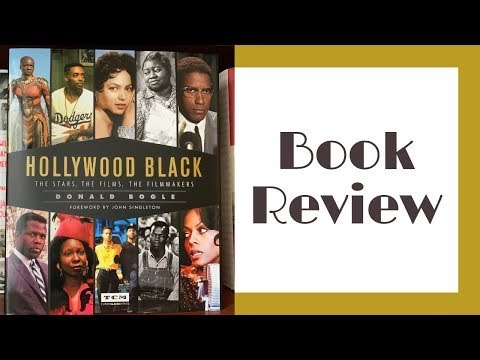
More details in my written review:
https://www.outofthepastblog.com/2019...
and my video review:
https://www.youtube.com/watch?v=-1HcR...
More details in my written review:
https://www.outofthepastblog.com/2019...
and my video review:
https://www.youtube.com/watch?v=-1HcR...

November 10, 2020
A magnificent intro into an often criminally overlooked part of film history. Highly recommended for anyone with an interest in film history or film in general.

May 15, 2019
If you ever wanted to know anything about the early days of (Black) Hollywood, this is the author to read, Donald Bogle. If you're an actor or wanna be an actor, then read every book Donald Bogle has written about Hollywood. You're guaranteed to learn something about the pioneers that forged the path for actors such as: Ossie Davis, Sammy Davis, Jr., Sidney Portier, Denzel Washington and Will Smith ... the list goes on and on.
Don't forget late night TV ... Me TV and other nostalgia stations show a bevy of old (b&w) TV shows featuring black actors and actresses. Check out 'The Jack Benny Show' where it features a character named Rochester played by Eddie Anderson, a vaudeville actor from the 1920s. Eddie had a prominent and important role on the show, for the times.
Also check out 'The Phil Silvers Show' where there are several black actors featured as military men and some with speaking roles. Imagine my shock when I saw a black secretary in an office on base and she spoke a couple of lines. These actors/shows were ahead of their time in hiring black actors.
Then there's Julia starring Diahann Carroll (she's a nurse) which is credited as being one of the first weekly series to depict an African American woman in a non-stereotypical role.
Gail Fisher, she played Joe Mannix's secretary Gail.
The Mod Squad with characters Lincoln (he played Prince's father in Purple Rain), Pete and Julie.
The list goes on and on.
Check out the shows above and others if you ever get a chance.
ARC provided by Netgalley
Don't forget late night TV ... Me TV and other nostalgia stations show a bevy of old (b&w) TV shows featuring black actors and actresses. Check out 'The Jack Benny Show' where it features a character named Rochester played by Eddie Anderson, a vaudeville actor from the 1920s. Eddie had a prominent and important role on the show, for the times.
Also check out 'The Phil Silvers Show' where there are several black actors featured as military men and some with speaking roles. Imagine my shock when I saw a black secretary in an office on base and she spoke a couple of lines. These actors/shows were ahead of their time in hiring black actors.
Then there's Julia starring Diahann Carroll (she's a nurse) which is credited as being one of the first weekly series to depict an African American woman in a non-stereotypical role.
Gail Fisher, she played Joe Mannix's secretary Gail.
The Mod Squad with characters Lincoln (he played Prince's father in Purple Rain), Pete and Julie.
The list goes on and on.
Check out the shows above and others if you ever get a chance.
ARC provided by Netgalley

May 7, 2019
Hollywood Black (Turner Classic Movies) by Donald Bogle
The Stars, The Films, The Filmmakers
Rich with history this book begins in the early years of film then moves through the decades from the thirties through the 20th century and then a bit beyond. As I read and looked at photos I remembered movies and loved and also was reminded of the roles that black actors had played in them. Not all of the movies I remember were in this book many were. I also came away wanting to revisit some of those well remembered movies and see some mentioned that I had never encountered. I learned a great deal including the fact that there were movies made by black directors decades before I was even born. I found this book fascinating and would love to have it in my library to spend more time with in the future. I also highly recommend this book to libraries as a wonderful resource.
Thank you to NetGalley and Perseus Books, Running Press for the ARC – This is my honest review.
5 Stars
The Stars, The Films, The Filmmakers
Rich with history this book begins in the early years of film then moves through the decades from the thirties through the 20th century and then a bit beyond. As I read and looked at photos I remembered movies and loved and also was reminded of the roles that black actors had played in them. Not all of the movies I remember were in this book many were. I also came away wanting to revisit some of those well remembered movies and see some mentioned that I had never encountered. I learned a great deal including the fact that there were movies made by black directors decades before I was even born. I found this book fascinating and would love to have it in my library to spend more time with in the future. I also highly recommend this book to libraries as a wonderful resource.
Thank you to NetGalley and Perseus Books, Running Press for the ARC – This is my honest review.
5 Stars

August 17, 2021
This is a brief history [divided by decade] of all the Black artists who contributed to where Black professionals are today in Hollywood. A great collection to shine a light on influential and talented people. Some are known, some are less known, but all of their achievements are the reason we see the younger generations of Black filmmakers succeeding today. It's a great lesson in filmmaking that doesn't way you down with tedious details but not meant to be comprehensive.

April 7, 2019
I am not a movie person. I don't buy advance tickets to new releases. I don't plan events around a new movie. I do not rewatch movies unless it is an all-time favorite (gut-wrenching Imitation of Life, my kind of musical Purple Rain, or the prize-fighting Rocky series). I cannot quote lines from classic movies such as Color Purple, Coming to America, Friday and such. I can't tell you which actor played in what movie. Like I said, I am not a movie person.
But I do love black history. Hence my enthusiasm to read a new book release titled Hollywood Black: The Stars, The Films, The Filmmakers which spans from the early years of 1905 to the new Millenium. What an outstanding book cover too! This is the definition of a coffee-table, conversation-starter piece. The black and white images and colorful film posters within are just as eye-catching and support the content. I plan to gift this book to a couple friends that will appreciate the true story it tells.
We have all heard the household names like actor Sidney Poitier, actress Dorothy Dandridge, songstress Lena Horne, filmmaker Spike Lee, Claudine or cool cat Shaft. However, Hollywood Black expertly points out lesser known black stars that paved the way. There are a ton more actors, actresses, writers, directors and producers that have been glossed over and deserve recognition. From the era of blackface to modern-day Jordan Peele/Viola Davis and the breaking of stereotyped roles, Hollywood Black serves as a guide.
To say I learned a lot is an understatement. I gasped while reading about how far blacks have come in the film industry. I had no idea there were films titled as bold as The Dancing Nig. While other movies like my favorite, Imitation of Life, is a tearjerker example of rejection, colorism and white advantage. The funeral scene is still one of the most moving ever! Eddie Anderson went from being paid a measly $35 to earning $100,000/year and was the highest paid black actor. Women like Hattie McDaniel were larger and browner offering mammy-ish comfort on screen to white heroines. Now look...black men and women of all shapes and shades are stars in film both on and behind the camera!
I highly recommend Hollywood Black: The Stars, The Films, The Filmmakers to movie buffs and fellow lovers of black history. If anything, you will be left with a world of knowledge and a long "To Watch" list. May I suggest you begin with blaxploitation cinema? Spring is upon us so get a head start, rent old black films and continue supporting new black films until this Turner Classic Movies book is released in your hands.
Happy Early Pub Day, Donald Bogle. Hollywood Black will be available Tuesday, May 7.
LiteraryMarie
But I do love black history. Hence my enthusiasm to read a new book release titled Hollywood Black: The Stars, The Films, The Filmmakers which spans from the early years of 1905 to the new Millenium. What an outstanding book cover too! This is the definition of a coffee-table, conversation-starter piece. The black and white images and colorful film posters within are just as eye-catching and support the content. I plan to gift this book to a couple friends that will appreciate the true story it tells.
We have all heard the household names like actor Sidney Poitier, actress Dorothy Dandridge, songstress Lena Horne, filmmaker Spike Lee, Claudine or cool cat Shaft. However, Hollywood Black expertly points out lesser known black stars that paved the way. There are a ton more actors, actresses, writers, directors and producers that have been glossed over and deserve recognition. From the era of blackface to modern-day Jordan Peele/Viola Davis and the breaking of stereotyped roles, Hollywood Black serves as a guide.
To say I learned a lot is an understatement. I gasped while reading about how far blacks have come in the film industry. I had no idea there were films titled as bold as The Dancing Nig. While other movies like my favorite, Imitation of Life, is a tearjerker example of rejection, colorism and white advantage. The funeral scene is still one of the most moving ever! Eddie Anderson went from being paid a measly $35 to earning $100,000/year and was the highest paid black actor. Women like Hattie McDaniel were larger and browner offering mammy-ish comfort on screen to white heroines. Now look...black men and women of all shapes and shades are stars in film both on and behind the camera!
I highly recommend Hollywood Black: The Stars, The Films, The Filmmakers to movie buffs and fellow lovers of black history. If anything, you will be left with a world of knowledge and a long "To Watch" list. May I suggest you begin with blaxploitation cinema? Spring is upon us so get a head start, rent old black films and continue supporting new black films until this Turner Classic Movies book is released in your hands.
Happy Early Pub Day, Donald Bogle. Hollywood Black will be available Tuesday, May 7.
LiteraryMarie

June 10, 2019
I've read other books by this author and liked them but this was disappointing, and the main reason, I admit, is that it's not a well-researched deep dive into a particular subject, but instead a survey covering nearly 100 years, light on text and heavy on photographs. If you want a book that rushes through its topics as it gives you a general overview of the subject (African American filmmakers and performers), this will do. But there is so much that could have been said about people like Willy Best, Clarence Muse, Lillian Randolph, James Edwards, Roscoe Lee Browne, Bill Nunn and others that it's a shame this opportunity was wasted. Even Hattie McDaniel doesn't really get her due (she gets 5 pages but the bulk of that is about Gone with the Wind).
And there are errors aplenty in the text; whether that's mostly due to the author or the editors, I can't say. The movie Superfly is one word, not two (it's often written as SuperFly with a capital F but never "Super Fly," as Bogle insists. Richard Pryor's breakout album is not called "This Nigger is Crazy," but "That Nigger's Crazy." Patti LuPone's name is not spelled "Patty." Oscars can be honorary, but not "honorarey." And so on. (And I won't even get into the occasional subject/verb agreement problems that crop up.) Bogle's coverage of the race films of the 30s and 40s is interesting, but just scratches the surface. I'd love to read an entire book about those; maybe someday Bogle will write one--with better editors.
And there are errors aplenty in the text; whether that's mostly due to the author or the editors, I can't say. The movie Superfly is one word, not two (it's often written as SuperFly with a capital F but never "Super Fly," as Bogle insists. Richard Pryor's breakout album is not called "This Nigger is Crazy," but "That Nigger's Crazy." Patti LuPone's name is not spelled "Patty." Oscars can be honorary, but not "honorarey." And so on. (And I won't even get into the occasional subject/verb agreement problems that crop up.) Bogle's coverage of the race films of the 30s and 40s is interesting, but just scratches the surface. I'd love to read an entire book about those; maybe someday Bogle will write one--with better editors.

December 22, 2018
What an interesting read. I've read two books that focused on old Hollywood, specifically the silent era, and only remember a slight mention of black silent screen actors of the time. Mainly that they were there but for the most part it was just white actors in black face (or yellow face for that matter). What is truly telling of the system is that the practice continued well into the 1940's. Hollywood Black focuses on the growing changes as well as social stratus that black actors had/ have to climb through to get equal footing with their white peers (especially black female actresses).
Bogle's charts the history of black film industry from the silent era (starting with early race films) and pioneering black film directors like Oscar Micheaux as well as actors like Rex Ingram and Stepin Fetchit. People who have been thrown by the way side of history do to the color of their skin and the racist practices of the day. (Though to a lesser extent it still continues today) learning about the struggles of these actors and filmmakers from an outsiders perspective is really eye opening. But I really admire the strength to carry on and to change a system that once pegged these actors as mammies, magic Negros, and mad black women.
If I had one concession of an otherwise great book it would be the lack of focus on specific actors/ actresses. Some were just brushed over (like Morgan Freeman) and others got multiple chapters (like Denzel Washington) also why was television only sometimes mention? I know this focus was on Hollywood but television has become the main median that people consume now (especially through streaming channels like Netflix). Angela Basset has made a healthy come back career through television, especially through the Netflix series American Horror Stories and she should have been mentioned for her roles in the anthology.
This is not a complaint really, I liked what was covered and learned about a lot of films that I was never aware of (and would like to check out) as a fan of silent cinema and early talkies viewing race films as a genre forced to exist would be something to see. This book brings to life a history I didn't know existed, as sad as that is. Though it puts the question forward, how far can we come if our past is ignored?
Thank you Netgalley for the ARC, as always I give you my honest review.

Read
March 21, 2022HOLLYWOOD BLACK is an exceptionally comprehensive book that looks at blacks in films from the earliest days to more recent times. For students of film who seek out a book that chronicles a subject most extensively, this is definitely the one.
Donald Bogle is considered one of the foremost authorities on African Americans in film, and it certainly shows through on every page. The introduction in the book notes,” HOLLYWOOD BLACK seeks to set the historical record straight. It charts that long journey, examining cinema that is often disturbing but also often compelling and engrossing. This book spotlights the way that films and film stars reflect the social and political attitudes and perspectives of the eras in which they first appeared—and the way those films and film stars looked in the past and to later generations.” In the earliest days, black were presented in demeaning ways, stereotyped and often used for comic relief. Often as well, white actors were used with blackface, making it all the more demeaning. The book looks at the beginnings of black filmmakers such as William Foster (also called Juli Jones). He did comedy shorts including The Railroad Porter around 1912.
Black actors were also making their mark such as Noble Johnson. He first appeared in a movie in 1915 called A Western Governor’s Humanity and then later in popular films such as The Ten Commandments, The Four Horsemen of the Apocalypse and The Adventures of Robinson Crusoe. The book goes decade by decade, highlighting the succession of gifted black film stars that were slowly making their way into Hollywood’s mainstream. One of the most positive aspects of the books is the fact the author has profiled a significant number of stars, from the not as well known to the more famous such as Sidney Poitier, Harry Belafonte, Dorothy Dandridge, Eartha Kitt, Lena Horne, Cicely Tyson and dozens more.
There is also an impressive profile of Herb Jeffries, the first African-American singing cowboy. He went on to star in movies as Herbert Jeffrey, with such films as Harlem on the Prairie, and Two-Man Gun From Harlem.
With hundreds of classic film stills and so much more information, HOLLYWOOD BLACK is a gem of a book that deserves to be in the library of any film lover. It looks at the black experience in Hollywood, and the manner in not only how blacks were portrayed, but how the black culture evolved throughout the decades.
Donald Bogle is considered one of the foremost authorities on African Americans in film, and it certainly shows through on every page. The introduction in the book notes,” HOLLYWOOD BLACK seeks to set the historical record straight. It charts that long journey, examining cinema that is often disturbing but also often compelling and engrossing. This book spotlights the way that films and film stars reflect the social and political attitudes and perspectives of the eras in which they first appeared—and the way those films and film stars looked in the past and to later generations.” In the earliest days, black were presented in demeaning ways, stereotyped and often used for comic relief. Often as well, white actors were used with blackface, making it all the more demeaning. The book looks at the beginnings of black filmmakers such as William Foster (also called Juli Jones). He did comedy shorts including The Railroad Porter around 1912.
Black actors were also making their mark such as Noble Johnson. He first appeared in a movie in 1915 called A Western Governor’s Humanity and then later in popular films such as The Ten Commandments, The Four Horsemen of the Apocalypse and The Adventures of Robinson Crusoe. The book goes decade by decade, highlighting the succession of gifted black film stars that were slowly making their way into Hollywood’s mainstream. One of the most positive aspects of the books is the fact the author has profiled a significant number of stars, from the not as well known to the more famous such as Sidney Poitier, Harry Belafonte, Dorothy Dandridge, Eartha Kitt, Lena Horne, Cicely Tyson and dozens more.
There is also an impressive profile of Herb Jeffries, the first African-American singing cowboy. He went on to star in movies as Herbert Jeffrey, with such films as Harlem on the Prairie, and Two-Man Gun From Harlem.
With hundreds of classic film stills and so much more information, HOLLYWOOD BLACK is a gem of a book that deserves to be in the library of any film lover. It looks at the black experience in Hollywood, and the manner in not only how blacks were portrayed, but how the black culture evolved throughout the decades.

August 22, 2019
Hollywood Black: The Stars, the Films, the Filmmakers from Donald Bogle is that mix of coffee table type book that is also a joy to read.
I was expecting this to be like so many books that are primarily published as attractive volumes with many photographs that cover long periods of time. They tend toward avoiding too much of the controversy in what they are covering and keep to the things that casual fans want to see and read. And I would not have been disappointed if that had been the case here, there are plenty of good critical and academic books that cover the many issues at the intersection of race and cinema, several from Bogle himself. But Bogle and Turner Classic Movies found a nice middle ground so that this book could both entertain and educate readers. This is not an in depth analysis of either racism in Hollywood or the role of race cinema in the silent and early talkie eras, nor was this written to be that, to criticize this book for not being what it didn't set out to be is disingenuous at best. As it is, it may well pique a lot of people's interest and they can then go find in-depth work in those areas of interest. Otherwise, this would have been a massive tome and had limited readership. I guess what I am saying is that Bogle did a great job of pointing out the racism and the hypocrisy (of both the film industry and of the country at large) without losing any of his readers who might have mostly been interested in just knowing some history.
The history, while by the nature of the volume not being able to touch on every person of note, does cover all of the major stars and films while offering enough of a glimpse at others to point them in the direction for more research or reading. The pictures are wonderful and distributed throughout the book.
I would recommend this to both the casual film lover as well as the more seasoned. While overviews don't always introduce a lot of new material they are wonderful for highlighting things as well as reminding us of things we may have forgotten. At 9.5"x7.9" it isn't quite as big as some coffee table books but it would still make for a nice display book.
Reviewed from a copy made available by the publisher via NetGalley.
I was expecting this to be like so many books that are primarily published as attractive volumes with many photographs that cover long periods of time. They tend toward avoiding too much of the controversy in what they are covering and keep to the things that casual fans want to see and read. And I would not have been disappointed if that had been the case here, there are plenty of good critical and academic books that cover the many issues at the intersection of race and cinema, several from Bogle himself. But Bogle and Turner Classic Movies found a nice middle ground so that this book could both entertain and educate readers. This is not an in depth analysis of either racism in Hollywood or the role of race cinema in the silent and early talkie eras, nor was this written to be that, to criticize this book for not being what it didn't set out to be is disingenuous at best. As it is, it may well pique a lot of people's interest and they can then go find in-depth work in those areas of interest. Otherwise, this would have been a massive tome and had limited readership. I guess what I am saying is that Bogle did a great job of pointing out the racism and the hypocrisy (of both the film industry and of the country at large) without losing any of his readers who might have mostly been interested in just knowing some history.
The history, while by the nature of the volume not being able to touch on every person of note, does cover all of the major stars and films while offering enough of a glimpse at others to point them in the direction for more research or reading. The pictures are wonderful and distributed throughout the book.
I would recommend this to both the casual film lover as well as the more seasoned. While overviews don't always introduce a lot of new material they are wonderful for highlighting things as well as reminding us of things we may have forgotten. At 9.5"x7.9" it isn't quite as big as some coffee table books but it would still make for a nice display book.
Reviewed from a copy made available by the publisher via NetGalley.

November 11, 2020
I originally received Hollywood Black by Donald Bogle as an e-ARC through NetGalley, although I ended up realising quickly that it would end up being the kind of book I personally prefer reading physically--the full-sized pictures, multiple columns, and my own need to flip back to place names and faces as new information is gained were all factors here. I ended up reading the book once it became available through the library so I could hold it. I have no regrets, although obviously, I wish I had read it sooner.
Hollywood Black is a fantastic introductory overview of Black American cinematic history. Beginning in the silent film era and covering every period up until 2019, we get a glance at some of the most significant actors, filmmakers, and individual films throughout the last more-than-a-century. With stills, posters, and glamour shots filling the pages, it was easy to imagine even the actors and films I wasn't familiar with. The style is accessible and friendly to those without a lot of background on the subject, so if you were ever intimidated by a film history book, this is a welcome chronology to come into the subject. I also ended up being reminded of favourite movies and finished the book with a lengthy to-watch list, so I feel like it was a win on that front.
If this is a subject you already have a deep knowledge of, you'll likely not find much in the way of new information, but it is a great overview. I was personally familiar with probably two-thirds of the films and figures mentioned, but I managed to learn something new about many of the selections, and even the stuff I was very familiar with was placed into a broader context that I felt gave me a greater understanding of the whole. I know that Bogle has written other books on the subject, both more in-depth and detailed overviews along with in-depth looks on particular subjects (including related biographies). I know that when I'm ready to read more about Black film history, it will be Bogle's works I look to.
Overall, Hollywood Black was an accessible, enjoyable, and informative look into the subject, and I'm very glad to have read it. I would definitely recommend it to those looking to explore more Black film history and aren't sure where to start.
Hollywood Black is a fantastic introductory overview of Black American cinematic history. Beginning in the silent film era and covering every period up until 2019, we get a glance at some of the most significant actors, filmmakers, and individual films throughout the last more-than-a-century. With stills, posters, and glamour shots filling the pages, it was easy to imagine even the actors and films I wasn't familiar with. The style is accessible and friendly to those without a lot of background on the subject, so if you were ever intimidated by a film history book, this is a welcome chronology to come into the subject. I also ended up being reminded of favourite movies and finished the book with a lengthy to-watch list, so I feel like it was a win on that front.
If this is a subject you already have a deep knowledge of, you'll likely not find much in the way of new information, but it is a great overview. I was personally familiar with probably two-thirds of the films and figures mentioned, but I managed to learn something new about many of the selections, and even the stuff I was very familiar with was placed into a broader context that I felt gave me a greater understanding of the whole. I know that Bogle has written other books on the subject, both more in-depth and detailed overviews along with in-depth looks on particular subjects (including related biographies). I know that when I'm ready to read more about Black film history, it will be Bogle's works I look to.
Overall, Hollywood Black was an accessible, enjoyable, and informative look into the subject, and I'm very glad to have read it. I would definitely recommend it to those looking to explore more Black film history and aren't sure where to start.

August 19, 2019
This fascinating book follows the history of African Americans in the movies from the earliest days of silents through the more recent days of #Oscarssowhite and the discussion following the last Academy Awards where Spike Lee was not recognized with the directors' trophy for "Black Klansman" (yes, I saw the movie and read the book on which it was based).
A lot of the names and films may be new to folks, but author Bogle has a long history of research and books in entertainment fields (first book I read of his was a 1980 book ..."Brown Sugar", and worth searching out if you're interested in Black female entertainers...and the basis of a PBS series).
Reminds me that I need to seek out his book about Dorothy Dandridge, too!
Lots of great photo images in this particular book that I hadn't seen before...and I found it quietly sitting on the "New Books" shelves at my suburban library here!
A lot of the names and films may be new to folks, but author Bogle has a long history of research and books in entertainment fields (first book I read of his was a 1980 book ..."Brown Sugar", and worth searching out if you're interested in Black female entertainers...and the basis of a PBS series).
Reminds me that I need to seek out his book about Dorothy Dandridge, too!
Lots of great photo images in this particular book that I hadn't seen before...and I found it quietly sitting on the "New Books" shelves at my suburban library here!

January 14, 2022
More like 4.75 ⭐️. It’s nearly perfect for me if not for a few surprising photography errors citing people in the image confused for someone else. Idk it just bugged me.
That aside, I mostly loved this book and the journey I went on through the ages of Black cinematic history. Some of the stories are hard to read, but the triumphs on display tell of the resilience of my people onscreen. You can’t have the good without the bad. But yeah o that I was riveted and inspired throughout my reading would be an understatement.
I look forward to reading the book again, as well as watching a lot of he films cited. Often times while reading I had my Letterboxd profile open marking films down as To Watch Later. I encourage all film enthusiasts of any background to pick this book up, but of course I urge Black film nerds and aspiring filmmakers to add this tome to your library ASAPidly, you won’t be sorry🍿 ✊🏾🎬 🎥 .
That aside, I mostly loved this book and the journey I went on through the ages of Black cinematic history. Some of the stories are hard to read, but the triumphs on display tell of the resilience of my people onscreen. You can’t have the good without the bad. But yeah o that I was riveted and inspired throughout my reading would be an understatement.
I look forward to reading the book again, as well as watching a lot of he films cited. Often times while reading I had my Letterboxd profile open marking films down as To Watch Later. I encourage all film enthusiasts of any background to pick this book up, but of course I urge Black film nerds and aspiring filmmakers to add this tome to your library ASAPidly, you won’t be sorry🍿 ✊🏾🎬 🎥 .

June 28, 2019
3.5 out of 4. This is a beautiful book, with an abundance of information and revelations. However, I feel like this is just a beginning to learning about Hollywood Black. Whole tomes could be written about each decade. And I feel like the further Donald Bogle went into history, the more he skimmed. The 2000's are all clumped together when there is a big difference between the 00's and the 10's.
What I did get out of this book is an entire list of films and actors that I have to keep an eye out for from now on. I immediately looked up clips of the Nicholas Brothers and my god are they amazing.
What I did get out of this book is an entire list of films and actors that I have to keep an eye out for from now on. I immediately looked up clips of the Nicholas Brothers and my god are they amazing.

January 2, 2019
OMG!!!! I loved this book. What a gem. Very well written history on black films. Nice mix of actors and actresses. I found the facts to be very interesting and fascinating. The format of the book makes you want to continue reading. The subjects chosen were good choices and I sincerely hope the author makes a 2nd book on the subject matter. I for one would buy it. Thanks to NetGalley, the author and the publisher for the ARC of this book. Although I received the book in this manner, it did not effect my opinion of this book nor my review.

April 28, 2019
tcm books is kind of killing it. the book seems a little rushed at times, but the various sections highlighting actors and directors -- particularly those on early notables -- make for an engaging read. it does hit a few more high points as things move past the '40s and '50s, rather than delving into possible side avenues, but that's why we have books like tanarive due's horror noire to explore all the possibilities.
July 27, 2022
Donald Bogle was taking on a pretty impossible task with this book in trying to summarize over one hundred years of Black American filmmaking in roughly two hundred pages. However, given his credentials, there was probably no one more qualified for the task. My only criticism comes from the lack of depth at some point and I would have appreciated some more analysis on Black queer filmmaking and perhaps even more depth of analysis in the way that race and gender impacts the way Black women have been represented on screen.

June 23, 2021
An essential primer on the evolution of Black actors and filmmakers, the book offers a good overview of the major players in Black cinema, which importantly began outside of mainstream Hollywood. While the author does examine some of the more impactful films and milestone breakthroughs, this is mostly an introduction that attempts to cover a hundred years of films without a lot of depth.

January 26, 2020
A must have for anyone interested in film history. Hollywood Black puts into perspective the challenges and triumphs that African Americans have dealt with in cinema, highlighting the importance of greater representation in Hollywood today.
April 8, 2020
I thought it was an excellent book! A real page turner! I wanted to read more and more! The book was loaded with information. What a brilliant author! I can't wait until I read my next book written by him.

September 3, 2020
Extensive history
From the silent movies to Black Panther, Hollywood Black is an excellent book. I recommend adding this book to your film collection. I have noted several movies that I must see
From the silent movies to Black Panther, Hollywood Black is an excellent book. I recommend adding this book to your film collection. I have noted several movies that I must see

March 5, 2024
For a film buff, this is a great book. I mostly.” read.” the pictures. While reading a bit about the old films and information about recent stars, that I like such as Denzel, Washington, I learned about other motion, picture, directors, and such that have made a success.

February 17, 2025
Bogle really loves Denzel Washington. He does a much better job covering Black Hollywood post 1980s than the early years. I get it. Up until the 1960s, most Black actors played stereotypes, especially the men. I wanted to know more about those actors instead of them being glossed over because of the characters they played.
October 20, 2019
I would have liked a selective filmography at the end.

June 28, 2022
Gives a good overview of the history of Black American cinema including the politics involved. The book also has these great color images of film shots and posters
September 9, 2025
It felt chaotic and all over the place.
February 7, 2019
What a fascinating journey through the history of Blacks in the film industry! As I read this book, I was totally engaged. That made it very hard to put this book down. I even went to my Turner Classic Movies app to see if any of the films discussed in the book were available for viewing. The author does an excellent job of taking the reader through not only the backstories of the people discussed but also their biographies. This book belongs on the bookshelves or libraries of those interested in the history of film as well as the contributions of Black people to this industry.
I voluntarily reviewed an Advanced Reader Copy of this book provided by the publisher and Net Galley. However, the thoughts expressed are totally my own.
I voluntarily reviewed an Advanced Reader Copy of this book provided by the publisher and Net Galley. However, the thoughts expressed are totally my own.

May 21, 2019
Beautiful photographs and visuals. I appreciate the attention given to the fight for equal representation of black women in films. This book was automatically dear to my heart with mention of my all-time favorite movies, A Cabin in the Sky and Stormy Weather.
Displaying 1 - 30 of 30 reviews