Naturally high in essential vitamins and minerals, oysters are one of the oldest known foods consumed by humans. Varying in size from as small as a grape to as large as a dinner plate, the humble oyster has played an outsized role in the building of empires and the discovery of new lands. Consumed by both rich and poor, the oyster has inspired writers, poets, painters, and even lovers—Casanova was said to have started each day with a breakfast of fifty oysters.
In A Global History Carolyn Tillie delves into the culinary, artistic, sexual, historical, and scientific history of the humble bivalve. She shows how the oyster encouraged immigration and industry in the newly established United States, how it perpetuated slavery among those working in the oyster beds, and how Japan unexpectedly became the savior of the world’s oyster industry. Packed with colorful anecdotes, recipes, and more than fifty illustrations, this little book is a delightful introduction to the lore of the oyster.
Carolyn Tillie is a freelance writer, exhibiting artist, and curator. Having obtained an MFA in jewelry and metalsmithing from CSULB in 1998, she immediately worked in obtaining a Certified Master Chef certificate from Epicurean school in Los Angeles and Level Two certification from the Wine Spirit Education Trust. She has written for a number of wine industry magazines, the Napa Register, and Metalsmith magazine. As a culinary historian, her first book was Oysters, A Global History. Her food-themed jewelry has been sold in dozens of galleries all over the world. She is now curating art exhibits to accompany the release of her second book, A Feast for the Eyes – Edible Art from Apple to Zucchini in June of 2019.
Un libro completísimo sobre el tema, muy ameno, con información sobre tipos de ostras, tipos de cultivo, festivales tradicionales, bares clásicos y un análisis super interesante sobre su relación con el lujo y el glamour en los '20, que persiste hasta el día de hoy.
When I enjoy a plate of oysters, I feel like a gluttonous giant. With stubby hands I pry the poor bivalves apart in an act that, according to The Economist and other thought leaders, will horrify my descendants. My salve is to better understand and contextualize oysters and their history, and it's been a couple of months since my last oyster focused book, so here's another from the library. Compared to the last dose, this book spends much more time on the anthropology of oysters, separating its history by region and continent, which I think gives some interesting focus to how oysters were loved and abandoned in separate regions at different times. It also affords a new to me glimpse at how Japan revived oyster beds and markets across the globe, and where it sits today with emerging oyster markets and aquaculture research centers. This book more than the other also addresses the aphrodisiac quality of the oyster without trepidation though only briefly in what feels like the penultimate chapter. A nice and short read, anybody who has devoured oysters recently and would like to learn more would be well served by picking this up and slurping it over a drink or two.
A deeply researched and beautifully illustrated compendium of oysters, one of the oldest known foods consumed by humans. It has a nice mix of history, science, art, literature, and recipes. Filled with interesting facts and anecdotes about everything to do with oysters.
Great brief overview of the culinary history of oysters. While well-written, it didn't have enough science for my taste (though was chock-full of history!).
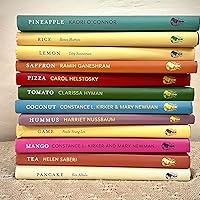
A delightful read. A well written, very informative book in the Edible series. Reading this book made me desperately want to try slurping up an oyster!