Works, including In Memoriam in 1850 and "The Charge of the Light Brigade" in 1854, of Alfred Tennyson, first baron, known as lord, appointed British poet laureate in 1850, reflect Victorian sentiments and aesthetics.
Elizabeth Tennyson, wife, bore Alfred Tennyson, the fourth of twelve children, to George Tennyson, clergyman; he inevitably wrote his books. In 1816, parents sent Tennyson was sent to grammar school of Louth.
Alfred Tennyson disliked school so intensely that from 1820, home educated him. At the age of 18 years in 1827, Alfred joined his two brothers at Trinity College, Cambridge and with Charles Tennyson, his brother, published Poems by Two Brothers, his book, in the same year.
Alfred Tennyson continued throughout his life and in the 1870s also to write a number of plays.
In 1884, the queen raised Alfred Tennyson, a great favorite of Albert, prince, thereafter to the peerage of Aldworth. She granted such a high rank for solely literary distinction to this only Englishman.
Alfred Tennyson died at the age of 83 years, and people buried his body in abbey of Westminster.
**Poetry or a nnovella" Poetry is definitely not my thing, but I made it through most of them. I figured I shouldn't give it less than 4 stars because of personal preference, though. 😉 It was fun reading "The Lady of Shalott," in its entirely. I definitely heard Meagan Follows' voice in my head while reading it - especially the parts she quotes in Anne of Green Gables. 😁
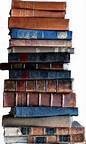
I have an 1871 printing of The Poetical Works of Alfred Tennyson, Poet Laureate. This edition has many beautiful engravings illustrating the poems. Like all my old books, it's beginning to fall apart. Tennyson's best is among my favorite poetry. Here is a list of poems I particularly liked:
Lady of Shalott The Kraken Lotos-Eaters The Day-Dream Claribel Recollection of the Arabian Nights Amphion Second Song To the Same (i.e. The Owl)
I can appreciate his longer poetry, like Idylls of the King, but I find it slow going. His poetry in praise of the beauty of particular women gets old pretty fast. Also his poetry in praise of the Duke of Wellington, or Milton-- it's all a little over-the-top. You get the feeling he was a bit of a sycophant. (I make exception for his poetry in praise of Victoria and the Crystal Palace, which I have been reading about lately.) Overall, he is a through-and-through Victorian.
His ability to make beautiful sound and beautiful imagery is unparalleled. He also resembles a fantasy author, before there was such a genre. Here he imagines an SF scenario:
Well—were it not a pleasant thing To fall asleep with all one’s friends; To pass with all our social ties To silence from the paths of men; And every hundred years to rise And learn the world, and sleep again; To sleep thro’ terms of mighty wars, And wake on science grown to more, On secrets of the brain, the stars, As wild as aught of fairy lore; And all that else the years will show, The Poet-forms of stronger hours, The vast Republics that may grow, The Federations and the Powers; Titanic forces taking birth In divers seasons, divers climes; For we are Ancients of the earth, And in the morning of the times.
He brings the Arabian Nights to life:
The fourscore windows all alight As with the quintessence of flame, A million tapers flaring bright From twisted silvers look'd to shame The hollow-vaulted dark, and stream'd Upon the mooned domes aloof In inmost Bagdat, till there seem'd Hundreds of crescents on the roof Of night new-risen, that marvellous time, To celebrate the golden prime Of good Haroun Alraschid.
Here is a celebration of the Ent-wives:
The mountain stirr'd its bushy crown, And, as tradition teaches, Young ashes pirouetted down Coquetting with young beeches; And briony-vine and ivy-wreath Ran forward to his rhyming, And from the valleys underneath Came little copses climbing.
The linden broke her ranks and rent The woodbine wreathes that bind her, And down the middle, buzz! she went, With all her bees behind her. The poplars, in long order due, With cypress promenaded, The shock-head willows two and two By rivers gallopaded.
The birch-tree swang her fragrant hair, The bramble cast her berry, The gin within the juniper Began to make him merry.
Came wet-shot alder from the wave, Came yews, a dismal coterie; Each pluck'd his one foot from the grave, Poussetting with a sloe-tree: Old elms came breaking from the vine, The vine stream'd out to follow, And, sweating rosin, plump'd the pine From many a cloudy hollow.
And wasn't it a sight to see When, ere his song was ended, Like some great landslip, tree by tree, The country-side descended; And shepherds from the mountain-caves Look'd down, half-pleased, half-frighten'd, As dash'd about the drunken leaves The random sunshine lighten'd!
Amazing reading, although not for the faint-hearted. The Memorium was beautiful and highly recommended for anyone working through grief after the death of a loved one.
Tennyson was poet laureate and the darling of the Romantic Age in England. Enobled by Victoria he was the son of a poor parish priest who had 12 children, the family living on in the manse after the father’s death until forced to move. The death of his friend Hallam figured highly in his life and verse.
To ears accustomed to Blank and Free Verse it seems remarkable that everything here rhymes. To modern ears some of this verse can seem somewhat stilted but his ability to express himself in rhyming verse is nothing short of remarkable. The order of words in a sentence is altered to emphasize certain thoughts and facilitate rhymes in a manner that has come to be thought of as poetic expression. Think of the way Yoda talks in Star Wars. This is the poet of the Victorian Era.
After working our way through the early works and short poems we come to long form verse. The Princess is 80 pages followed by In Memoriam written to mark the death of his friend, another 80 pages.
And so a year after I began the reading I reach the close though with a 6 month hiatus for travel.
The book was my mother’s. Truly an antique printed at a time when copyrite dates were not yet part of the process. Leatherbound with ancient plastic wrapper long disintegrated enclosed in cardboard case. Printed in fine type on onion skin paper with built-in ribbon bookmark.
The final long-form poem is a classic tale of a love triangle involving two boys and a girl in a small port town. In an age before modern communications sailors disappeared for decades at a time without any word reaching home. Some were lost without record, were shipwrecked on isolated desert islands inspiring tales such as Robinson Crusoe, or traveled the world on shipboard knowing little of the exotic ports of call they visited save the bars and brothels of the waterfront.
I've been dipping in and out of this for a while now. I'm not a huge poetry lover but I bought this at University as I was studing 'In Memoriam' and I didn't read any more of it at the time. So I decided to read it at last, 8 years later. Some poems took a lot of concentration to understand. Some bored me. Some I enjoyed ('Enoch Arden').
Tennyson was a presence throughout my school years -- and likely before that as my mother could refer to poems readily as did others in my immediate family. These were the standards, the classics and they wer taught and read. The language is grand -- and lovely to turn to from time to time.
Have not read this particular book, but have read his poems in collections and truly, he has a skill with words. He writes so beautifully, it's easy to lose the metaphorical meaning in his text, but it is a pleasure to go back and re-read his work, dissecting line for line.
I have not read all of the works in this collection, but those that I have read are listed and rated below:
--“Come Down, O Maid” (from “The Princess”): A shepherd sings to a young lady to come down from the mountains into the valley to find love. Rating: 4/5
--“Crossing the Bar”: Tennyson uses the metaphor of “crossing the bar” to discuss his approaching death. Rating: 2/5
--“The Eagle” (fragment): The speaker describes the mighty eagle and surprises the reader with a turn of mood in the last line. Rating: 3.5/5
--“The Hesperides”: The guardians of a golden apple tree sing a song about their watch over the tree. Rating: 2.5/5
--“The Kraken”: The speaker surveys the mysterious and powerful creature of the deep. Rating: 2.5/5
--“The Lady of Shalott”: a young woman who lives alone in a castle cannot look toward Camelot under threat of a curse. Rating: 4/5
--“Locksley Hall”: The speaker laments a love who left him and contemplates the progress of society. In my personal opinion, the speaker is prejudiced and whiney. Rating: 1.5/5
--“The Lotos-Eaters”: the speaker recounts the effects of the lotus flower on the mental states of Odysseus’s men. Rating: 4/5
--“Lucretius”: Lucretius, an Epicurean philosopher, has been driven to insanity by a love potion given to him by his wife. He experiences troubling dreams and chooses to take his own life. In his final speech, he explains his dissatisfaction with life, his belief that the gods do not care about or interact with the world, and his desire to exert his will by killing himself. Rating: 3.5/5
--“Mariana”: A woman despairs over the absence of her lover. Rating: 3.5/5
--“Merlin and the Gleam”: Tennyson outlines his poetic career by comparing himself to Merlin. Rating: 1.5/5
--“Morte d’Arthur”: After being seriously wounded in battle, King Arthur calls upon the faithfulness of his last knight. Rating: 3/5
--“Saint Simeon Stylites”: Tennyson uses the voice of Simeon Stylites, an ascetic saint who sat atop a pillar for 30 years, to create a fictional discourse in which the saint alternates between professing his sinfulness and expressing his worthiness to be considered a saint while enumerating his sufferings. The poem is something of a satire. Rating: 2.5/5
--“The Splendor Falls” (from “The Princess”): The speaker calls for the bugles to blow, and he draws a connection between their echoes and the “echoes” of people in our lives. Rating: 1.5/5
--“Tears, Idle Tears” (from “The Princess”): The speaker uses powerful metaphors to express the depth of his sorrow over a loss. Rating: 4/5
--“Tithonus”: Tithonus recalls his youth, when he asked the goddess Aurora, who was in love with him, to give him eternal life. She granted his request but did not give him eternal youth, and now, an old man, he begs her to take back her gift. Rating: 3.5/5
--“Ulysses”: This poem shows a different side of Ulysses (a.k.a. Odysseus) than readers see in the Odyssey. It portrays an older Ulysses who has been stuck at home ruling for many years and is longing to experience adventure once more. Rating: 3.5/5
--“To Virgil”: Tennyson praises the ancient poet Virgil. Rating: 1.5/5
--“The Vision of Sin”: A man who lived a hedonistic lifestyle in his youth gives a bitter speech indicating the corruption of humankind and meaninglessness of much human action. Rating: 3/5
Tennyson is mainly a storyteller who does it in verse.He does some in brogue, but mainly in straight up English. Is Idylls of the King is probably his most famous which is his version of the Arthur in Camelot story. He also wrote the Charge of the Light Brigade. This is a complete collection of his poetry and frankly I like him better than Shelley. t is a long read.
Beautiful 1898 edition. is a bit battered. I struggled with several of the poems but enjoyed the help and rumminations of Clara Mae Robbins (? a sorority sister at Indiana University in Bloomington, Indiana) scattered throughout (marginations and such). If you are reading this I found a pressed rose between pages 566 and 7 - “Queen Mary,” act I, scene V. I’ll be happy to return it...
"Thou who stealest fire, from the fountains of the past, to glorify the present; oh, haste visit my low desire! Strengthen me, enlighten me!" (Ode to Memory)
It has taken me awhile to finish because I used it as filler between great reads. I needed to finish, and every page enjoyable to see how formed messages.
Willows whiten, aspens quiver, little breezes dusk and shiver, thro' the wave that runs forever by the island in the river, flowing down to Camelot. Four gray walls and four gray towers, overlook a space of flowers, and the silent isle imbowers, the Lady of Shalott.” It's this one that gets me every time - the Lady of Shalott. Tennyson's poetry embodies romance. His poetry is full of memorable and melodic lines. His use of rhyme, meter, and repetition create a rhythmic and lyrical quality that makes his poems a joy to read out loud. Tennyson was known for his romanticism and his poetry often explores the joys and sorrows of love. Many of his most famous poems, such as "In Memoriam" and "The Lady of Shalott," deal with themes of loss and grief. His use of nature imagery, such as in "The Brook" and "The Eagle," create a sense of beauty and wonder that is both timeless and inspiring.
Once again, I haven't read a fraction of what he wrote (one reason's 'cause for some reason the writers of the period wrote HUGE amounts of words, the other's that he wasn't my favorite).
I really like Tennyson's poetry. I've studied various poems by him, including "The Kraken" and "The Eagle", and I liked reading more widely. I love the Arthurian stuff, in particular.
I actually own the edition that was published in 1872 by James R Osgood and Company. Found at an antiques auction in a box of miscellaneous old books that nobody wanted.