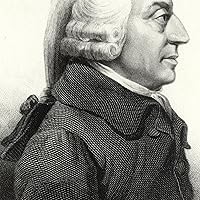
Western Europeans were among the first, if not the first, to invent mechanical clocks, geometrically precise maps, double-entry bookkeeping, precise algebraic and musical notations, and perspective painting. More people in Western Europe thought quantitatively in the sixteenth century than in any other part of the world, enabling them to become the world's leaders. With amusing detail and historical anecdote, Alfred Crosby discusses the shift from qualitative to quantitative perception that occurred during the late Middle Ages and Renaissance. Alfred W. Crosby is the author of five books, including the award-winning Ecological Imperialism: The Biological Expansion of Europe, 900-1900 (Cambridge, 1986)
Alfred W. Crosby Jr. was Professor Emeritus of History, Geography, and American Studies at the University of Texas at Austin, Harvard University and University of Helsinki.
Crosby studied at Harvard University and Boston University. He was an inter-disciplinary researcher who combined the fields of history, geography, biology and medicine. Recognizing the majority of modern-day wealth is located in Europe and the Neo-Europes, Crosby set out to investigate what historical causes are behind the disparity, investigating the biological factors that contributed to the success of Europeans in their quest to conquer the world. One of the important themes of his work was how epidemics affected the history of mankind.
As early as the 1970s, he was able to understand the impact of the 1918 flu pandemic on world history. According to Hal Rothman, a Professor of History at the University of Nevada, Las Vegas, Crosby “added biology to the process of human exploration, coming up with explanations for events as diverse as Cortés’ conquest of Mexico and the fall of the Inca empire that made vital use of the physical essence of humanity. In 1972 he created the term "Columbian Exchange" in his book of the same name. The term has become popular among historians and journalists, such as Charles C. Mann, whose 2011 book 1493: Uncovering the New World Columbus Created expands and updates Crosby's original work. Crosby was also interested in the history of science and technology.
He wrote several books on this subject, dealing with the history of quantification, of projectile technology, and the history of the use of energy. He said that the study of history also made him a researcher of the future. He was very much interested in how humankind could make the future a better one. He has taught at Washington State University, Yale University, the Alexander Turnbull Library in New Zealand, and twice at the University of Helsinki as a Fulbright Bicentennial Professor, most recently in 1997–98. He was appointed an academician by Finnish president Martti Ahtisaari. He retired from the chair of Professor Emeritus of History, Geography, and American Studies of the University of Texas at Austin in 1999. Crosby’s hobbies included birdwatching and jazz, on which topic he could lecture with great expertise. He was married to linguist Frances Karttunen.
This book is an incoherent mess. Buried somewhere among the thickets of impenetrable prose, run-on sentences and sundry atrocities against the English language is a semi-decent idea. But Alfred W. Crosby sorely lacks the skills to bring it to light.
It's rare that a book can actually make me flinch, but AWC managed it on every other page. Two sample paragraphs convey the flavor of the writing:
Pantometry is one of the neologisms that appeared in increasing numbers in the languages of Europe in the first half of the second Christian millennium, words summoned into being by new tendencies, institutions, and discoveries. Milione and America are others. A general surge of more in the 1200s rendered a thousand thousand obsolete and inspired a convenient replacement: milione. Columbus and Amerigo Vespucci and the like created the need for America two centuries or so later. These words were sparks thrown off by the wheels of Western society veering and grating against the sides of old ruts. The veerings and gratings are the subject of this book, but first we must examine the ruts, that is to say, the view of reality that most medieval and Renaissance Western Europeans accepted. We can begin by putting aside the word rut.
The raison d'etre of this book is to describe an acceleration after 1250 or so in the West's shift from qualitative perception to, or at least toward, quantificational perception. Most particularly, we want to ferret out the source of that acceleration. The latter half of the assignment is daunting, and before we begin we must discuss just what we are looking for lest we convince ourselves we have found it before we get to it.
This is "scientific" writing at its worst - bloated (inclusion of the neologism "America" has nothing to do with the point he is trying to make; the second paragraph could be written simply as "This book aims to describe an acceleration in the West's shift from qualitative to quantitative perception that occurred after 1250, and to pinpoint its source"), meandering (what does that third sentence mean, anyway?), and inelegant to the point of ugliness ("quantificational"?, that hideous "wheels and sparks" metaphor, with its dreary corollary, that the book is about "veerings and scrapings".
The book is easily twice as long as it needs to be, and there is much meandering, repetitive bloviation which tends to obfuscate, rather than illuminate, whatever argument the author is trying to make. His credibility is not enhanced by glib, fanciful, and largely inaccurate characterizations of the nature of mathematics and of science. Although he acknowledges the central role of commercial and related accounting activities as an impetus towards improved measurement, he stints it implicitly by giving it only 20 pages of text, while devoting fully 60 pages to music and painting as stimuli. This seems frankly skewed, as does his failure to discuss scientific developments in an adequate fashion.
But this is an author who has no evident understanding of mathematics or the scientific method, who is unable to distinguish between true progress in mathematics, numerology and mathematical mysticism. This leads to paragraphs like the following:
"India, the home of Buddha, has produced and continues to produce a disproportionate number of brilliant pure mathematicians. The West has produced most of the good applied physicists, engineers, and accountants. (This may or may not be true of late, but I am speaking historically). One of history's most interesting problems is the question of why."
It is impossible to take this kind of sloppy rubbish seriously. This is a bad book, by an extremely mediocre 'scholar'.
W. H. Auden once said that we live societies “to which the study of that which can be weighed and measured is a consuming love” – but that hasn’t always been the case. The science of Aristotle, arguably the biggest influence on post-Hellenic science west of the Levant, was thoroughly qualitative. Only later, after the rediscovery of the Plato whose fascination with numbers and ratios bordered on worship, did science begin to take on a properly quantitative quality. As the subtitle of the book hints, this begins to happen sometime in the mid-thirteenth century, and this is precisely the set of stories that Crosby seeks to elucidate for the general reader. He wants to retrace the steps that took us from a world of “emotional attachment to perception and experience, to a visualizing and quantifiable approach to reality,” to “comprehending reality as composed of quanta.”
Because of what Crosby is trying to do, much of the book reads like a survey of medieval and Renaissance math and science. In a few hundred years, the West went from the Dark Ages (I’ve always despised that term since it’s so wrong and inappropriate, but if fits anywhere it’s true of the quantitative sciences) to the bourgeoning of an array of common things and ideas that would have been impossible without better economizers; just a few of these things include military maneuvering, increasing calendrical accuracy (i.e., the transition from the Julian to the Gregorian calendar), cartography, time-keeping devices, grammar and alphabetization, geometric perspective in painting, astronomy and currency and bookkeeping. The invention of polyphonic music, perhaps the greatest innovation of the medieval West, would have been impossible without the modern musical notation that replaced neumatic notation (commonly, though questionably, attributed to Guido of Arezzo during the early eleventh century).
His chapter on the development of music from 600 to around 1500 traces its development from the earliest Gregorian chant to the acme of Flemish polyphony, stating that the importance of music can be traced to its unique place in the quadrivium as “the only one of the four members in which measurement had immediate practical application.” Similarly, as the medieval visual art gently bleeds into the masterpieces of the Renaissance, we see a growing fascination with naturalism in painting that would have been impossible without new insights into optics, illusion, perspective, and depth – all quantifiable and “mathematizable.” Those familiar with the Renaissance greats will readily recognize that Leonardo, Masaccio, and Raphael are just as much about mystical Platonic ratios as they are about older, medieval considerations. Crosby ends his historical journey in a place that conveniently ties up several loose knots that would interest other kinds of historians, including those interested in the development of capitalism and the mercantile economy – namely, the advent of double-entry bookkeeping. While the mechanical clock “enabled them to measure time, double entry bookkeeping enabled them to stop it - on paper, at least.”
While Crosby does little to actually make new discoveries in the fields he considers, he goes far in recasting and repurposing the information he has readily available. It seems incontrovertibly true that his central argument is true. How well does his evidence explain or support this argument? This seems shakier to me. As I noted above, taken as a whole, the book can come across as a history of medieval math, medieval science, medieval astronomy, etc. But his voice is quick-witted and engaging, sometimes even chatty – probably not what you were expecting given the title of the book. And rather than fully “accounting” for the rise of the particular phenomenon he is trying to explain, this book at the very least rediscovers some of the important philosophical fundamentals that undergird his concerns. However, he fails at answering the all-important “why?” Perhaps this question is better-suited to cliometricians and psychohistorians than historians of science.
The sheer quantitativeness of modern empirical science is what makes our civilization possible, without which it would be inconceivable. Things were not always so. The ancients, while perfectly capable of logically precise reasoning, weren’t very quantitative apart from their astronomy because they lacked a mentality for which measurement and quantification are key – they lived under the sway of what the American historian Alfred W. Crosby calls the ‘venerable model’ in the work presently under view, The Measure of Reality: Quantification and Western Society, 1250-1600 (Cambridge University Press, 1997). Mankind dwelt in a comfortable universe, as it were, whose spatial and chronological bounds, though capacious enough, were not astronomically beyond the ability of common sense to accommodate, the arts and sciences comprehended their subject matter in mostly qualitative terms and numbers, in so far as they registered themselves, fitted into a pattern of filtering one’s experience of the world through a symbolic lens, as forcefully suggested by the tendency to a typological exegesis of scripture. The Middle Ages in western Europe, however, mark the inception of a major transition, when one moved at an accelerating pace to a ‘new model’ founded upon a coldly quantitative approach to reality. What were its stages and enabling factors?
It is always best to circle around a large question such as this while wielding an acquaintance with a broad array of actual historical phenomena that can be brought to bear upon it. This aspect of the Fragestellung is where Crosby’s work proves most valuable, for in a few short but incisive chapters he reviews its status with respect to the fields of technology, music, painting and finance. Crosby pays close attention to the interaction between theory and practice. New methods in the arts and sciences were in the air at the time: Arabic numerals, algebraic notation, clocks, double-entry bookkeeping, polyphonic music, perspective in painting. But Crosby also wants to tell the story of the societal effects of an age of exploration, in which new worlds were opened to conquest and colonization, book printing took off and facilitated the Reformation, the rise of capitalism underwrote sustained economic growth, and ultimately (past Crosby’s time frame) a technically sophisticated applied science issued in the agricultural, medical and communications revolutions that have profoundly changed the face of the modern world.
Let us quote at length a fine example of how Crosby graphically illustrates his point about the significance of the quantitative turn, which this reviewer finds particularly striking (not ever having been an entrepreneur):
Consider, for instance, one short chapter in the career of Francesco di Marco Datini, the merchant of Prato who liked to begin his ledgers with ‘In the name of God and of profit’. On 15 November 1394 he transmitted an order for wool to a branch of his company in Mallorca in the Balearic Isles. In May of the following year his sheep were shorn. Storms ensued, and so it was not until midsummer that his agent dispatched twenty-nine sacks of wool to Datini, via Peniscola and Barcelona in Catalonia, and thence to Porto Pisa on the coast of Italy. From there the wool traveled to Pisa by boat. There the wool was divided into thirty-nine bales, of which twenty-one went to a customer in Florence and eighteen to Datini’s warehouse in Prato. The eighteen arrived on 14 January 1396. In the next half year his Mallorcan wool was beaten, picked, greased, washed, combed, carded, spun, then woven, dried, teaseled and shorn, dyed blue, napped and shorn again, and pressed and folded. These tasks were done by different groups of workers, the spinning, for instance, by ninety-six women in their homes. At the end of July 1396, two and a half years after Datini ordered his Mallorcan wool, it was six cloths of about thirty-six yards each and ready for sale. The cloths were dispatched via mule over the Apennines to Venice for shipping and sale back to Mallorca. The market there was dull, so they were sent on to Valencia and Barbary. Some sold there, and some were returned to Mallorca for final disposal in 1398, three and a half years after Francesco had ordered the wool. – We may wonder at his patience, but – think a moment – how more wondrous was his ability to keep track of his business affairs, of which this matter of the Mallorcan wool was but one small part. How did this man even know whether he was a success or bankrupt? Merchants like Datini were driven to invent bookkeeping just as physicists were later driven to take up calculus. It was their only hope of knowing what was going on. [pp. 201-202]
Double-entry bookkeeping was and is a means of soaking up and holding in suspension and then arranging and making sense out of masses of data that previously had been spilled and lost. It played an important role in enabling Renaissance Europeans and their successors in commerce, industry and government to launch and maintain control over their corporations and bureaucracies. Today computers compute faster than friar Pacioli would ever have dreamed possible, but they do so within the same framework (accounts payable, accounts receivable, and all) as he did. [p. 220]
As Pacioli wrote, bourgeois Italian students, attending not cathedral schools or universities, but abacco schools (you might call them trade schools for merchants and their aides), were honing their mathematical skills on such problems as this: Three men, Tomasso, Domenego and Nicolo, entered into partnership. Tomasso put in 760 ducats the first day of January, 1472, and on the first day of April took out 200 ducats. Domenego put in 616 ducats on the first day of February, 1472, and on the first day of June took out 96 ducats. Nicolo put in 892 ducats on the first day of February, 1472, and on the first day of March took out 252 ducats. And on the first day of January, 1475, they found they had gained 3168 ducats, 13 grossi and ½. Required is the share of each, so that no one shall be cheated. [pp. 221-222]
A rather non-trivial task, even for one like the present reviewer accustomed to complicated calculations in physics! If one has ever glanced at today’s examination for chartered financial analysts, by the way, its problems are no less challenging, if not more so (discounting cash flows for risk-adjusted interest rates and so forth).
If one reflects a bit on the quoted passages, he may gain an impression of the sheer economic efficacy thereby liberated for one who possesses the sagacity to orchestrate his business affairs and to keep tabs on his momentary position by means of assiduous accounting. No wonder economic growth took off during the period of early capitalism in question!
A brief assessment of Crosby the historian’s performance here: solid, not overly technical or heavy on philosophy, well illustrated (literally and figuratively), succinct and therefore provocative. Any reasonably educated layman will be confronted with much food for thought, as he ponders the possible connections among the historical trends here discussed and relates them with what can be perceived unfolding all around us in our era. For us, the topic of greatest interest would be to interrogate what implications medieval civilization’s turn to the quantitative might have for the kinds of knowledge over which we dispose today – what have we gained, or lost, and where will it all lead? A subsidiary theme that seems to have figured in Crosby’s motivation for writing this piece in the first place is this: competence in quantitative matters in fact unleashes hitherto unsuspected power, both over nature and over other men, and contributes a key enabling factor to European civilization’s rise to world dominance during the early modern period.
The colonial enterprise and its attendant imperialism are by now accomplished facts, but what can we foresee going forward? Two things suggest themselves. First, the economic advantage conferred by quantitative knowledge is far from having been exhausted. On the contrary, the business world has been revolutionized in recent decades by the advent of big data. Those who are adept at exploiting it, such as the providers of social media platforms, have risen to a prominence similar to that enjoyed by the successful industrialists of the Gilded Age around the turn of the twentieth century, in a development known as the emergence of late capitalism. As we know, the pathologies associated with monopolistic business practices occasioned the reforms of the progressive movement. Many internet activists suppose something analogous to be in order in the current environment. But to be in a position to envision what steps to take so as to implement effective regulations requires that one first reflect upon the technical capacities set free by contemporary data science. The financial crisis of 2008, caused by a regulatory environment that permitted investment schemes based upon inept quantitative financial analysis to flourish and, in the event, to undermine the health of the entire economy, raises a warning flag. Crosby’s exploration of the first quantitative revolution that unfolded during the late Middle Ages to early modern period offers an excellent reference point for those who would understand better today’s complicated world and its possibilities, for good and for bad.
Second, one wonders whether the hypertrophy of quantitative methods accompanied by the ongoing demise of more qualitative expertise augurs well for the future. Certainly, the climate crisis may in large measure be attributed to the unintended side effects of the application of new technologies and the economic ventures they underwrite, supplanting established modes of doing things that, while perhaps less efficient in utilitarian theory, at least possessed the virtue of sustainability over the long term. Can humanity learn to take the measure, so to speak, of the quantitative and hold its adverse consequences in check by a parallel increase in sophistication of qualitative methods of knowing?
A concluding reflection, in which we adumbrate a few thoughts suggested by the present work but ranging well beyond what Crosby himself covers. What is clear from the history is that the invention of novel theoretical ideas together with a locus in praxis constitutes the precondition for fundamental advances. Crosby mentions some precedents: the late medieval computists, the seventeenth-century calculus. What about now, in the early twenty-first century? On the purely scientific front, the big developments seem to be in the areas of quantum computing and the omics revolution in biology. In practice, we have yet to experience the full ramifications of machine learning and big data science – in medicine, say (both of which are eminently practical and so receiving major support).
Therefore, conditions are ripe for exciting developments but where to turn for the new ideas? Taking the long view, we may look to the revolutionary concepts of number in modern mathematics, still characterized by the prevalence of a logical formalism seeking to found quantity in logic (the domain of intellect rather than of intuition) whose potential, one may judge, is far from having played itself out – for once one adopts a logical formalist perspective, one naturally arrives at Cantor’s transfinitum in which infinite quantities are just as conceivable and valid as finite – yet physics to date never makes use of infinity despite the fact that good functional analytic tools for going beyond metrizability exist (as in the theory of topological vector spaces, which are encountered in operator and spectral analysis, partial differential equations, probability and stochastic processes and mathematical economics). The reluctance to leave Hilbert space may perhaps explain why the program of constructive quantum field theory remains stalled at four dimensions, where no good existence proofs have been found out to date. After all, one can get only so far with the rough-and-ready heuristic tools of renormalization and the path integral, in the absence of fundamental understanding. Key breakthroughs in theoretical physics have always followed upon a deepening grasp of the pertinent pure mathematics, as with Leibniz and Newton’s differential and integral calculus with respect to classical mechanics, Gibbs and Heaviside’s vector analysis with respect to electrodynamics, Hilbert’s spectral theory with respect to atomic physics etc. Could then an analytically effective control over infinite quantity represent an organizing task for pure mathematics of the future?
What does the use of Hindu-Arabic numbers, linear perspective painting, polyphonic singing and double-entry bookkeeping have in common? Some very provocative answers are provided by Alfred Crosby in his clear and ambitious book The Measure of Reality: Quantification and Western Society 1250-1600. Crosby systematically compares the Middle Ages to the Early Modern period in the areas of astronomy, cartography, mathematics, painting, music, commerce, accounting, military techniques space as well as spiritual and historical time. He argues there is a direct line between an increase in measurement, mathematical symbols, logical symbols, rational analysis and universal scientific judgments as we proceed from the Middle Ages to the Early Modern period. Crosby shows how so many of the scientific inventions of the early modern period-- specifically the activity of measuring-- required the use of visual technology. Everything from telescopes to microscopes; from clock-making to algebra; from shipbuilding navigation to perspective painting and musical scores involved sight. Composers, painters, astronomers and bookkeepers were committed to quantitative visual perception in the material of their craft. Essentially, he argues that the quantification of reality was one of the secrets that made the Western world different from the rest of the world for better and for worse. Crosby has a rare skill of being grounded in scientific study while being able to write for an educated lay audience. This is a wonderful book.
I'll be honest, this is not a *great* book, but if like me you're interested and relatively new to studying the late middle ages this is a short and interesting read. It leans into what I find most fascinating about this period of European history; the fundamentally different way they saw the world.
Specifically, the majority of the book is devoted to detailing how information in the middle ages was almost entirely vague, biblically literal, or symbolic. This leads to some wild outcomes like the length of an hour changing throughout the year to ensure there were always 12 hours of daylight in accordance with a literal interpretation of the Bible. Maps were centered on Jerusalem because it was the biblical center of the universe. No one knew how to balance a ledger. No one knew how to draw in perspective or draw a realistic face. No one understood how make a map that accounted for the curvature of the earth. Recipes, music, and medicine all used vague notations like "a little more" and no one seemed to mind.
On the downside the book kind of lacks a thesis and is more of a collection of observations from different fields. This was fine for me but people more familiar with the economic and scientific history of this period might not get much from this text. The author's prose leans strongly towards 90's academic tropes with plenty of tortured and unhelpful "high-brow" analogies. This was a major turn off for some other reviewers but just an eye-roll for me.
I can't believe I actually finished a book like this, let alone enjoyed it as much as I did. Without a doubt its shortness helped a ton! To start, I admit it felt awkward to read a book on factors that would make Europeans a colonizing machine in the coming centuries, but I suppose I was interested enough in the deep history of those factors to give it a go (LOL, yes, I was here for some wee history on the development of double entry accounting). Plus, those late Antiquity - Medieval Europeans strike me as such a freakish lot; I can't help but want to read more on them in a relatively shallow way (I think it was me calling them freaks that lead my geographer friend to forcibly lend this to me). This book will defintely help me articulate why I think they were so freakish - so thanks for that!
[Maybe at some point I'll dredge up the energy to type up summaries of the insights I got on the freaks and how they worked their way out of the freakishness. But probably not. Just know, there were things related to time, the development of universities, art, music, etc. etc. etc. BOOKKEEPING.]
On the other hand, the author was kind of pretentious - though he didn't rise to the same level as the authors of that other pretentious geography book (The Myth of Continents: A Critique of Metageography) I enjoyed - so I'm skeptical this would ever be widely read. And by the end I felt like the shallow take was made even shallower because not one historic woman was cited (I think Virgin Mary and her mother, Anna were the only two women mentioned by name in the entire book). Do I think only men engaged in the study and writing on these factors back then or do I think men have only been interested in citing men for the past 800+ years on these factors? Hmmm... So, yeah, that was a bit of a (n infuriating) snoozer.
Nonetheless, I made it through! At some point I'll have to load an image of the cover that I had. It was driving me slightly to distraction that all the cover images here show the dude completely swapped from the cover of my copy. LOL, which side of the pond printed which?
The preface of the book begins with, "This the third book I have written in my lifelong search for explanations for the amazing success of the European imperialism." A little later the author observes, "Westerners' advanage, I believe, lay at first not in their science and technology, but in their utilization of habits of thought that would in time enable them to advance swiftly in science and technology and, in the meantime, gave them decisively important administrative, commercial, navigational, industrial, and military skills. The intitial European advantage lay in what French historians have called mentalité. The book ends with a quote from Galileo, "Philosophy is written in this grand book, the universe, which stands continually open to our gaze, but the book cannot be understood unless one first learns to comprehend the language and read the letters in which it is composed. It is written in the language of mathematics..."
In essence, the mentalité responsible for the success of the West is use of numbers - precision in measuring and using the numbers thus obtained through mathematics. The book traces how this habit of quantification develped in the West between 1250 and 1600.
The author draws of picture of Europe before this epoch to illustrate that Europeans of 1265 did not develop the habit of precise quantification from the ancients. He asks, "How, why, and when did Europeans move or begin to move from their mensuratively dubious beginnings to, or at least toward, ther rigorous arts, sciences, techniques, and technologies..."
Unfortunately, while doing a good job of answering 'how' and 'when', the author's treatment is weak on 'why'. Except in the last chapter on bookkeeping, where the need for precision is necessitated by demands of commerce, the pressures that led to greater quantification and precision have not been adequately identified.
Despite this shortcoming, the book is a good read. The reader expecting mostly science and engineering will be surprized by the chapters on painting and music.
The amount of inaccuracies and falsehoods propounded in this book is so large that it would require the size of the book itself to expose them all. More broadly, the book suffers from the following deficiencies: * In Chapter 2 the Venerable Model of metrology is introduced, but without mentioning what its components are and therefore there is no scrutiny of this model possible. * In Chapter 3 a brief introduction on the advent of universities is given, but the mechanics of setting up universities or their importance in relation to metrology is omitted. * There is no explanation of what double bookkeeping actually is, but instead examples and anecdotes are given, and a more coherent explanation together with historical developments on the topic is missing. * It is also unclear what the author finds so compelling about bookkeeping in particular as opposed to record keeping in general (population, tax revenue, land ownership, possessions in regard to succession or inheritance, insurance claims etc) that it warrants its own chapter. * I would have expected an introduction on the invention of logarithms, which enables humans to express orders of magnitude, such that "the result of my calculation contains 6 digits whereas yours contains 5 digits, and they therefore differ by one order of magnitude." would be a common discussion to have had. * There is no explanation what the significance is of using the base-10 system for counting, only the mention that it is the superior system. * Also the significance of the invention of the digit 0 or the concept of infinity is glossed over.
It is not only the disjoint similes ("Easter darts about in the first weeks of spring like a reflection on moving water.") and exaggerations ("Bookkeeping has had a massive and pervasive influence on the way we think."), but mostly the fact that the book fails to answer its own question that make this book difficult to recommend.
i don't really know to the extent this work is 'bad' (there are some very angry reviews of this book)..
but as a poetic/philosophical work it's pretty thought-provoking in the way you can kind of vaguely see the collective psychology of Europe around the 1200s. what kinds of conditions pushed these people to develop so much infrastructure? some kind of fear of what lay at their borders? constant competition? As a musician myself there is really something truly unsettling about the evolution of polyphony and standardization and development of the chromatic scale. Almost as if, to keep trying to find new forms of music, the humans of that time would invent new musical structures to build on.. from chants to polyphonic ones to scales and musical forms, the symphony...
This picture (Pieter Bruegel's Temperance, 1560) in particular has an eerie atmosphere: everyone doing different things (accounting, astronomy, theater, music) that, in some ways, are like the framework of the world today. Trying to constantly push and expand the boundaries of reality.. https://commons.wikimedia.org/wiki/Fi...
It's almost like Europe of that period was possessed with some desire that the state of the world isn't enough - there needed to be more, something else out there. That resonates with me in the sense that it's how most societies today think, it's why we have weirdos trying to colonize mars at the expense of the planet, everyone trying to 'make it' even if that means making their corporation keep polluting and scaling up. I mean who doesn't have the urge to 'keep seeing what's out there' or something?
a strange and eerie read so far! I don't care if it's accurate or not.
I enjoy reading about the history of science, which if I had to categorize this book, it would most appropriately fit there. However, I often get lost in the deep philosophical underpinnings of the discipline. I'm not an eager or happy reader of philosophy. This book started out well, not diving too deeply into that end of the pool. However, by the middle of the book, it took hold. Honestly, I can't say I understood anything that Crosby wrote in the chapter about music. Sadly, that was one of the subjects in which I had the greatest interest. Gladly, I found the chapter on the invention of double-entry bookkeeping (the basis of modern accounting) the most fascinating.
Despite the slow pace, I enjoyed reading this slim volume. However, given its intellectual density, it took me a lot longer to read than anticipated. Reading was hard work in some places. I don't imagine there are a lot of people interested in my review of an obscure 22 year-old text published by a university press. If they have this book on their "to read" list, my review won't swing them one way or another.
For the casual reader, I'd suggest reading this one chapter at a time, whenever the mood struck. Plowing through in one reading might be too much for the casual reader, like me, without a background in natural philosophy or the history of science.
Crosby is best known for his path-breaking scholarship on European colonial expansion, Ecological Imperialism and The Columbian Exchange, which discuss the happenstance biological advantages that allowed Europeans to overwhelm the Americas & springboard to world domination, and this book makes a lovely conclusion to this trilogy. Writing a longue durée history is a challenge for anyone, but especially when tackling changes, rather than continuities, across generations and cultures.
Happily, Crosby has a gift not only for insight and synthesis, but also for engaging prose. Of all the authors I read in grad school, none was a more fun read than Crosby.
I don't think he entirely escapes the trap of 'Europeans did it right, unlike everyone else', but it's hard to tell a story of conquerors without centering the story on them.
This book describes a pattern evident in various subjects during the Renaissance: the increasing reliance on objection quantification in maps, music, painting, etc. But the treatment of each subject is superficial, and doesn't extend far beyond a handful of anecdotes. Those anecdotes can be interesting, to be sure, but aren't sufficient for the reader to really understand the change taking place in each area. This weakness would be bearable if there were a stronger narrative weaving these subjects together, but the author only makes a minimal effort here; there doesn't seem to be much insight, just a recognition of increased quantification. An engaging book, but not particularly enlightening.
Short and pleasant, and so necessarily superficial, view of the importance of measurement to the advancement of western culture and science. Crosby covers time, space, math, science, music, painting, and bookkeeping as opportunities for quantification and measurement to lead to sustained development progress over time. Crosby's narrative is breezy and fun, and he tells the story responsibly, though he has to leave a lot out, just given the nature of the book. This would be a good introduction to studies of early Christendom.
The ascent of west started with quantification. While the present era occupies a heap full smartest PhDs to measure ad-hit ratios, the renaissance started incorporating measurement - a proxy of (a) reality, (b) repeatability and (c) ability of participants to ask non-abstract questions -into art, music and commerce. The latter sponsored the former two. This book is a delightful tour of how west started to measure and fell in love with it.
This book is interesting in how it covers how we came to measure time, zeroed in on an accurate calendar, the growth of math, notating music, double entry accounting, and how perspective originated in art. It is a bit full of big words and references to people and books that can get to be a bit much. However, it is short and worth it for anyone interested in the origins of many things we take for granted today.
This book is a jumbled mess. Not that it doesn’t have value in a trivial pursuit sort of way, but the author lays out a bold thesis in the introduction why the West was so ably to escape the grasps of the Black Death and proceeds to almost forget about this point. I’ve heard the best introductions are written after a book is finished. In this case, the introduction was written before the book was finished and completely forgotten about.
Clearly written. I thought he would expand on why all of these advances gave the West such an advantage over other cultures, but much of the argumentation is assumed. Crosby instead describes many advances and how they happened, in the areas of time, space, math, music, painting, bookkeeping, etc.
Just an excellent historical analysis of progress in the late Middle Ages. Alfred Crosby looks at the transition from a basis of qualification to quantification, and how "vision" helped to change societal focus in Europe.
Flatly orientalist, very poorly written, an absolute slog to get through. Author makes major claims, which are either insufficiently or entirely un- substantiated. Do not read under any circumstances. I strongly feel that this is an insult to life itself.
"Our chronic difficulty with medieval and Renaissance time is that, like an octopus, its shape was no more than approximate. Europeans of od had an enormous tolerance for anachronism." p. 28
Not being a historian, I am hesitant to argue with the author who is a historian. However, I will.
First, Crosby never demonstrates how this new thinking, the shift from the “Venerable Model” of the medieval outlook to the “New Model” of the Renaissance, helps bring about European imperialism. Sure, European sailors had better maps in 1600 than in 1300, but whence the desire to sail anywhere and set up colonies for exploitation? What led to the success of those colonies?
The author sets out to prove that the late medieval Europeans developed a habit—unknown among them until then—of precise measurement of nearly everything, for which he uses the word "panotmetry." This led to technical developments, such as the town clock, and advancements in art, mathematics, astronomy, music, and bookkeeping. He posits less successfully (IMHnonprofessionalO) that this led to the success of European imperialism. He also, I believe, gives short shrift to the fact that many of the advances were enhancements of knowledge and craft imported through Arab or Indian contacts.
While I disagree with Crosby’s thesis, I had fun reading about the medieval world and the change in outlook. For example, after the development of polyphonic music from plainsong, the older generation complained about that newfangled so-called music. In a way, it’s nice to know we old fogeys have been bellyaching about kids’ music since at least the 14th century.
"Today we utilize numbers when we want narrow focus on a given subject and maximum precision in our deliberations. The old Europeans preferred broad focus and settled for imprecisions in the hope of including as much as possible in what might be important. Often they were reaching not for a handle on material reality, but for a clue as to what lay beyond the scrim of reality. They were as poetic about numbers as about words." (46-7)
"A society in which the chief conduit of authority was the ear, tilted to the recitation of the Scripture and the church fathers, to the somniferous repetition of myths and epics, began to become a society in which the recipient of light ruled: the eye. The word audit (from the same root as audible and auditory), which meant to examine by listening to testimony, was off on its queer trek to meaning, almost without exception, to examine by reading in dead silence." (133)
"[M]usic, a matter of pitches and durations, is highly susceptible to mathematical analysis, as legions of theorists from Pythagoras to Arnold Schoenberg have agreed. The significance of music in its influence on the general attitudes toward quantification and the relationship of mathematics to actuality is this: music was the only one of the four members of the quadrivium in which measurement had immediate practical application." (149)
"Visualization and quantification: together they snap the padlock -- reality is fettered (at least tightly enough and for long enough and for long enough to gent some work out of it and possibly a law of nature or two)." (229)
A very interesting treatise on the development of "measurement" in the Western world. The book provides a convincing explanation of how the West became the world's powerhouse within several centuries by evolving from a qualitative society to a quantitative society, thus enabling it to be productive in areas that provided the base for modern economics. While it may seem that such a development was in all ways positive, there have been obvious negative consequences, which may or may not be resolvable by such a philosophical change. As I read the book, it occurred to me that the world is now moving away from the the strictly quantitative perspective of the Industrial age to a more qualitative philosophy, even in science. This move has been necessitated by reaching what one might even argue is the limits of the quantitative perspective. But that argument calls for another book.