

What do you think?

Astérix #37
Astérix et la Transitalique
Les personnages créés par les deux génies du 9e art Albert Uderzo et René Goscinny sont de retour!
Après Astérix chez les Pictes et Le Papyrus de César, Astérix et Obélix reviennent dans Astérix et la Transitalique, le nouvel album signé par les talentueux Jean-Yves Ferri et Didier Conrad.
N'en déplaise à Obélix, les Italiques, les habitants de l'Italie, ne sont pas tous des Romains, au contraire! Les Italiques tiennent à préserver leur autonomie et voient d'un mauvais oeil les vélléités de domination de Jules César et ses Légions. Dans Astérix et la Transitalique, nos héros favoris s'engagent dans une aventure palpitante à la découverte de cette suprenante Italie antique !
Après Astérix chez les Pictes et Le Papyrus de César, Astérix et Obélix reviennent dans Astérix et la Transitalique, le nouvel album signé par les talentueux Jean-Yves Ferri et Didier Conrad.
N'en déplaise à Obélix, les Italiques, les habitants de l'Italie, ne sont pas tous des Romains, au contraire! Les Italiques tiennent à préserver leur autonomie et voient d'un mauvais oeil les vélléités de domination de Jules César et ses Légions. Dans Astérix et la Transitalique, nos héros favoris s'engagent dans une aventure palpitante à la découverte de cette suprenante Italie antique !
48 pages, Hardcover
First published October 19, 2017
About the author
Jean-Yves Ferri
74 books74 followersJean-Yves Ferri is a French writer, designer and colourist of comic books.
In 2011, he was chosen as the new lead writer for the Asterix series created by René Goscinny and Albert Uderzo. He and illustrator Didier Conrad have so far produced five new books in the series.
In 2011, he was chosen as the new lead writer for the Asterix series created by René Goscinny and Albert Uderzo. He and illustrator Didier Conrad have so far produced five new books in the series.
Ratings & Reviews
Friends & Following
Create a free account to discover what your friends think of this book!
Community Reviews
Displaying 1 - 30 of 308 reviews

November 13, 2017
A Roman Senator is shamed into defending the crumbling state of the famous Roman roads by proposing a chariot race across Italy. Thus the first Trans-Italic Race (an Ancient version of the Gumball Rally) is born with competitors including our Gaulish heroes, Asterix and Obelix!
Ah, sweet, pointless nostalgia - that’s what keeps me coming back to these new Asterix books despite not being nearly as good as the Uderzo/Goscinny originals! As they’ve done for three books now, writer Jean-Yves Ferri and artist Didier Conrad faithfully replicate the look and tone of Asterix but they’ve yet to produce anything very good.
Ferri ticks all the boxes: the silly names, the sly jabs at pop culture, Obelix’s wild boar obsession and shyness around the ladies, and Caesar talking about himself in the third person. But it’s not a very compelling read as nothing terribly interesting happens in the story and our heroes predictably sail through without encountering any real problems.
The masked Roman champion, Coronavirus, was mildly interesting except his identity reveal was underwhelming. And anyway how do you have a famous champion with multiple victories in a race that’s the first of its kind??
Asterix and the Chariot Race is a perfectly ok comic but nothing special. I enjoyed it as I’ve been a huge Asterix fan since childhood so it was nice to revisit that world again with a new adventure, though I’d recommend Uderzo/Goscinny’s Asterix and the Great Banquet over this one, which is basically the same story but much more entertaining.
Ah, sweet, pointless nostalgia - that’s what keeps me coming back to these new Asterix books despite not being nearly as good as the Uderzo/Goscinny originals! As they’ve done for three books now, writer Jean-Yves Ferri and artist Didier Conrad faithfully replicate the look and tone of Asterix but they’ve yet to produce anything very good.
Ferri ticks all the boxes: the silly names, the sly jabs at pop culture, Obelix’s wild boar obsession and shyness around the ladies, and Caesar talking about himself in the third person. But it’s not a very compelling read as nothing terribly interesting happens in the story and our heroes predictably sail through without encountering any real problems.
The masked Roman champion, Coronavirus, was mildly interesting except his identity reveal was underwhelming. And anyway how do you have a famous champion with multiple victories in a race that’s the first of its kind??
Asterix and the Chariot Race is a perfectly ok comic but nothing special. I enjoyed it as I’ve been a huge Asterix fan since childhood so it was nice to revisit that world again with a new adventure, though I’d recommend Uderzo/Goscinny’s Asterix and the Great Banquet over this one, which is basically the same story but much more entertaining.

October 30, 2017
Was ich vom neuen Asterix halte? Er ist nett ([nettttt] ausgesprochen mit möglichst vielen T’s und einem etwas genervten Gesichtsausdruck garniert) und das ist genauso mittelmäßig bis beliebig, wie es sich anhört.
Warum ich glaube, dass ich ein faires Urteil abgeben kann, ist auch schnell erklärt:
1. Ich kriege nicht gleich eine Panikattacke mit Schnappatmung, wenn die typische Asterix Einleitung auf den ersten beiden Seiten fehlt, im Gegenteil, ich bin offen für Neues.
2. Ich bin auch keine reine Puristin des Duos René Goscinny und Zeichner Albert Uderzo. Ich habe nie dem unvergleichlichen subversiven Humor von Goscinny mit einem zerdrückten Tränchen im Augenwinkel nachgetrauert, der nach seinem Tod nie wieder in der Qualität erreicht wurde, denn auch bei den alten Asterix Heften gibt es meiner Meinung nach bessere und schlechtere.
3. Der letzte Asterix „Der Papyrus des Cäsar“ vom neuen Duo Zeichner Didier Conrad und Texter Jean-Yves Ferri hat mir ausnehmend gut gefallen. Eine wundervolle Kritik an klassischem Journalismus, traditionellen bzw. neuen sozialen Medien und Bildung von Memes. Dieser Asterix hatte mitunter ein durchgängigeres Thema als viele alte Geschichten und war fast besser als einige der Urgesteinsausgaben. Jetzt ducke ich mich gleich weg, wenn von Euch die Wildschweine in meine Richtung fliegen 😂😜.
Nun aber zurück zu dieser Geschichte, warum ich sie derart seicht und beliebig empfinde. Der Inhalt ist diesmal relativ knapp erzählt. Ein Wagenrennen von Monza nach Neapel. Schiebung und Betrug beim Wettkampf, damit die Römer siegen (Moment! hatten wir das nicht schon bei Band 12 Asterix bei den Olympischen Spielen thematisiert?). Ein paar Witzchen mit italienischem Lokalkolorit in Bezug auf die kulinarischen Besonderheiten: eine Urform der Pizza, Pasta, alles wird in Scheiben geschnitten und der Käse zu Krümeln gerieben. Das Wiedersehen mit ein paar liebgewonnenen Figuren – die Piraten machen auch mit beim Wagenrennen und gut gezeichnete neue Charaktere wie die ägyptischen Mädls. Und last but not least in Neapel ein mäßig gelungener Schmäh am Ende, aber nun habe ich ohnehin schon genug gespoilert. Das wars leider schon. Moment! Zweimal habe ich mich ob der modernen Bezüge zu Industrie 4.0 und Losgröße eins doch noch gut amüsiert. Auf dem CEltischen Markt für Brauchtum und Innovative Technik - CEBIT - gabs personalisierte Schilde, neue Produkte wie leichte Hinkelsteine aus Bimstein und Prototypen von Wagen beim Erlkönix Stand. Bedauerlicherweise sind zwei Schmunzler auf 46 Seiten einfach zu wenig.
Fazit: Für unverbesserliche Hardcore Fans – durch dieses Jammertal müsst Ihr leider durch, aber ganz so schlimm ist es dann auch wieder nicht. Für Gelegenheitsasterixliebhaber - lest einen anderen Band zum Beispiel Nummer 36 „Der Papyrus des Cäsar“ .
Warum ich glaube, dass ich ein faires Urteil abgeben kann, ist auch schnell erklärt:
1. Ich kriege nicht gleich eine Panikattacke mit Schnappatmung, wenn die typische Asterix Einleitung auf den ersten beiden Seiten fehlt, im Gegenteil, ich bin offen für Neues.
2. Ich bin auch keine reine Puristin des Duos René Goscinny und Zeichner Albert Uderzo. Ich habe nie dem unvergleichlichen subversiven Humor von Goscinny mit einem zerdrückten Tränchen im Augenwinkel nachgetrauert, der nach seinem Tod nie wieder in der Qualität erreicht wurde, denn auch bei den alten Asterix Heften gibt es meiner Meinung nach bessere und schlechtere.
3. Der letzte Asterix „Der Papyrus des Cäsar“ vom neuen Duo Zeichner Didier Conrad und Texter Jean-Yves Ferri hat mir ausnehmend gut gefallen. Eine wundervolle Kritik an klassischem Journalismus, traditionellen bzw. neuen sozialen Medien und Bildung von Memes. Dieser Asterix hatte mitunter ein durchgängigeres Thema als viele alte Geschichten und war fast besser als einige der Urgesteinsausgaben. Jetzt ducke ich mich gleich weg, wenn von Euch die Wildschweine in meine Richtung fliegen 😂😜.
Nun aber zurück zu dieser Geschichte, warum ich sie derart seicht und beliebig empfinde. Der Inhalt ist diesmal relativ knapp erzählt. Ein Wagenrennen von Monza nach Neapel. Schiebung und Betrug beim Wettkampf, damit die Römer siegen (Moment! hatten wir das nicht schon bei Band 12 Asterix bei den Olympischen Spielen thematisiert?). Ein paar Witzchen mit italienischem Lokalkolorit in Bezug auf die kulinarischen Besonderheiten: eine Urform der Pizza, Pasta, alles wird in Scheiben geschnitten und der Käse zu Krümeln gerieben. Das Wiedersehen mit ein paar liebgewonnenen Figuren – die Piraten machen auch mit beim Wagenrennen und gut gezeichnete neue Charaktere wie die ägyptischen Mädls. Und last but not least in Neapel ein mäßig gelungener Schmäh am Ende, aber nun habe ich ohnehin schon genug gespoilert. Das wars leider schon. Moment! Zweimal habe ich mich ob der modernen Bezüge zu Industrie 4.0 und Losgröße eins doch noch gut amüsiert. Auf dem CEltischen Markt für Brauchtum und Innovative Technik - CEBIT - gabs personalisierte Schilde, neue Produkte wie leichte Hinkelsteine aus Bimstein und Prototypen von Wagen beim Erlkönix Stand. Bedauerlicherweise sind zwei Schmunzler auf 46 Seiten einfach zu wenig.
Fazit: Für unverbesserliche Hardcore Fans – durch dieses Jammertal müsst Ihr leider durch, aber ganz so schlimm ist es dann auch wieder nicht. Für Gelegenheitsasterixliebhaber - lest einen anderen Band zum Beispiel Nummer 36 „Der Papyrus des Cäsar“ .

January 2, 2019
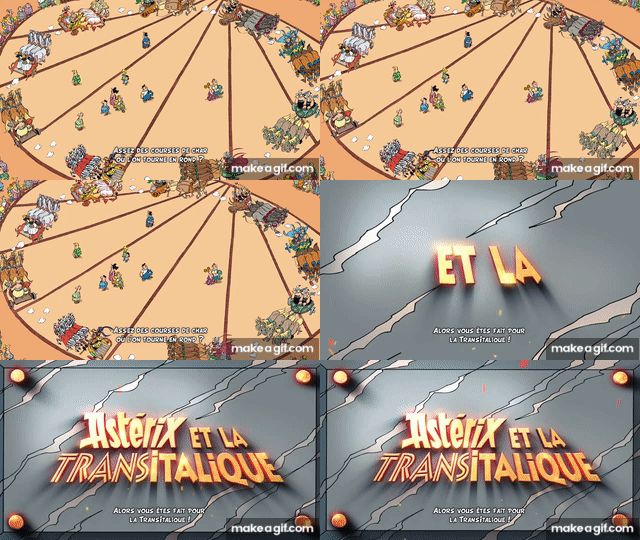
Vote: ☆☆☆½
Just not as good as old Asterix comics from original inimitable authors Goscinny and Uderzo, but this new story from Ferri and Conrad was still a funny good one.
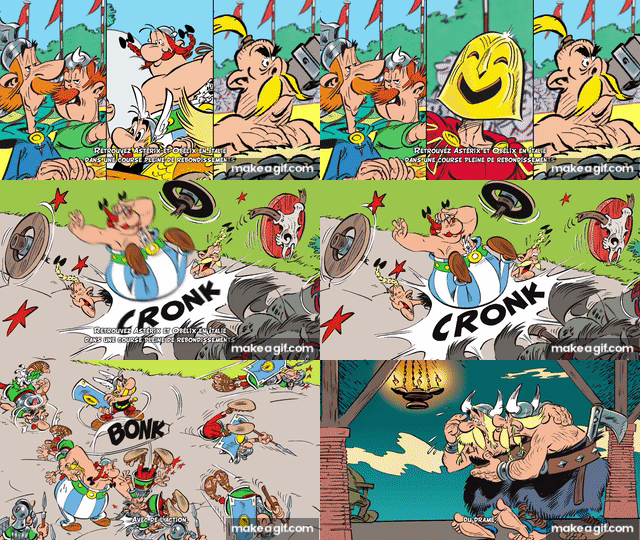
Just not compare it to the original ones and enjoy the read.
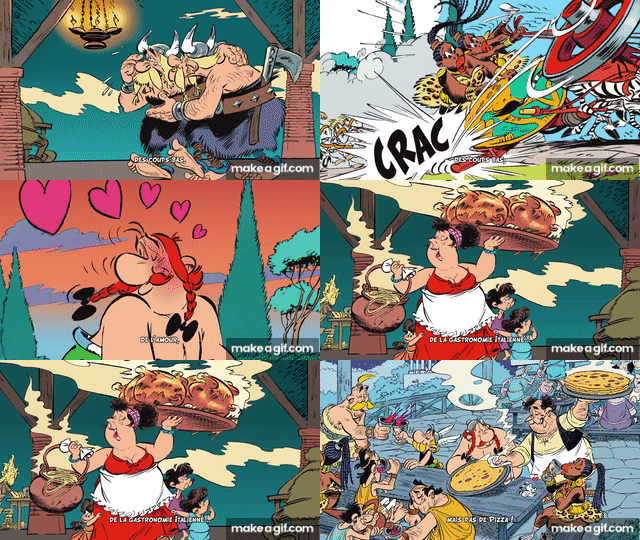


October 22, 2017
2,5/5
Je suis déçue!
Asterix c'est sacré pour moi. Quelque chose que j'ai partagé avec mon grand-père qui était un grand fan. Alors quand j'ouvre la BD et que je n'y trouve pas la page de présentation des personnages ni la page qui situe le village sur la carte entouré des camps romains et bien cela commence mal.
Ensuite, l'histoire est gentilllette... pas de quoi casser 3 pattes à un canard. Les références historiques et culturelles ne volent pas haut.
Et je me suis ennuyée ! Sérieux ! En lisant une BD j'ai eu le temps de m'ennuyer !
Bref c'est le moins bon volume de toute la série.
Je suis déçue!
Asterix c'est sacré pour moi. Quelque chose que j'ai partagé avec mon grand-père qui était un grand fan. Alors quand j'ouvre la BD et que je n'y trouve pas la page de présentation des personnages ni la page qui situe le village sur la carte entouré des camps romains et bien cela commence mal.
Ensuite, l'histoire est gentilllette... pas de quoi casser 3 pattes à un canard. Les références historiques et culturelles ne volent pas haut.
Et je me suis ennuyée ! Sérieux ! En lisant une BD j'ai eu le temps de m'ennuyer !
Bref c'est le moins bon volume de toute la série.

November 14, 2019
4.5
Este creo que se ha convertido en el mejor de los nuevos tomos de Astérix que he podido leer por el momento. Esta vez, el César aprueba una carrera de caballos por toda península itálica. Todo el mundo puede participar. Es por esto que Astérix y Obélix lo ven como una aventura más. Solo puedo decir que me reí mucho más que en los otros tomos. Además, este me hizo recordar que cuando era pequeña y no paraba de releer una y otra vez las diferentes historias de esta pareja de galos tan peculiar.
Como conclusión solo diré que están haciendo un gran trabajo los nuevos autores. No me están decepcionando.
Este creo que se ha convertido en el mejor de los nuevos tomos de Astérix que he podido leer por el momento. Esta vez, el César aprueba una carrera de caballos por toda península itálica. Todo el mundo puede participar. Es por esto que Astérix y Obélix lo ven como una aventura más. Solo puedo decir que me reí mucho más que en los otros tomos. Además, este me hizo recordar que cuando era pequeña y no paraba de releer una y otra vez las diferentes historias de esta pareja de galos tan peculiar.
Como conclusión solo diré que están haciendo un gran trabajo los nuevos autores. No me están decepcionando.

August 25, 2020
Τα αναμενόμενα τρία αστεράκια όπως και τα περισσότερα μετά την αποχώρηση του Uderzo...
Θα σταθώ στο όνομα του Ρωμαίου ηνιόχου που πρέπει οπωσδήποτε να έρθει πρώτος, μεταχειριζόμενος ακόμα και αθέμιτους τρόπους για να το πετύχει: CORONAVIRUS !!!
Το αλμπουμάκι κυκλοφόρησε το 2017. Δηλαδή, πόσο μπροστά... 😎
Θα σταθώ στο όνομα του Ρωμαίου ηνιόχου που πρέπει οπωσδήποτε να έρθει πρώτος, μεταχειριζόμενος ακόμα και αθέμιτους τρόπους για να το πετύχει: CORONAVIRUS !!!
Το αλμπουμάκι κυκλοφόρησε το 2017. Δηλαδή, πόσο μπροστά... 😎

November 10, 2025
Um livro de 2017 com um vilão chamado Coronavírus?! Quanto ao resto, é engraçado, sim, mas...

August 16, 2018
As a die-hard Asterix fan who knows the Gaulish world inside out, I still don't know how I feel about the series continuing without Uderzo. Part of me wishes the series had ended with the death of Goscinny, but then we wouldn't have had such classics as Asterix and the Magic Carpet, and ever since the news came out that Uderzo was passing on the mantle to these new guys, it just felt wrong. But here we are: Asterix is continuing whether I want it to or not, so of course I'm going to bloody read them. And, like it or not, they're getting better. Asterix and the Picts was nothing to write home about, Asterix and the Missing Scroll was much better but lacking in many ways, and this one is better still, even if they're all nowhere near the standard of the good old days. But then Uderzo did decide to go out with the worst Asterix book ever written: Asterix and the Falling Sky, so maybe the series deserves to continue and not end on that bombshell.

October 6, 2019
The Menhir carrying and boar loving Obelix with his dog, Dogmatix, and the mighty and lovable Asterix enter the First Modicia -Neapolis Transitalic Race. The charioteers from the known world compete but Caesar and the Romans favor the masked smiling Coronavirus. I read Asterix and Obelix growing up and in the past year I found some I have not read. However, this is written by Jean-Yves Ferri. While it captures the spirit of Goscinny and Uderzo with the silliness, punning names, intricate drawings, and indomitableness of the Gauls, it falls short to the original series.

May 25, 2019
i'm surprised with fulliautomatix serving roasted boars at the final panel

November 2, 2017
Eigentlich schreibe ich hier selten bis nie Rezensionen zu den Büchern, die ich lese. Da ich selber Autor bin und meine Romane hier zu finden sind, finde ich es meist etwas seltsam, gleichzeitig über die Arbeit anderer zu richten. Bei Asterix möchte ich allerdings eine kleine Ausnahme machen. Mit Asterix bin ich, wie so viele andere hier ebenfalls, groß geworden. Asterix half mir nicht nur, lesen zu lernen, er brachte mich sogar halbwegs durch den so verhassten Lateinunterricht in der Schule.
Ein neuer Asterix Band, ganz egal wie sporadisch sie veröffentlicht werden, sind für mich immer ein Pflichtkauf. ABER: Asterix ist nicht mehr Asterix. Und klar, Zeiten ändern sich und ein neues Team bedeutet auch immer Veränderung - so weit so gut, kann ich mit Leben. Die exakte Richtung, in die sich der Ton entwickelt hat, ist allerdings "fair game", wenn es darum geht es zu kritisieren. Ganz davon abgesehen, wie viel besser früher alles war: Asterix in Italien hat rein gar nichts mehr mit den klassischen Abenteuern zu tun, die die Serie überhaupt so berühmt gemacht hat. Ich war beim Lesen zwar recht gut unterhalten worden, muss aber anmerken, dass mir ein paar Dinge sauer aufgestoßen sind. Da ist eindeutig etwas faul im Staate Rom.
Ist nur mir aufgefallen, dass Asterix in diesem Band einfach ein komplettes Arschloch ist? Nicht nur nutzt er den Zaubertrank, um sich persönliche Vorteile zu erschleichen und die Konkurrenz platt zu machen, er behandelt sogar seinen besten Freund Obelix wie Dreck. Ich kann verzeihen, dass sich die Geschichten mittlerweile immer mehr der Popkultur anbiedern und fast ausschließlich aus zeitgenössischen Referenzen bestehen. Ich kann verzeihen, wenn ein neuer Autor lieber schnelle, actiongeladene und sprunghaft erzählte Geschichten schreibt. Was ich nicht verzeihen kann, ist, wenn man Figuren, die seit Jahrzehnten für etwas stehen so missversteht. Schade.
Ein neuer Asterix Band, ganz egal wie sporadisch sie veröffentlicht werden, sind für mich immer ein Pflichtkauf. ABER: Asterix ist nicht mehr Asterix. Und klar, Zeiten ändern sich und ein neues Team bedeutet auch immer Veränderung - so weit so gut, kann ich mit Leben. Die exakte Richtung, in die sich der Ton entwickelt hat, ist allerdings "fair game", wenn es darum geht es zu kritisieren. Ganz davon abgesehen, wie viel besser früher alles war: Asterix in Italien hat rein gar nichts mehr mit den klassischen Abenteuern zu tun, die die Serie überhaupt so berühmt gemacht hat. Ich war beim Lesen zwar recht gut unterhalten worden, muss aber anmerken, dass mir ein paar Dinge sauer aufgestoßen sind. Da ist eindeutig etwas faul im Staate Rom.
Ist nur mir aufgefallen, dass Asterix in diesem Band einfach ein komplettes Arschloch ist? Nicht nur nutzt er den Zaubertrank, um sich persönliche Vorteile zu erschleichen und die Konkurrenz platt zu machen, er behandelt sogar seinen besten Freund Obelix wie Dreck. Ich kann verzeihen, dass sich die Geschichten mittlerweile immer mehr der Popkultur anbiedern und fast ausschließlich aus zeitgenössischen Referenzen bestehen. Ich kann verzeihen, wenn ein neuer Autor lieber schnelle, actiongeladene und sprunghaft erzählte Geschichten schreibt. Was ich nicht verzeihen kann, ist, wenn man Figuren, die seit Jahrzehnten für etwas stehen so missversteht. Schade.
December 10, 2019
This is the first of those new Asterix comics I've read. And, you know, it's not terrible - certainly better than some of the worst from Uderzo era - with a couple good jokes and the continuing tradition of modern stuff with a classical coat of paint. But it still feels a little bland and unnecessary.
Also, I simply could not get into the art style. It's basically Uncanny Valley: hits all too close to Uderzo's old style while still only just different enough for my brain to rebel. Caesar especially is like a strawman caricature of himself, art-wise.
Also, I simply could not get into the art style. It's basically Uncanny Valley: hits all too close to Uderzo's old style while still only just different enough for my brain to rebel. Caesar especially is like a strawman caricature of himself, art-wise.

January 16, 2018
Κατά τη δεύτερη ανάγνωση
==========
Νομίζω πως το ευχαριστήθηκα περισσότερο από οποιοδήποτε άλλο, γραμμένο μετά τον θάνατο του Γκοσινύ. Πολύχρωμο, βιμπράτο και πάντα με το μήνυμά του.
Κατά την πρώτη ανάγνωση
=======
Εξαργυρώνει παλιές ιδέες, ακολουθεί το παλιό πνεύμα. Not bad.
==========
Νομίζω πως το ευχαριστήθηκα περισσότερο από οποιοδήποτε άλλο, γραμμένο μετά τον θάνατο του Γκοσινύ. Πολύχρωμο, βιμπράτο και πάντα με το μήνυμά του.
Κατά την πρώτη ανάγνωση
=======
Εξαργυρώνει παλιές ιδέες, ακολουθεί το παλιό πνεύμα. Not bad.

January 15, 2018
3,5 *
Gostei desta aventura de Astérix e Obélix, fez-me rir e acho que este álbum é um digno seguidor da tradição destas histórias, não faltando nada daquilo que estamos à espera.
Gostei desta aventura de Astérix e Obélix, fez-me rir e acho que este álbum é um digno seguidor da tradição destas histórias, não faltando nada daquilo que estamos à espera.

October 31, 2018
Ολόκληρη η κριτική στο Smassing Culture
Η νέα εποχή και το ιστορικό πνεύμα του Αστερίξ
Οι περιπέτειες του Αστερίξ έχουν μπει για τα καλά σε μία νέα εποχή. Ο «Υπεριταλικός» είναι το τρίτο τεύχος που μας έρχεται, πάντα στις εκδόσεις Μαμούθκομιξ, από τους νέους δημιουργούς, Ντιντιέ Κονράντ (σχέδιο) και Ζαν-Υβ Φερί (σενάριο), μετά το «ο Αστερίξ στους Πίκτους» και τον «Πάπυρο του Καίσαρα». Καθώς η χρονική απόσταση μεταξύ των τευχών μικραίνει, δημιουργούνται ελπίδες για μία νέα πορεία, γεμάτη πολλές νέες ιστορίες από τους αγαπημένους Γαλάτες.
Όπως και πολλές άλλες περιπέτειες, ο «Υπεριταλικός» ξεκινάει στη ρωμαϊκή σύγκλητο όπου ο συγκλητικός Λάκτους Μπίφιδους υπεύθυνος για το οδικό δίκτυο, βρίσκεται να κατηγορείται από τους πολιτικούς αντιπάλους του για την κατάσταση των δρόμων. Βρίσκει διέξοδο στα θεάματα, στη διοργάνωση ενός μεγάλου αγώνα με άρματα που θα περάσει από όλη την ιταλική χερσόνησο. Η συμμετοχή στον αγώνα είναι ανοιχτή για όλους τους λαούς και το κάλεσμα φτάνει. Ο αγώνας προσελκύει το ενδιαφέρον του Καίσαρα που τον βλέπει ως ευκαιρία να αναδειχθεί, ακόμα μία φορά, η ρωμαϊκή ανωτερότητα απέναντι στους «βάρβαρους» αλλά και η υπακοή των λαών της ιταλικής χερσονήσου στην εξουσία της Ρώμης. Όμως, το κάλεσμα θα φτάσει μέχρι τη Γαλατία και το ανυπότακτο χωριό όπου ο Οβελίξ θα αποφασίσει να γίνει ηνίοχος, παίρνοντας τον Αστερίξ για συνοδηγό του.
Για τους φανατικούς αναγνώστες Αστερίξ –αμφιβάλλω αν υπάρχει και άλλη κατηγορία-, η ιστορία θυμίζει ένα μείγμα «Γύρου της Γαλατίας», «Ολυμπιακούς αγώνες» με μία μικρή δόση από «Κορσική». Τα μεγάλα ταξίδια, οι διαγωνισμοί –που έχουν πάντα ασαφείς κανόνες σχετικά με τις μπούφλες, όπως τονίζει ο Οβελίξ- και η ενότητα όσων καταπιέζονται από τους Ρωμαίους είναι κλασικές θεματικές. Ο Φερί της αξιοποιεί για να δώσει μία νέα ιστορία που θα κινείται στο μήκος κύματος των ιστοριών του Γκοσινύ που έκαναν εκατομμύρια ανθρώπους να αγαπήσουν τους ανυπόταχτους Γαλάτες.
Οι ιστορίες του Αστερίξ πάντα μεγαλουργούν όταν καταφέρουν να συνδυάσουν μαθήματα ιστορίας, μυθοπλασία και αναχρονισμούς. Περνώντας μέσα από την ιταλική χερσόνησο, πολλούς αιώνες προτού αποτελέσει ενιαίο ιταλικό κράτος, οι Αστερίξ και Οβελίξ θα γνωρίσουν τους λαούς που ηττήθηκαν από τους Ρωμαίους στα πρώτα χρόνια της συγκρότησης της αυτοκρατορίας και δίνουν τους δικούς τους αγώνες ακόμα. Πλάι σε αυτούς είναι πλήθος λαών του αρχαίου κόσμου, καθώς Βρετανοί, Γότθοι, Σκανδιναβοί και πολλοί ακόμα συμμετέχουν στην αρματοδρομία, για να αποτινάξουν τον τίτλο του βαρβάρου και να ταπεινώσουν τους ρωμαίους. Αποδίδονται, όπως επιβάλλει η παράδοση του Αστερίξ, με δικές τους γραμματοσειρές στους διαλόγους και με έμφαση σε διάφορα στερεότυπα –οι Βρετανοί αντιμετωπίζουν φλεγματικά τη διάλυση του άρματος τους- χωρίς ίχνος ρατσισμού. Μέσα στην πορεία της αρματοδρομίας, θα εμφανιστούν στον αρχαίο κόσμο στιγμιότυπα της μεταγενέστερης ιταλικής χερσονήσου. Η Μόνα Λίζα, ο πύργος της Πίζας, η Βενετία που βυθίζεται και πολλά ακόμα είναι παρόντα στην πορεία των Γαλατών και θα προσφέρουν ευκαιρίες για διάφορα αστεία, λιγότερο ή περισσότερο επιτυχημένα. Κομμάτι των αναχρονισμών είναι και η κριτική σε σύγχρονα φαινόμενα. Δεν θα μπορούσαν να λείπουν σπόντες στην αξιοποίηση του αθλητισμού για τις επιδιώξεις της πολιτικής εξουσίας αλλά και για την εμπορευματοποίηση της εικόνας των αθλητών, η οποία θα παρασύρει ακόμα και τους ανατρεπτικούς πρωταγωνιστές σε μία συμφωνία με το βασικό χορηγό της αρματοδρομίας. Τίποτα από αυτά δεν ξενίζει, αντιθέτως συνεχίζει την παράδοση όσων στοιχείων έκαναν τόσο αγαπητό τον Αστερίξ και την εικόνα του ανυπότακτου Γαλάτη που τα βάζει με έναν κόσμο που μοιάζει πολύ με τον δικό μας.
Φυσικά, δεν θα μπορούσαν να λείπουν οι μπούφλες στους Ρωμαίους και όλα τα σχετικά γκαγκ. Οι λεγεωνάριοι παρατάσσονται κατά μήκος της αρματοδρομίας με διπλό ρόλο: οπαδοί του Ρωμαίου αρματοδρόμου αλλά και σαμποτέρ στην προσπάθεια των υπολοίπων. Θα εκπληρώσουν το ρόλο τους, κάνοντας την ψυχή του Οβελίξ να αγαλλιάσει, ο οποίος, κουρασμένος από τις συναντήσεις με τους άλλους λαούς που κατοικούν στη χερσόνησο, θα αναφωνήσει « Αληθινοί Ρωμαίοι, όπως στη Γαλατία!»
Ο «Υπεριταλικός» είναι μακράν το καλύτερο τεύχος της νέας περιόδου. Από αυτό και μόνο δημιουργούνται προσδοκίες για τη συνέχεια αφού οι νέοι δημιουργοί βρίσκουν σταδιακά τα πατήματα τους. Ωστόσο, ισχύει ό,τι γράφαμε για τον «Πάπυρο του Καίσαρα». Υπάρχει ακόμα κάποια απόσταση από τις καλύτερες στιγμές του Αστερίξ, τα αριστουργήματα του Γκοσινύ. Ο κόσμος του Αστερίξ προσφέρεται για νέες προσπάθειες, για απρόσμενα αστείους και έξυπνους συνδυασμούς του αρχαίου κόσμου με τον σύγχρονο. Οι Φερί και Κονράντ, για να φτάσουν να γράψουν τη δική τους ιστορία, ίσως πρέπει να αναπτύξουν δικές τους θεματικές και να μην αρκεστούν σε ό,τι τους έχει κληρονομηθεί. Έχουν αποδείξει, εξάλλου, ότι έχουν αυτή τη δυνατότητα και το μέλλον τους ανήκει.
Η νέα εποχή και το ιστορικό πνεύμα του Αστερίξ
Οι περιπέτειες του Αστερίξ έχουν μπει για τα καλά σε μία νέα εποχή. Ο «Υπεριταλικός» είναι το τρίτο τεύχος που μας έρχεται, πάντα στις εκδόσεις Μαμούθκομιξ, από τους νέους δημιουργούς, Ντιντιέ Κονράντ (σχέδιο) και Ζαν-Υβ Φερί (σενάριο), μετά το «ο Αστερίξ στους Πίκτους» και τον «Πάπυρο του Καίσαρα». Καθώς η χρονική απόσταση μεταξύ των τευχών μικραίνει, δημιουργούνται ελπίδες για μία νέα πορεία, γεμάτη πολλές νέες ιστορίες από τους αγαπημένους Γαλάτες.
Όπως και πολλές άλλες περιπέτειες, ο «Υπεριταλικός» ξεκινάει στη ρωμαϊκή σύγκλητο όπου ο συγκλητικός Λάκτους Μπίφιδους υπεύθυνος για το οδικό δίκτυο, βρίσκεται να κατηγορείται από τους πολιτικούς αντιπάλους του για την κατάσταση των δρόμων. Βρίσκει διέξοδο στα θεάματα, στη διοργάνωση ενός μεγάλου αγώνα με άρματα που θα περάσει από όλη την ιταλική χερσόνησο. Η συμμετοχή στον αγώνα είναι ανοιχτή για όλους τους λαούς και το κάλεσμα φτάνει. Ο αγώνας προσελκύει το ενδιαφέρον του Καίσαρα που τον βλέπει ως ευκαιρία να αναδειχθεί, ακόμα μία φορά, η ρωμαϊκή ανωτερότητα απέναντι στους «βάρβαρους» αλλά και η υπακοή των λαών της ιταλικής χερσονήσου στην εξουσία της Ρώμης. Όμως, το κάλεσμα θα φτάσει μέχρι τη Γαλατία και το ανυπότακτο χωριό όπου ο Οβελίξ θα αποφασίσει να γίνει ηνίοχος, παίρνοντας τον Αστερίξ για συνοδηγό του.
Για τους φανατικούς αναγνώστες Αστερίξ –αμφιβάλλω αν υπάρχει και άλλη κατηγορία-, η ιστορία θυμίζει ένα μείγμα «Γύρου της Γαλατίας», «Ολυμπιακούς αγώνες» με μία μικρή δόση από «Κορσική». Τα μεγάλα ταξίδια, οι διαγωνισμοί –που έχουν πάντα ασαφείς κανόνες σχετικά με τις μπούφλες, όπως τονίζει ο Οβελίξ- και η ενότητα όσων καταπιέζονται από τους Ρωμαίους είναι κλασικές θεματικές. Ο Φερί της αξιοποιεί για να δώσει μία νέα ιστορία που θα κινείται στο μήκος κύματος των ιστοριών του Γκοσινύ που έκαναν εκατομμύρια ανθρώπους να αγαπήσουν τους ανυπόταχτους Γαλάτες.
Οι ιστορίες του Αστερίξ πάντα μεγαλουργούν όταν καταφέρουν να συνδυάσουν μαθήματα ιστορίας, μυθοπλασία και αναχρονισμούς. Περνώντας μέσα από την ιταλική χερσόνησο, πολλούς αιώνες προτού αποτελέσει ενιαίο ιταλικό κράτος, οι Αστερίξ και Οβελίξ θα γνωρίσουν τους λαούς που ηττήθηκαν από τους Ρωμαίους στα πρώτα χρόνια της συγκρότησης της αυτοκρατορίας και δίνουν τους δικούς τους αγώνες ακόμα. Πλάι σε αυτούς είναι πλήθος λαών του αρχαίου κόσμου, καθώς Βρετανοί, Γότθοι, Σκανδιναβοί και πολλοί ακόμα συμμετέχουν στην αρματοδρομία, για να αποτινάξουν τον τίτλο του βαρβάρου και να ταπεινώσουν τους ρωμαίους. Αποδίδονται, όπως επιβάλλει η παράδοση του Αστερίξ, με δικές τους γραμματοσειρές στους διαλόγους και με έμφαση σε διάφορα στερεότυπα –οι Βρετανοί αντιμετωπίζουν φλεγματικά τη διάλυση του άρματος τους- χωρίς ίχνος ρατσισμού. Μέσα στην πορεία της αρματοδρομίας, θα εμφανιστούν στον αρχαίο κόσμο στιγμιότυπα της μεταγενέστερης ιταλικής χερσονήσου. Η Μόνα Λίζα, ο πύργος της Πίζας, η Βενετία που βυθίζεται και πολλά ακόμα είναι παρόντα στην πορεία των Γαλατών και θα προσφέρουν ευκαιρίες για διάφορα αστεία, λιγότερο ή περισσότερο επιτυχημένα. Κομμάτι των αναχρονισμών είναι και η κριτική σε σύγχρονα φαινόμενα. Δεν θα μπορούσαν να λείπουν σπόντες στην αξιοποίηση του αθλητισμού για τις επιδιώξεις της πολιτικής εξουσίας αλλά και για την εμπορευματοποίηση της εικόνας των αθλητών, η οποία θα παρασύρει ακόμα και τους ανατρεπτικούς πρωταγωνιστές σε μία συμφωνία με το βασικό χορηγό της αρματοδρομίας. Τίποτα από αυτά δεν ξενίζει, αντιθέτως συνεχίζει την παράδοση όσων στοιχείων έκαναν τόσο αγαπητό τον Αστερίξ και την εικόνα του ανυπότακτου Γαλάτη που τα βάζει με έναν κόσμο που μοιάζει πολύ με τον δικό μας.
Φυσικά, δεν θα μπορούσαν να λείπουν οι μπούφλες στους Ρωμαίους και όλα τα σχετικά γκαγκ. Οι λεγεωνάριοι παρατάσσονται κατά μήκος της αρματοδρομίας με διπλό ρόλο: οπαδοί του Ρωμαίου αρματοδρόμου αλλά και σαμποτέρ στην προσπάθεια των υπολοίπων. Θα εκπληρώσουν το ρόλο τους, κάνοντας την ψυχή του Οβελίξ να αγαλλιάσει, ο οποίος, κουρασμένος από τις συναντήσεις με τους άλλους λαούς που κατοικούν στη χερσόνησο, θα αναφωνήσει « Αληθινοί Ρωμαίοι, όπως στη Γαλατία!»
Ο «Υπεριταλικός» είναι μακράν το καλύτερο τεύχος της νέας περιόδου. Από αυτό και μόνο δημιουργούνται προσδοκίες για τη συνέχεια αφού οι νέοι δημιουργοί βρίσκουν σταδιακά τα πατήματα τους. Ωστόσο, ισχύει ό,τι γράφαμε για τον «Πάπυρο του Καίσαρα». Υπάρχει ακόμα κάποια απόσταση από τις καλύτερες στιγμές του Αστερίξ, τα αριστουργήματα του Γκοσινύ. Ο κόσμος του Αστερίξ προσφέρεται για νέες προσπάθειες, για απρόσμενα αστείους και έξυπνους συνδυασμούς του αρχαίου κόσμου με τον σύγχρονο. Οι Φερί και Κονράντ, για να φτάσουν να γράψουν τη δική τους ιστορία, ίσως πρέπει να αναπτύξουν δικές τους θεματικές και να μην αρκεστούν σε ό,τι τους έχει κληρονομηθεί. Έχουν αποδείξει, εξάλλου, ότι έχουν αυτή τη δυνατότητα και το μέλλον τους ανήκει.

November 22, 2018
A Pointless Competition
21 November 2018 - Adelaide
Well, it seems that we have now reached a point in the series where the original creators only appear as names on the album, since the illustrator and author are completely different people. Sure, one of the original two is dead, and the other has retired (though I have since discovered that Goscinny died around 1977, and was the author, though Uderzo, the illustrator, retired from drawing back in 2011). So, what we have now is basically the adventures continuing, but with no real input from the original creators.
Honestly, I’m not really sure how to take this one. I guess it also doubles for those written after Goscinny’s death, which are namely those written in the 1980s and beyond. I guess I somehow preferred the way Herge set up his albums, and how the estate has refused to allow any further Tintin albums to be produced. Year, some have appeared on the black market, but in the end there is a set canon when it comes to the Tintin stories, and we know what they are and there is going to be no attempt to change them – they were Herge’s babies, and that is what they will remain.
I guess it is different here when it comes to Asterix. Take this story for example. I suspect it is supposed to be making fun of a real road race – the Transitalia? I’m not sure, though a quick search on the internet doesn’t reveal all that much. Anyway, the Roman roads are falling into a state of disrepair, and instead of actually doing anything about them, the Senator in charge of the roads declares a road race to prove that they are fine. Honestly, that set up doesn’t really sit well with me.
Then we have the means through which we introduce Asterix and Obelix to the race. Basically they are at a market, Obelix meets a sybil, and she reads his palm and tells him that he will win a chariot race, so he basically heads off and buys himself a chariot, though the chariot dealer, just like everybody else in this world, seem to have an unending need for menhirs (I guess that is a part of the joke though).
Yeah, it seems that they are really attempting to clutch at straws when it comes to creating the plots these days. Actually, if the Simpsons had last as long as it has lasted for, then I’m pretty sure that they can still come up with stories and adventures for Asterix. Well, maybe I’m stretching it a bit too far there, because I really did get put off by the Simpsons after a certain point, namely because the whole show ceased being funny. That was the case with this particular album, and with Asterix in general – they have ceased to be funny. While it looks as if I have borrowed some of the stories, it looks like I have ended up letting the whole attempt fall to the way side. Still, maybe I should try to at least finish off as much of the albums that I can, but I guess I need to wait until I am back in Melbourne for the long term.
21 November 2018 - Adelaide
Well, it seems that we have now reached a point in the series where the original creators only appear as names on the album, since the illustrator and author are completely different people. Sure, one of the original two is dead, and the other has retired (though I have since discovered that Goscinny died around 1977, and was the author, though Uderzo, the illustrator, retired from drawing back in 2011). So, what we have now is basically the adventures continuing, but with no real input from the original creators.
Honestly, I’m not really sure how to take this one. I guess it also doubles for those written after Goscinny’s death, which are namely those written in the 1980s and beyond. I guess I somehow preferred the way Herge set up his albums, and how the estate has refused to allow any further Tintin albums to be produced. Year, some have appeared on the black market, but in the end there is a set canon when it comes to the Tintin stories, and we know what they are and there is going to be no attempt to change them – they were Herge’s babies, and that is what they will remain.
I guess it is different here when it comes to Asterix. Take this story for example. I suspect it is supposed to be making fun of a real road race – the Transitalia? I’m not sure, though a quick search on the internet doesn’t reveal all that much. Anyway, the Roman roads are falling into a state of disrepair, and instead of actually doing anything about them, the Senator in charge of the roads declares a road race to prove that they are fine. Honestly, that set up doesn’t really sit well with me.
Then we have the means through which we introduce Asterix and Obelix to the race. Basically they are at a market, Obelix meets a sybil, and she reads his palm and tells him that he will win a chariot race, so he basically heads off and buys himself a chariot, though the chariot dealer, just like everybody else in this world, seem to have an unending need for menhirs (I guess that is a part of the joke though).
Yeah, it seems that they are really attempting to clutch at straws when it comes to creating the plots these days. Actually, if the Simpsons had last as long as it has lasted for, then I’m pretty sure that they can still come up with stories and adventures for Asterix. Well, maybe I’m stretching it a bit too far there, because I really did get put off by the Simpsons after a certain point, namely because the whole show ceased being funny. That was the case with this particular album, and with Asterix in general – they have ceased to be funny. While it looks as if I have borrowed some of the stories, it looks like I have ended up letting the whole attempt fall to the way side. Still, maybe I should try to at least finish off as much of the albums that I can, but I guess I need to wait until I am back in Melbourne for the long term.

November 19, 2017
I grew up with Asterix the Galliër and his friends, these comics were around when I grew up and I really enjoyed them. They are clearly European comics that have a firm rooting in the French soil. And their comics have always been a bigger part of my youth than the US based comics who in recent years have made their way across the ocean and are staring to replace the major place the European comics have. That said a new Asterix is always a major event. End even if the original creators are no longer part of the series the drawing and writing of these comics are still of an excellent level.
This book is about the deplorable state of the roads in the Roman empire and the responsible senator tries to uplift the state by organizing a chariot race through Italy. Which Ceasar sees as a reason to show the glory of the Roman Empire. Enter Obelix and his friend Asterix who enter this race. And so the journey and the cheating starts. As always very entertaining. Not the best installment but still one to enjoy a lot.
I do hope we have a few new stories to look forward to as a world without Asterix is a poor place to be.
This book is about the deplorable state of the roads in the Roman empire and the responsible senator tries to uplift the state by organizing a chariot race through Italy. Which Ceasar sees as a reason to show the glory of the Roman Empire. Enter Obelix and his friend Asterix who enter this race. And so the journey and the cheating starts. As always very entertaining. Not the best installment but still one to enjoy a lot.
I do hope we have a few new stories to look forward to as a world without Asterix is a poor place to be.

October 21, 2017
As good as the other new Asterix comics, maybe even better. So many laughable tiny details and puns. A must-read for Asterix & Obelix fans.

January 9, 2019
Cresci a ler livros do Astérix, entre outros. Adoro a pequena e resistente aldeia gaulesa, o Obélix sempre chateado porque não pode beber a poção e o humor irónico e mordaz das histórias. Voltar a ler Astérix passados muitos anos foi reconfortante. É verdade que já não é a mesma coisa, as piadas e referências são mais actuais, mas é sempre bom acompanhar este duo e as suas aventuras.

December 11, 2017
Eine wirkliche Rezension will ich eigentlich zu diesem Comic nicht verfassen, als bekennender "Asterix und Obelix"-Fan muss ich jedoch einige Worte zu der neuen Ausgabe loswerden, die ich nun endlich gelesen habe.
Nach 36 wunderbaren, witzigen und einfach nur hinreißenden Vorgängern kann der 37. Band der Kinderreihe, nun geschrieben von Jean-Yves Ferri und illustriert von Didier Conrad ja eigentlich nur verlieren. So meine Annahme und sie wurde bestätigt: Der Band ist noch lange keine Meisterleistung, wie man es von René Goscinny und Albert Uderzo in der Hochzeit ihres Schaffens gewohnt war, jedoch hat er mir alles in allem gut gefallen.
Die Straßen des Römischen Reiches sind in einem miserablen Zustand. Doch statt dies zuzugeben, entschließt sich Lactus Bifidus, seines Zeichens Leiter des römischen Verkehrswesens, ein Wagenrennen zu veranstalten, welches die ausgezeichneten römischen Verkehrswege der gesamten Welt präsentieren soll. Und so sind alle Völker eingeladen, mit ihren Vertretern an diesem Wagenrennen teilzunehmen. Natürlich lassen es sich auch Asterix und Obelix nicht nehmen diesem Spektakel beizuwohnen, nachdem Obelix von der Wahrsagerin Sybille die Weißsagung erhalten hat, dass er ein großer Aurige (Rennwagenfahrer) sein wird, dem die Frauen zu Füßen liegen. Also besorgt sich Asterix' stämmiger Freund kurzerhand einen Rennwagen bei Erlkönix dem Wagenhändler und 4 Pferde aus einem der umliegenden römischen Lager und auf geht es nach Italien, wo das Wagenrennen und der Ruhm auf ihn warten ...
Die Illustrationen sind einfach klasse, auch wenn mir die typische Einleitung über die römische Besatzung Galliens am Anfang des Heftes dieses Mal gefehlt hat, die Texte lassen sich super lesen und auch die Story ist in Ordnung. Natürlich gab es schon bessere Plots mit spannenderen Themen und witzigeren Handlungssträngen, aber auch bei den alten Heften schon deutlich schlechtere. Seltsam fand ich die vielen verschiedenen Schriften für die Sprachen unterschiedlicher Völker. Teilweise konnte man absichtlich umgedrehte Buchstaben oder aktdeutsch nur sehr schlecht entziffern, während mir die dominant aufdringlichen Großbuchstaben, die oft eingesetzt werden, fast ein wenig zu viel geworden sind.
Wunderbar aber wieder die ständigen Anspielungen auf gesellschaftliche, politische und kulturelle Aspekte der Neuzeit und Geschichte. Zahlreiche Wortspiele und die typischen Charaktere sorgen für Erheiterung, Italien wird auf kultureller Ebene mit Essen und Sehenswürdigkeiten ganz gut dargestellt.
Fazit:
Eine nette Fortsetzung der Reihe mit einigen Schwächen und Stärken. Ein absolutes Muss für Fans!
Nach 36 wunderbaren, witzigen und einfach nur hinreißenden Vorgängern kann der 37. Band der Kinderreihe, nun geschrieben von Jean-Yves Ferri und illustriert von Didier Conrad ja eigentlich nur verlieren. So meine Annahme und sie wurde bestätigt: Der Band ist noch lange keine Meisterleistung, wie man es von René Goscinny und Albert Uderzo in der Hochzeit ihres Schaffens gewohnt war, jedoch hat er mir alles in allem gut gefallen.
Die Straßen des Römischen Reiches sind in einem miserablen Zustand. Doch statt dies zuzugeben, entschließt sich Lactus Bifidus, seines Zeichens Leiter des römischen Verkehrswesens, ein Wagenrennen zu veranstalten, welches die ausgezeichneten römischen Verkehrswege der gesamten Welt präsentieren soll. Und so sind alle Völker eingeladen, mit ihren Vertretern an diesem Wagenrennen teilzunehmen. Natürlich lassen es sich auch Asterix und Obelix nicht nehmen diesem Spektakel beizuwohnen, nachdem Obelix von der Wahrsagerin Sybille die Weißsagung erhalten hat, dass er ein großer Aurige (Rennwagenfahrer) sein wird, dem die Frauen zu Füßen liegen. Also besorgt sich Asterix' stämmiger Freund kurzerhand einen Rennwagen bei Erlkönix dem Wagenhändler und 4 Pferde aus einem der umliegenden römischen Lager und auf geht es nach Italien, wo das Wagenrennen und der Ruhm auf ihn warten ...
Die Illustrationen sind einfach klasse, auch wenn mir die typische Einleitung über die römische Besatzung Galliens am Anfang des Heftes dieses Mal gefehlt hat, die Texte lassen sich super lesen und auch die Story ist in Ordnung. Natürlich gab es schon bessere Plots mit spannenderen Themen und witzigeren Handlungssträngen, aber auch bei den alten Heften schon deutlich schlechtere. Seltsam fand ich die vielen verschiedenen Schriften für die Sprachen unterschiedlicher Völker. Teilweise konnte man absichtlich umgedrehte Buchstaben oder aktdeutsch nur sehr schlecht entziffern, während mir die dominant aufdringlichen Großbuchstaben, die oft eingesetzt werden, fast ein wenig zu viel geworden sind.
Wunderbar aber wieder die ständigen Anspielungen auf gesellschaftliche, politische und kulturelle Aspekte der Neuzeit und Geschichte. Zahlreiche Wortspiele und die typischen Charaktere sorgen für Erheiterung, Italien wird auf kultureller Ebene mit Essen und Sehenswürdigkeiten ganz gut dargestellt.
Fazit:
Eine nette Fortsetzung der Reihe mit einigen Schwächen und Stärken. Ein absolutes Muss für Fans!

January 15, 2020
Cinco millones de ejemplares en su primera edición, distribuidos por 25 países y traducido a 20 idiomas... y seguro que los vendieron todos en menos de un mes. Ojalá mis libros alcancen esas cifras alguna vez (ejem); o la quinta parte, o la centésima… en fin, dejemos de soñar. El caso es que en aquel mes de octubre de 2017 no falté a mi cita de cada dos años y adquirí uno de esos 5000000 (así, en numérico, con tanto cero, parecen más) ejemplares del nuevo Astérix.
Y es que este personaje fundamental del cómic franco belga, que creíamos muerto y enterrado, tras este tercer álbum de sus nuevos autores, podemos decir que ha resurgido de sus cenizas para tener una nueva etapa que, aunque presiento que tendrá altos y bajos, como es natural, preveo que será recordada como una de las mejores cuando, pongamos por caso, se llegue a los 100 números. Algo parecido a lo que ocurre con el Spirou de Tomé y Janry, al que todo el mundo reconoce como uno de los mejores, sin por ello olvidarse del mejor de todos los tiempos: el de Franquin.
Como los “estudiosos del cómic” recordarán, todo empezó en 2013, cuando una gran noticia hizo ilusionarse a los millones de lectores de cómics del planeta: Se iba a publicar una nueva aventura de Astérix con nuevo dibujante (Didier Conrad) y guionista (Jean-Yves Ferri): “Astérix y los pictos”. Fue un gran acontecimiento. Después de que falleciera Goscinny, los libros que empezó a hacer Uderzo en solitario fueron, en su mayor parte, lamentables… y algunos daban verdadero bochorno, como por ejemplo el último: el inenarrable “¡El cielo se nos cae encima!” (2005), que debe ser a la mitología de Astérix lo mismo que la cuarta película de Indiana Jones a la saga de este célebre arqueólogo… algo que se prefiere ocultar por vergüenza. Habrá quién dice que no existe ni la película ni el cómic, imitando a los galos de “El Escudo Arverno” que negaban la existencia del asedio y caída de Alexia y la posterior rendición de su líder Vercingetórix ante Julio César. Insisto, por lo mismo, por vergüenza sonrojante.
De algún modo nos habíamos resignado a que los cómics de este galo irreductible tenían final, como los de Tintín, por ejemplo, que fallecido el autor no se ha vuelto a hacer nada más, debido al expreso deseo de Hergé de que no toquen a su inmortal personaje si él no está delante. Pero, como decimos, en octubre de 2013 saltó la sorpresa y, lo que era más importante, el nuevo álbum, “Astérix y los pictos”, resultaba bastante bueno y fiel a lo esperado de una historia de Astérix clásica. Nada que ver con los últimos bodrios perpetrados por Uderzo. Así, este volumen 35 de la serie regular, recordaba bastante, tanto en dibujo como en guion (salvando las distancias, por supuesto), a los mejores Astérix del tándem Goscinny-Uderzo. A los seguidores de estos aldeanos de la Armónica celta se les abrieron mucho los ojos y se les puso una sonrisa de oreja a oreja, alegremente esperanzados por lo que vendría después.
Y, efectivamente, pasaron dos años y, siguiendo esta resurrección imparable, llegó el irregular “El papiro del César” (en mi opinión, muy bueno en su primera parte y terriblemente parecido a otros en su segunda). Con todo, para muchos, les pareció el mejor de esta nueva etapa (mejor incluso que los que vinieron después). La esperanza en la resurrección se empezaba a asentar en los corazones de los fans de la serie. Y, como se ha convertido en tradición, dos años después, para constatar ya de forma inequívoca que Ferri y Conrad habían venido para quedarse, se publicó el número 37 de la colección regular: “Astérix en Italia”, cuyo título original, “Astérix et la Transitalique”, tenemos que reconocer que resulta bastante más acertado.
Sólo con hojear este álbum te das cuenta de que su acabado es espectacular. Recuerda en cierto modo a “La residencia de los dioses” (1971). De hecho empieza en página par, como este, ya que luego vendrán muchas viñetas grandes, muy ricas en detalles, que necesitan ser ordenadas de esta manera. Además, incluye una magnífica lámina con la publicidad de la carrera que se narra en esta aventura, muy del estilo de esa otra publicidad con la que se vendían las virtudes de la nueva y “tranquila” zona residencial de la Galia romana en aquel genial volumen de 1971 de Goscinny y Uderzo.
Pero la cosa no queda ahí. Las referencias son múltiples para el lector informado. Por ejemplo, la constante presencia de los personajes secundarios te evoca en parte al mejor Astérix según casi todas las encuestas: “Astérix legionario” (1969). En aquel magnífico volumen, la gracia venía por un conjunto de aspirantes a legionario llegados de todas las provincias de Roma: galos, egipcios, griegos, bretones, godos… Y cada uno con su carácter y tradiciones y que, por así decir, “iban a su bola”. Esto, por supuesto, desquiciaba al pobre centurión que les intentaba enseñar marcialidad. En “Asteríx en Italia” nos cuentan una carrera de cuadrigas por la península itálica y los participantes proceden de distintas parte del imperio (incluso de fuera). Como siempre, cada "bárbaro" habla en su idioma: los godos con caracteres germanos, los griegos con su grafía de "palitos", las númidas con jeroglíficos, etc.
También es inevitable no acordarse de “La vuelta a la Galia”, aquel álbum del lejano 1965 que es famoso, sobre todo, por ser el primero donde aparece el bueno de Ideafix, el perro más conocido del cómic si, por supuesto, excluimos de la lista a Milú.
Además, fieles a los orígenes, nos encontramos con todo los elementos obligatorios en un cómic de Astérix: juegos de palabras, nombres hilarantes, personajes reales caricaturizados (Luciano Pavarotti, Silvio Berlusconi…), peleas, comilonas, poción mágica y hasta los piratas... ¿Qué más se puede pedir? Pues hay algo más, ya que parece que se ha querido desterrar en parte el sambenito de teórico infantilismo que injustamente acarrea este cómic. Así, la trama, en realidad, es bastante adulta: Los senadores de Roma (los políticos) urden una distracción para tener entretenida a la opinión pública: una carrera de cuadrigas por etapas que recorra la Península Itálica, esto es, “pan y circo”, nunca mejor dicho dada la época romana de la historia. Con ello pretenden que no se hable de una de las corruptelas de moda en el momento: la malversación de los fondos públicos destinados al mantenimiento de las calzadas romanas y que, en realidad, los políticos (senadores, en este caso) utilizan para sus “orgías”. ¿Les suena de algo este argumento?
En resumen, me ha parecido un buen Astérix, aunque confieso que se me ha hecho un poco corto. La trama da quizás para hacer un cómic de 62 páginas (en vez de las acostumbradas y encorsetadas 44) o dos álbumes; pero cualquiera de estas ideas sería algo inédito en la colección y parece que no se quiere arriesgar demasiado ante un público tan exigente.
Por último, me sorprende otra cosa de este Astérix: el precio de su primera edición. Menos de ¡10 euros! “Astérix y los pictos” (2013) y “El papiro del césar” (2015) me costaron cada uno 12,25€. El papel parece más fino, si es que eso es posible, y el lomo es más estrecho (de nuevo, si es que eso es posible)… Pero en lo esencial es un libro de Astérix como los de siempre.
Al final, sin ser creyentes, terminaremos por creer en la resurrección de los muertos. Que así sea.
>>> Si te gusta el mundo del cómic, tienes mis artículos recopilados aquí --> https://xurl.es/65qps
Y recuerda que puedes #leer todos mis #libros en #amazon, en formato #ebook, #papel y #gratis con #kindleunlimited: https://amzn.to/2vRdYL6
Sigue poniendo a prueba tus conocimientos sobre el noveno arte aquí: https://xurl.es/9zbpk
Y es que este personaje fundamental del cómic franco belga, que creíamos muerto y enterrado, tras este tercer álbum de sus nuevos autores, podemos decir que ha resurgido de sus cenizas para tener una nueva etapa que, aunque presiento que tendrá altos y bajos, como es natural, preveo que será recordada como una de las mejores cuando, pongamos por caso, se llegue a los 100 números. Algo parecido a lo que ocurre con el Spirou de Tomé y Janry, al que todo el mundo reconoce como uno de los mejores, sin por ello olvidarse del mejor de todos los tiempos: el de Franquin.
Como los “estudiosos del cómic” recordarán, todo empezó en 2013, cuando una gran noticia hizo ilusionarse a los millones de lectores de cómics del planeta: Se iba a publicar una nueva aventura de Astérix con nuevo dibujante (Didier Conrad) y guionista (Jean-Yves Ferri): “Astérix y los pictos”. Fue un gran acontecimiento. Después de que falleciera Goscinny, los libros que empezó a hacer Uderzo en solitario fueron, en su mayor parte, lamentables… y algunos daban verdadero bochorno, como por ejemplo el último: el inenarrable “¡El cielo se nos cae encima!” (2005), que debe ser a la mitología de Astérix lo mismo que la cuarta película de Indiana Jones a la saga de este célebre arqueólogo… algo que se prefiere ocultar por vergüenza. Habrá quién dice que no existe ni la película ni el cómic, imitando a los galos de “El Escudo Arverno” que negaban la existencia del asedio y caída de Alexia y la posterior rendición de su líder Vercingetórix ante Julio César. Insisto, por lo mismo, por vergüenza sonrojante.
De algún modo nos habíamos resignado a que los cómics de este galo irreductible tenían final, como los de Tintín, por ejemplo, que fallecido el autor no se ha vuelto a hacer nada más, debido al expreso deseo de Hergé de que no toquen a su inmortal personaje si él no está delante. Pero, como decimos, en octubre de 2013 saltó la sorpresa y, lo que era más importante, el nuevo álbum, “Astérix y los pictos”, resultaba bastante bueno y fiel a lo esperado de una historia de Astérix clásica. Nada que ver con los últimos bodrios perpetrados por Uderzo. Así, este volumen 35 de la serie regular, recordaba bastante, tanto en dibujo como en guion (salvando las distancias, por supuesto), a los mejores Astérix del tándem Goscinny-Uderzo. A los seguidores de estos aldeanos de la Armónica celta se les abrieron mucho los ojos y se les puso una sonrisa de oreja a oreja, alegremente esperanzados por lo que vendría después.
Y, efectivamente, pasaron dos años y, siguiendo esta resurrección imparable, llegó el irregular “El papiro del César” (en mi opinión, muy bueno en su primera parte y terriblemente parecido a otros en su segunda). Con todo, para muchos, les pareció el mejor de esta nueva etapa (mejor incluso que los que vinieron después). La esperanza en la resurrección se empezaba a asentar en los corazones de los fans de la serie. Y, como se ha convertido en tradición, dos años después, para constatar ya de forma inequívoca que Ferri y Conrad habían venido para quedarse, se publicó el número 37 de la colección regular: “Astérix en Italia”, cuyo título original, “Astérix et la Transitalique”, tenemos que reconocer que resulta bastante más acertado.
Sólo con hojear este álbum te das cuenta de que su acabado es espectacular. Recuerda en cierto modo a “La residencia de los dioses” (1971). De hecho empieza en página par, como este, ya que luego vendrán muchas viñetas grandes, muy ricas en detalles, que necesitan ser ordenadas de esta manera. Además, incluye una magnífica lámina con la publicidad de la carrera que se narra en esta aventura, muy del estilo de esa otra publicidad con la que se vendían las virtudes de la nueva y “tranquila” zona residencial de la Galia romana en aquel genial volumen de 1971 de Goscinny y Uderzo.
Pero la cosa no queda ahí. Las referencias son múltiples para el lector informado. Por ejemplo, la constante presencia de los personajes secundarios te evoca en parte al mejor Astérix según casi todas las encuestas: “Astérix legionario” (1969). En aquel magnífico volumen, la gracia venía por un conjunto de aspirantes a legionario llegados de todas las provincias de Roma: galos, egipcios, griegos, bretones, godos… Y cada uno con su carácter y tradiciones y que, por así decir, “iban a su bola”. Esto, por supuesto, desquiciaba al pobre centurión que les intentaba enseñar marcialidad. En “Asteríx en Italia” nos cuentan una carrera de cuadrigas por la península itálica y los participantes proceden de distintas parte del imperio (incluso de fuera). Como siempre, cada "bárbaro" habla en su idioma: los godos con caracteres germanos, los griegos con su grafía de "palitos", las númidas con jeroglíficos, etc.
También es inevitable no acordarse de “La vuelta a la Galia”, aquel álbum del lejano 1965 que es famoso, sobre todo, por ser el primero donde aparece el bueno de Ideafix, el perro más conocido del cómic si, por supuesto, excluimos de la lista a Milú.
Además, fieles a los orígenes, nos encontramos con todo los elementos obligatorios en un cómic de Astérix: juegos de palabras, nombres hilarantes, personajes reales caricaturizados (Luciano Pavarotti, Silvio Berlusconi…), peleas, comilonas, poción mágica y hasta los piratas... ¿Qué más se puede pedir? Pues hay algo más, ya que parece que se ha querido desterrar en parte el sambenito de teórico infantilismo que injustamente acarrea este cómic. Así, la trama, en realidad, es bastante adulta: Los senadores de Roma (los políticos) urden una distracción para tener entretenida a la opinión pública: una carrera de cuadrigas por etapas que recorra la Península Itálica, esto es, “pan y circo”, nunca mejor dicho dada la época romana de la historia. Con ello pretenden que no se hable de una de las corruptelas de moda en el momento: la malversación de los fondos públicos destinados al mantenimiento de las calzadas romanas y que, en realidad, los políticos (senadores, en este caso) utilizan para sus “orgías”. ¿Les suena de algo este argumento?
En resumen, me ha parecido un buen Astérix, aunque confieso que se me ha hecho un poco corto. La trama da quizás para hacer un cómic de 62 páginas (en vez de las acostumbradas y encorsetadas 44) o dos álbumes; pero cualquiera de estas ideas sería algo inédito en la colección y parece que no se quiere arriesgar demasiado ante un público tan exigente.
Por último, me sorprende otra cosa de este Astérix: el precio de su primera edición. Menos de ¡10 euros! “Astérix y los pictos” (2013) y “El papiro del césar” (2015) me costaron cada uno 12,25€. El papel parece más fino, si es que eso es posible, y el lomo es más estrecho (de nuevo, si es que eso es posible)… Pero en lo esencial es un libro de Astérix como los de siempre.
Al final, sin ser creyentes, terminaremos por creer en la resurrección de los muertos. Que así sea.
>>> Si te gusta el mundo del cómic, tienes mis artículos recopilados aquí --> https://xurl.es/65qps
Y recuerda que puedes #leer todos mis #libros en #amazon, en formato #ebook, #papel y #gratis con #kindleunlimited: https://amzn.to/2vRdYL6
Sigue poniendo a prueba tus conocimientos sobre el noveno arte aquí: https://xurl.es/9zbpk

February 4, 2018
Cumple bastante más que los anteriores ...pero por Dios, que nadie lo intente comparar con esas joya de Astérix y Cleopatra, o Astérix legionario o tantos otros.
Las cuatro estrellas incluyen mucho de nostalgia, me temo.
Las cuatro estrellas incluyen mucho de nostalgia, me temo.

March 14, 2018
A terceira aventura de Astérix sem algum dos autores originais não é tão consistente como a segunda, mas é igualmente divertida e com apontamentos referências hilariantes. E de qualquer maneira, continua a ser superior a todos os álbuns assinados apenas por Uderzo.

October 23, 2017
Die unverständliche Neigung, Klassikern nicht fortzusetzen, sondern stattdessen in Nostalgie und Best-Of-Referenzen zu baden, jetzt auch auf gallisch. Entbehrlich.
Extra-Malus für den moralischen Nebel, in dem der Zaubertrank nicht mehr dazu dient, gegen eine illegitime Besatzungsmacht die Oberhand zu behalten, sondern die gleichgestellten Konkurrenten aus dem Rennen zu werfen. Reflektionsniveau der Autoren: null.
Extra-Malus für den moralischen Nebel, in dem der Zaubertrank nicht mehr dazu dient, gegen eine illegitime Besatzungsmacht die Oberhand zu behalten, sondern die gleichgestellten Konkurrenten aus dem Rennen zu werfen. Reflektionsniveau der Autoren: null.
November 13, 2018
Θα ομολογήσω πως ο Αστερίξ στους Πίκτους μου είχε φανεί μετριότατος, ενώ δεν έχω διαβάσει ακόμα τον Πάπυρο του Καίσαρα.
Εδώ, όμως, πιστεύω πως οι διάδοχοι των Gosciny και Uderzo βρήκαν επιτέλους τρόπο να παίξουν ικανοποιητικά τις "παρτιτούρες" των παλιών δασκάλων. Χιούμορ εύπεπτο αλλά όχι επιφανειακό, γκοσκινική αποτύπωση των διαφόρων λαών, παίζοντας μεταξύ παρελθόντος, παρόντος και διασκεδαστικών στερεοτύπων.
Το Ρωμαϊκό Δημόσιο αντανακλά κάθε δυσλειτρουργικό δημόσιο ανά τον κόσμο (ειδικώς θα έλεγα το γαλλικό, το ιταλικό και φυσικά το ελληνικό) και οι εμπλεκόμενοι πολιτικοί είναι αναμφίβολα φιγούρες γνώριμες σε όλους, ανεξαρτήτως προέλευσης.
Επίσης έμαθα για τον γάρο, που είναι πραγματικό σκεύασμα και όχι αποκύημα φαντασίας!!!
Allez la France!
Εδώ, όμως, πιστεύω πως οι διάδοχοι των Gosciny και Uderzo βρήκαν επιτέλους τρόπο να παίξουν ικανοποιητικά τις "παρτιτούρες" των παλιών δασκάλων. Χιούμορ εύπεπτο αλλά όχι επιφανειακό, γκοσκινική αποτύπωση των διαφόρων λαών, παίζοντας μεταξύ παρελθόντος, παρόντος και διασκεδαστικών στερεοτύπων.
Το Ρωμαϊκό Δημόσιο αντανακλά κάθε δυσλειτρουργικό δημόσιο ανά τον κόσμο (ειδικώς θα έλεγα το γαλλικό, το ιταλικό και φυσικά το ελληνικό) και οι εμπλεκόμενοι πολιτικοί είναι αναμφίβολα φιγούρες γνώριμες σε όλους, ανεξαρτήτως προέλευσης.
Επίσης έμαθα για τον γάρο, που είναι πραγματικό σκεύασμα και όχι αποκύημα φαντασίας!!!
Allez la France!

December 21, 2018
The breath-taking pace, the beautiful scenery, the cast representing a large variety of peoples from all corners of the Roman Empire, the tension caused by a chariot race over sub-standard pitholed Roman roads - an adventure that thrills Asterix fans. This book, the third by the new team of Ferri and Conrad, represent another break in the English Asterix tradition: it is the first one not translated to English by Anthea Bell. She is thanked in the colofon for "her wonderful translation work on ASTERIX over the years" - and her work, for decades with her translation partner Derick Hockridge, definitely ensured Asterix's success in the Anglophone world. Best wishes to Adriana Hunter, who has taken over the task with aplomb. Ferri and Conrad's story is once again an interesting mix of the familiar (some characters look as if they come from previous adventures; the race idea has been used before in different guise) and the new (especially the introduction of a larger variety of nations taken up in the Roman Empire). The running jokes about sport and illegal fixing, of hero worship and advertising link the story to our time, maintain the satirical take on the modern world that has been part of the series since the beginning. This installment is another fine adventure with lots of little assides that will reward the rereader.
Ferri en Conrad se derde Asterix-avontuur verbind weer bekende elemente met nuwe aspekte; dit behou die satiriese blik op hedendaagse gebeure en sluit nou meer bevolkingsgroepe uit die Romeinse Ryk in. Dit is die eerste boek wat deur Adriana Hunter vertaal word, en haar naamgewing is veral uitstekend.
Ferri en Conrad se derde Asterix-avontuur verbind weer bekende elemente met nuwe aspekte; dit behou die satiriese blik op hedendaagse gebeure en sluit nou meer bevolkingsgroepe uit die Romeinse Ryk in. Dit is die eerste boek wat deur Adriana Hunter vertaal word, en haar naamgewing is veral uitstekend.

October 27, 2023
Weder Geschichte noch Zeichnungen erreichten für mich ein Niveau, das ich von Asterix einfach erwarten können muss!
Es gab ein paar gelungene Gags und einige schöne Lesemomente zum schmunzeln und nachdenken.
Warum ⭐️⭐️⭐️◾️◾️?
Asterix bei den Olympischen Spielen hatte eine ähnliche Story. Wirkte also wie eine ungewollte Wiederholung. Die Anzahl der gelungenen Gags verloren sich irgendwie in der seichten Geschichte. Hier wurde viel Potential verschenkt! So kunterbunt die Teamzusammenstellung geriet, so trist wirkte der Rest. Schade.
Es gab ein paar gelungene Gags und einige schöne Lesemomente zum schmunzeln und nachdenken.
Warum ⭐️⭐️⭐️◾️◾️?
Asterix bei den Olympischen Spielen hatte eine ähnliche Story. Wirkte also wie eine ungewollte Wiederholung. Die Anzahl der gelungenen Gags verloren sich irgendwie in der seichten Geschichte. Hier wurde viel Potential verschenkt! So kunterbunt die Teamzusammenstellung geriet, so trist wirkte der Rest. Schade.

January 18, 2020
not one of my fav's but still fun to read.

September 24, 2023
3.5
J'en ai lu 3 d'affilée et celui-ci était le moins pire. C'était assez drôle dans l'ensemble.
J'en ai lu 3 d'affilée et celui-ci était le moins pire. C'était assez drôle dans l'ensemble.
Displaying 1 - 30 of 308 reviews