

What do you think?
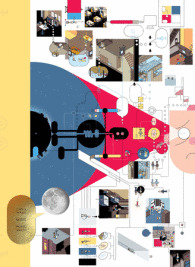
Monograph
The first and much-anticipated monograph by multi-award-winning cartoonist and graphic novelist Chris Ware, chronicling his influential quarter-century career.
While illustrator Chris Ware's singular body of work is often categorized as comics, his trailblazing work defies genre. Whether he is writing graphic novels, making paintings, or building sculptures, Ware explores universal themes of social isolation, emotional torment, and depression with his trademark self-effacing voice. The end result is wry, highly empathetic, and identifiable to all walks of life. Ware, like Charles Schulz, Art Spiegelman, and R. Crumb, has elevated cartooning to an iconic art form.
This volume is a personal, massive, never-before-seen look at how the artist's life and work combine, beginning with his newspaper family and the influence of their work; his art-school days in Austin and Chicago; to his career from the early 1990s to the present day. It also delves into how, as a storyteller and builder, his near-compulsion to build in three dimensions feeds into the thinking of his innovative narrative art. The book contains a comprehensive collection of his work, including many previously unpublished examples, and is an intimate window into a comics master sure to appeal to fans of art and storytelling.
While illustrator Chris Ware's singular body of work is often categorized as comics, his trailblazing work defies genre. Whether he is writing graphic novels, making paintings, or building sculptures, Ware explores universal themes of social isolation, emotional torment, and depression with his trademark self-effacing voice. The end result is wry, highly empathetic, and identifiable to all walks of life. Ware, like Charles Schulz, Art Spiegelman, and R. Crumb, has elevated cartooning to an iconic art form.
This volume is a personal, massive, never-before-seen look at how the artist's life and work combine, beginning with his newspaper family and the influence of their work; his art-school days in Austin and Chicago; to his career from the early 1990s to the present day. It also delves into how, as a storyteller and builder, his near-compulsion to build in three dimensions feeds into the thinking of his innovative narrative art. The book contains a comprehensive collection of his work, including many previously unpublished examples, and is an intimate window into a comics master sure to appeal to fans of art and storytelling.
280 pages, Hardcover
First published October 1, 2017
About the author
Chris Ware
141 books1,175 followersChris Ware is an American cartoonist acclaimed for redefining the visual and narrative possibilities of the graphic novel, known especially for his long-running Acme Novelty Library series and major works including Jimmy Corrigan, the Smartest Kid on Earth, Building Stories, and Rusty Brown. His work is distinguished by its emotional depth, frequently exploring loneliness, memory, regret, and the quieter forms of pain that shape ordinary lives, rendered with extreme visual precision, intricate page designs, and a style that evokes early twentieth-century American illustration, advertising, and architecture. Raised in Omaha and later based in the Chicago area, Ware first attracted attention through his strips for The Daily Texan, where an invitation from Art Spiegelman to contribute to Raw helped encourage him toward an ambitious, self-publishing approach that would define his career. Acme Novelty Library disrupted conventions of comic book production in both format and tone, presenting characters such as Quimby the Mouse and later Rusty Brown in narratives that blend autobiography, satire, and psychological portraiture. Building Stories further expanded his formal experimentation, released as a boxed set of interconnected printed pieces that require the reader to assemble meaning from varied physical formats. Ware’s artistic influences range from early newspaper cartoonists like Winsor McCay and Frank King to the collage and narrative play of Joseph Cornell, and he has spoken about using typography-like logic in his drawing to mirror the fragmented, associative way memory works. His practice remains largely analog, relying on hand drawing and careful layout, though he uses computers for color preparation. Ware has also been active as an editor, designer, and curator, contributing to volumes reprinting historic comic strips, serving as editor of The Best American Comics 2007, and organizing exhibitions such as UnInked at the Phoenix Art Museum. His work has extended into multimedia collaborations, including illustrated documentary materials for This American Life and visual designs for film posters, book covers, and music projects. His later projects include The Last Saturday, serialized online for The Guardian, and Monograph, a retrospective volume combining autobiography with archival material. Widely recognized for his influence, Ware’s books have received numerous honors, including multiple Eisner and Harvey Awards, and Jimmy Corrigan became the first graphic novel to win the Guardian First Book Award. He has exhibited at major institutions including the Whitney Museum of American Art and Museum of Contemporary Art Chicago, and his contributions to the medium have led many peers and critics to regard him as one of the most significant cartoonists of his generation.
Ratings & Reviews
Friends & Following
Create a free account to discover what your friends think of this book!
Community Reviews
Displaying 1 - 30 of 44 reviews
October 24, 2017
The Grand Archon of Cringe Comics

The word 'genius' gets thrown around a lot these days...
That is all.
BUT:
Maybe it isn't all.

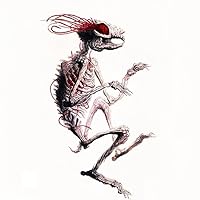
Chris Ware is the Dirk Diggler of Foreheads :
(WARNING: The photo is un-fucked-with. However... .)
If anyone is still refusing to plaster the word 'genius' across Chris Ware's massive, phrenologically-ideal genius-shaped forehead, which came close to pushing his face onto his neck or upper chest in utero, it's only because Ware himself keeps offering up arguments against it. No one else has seriously attempted to dissuade the world, even people who kind of get sick of the way he immerses himself in self-loathing. You might have assumed all those years spent hanging around Dan Clowes would have taught him the correct method for converting neurotic insecurity into narcissistic misanthropy, but that's one super-secret Mr. Eightball never passed along to Lil' Acme Braino, back when they were a Dynamic Duo bromance.


Or maybe he did, but Acme Braino had too much love in his heart... which also happens to be conveniently located in that roomy forehead.
Besides... it worked for Robert Crumb, and it's working for Chris Ware: he's inspired enough breathless praise to measurably alter Carbon Dioxide levels... mostly for his writing and revolutionary design brilliance; Chip Kidd is a top-level talent, and he's in love with Ware - serving as Prez of the fan-club & part-time CW cheerleader; the poster below celebrating Ware's 300th Eisner win is a Chip Kidd love letter - but Chris Ware reshaped the entire field of publishing design. One subject, however, has exposed brief glimpses of the uncharacteristic narcissism lurking behind his semi-authentic half-facade of pathological modesty: the lack of appreciation his artwork receives. 'Monograph' is Chris Ware stepping out of his shy reticence (cleverly feigned), and to demonstrate his artistic brilliance.


AND SO:
Every Ware scripted paragraph in 'Monograph' reveals a cognitive dissonance in Ware's updated version of a particular Orwellian language. While the prestigious, sometimes century-old American art-book publishers began releasing monographs, Taschen & Abrams were in the forefront; they eschewed Disneyfied Marvel/DC comics, inevitably, instead seeking out the Sequential Art Auteurs: Winsor McCay, Daniel Clowes, and Jamie Hernandez were three of the best, with Abrams The Art of Daniel Clowes: Modern Cartoonist
 .
.
While Abrams launched an imprint to specifically accommodate these sequential art auteurs, Ware is the first American cartoonist with his own Rizzoli artbook, and only the great Belgian pioneer of BD, Herge, the creator of Tintin, can make the same boast. If he wasn't dead. The size of Monograph, however, is a very unsubtle statement: it screams ambition and confidence... two words Ware feels uncomfortable whispering... or so he'd have us think. For a man who rejected the male tendency to use bravado and bullshit to sell themselves, he clearly has no problems letting his art do the selling.


And his artwork does get overlooked, but that might be a simple case of reviewers feeling far more comfortable talking about story than art. Seeing the original inked pages for 'Jimmy Corrigan', which are almost TWICE the size of the book's 13" x 18.5" dimensions, I was in awe... those gorgeous depictions of the 'flashback' chapters set during the Chicago World Fair are amazing. I had assumed - incorrectly - that Ware achieved his astonishing level of exactitude through digital means... and it was still impressive. But seeing these super-oversized pages, rendered in black-ink & blue-line pencil, is close to awe-inspiring. FUCKING GENIUS.


BUT I DIGRESS, WITH A CORRIGAN-ESQUE DIGRESSION INTO ANCESTRAL HISTORY, TO PROVE MISERY IS GENETIC, SPANNING PAST, PRESENT & FUTURE, LIKE AN OUROBOUROS MADE ENTIRELY OF SHIT:
AND SO... WAIT WHAT? OH FUCK IT, WHO GIVES A SWIMMING FUCK:
So Chris Ware's carefully constructed sad sack bullshit is his way of avoiding the isolation - and danger -that comes of being the Royal Bloodline of the Ubermensch. It's a clever scheme... and you'll notice it actually tends to pre-emptively detonate critical bombs, leaving most reviewers praising the GENIUS of his FOREHEAD. I mean his COMICS.
Unlike the time of his forebears, he doesn't need to be modest about the Ware super-brain; but the Ware family fled Germany for the American Mid-West, where people either don't care about your brain... but cautious as they were, a young Ware believed the old stories, and unfortunately, when it came time to start meeting girls and hooking up, that critical phase in determining how you'll view yourself for years to come, he took some very bad advice... bullshit like 'Honesty is the best policy' - NO. It is almost always a disastrous policy - and 'Just Be Yourself'... NO. Women love it and appreciate it when a guy is upfront about his fears, when he admits his mistakes and character flaws. It helps them immediately weed out the sad-sack losers. Then they move on to the next decent looking beta male, but this one's successfully mimicking an alpha, telling lies about his job and finances, to flip those evolutionary switches in the female brain, unconsciously register an attractive visage, signs of health, suggestions of power, influence, potential, ambition. Even if she suspects the lie, the con itself demonstrates strong determination and imagination, traits worth passing on. Even an attractive face has a purpose... cuter offspring stand a better chance of survival, and the effect of oxytocin is powerful...


But even though Chris Ware learned the ugly truths about human nature, truths that tie modern mating & dating, boardrooms & job-sites, art galleries & film theaters, college & kindergarten, he knew he'd never pass as a pseudo-Alpha... and he knew he'd never want to play those animal games for the animal brains. He would 'be himself', he would 'be honest', and he would introduce the outer world to his inner world, and make them wish their emotions could roll up into an armored ball of the deepest existential cringe, like an armadillo who was Jean-Paul Sartre in a previous life. 'Jimmy Corrigan' was a masterpiece of Cringe Comic Literature, and every beautifully designed book since then has sought to drug the reader with poignancy, then destroy their hopes with the horrors of banality, the broken 'Heartland' in Winter, and a deafening chorus of cruel, pseudo-nihilistic laughter, emanating from the deep psychic territory of the lizard brain, an ancient Pangaean swamp full of pre-human monster-ancestors.
WHAT THAT MEANT I'M NOT SURE, BUT A MERCIFUL CONCLUSION TO THIS WARE-INFECTED NONSENSE SEEMS TO BE LOOMING BEYOND THE SOUTHERN PARAGRAPH, SO:
This book is big: 13.5"w x 18.5"h. 280 pages. It's a treasure trove... as I turned the pages, I eventually noticed something interesting... while most of the mini-comics are represented as photos, I found that one of the photos wasn't a photo, but the entire mini-comic booklet itself. This happens several times throughout, with comics of varying size, glued to the page & camouflaged by the layout. So fucking cool.


The only sequential art monographs that come close...


The word 'genius' gets thrown around a lot these days...
That is all.
BUT:
Maybe it isn't all.
Chris Ware is the Dirk Diggler of Foreheads :
(WARNING: The photo is un-fucked-with. However... .)
If anyone is still refusing to plaster the word 'genius' across Chris Ware's massive, phrenologically-ideal genius-shaped forehead, which came close to pushing his face onto his neck or upper chest in utero, it's only because Ware himself keeps offering up arguments against it. No one else has seriously attempted to dissuade the world, even people who kind of get sick of the way he immerses himself in self-loathing. You might have assumed all those years spent hanging around Dan Clowes would have taught him the correct method for converting neurotic insecurity into narcissistic misanthropy, but that's one super-secret Mr. Eightball never passed along to Lil' Acme Braino, back when they were a Dynamic Duo bromance.
Or maybe he did, but Acme Braino had too much love in his heart... which also happens to be conveniently located in that roomy forehead.
Besides... it worked for Robert Crumb, and it's working for Chris Ware: he's inspired enough breathless praise to measurably alter Carbon Dioxide levels... mostly for his writing and revolutionary design brilliance; Chip Kidd is a top-level talent, and he's in love with Ware - serving as Prez of the fan-club & part-time CW cheerleader; the poster below celebrating Ware's 300th Eisner win is a Chip Kidd love letter - but Chris Ware reshaped the entire field of publishing design. One subject, however, has exposed brief glimpses of the uncharacteristic narcissism lurking behind his semi-authentic half-facade of pathological modesty: the lack of appreciation his artwork receives. 'Monograph' is Chris Ware stepping out of his shy reticence (cleverly feigned), and to demonstrate his artistic brilliance.
AND SO:
Every Ware scripted paragraph in 'Monograph' reveals a cognitive dissonance in Ware's updated version of a particular Orwellian language. While the prestigious, sometimes century-old American art-book publishers began releasing monographs, Taschen & Abrams were in the forefront; they eschewed Disneyfied Marvel/DC comics, inevitably, instead seeking out the Sequential Art Auteurs: Winsor McCay, Daniel Clowes, and Jamie Hernandez were three of the best, with
Abrams The Art of Daniel Clowes: Modern Cartoonist
.While Abrams launched an imprint to specifically accommodate these sequential art auteurs, Ware is the first American cartoonist with his own Rizzoli artbook, and only the great Belgian pioneer of BD, Herge, the creator of Tintin, can make the same boast. If he wasn't dead. The size of Monograph, however, is a very unsubtle statement: it screams ambition and confidence... two words Ware feels uncomfortable whispering... or so he'd have us think. For a man who rejected the male tendency to use bravado and bullshit to sell themselves, he clearly has no problems letting his art do the selling.
And his artwork does get overlooked, but that might be a simple case of reviewers feeling far more comfortable talking about story than art. Seeing the original inked pages for 'Jimmy Corrigan', which are almost TWICE the size of the book's 13" x 18.5" dimensions, I was in awe... those gorgeous depictions of the 'flashback' chapters set during the Chicago World Fair are amazing. I had assumed - incorrectly - that Ware achieved his astonishing level of exactitude through digital means... and it was still impressive. But seeing these super-oversized pages, rendered in black-ink & blue-line pencil, is close to awe-inspiring. FUCKING GENIUS.
BUT I DIGRESS, WITH A CORRIGAN-ESQUE DIGRESSION INTO ANCESTRAL HISTORY, TO PROVE MISERY IS GENETIC, SPANNING PAST, PRESENT & FUTURE, LIKE AN OUROBOUROS MADE ENTIRELY OF SHIT:
AND SO... WAIT WHAT? OH FUCK IT, WHO GIVES A SWIMMING FUCK:
So Chris Ware's carefully constructed sad sack bullshit is his way of avoiding the isolation - and danger -that comes of being the Royal Bloodline of the Ubermensch. It's a clever scheme... and you'll notice it actually tends to pre-emptively detonate critical bombs, leaving most reviewers praising the GENIUS of his FOREHEAD. I mean his COMICS.
Unlike the time of his forebears, he doesn't need to be modest about the Ware super-brain; but the Ware family fled Germany for the American Mid-West, where people either don't care about your brain... but cautious as they were, a young Ware believed the old stories, and unfortunately, when it came time to start meeting girls and hooking up, that critical phase in determining how you'll view yourself for years to come, he took some very bad advice... bullshit like 'Honesty is the best policy' - NO. It is almost always a disastrous policy - and 'Just Be Yourself'... NO. Women love it and appreciate it when a guy is upfront about his fears, when he admits his mistakes and character flaws. It helps them immediately weed out the sad-sack losers. Then they move on to the next decent looking beta male, but this one's successfully mimicking an alpha, telling lies about his job and finances, to flip those evolutionary switches in the female brain, unconsciously register an attractive visage, signs of health, suggestions of power, influence, potential, ambition. Even if she suspects the lie, the con itself demonstrates strong determination and imagination, traits worth passing on. Even an attractive face has a purpose... cuter offspring stand a better chance of survival, and the effect of oxytocin is powerful...
But even though Chris Ware learned the ugly truths about human nature, truths that tie modern mating & dating, boardrooms & job-sites, art galleries & film theaters, college & kindergarten, he knew he'd never pass as a pseudo-Alpha... and he knew he'd never want to play those animal games for the animal brains. He would 'be himself', he would 'be honest', and he would introduce the outer world to his inner world, and make them wish their emotions could roll up into an armored ball of the deepest existential cringe, like an armadillo who was Jean-Paul Sartre in a previous life. 'Jimmy Corrigan' was a masterpiece of Cringe Comic Literature, and every beautifully designed book since then has sought to drug the reader with poignancy, then destroy their hopes with the horrors of banality, the broken 'Heartland' in Winter, and a deafening chorus of cruel, pseudo-nihilistic laughter, emanating from the deep psychic territory of the lizard brain, an ancient Pangaean swamp full of pre-human monster-ancestors.
WHAT THAT MEANT I'M NOT SURE, BUT A MERCIFUL CONCLUSION TO THIS WARE-INFECTED NONSENSE SEEMS TO BE LOOMING BEYOND THE SOUTHERN PARAGRAPH, SO:
This book is big: 13.5"w x 18.5"h. 280 pages. It's a treasure trove... as I turned the pages, I eventually noticed something interesting... while most of the mini-comics are represented as photos, I found that one of the photos wasn't a photo, but the entire mini-comic booklet itself. This happens several times throughout, with comics of varying size, glued to the page & camouflaged by the layout. So fucking cool.
The only sequential art monographs that come close...

November 23, 2017
In short: Even diehard fans could skip this, this is more for collectors.
I am not proud of giving a 2* rating to my favorite living author. He continues to outdo himself—marriage and childbirth have somehow substantially elevated the ambition and enjoyability of his works. He has an innovative way of using symbols and page layouts to play with how time passes in the narrative, such that memories and daydreams can be followed in parallel to plot events. Like how Woolf, Gaddis and Wallace reinvented the use of paragraphs, dialogue and footnotes to make both the reading and the imagined events more 'fluid', Ware is doing for the comic book panel (just look at the cover for this!) In short, Chris Ware is the biggest proponent (and best example) that comics will soon be sufficiently intricate to be classified as classic literature.
The reason I'm giving this 2*s is because there's nothing really new here.
I thought this would be an autobiography, and it sort of is, but it's much more like Ware's art school portfolio (mainly modelling). You learn that Ware imitated many good artists to find his style, which I'm placing as a mix of Schultz, Spiegelman and Burns. I learned more about Ware's vision of the graphic novel in the opening essay on the inside cover of Jimmy Corrigan, and more about Ware's creative process in the Acme Novelty Datebooks. It's nice to see photos of his family, but it all felt quite emotionally terse when he barely talked in much detail about his personal life. On page 61 there's a photo captioned of his then girlfriend: 'Jon Jeffus endures my inexcusable lack of eye contact while I [work]'. I felt like this photo resembled how I as a reader of this book felt like, with only scant mentions of his feelings among this portfolio that I otherwise can't really connect with. I'm just not entirely sure what was meant to result from reading this, perhaps I don't understand monographs, but I felt this lacked detail despite its unwieldy page size and count.
I think I got more out of Adrian Tomine's New York Drawings, because at least that was focused on a particular part of his work and provided novel insights into his process. I just think Chris Ware has already written about all of this more clearly elsewhere, so as a book I can't really recommend it despite it containing excerpts from exceptional comics.
I am not proud of giving a 2* rating to my favorite living author. He continues to outdo himself—marriage and childbirth have somehow substantially elevated the ambition and enjoyability of his works. He has an innovative way of using symbols and page layouts to play with how time passes in the narrative, such that memories and daydreams can be followed in parallel to plot events. Like how Woolf, Gaddis and Wallace reinvented the use of paragraphs, dialogue and footnotes to make both the reading and the imagined events more 'fluid', Ware is doing for the comic book panel (just look at the cover for this!) In short, Chris Ware is the biggest proponent (and best example) that comics will soon be sufficiently intricate to be classified as classic literature.
The reason I'm giving this 2*s is because there's nothing really new here.
I thought this would be an autobiography, and it sort of is, but it's much more like Ware's art school portfolio (mainly modelling). You learn that Ware imitated many good artists to find his style, which I'm placing as a mix of Schultz, Spiegelman and Burns. I learned more about Ware's vision of the graphic novel in the opening essay on the inside cover of Jimmy Corrigan, and more about Ware's creative process in the Acme Novelty Datebooks. It's nice to see photos of his family, but it all felt quite emotionally terse when he barely talked in much detail about his personal life. On page 61 there's a photo captioned of his then girlfriend: 'Jon Jeffus endures my inexcusable lack of eye contact while I [work]'. I felt like this photo resembled how I as a reader of this book felt like, with only scant mentions of his feelings among this portfolio that I otherwise can't really connect with. I'm just not entirely sure what was meant to result from reading this, perhaps I don't understand monographs, but I felt this lacked detail despite its unwieldy page size and count.
I think I got more out of Adrian Tomine's New York Drawings, because at least that was focused on a particular part of his work and provided novel insights into his process. I just think Chris Ware has already written about all of this more clearly elsewhere, so as a book I can't really recommend it despite it containing excerpts from exceptional comics.

October 23, 2018
I would be lying if I said that I read every word of this tome but I guess on one level, that's not really the point. This monograph collects a career-spanning collection of Ware's work and presents them in a huge format. A format that Ware definitely benefits from to appreciate the level of detail that is put into the work. It definitely deserves a cursory glance from those who appreciate Ware's work (and I would include myself as one) but ultimately is a bit too much for anyone but a major fan/collector. It's a fun book to hold and go through. You'll find yourself turning the book, getting close, moving away and enjoying lesser known works from one of the best graphic novelists out there.

October 20, 2025
I am extremely fortunate that a GR friend (thank you, Wendy!) had a brand new copy of this, knew I was a fan of Ware, and not only shipped it to me, but refused any sort of payment in return. I took my time by going through this only a few pages at any one sitting over many months in order to savor the experience, study the work, and because there is no other way to ingest the sheer amount of content in this monolith monograph. Honestly, my only criticism of this book is its sheer size---once opened wide, we're talking 26" x 18"---you almost need a dining room table to make it tenable. I felt like a little kid trying to read the newspaper, if the newspaper had also weighed 50 lbs.

The material is arranged chronologically and completely devoid of commentary/criticism. Instead, we have Ware's own anecdotes, bon mots, self-deprecating jokes, contextualizations, and notes, beginning with biographical/formative year stories and family photos. But mostly, it's a sheer ton of his work (which, I imagine, is what most people who would be interested in this type of book would want).
Most known for his comics work, it was great to see some of the sculptures/inventions Ware has done over the years.
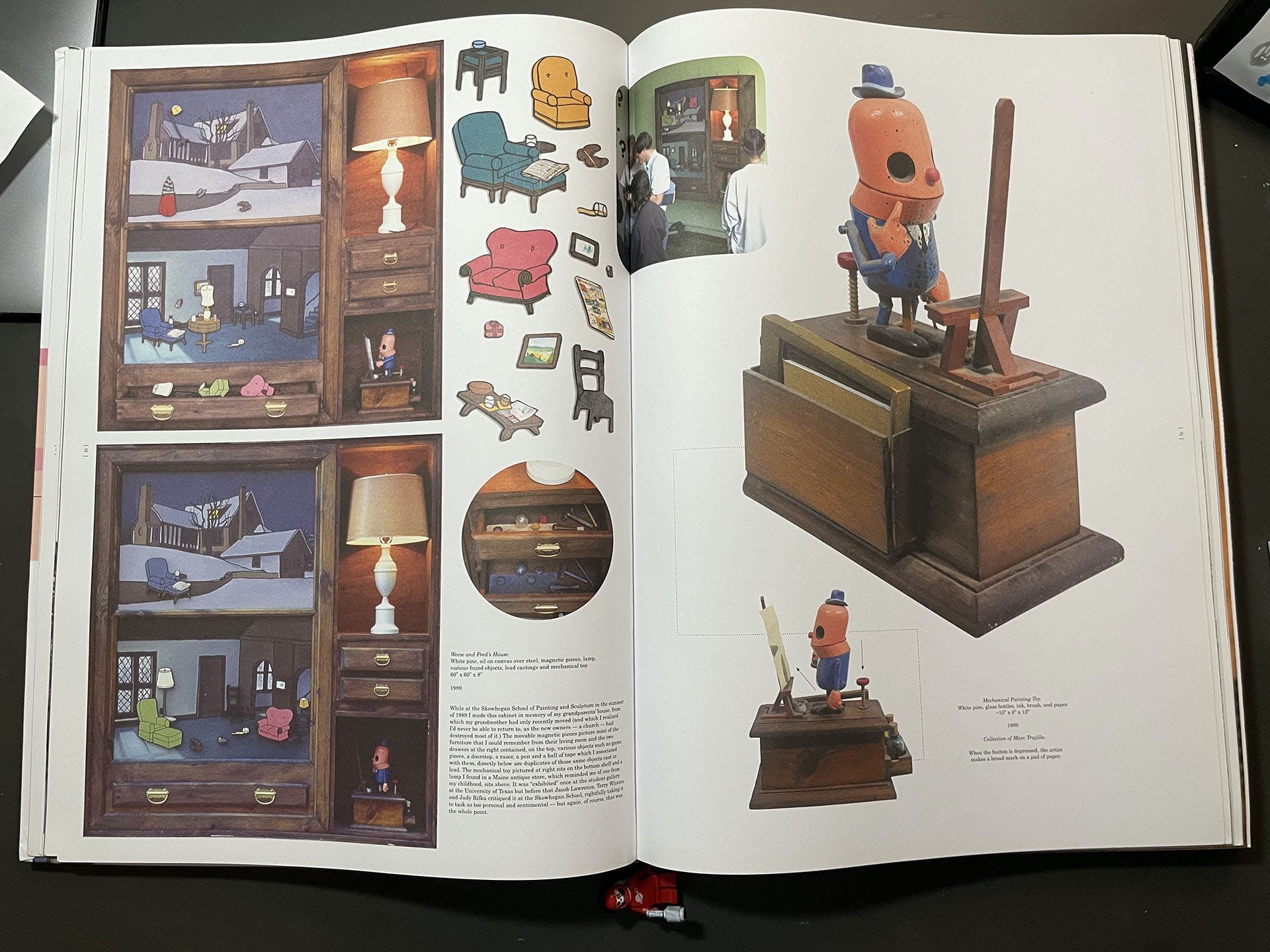

In addition to a bonanza of his finished work (the New Yorker covers all collected in one place were quite appealing), we also have sketchbook pages, thumbnail sketches/notes for his ideas/books, pre-colored work, and reference compositions on tracing paper. Sprinkled quite guardedly throughout are little insights into Ware's feelings about the medium:
He is gracious with his credit to those who helped him along the way and his personal outlook on art comes off as incredibly sincere and insightful (not an easy balance to strike for anyone):
Rizolli (https://www.rizzoliusa.com/book/97808...), the publisher, did a wonderful job with the binding, heavy paper, and quality reproductions of the artwork.
I'll leave you with his delightful tribute to Charles Schultz (Ware's depiction of himself as a Peanuts character is... well, it is quintessentially Ware!) and a few choice quotes sharing his wisdom with respect to storytelling and making art.

To read Ware's tribute essay to Schultz, go here:
https://www.tumblr.com/connorratliff/...
----------------------------------------
GOOD WARIAN ADVICE
- "…a character one completely understands is the worst of all possible corners into which to write oneself."
- "Two of the enduring truths of cartooning I've discovered are: 1) it always takes longer than you think it will, and 2) nothing will make you feel better other than actually accomplishing something. As one who self-medicates with art it's something I have to relearn every single time: no distraction, however enticing, will repair your mood other than doing the work itself."
- "When I was in school, I remember some of the instructors encouraging us all to find "one thing" — visual, political, social or otherwise — which somehow compelled us, and then to relentlessly focus on it to the exclusion of all else. This seemed utterly batshit to me. The best art isn't ever about one thing, but tries to be about everything. No one really wants to be impressed by art; you want to feel something through it, and ideally something that puts you in that most receptive of states when you're most vulnerable, forgiving and understanding. Not that art should be sentimental or cloying — it should just be human. And if it isn't, or you make crappy art despite your best efforts, who cares? All you can do is sit down and try harder next time."

New Yorker Cover -- October 11, 2010
The material is arranged chronologically and completely devoid of commentary/criticism. Instead, we have Ware's own anecdotes, bon mots, self-deprecating jokes, contextualizations, and notes, beginning with biographical/formative year stories and family photos. But mostly, it's a sheer ton of his work (which, I imagine, is what most people who would be interested in this type of book would want).
Most known for his comics work, it was great to see some of the sculptures/inventions Ware has done over the years.
In addition to a bonanza of his finished work (the New Yorker covers all collected in one place were quite appealing), we also have sketchbook pages, thumbnail sketches/notes for his ideas/books, pre-colored work, and reference compositions on tracing paper. Sprinkled quite guardedly throughout are little insights into Ware's feelings about the medium:
"In a method not in any way unique to me (Hergé and Charles Burns did/do much the same) during the writing of Jimmy Corrigan I'd "store" backgrounds and compositions on tracing paper to insure their compositional consistency between pages, and especially to maintain the proscenium-scene language of comics I'd come to think was the medium's real power. As I bloviated earlier, I believe the most damaging development in the history of comics was the reinvention of the panel as a "camera," short-circuiting the power not only of comics as an art of memory but also of the potential rhythm and gesture on the page that consistent representations of figures and scenes create when read. Chop the whole thing into viewpoints and as-seen scenes, and you're sacrificing the potential of the drawn, reduced image to a poor imitation of film. Not that there's anything wrong with that — we all now dream in close-ups and cuts — but it should be employed thoughtfully, not as an injudicious core metaphysic of the language itself."
He is gracious with his credit to those who helped him along the way and his personal outlook on art comes off as incredibly sincere and insightful (not an easy balance to strike for anyone):
"One of my favorite definitions of art is Stanley Kubrick's: "In the end, the test of a work of art is our affection for it, not our ability to explain why it is good." Everyone becomes an art critic when they have to move; boxes of books, CDs and DVDs left in trash cans and by the sides of roads are the shore edge of I-Don't-Want-This-Anymore that washes into the ocean of oblivion. Maybe you even picked this very book out of the trash, or are about to put it there. Either way, we react much the same way to art the way we do to other people; the friendships that drift or atrophy are not unlike the art we forget about, resell or ditch. Unless, of course, one has paid a great deal of money for the art, which sort of lashes it to the shore—oh, lucky fine art! And which, again, is one of the great advantages and truths of books; they're worthless and tossable, unless, of course, one genuinely loves what they contain.
Rizolli (https://www.rizzoliusa.com/book/97808...), the publisher, did a wonderful job with the binding, heavy paper, and quality reproductions of the artwork.
I'll leave you with his delightful tribute to Charles Schultz (Ware's depiction of himself as a Peanuts character is... well, it is quintessentially Ware!) and a few choice quotes sharing his wisdom with respect to storytelling and making art.
To read Ware's tribute essay to Schultz, go here:
https://www.tumblr.com/connorratliff/...
----------------------------------------
GOOD WARIAN ADVICE
- "…a character one completely understands is the worst of all possible corners into which to write oneself."
- "Two of the enduring truths of cartooning I've discovered are: 1) it always takes longer than you think it will, and 2) nothing will make you feel better other than actually accomplishing something. As one who self-medicates with art it's something I have to relearn every single time: no distraction, however enticing, will repair your mood other than doing the work itself."
- "When I was in school, I remember some of the instructors encouraging us all to find "one thing" — visual, political, social or otherwise — which somehow compelled us, and then to relentlessly focus on it to the exclusion of all else. This seemed utterly batshit to me. The best art isn't ever about one thing, but tries to be about everything. No one really wants to be impressed by art; you want to feel something through it, and ideally something that puts you in that most receptive of states when you're most vulnerable, forgiving and understanding. Not that art should be sentimental or cloying — it should just be human. And if it isn't, or you make crappy art despite your best efforts, who cares? All you can do is sit down and try harder next time."
New Yorker Cover -- October 11, 2010

April 13, 2018
Chris Ware's "Jimmy Corrigan" ACME comics (before they were collected into a book) completely altered my life's trajectory. That may sound extreme, but his comics made me realize the true potential of comics, not as mindless entertainment but as a powerful story-telling vehicle that can deliver true empathy. I don't know that my own comics achieve anything approaching Ware's, but for the past decade I've been trying to foster those artists who do through my comics publishing & distribution company.
All this to say that I'm a Ware disciple, so I couldn't have asked for a better summation of his life thus far than Monograph. It's not a "greatest hits" collection, but rather a peek into his inspirations (mostly family oriented), his workspace, his artistic intentions and more.
The book is a little unwieldy (both in size and weight), but I wouldn't expect anything less from Ware. It's bursting with interesting production choices (like complete minicomics hidden on certain pages) and shows just how much effort he puts into everything he does, whether it's a college syllabus or a Valentine's Day gift for his wife.
My only complaint was the eye-strainingly small type in some of the comics, but this is something to which I'm accustomed when it comes to Ware. I borrowed a snake-handled magnifying glass from my 4 year old son and got to reading.
All this to say that I'm a Ware disciple, so I couldn't have asked for a better summation of his life thus far than Monograph. It's not a "greatest hits" collection, but rather a peek into his inspirations (mostly family oriented), his workspace, his artistic intentions and more.
The book is a little unwieldy (both in size and weight), but I wouldn't expect anything less from Ware. It's bursting with interesting production choices (like complete minicomics hidden on certain pages) and shows just how much effort he puts into everything he does, whether it's a college syllabus or a Valentine's Day gift for his wife.
My only complaint was the eye-strainingly small type in some of the comics, but this is something to which I'm accustomed when it comes to Ware. I borrowed a snake-handled magnifying glass from my 4 year old son and got to reading.

February 10, 2020
While reading this massive, intricate book two things came to mind. First, I was reminded of the feeling of buying a new video game, and before I would even play it I'd sit cross-legged and pore over the manual laid out on the floor in front of me. That's pretty much how I read this book. Second, as I went through it and marveled at all the details, it made me think of detective Mills (Brad Pitt) and and detective Somerset (Morgan Freeman) searching John Doe's apartment in Se7en. The investigation reveals hand stitched notebooks filled to the brim with sketches, photographs and tiny handwritten sentences taking up every single inch of the page. Along with artifacts of the murders kept in trophy cases like a museum. I am glad Chris Ware became a cartoonist.
Detective Somerset: "This guy's methodical, exacting, and worst of all, patient."
Detective Mills: "Honestly, have you ever seen anything like this?"
Detective Somerset: "No."
Detective Somerset: "This guy's methodical, exacting, and worst of all, patient."
Detective Mills: "Honestly, have you ever seen anything like this?"
Detective Somerset: "No."

February 7, 2023
Apart from being a legendary artist and innovative comic storyteller, Chris Ware is definitely a very insightful art and cultural critic.
This hefty book is definitely not a page turner but a great pleasure to read, because each page is so richly filled with either long text or the intricate works of Ware. The heavy creative load is very much materialized into this book. To cope with the physical and intellectual weight of it, I only read a few pages at a time. Every time it’s a weight-lifting exercise to take the book out from the bookshelf. This somehow became a ritual to mentally prepare myself to delve into the creative process and memoir of Ware.
This hefty book is definitely not a page turner but a great pleasure to read, because each page is so richly filled with either long text or the intricate works of Ware. The heavy creative load is very much materialized into this book. To cope with the physical and intellectual weight of it, I only read a few pages at a time. Every time it’s a weight-lifting exercise to take the book out from the bookshelf. This somehow became a ritual to mentally prepare myself to delve into the creative process and memoir of Ware.

August 23, 2018
Over Chris Ware zijn al vele letters gevloeid. Zowel academisch als pluralistisch is hij een figuur die de stripwereld domineert. Nu gaf hij ook eindelijk zelf zijn fiat voor een biografisch naslagwerk, al zegt hij zelf "zit de wereld hier wel op te wachten?" Het antwoord op die vraag is ongetwijfeld: JA.
Heel vroeg al wist Ware dat hij comics wilde maken. Hij volgde een kunstopleiding waarbij hij niet enkel grafisch werkte, maar zijn figuren tot leven bracht via klei, hout en metaal. Al dit wordt gekenmerkt door een hang naar nostalgie, het vergane. Deze rode draad vind je terug in al het werk van Ware, maar in Monograph gaat hij dieper in op de motieven en thema's die hij steevast gebruikt.
Bovendien is Ware een perfectionist, zowel wat zijn lijnen en dialoog betreft, als op de wijze van uitgave. Dit boek is dan ook niets minder dan een mijlpaal in de boekdrukkunst. Uitgebracht op (extra)groot formaat, met een prachtig kleurgebruik én de nodige extra's (denk aan miniboekjes binnenin een pagina). Voor elke strip-, kunst- en literatuurliefhebber is dit boek een MUST. Bovendien is het érg betaalbaar.
Heel vroeg al wist Ware dat hij comics wilde maken. Hij volgde een kunstopleiding waarbij hij niet enkel grafisch werkte, maar zijn figuren tot leven bracht via klei, hout en metaal. Al dit wordt gekenmerkt door een hang naar nostalgie, het vergane. Deze rode draad vind je terug in al het werk van Ware, maar in Monograph gaat hij dieper in op de motieven en thema's die hij steevast gebruikt.
Bovendien is Ware een perfectionist, zowel wat zijn lijnen en dialoog betreft, als op de wijze van uitgave. Dit boek is dan ook niets minder dan een mijlpaal in de boekdrukkunst. Uitgebracht op (extra)groot formaat, met een prachtig kleurgebruik én de nodige extra's (denk aan miniboekjes binnenin een pagina). Voor elke strip-, kunst- en literatuurliefhebber is dit boek een MUST. Bovendien is het érg betaalbaar.

October 4, 2021
An amazing beast of a book. Part diary, slight sketchbook, collection of sundry projects, constructions and offshoots. If you're a fan it's stunning and full of tons of inspiring pieces and discussions of Ware's process, influences and goals. One of the most unique books I've read.

January 22, 2018
Enjoyable for fans of Chris Ware, but not the place for non-fans to start.

not-finished
March 18, 2018More accurate than "not finished", I flipped through this large format book and read bits and pieces. Interesting, but way too much detail for me to look at everything.
April 9, 2019
Chris Ware appears to be the grand high imperial wizard of artistic cartoonists, someone who is revered by all others in the field.
When I brought home Monograph from the library, I had never heard of him except for a brief review I'd read, and I wasn't quite sure what I had. The book is about 13.5" x18.5", weighs 8.4 pounds (I thought it was more), and is difficult to hold and read.
I've been a fan of cartooning (the type you read and laugh at) for many decades. And I'm interested enough in modern graphic novels and other graphic books that I have read perhaps a dozen of them, including a complete biography of Richard Feynman and another one that was a history of the development of the atomic bomb. (Just a coincidence there -- the projects are not related.) But I don't claim to be an expert or to know who's who in the field.
Monograph turns out to be largely a collection of Chris Ware's work since childhood -- which is pretty much what a monograph is, so it's well-named.
I can't claim to have read every word of what is written in this book, not in the cartoons nor in the accompanying text. Some of it appears to be in about eight-point type and is just a bit too much for me to see. There's an interesting preface by Ware's close friend Ira Glass, whose work as a documentarian I have long known and appreciated.
But I did look through Monograph carefully, reading what I could, and found pages from his early series Quimby the Mouse; more from Jimmy Corrigan: The Smartest Kid on Earth; many spreads that were labeled as being from the Acme Novelty series; pieces from McSweeny's Quarterly; many New Yorker covers (I don't know how many of Ware's covers have actually been published -- a fair number, I guess). Notable, too, are several spreads from his series Building Stories, in which he demonstrates that he also has a knack for architecture. That series looks interesting, and I'm expecting it to appear at my library soon.
One curious and no doubt extremely expensive addition to the book is at least six multi-page paste-ins ranging from about 1" x 1" (barely larger than a postage stamp) to about 6" x 6", and one that is a complete musical composition, a piece of ragtime music for piano written by Ware. Impressive.
As a testimony to one man's lifework, Monograph certainly stands out. What more could a person leave behind to say: "This is what I did in life"? And at age 51, Chris Ware doubtless has many years of productivity left in him, so perhaps this is a summary of his work up to what might be called his middle period.
When I brought home Monograph from the library, I had never heard of him except for a brief review I'd read, and I wasn't quite sure what I had. The book is about 13.5" x18.5", weighs 8.4 pounds (I thought it was more), and is difficult to hold and read.
I've been a fan of cartooning (the type you read and laugh at) for many decades. And I'm interested enough in modern graphic novels and other graphic books that I have read perhaps a dozen of them, including a complete biography of Richard Feynman and another one that was a history of the development of the atomic bomb. (Just a coincidence there -- the projects are not related.) But I don't claim to be an expert or to know who's who in the field.
Monograph turns out to be largely a collection of Chris Ware's work since childhood -- which is pretty much what a monograph is, so it's well-named.
I can't claim to have read every word of what is written in this book, not in the cartoons nor in the accompanying text. Some of it appears to be in about eight-point type and is just a bit too much for me to see. There's an interesting preface by Ware's close friend Ira Glass, whose work as a documentarian I have long known and appreciated.
But I did look through Monograph carefully, reading what I could, and found pages from his early series Quimby the Mouse; more from Jimmy Corrigan: The Smartest Kid on Earth; many spreads that were labeled as being from the Acme Novelty series; pieces from McSweeny's Quarterly; many New Yorker covers (I don't know how many of Ware's covers have actually been published -- a fair number, I guess). Notable, too, are several spreads from his series Building Stories, in which he demonstrates that he also has a knack for architecture. That series looks interesting, and I'm expecting it to appear at my library soon.
One curious and no doubt extremely expensive addition to the book is at least six multi-page paste-ins ranging from about 1" x 1" (barely larger than a postage stamp) to about 6" x 6", and one that is a complete musical composition, a piece of ragtime music for piano written by Ware. Impressive.
As a testimony to one man's lifework, Monograph certainly stands out. What more could a person leave behind to say: "This is what I did in life"? And at age 51, Chris Ware doubtless has many years of productivity left in him, so perhaps this is a summary of his work up to what might be called his middle period.

March 12, 2020
I've always been fascinated by the idea of creatives returning to the same themes over and over again, and the idea that anyone's work could be compiled chronologically to reveal greater themes that have been present from childhood to the present day. This book does exactly that for Chris Ware, one of the greatest living cartoonists (by my estimation, at least). The text on each page, somewhat akin to the descriptions you'd see in a museum aside each piece of art, could be compiled as a book-length memoir. Likewise, the many pieces of story art, original art, fake ads, designs, wooden dolls, old-timey sculptures, paper replicas, enlarged New Yorker covers, and pasted-in minicomics could stand on their own as an incredible artbook. Yet "Monograph" is simultaneously both artbook and memoir, and neither. By putting them together, he creates something far greater, not unlike the mechanics of putting two panels together when reading a comic, or, as he opines, the third being that is created when two people share a connection.
Ware's personal story is inspiring and tear-jerking without meaning to be. In fact, those are probably, in his infinite self-consciousness, the last things he'd want a reader to get out of the book. The personal details are sparse enough that he seemed to be actively avoiding any easy appeal to the emotions. And yet, I broke down in tears by page 13, and found new meaning in myself as a creator by the end.
Most fascinating are the endless nuggets of wisdom he drops just by sharing his creative process. His ideas about seeing panels as a theatre-influenced "proscenium" as opposed to a film-influenced "camera" were revolutionary to me, revealing an indescribable feeling I've never been able to put to words that his work has, as do pre-film comic strips and the work of other greats like Charles Schulz and Jeff Smith. His thoughts on creating as a form of recreating memory, with all the fickleness of the human brain, also helped me understand why I enjoy so many of his works, and helped me appreciate the strange thing that is consciousness.
I've barely scratched the surface here. The 20+ hours I spent with this giant book (both in dimensions and density of content) were kind of revelatory to me in ways I still can't quite wrap my head around yet, and I'm sure I'll be back to revisit it soon. A grand experiment that works so much better than it had any right to.
Ware's personal story is inspiring and tear-jerking without meaning to be. In fact, those are probably, in his infinite self-consciousness, the last things he'd want a reader to get out of the book. The personal details are sparse enough that he seemed to be actively avoiding any easy appeal to the emotions. And yet, I broke down in tears by page 13, and found new meaning in myself as a creator by the end.
Most fascinating are the endless nuggets of wisdom he drops just by sharing his creative process. His ideas about seeing panels as a theatre-influenced "proscenium" as opposed to a film-influenced "camera" were revolutionary to me, revealing an indescribable feeling I've never been able to put to words that his work has, as do pre-film comic strips and the work of other greats like Charles Schulz and Jeff Smith. His thoughts on creating as a form of recreating memory, with all the fickleness of the human brain, also helped me understand why I enjoy so many of his works, and helped me appreciate the strange thing that is consciousness.
I've barely scratched the surface here. The 20+ hours I spent with this giant book (both in dimensions and density of content) were kind of revelatory to me in ways I still can't quite wrap my head around yet, and I'm sure I'll be back to revisit it soon. A grand experiment that works so much better than it had any right to.

November 6, 2022
This is a unique and fascinating book: a cross between an art book, an artist's edition, an autobiography, a rarities collection, and a compilation of ruminations on life and art.
As a big fan of Chris Ware's work, I really value the insight this enormous tome provides into his life, personality, worldview and creative process. I believe in separating art from artist, but it's nonetheless nice to read this and see the author of some of my favourite comics come across as a thoughtful, modest and eminently likeable person. Above all, however, I appreciate Monograph for the artwork and comics collected here that aren't contained in Ware's three long-form works (Jimmy Corrigan, Building Stories and Rusty Brown). Among other bits and pieces, this includes some of his early work, excerpts from his sketchbooks, his New Yorker covers, some of his Putty Gray strips, and a bunch of miscellaneous strips featuring the Rusty Brown and Jimmy Corrigan characters. And I should emphasize that these absolutely aren't just dregs and rejects; much of this material is as great as anything in his three big works.
As great as this thing is, I do have to mention that due to its sheer size (34×47 cm, 280 pages, 4 kg) it is totally unwieldy and quite impractical to actually read, especially when there are pages that need to be viewed from multiple different angles. And while mentioning negatives, writing down the book's dimensions reminds me of another small gripe: in "art book" style, the size of each art piece is indicated, but this is only in inches, which will undoubtedly cause annoyance for most non-US readers.
Nevertheless, there's no doubt in my mind that it's absolutely worth grappling with this absurdly oversized tome (and enduring its use of non-metric measurements). It's essential reading for any Chris Ware fan.
As a big fan of Chris Ware's work, I really value the insight this enormous tome provides into his life, personality, worldview and creative process. I believe in separating art from artist, but it's nonetheless nice to read this and see the author of some of my favourite comics come across as a thoughtful, modest and eminently likeable person. Above all, however, I appreciate Monograph for the artwork and comics collected here that aren't contained in Ware's three long-form works (Jimmy Corrigan, Building Stories and Rusty Brown). Among other bits and pieces, this includes some of his early work, excerpts from his sketchbooks, his New Yorker covers, some of his Putty Gray strips, and a bunch of miscellaneous strips featuring the Rusty Brown and Jimmy Corrigan characters. And I should emphasize that these absolutely aren't just dregs and rejects; much of this material is as great as anything in his three big works.
As great as this thing is, I do have to mention that due to its sheer size (34×47 cm, 280 pages, 4 kg) it is totally unwieldy and quite impractical to actually read, especially when there are pages that need to be viewed from multiple different angles. And while mentioning negatives, writing down the book's dimensions reminds me of another small gripe: in "art book" style, the size of each art piece is indicated, but this is only in inches, which will undoubtedly cause annoyance for most non-US readers.
Nevertheless, there's no doubt in my mind that it's absolutely worth grappling with this absurdly oversized tome (and enduring its use of non-metric measurements). It's essential reading for any Chris Ware fan.

June 8, 2019
I've been reading Chris Ware for almost as long as he's been published, so when this book dedicated to his career/life and written/compiled by the man himself rolled around I knew I'd have it eventually. It took me a year or so to get around to it, and another year (and then some!) to finish it, but it was money and time well spent.
Ware has basically carved his own little niche in comics, wedging firmly into the company of past masters ranging from R. Crumb (with his true-life tales, daring honesty and persistent self-deprecation) to Winsor McKay (whose meticulous draughtsmanship, freehanded manipulation of space and bold use of soft colours are reflected in nearly all Ware's work), but with artistic and narrative style all his own. His stories tend to plumb depths of human experience, loneliness and emotion like no other 'cartoonists.'
This oversized tome is a fitting exploration of his art and its growth, as well as a bit of a memoir. Naturally, it's all done with the same self-loathing and sense of melancholy imbued in most of his work. Just as naturally, it's committed in a beautifully lavish compendium of art and photos with occasional produced objects fixed into the pages. The text is about half the size of usual book text and there is a LOT of it through the massive pages, but Ware doesn't skimp on details about his life or his creation. All of that just adds up to a hefty read in a book that doesn't lend itself at all to casual reading (I could only read it at my table when there was nothing else on it, hence the time it took me to finish). It is, however, a thoroughly indulging (if more than occasionally self-indulgent) and satisfying read.
I can't imagine reading this (much less buying it) without being a fan of Ware, but even the uninitiated art fan and the curious comic reader will find much to explore between these covers.
Ware has basically carved his own little niche in comics, wedging firmly into the company of past masters ranging from R. Crumb (with his true-life tales, daring honesty and persistent self-deprecation) to Winsor McKay (whose meticulous draughtsmanship, freehanded manipulation of space and bold use of soft colours are reflected in nearly all Ware's work), but with artistic and narrative style all his own. His stories tend to plumb depths of human experience, loneliness and emotion like no other 'cartoonists.'
This oversized tome is a fitting exploration of his art and its growth, as well as a bit of a memoir. Naturally, it's all done with the same self-loathing and sense of melancholy imbued in most of his work. Just as naturally, it's committed in a beautifully lavish compendium of art and photos with occasional produced objects fixed into the pages. The text is about half the size of usual book text and there is a LOT of it through the massive pages, but Ware doesn't skimp on details about his life or his creation. All of that just adds up to a hefty read in a book that doesn't lend itself at all to casual reading (I could only read it at my table when there was nothing else on it, hence the time it took me to finish). It is, however, a thoroughly indulging (if more than occasionally self-indulgent) and satisfying read.
I can't imagine reading this (much less buying it) without being a fan of Ware, but even the uninitiated art fan and the curious comic reader will find much to explore between these covers.

January 21, 2018
+++ There's something awesome about Chris Ware's graphic style. I see De Stijl and Joost Swarte and Herge's Tintin series, but cleaner and even more radical. Who else would divide a panel into 256 squares, then proceed to group them and form curious image saccades? Who would build panels out of 6x8-square grids, only to make a central 2x4 figures and show their entire lives in vignettes covering the remainder?
++/-- This is an auto-biography of one of the most self-effacing authors in the business, so in fact we see plenty of technical detail about his work and just a brief layer of personal information. Personal detail is just not something meaningful for the author of Jimmy Corrigan. I would have liked more of that detail.
++ Honest craftsmanship in a variety of visual arts: comics, graphic novels, wood sculpture, movie and zootropes for casting simple animations, installations focusing on the comics characters, etc.
+ A bit about the processes that led to New Yorker covers and stories, and to the McSweeney's special issue on Comics, plus a few details about each important exhibition in which the author has been involved (a movie and creative arts show in London springs to mind). Also, some material on his relationship with the cult magazine RAW.
++/-- This is an auto-biography of one of the most self-effacing authors in the business, so in fact we see plenty of technical detail about his work and just a brief layer of personal information. Personal detail is just not something meaningful for the author of Jimmy Corrigan. I would have liked more of that detail.
++ Honest craftsmanship in a variety of visual arts: comics, graphic novels, wood sculpture, movie and zootropes for casting simple animations, installations focusing on the comics characters, etc.
+ A bit about the processes that led to New Yorker covers and stories, and to the McSweeney's special issue on Comics, plus a few details about each important exhibition in which the author has been involved (a movie and creative arts show in London springs to mind). Also, some material on his relationship with the cult magazine RAW.

October 16, 2018
Chris Ware's way of publishing stuff makes it insanely hard to keep up with everything he's ever done. I remember I found he was publishing new stuff a while back... as saturday strips... in the Guardian Magazine... (they were later ported to guardian dot com but reading Chris Ware in your browser is missing the point). So having all of this collected Ware content in one place is a blessing.
It's kind of like buying a b-sides and rarities collection instead of a greatest hits but it gives you an incredibly detailed an minute look at Chris Ware's path from comic at the college paper to award winning hero of folks who move graphic novels into the fiction section at Barnes and Noble.
There is a serious deluge of content here and while I have not read every bit of stuff in here (probably only a quarter of it if that) I feel satisfied with the work. I will keep coming back to it (with a damn magnifying glass because some of the type is miniscule!) and looking for new things in old strips. Big Ware Heads check it out!
It's kind of like buying a b-sides and rarities collection instead of a greatest hits but it gives you an incredibly detailed an minute look at Chris Ware's path from comic at the college paper to award winning hero of folks who move graphic novels into the fiction section at Barnes and Noble.
There is a serious deluge of content here and while I have not read every bit of stuff in here (probably only a quarter of it if that) I feel satisfied with the work. I will keep coming back to it (with a damn magnifying glass because some of the type is miniscule!) and looking for new things in old strips. Big Ware Heads check it out!

August 25, 2021
While I somewhat enjoyed the first, childhood and young adulthood, section of this book, in the end I grew tired of it.
I'm not that enamored with Ware's work--it's just too too much--too dense for me to even read comfortably--but that may partly be the way he presented it here--just page after page of time busy squares and tiny tiny tiny writing.
I also grew weary of his self-deprecation, particularly coupled with the lists of all his famous friends and admirers and the multiple honors and awards he has received.
If you don't think you're that good, why are you putting together this gigantic book? And if, as you claim over and over, the publishing world does not take you seriously, why did they publish it?
I'm not that enamored with Ware's work--it's just too too much--too dense for me to even read comfortably--but that may partly be the way he presented it here--just page after page of time busy squares and tiny tiny tiny writing.
I also grew weary of his self-deprecation, particularly coupled with the lists of all his famous friends and admirers and the multiple honors and awards he has received.
If you don't think you're that good, why are you putting together this gigantic book? And if, as you claim over and over, the publishing world does not take you seriously, why did they publish it?

June 21, 2020
I feel like rating every Chris Ware book 5/5 is cheapening them.... BUT I CANT BRING MYSELF TO RATE THEM ANY LOWER! this is the absolute best autobiography/portfolio/cv/artist book I have ever come across. Any one who loves Chris Ware will not be disappointed. The book itself is gigantic and a work of art. The level of detail is what you would come to expect from Ware. His writing about his own process is very interesting and even gets into philosophy and art criticism. I loved it. And will hold on to my copy for the rest of my life.

June 17, 2023
When I went to the library to borrow this book, the humongous size caught me off guard. There is good reason for Monograph to be this large. The layout of many drawings demands it. However, the writing is tiny, and it sometimes becomes tedious to read. Nevertheless, it is an ambitious project to include so much of someone's life and work. Is this why we save old photographs?
Chris Ware is not only a "cartoonist." The variety of work in this book attests to this. His dioramas and constructions, automatons or mechanical sculptures, the paper cutouts!
Wow.
Chris Ware is not only a "cartoonist." The variety of work in this book attests to this. His dioramas and constructions, automatons or mechanical sculptures, the paper cutouts!
Wow.

August 24, 2026
Quite a challenging read, and I mean that literally. I needed a magnifying glass, my phone's flashlight, lots of sun, and a big table. The darn thing weighs like twelve pounds, too. But Ware offers such a clear look into his own vulnerabilities, from youth to maturity -- really, into an artist's self-doubt and self-flagellation, despite and because of his success -- that I came away feeling like I knew him well and could better understand his work (much of which I'd read before, but was happy to revisit in selected form, here).

October 24, 2017
Massive, beautiful flood of Chris Ware's incomparable talent for interweaving words and pictures. I've been a reader since his Daily Texan days but there were plenty of things here that I had never seen before. Essential graphic art and autobiography.

December 6, 2017
Those people who gave this book only 4 stars, I am truly baffled as to what could ever make you so happy as to give a book 5 stars? Is there a better autobiography than this? This book has tiny books in it! What more do you want??!!
5 star book, will read again.
5 star book, will read again.

January 22, 2018
Portrait of the Artist as an Exercise in Self Doubt
I ❤️ Chris Ware’s work, including Chris Ware’s personal reflections on Chris Ware’s work.
I guess this isn’t really so much a review as a statement of fawning admiration.
I ❤️ Chris Ware’s work, including Chris Ware’s personal reflections on Chris Ware’s work.
I guess this isn’t really so much a review as a statement of fawning admiration.

November 23, 2020
This giant book is a triumph of passive aggressive design from Chris Ware, making his already difficult-to-read comics that much more unwieldy. However, as with all his work, the payoff makes the required commitment worthwhile. And lots of interesting musings on the nature of comics.
March 27, 2022
I like Chris ware a lot to be honest I skim the book there's a lot of density in it and both text and images, the text retains his voice as do the images and you learn a bit more about the artist it's something to be sampled a bit and then put away and then sampled a bit again.

November 5, 2017
There's no finishing this book: it contains multitudes! What a smorgasbord of Chris Ware!


December 29, 2017
Fascinating and ambitious and .... a physically huge book.

January 1, 2018
A beautiful and awe inspiring collection with lots of surprises. And as a fan it was wonderful to see bits and pieces of the enormous amount of work that goes into all of Chris Ware’s art.
Displaying 1 - 30 of 44 reviews