

What do you think?

Island of the Blue Foxes: Disaster and Triumph on the World's Greatest Scientific Expedition
The immense 18th-century scientific journey, variously known as the Second Kamchatka Expedition or the Great Northern Expedition, from St. Petersburg across Siberia to the coast of North America, involved over 3,000 people and cost Peter the Great over one-sixth of his empire's annual revenue.
Until now recorded only in academic works, this 10-year venture, led by the legendary Danish captain Vitus Bering and including scientists, artists, mariners, soldiers, and laborers, discovered Alaska, opened the Pacific fur trade, and led to fame, shipwreck, and "one of the most tragic and ghastly trials of suffering in the annals of maritime and arctic history."
Until now recorded only in academic works, this 10-year venture, led by the legendary Danish captain Vitus Bering and including scientists, artists, mariners, soldiers, and laborers, discovered Alaska, opened the Pacific fur trade, and led to fame, shipwreck, and "one of the most tragic and ghastly trials of suffering in the annals of maritime and arctic history."
352 pages, Hardcover
First published November 17, 2017
About the author
Stephen R. Bown
18 books234 followerswww.stephenrbown.net
www.facebook.com/srbown
Winner of the 2024 Governor General's History Award for Popular Media: the Pierre Berton Award
I am a popular historian and author of 12 works of literary non-fiction on Canadian and international topics. I have also written more than 20 feature magazine articles highlighting lesser-known characters and events in Canadian history. I strive to make the past accessible, meaningful, and entertaining by applying a narrative and immersive style to my writing, which blends story-telling with factual depth.
My recent best-selling books The Company: The Rise and Fall of the Hudson's Bay Empire and Dominion: The Railway and the Rise of Canada offer fresh perspectives on Canada's foundational stories by casting a broader lens on events of the day and highlighting characters who were not previously part of the dominant narrative. My work has been recognized for enriching public discourse and creating a lasting impact on how Canadians view and understand our shared history.
The Company won the 2021 National Business Book Award and the J.W. Dafoe Book Prize. I also won the BC Book Prize for Madness, Betrayal and the Lash: The Epic Voyage of Captain George Vancouver, the Alberta Book Award for Island of the Blue Foxes: Disaster and Triumph on Bering's Great Voyage to Alaska and the William Mills Prize for Polar Books for White Eskimo: Knud Rasmussen's Fearless Journey into the Heart of the Arctic.
"Learning from the past isn't about judging the past by modern standards, or agreeing or disagreeing with the actions or decisions of historical characters. It is about understanding the challenges and struggles of past people within the context of their times, technology, education and infrastructure and state capacity to solve problems. In other words, it involves learning about and considering the good, the bad, and the ugly of the past in its full context, the way a visitor might explore a foreign country, open-minded to the differences from their own culture and experience.
Knowing how we came to be where we are as a nation - the choices made by people in the past - should be about understanding our origins, not glorifying or denigrating them. To deny knowledge and remain ignorant is an abrogation of responsibility that paves the way for future failure. Gaining knowledge of our shared history builds a sense of community and inoculates us against agenda-driven distortions of facts and events."
I live in a small town in the Canadian Rocky Mountains. When I'm not writing I'm usually reading, mountain biking, hiking and camping in the summer, and downhill and cross country skiing in the winter.
www.facebook.com/srbown
Winner of the 2024 Governor General's History Award for Popular Media: the Pierre Berton Award
I am a popular historian and author of 12 works of literary non-fiction on Canadian and international topics. I have also written more than 20 feature magazine articles highlighting lesser-known characters and events in Canadian history. I strive to make the past accessible, meaningful, and entertaining by applying a narrative and immersive style to my writing, which blends story-telling with factual depth.
My recent best-selling books The Company: The Rise and Fall of the Hudson's Bay Empire and Dominion: The Railway and the Rise of Canada offer fresh perspectives on Canada's foundational stories by casting a broader lens on events of the day and highlighting characters who were not previously part of the dominant narrative. My work has been recognized for enriching public discourse and creating a lasting impact on how Canadians view and understand our shared history.
The Company won the 2021 National Business Book Award and the J.W. Dafoe Book Prize. I also won the BC Book Prize for Madness, Betrayal and the Lash: The Epic Voyage of Captain George Vancouver, the Alberta Book Award for Island of the Blue Foxes: Disaster and Triumph on Bering's Great Voyage to Alaska and the William Mills Prize for Polar Books for White Eskimo: Knud Rasmussen's Fearless Journey into the Heart of the Arctic.
"Learning from the past isn't about judging the past by modern standards, or agreeing or disagreeing with the actions or decisions of historical characters. It is about understanding the challenges and struggles of past people within the context of their times, technology, education and infrastructure and state capacity to solve problems. In other words, it involves learning about and considering the good, the bad, and the ugly of the past in its full context, the way a visitor might explore a foreign country, open-minded to the differences from their own culture and experience.
Knowing how we came to be where we are as a nation - the choices made by people in the past - should be about understanding our origins, not glorifying or denigrating them. To deny knowledge and remain ignorant is an abrogation of responsibility that paves the way for future failure. Gaining knowledge of our shared history builds a sense of community and inoculates us against agenda-driven distortions of facts and events."
I live in a small town in the Canadian Rocky Mountains. When I'm not writing I'm usually reading, mountain biking, hiking and camping in the summer, and downhill and cross country skiing in the winter.
Ratings & Reviews
Friends & Following
Create a free account to discover what your friends think of this book!
Community Reviews
Displaying 1 - 30 of 184 reviews


January 11, 2026
I usually try and read a polar exploration tale each January. It seems to fit with the darkness and the weather outside in the Northern Hemisphere. I suppose Kamchatka and southern Alaska don’t technically count as polar regions, but near enough for my purposes!
I downloaded this book a while back, and it was only when I picked it up again that I noticed the author was Stephen R. Bown. I recently read another of his books. He’s an entertaining writer.
The book is a narrative history of the two 18th century expeditions led by Vitus Bering to explore the Russian far east and Alaska. The first was commissioned by Peter the Great in the last year of his life, the second, and much larger, by his successor, the Empress Anna Ivanovna. The second expedition was to be a multi-pronged affair with the aims of travelling to America via the Pacific and establishing whether a land bridge existed, travelling to Japan via the Kuriles, and mapping the north coast of Siberia. It was over-ambitious and suffered from trying to achieve too much. It was vastly larger than Bering himself had envisaged.
Two ships were eventually built in Kamchatka and sailed off blind into the Pacific. As so often in this period, the sailors suffered terribly from scurvy. The ships became separated and, in returning, one – the one Bering captained - ended up being wrecked on an island east of Kamchatka, that is now called Bering Island. I won’t go into detail about the rest of the tale, although you can look it up on the web if you are interested but don’t want to read the book.
In his book, Bown has relied quite heavily on the journal kept by a German-born naturalist, Georg Steller, who was amongst those wrecked on Bering Island. He was rather an interesting personality. During his time on the island, Steller observed a number of previously undiscovered species, that were hunted to extinction a few years later. He was therefore the only naturalist ever to observe them. The most well-known of these was the Stellar’s Sea Cow, an enormous animal about half way in size between a manatee and a whale.
A tale of human endurance, alongside and followed by human avarice.
I downloaded this book a while back, and it was only when I picked it up again that I noticed the author was Stephen R. Bown. I recently read another of his books. He’s an entertaining writer.
The book is a narrative history of the two 18th century expeditions led by Vitus Bering to explore the Russian far east and Alaska. The first was commissioned by Peter the Great in the last year of his life, the second, and much larger, by his successor, the Empress Anna Ivanovna. The second expedition was to be a multi-pronged affair with the aims of travelling to America via the Pacific and establishing whether a land bridge existed, travelling to Japan via the Kuriles, and mapping the north coast of Siberia. It was over-ambitious and suffered from trying to achieve too much. It was vastly larger than Bering himself had envisaged.
Two ships were eventually built in Kamchatka and sailed off blind into the Pacific. As so often in this period, the sailors suffered terribly from scurvy. The ships became separated and, in returning, one – the one Bering captained - ended up being wrecked on an island east of Kamchatka, that is now called Bering Island. I won’t go into detail about the rest of the tale, although you can look it up on the web if you are interested but don’t want to read the book.
In his book, Bown has relied quite heavily on the journal kept by a German-born naturalist, Georg Steller, who was amongst those wrecked on Bering Island. He was rather an interesting personality. During his time on the island, Steller observed a number of previously undiscovered species, that were hunted to extinction a few years later. He was therefore the only naturalist ever to observe them. The most well-known of these was the Stellar’s Sea Cow, an enormous animal about half way in size between a manatee and a whale.
A tale of human endurance, alongside and followed by human avarice.

October 15, 2017
Disclaimer: ARC via Netgalley
For some reason, I like reading books about white men going into cold places and dying. Except Norwegians, for some reason my brain believes Norwegians should always make it out alive. I’m not sure why, but it does. I blame National Geographic Museum in Washington DC for all this because I saw an exhibit there about Scott and Amundsen.
This book is about a Russian trek, led by a Dane Vitus Bering (yes, that Bering). Truthfully, when we read about those treks, at least in the Eastern part of American, we tend to focus solely on the British during crazy things. It was refreshing, therefore to read about Russians doing crazy things. It should be noted that I am not an expert on this topic.
Brown does a very good in keeping the reader engaged. First, he sets up the scene, allowing the read to understand the circumstances that the large group of men were dealing with. Unlike the British, the Kamchatka Expedition had to deal with official who had little desire to help the leaders, making food and supplies difficult. The failure of the expedition, it seems, was also that due to politics.
Brown doesn’t hesitate to illustrate the flaws of some of the members of the expedition, but he also shows the good points. In particular, is Stellar who is at once infuriating, yet he is vital to the survival of those who make it.
Perhaps that is the greatest strength of this history – unlike many such book it doesn’t play favorites but presents humanity struggling in a dangerous situation of its own making.
For some reason, I like reading books about white men going into cold places and dying. Except Norwegians, for some reason my brain believes Norwegians should always make it out alive. I’m not sure why, but it does. I blame National Geographic Museum in Washington DC for all this because I saw an exhibit there about Scott and Amundsen.
This book is about a Russian trek, led by a Dane Vitus Bering (yes, that Bering). Truthfully, when we read about those treks, at least in the Eastern part of American, we tend to focus solely on the British during crazy things. It was refreshing, therefore to read about Russians doing crazy things. It should be noted that I am not an expert on this topic.
Brown does a very good in keeping the reader engaged. First, he sets up the scene, allowing the read to understand the circumstances that the large group of men were dealing with. Unlike the British, the Kamchatka Expedition had to deal with official who had little desire to help the leaders, making food and supplies difficult. The failure of the expedition, it seems, was also that due to politics.
Brown doesn’t hesitate to illustrate the flaws of some of the members of the expedition, but he also shows the good points. In particular, is Stellar who is at once infuriating, yet he is vital to the survival of those who make it.
Perhaps that is the greatest strength of this history – unlike many such book it doesn’t play favorites but presents humanity struggling in a dangerous situation of its own making.

December 2, 2017
During the Age of Sail scurvy was indirectly responsible for more deaths at sea than storms, combat, shipwreck, and all other diseases combined and was in fact the cause of shipwrecks when men who were too ill and weakened to haul ropes or climb the rigging allowed a ship to be driven on the rocks or flounder and be swamped by mighty waves.
Reasons I read this book:
1) Feral blue foxes attack!
2) Kamchatka, my prior knowledge only consisted of the need to acquire and hold it in order to win Risk, the game that never ends--so bloody true.
3) Boats, boats... BOATS
Honestly, there was so much stupidity, bad judgment, and poor leadership that a good portion of the participants deserved to die. Driven by the capricious punishments meted out by the various emperors/empresses that oversaw the Great Expedition an atmosphere of caution blossomed. This affected all persons in power, but ultimately the greatest responsibility lay with Captain Bering, the expedition leader. The need to placate the multitude of subgroups during the arduous land journey labeled the Captain as overly cautious and the other naval officers began to lose confidence even before they built the ships, let alone set sail. This was a monumental endeavor that was poorly planned and like all things depended on supply chain management to succeed, which they had none of. Essentially, the politicians and academics in the cozy city of Moscow had zero understanding of the existing conditions and how ridiculous their expectations were. Nonetheless, as the responsible party, Bering's life was on the line, not just fortune, but he also stood a good chance of being imprisoned if he failed.
What did we get from the Great Expedition? Outrageous debt and provinces that were driven into the ground trying to "host" the multi-thousand person process, opening of the east in a Wild West atmosphere by the tens of thousands of exiled malcontents from Moscow that led to indigenous abuses, and extinctions of animals that only exist in Stellar's records but were abundant when they visited.
And the promise of knowledge that would prove Russia as enlightened, Peter the Great's vision, was stifled so that economic factors could be exploited before a mad rush would ensue.
The story was a bit slow, but excellent documentation, if limited sources, provided by the quotes taken from personal logs. This is well suited to someone coming to it with no knowledge. The first fifty pages was basic Russian history explaining Peter the Great and the impetus for the expedition itself. Other czars/czarinas are mentioned in terms of the court atmosphere and how the changes affected the expedition and its participants, mostly notably, at the onset foreigners were welcomed and fulfilled many positions with the Academy, but by the end most had been turned out.
It was interesting, but the foxes didn't start until page 170 :/
Yes, I am the kind of person that makes Donner Party jokes.

February 28, 2025
Island of the Blue Foxes chronicles two expeditions, led by Captain Vitus Bering, in the 1720s - 1740s. The book details how the Danish-born navigator, serving in the Russian Navy under Tsar Peter the Great and later Empress Anna, led the First Kamchatka Expedition (1725 – 1731) and Great Northern Expedition (1733 – 1743). It is an engaging account that conveys sweeping geopolitical ambitions and the grueling experiences of the participants.
The scale was staggering, including thousands of men to accomplish multiple objectives, supplies hauled across the vast expanses of Siberia and Kamchatka, custom ships built in the wilderness, and years of struggle to survive in extreme environmental conditions. Bown excels in describing the logistical nightmares the team faced. They ventured out with little knowledge and mostly inaccurate maps. The titular blue foxes appear when the expedition becomes shipwrecked on what is now called Bering Island. The way they escape is one of the highlights of the book.
Throughout the narrative, Bown pays particular attention to the German naturalist Georg Wilhelm Steller, whose scientific observations and medical skills proved crucial to the survival of a portion of the crew. Steller's detailed records of previously unknown plants and animals represent one of the few successes in an otherwise catastrophic venture. He also experimented with cures for scurvy, a killer of many crew members.
The author researched primary sources including journals and official reports. It contains one of the best descriptions of how ships in the 18th century determined latitude and longitude (before the invention that would solve the longitude problem). Island of the Blue Foxes is a gripping true story of exploration and scientific ambition. It is a tribute to one of history's notable but largely forgotten expeditions. It is definitely worth reading if you're interested in the history of early explorations.
The scale was staggering, including thousands of men to accomplish multiple objectives, supplies hauled across the vast expanses of Siberia and Kamchatka, custom ships built in the wilderness, and years of struggle to survive in extreme environmental conditions. Bown excels in describing the logistical nightmares the team faced. They ventured out with little knowledge and mostly inaccurate maps. The titular blue foxes appear when the expedition becomes shipwrecked on what is now called Bering Island. The way they escape is one of the highlights of the book.
Throughout the narrative, Bown pays particular attention to the German naturalist Georg Wilhelm Steller, whose scientific observations and medical skills proved crucial to the survival of a portion of the crew. Steller's detailed records of previously unknown plants and animals represent one of the few successes in an otherwise catastrophic venture. He also experimented with cures for scurvy, a killer of many crew members.
The author researched primary sources including journals and official reports. It contains one of the best descriptions of how ships in the 18th century determined latitude and longitude (before the invention that would solve the longitude problem). Island of the Blue Foxes is a gripping true story of exploration and scientific ambition. It is a tribute to one of history's notable but largely forgotten expeditions. It is definitely worth reading if you're interested in the history of early explorations.

October 17, 2017
Review written: January 6, 2018
Star Rating: ★★½☆☆
Heat Rating: N/A
An Advanced Reader Copy (ARC) of this book was received free via Netgalley for an honest review.
Ever heard of the Kamchatka expedition? Ever wondered how the Russians came to own Alaska? Ever wondered why so many places there bear Bering's name? Ever been curious about why so many animals are Steller's this or Steller's that? Wonder no more. This explains it all. Bown argues that the Kamchatka expeditions are on par with Cook's, Magellan's, de Soto's, Bougainville's, and others. We just didn't know much about it because the Russians were so secretive.
OK. The book's blurb and title sound fantastic. Think The Endurance kind of fantastic. Think "Wow! This sounds amazing and I want to know more." fantastic. Maybe so. But the book doesn't reflect that. At all. I was deeply disappointed by the mostly bald recitation of events. Bown uses diaries, logs, and official documents from the expedition to paint a picture and the picture is dull and uninteresting. There is no emotional focus and, with the exception of Steller's death, nothing gripped me at all.
Waxell, one of the principals, has one of his sons with him. That's a huge deal considering the horror the men endure. And yet, Laurentz, the son, is mentioned only a couple of times. Surely Waxell must have written something in his journal about his fears for his son? And Bering, the ostensible leader of the expedition? We read about his concerns before it gets started. We know he is troubled. But once they set sail, he's virtually non-existent. Yes, he is ill and mostly in his cabin. But, he had to have had thoughts, concerns. Nothing. Almost none of the sailors and scientists are mentioned by name.
This could have been a captivating and brilliant book that showcased a horrifying and amazingly edifying expedition. Instead, a bland recitation that never arouses the senses or the emotions ends up diminishing a perilous journey said to be on par with the greatest expeditions undertaken. To say I was disappointed would be an understatement because I went into this excited.
Despite the blandness of the retelling of events, I did learn a great deal. I learned more about scurvy than I ever dreamed I'd know. I learned who Steller is/was. That alone is pretty big as he became the central character in the narrative. I learned about the Russian/German intellectual confluence. Certainly I learned about an expedition I had never heard of. I just wish the book hadn't been quite so dry. Even the horror was written is such a way as to make it seem commonplace.
This review is ©January 2018 by Monique N. and has been posted to Netgalley.
Star Rating: ★★½☆☆
Heat Rating: N/A
An Advanced Reader Copy (ARC) of this book was received free via Netgalley for an honest review.
Ever heard of the Kamchatka expedition? Ever wondered how the Russians came to own Alaska? Ever wondered why so many places there bear Bering's name? Ever been curious about why so many animals are Steller's this or Steller's that? Wonder no more. This explains it all. Bown argues that the Kamchatka expeditions are on par with Cook's, Magellan's, de Soto's, Bougainville's, and others. We just didn't know much about it because the Russians were so secretive.
OK. The book's blurb and title sound fantastic. Think The Endurance kind of fantastic. Think "Wow! This sounds amazing and I want to know more." fantastic. Maybe so. But the book doesn't reflect that. At all. I was deeply disappointed by the mostly bald recitation of events. Bown uses diaries, logs, and official documents from the expedition to paint a picture and the picture is dull and uninteresting. There is no emotional focus and, with the exception of Steller's death, nothing gripped me at all.
Waxell, one of the principals, has one of his sons with him. That's a huge deal considering the horror the men endure. And yet, Laurentz, the son, is mentioned only a couple of times. Surely Waxell must have written something in his journal about his fears for his son? And Bering, the ostensible leader of the expedition? We read about his concerns before it gets started. We know he is troubled. But once they set sail, he's virtually non-existent. Yes, he is ill and mostly in his cabin. But, he had to have had thoughts, concerns. Nothing. Almost none of the sailors and scientists are mentioned by name.
This could have been a captivating and brilliant book that showcased a horrifying and amazingly edifying expedition. Instead, a bland recitation that never arouses the senses or the emotions ends up diminishing a perilous journey said to be on par with the greatest expeditions undertaken. To say I was disappointed would be an understatement because I went into this excited.
Despite the blandness of the retelling of events, I did learn a great deal. I learned more about scurvy than I ever dreamed I'd know. I learned who Steller is/was. That alone is pretty big as he became the central character in the narrative. I learned about the Russian/German intellectual confluence. Certainly I learned about an expedition I had never heard of. I just wish the book hadn't been quite so dry. Even the horror was written is such a way as to make it seem commonplace.
This review is ©January 2018 by Monique N. and has been posted to Netgalley.

June 25, 2018
The island with the blue foxes is now called Bering Island and is off the coast of the Kamchatka Peninsula. This book tells the story of the greatest scientific expedition you have never heard of. Bering, a Dane in the Russian Navy actually led two expeditions with the second lasting ten years. Ten years!!
Bering, a sailor, is associated with the sea but these two expeditions were overland too. Bering was much like Lewis and Clark proceeding up and down rivers across Siberian wilderness. The logistics of moving tons of supplies into the wilderness was overwhelming. Once they reached the ocean they would build the ships to explore Siberia and America. The amount of time invested in just getting to the point of launching ships was excessive and the expeditions could be said to be exhausted before they even started. There was lots documenting of decisions which were not always unilaterally made by the leader, Bering. More of a consensus and “cover your ass” mentality. There was also massive mission creep and bureaucratic infighting that made it more difficult than necessary.
By the time the ships started exploring the Northern Pacific Ocean weather was a constant source of anxiety. Another factor was get home-itis. We also meet a naturalist for whom many animals are named- Georg Steller- the Steller’s Jay is one of them. Steller was an obnoxious elitist who quickly alienated himself from the crew during the Second Expedition. However, he would be their salvation and transform himself into a respected and perhaps beloved savior. I found the role of Steller and his leadership during the darkest of days an impressive read. Much is made of the endurance of the Shackleton expedition in Antarctica exploration. Steller is on the same page. He even figured out scurvy was diet related.
So why don’t we know more about this expedition and Steller? The Russian government kept it all secret. Not out of embarrassment but out of paranoia. Steller died of a fever in Siberia while traveling back to Europe.
Bering, a sailor, is associated with the sea but these two expeditions were overland too. Bering was much like Lewis and Clark proceeding up and down rivers across Siberian wilderness. The logistics of moving tons of supplies into the wilderness was overwhelming. Once they reached the ocean they would build the ships to explore Siberia and America. The amount of time invested in just getting to the point of launching ships was excessive and the expeditions could be said to be exhausted before they even started. There was lots documenting of decisions which were not always unilaterally made by the leader, Bering. More of a consensus and “cover your ass” mentality. There was also massive mission creep and bureaucratic infighting that made it more difficult than necessary.
By the time the ships started exploring the Northern Pacific Ocean weather was a constant source of anxiety. Another factor was get home-itis. We also meet a naturalist for whom many animals are named- Georg Steller- the Steller’s Jay is one of them. Steller was an obnoxious elitist who quickly alienated himself from the crew during the Second Expedition. However, he would be their salvation and transform himself into a respected and perhaps beloved savior. I found the role of Steller and his leadership during the darkest of days an impressive read. Much is made of the endurance of the Shackleton expedition in Antarctica exploration. Steller is on the same page. He even figured out scurvy was diet related.
So why don’t we know more about this expedition and Steller? The Russian government kept it all secret. Not out of embarrassment but out of paranoia. Steller died of a fever in Siberia while traveling back to Europe.
January 15, 2022
The most shocking part about the "Island of the Blue Foxes" is that it is true! This book tells the story of Vitus Bering (yes, the same guy who has a sea and strait named after him) and the extraordinary scientific journeys he led through the first half of the 18th century. In order to catch up with other European nations, Russia sought to explore the Northern Pacific Ocean in an attempt to establish colonies like other seafaring nations had been doing for almost 200 years. But instead of sailing south, around Africa, east into the Indian Ocean and turning northeast near Indonesia, the plan was trek 4,000 miles across Siberia, establish a base of operations and build three ships on the far eastern shore of Russia. To do this, Bering’s team had to haul everything necessary to build these ships (except timber) in addition to all of the scientific gear necessary to explore and record all they observed. Think about moving anchors, sails, and everything else needed to build a ship across the most challenging terrain without any roads. Sounds crazy, right? Add to that the complexities of having sailors, explorers and academics as a part of this massive caravan and you have the makings for one outrageous story. The logistics alone, for this 18th century expedition are mind-boggling. This book is taken straight out of the truth-is-stranger-than-fiction library. If you are into science and adventure stories, I’d highly recommend reading this book.

September 10, 2019
Parts of this book were fascinating, but the majority is rather slow.
I enjoyed the parts about Peter the Great and his efforts to modernize Russia. The author assumed that his readers knew nothing about Russian society so he explains in considerable detail the forces that motivated and hampered the Russian expeditions to explore America. I appreciated that because I really didn’t know anything about 18th century Russia. The story of their survival is equally fascinating.
The parts, chapters, in-between however are much slower. They chronicle the years that went into the building the infrastructure needed to build and stock the expedition. They also chronicle the constant politicking, backbiting, and bickering that hindered every step. Because there were so few personal records kept and the author at points has to rely on them alone as sources, it occasionally has a biased feel.
It was very delicately written, but pretty gruesome at spots.
I enjoyed the parts about Peter the Great and his efforts to modernize Russia. The author assumed that his readers knew nothing about Russian society so he explains in considerable detail the forces that motivated and hampered the Russian expeditions to explore America. I appreciated that because I really didn’t know anything about 18th century Russia. The story of their survival is equally fascinating.
The parts, chapters, in-between however are much slower. They chronicle the years that went into the building the infrastructure needed to build and stock the expedition. They also chronicle the constant politicking, backbiting, and bickering that hindered every step. Because there were so few personal records kept and the author at points has to rely on them alone as sources, it occasionally has a biased feel.
It was very delicately written, but pretty gruesome at spots.

August 25, 2025
This is the gripping telling of two voyages of Vitus Bering on his Russian expedition to the Aleutian Islands and Kamchatka on the early eighteenth century. It is an excellent addition to the literary canon of books on the Age of Sail, and the earliest I have read.
This period fascinates me, and Bown writes well in what soon becomes a fast-paced story of adventure.
The first Kamchatka Expedition (1725-1730) lasted only 50 days, and was unsuccessful, so understandably the majority of the book is given over to the second expedition of 1733 - 1743. Bown uses a variety of expedition diaries, letters, and official reports to provide a captivating narrative of ‘the most extensive scientific expedition in history.’
In 1733 more than a thousand explorers, scientists, craftsmen and crew left St. Petersburg with tons of supplies, taking three years to cross 6,000 miles of Russia. That was stressful enough, with plenty of quarreling, suffering, and problems over a roadless and thinly populated Siberia. On reaching the Pacific Ocean the expedition built several ships. One sailed south and made Russia’s first contact with Japan. Another, under Bering’s direction, sailed through the strait that eventually would bear his name, confirming that Russia was not connected to America and reaching Alaska. They then became shipwrecked and spent years on an isolated island with much suffering and death.
As well as being the story of Bering, this is also the story of the naturalist and scientist George Steller, a fascinating and controversial character whose story deserves a book in itself. He gave his name to many of the animals he describes in his notes; Steller’s sea eagle, Steller’s sea cow (now extinct), for example.
This is a tremendous story of a lesser known Arctic Expedition, and off the back of it, I look forward to reading more of Bown’s Arctic non-fiction.
This period fascinates me, and Bown writes well in what soon becomes a fast-paced story of adventure.
The first Kamchatka Expedition (1725-1730) lasted only 50 days, and was unsuccessful, so understandably the majority of the book is given over to the second expedition of 1733 - 1743. Bown uses a variety of expedition diaries, letters, and official reports to provide a captivating narrative of ‘the most extensive scientific expedition in history.’
In 1733 more than a thousand explorers, scientists, craftsmen and crew left St. Petersburg with tons of supplies, taking three years to cross 6,000 miles of Russia. That was stressful enough, with plenty of quarreling, suffering, and problems over a roadless and thinly populated Siberia. On reaching the Pacific Ocean the expedition built several ships. One sailed south and made Russia’s first contact with Japan. Another, under Bering’s direction, sailed through the strait that eventually would bear his name, confirming that Russia was not connected to America and reaching Alaska. They then became shipwrecked and spent years on an isolated island with much suffering and death.
As well as being the story of Bering, this is also the story of the naturalist and scientist George Steller, a fascinating and controversial character whose story deserves a book in itself. He gave his name to many of the animals he describes in his notes; Steller’s sea eagle, Steller’s sea cow (now extinct), for example.
This is a tremendous story of a lesser known Arctic Expedition, and off the back of it, I look forward to reading more of Bown’s Arctic non-fiction.

April 15, 2022
Niesamowita historia, przekazana w 100% reporterski sposób. Czy to dobrze? Chyba zależy od człowieka, mi niestety zabrakło odrobiny emocji, by w pełni ją poczuć i żeby trzymała mnie w napięciu do ostatnich stron. Nie zmienia to faktu, że książka dostarcza wielu informacji i opowiada o niewyobrażalnych wręcz wydarzeniach. Pomimo tego, że nie lubię historii, tutaj zarys historyczny w pierwszych rozdziałach pochłonął mnie bez reszty, i jest świetnym podłożem pod to co się dzieje dalej.
Generalnie polecam, bo nawet jeśli nie jesteście fanami opowieści morskich, to jest w tej jest zdecydowanie o wiele więcej.
Generalnie polecam, bo nawet jeśli nie jesteście fanami opowieści morskich, to jest w tej jest zdecydowanie o wiele więcej.

January 17, 2024
This is my second book by Stephen R. Bown, my first being Scurvy: How a Surgeon, a Mariner, and a Gentleman Solved the Greatest Medical Mystery of the Age of Sail, and he is quickly becoming one of my favorite authors in the sad boat genre. His books are well-researched and quite engaging.
I had no idea before reading this book that Peter the Great had sent out expeditions across his huge empire for scientific purposes. It was also interesting to learn that Peter really wanted to bring Russia into the modern age, to become the equal of the major countries of Western Europe. To this end, he sent Vitus Bering, a Danish explorer, on a mission to explore Siberia and hopefully to bring the people living there more under the power of Moscow. When Bering returns from this first expedition, three czars and czarinas have taken power and died, and now Empress Anna Ivanovna, niece of Peter the Great, is on the throne. She too is interested in imperial exploration, and when Bering suggests a second expedition to Kamchatka, she readily approves.
The Second Kamchatka Expedition, also known as the Great Northern Expedition, was almost doomed from the start. Incompetent bureaucracy meant that nothing was prepared for the influx of the many members of this expedition and their families, and very little in the way of supplies had arrived. The trip from St Petersburg to Yakutsk was already an arduous undertaking. But after a few years’ delay, and the return of the families to St Petersburg, finally Bering and his crew were on their way from Kamchatka to the coast of North America in two ships, the St Peter and the St Paul. While the expedition is successful in sighting the coast of North America, the two ships are separated in a storm. Both crews suffer terribly from scurvy, but the St Paul manages to limp back to Avacha Bay, while the St Peter wrecks on what is later named Bering Island, forcing the crew to overwinter there. And it is there that Vitus Bering perishes, and many other men die of the effects of scurvy. It isn’t until the following summer, after the crew fashions a smaller boat from the wreckage of the St Peter, that the survivors finally arrive back in Avacha Bay. The entire expedition lasted over ten years, and cost the Russian government a great deal of money.
Bown’s attention to detail is incredible in this book. He uses a lot of first person sources to really flesh out the story, and it reads almost like a novel. Because he was share insights from the journals of Steller and Waxell, the events feel more immediate, and we know how the crew was feeling at the time. Bown presents Steller as a stuck-up pedant for most of the expedition, as he portrays himself in his own journals, but it’s clear that once the men really needed him for his doctoring capabilities as they suffered greatly from scurvy before and after the shipwreck that he served them selflessly, forgetting all the slights and insults he had brought on himself before then.
It’s interesting how concerned the men of the expedition were regarding how their actions would be perceived by the administration back in Moscow. Everything had to be written down in various reports, with all the expedition members signing off on it, so as to spread the blame around if Moscow didn’t like what they had done. It’s almost mind-boggling that these men were barely surviving, yet they all formulated reports and counter-reports to cover their butts when they got back home — if they ever did. I don’t recall another expedition doing such a thing.
I can’t wait to read more by this author!
I had no idea before reading this book that Peter the Great had sent out expeditions across his huge empire for scientific purposes. It was also interesting to learn that Peter really wanted to bring Russia into the modern age, to become the equal of the major countries of Western Europe. To this end, he sent Vitus Bering, a Danish explorer, on a mission to explore Siberia and hopefully to bring the people living there more under the power of Moscow. When Bering returns from this first expedition, three czars and czarinas have taken power and died, and now Empress Anna Ivanovna, niece of Peter the Great, is on the throne. She too is interested in imperial exploration, and when Bering suggests a second expedition to Kamchatka, she readily approves.
The Second Kamchatka Expedition, also known as the Great Northern Expedition, was almost doomed from the start. Incompetent bureaucracy meant that nothing was prepared for the influx of the many members of this expedition and their families, and very little in the way of supplies had arrived. The trip from St Petersburg to Yakutsk was already an arduous undertaking. But after a few years’ delay, and the return of the families to St Petersburg, finally Bering and his crew were on their way from Kamchatka to the coast of North America in two ships, the St Peter and the St Paul. While the expedition is successful in sighting the coast of North America, the two ships are separated in a storm. Both crews suffer terribly from scurvy, but the St Paul manages to limp back to Avacha Bay, while the St Peter wrecks on what is later named Bering Island, forcing the crew to overwinter there. And it is there that Vitus Bering perishes, and many other men die of the effects of scurvy. It isn’t until the following summer, after the crew fashions a smaller boat from the wreckage of the St Peter, that the survivors finally arrive back in Avacha Bay. The entire expedition lasted over ten years, and cost the Russian government a great deal of money.
Bown’s attention to detail is incredible in this book. He uses a lot of first person sources to really flesh out the story, and it reads almost like a novel. Because he was share insights from the journals of Steller and Waxell, the events feel more immediate, and we know how the crew was feeling at the time. Bown presents Steller as a stuck-up pedant for most of the expedition, as he portrays himself in his own journals, but it’s clear that once the men really needed him for his doctoring capabilities as they suffered greatly from scurvy before and after the shipwreck that he served them selflessly, forgetting all the slights and insults he had brought on himself before then.
It’s interesting how concerned the men of the expedition were regarding how their actions would be perceived by the administration back in Moscow. Everything had to be written down in various reports, with all the expedition members signing off on it, so as to spread the blame around if Moscow didn’t like what they had done. It’s almost mind-boggling that these men were barely surviving, yet they all formulated reports and counter-reports to cover their butts when they got back home — if they ever did. I don’t recall another expedition doing such a thing.
I can’t wait to read more by this author!

March 19, 2018
Such a difficult, difficult history to relate. This covers both Russian Expeditions to reach America from the West which took place in the early to mid eighteenth century. It began under Peter the Great's dictation and ended within the realm of 3 Czars/ Czarinas after him.
But the distances? They needed to travel over 4000 miles across Siberia and other most Eastern reaches of the Asian continent BEFORE they began the nautical portions into the unknown. And their instruments and communications for doing this were haphazard in accuracy or nil completely.
Bering's 1st Expedition details the river portages and the first and most obscure and sometimes absurd realities to a supply chain possibility. How can some villages of less than 500 people who exist on the very edges of survival for weather protection and/or food supply in sufficient quantity hope to obey and support 500 to 1000 people coming through and taking all their animals and structures? Obedience is assumed.
But the 2nd Expedition with the 2 ships and that 10 year span is some of the most enthralling non-fiction I've read in years. This is so early, and so much is unknown. And the suffering to spend merely an hour on a distant island shore with "different" trees and birds? Stellar's story is nearly impossible to believe. What a rigid discipline he cored and practiced!
And the story of scurvy! Here it is as it is in reality.
This author organized the individual stories within the whole sublimely. No easy feat as the conflicts at every level were so immense in time chronological orders and within class and power positions. And the land travel!
The drawings were 5 star and I just wish that the "reasoning" of these monarchs was more explained as how they could believe that the obedience would insure water from stones at the other end of the continent. Again and again- could they not understand that any people would say not only "no" but just never understand language or context to any of the "orders".
I'm surprised that more labor did not desert. And that Bering got to chart as many of those Alaskan Islands as he did.
This is a subject from the Russian "eyes" that I have not encountered before. Not this early. It is worth it for that aspect alone, and as are the individual stories of the men and women who dared.
But the distances? They needed to travel over 4000 miles across Siberia and other most Eastern reaches of the Asian continent BEFORE they began the nautical portions into the unknown. And their instruments and communications for doing this were haphazard in accuracy or nil completely.
Bering's 1st Expedition details the river portages and the first and most obscure and sometimes absurd realities to a supply chain possibility. How can some villages of less than 500 people who exist on the very edges of survival for weather protection and/or food supply in sufficient quantity hope to obey and support 500 to 1000 people coming through and taking all their animals and structures? Obedience is assumed.
But the 2nd Expedition with the 2 ships and that 10 year span is some of the most enthralling non-fiction I've read in years. This is so early, and so much is unknown. And the suffering to spend merely an hour on a distant island shore with "different" trees and birds? Stellar's story is nearly impossible to believe. What a rigid discipline he cored and practiced!
And the story of scurvy! Here it is as it is in reality.
This author organized the individual stories within the whole sublimely. No easy feat as the conflicts at every level were so immense in time chronological orders and within class and power positions. And the land travel!
The drawings were 5 star and I just wish that the "reasoning" of these monarchs was more explained as how they could believe that the obedience would insure water from stones at the other end of the continent. Again and again- could they not understand that any people would say not only "no" but just never understand language or context to any of the "orders".
I'm surprised that more labor did not desert. And that Bering got to chart as many of those Alaskan Islands as he did.
This is a subject from the Russian "eyes" that I have not encountered before. Not this early. It is worth it for that aspect alone, and as are the individual stories of the men and women who dared.

June 27, 2025
Stranded men vs. ravenous foxes, scurvy, extreme cold, and starvation.
When men go on a lengthy government-sponsored expedition, one doesn't think of them taking along their wives and children, right? But that's what a group of men did when they left St. Petersburg in 1741. They resettled their families on the Kamchatka Peninsula, on the Pacific coast of Russia. That happened during the second Kamchatka Expedition.
This book details both the first and second Kamchatka Expeditions and includes the story of their voyage to Alaska and the West Coast of America! I learned a lot about Vitus Bering, the leader of the expeditions, and now I know why there's a waterway called the Bering Strait... the water that divides Russia and Alaska. Also the Bering Sea is just south of there.
Unfortunately the voyage to discover America ended badly with extreme scurvy, shipwreck, and many deaths. There were survivors including the naturalist, Georg Wilhelm Steller, who played a key role in helping some of the men survive on a treacherous fox-inundated island.
It was an interesting survival history, though for me, a bit harder to follow than some of the others I've read. I'm not sure if it was the writing style or the numerous Russian names of people and places, but I didn't feel my comprehension and attention were perfect on this one. Still, I learned a lot about the places, the people involved, and the expeditions. I knew nothing about them before.
Yes, before reading this, "Kamchatka" was just a territory on the RISK game board. I haven't played that game since I was a teenager. It is about time I learned more about Kamchatka!
When men go on a lengthy government-sponsored expedition, one doesn't think of them taking along their wives and children, right? But that's what a group of men did when they left St. Petersburg in 1741. They resettled their families on the Kamchatka Peninsula, on the Pacific coast of Russia. That happened during the second Kamchatka Expedition.
This book details both the first and second Kamchatka Expeditions and includes the story of their voyage to Alaska and the West Coast of America! I learned a lot about Vitus Bering, the leader of the expeditions, and now I know why there's a waterway called the Bering Strait... the water that divides Russia and Alaska. Also the Bering Sea is just south of there.
Unfortunately the voyage to discover America ended badly with extreme scurvy, shipwreck, and many deaths. There were survivors including the naturalist, Georg Wilhelm Steller, who played a key role in helping some of the men survive on a treacherous fox-inundated island.
It was an interesting survival history, though for me, a bit harder to follow than some of the others I've read. I'm not sure if it was the writing style or the numerous Russian names of people and places, but I didn't feel my comprehension and attention were perfect on this one. Still, I learned a lot about the places, the people involved, and the expeditions. I knew nothing about them before.
Yes, before reading this, "Kamchatka" was just a territory on the RISK game board. I haven't played that game since I was a teenager. It is about time I learned more about Kamchatka!

August 23, 2022
Stephen Bown's Island of the Blue Foxes: Disaster and Triumph on the World's Greatest Scientific Expedition (2017) is about Tsar Peter the Great's expedition to explore the Kamchatka Peninsula in the early 18th century. This is Bown's "Greatest Scientific Expedition of All Time." I found it extremely interesting on several levels—as a history of Peter the Great's life and times, as a history of a massive national project with multiple goals and vast repercussions, as a tale of man's most common attribute—the ability sto fight with other's during calm times and draw together when the going gets rough, and as an adventure story on the scale of Sir Ernest Shackleton's 1914-17 Antarctic expedition during which HMS Endurance was lost in the ice.
Russia's Tsar Peter I was called "The Great" for two reasons. First, at 6' 8" he was extremely tall, especially for his time. But more importantly, he was devoted to bringing backward, boorish, and brutal Russia into the modern European community: upgrading its sciences, building new cities like St. Petersburg, supporting scientific research, building a modern Navy, forming alliances, and finding enemies. When he wasn't fighting the Ottomans or his internal opposition—especially the elite military cabal known as the Streltskys, but also the usual group of enemies that trail around behind power—Peter was advocating education for women, beardlessness, tidiness, and forbearance from rape and pillage, clearly not Russian values.
In 1697 Peter embarked on his "Grand Embassy," a tour of 250 members of his court to visit European courts and learn modern science, philosophy, diplomacy, and other arts. Insisting on anonymity while traveling, Peter remained incognito, a task we suspect failed because of his height. But for the tour he pretended to be simply one of the tourists working side-by-side with his courtiers.
In 1700 Peter initiated the Great Northern War with Sweden, a war for territory that would end twenty-one years later with much of the eastern Baltic, southeastern Finland, Estonia and other small Baltic states under the Russian umbrella. At the treaty, he adopted the honorific title Emperor of All Russia.
In 1703 Peter married a Lithuanian peasant, a domestic servant named Martha Skavronskaya, soon to be renamed Catherine I. (Catherine the Great was Catherine II, the wife of Peter III.) After the Great Northern War treaty n 1721, Peter had only a short time to live. In 1724 he became seriously ill and turned his attention to a project that had been long been on his mind, a project that he hoped would open up massive new trading areas, broaden Russia's territory, elevate Russia's knowledge of its far east, and increase Russia's prestige.
This project was an exploration of the Kamchatka Peninsula on Russia's far eastern coast to map the area and determine if it connected with North America. As we know now, Kamchatka comes no closer than about 2,000 miles to Attu, the outer of the Aleutian Islands, with the exception of the 70-mile gap called the Bering Strait. Close, but no cigar!
The First Kamchatka Expedition (1725-1731)
Just before his death in 1725, Peter named Catherine I "Empress of Russia." For the remainder of her short life—she died in 1727—she continued Peter's modernization, including preparation for the First Kamchatka Expedition. Command of the Expedition was given to Vitus Bering, a Dane who served in the Imperial Russian Navy and had risen to the rank of Captain First Class; at the end of the first expedition he would be promoted to Captain-Commander. Bering's special talent was in logistics, a necessary skill for an expedition into almost uncharted territory when knowledge of transportation routes and sources of supplies was essential.
The expedition with 36 members left Moscow in 1725 with the expectation of conscripting men and materials along the way. As a first expedition to the remote Siberian coast, it had a limited agenda: to build two ships in Siberia and to sail them along Siberia's Eastern coast while mapping the area, and to determine whether Russian territory connected with North America. The small group had to cut roads, navigate unknown rivers, and manage fierce winters. It took two years to reach the final staging area at Okhotsk on Siberia's eastern coast at the latitude of Alaska. The Natives in Siberia received their elite invaders peacefully but without the expected admiration, and Native hostility increased as the expedition proceeded to conscript men, horses, and supplies.
At Okhotsk the group settled in to build two ships for the naval portion of the expedition. Once the ships were finished they sailed around the tip of Kamchatka and set up a temporary base on the mouth of the Kamchatka River. From there they sailed north through what became known later as the Bering Strait. The discovery of the seventy-mile gap established that North America and Russia were not connected, but their proximity to North America was unnoticed because they sailed through the Strait in heavy fog, behind which Alaska was hidden.
In 1732 Bering returned to St. Petersburg trailed by Native and Russian complaints about the behavior of his people and the conscriptions forced on them. Anna—Peter the Great's niece—was now Russia's Tsarina. The expedition had suffered harsh conditions during the winters, made worse by food shortages and the loss of fifteen members.
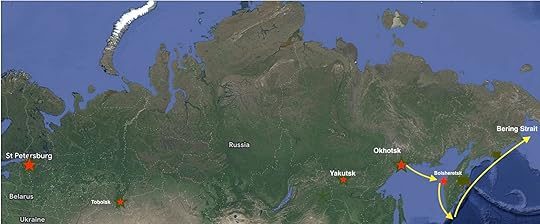
Ground Expedition: From St. Petersburg to Kamchatka
The Second Kamchatka Expedition(1733-1743)
Planning began immediately for a more extensive Second Kamchatka Campaign. If the first expedition was a light one, this was "expedition heavy," starting out from St. Petersburg with 1,000 members, half academics and half military. An additional force of 2,000 conscripted laborers would be added along the way. This expedition had a much broader agenda than the first expedition. Mapping and general exploration of the Russian east coast were central, but also important were investigation of the flora and fauna, an understanding of the culture and people of the Kamchatka area, of whom most were natives rather than Russians, and discovery of North America's western coast. It was also to find a suitable Pacific port to supplement Russia's only existing port on its northwestern coast at Archangelsk. Plans for Russia-Alaska trade required preparation for a full-time population to manage the trade. To support this, towns were to get better structures, schools, and hospitals, and improved roads.
The Second Kamchatka Expedition, called the "Great Northern Expedition," left St. Petersburg in 1733—it would return in 1743, a full decade later. This was Bown's "Greatest Expedition." It was also a complicated "octopus" with too many leaders, too few followers, and an even less cordial population to work with: under Empress Anna, Siberia had become a dumping ground for discontents and criminals. An advance party was sent to Okhotsk to prepare the ground for the main parties. This advance group was to build roads, houses, wharves, and infrastructure. But the advance man—an outcast named Grigori Skornyakov-Pisarev—prepared little and did less. The expedition arrived in an Okhotsk much as it was in 1727.
All of these people were going to an area where the largest city—Yakutsk—had only 4,000 residents, and the terminal city—Okhotsk—had only eight buildings and a population in the hundreds, most in the area surrounding the "town" in tent suburbs. To complicate matters further, though the commander was experienced—it was Captain Vitus Bering again—there were now two sub-commanders. Captains Martin Spangberg and Alexei Chirikov would command the two ships being built. Each was in conflict with the other and both were in conflict with Bering. And while the many scientists were led by a few respected ethnographers, botanists, zoologists and more, they were never at peace with each other.
Bown describes the Great Northern Expedition as,
Bering did not arrive in Okhotsk until 1737, four years after the lead party departed from St. Petersburg. Once the expedition arrived in Okhotsk, construction began on the town and port infrastructure, as well as two 90-foot sailing ships—the St. Peter, to be commanded by Bering with Spangberg having sailing command, and the St. Paul commanded by Chirikov. When the ships were completed, workers were ferried 700 miles across the Sea of Okhotsk to the tiny village of Bolsheretsk on Kamchatka's western shore. This would become the launching point for the First Kamchatka Expedition. Later, another port—Petropavlovsk—would be built on the east side of Kamchatka. It was from Petropavlovsk that the Second Naval Expedition departed.
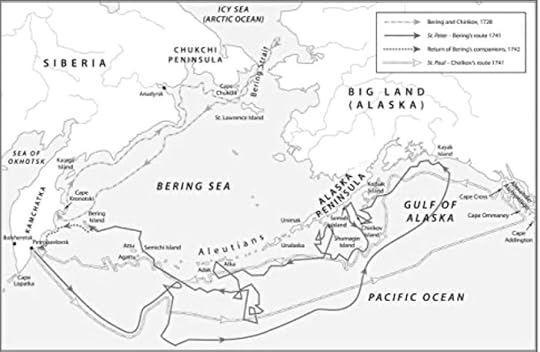
The Two Kamchatka Naval Expeditions
In June of 1741, the St. Peter and St. Paulwere completed and the two ships set out from Petropavlovsk on a due-east course to search for North America. On July 15, 1741, they found it and claimed it for Russia, initiating a trade in pelts and furs that continued for centuries. Unfortunately, on their return to Kamchatka the two ships became separated in a storm. Chirikov sailed around the area for days hoping to reconnect; at one point he saw the masts of St. Peter in the distance, but St. Paul could not catch up. During this period he sent a shore party to get water at one of the islands—the party never returned. A second shore party was sent to find the first party—it also disappeared.
In October of 1741, Chirikov broke off the search and set course for Petropavlovsk with a low—and briny—water supply. Meanwhile, the St. Peter had followed a wandering course in the continuing bad weather. The crew was in the early stages of scurvy—the mariner's menace that was fatal if not treated, but for which the cause and treatment were both unknown. She was on her way back to Petropavlovsk when a series of unusually violent and long-lasting storms drove her up onto Bering Island, an uninhabited 59-mile-long island in the Komandorski (Commander) Islands, an island group about 100 miles due east of Kamchatka and 500 miles northeast of Petropavlovsk; it was November 8, 1741. There the 77 castaways were plagued by bad water, scurvy, limited food, and hordes of small but very aggressive feral blue foxes.
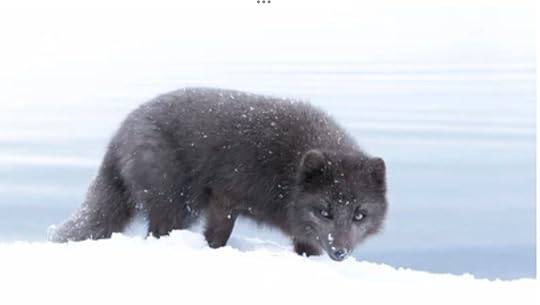
An Arctic Blue Fox
The winter of 1741-42 was brutal on Bering Island. The crew camped in ragged tents on a beach by the lagoon into which the corpse of St. Peter had washed. Scurvy deaths continued until the 31st death on December 8, 1741. The end of the epidemic was brought about by the naturalist on board, who decided that the cause was a low-vegetation diet. He scoured the island for plants to include in the diet, and the plants found had antiscorbutic value.
But the lack of a good food supply—rancid blubber, blue fox meat, and the meat of sea otters and sea cows (a Northern version of the manatee)—and the tenacity of the blue foxes, as well as the continuing onslaught of storms, made life difficult. In May, 1742 the remaining 46 crewmen voted to construct a new St. Peter from the hulk of the old. They retrieved sections of the lagoon-bound hulk and constructed a 36-foot ship. in June.
On August 13, 1742, the new St. Peter left Bering Island. The last reported sight on the island was hordes of blue foxes tearing up their just-vacated campsite. Two weeks later St. Peter arrived at Petropavlovsk with all hands. Only then did they learn that in June Chirikov had sailed the St. Paul out of Petropavlovsk to search for Bering. It had passed close by Bering Island, but not in the area of the shipwreck where the new St. Peter was under construction. Once again, they were like ships passing in the night.
So ended the Second Kamchatka Expedition. Its official conclusion was through a 1743 decree by now-Empress Elizabeth I. (One wonders why the life span of Empresses of Russia was so short?)
Denouement
Peter I's dream had been two-pronged. First, to open up Pacific trade with North America and Japan; second, to create a flood of scientific knowledge of the Pacific area that would enlighten and impress the world. The Expeditions were successful on the first effort, though at an extreme cost estimated at six percent of the Emperor's annual treasury revenues. Russia now had control of what would become Alaska, and it reaped a large reward as traders in fur and pelts despoiled the variety of animal species in the area, killing whole species for their body parts.
But on the second point, the Expeditions fell short. A Northeast Passage to Europe was not found, and the information gleaned by the many scientists didn't see the light of day until it was well past its use-by date. Instead, it was confined to secret archives so that whatever was valuable would be solely for Russia's benefit as determined by the government.
Was the Purchase of Alaska a Good Deal?
Over time, Russia's profits from the exploitation of animal life in Alaska and in the Pacific between Alaska and Kamchatka declined. In 1867, what is now Alaska was sold to the United States for what is often thought a measly sum—$7.2 million. How measly that really was is yet to be determined.
A detailed answer would require a determination of today's value of that original investment and of its rate of return over 155 years. This is well beyond our scope as it would require—at the least—measuring the total market value of Alaska today, then stripping out the value of past investments in public and private capital—infrastructures like roads, bridges, and public facilities plus private investments in housing and business structures and equipment—then comparing the result to the initial $7.2 million blown up by the inflation over 155 years.
But there is a quick and dirty way to a tentative answer. Over the period there was enormous extraction of natural resources from Alaska. The first wave after the fur trade was the mid-1890s Klondike Gold Rush; the second was the post-1970 development of the North Slope Oil Field. The revenues from the former were lost in private pockets, many of them Russian, but in 1976 the State of Alaska established the Alaska Permanent Fund (APF), into which its oil revenues from the leasing of extraction rights were deposited. Since then, these revenues have paid an annual dividend to Alaska residents and have served as a source of funds for public projects.
In mid-2022 the Fund was valued at approximately $80 billion. Adding back the cumulative $26 billion of dividends paid out to state residents over the years, the value generated by the APF is at least $106 billion. This $106 billion is, of course, only one of many components of the "value of Alaska," but it is easily identified and it sets a minimum value for the state of Alaska.
Had the original $7.2 million paid in 1867 been invested in an alternate fund, it would have had to earn an average 10% percent average annual return since 1867 to match the $106 billion value of the APF. Of this, 1.95% is the contribution of inflation, leaving 8.05% as the real rate of return. This compares favorably with long-term evidence on returns to common stocks and real property.
In short, on the basis of the North Slope oil field alone, the U.S received, at a minimum, a fair rate of return on its purchase of Alaska. When other sources of value are considered, it was a very good deal. And among the hidden benefits is that today we don't have Vladimir Putin at our back door.
Russia's Tsar Peter I was called "The Great" for two reasons. First, at 6' 8" he was extremely tall, especially for his time. But more importantly, he was devoted to bringing backward, boorish, and brutal Russia into the modern European community: upgrading its sciences, building new cities like St. Petersburg, supporting scientific research, building a modern Navy, forming alliances, and finding enemies. When he wasn't fighting the Ottomans or his internal opposition—especially the elite military cabal known as the Streltskys, but also the usual group of enemies that trail around behind power—Peter was advocating education for women, beardlessness, tidiness, and forbearance from rape and pillage, clearly not Russian values.
In 1697 Peter embarked on his "Grand Embassy," a tour of 250 members of his court to visit European courts and learn modern science, philosophy, diplomacy, and other arts. Insisting on anonymity while traveling, Peter remained incognito, a task we suspect failed because of his height. But for the tour he pretended to be simply one of the tourists working side-by-side with his courtiers.
In 1700 Peter initiated the Great Northern War with Sweden, a war for territory that would end twenty-one years later with much of the eastern Baltic, southeastern Finland, Estonia and other small Baltic states under the Russian umbrella. At the treaty, he adopted the honorific title Emperor of All Russia.
In 1703 Peter married a Lithuanian peasant, a domestic servant named Martha Skavronskaya, soon to be renamed Catherine I. (Catherine the Great was Catherine II, the wife of Peter III.) After the Great Northern War treaty n 1721, Peter had only a short time to live. In 1724 he became seriously ill and turned his attention to a project that had been long been on his mind, a project that he hoped would open up massive new trading areas, broaden Russia's territory, elevate Russia's knowledge of its far east, and increase Russia's prestige.
This project was an exploration of the Kamchatka Peninsula on Russia's far eastern coast to map the area and determine if it connected with North America. As we know now, Kamchatka comes no closer than about 2,000 miles to Attu, the outer of the Aleutian Islands, with the exception of the 70-mile gap called the Bering Strait. Close, but no cigar!
The First Kamchatka Expedition (1725-1731)
Just before his death in 1725, Peter named Catherine I "Empress of Russia." For the remainder of her short life—she died in 1727—she continued Peter's modernization, including preparation for the First Kamchatka Expedition. Command of the Expedition was given to Vitus Bering, a Dane who served in the Imperial Russian Navy and had risen to the rank of Captain First Class; at the end of the first expedition he would be promoted to Captain-Commander. Bering's special talent was in logistics, a necessary skill for an expedition into almost uncharted territory when knowledge of transportation routes and sources of supplies was essential.
The expedition with 36 members left Moscow in 1725 with the expectation of conscripting men and materials along the way. As a first expedition to the remote Siberian coast, it had a limited agenda: to build two ships in Siberia and to sail them along Siberia's Eastern coast while mapping the area, and to determine whether Russian territory connected with North America. The small group had to cut roads, navigate unknown rivers, and manage fierce winters. It took two years to reach the final staging area at Okhotsk on Siberia's eastern coast at the latitude of Alaska. The Natives in Siberia received their elite invaders peacefully but without the expected admiration, and Native hostility increased as the expedition proceeded to conscript men, horses, and supplies.
At Okhotsk the group settled in to build two ships for the naval portion of the expedition. Once the ships were finished they sailed around the tip of Kamchatka and set up a temporary base on the mouth of the Kamchatka River. From there they sailed north through what became known later as the Bering Strait. The discovery of the seventy-mile gap established that North America and Russia were not connected, but their proximity to North America was unnoticed because they sailed through the Strait in heavy fog, behind which Alaska was hidden.
In 1732 Bering returned to St. Petersburg trailed by Native and Russian complaints about the behavior of his people and the conscriptions forced on them. Anna—Peter the Great's niece—was now Russia's Tsarina. The expedition had suffered harsh conditions during the winters, made worse by food shortages and the loss of fifteen members.
Ground Expedition: From St. Petersburg to Kamchatka
The Second Kamchatka Expedition(1733-1743)
Planning began immediately for a more extensive Second Kamchatka Campaign. If the first expedition was a light one, this was "expedition heavy," starting out from St. Petersburg with 1,000 members, half academics and half military. An additional force of 2,000 conscripted laborers would be added along the way. This expedition had a much broader agenda than the first expedition. Mapping and general exploration of the Russian east coast were central, but also important were investigation of the flora and fauna, an understanding of the culture and people of the Kamchatka area, of whom most were natives rather than Russians, and discovery of North America's western coast. It was also to find a suitable Pacific port to supplement Russia's only existing port on its northwestern coast at Archangelsk. Plans for Russia-Alaska trade required preparation for a full-time population to manage the trade. To support this, towns were to get better structures, schools, and hospitals, and improved roads.
The Second Kamchatka Expedition, called the "Great Northern Expedition," left St. Petersburg in 1733—it would return in 1743, a full decade later. This was Bown's "Greatest Expedition." It was also a complicated "octopus" with too many leaders, too few followers, and an even less cordial population to work with: under Empress Anna, Siberia had become a dumping ground for discontents and criminals. An advance party was sent to Okhotsk to prepare the ground for the main parties. This advance group was to build roads, houses, wharves, and infrastructure. But the advance man—an outcast named Grigori Skornyakov-Pisarev—prepared little and did less. The expedition arrived in an Okhotsk much as it was in 1727.
All of these people were going to an area where the largest city—Yakutsk—had only 4,000 residents, and the terminal city—Okhotsk—had only eight buildings and a population in the hundreds, most in the area surrounding the "town" in tent suburbs. To complicate matters further, though the commander was experienced—it was Captain Vitus Bering again—there were now two sub-commanders. Captains Martin Spangberg and Alexei Chirikov would command the two ships being built. Each was in conflict with the other and both were in conflict with Bering. And while the many scientists were led by a few respected ethnographers, botanists, zoologists and more, they were never at peace with each other.
Bown describes the Great Northern Expedition as,
. . . a huge scientific endeavor, but it was science in the service of the State, imperial science rather than disinterested scientific Inquiry. The first and slower-moving units left St. Petersburg in February of 1733 and arrived in the Ural metropolis of Tobolsk (population 13,000) in early 1734 after almost a year on the road; the remainder arrived six months later. The next stop was the city of Yakutsk, where the scientists commandeered the best houses, the soldiers commandeered horses, and the people stifled their anger.
Bering did not arrive in Okhotsk until 1737, four years after the lead party departed from St. Petersburg. Once the expedition arrived in Okhotsk, construction began on the town and port infrastructure, as well as two 90-foot sailing ships—the St. Peter, to be commanded by Bering with Spangberg having sailing command, and the St. Paul commanded by Chirikov. When the ships were completed, workers were ferried 700 miles across the Sea of Okhotsk to the tiny village of Bolsheretsk on Kamchatka's western shore. This would become the launching point for the First Kamchatka Expedition. Later, another port—Petropavlovsk—would be built on the east side of Kamchatka. It was from Petropavlovsk that the Second Naval Expedition departed.
The Two Kamchatka Naval Expeditions
In June of 1741, the St. Peter and St. Paulwere completed and the two ships set out from Petropavlovsk on a due-east course to search for North America. On July 15, 1741, they found it and claimed it for Russia, initiating a trade in pelts and furs that continued for centuries. Unfortunately, on their return to Kamchatka the two ships became separated in a storm. Chirikov sailed around the area for days hoping to reconnect; at one point he saw the masts of St. Peter in the distance, but St. Paul could not catch up. During this period he sent a shore party to get water at one of the islands—the party never returned. A second shore party was sent to find the first party—it also disappeared.
In October of 1741, Chirikov broke off the search and set course for Petropavlovsk with a low—and briny—water supply. Meanwhile, the St. Peter had followed a wandering course in the continuing bad weather. The crew was in the early stages of scurvy—the mariner's menace that was fatal if not treated, but for which the cause and treatment were both unknown. She was on her way back to Petropavlovsk when a series of unusually violent and long-lasting storms drove her up onto Bering Island, an uninhabited 59-mile-long island in the Komandorski (Commander) Islands, an island group about 100 miles due east of Kamchatka and 500 miles northeast of Petropavlovsk; it was November 8, 1741. There the 77 castaways were plagued by bad water, scurvy, limited food, and hordes of small but very aggressive feral blue foxes.
An Arctic Blue Fox
The winter of 1741-42 was brutal on Bering Island. The crew camped in ragged tents on a beach by the lagoon into which the corpse of St. Peter had washed. Scurvy deaths continued until the 31st death on December 8, 1741. The end of the epidemic was brought about by the naturalist on board, who decided that the cause was a low-vegetation diet. He scoured the island for plants to include in the diet, and the plants found had antiscorbutic value.
But the lack of a good food supply—rancid blubber, blue fox meat, and the meat of sea otters and sea cows (a Northern version of the manatee)—and the tenacity of the blue foxes, as well as the continuing onslaught of storms, made life difficult. In May, 1742 the remaining 46 crewmen voted to construct a new St. Peter from the hulk of the old. They retrieved sections of the lagoon-bound hulk and constructed a 36-foot ship. in June.
On August 13, 1742, the new St. Peter left Bering Island. The last reported sight on the island was hordes of blue foxes tearing up their just-vacated campsite. Two weeks later St. Peter arrived at Petropavlovsk with all hands. Only then did they learn that in June Chirikov had sailed the St. Paul out of Petropavlovsk to search for Bering. It had passed close by Bering Island, but not in the area of the shipwreck where the new St. Peter was under construction. Once again, they were like ships passing in the night.
So ended the Second Kamchatka Expedition. Its official conclusion was through a 1743 decree by now-Empress Elizabeth I. (One wonders why the life span of Empresses of Russia was so short?)
Denouement
Peter I's dream had been two-pronged. First, to open up Pacific trade with North America and Japan; second, to create a flood of scientific knowledge of the Pacific area that would enlighten and impress the world. The Expeditions were successful on the first effort, though at an extreme cost estimated at six percent of the Emperor's annual treasury revenues. Russia now had control of what would become Alaska, and it reaped a large reward as traders in fur and pelts despoiled the variety of animal species in the area, killing whole species for their body parts.
But on the second point, the Expeditions fell short. A Northeast Passage to Europe was not found, and the information gleaned by the many scientists didn't see the light of day until it was well past its use-by date. Instead, it was confined to secret archives so that whatever was valuable would be solely for Russia's benefit as determined by the government.
Was the Purchase of Alaska a Good Deal?
Over time, Russia's profits from the exploitation of animal life in Alaska and in the Pacific between Alaska and Kamchatka declined. In 1867, what is now Alaska was sold to the United States for what is often thought a measly sum—$7.2 million. How measly that really was is yet to be determined.
A detailed answer would require a determination of today's value of that original investment and of its rate of return over 155 years. This is well beyond our scope as it would require—at the least—measuring the total market value of Alaska today, then stripping out the value of past investments in public and private capital—infrastructures like roads, bridges, and public facilities plus private investments in housing and business structures and equipment—then comparing the result to the initial $7.2 million blown up by the inflation over 155 years.
But there is a quick and dirty way to a tentative answer. Over the period there was enormous extraction of natural resources from Alaska. The first wave after the fur trade was the mid-1890s Klondike Gold Rush; the second was the post-1970 development of the North Slope Oil Field. The revenues from the former were lost in private pockets, many of them Russian, but in 1976 the State of Alaska established the Alaska Permanent Fund (APF), into which its oil revenues from the leasing of extraction rights were deposited. Since then, these revenues have paid an annual dividend to Alaska residents and have served as a source of funds for public projects.
In mid-2022 the Fund was valued at approximately $80 billion. Adding back the cumulative $26 billion of dividends paid out to state residents over the years, the value generated by the APF is at least $106 billion. This $106 billion is, of course, only one of many components of the "value of Alaska," but it is easily identified and it sets a minimum value for the state of Alaska.
Had the original $7.2 million paid in 1867 been invested in an alternate fund, it would have had to earn an average 10% percent average annual return since 1867 to match the $106 billion value of the APF. Of this, 1.95% is the contribution of inflation, leaving 8.05% as the real rate of return. This compares favorably with long-term evidence on returns to common stocks and real property.
In short, on the basis of the North Slope oil field alone, the U.S received, at a minimum, a fair rate of return on its purchase of Alaska. When other sources of value are considered, it was a very good deal. And among the hidden benefits is that today we don't have Vladimir Putin at our back door.

November 3, 2025
Cronaca di quando le cose non avevano ancora un nome nell'oriente russo-americano ovvero cronaca che diventa racconto avvincente.
Dopo la lettura si comprende il motivo per cui tante isole, città e stretti marittimi portano nomi di persona.
Per certi versi il brillante Vitus Bering si trovò ad essere _anziché un esploratore puro_ una sorta di "zar in seconda" in virtù della impossibilità pratica di governare da San Pietroburgo un Paese di dimensioni simili, così oberato da obblighi e prescrizioni tanto da domandarsi se davvero l'impresa fosse una Grande Occasione o piuttosto un compito così gravoso da spezzare la volontà e gli entusiasmi.
Impresa incredibile mentre in Europa non era ancora avvenuta la Rivoluzione francese.
Dopo la lettura si comprende il motivo per cui tante isole, città e stretti marittimi portano nomi di persona.
Per certi versi il brillante Vitus Bering si trovò ad essere _anziché un esploratore puro_ una sorta di "zar in seconda" in virtù della impossibilità pratica di governare da San Pietroburgo un Paese di dimensioni simili, così oberato da obblighi e prescrizioni tanto da domandarsi se davvero l'impresa fosse una Grande Occasione o piuttosto un compito così gravoso da spezzare la volontà e gli entusiasmi.
Impresa incredibile mentre in Europa non era ancora avvenuta la Rivoluzione francese.

March 9, 2026
A fantastic book on one the largest, and least talke about expeditions of "exploration" (see: utter destruction) of all time. The Russian politics were fascinating as always. I've never read much about Steller who should sit in the ranks with von Humboldt for his contributions, sometimes being the only naturalist to document species before they were hunted to extinction, to which he greatly protested. I am inured to the suffering of sailors with scurvy after so many expxloration books, but reading about the brutal hunt of the seals and otters, and the war on the foxes, was difficult to get through. Still, one of the tbr pile if you can't seem to break away from expedition and shipwreck reading.

March 23, 2023
This was an exciting story of scientific exploration in 18th century Russia. The Great Northern Expedition was set in motion by Peter the Great to modernize and enhance the prestige of Russia in relations to Europe. The Danish Vitus Bering, employed as a Russian Naval Officer was made Commander of the expedition. His task was to travel east across Siberia to the Pacific, then to build ships to cross the Pacific to western America (Alaska). This required hundreds of people to transport supplies, scientific and ship building equipment. This endeavor, ten years in the making, became one of the greatest feats of scientific exploration, the history of which shortly afterwards became lost in the Russian archives for many years.
I have always loved stories of exploration such as by, Captain Cook, Lewis and Clark, Amundsen, Shackleton and others. If so with you, then this is your book.
I will say no more but to quote the last paragraph of the book. "Although it remains the greatest, most extensive scientific expedition in history, spanning three continents over nearly ten years, the story of the Great Northern Expedition, and particularly its epic Pacific voyage, is not merely a tale of imperial hubris. It is a story of individuals faced with the power of nature, of the struggle and triumph over disaster, a testament of human ingenuity in the face of adversity, the failure and resurgence of leadership, fortitude in the face of horrible suffering, and the powerful urge to persevere and return home."
I have always loved stories of exploration such as by, Captain Cook, Lewis and Clark, Amundsen, Shackleton and others. If so with you, then this is your book.
I will say no more but to quote the last paragraph of the book. "Although it remains the greatest, most extensive scientific expedition in history, spanning three continents over nearly ten years, the story of the Great Northern Expedition, and particularly its epic Pacific voyage, is not merely a tale of imperial hubris. It is a story of individuals faced with the power of nature, of the struggle and triumph over disaster, a testament of human ingenuity in the face of adversity, the failure and resurgence of leadership, fortitude in the face of horrible suffering, and the powerful urge to persevere and return home."

January 21, 2023
3.75 ale czytanie tej książki w moim cieplutkim łóżeczku powodowalo u mnie ogromne poczucie komfortu XD

April 27, 2024
9/10, 4,5*
"Sebbene rimanga tutt’oggi la più grandiosa e imponente spedizione scientifica della storia, che ha attraversato tre continenti per quasi dieci anni, le vicende della Grande spedizione del Nord, e in particolare del suo epico viaggio nel Pacifico, non raccontano solamente l’arroganza di un impero. È una storia di individui che si confrontano con la potenza della natura, di lotta e trionfo contro il disastro, una testimonianza dell’ingegno umano di fronte alle avversità, del fallimento e della rinascita della leadership, della forza d’animo di fronte a sofferenze terribili e del potente impulso a perseverare pur di riuscire a fare ritorno a casa."
Partita come spedizione scientifica aprì la strada allo sfruttamento commerciale rapinoso e violento: i nativi schiavizzati gli animali da pelliccia uccisi e ridotti quasi all'estinzione (lontre marine e volpi azzurre), la ritina di Steller si estinse davvero.
La prima parte del libro interessante, la seconda interessante e avvincente.
Sconsiglio la lettura alle persone dall'animo sensibile: alcune descrizioni di come venivano cacciati e uccisi gli animali ho fatto veramente fatica a leggerle.
"Sebbene rimanga tutt’oggi la più grandiosa e imponente spedizione scientifica della storia, che ha attraversato tre continenti per quasi dieci anni, le vicende della Grande spedizione del Nord, e in particolare del suo epico viaggio nel Pacifico, non raccontano solamente l’arroganza di un impero. È una storia di individui che si confrontano con la potenza della natura, di lotta e trionfo contro il disastro, una testimonianza dell’ingegno umano di fronte alle avversità, del fallimento e della rinascita della leadership, della forza d’animo di fronte a sofferenze terribili e del potente impulso a perseverare pur di riuscire a fare ritorno a casa."
Partita come spedizione scientifica aprì la strada allo sfruttamento commerciale rapinoso e violento: i nativi schiavizzati gli animali da pelliccia uccisi e ridotti quasi all'estinzione (lontre marine e volpi azzurre), la ritina di Steller si estinse davvero.
La prima parte del libro interessante, la seconda interessante e avvincente.
Sconsiglio la lettura alle persone dall'animo sensibile: alcune descrizioni di come venivano cacciati e uccisi gli animali ho fatto veramente fatica a leggerle.

November 28, 2022
This book is more like watching a documentary rather than a feature film. Contains lots of interesting historical information.

July 1, 2018
This is a well written, easily readable book about the 1st and 2nd Kamchatka Expeditions. It is a tale as terrible as American histories of wagon trains crossing the Rockies. The reader gets a balanced view of historical figures such a Bering and Stellar and lesser known figures like Chirikov and Khitov. The picture painted of the near marooning of the expedition on Bering Island was stark.
I highly recommend this very readable book to anyone interested in world exploration, or the history of Russia or Alaska.
I highly recommend this very readable book to anyone interested in world exploration, or the history of Russia or Alaska.

January 6, 2021
Strasznie mnie przygnębiła ta jesień. Z tego powodu tempo czytania spadło niemal do zera. Ale to tylko otoczka. Sama książka jest ... dość ciekawa. Zawsze wyobrażałem sobie w swojej ignorancji, że Bering był jakimś Amerykaninem albo Brytyjczykiem. A tu pierwsza niespodzianka. Był Duńczykiem. Kolejne dotyczą genezy, przebiegu i konsekwencji Dwóch Wypraw Kamczackich, jednak je pozostawię osobom, które zdecydują się przeczytać książkę.
Świadomość ogromu wyzwań jaka stanęła przed odkrywcami sprzed kilkuset lat uzmysławia nam jak bardzo cywilizacja spowija nas w swoistą bańkę, której w ramach swojego codziennego życia nie sposób naruszyć. Jeżeli jednak trzeba by było ją opuścić, weryfikacja naszych umiejętności mogłaby być okrutna. I ta warstwa książki trafiła do mnie i mojej wyobraźni.
Jest też druga warstwa - wskazująca na wpływ obydwu Wypraw Kamczackich na wszystko co napotkały na swojej drodze. I ta część niestety rozczarowała mnie swoją obojętnością, przechodzeniem do porządku dziennego nad opisywanymi tragicznymi zdarzeniami i ich skutkami.
Zarzut ten stawiam nie dlatego, że oczekiwałem od książki oceny moralnej opisywanej historii, ale dlatego że uderzyło mnie zderzenie ogromu sympatii Autora do głównych bohaterów powieści z absolutnym wycofaniem i suchym opisem tych wszystkich faktów które nie przystają do laurki.
Dla fanów gatunku.
Świadomość ogromu wyzwań jaka stanęła przed odkrywcami sprzed kilkuset lat uzmysławia nam jak bardzo cywilizacja spowija nas w swoistą bańkę, której w ramach swojego codziennego życia nie sposób naruszyć. Jeżeli jednak trzeba by było ją opuścić, weryfikacja naszych umiejętności mogłaby być okrutna. I ta warstwa książki trafiła do mnie i mojej wyobraźni.
Jest też druga warstwa - wskazująca na wpływ obydwu Wypraw Kamczackich na wszystko co napotkały na swojej drodze. I ta część niestety rozczarowała mnie swoją obojętnością, przechodzeniem do porządku dziennego nad opisywanymi tragicznymi zdarzeniami i ich skutkami.
Zarzut ten stawiam nie dlatego, że oczekiwałem od książki oceny moralnej opisywanej historii, ale dlatego że uderzyło mnie zderzenie ogromu sympatii Autora do głównych bohaterów powieści z absolutnym wycofaniem i suchym opisem tych wszystkich faktów które nie przystają do laurki.
Dla fanów gatunku.

December 25, 2019
This was one of the best non-fiction books I read in 2019 and has gone onto my favorites shelf.
I already knew a bit about the Bering expedition to the Alaskan coast after having read Naturalists at Sea: Scientific Travellers from Dampier to Darwin by Glyn Williams. Naturalists at Sea, however, did not give as much of the detailed back story of the expedition as it was just a chapter among many focused mainly on the scientists/naturalists attached to various expeditions since the late 17th century.
I read these books because I really wish I could have been there. I would love to have been able to see these pristine wildernesses and uninhabited or inhabited islands for the first time, when they were untouched and all the species native to that area still thrived. At the same time, it disturbs me greatly that so much is gone now. The toll on species and habitat is vast since the age of exploration to now and it isn't stopping. I only wish we could have done things differently.
That said, the Bering expedition, which is the subject of this book, was the precursor expedition to opening up the Russian Far East and the exploration and exploitation of the Alaskan coast and the interior of Alaska. There is a lot of detailed back story to the expedition from the inception of the idea with Peter the Great to it's eventual demise under Empress Elizabeth. It truly was a remarkable feat and Stephen R. Brown has done a huge amount of research to make this book interesting and accurate.
Along with the details of how the expedition was organized and what they had to go through in order to make it happen, I found the story of and the fraught relationships of the various expedition commanders and Vitus Bering one of the most interesting aspects of the book. I was particularly dismayed at the story of Georg Stellar, the naturalist, who did not get along with the commander of the ship he was on but also with just about every member of the crew.
Sadly I have to return the book to my friend who loaned it to me to read, but I would love to own a copy to reread at some future date. A really interesting and well written book.
I already knew a bit about the Bering expedition to the Alaskan coast after having read Naturalists at Sea: Scientific Travellers from Dampier to Darwin by Glyn Williams. Naturalists at Sea, however, did not give as much of the detailed back story of the expedition as it was just a chapter among many focused mainly on the scientists/naturalists attached to various expeditions since the late 17th century.
I read these books because I really wish I could have been there. I would love to have been able to see these pristine wildernesses and uninhabited or inhabited islands for the first time, when they were untouched and all the species native to that area still thrived. At the same time, it disturbs me greatly that so much is gone now. The toll on species and habitat is vast since the age of exploration to now and it isn't stopping. I only wish we could have done things differently.
That said, the Bering expedition, which is the subject of this book, was the precursor expedition to opening up the Russian Far East and the exploration and exploitation of the Alaskan coast and the interior of Alaska. There is a lot of detailed back story to the expedition from the inception of the idea with Peter the Great to it's eventual demise under Empress Elizabeth. It truly was a remarkable feat and Stephen R. Brown has done a huge amount of research to make this book interesting and accurate.
Along with the details of how the expedition was organized and what they had to go through in order to make it happen, I found the story of and the fraught relationships of the various expedition commanders and Vitus Bering one of the most interesting aspects of the book. I was particularly dismayed at the story of Georg Stellar, the naturalist, who did not get along with the commander of the ship he was on but also with just about every member of the crew.
Sadly I have to return the book to my friend who loaned it to me to read, but I would love to own a copy to reread at some future date. A really interesting and well written book.


October 27, 2017
Siberia is still a significant mass of land with its severe cold winters & a low density of inhabitants, From its history we see visions of the harsh life of those who were sent there to prison, work camps or into exile and ultimately an untimely agonizing death. In today's world of satellites and drones, it has become harder to imagine what explorers faced without the fancy equipment we so readily rely upon today. In Stephen R. Bown's 2017 novel "Island of Blue Foxes" published by Da Capo Press he leads us on a most excellent look into the trails and tribulations that befall all those seeking to penetrate the unknown against unforeseeable obstacles that will stand in the way of the most tenacious explorers of the past. With little knowledge of what to expect on their journey, many influential men took part to blaze a trail over Siberia to build boats to cross the Bering Sea to the new lands of the America's. This historical fiction does justice to the men and women who risked their lives by bringing their tale into the light for all to enjoy. I requested to read a Kindle version of this book from NetGalley because I am a fan of historical fictions. The author did his job so well that I was transported back in time and felt my emotions swayed from page to page as more calamity or triumph befell these travelers. It was a non-stop roller coaster ride that provided unabating beauty along with unprecedented danger at every turn.

June 30, 2022
by this account Georg Steller may not have been a pleasant man but he left the most indelible memories of the most impressive animals of the northern Pacific. What a shame that humankind is so vile. Steller's sea cow should still be with us. Page 249-253, a description of the now extinct northern manatee, the giant Steller's sea cow makes the entire book worth reading. "Steller was the only naturalist ever to see a Steller's sea cow and study it." Thirty foot in length and reaching four tons. From https://www.geologyin.com/2017/11/eno... "Steller's sea cows (Hydrodamalis gigas) were one of the last of the Pleistocene megafauna, whose populations were already declining when they were discovered in 1741. As their last refuge, sea cows lived around the then-uninhabited Commander Islands in the Bering Sea.

March 21, 2021
An excellent rendering of the long and massive Russian scientific expedition led by Vitus Bering across Siberia to the Pacific and Alaska. The author manages to immerse the reader in the expedition and convey all of the hardship, wonder, tension, fear, misery and ultimate gratitude experienced by the crews of the St. Peter and St. Paul - in less 280 pages. Like the expedition itself, this is an incredible feat and a very worthwhile read.

October 7, 2025
I certainly learned alot about a part of the world and era of exploration that I previously was unfamiliar with. I appreciated the amount of time spent recounting the politics of 17th and 18th century Russia as it related to the changing priorities of the expedition. The subject matter was intriguing and overall I enjoyed the read.
My single notable issue with this book was that some points felt more like an opinion piece than a factual account compiled from primary memoirs and writings. Throughout the book, and particularly where it related to the Steller, the author interjected his own opinions where they were certainly not necessary nor welcomed. The primary source quotes and the arc of the journey paint a plenty clear picture of Steller’s initial reputation and his gradual development towards a respected and essential member of the crew. Yet the author passed blatant judgement on Steller’s character throughout, clearly showing a bias. Regularly, I wondered how much of the account was factual, and how much of the details were hand picked to back the authors perspective.
In the end, I do believe the details were overall factual and this book an accurate account of the expedition’s highs and lows. But i hesitate to read further historical books by Bown, as I was seriously not a fan of the judgement and opinions throughout. I look for neither of those when I pick up a “non-fiction” book like this one.
On a final positive note, and to justify four stars instead of three, the specific details of geography and routes truly shined through Bown’s writing. The maps and chronology included in the book, the specific descriptions of place names and directions, and other geographic details added alot to the read for me. I felt I could follow along with the journey.
My single notable issue with this book was that some points felt more like an opinion piece than a factual account compiled from primary memoirs and writings. Throughout the book, and particularly where it related to the Steller, the author interjected his own opinions where they were certainly not necessary nor welcomed. The primary source quotes and the arc of the journey paint a plenty clear picture of Steller’s initial reputation and his gradual development towards a respected and essential member of the crew. Yet the author passed blatant judgement on Steller’s character throughout, clearly showing a bias. Regularly, I wondered how much of the account was factual, and how much of the details were hand picked to back the authors perspective.
In the end, I do believe the details were overall factual and this book an accurate account of the expedition’s highs and lows. But i hesitate to read further historical books by Bown, as I was seriously not a fan of the judgement and opinions throughout. I look for neither of those when I pick up a “non-fiction” book like this one.
On a final positive note, and to justify four stars instead of three, the specific details of geography and routes truly shined through Bown’s writing. The maps and chronology included in the book, the specific descriptions of place names and directions, and other geographic details added alot to the read for me. I felt I could follow along with the journey.

September 25, 2022
The blue foxes of the title are the arctic foxes that make the shipwrecked sailors’ lives a misery, stranded as they are on Bering Island in 1741. This book deserves five stars for the sheer amazing nature of the story, however it loses a star for the way in which the author tells it. He quite often gives away the way events will unfold, and so all narrative tension is lost, which I suppose doesn’t matter if you’re a reader who knows how things will turn out, but I didn’t know that one of the men would die, and was annoyed to find an illustration showing him dead before the story covered that part of their adventure. The author also tells you that other key characters survive, when perhaps as a reader, I would rather have discovered that for myself than be told early on.
The brutality showed by the sailors towards the wildlife they encountered on their expedition to cross Siberia from St Petersburg to North America’s coast was appalling. The blue foxes were mercilessly tortured, and the sea otters were slaughtered gratuitously. The killing of the sea cows made for an upsetting chapter’s reading, too. Not for sensitive readers!
Ghastly and tragic, yes. An unedifying account of human behaviour and lack of respect towards the natural world, yes. Could it have been better written, yes. But, on the whole, an unmissable story of mankind’s determination to conquer new territories.
The brutality showed by the sailors towards the wildlife they encountered on their expedition to cross Siberia from St Petersburg to North America’s coast was appalling. The blue foxes were mercilessly tortured, and the sea otters were slaughtered gratuitously. The killing of the sea cows made for an upsetting chapter’s reading, too. Not for sensitive readers!
Ghastly and tragic, yes. An unedifying account of human behaviour and lack of respect towards the natural world, yes. Could it have been better written, yes. But, on the whole, an unmissable story of mankind’s determination to conquer new territories.
Displaying 1 - 30 of 184 reviews