

What do you think?

The Blessed #1
Blessed (The Blessed 1): Sangre preciosa
De Tonya Hurley, autora de la exitosa saga Ghostgirl.
Tres chicas perdidas, cada una en busca de algo distinto. Pero lo que acaban encontrando supera los límites de la razón.
Agnes, Cecilia y Lucy no han tenido una vida ejemplar..., más bien todo lo contrario. Brooklyn es testigo de sus excesos. Tres historias de corazones rotos y de sueños hechos añicos, tres chicas con un mismo fuego metido en sus cabezas, una misma inquietud que las persigue desde niñas: la idea de que hay algo muy grande reservado para ellas.
Y, entonces, llega Sebastián. Misterioso, irresistible, seductor. Parece ofrecerles todo aquello que han estado esperando, aunque para conseguirlo deban embarcarse en una cruel batalla a muerte en la que no se juegan sólo el amor, sino también el destino de sus almas.
Tres chicas perdidas, cada una en busca de algo distinto. Pero lo que acaban encontrando supera los límites de la razón.
Agnes, Cecilia y Lucy no han tenido una vida ejemplar..., más bien todo lo contrario. Brooklyn es testigo de sus excesos. Tres historias de corazones rotos y de sueños hechos añicos, tres chicas con un mismo fuego metido en sus cabezas, una misma inquietud que las persigue desde niñas: la idea de que hay algo muy grande reservado para ellas.
Y, entonces, llega Sebastián. Misterioso, irresistible, seductor. Parece ofrecerles todo aquello que han estado esperando, aunque para conseguirlo deban embarcarse en una cruel batalla a muerte en la que no se juegan sólo el amor, sino también el destino de sus almas.
398 pages, Kindle Edition
First published August 2, 2012
About the author
Tonya Hurley
24 books1,136 followersTonya Hurley is a New York Times and international bestselling author of the ghostgirl series (Little, Brown) and The Blessed trilogy (Simon & Schuster). Her books are published in nearly 30 countries and in more than 20 languages. Ms. Hurley has a worked in virtually every aspect of teen entertainment: creating, writing, and producing two hit TV series; writing and directing several acclaimed independent films, music videos and videogames. She is a contributor to the Huffington Post, an active member of the Writer's Guild of America, a member of the Horror Writers Association Her first novel, ghostgirl was an instant bestseller and received starred reviews from the literary publications Publishers Weekly, Kirkus, VOYA and School Library Journal. The ghostgirl audiobooks are narrated by Parker Posey with original music by Vince Clarke. PRECIOUS BLOOD, the first book in her new, gritty young adult THE BLESSED Trilogy was released September 25, 2012. PASSIONARIES, the second book, was released January 7, 2014. The Blessed audiobook is read by Moonrise Kingdom star Kara Hayward.
Praise for "ghostgirl":
Instant New York Times bestseller.
Instant International bestseller.
"Tim Burton and Edgar Allan Poe devotees will die for this fantastic, phantasmal read."
– School Library Journal (STARRED review)
"[Hurley] beats out witty teen-speak like a punk-band drummer, keeping the narrative fast-paced and fun yet thought-provokingly heartwarming. Goofy, ghastly, intelligent, electrifying."
– Kirkus Reviews (STARRED review)
"Readers with a taste for black humor and satire will feast on Hurley’s crisp, wise dialogue. Anticipate a well deserved cult following."
– VOYA (STARRED review)
"Glittering comedy, a prime exemplar of what might be called demento mori, a growing subgenre of satire about teens who will not or cannot die."
– Publishers Weekly (STARRED review)
"Harry Potter's epic battles against dark forces of evil are nothing compared to Charlotte Usher's struggles with an even more fearsome foe -- high school."
– Herald-Standard
"Offers the answer to the age old question: Who would come to my funeral? And gives fantasy fulfillment for anyone who wanted to be someone else for a day."
– San Francisco Chronicle
"Written with deadpan wit… this is a ‘Wonderful Life’-like tale."
– New York Post
"A sincere (and humorous) exploration of how we all feel invisible at one time or another… a perfect read."
– CosmoGirl
Indie Next List pick
New York Public Library Stuff For The Teenage pick
Pennsylvania Library School Assocation Award Outstanding Author for 2012
Praise for "ghostgirl":
Instant New York Times bestseller.
Instant International bestseller.
"Tim Burton and Edgar Allan Poe devotees will die for this fantastic, phantasmal read."
– School Library Journal (STARRED review)
"[Hurley] beats out witty teen-speak like a punk-band drummer, keeping the narrative fast-paced and fun yet thought-provokingly heartwarming. Goofy, ghastly, intelligent, electrifying."
– Kirkus Reviews (STARRED review)
"Readers with a taste for black humor and satire will feast on Hurley’s crisp, wise dialogue. Anticipate a well deserved cult following."
– VOYA (STARRED review)
"Glittering comedy, a prime exemplar of what might be called demento mori, a growing subgenre of satire about teens who will not or cannot die."
– Publishers Weekly (STARRED review)
"Harry Potter's epic battles against dark forces of evil are nothing compared to Charlotte Usher's struggles with an even more fearsome foe -- high school."
– Herald-Standard
"Offers the answer to the age old question: Who would come to my funeral? And gives fantasy fulfillment for anyone who wanted to be someone else for a day."
– San Francisco Chronicle
"Written with deadpan wit… this is a ‘Wonderful Life’-like tale."
– New York Post
"A sincere (and humorous) exploration of how we all feel invisible at one time or another… a perfect read."
– CosmoGirl
Indie Next List pick
New York Public Library Stuff For The Teenage pick
Pennsylvania Library School Assocation Award Outstanding Author for 2012
Ratings & Reviews
Friends & Following
Create a free account to discover what your friends think of this book!
Community Reviews
Displaying 1 - 30 of 502 reviews

November 3, 2012
I take back every single time in the past that I've said, "what did I just read?" All of those previous times feel somehow inappropriate now, since I've just finished the mother of WTF?!? books.
Seriously...WHAT DID I JUST READ? I'm not sure if I've stumbled upon pure brilliance or sheer insanity.
First off, the book summary and cover were the first things to catch my eye and sucker me into wanting to read The Blessed. The stepback cover was even more awesome. I had to screencap it :
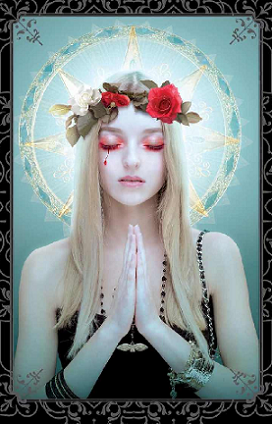
Part of me thinks I should rate this book higher simply because it got me to sit on edge while I tried to figure out how everything was connected. For that, I was completely into the story. There's something about the characters which really squicked me out though. It was as if cewpie dolls came to life and met up with a sexier Jim Jones. Think The Craft meets Cruel Intentions meets Paris Hilton meets some sort of religious cult obsessed with symbolism and mysticism.
I was annoyed
I was disturbed
I was intrigued
I was slightly aroused
I was ready to toss my cookies
I was so frustrated at the end
I have to read the next book
The rotating PoV of the three girls threw me off at first. The only girl I even liked was Cecilia because she seemed the most normal. Lucy was the paparazzi golden girl and Agnes was a seemingly downtrodden girl who didn't have much of a spine. But Sebastian, the guy who brought them all together...he was the most frustrating of them all.
Sebastian mini-rant/mini-spoiler : Teasing = evil.
Someone else needs to read this book because I want to inflict it on another person. I want someone else to scream WTF?!? with. I want someone who will go on this bizarre journey with me as I continue the series. Yes, I am cruel like that.
"You aren't just being followed. You are being hunted."
Seriously...WHAT DID I JUST READ? I'm not sure if I've stumbled upon pure brilliance or sheer insanity.
First off, the book summary and cover were the first things to catch my eye and sucker me into wanting to read The Blessed. The stepback cover was even more awesome. I had to screencap it :
Part of me thinks I should rate this book higher simply because it got me to sit on edge while I tried to figure out how everything was connected. For that, I was completely into the story. There's something about the characters which really squicked me out though. It was as if cewpie dolls came to life and met up with a sexier Jim Jones. Think The Craft meets Cruel Intentions meets Paris Hilton meets some sort of religious cult obsessed with symbolism and mysticism.
I was annoyed
I was disturbed
I was intrigued
I was slightly aroused
I was ready to toss my cookies
I was so frustrated at the end
I have to read the next book
The rotating PoV of the three girls threw me off at first. The only girl I even liked was Cecilia because she seemed the most normal. Lucy was the paparazzi golden girl and Agnes was a seemingly downtrodden girl who didn't have much of a spine. But Sebastian, the guy who brought them all together...he was the most frustrating of them all.
Sebastian mini-rant/mini-spoiler : Teasing = evil.
Someone else needs to read this book because I want to inflict it on another person. I want someone else to scream WTF?!? with. I want someone who will go on this bizarre journey with me as I continue the series. Yes, I am cruel like that.
"You are (this)," Sebastian said ominously. "There is no army of angels coming to save you."
"Three girls and a guy from Brooklyn."
"Why not," he said simply.
His words hung in the air like a punishment. A death sentence.

Did Not Finish
July 3, 2012DNF After 50 pages, I still don't have a clue who anyone is or what is going on. But the real problem is, I don't really care, either.

April 30, 2019
Este libro es uno de los más extraños que he leído en mi vida.
Necesitas tiempo para digerir una historia como esta.
No sé ni por donde empezar.
La idea es algo rara desde el principio, y aunque el diseño interior es hermoso y encaja a la perfección con la onda del libro, si me causó curiosidad, sobre todo por como empieza.
La literatura gótica es de mis favoritas, y por eso con solo leer los nombres de los capítulos en el indice, me emocioné.
Los elementos religiosos dentro de la estela gótica es algo que ya he leído y que no me molesta, pero en este libro si me causó una sensación no muy agradable.
Muchas de las escenas blasfemas (porque en realidad tiene bastantes) eran innecesarias, porque no llegaban a nada relevante dentro de la historia, y me daba la impresión de que solo fueron puestas porque sí, para causar impacto o quizá alguna otra reacción exagerada.
Las protagonistas; me gustó que sis vidas no fueran sencillas, que cada una tuviera sus pasados, y que estén en la "oscuridad" o "en las tinieblas" lo consideré características super padres para fundamentar una historia que no es nada fácil de contar.
Lo que sí es que no es un libro común, para nada, ¿cuando habían leído o escuchado sobre una historia que se atreviera a tomar elementos religiosos como una mártir? La verdad yo nunca me había encontrado algo semejante, y por ello esperaba mucho más.
Pensé que para que las chicas pasarían por largo, doloroso y difícil a una transformación gigantesca (redención, es la palabra) y creo que ahí es donde la trama comenzó a desmoronarse a pedazos.
En lugar de utilizar todo ese material, siento que se decantó por el uso excesivo de elementos que ni siquiera sé como llamarles que no lograron que me la creyera.
El otro chico y el "malo" tampoco me parecen bien fundamentados, parece más una historia algo desdibujada que se quedó estancada.
La mayoría del tiempo me quedaba con un desconcierto tan grande, que me hizo preguntarme más de una vez qué estaba pasando, y eso no ayudaba.
Las acciones de las chicas y el mal ejemplo que dan a cualquier otra chica joven es un punto que deja mucho que pensar, sobre todo porque se supone que es un libro juvenil, aunque en realidad dudo que deba estar en esa categoría, debido a muchísimas cosas, como la trama, los elementos por mencionar algunos.
Incluso hubo momentos en que no podía creer que algo así estuviera en un libro que se vende en una sección tan rosa, ¿en que estaba pensando la editorial al publicar esto?
La confusión sigue rondando incluso mientras escribo esta reseña, podría escribir más, pero lo dejaré hasta aquí.
Resumen; en definitiva un libro que se sale por completo de la linea, una historia ambiciosa, que aunque no comenzó de la mejor manera, podría mejorar en sus continuaciones, ¿ o no?
Necesitas tiempo para digerir una historia como esta.
No sé ni por donde empezar.
La idea es algo rara desde el principio, y aunque el diseño interior es hermoso y encaja a la perfección con la onda del libro, si me causó curiosidad, sobre todo por como empieza.
La literatura gótica es de mis favoritas, y por eso con solo leer los nombres de los capítulos en el indice, me emocioné.
Los elementos religiosos dentro de la estela gótica es algo que ya he leído y que no me molesta, pero en este libro si me causó una sensación no muy agradable.
Muchas de las escenas blasfemas (porque en realidad tiene bastantes) eran innecesarias, porque no llegaban a nada relevante dentro de la historia, y me daba la impresión de que solo fueron puestas porque sí, para causar impacto o quizá alguna otra reacción exagerada.
Las protagonistas; me gustó que sis vidas no fueran sencillas, que cada una tuviera sus pasados, y que estén en la "oscuridad" o "en las tinieblas" lo consideré características super padres para fundamentar una historia que no es nada fácil de contar.
Lo que sí es que no es un libro común, para nada, ¿cuando habían leído o escuchado sobre una historia que se atreviera a tomar elementos religiosos como una mártir? La verdad yo nunca me había encontrado algo semejante, y por ello esperaba mucho más.
Pensé que para que las chicas pasarían por largo, doloroso y difícil a una transformación gigantesca (redención, es la palabra) y creo que ahí es donde la trama comenzó a desmoronarse a pedazos.
En lugar de utilizar todo ese material, siento que se decantó por el uso excesivo de elementos que ni siquiera sé como llamarles que no lograron que me la creyera.
El otro chico y el "malo" tampoco me parecen bien fundamentados, parece más una historia algo desdibujada que se quedó estancada.
La mayoría del tiempo me quedaba con un desconcierto tan grande, que me hizo preguntarme más de una vez qué estaba pasando, y eso no ayudaba.
Las acciones de las chicas y el mal ejemplo que dan a cualquier otra chica joven es un punto que deja mucho que pensar, sobre todo porque se supone que es un libro juvenil, aunque en realidad dudo que deba estar en esa categoría, debido a muchísimas cosas, como la trama, los elementos por mencionar algunos.
Incluso hubo momentos en que no podía creer que algo así estuviera en un libro que se vende en una sección tan rosa, ¿en que estaba pensando la editorial al publicar esto?
La confusión sigue rondando incluso mientras escribo esta reseña, podría escribir más, pero lo dejaré hasta aquí.
Resumen; en definitiva un libro que se sale por completo de la linea, una historia ambiciosa, que aunque no comenzó de la mejor manera, podría mejorar en sus continuaciones, ¿ o no?

January 26, 2014
1'5/5

July 2, 2019
Me encantan las leyendas sobre santos y mártires católicos, por eso estaba muy interesada en leer este libro. Tristemente, la ejecución de la historia es mala y este libro es prueba de que tener una idea original no sirve de mucho si no sabes como desarrollarla.
Seguiré leyendo solamente porque cometí el error de comprar la trilogía entera. Lo único que me queda de consuelo es que Hurley de pronto mete unas escenas muy sangrientas y abrumadoras que le dan un aire macabro a la historia, de resto, pésimos personajes que no me gustaron ni un poco y una historia sin pies, ni cabeza. Lástima.
Seguiré leyendo solamente porque cometí el error de comprar la trilogía entera. Lo único que me queda de consuelo es que Hurley de pronto mete unas escenas muy sangrientas y abrumadoras que le dan un aire macabro a la historia, de resto, pésimos personajes que no me gustaron ni un poco y una historia sin pies, ni cabeza. Lástima.
September 21, 2012
The Blessed is, hands down, the worst book I have ever read in my entire life.
Let's just get this out of the way quick: if it weren't for the rampant transphobia, I would've just called this book comically terrible. But of course, The Blessed, in a really desperate bid to be relevant, throws around the word “tranny” (p. 346), makes a completely unnecessary comment about how Lucy “endures” a pat-down by a “very manly looking woman” (p. 307) , and uses the baffling phrase “trends gender” in a derogatory manner (p. 117).
There's a fair amount of rape in this book, much of it gratuitous and purposelessly sensational (p. 378), none of it addressed with the proper care and compassion. Indeed, when the narrative takes a turn towards the non-consensual, victim-blaming follows in its wake. When Cecelia finds out that Catherine, a young fan of hers, was raped by an acquaintance, she responds with anger: '“New York is not a place for someone like you.” Cecelia railed at the girl's naivete. “I told you. You need to go home.”' (p. 338). A few paragraphs later, Cecelia magnanimously rescinds this statement, saying that, “We all put our trust in the wrong people sometimes.” The onus of the assault still rests on Catherine, and the book makes no attempt to imply that Catherine is not at fault for her own assault. Of course, with all the slut-shaming in The Blessed I guess it's to be expected.
As for the occasional claims of “feminism” I've seen about this book, well – The Blessed is, in a sense, a love story. That doesn't make the book inherently not feminist, but there's a whole lot of female competition, the formation of an ill-conceived and awkward harem around the main male character of the book, Sebastian, and a consistent focus on the power and actions of the male characters in the story. The three girls are motivated by men, defined by men, and reactionary to men. Hurley crafts a very hollow and superficial friendship between the three, but it's not very believable.
All right, with the social justice aspect taken of (for now), let's tackle the biggest formalistic flaw of the book: point of view. There are good ways to write a third-person omniscient point of view – the prerequisite being that there is a good reason for a third-person omniscient point of view. It is immaterial that the point of view in The Blessed is poorly executed, because there is absolutely no reason for the point of view to be third-person omniscient. The book clearly wants to focus on Lucy, Agnes, and Cecelia, and thus could used alternating third-person limited accounts from the three girls. Jesse, Sebastian, and Dr. Frey could have narrated as needed, or Hurley could have cut their sections entirely, finding other ways to communicate the information their narratives provide. It would have streamlined the book and cleared up a lot of the confusion. Instead, the perspective skips around at will, sometimes even within a given paragraph. This negatively impacts the story not only because it is confusing, but also because it undercuts a lot of the mystery and ambiguity of the narrative. For instance, Dr. Frey's motives are supposed to be open to interpretation, but as he spends much of his screen time twirling his handlebar mustache of villainy (a fact of which the audience is made aware via the third-person omniscient perspective) it's kind of hard to imagine him as a beneficent figure.
The dual-narrative of the book (possibly its only redeeming quality) is constantly sabotaged by the absurdity of the plot. We're supposed to believe that Dr. Frey is possibly not the true antagonist of the narrative, despite the fact that, rather than allowing the police to pursue a potentially dangerous idealogue who believes his is a saint, he instead attempts to hunt him down himself using a team of murderous indie-rock junkies for … reasons? I mean, Frey's actions make perfect sense if he is supposed to be the bad guy, but no sense if he actually means well. Thus: the story isn't actually very ambiguous at all.
Whatever narrative ambiguity the story lacks, it certainly makes up for it with focal ambiguity. There's no point to this book. It's not saying or doing anything even remotely meaningful, aside from a few tired references to the “faith versus science conflict” that are half-assed it's almost offensive. I get that, as the first book in a series, the aim of The Blessed is more to ask a question than to give an answer, but the book doesn't manage to do even that. We know that science is evil, psychology is apparently the devil's trade and the girls will probably suffer a lot more in the coming books. The conclusion of The Blessed is on the opposite end of the spectrum of those books who love to sequel-bait; rather than asking “what comes next?” the question becomes “what could you possibly write next?”
Furthermore, the pacing of the book is awful. A whole lot of absolutely nothing happens for the first half of the book, then there's a brief interlude of violence, then a lot more nothing, and then, in the last fifty pages or so, a series of hyper-violent action so over-the-top it reads like it belongs in a Tarantino movie. It's like Hurley is apologizing from the previous 350 pages of plodding drivel by having people getting beheaded with guitars and shit. The outright absurdity of the violence aside, the tonal shift between the first half of the book and the last fifty pages is jarring, and not in emotionally effective kind of way.
All that said, I could forgive the plot for good characters. Alas, Lucy, Agnes, and Cecelia have all the dimension and vivacity of cardboard, and only if one is being generous. Perhaps if Hurley spent even half the time developing her characters as she does describing their outfits they would be something other than overwrought stereotypes, but she doesn't and they aren't. Lucy was, shockingly, the least repellent to me, because even though she was a completely asshole, at least she was upfront about it. Cecelia was a struggle – I got a really strong sense of wish-fulfillment from her, and even if I didn't I found her mostly embarrassing and absurd. Agnes was, to me, the worst of the three. The narrative kept telling me she was compassionate and kind and innocent, but mostly she came across as spoiled, whiny, and romantic to the point of delusion.
If the main characters were shallow, the minor characters were hilarious caricatures that existed mostly to provide the main characters reason to angst. Everyone was comically awful to the leading ladies, in a desperate bid to manipulate the reader into finding said characters somewhat sympathetic. And while that technique might have worked on a less cynical reader, I found myself rooting for the minor characters, the asshole characters, the one-off villains who were so ridiculous in their cruelty I couldn't help but find them delightful.
Of course, all of the aforementioned issues are merely compounded by bad writing. Hurley is eminently guilty of telling her readers, not showing them. This makes the scenes feel flat and inauthentic; aside from a lot of excruciating detail about scenery there's nothing to really pull the reader into the book. Furthermore, Hurley can't keep track of where her characters are or what they're doing. For instance, on page 123 Sebastian is pulling the girls into a building. One paragraph later, he is running through the church toward them, despite the fact that three sentences before he was standing right there. There's also a lot of items that just appear out of nowhere, without prior mention, like the sword Agnes uses to cut some hapless dude's foot off (p. 379) or Dr. Frey's amazing appearing and disappering serial killer friend, Sicarius.
On a more fundamental level, the writing is grammatically unsound. There are a lot of dangling modifiers, sentence fragments, and a generally baffling syntax. All of these elements severely reduce the book's readability, which is reduced even further by the plethora of five-dollar words plucked haphazardly from the unsuspecting pages of a thesaurus. One of the more egregious examples of purple prose comes towards the end of the book, when Lucy begins to cry tears of blood. Or, in Hurley's words: “Sanguineous drops stained her legs as they formed a puddle of plasma on the carpet beneath her” (p. 330). I know every author has their own style, but there's style, and then there, well, this. This book is already somewhat confusing, but awful mechanics make it even more confusing.
There's also a lot more: the abortion that, in true soap operatic style, is later revealed to have been a miscarriage. The mackin' on dead bodies. That one time where Cecelia lays on stage, writhing in her own blood from the stigmata she received from an iron maiden while being lashed by an invisible whip. Agnes' spiritual sexytimes in the koi pond. The stilted, awful dialogue that dogs this book, attempting to be with witty and profound whilst managing neither. The magical romanticized drug-addict, alcoholic ex-beat-poet homeless guy with his vintage typewriter that doesn't have any ink so he types poetry into the ether. Basically, the whole book. I'd like to say that this just wasn't my cup, but this is a book that needs some serious editing by a very critical eye to even be consumable. Not worth it, even for a laugh.
Let's just get this out of the way quick: if it weren't for the rampant transphobia, I would've just called this book comically terrible. But of course, The Blessed, in a really desperate bid to be relevant, throws around the word “tranny” (p. 346), makes a completely unnecessary comment about how Lucy “endures” a pat-down by a “very manly looking woman” (p. 307) , and uses the baffling phrase “trends gender” in a derogatory manner (p. 117).
There's a fair amount of rape in this book, much of it gratuitous and purposelessly sensational (p. 378), none of it addressed with the proper care and compassion. Indeed, when the narrative takes a turn towards the non-consensual, victim-blaming follows in its wake. When Cecelia finds out that Catherine, a young fan of hers, was raped by an acquaintance, she responds with anger: '“New York is not a place for someone like you.” Cecelia railed at the girl's naivete. “I told you. You need to go home.”' (p. 338). A few paragraphs later, Cecelia magnanimously rescinds this statement, saying that, “We all put our trust in the wrong people sometimes.” The onus of the assault still rests on Catherine, and the book makes no attempt to imply that Catherine is not at fault for her own assault. Of course, with all the slut-shaming in The Blessed I guess it's to be expected.
As for the occasional claims of “feminism” I've seen about this book, well – The Blessed is, in a sense, a love story. That doesn't make the book inherently not feminist, but there's a whole lot of female competition, the formation of an ill-conceived and awkward harem around the main male character of the book, Sebastian, and a consistent focus on the power and actions of the male characters in the story. The three girls are motivated by men, defined by men, and reactionary to men. Hurley crafts a very hollow and superficial friendship between the three, but it's not very believable.
All right, with the social justice aspect taken of (for now), let's tackle the biggest formalistic flaw of the book: point of view. There are good ways to write a third-person omniscient point of view – the prerequisite being that there is a good reason for a third-person omniscient point of view. It is immaterial that the point of view in The Blessed is poorly executed, because there is absolutely no reason for the point of view to be third-person omniscient. The book clearly wants to focus on Lucy, Agnes, and Cecelia, and thus could used alternating third-person limited accounts from the three girls. Jesse, Sebastian, and Dr. Frey could have narrated as needed, or Hurley could have cut their sections entirely, finding other ways to communicate the information their narratives provide. It would have streamlined the book and cleared up a lot of the confusion. Instead, the perspective skips around at will, sometimes even within a given paragraph. This negatively impacts the story not only because it is confusing, but also because it undercuts a lot of the mystery and ambiguity of the narrative. For instance, Dr. Frey's motives are supposed to be open to interpretation, but as he spends much of his screen time twirling his handlebar mustache of villainy (a fact of which the audience is made aware via the third-person omniscient perspective) it's kind of hard to imagine him as a beneficent figure.
The dual-narrative of the book (possibly its only redeeming quality) is constantly sabotaged by the absurdity of the plot. We're supposed to believe that Dr. Frey is possibly not the true antagonist of the narrative, despite the fact that, rather than allowing the police to pursue a potentially dangerous idealogue who believes his is a saint, he instead attempts to hunt him down himself using a team of murderous indie-rock junkies for … reasons? I mean, Frey's actions make perfect sense if he is supposed to be the bad guy, but no sense if he actually means well. Thus: the story isn't actually very ambiguous at all.
Whatever narrative ambiguity the story lacks, it certainly makes up for it with focal ambiguity. There's no point to this book. It's not saying or doing anything even remotely meaningful, aside from a few tired references to the “faith versus science conflict” that are half-assed it's almost offensive. I get that, as the first book in a series, the aim of The Blessed is more to ask a question than to give an answer, but the book doesn't manage to do even that. We know that science is evil, psychology is apparently the devil's trade and the girls will probably suffer a lot more in the coming books. The conclusion of The Blessed is on the opposite end of the spectrum of those books who love to sequel-bait; rather than asking “what comes next?” the question becomes “what could you possibly write next?”
Furthermore, the pacing of the book is awful. A whole lot of absolutely nothing happens for the first half of the book, then there's a brief interlude of violence, then a lot more nothing, and then, in the last fifty pages or so, a series of hyper-violent action so over-the-top it reads like it belongs in a Tarantino movie. It's like Hurley is apologizing from the previous 350 pages of plodding drivel by having people getting beheaded with guitars and shit. The outright absurdity of the violence aside, the tonal shift between the first half of the book and the last fifty pages is jarring, and not in emotionally effective kind of way.
All that said, I could forgive the plot for good characters. Alas, Lucy, Agnes, and Cecelia have all the dimension and vivacity of cardboard, and only if one is being generous. Perhaps if Hurley spent even half the time developing her characters as she does describing their outfits they would be something other than overwrought stereotypes, but she doesn't and they aren't. Lucy was, shockingly, the least repellent to me, because even though she was a completely asshole, at least she was upfront about it. Cecelia was a struggle – I got a really strong sense of wish-fulfillment from her, and even if I didn't I found her mostly embarrassing and absurd. Agnes was, to me, the worst of the three. The narrative kept telling me she was compassionate and kind and innocent, but mostly she came across as spoiled, whiny, and romantic to the point of delusion.
If the main characters were shallow, the minor characters were hilarious caricatures that existed mostly to provide the main characters reason to angst. Everyone was comically awful to the leading ladies, in a desperate bid to manipulate the reader into finding said characters somewhat sympathetic. And while that technique might have worked on a less cynical reader, I found myself rooting for the minor characters, the asshole characters, the one-off villains who were so ridiculous in their cruelty I couldn't help but find them delightful.
Of course, all of the aforementioned issues are merely compounded by bad writing. Hurley is eminently guilty of telling her readers, not showing them. This makes the scenes feel flat and inauthentic; aside from a lot of excruciating detail about scenery there's nothing to really pull the reader into the book. Furthermore, Hurley can't keep track of where her characters are or what they're doing. For instance, on page 123 Sebastian is pulling the girls into a building. One paragraph later, he is running through the church toward them, despite the fact that three sentences before he was standing right there. There's also a lot of items that just appear out of nowhere, without prior mention, like the sword Agnes uses to cut some hapless dude's foot off (p. 379) or Dr. Frey's amazing appearing and disappering serial killer friend, Sicarius.
On a more fundamental level, the writing is grammatically unsound. There are a lot of dangling modifiers, sentence fragments, and a generally baffling syntax. All of these elements severely reduce the book's readability, which is reduced even further by the plethora of five-dollar words plucked haphazardly from the unsuspecting pages of a thesaurus. One of the more egregious examples of purple prose comes towards the end of the book, when Lucy begins to cry tears of blood. Or, in Hurley's words: “Sanguineous drops stained her legs as they formed a puddle of plasma on the carpet beneath her” (p. 330). I know every author has their own style, but there's style, and then there, well, this. This book is already somewhat confusing, but awful mechanics make it even more confusing.
There's also a lot more: the abortion that, in true soap operatic style, is later revealed to have been a miscarriage. The mackin' on dead bodies. That one time where Cecelia lays on stage, writhing in her own blood from the stigmata she received from an iron maiden while being lashed by an invisible whip. Agnes' spiritual sexytimes in the koi pond. The stilted, awful dialogue that dogs this book, attempting to be with witty and profound whilst managing neither. The magical romanticized drug-addict, alcoholic ex-beat-poet homeless guy with his vintage typewriter that doesn't have any ink so he types poetry into the ether. Basically, the whole book. I'd like to say that this just wasn't my cup, but this is a book that needs some serious editing by a very critical eye to even be consumable. Not worth it, even for a laugh.

January 6, 2013
What just happened? ..... This is just awful.
Here is a list of why I did NOT like this book:
*The plot was SO SLLOOOWWW. It took 3/4 of the book to get to the point! The vagueness surrounding why these 3 girls have come together was annoying and unnecessary.
*The gratuitous swearing was.... gratuitous. There was also a lot of adult content which even as an adult, I thought was just uncalled for. This book does not belong in YA
*The repetition of the color descriptor: garnet. There are MANY OTHER WAYS TO DESCRIBE THAT COLOR! How about crimson, cherry, maroon, red, vermilion, ruby. I just could not stand how everything was garnet!
*I could not relate to any of the characters. I felt like they were complete stereotypes (all with the same, brainless sense of sarcasm and bitchiness). There were times when I felt as if Agnes was being developed more than Lucy and Cecelia but it was always a let down. Sebastian was also all over the map. I did not get a sense for him at all. He's dreamy? He's uber religious? He's sensitive? He's angry? He's laid back? He has an incredible sense of urgency? (What the hell?)
*I thought the transitions were sloppy. It was very hard to move from one scene to the next. The page breaks were weird and sometimes nonexistent and when there was a page break, it was usually awkwardly placed.
*With the overall slow pace of the book, I was rolling my eyes at the end when everything seemed to speed up.
There is so much more.... but I would like to forget about this book as soon as possible. I know that's harsh but it really was awful, which is a shame because I felt like there was so much potential with the story.
THE ONLY THING I LIKED ABOUT THIS BOOK WAS....
The cover. Gorgeous.
I would not recommend this book to anyone.
Here is a list of why I did NOT like this book:
*The plot was SO SLLOOOWWW. It took 3/4 of the book to get to the point! The vagueness surrounding why these 3 girls have come together was annoying and unnecessary.
*The gratuitous swearing was.... gratuitous. There was also a lot of adult content which even as an adult, I thought was just uncalled for. This book does not belong in YA
*The repetition of the color descriptor: garnet. There are MANY OTHER WAYS TO DESCRIBE THAT COLOR! How about crimson, cherry, maroon, red, vermilion, ruby. I just could not stand how everything was garnet!
*I could not relate to any of the characters. I felt like they were complete stereotypes (all with the same, brainless sense of sarcasm and bitchiness). There were times when I felt as if Agnes was being developed more than Lucy and Cecelia but it was always a let down. Sebastian was also all over the map. I did not get a sense for him at all. He's dreamy? He's uber religious? He's sensitive? He's angry? He's laid back? He has an incredible sense of urgency? (What the hell?)
*I thought the transitions were sloppy. It was very hard to move from one scene to the next. The page breaks were weird and sometimes nonexistent and when there was a page break, it was usually awkwardly placed.
*With the overall slow pace of the book, I was rolling my eyes at the end when everything seemed to speed up.
There is so much more.... but I would like to forget about this book as soon as possible. I know that's harsh but it really was awful, which is a shame because I felt like there was so much potential with the story.
THE ONLY THING I LIKED ABOUT THIS BOOK WAS....
The cover. Gorgeous.
I would not recommend this book to anyone.

June 28, 2012
After reading a Kirkus review about this book, I had to get my hands on an arc. "Gritty thriller" and "breathtaking violence" was all I needed to hear, not to mention that amazing writing and the amazingly well-crafted characters. I could not put this book down. It is definitely in my top five of all time. It is so different. I love that the author does her own thing and isn't just re-writing other people's books. I would recommend this book to anyone and everyone who is a real reader.

April 5, 2013
Reseña cortesía de: TIL |The Itzel Library
Éste libro es una rareza total. Cuando leí Ghostgirl, me gustó. No que la fantasmita fuera el mejor personaje, en realidad era bastante patético, pero de alguna manera me atrajo la trama, aunque no lo suficiente para seguir la saga. Cuando recibí "Las Bendecidas", pensé que tenía la portada más horrible que pudieron conseguirle. Quiero decir, en Goodreads podemos ver las otras y son mucho mejores.
Continuando... La trama es de lo más complicada, inverosímil y tediosa del mundo, que prefieres hacer cualquier cosa, que seguir leyendo. Te desconecta totalmente que un rato el ritmo vaya lento y de pronto todo sea una carrera contra reloj. Los personajes más insípidos del mundo (y creyendo que nada podría ser peor que Charlotte y Bella). La violencia está a la orden del día. Y si eres católico o algo parecido, aléjate! Este libro está lleno de blasfemias. No que a mí me importe, pero vamos, es un libro JUVENIL! Que alguien se lo recuerde a Hurley.
*El material fue enviado por la editorial a cambio de una reseña honesta. Nuestros comentarios se basan únicamente en nuestra lectura, no percibimos ningún tipo de remuneración por ellas.
Éste libro es una rareza total. Cuando leí Ghostgirl, me gustó. No que la fantasmita fuera el mejor personaje, en realidad era bastante patético, pero de alguna manera me atrajo la trama, aunque no lo suficiente para seguir la saga. Cuando recibí "Las Bendecidas", pensé que tenía la portada más horrible que pudieron conseguirle. Quiero decir, en Goodreads podemos ver las otras y son mucho mejores.
Continuando... La trama es de lo más complicada, inverosímil y tediosa del mundo, que prefieres hacer cualquier cosa, que seguir leyendo. Te desconecta totalmente que un rato el ritmo vaya lento y de pronto todo sea una carrera contra reloj. Los personajes más insípidos del mundo (y creyendo que nada podría ser peor que Charlotte y Bella). La violencia está a la orden del día. Y si eres católico o algo parecido, aléjate! Este libro está lleno de blasfemias. No que a mí me importe, pero vamos, es un libro JUVENIL! Que alguien se lo recuerde a Hurley.
*El material fue enviado por la editorial a cambio de una reseña honesta. Nuestros comentarios se basan únicamente en nuestra lectura, no percibimos ningún tipo de remuneración por ellas.

June 8, 2013
Check out my blog for reviews, giveaways & more!
Slight spoilers to follow in this review!
The Blessed is an extremely problematic book that I struggled to read. Thank you Simon & Schuster for repackaging this book with a different cover. My ARC's cover is absolutely dreadful and reminds of a possessed Amanda Seyfried. It's kind of ironic that I decided to read this book based on it's horrific cover. Honestly I decided to read this book because of the horrific reviews and the putrid cover, I really wanted to give The Blessed the benefit of the doubt. People say "What's on the inside is what counts" but The Blessed isn't any better on the inside with it's ridiculous plot and unlikeable, shallow characters.
The Blessed is the story of how Cecilia, Agnes, and Lucy became saints in this modern retelling of the classic biblical stories. All 3 girls' paths cross with the mysterious Sebastian who claims he is trying to help them. During a storm, all 3 girls feel an urge to go to the church and they find Sebastian there waiting for them. Cecilia, Agnes, and Lucy may have powers within that they never knew about.
Honestly all of the characters in The Blessed are extremely shallow, unlikeable and just plain ridiculous. Throughout the entire book, I hated reading about these petulant characters and it made reading this book a chore. They weren't likeable at all, despite the fact that the author tried to make the reader empathize with them. I couldn't even distinguish any of the 3 female protagonists, their character arcs were developed poorly. At one point in the novel, one of the girls suggested that they hold a fashion show in the Church and have the altar act as a catwalk. They wanted to model the Priest's robes because they were bored. Please tell me, why would anyone suggest doing that? That's pretty offensive and just a form of desecration. The girls all think it's a great idea until Sebastian gives them a disapproving look.
Hurley tried to make it seem like they grew so much throughout the novel, but truthfully they didn't. One second they were all bickering and calling each other derogatory terms, excuse my french, but would saints call each other bitches and whores? Right after this they were acting like they were best friends and as if they didn't all curse each other out! Did I miss something? You just cursed her out and now you're hugging like you're nothing just happened! This is extremely unrealistic and just poor plot and character development on Hurley's part.
If a guy trapped you in a church during a storm, would you honestly fall in love with him? The girls immediately fall for Sebastian despite the fact that he's obviously off his knockers. He claims that all 3 girls are Saints that have special powers. He has some sort of mental problem and he just escaped from a psychiatric ward, so why do you believe him? The author never really makes it clear what his mental handicap is or if it's a greater power. In some segments of the book, the author makes it seems as if he is truly divine and sometimes he just seems psychotic! I'm not sure if Hurley tries to make it open for interpretation or if she didn't bother to make it more clear. Either way, the lack of explanation regarding Sebastian was truly annoying!
Some readers will definitely find The Blessed to be offensive. I was extremely offended by a joke that Hurley made during a scene in the beginning of the book. She joked that putting the psych ward on the top floor helped the ward save money because many of the patients jump from the top floor. How is this funny at all? That's extremely offensive and just isn't acceptable to include in a book. Another thing that may bother readers is the way Hurley handles the New Testament, it kind of seemed throughout the novel that she was poking fun at organized religion. The girls didn't feel like they were saintly at all and it felt as if Hurley was saying that saints don't exist. I know I'm just making inferences but I couldn't figure what the point of this book was.
The plot in The Blessed is nonsensical and just a mush of events that didn't really fit well together. The author unsuccessfully tried to blend two storylines into one but it didn't flow very well. By the end, I was a bit confused with everything that happened and I was pretty unsatisfied with the lackluster ending. I wouldn't dare to pick up the sequel, which is called The Passionaries. After reading The Blessed, I can't imagine picking up any of Hurley's other books.
The Blessed is truly one disaster of a book that never truly redeems itself. There really was no clear plot or character development in The Blessed. I feel as if I wasted so much time reading this book, the only perk is that the author creates a creepy environment and that I didn't waste my $ on it. I would recommend avoiding this book because it is extremely disappointing!
Slight spoilers to follow in this review!
The Blessed is an extremely problematic book that I struggled to read. Thank you Simon & Schuster for repackaging this book with a different cover. My ARC's cover is absolutely dreadful and reminds of a possessed Amanda Seyfried. It's kind of ironic that I decided to read this book based on it's horrific cover. Honestly I decided to read this book because of the horrific reviews and the putrid cover, I really wanted to give The Blessed the benefit of the doubt. People say "What's on the inside is what counts" but The Blessed isn't any better on the inside with it's ridiculous plot and unlikeable, shallow characters.
The Blessed is the story of how Cecilia, Agnes, and Lucy became saints in this modern retelling of the classic biblical stories. All 3 girls' paths cross with the mysterious Sebastian who claims he is trying to help them. During a storm, all 3 girls feel an urge to go to the church and they find Sebastian there waiting for them. Cecilia, Agnes, and Lucy may have powers within that they never knew about.
Honestly all of the characters in The Blessed are extremely shallow, unlikeable and just plain ridiculous. Throughout the entire book, I hated reading about these petulant characters and it made reading this book a chore. They weren't likeable at all, despite the fact that the author tried to make the reader empathize with them. I couldn't even distinguish any of the 3 female protagonists, their character arcs were developed poorly. At one point in the novel, one of the girls suggested that they hold a fashion show in the Church and have the altar act as a catwalk. They wanted to model the Priest's robes because they were bored. Please tell me, why would anyone suggest doing that? That's pretty offensive and just a form of desecration. The girls all think it's a great idea until Sebastian gives them a disapproving look.
Hurley tried to make it seem like they grew so much throughout the novel, but truthfully they didn't. One second they were all bickering and calling each other derogatory terms, excuse my french, but would saints call each other bitches and whores? Right after this they were acting like they were best friends and as if they didn't all curse each other out! Did I miss something? You just cursed her out and now you're hugging like you're nothing just happened! This is extremely unrealistic and just poor plot and character development on Hurley's part.
If a guy trapped you in a church during a storm, would you honestly fall in love with him? The girls immediately fall for Sebastian despite the fact that he's obviously off his knockers. He claims that all 3 girls are Saints that have special powers. He has some sort of mental problem and he just escaped from a psychiatric ward, so why do you believe him? The author never really makes it clear what his mental handicap is or if it's a greater power. In some segments of the book, the author makes it seems as if he is truly divine and sometimes he just seems psychotic! I'm not sure if Hurley tries to make it open for interpretation or if she didn't bother to make it more clear. Either way, the lack of explanation regarding Sebastian was truly annoying!
Some readers will definitely find The Blessed to be offensive. I was extremely offended by a joke that Hurley made during a scene in the beginning of the book. She joked that putting the psych ward on the top floor helped the ward save money because many of the patients jump from the top floor. How is this funny at all? That's extremely offensive and just isn't acceptable to include in a book. Another thing that may bother readers is the way Hurley handles the New Testament, it kind of seemed throughout the novel that she was poking fun at organized religion. The girls didn't feel like they were saintly at all and it felt as if Hurley was saying that saints don't exist. I know I'm just making inferences but I couldn't figure what the point of this book was.
The plot in The Blessed is nonsensical and just a mush of events that didn't really fit well together. The author unsuccessfully tried to blend two storylines into one but it didn't flow very well. By the end, I was a bit confused with everything that happened and I was pretty unsatisfied with the lackluster ending. I wouldn't dare to pick up the sequel, which is called The Passionaries. After reading The Blessed, I can't imagine picking up any of Hurley's other books.
The Blessed is truly one disaster of a book that never truly redeems itself. There really was no clear plot or character development in The Blessed. I feel as if I wasted so much time reading this book, the only perk is that the author creates a creepy environment and that I didn't waste my $ on it. I would recommend avoiding this book because it is extremely disappointing!
July 26, 2018
FUCK CON ESTE LIBRO. FUCKITY FUCK FUCKING FUCK.
Mi yo de 11 años que veía este libro en las librerías y siempre lo quizo leer esta muy feliz porque este automáticamente se volvió uno de mis favoritos.
No es exageración, desde el comienzo sabes que va a ser todo un viaje leer este libro. Los temas que trata, como los trata, como se desarrolla la trama de este libro, lo diferente y "flawed" que son los personajes y como se relacionan entre ellos, TODO.
Creo que el aspecto que resalta a este libro es sin duda lo gótico que es. Su tema principal es la religión, lo cual igualmente lo puede hacer un tanto problemático y controversial gracias a que mucha gente no esta de acuerdo en algunas cosas tratadas aquí, pero ese fue mi toque favorito. Le da este feeling atmosférico muy único a la historia y fe gran parte por la cual amé demasiado este libro.
Estoy obsesionado con esta historia y francamente no se cuanto tiempo pueda esperar hasta conseguir los siguientes dos.
Mi yo de 11 años que veía este libro en las librerías y siempre lo quizo leer esta muy feliz porque este automáticamente se volvió uno de mis favoritos.
No es exageración, desde el comienzo sabes que va a ser todo un viaje leer este libro. Los temas que trata, como los trata, como se desarrolla la trama de este libro, lo diferente y "flawed" que son los personajes y como se relacionan entre ellos, TODO.
Creo que el aspecto que resalta a este libro es sin duda lo gótico que es. Su tema principal es la religión, lo cual igualmente lo puede hacer un tanto problemático y controversial gracias a que mucha gente no esta de acuerdo en algunas cosas tratadas aquí, pero ese fue mi toque favorito. Le da este feeling atmosférico muy único a la historia y fe gran parte por la cual amé demasiado este libro.
Estoy obsesionado con esta historia y francamente no se cuanto tiempo pueda esperar hasta conseguir los siguientes dos.

November 1, 2013
Check out YA Book Queens!
I won this book in a Goodreads First Reads Giveaway! Thank you, Goodreads, for hosting it.
Precious Blood actually has a really interesting premise. It's just the characters that really got to me. I firmly believe that most of the events I hated in this book were because of the characters, not the plot.
This book centers around three girls--Lucy, Cecilia, and Agnes--who all have issues one way or another. Either they're an unloved celebrity, a broke rock star, and a suicidal hopeless romantic. I'm pretty sure this book has it all. And that's almost not a good thing in this book's case. These three girls all end up in a hospital one night because somehow their issues got the best of them. It's there that they all find matching bracelets that eventually lead them to a church where they meet a hot stranger that they really shouldn't have fallen in love with because he's a two-timing (whoa, three-timing) jerk that only wants them because they're "special." Let's not emit the fact that he doesn't tell them why they're special until they're practically killed in a basement underneath a church.
This is going to be a bad review, so I'm going to start by pointing out the good things that I liked about this book before I dive into the parts that weren't particularly for me. I think there's honestly only one thing that I liked: the plot. The idea of reincarnated saints was something that I found interesting. The pace of the book, although a bit slow at first, wasn't horrendous either. Rough around the edges, yes, but it could've been much, much worse.
Sadly, that's the extent of my like. The only reason I didn't give this book one star was because it wasn't horrible. It was just ridiculous. (Be prepared for a lot of quotes. I took notes on this book. Then again, I took notes for all the books I read over Christmas break.) "You will catch your death out here." Cecilia says this. Let me just point out that Cecilia is the broke rock star that spends her time on the streets hanging out with a stoner that writes some of her songs. She's also a high school drop out. Not only would Cecilia not talk like that, but nobody would talk like that. "You will catch your death out here? No. I just...no.
...Agnes piped up. "But what about what he said? About [the bracelets] leading us here?..." You know, that's real funny, because I don't even remember Agnes being in the scene where Sebastian told Cecilia and Lucy that the bracelets led them to the church where he was staying during the storm. It was little things like this that just irked me. I'm very particular. I notice when little mishappenings occur. I think Agnes as a whole just annoying me though. She always looked at Cecilia sympathetically. If you've read this book, you would know that Cecilia is not a victim whatsoever. She's tough. I think she can handle Lucy saying a few mean words to her.
Oh, and Lucy and Cecilia, man. They were always at each other, usually because of Sebastian. I mean, you two just met the guy. There is not claming or dibs on this one. He is a strange man in a church that is pretty much creepy as hell, and you're still pining and fighting over him? This leads me into another thing that I hated: the instalove between Sebastian and the three girls. They were in the same vicinity for three days and all of a sudden the three girls were in love with Sebastian. I don't know if this had to do with their saint bond or whatever, but it was annoying. I hate instalove.
Oh, I found another mishappening. "No," Agnes said again, this time with no conviction. Agnes never said 'no' the first time. By using 'again,' it's implied that this is the second time Agnes has done such-and-such, except she really didn't. Agnes said 'no' one time and that's all. Like I said, little things like these, I notice them and they get to me.
(And out comes my grammar side.) First, 'off of' is not a grammatically correct phrase. It never was and it never will be. Stop trying to make it happen. And why is the word 'dumpster' capitalized? Unless it's a company that creates dumpsters, then dumpster should not be capitalized. It is an improper noun. It is not a proper nown. It should be lowercase.
I hate how all the girls are so conceited! Like, you three are not God's gift to this Earth so stop acting like it!
There was one line that is just a no-no. The psychiatric floor Perpetual Help also happened to be the highest floor. "The Penthouse," as the ward staffers liked to euphemize it. At that moment, all Agnes could think was that it was a pretty good place to jump from, which might have been what the administrators had in mind when they moved the unit up there. The simplest cost-cutting measure of all. I'm sorry, but that is just wrong. You do not joke about jumpers especially after you just slit your wrists. Just...no. I take it back; I'm not sorry. That's just so wrong to joke about.
There was one scene where Cecilia took a gold charm on her bracelet and used it as a pick for her electric guitar. I'm going out on a limb here so if I'm wrong don't kill me, but I don't think that gold charms work for guitar strings, especially electric guitars. I have both, electric and acoustic, and I've tried to use a multitude of items to strum, but the only item that works is a guitar pick and my fingers. All the other items either (a) break or (b) make a horrible noise. I just don't see how using a gold charm would work.
I don't know. There were just so many things in this book that got to me. I'm really starting to lean toward one star, but I didn't not (again with the double negatives. I use these a lot in my reviews) enjoy it at all. I have to admit that there were parts that caught my interest. I wouldn't really recommend this book to anybody. I know that's horrible to say, but I just really wouldn't. I wouldn't say it was a waste of my time, but it's simply not a book that I will be reading again or reading the sequel to. I don't want to read it if I don't think I will enjoy it, because although I'm good at nitpicking books, I don't enjoy giving bad reviews. It makes me feel like a bad person.
If you want to read this book, get it at the library. Then if you like it (quite a few people do!) then you can buy it. Precious Blood just wasn't for me.
I won this book in a Goodreads First Reads Giveaway! Thank you, Goodreads, for hosting it.
Precious Blood actually has a really interesting premise. It's just the characters that really got to me. I firmly believe that most of the events I hated in this book were because of the characters, not the plot.
This book centers around three girls--Lucy, Cecilia, and Agnes--who all have issues one way or another. Either they're an unloved celebrity, a broke rock star, and a suicidal hopeless romantic. I'm pretty sure this book has it all. And that's almost not a good thing in this book's case. These three girls all end up in a hospital one night because somehow their issues got the best of them. It's there that they all find matching bracelets that eventually lead them to a church where they meet a hot stranger that they really shouldn't have fallen in love with because he's a two-timing (whoa, three-timing) jerk that only wants them because they're "special." Let's not emit the fact that he doesn't tell them why they're special until they're practically killed in a basement underneath a church.
This is going to be a bad review, so I'm going to start by pointing out the good things that I liked about this book before I dive into the parts that weren't particularly for me. I think there's honestly only one thing that I liked: the plot. The idea of reincarnated saints was something that I found interesting. The pace of the book, although a bit slow at first, wasn't horrendous either. Rough around the edges, yes, but it could've been much, much worse.
Sadly, that's the extent of my like. The only reason I didn't give this book one star was because it wasn't horrible. It was just ridiculous. (Be prepared for a lot of quotes. I took notes on this book. Then again, I took notes for all the books I read over Christmas break.) "You will catch your death out here." Cecilia says this. Let me just point out that Cecilia is the broke rock star that spends her time on the streets hanging out with a stoner that writes some of her songs. She's also a high school drop out. Not only would Cecilia not talk like that, but nobody would talk like that. "You will catch your death out here? No. I just...no.
...Agnes piped up. "But what about what he said? About [the bracelets] leading us here?..." You know, that's real funny, because I don't even remember Agnes being in the scene where Sebastian told Cecilia and Lucy that the bracelets led them to the church where he was staying during the storm. It was little things like this that just irked me. I'm very particular. I notice when little mishappenings occur. I think Agnes as a whole just annoying me though. She always looked at Cecilia sympathetically. If you've read this book, you would know that Cecilia is not a victim whatsoever. She's tough. I think she can handle Lucy saying a few mean words to her.
Oh, and Lucy and Cecilia, man. They were always at each other, usually because of Sebastian. I mean, you two just met the guy. There is not claming or dibs on this one. He is a strange man in a church that is pretty much creepy as hell, and you're still pining and fighting over him? This leads me into another thing that I hated: the instalove between Sebastian and the three girls. They were in the same vicinity for three days and all of a sudden the three girls were in love with Sebastian. I don't know if this had to do with their saint bond or whatever, but it was annoying. I hate instalove.
Oh, I found another mishappening. "No," Agnes said again, this time with no conviction. Agnes never said 'no' the first time. By using 'again,' it's implied that this is the second time Agnes has done such-and-such, except she really didn't. Agnes said 'no' one time and that's all. Like I said, little things like these, I notice them and they get to me.
(And out comes my grammar side.) First, 'off of' is not a grammatically correct phrase. It never was and it never will be. Stop trying to make it happen. And why is the word 'dumpster' capitalized? Unless it's a company that creates dumpsters, then dumpster should not be capitalized. It is an improper noun. It is not a proper nown. It should be lowercase.
I hate how all the girls are so conceited! Like, you three are not God's gift to this Earth so stop acting like it!
There was one line that is just a no-no. The psychiatric floor Perpetual Help also happened to be the highest floor. "The Penthouse," as the ward staffers liked to euphemize it. At that moment, all Agnes could think was that it was a pretty good place to jump from, which might have been what the administrators had in mind when they moved the unit up there. The simplest cost-cutting measure of all. I'm sorry, but that is just wrong. You do not joke about jumpers especially after you just slit your wrists. Just...no. I take it back; I'm not sorry. That's just so wrong to joke about.
There was one scene where Cecilia took a gold charm on her bracelet and used it as a pick for her electric guitar. I'm going out on a limb here so if I'm wrong don't kill me, but I don't think that gold charms work for guitar strings, especially electric guitars. I have both, electric and acoustic, and I've tried to use a multitude of items to strum, but the only item that works is a guitar pick and my fingers. All the other items either (a) break or (b) make a horrible noise. I just don't see how using a gold charm would work.
I don't know. There were just so many things in this book that got to me. I'm really starting to lean toward one star, but I didn't not (again with the double negatives. I use these a lot in my reviews) enjoy it at all. I have to admit that there were parts that caught my interest. I wouldn't really recommend this book to anybody. I know that's horrible to say, but I just really wouldn't. I wouldn't say it was a waste of my time, but it's simply not a book that I will be reading again or reading the sequel to. I don't want to read it if I don't think I will enjoy it, because although I'm good at nitpicking books, I don't enjoy giving bad reviews. It makes me feel like a bad person.
If you want to read this book, get it at the library. Then if you like it (quite a few people do!) then you can buy it. Precious Blood just wasn't for me.

January 24, 2022
Want to see more bookish things from me? Check out my Youtube channel: https://www.youtube.com/channel/UCfer...
One night in the hospital, Cecilia, Agnes and Lucy meet a boy named Sebastian, who gives them each matching bracelets. During a storm, all three of the girls feel an urge to go down to a local church. Upon arriving, they find Sebastian waiting for them, claiming that he is a Saint, wanting to help them discover the powers they have within.
I hated every second of this book... I probably should have DNF'd but I was convinced it would get better if I just pushed through. Honestly, I don't even really know what I read, but it was so boring and I could not care less about any of these characters or the story as a whole. Cecilia, Lucy and Agnes were all boring, unlikeable and one-dimensional, with no development whatsoever. Not to mention the multiple offensive lines thrown in... For example, there was a line about how the psychiatric ward was on the top floor because it would help save money because the patients would jump from that floor. There's also a lot of slut shaming, and victim blaming that was never stated as being wrong.
Anyways, I would NOT recommend this... but ya know... read it if you want.
One night in the hospital, Cecilia, Agnes and Lucy meet a boy named Sebastian, who gives them each matching bracelets. During a storm, all three of the girls feel an urge to go down to a local church. Upon arriving, they find Sebastian waiting for them, claiming that he is a Saint, wanting to help them discover the powers they have within.
I hated every second of this book... I probably should have DNF'd but I was convinced it would get better if I just pushed through. Honestly, I don't even really know what I read, but it was so boring and I could not care less about any of these characters or the story as a whole. Cecilia, Lucy and Agnes were all boring, unlikeable and one-dimensional, with no development whatsoever. Not to mention the multiple offensive lines thrown in... For example, there was a line about how the psychiatric ward was on the top floor because it would help save money because the patients would jump from that floor. There's also a lot of slut shaming, and victim blaming that was never stated as being wrong.
Anyways, I would NOT recommend this... but ya know... read it if you want.

November 30, 2012
Sinceramente, no sé cómo hacer esta reseña sin que se vea demasiado cruel. La verdad, este libro llama demasiado la atención con su portada tan… tétrica (?) y por su interior tan adornado, tiene una edición demasiado preciosa para el contenido del libro.
La historia prácticamente la puedo resumir en “los santos viven en la ciudad sin que ellos lo sepan”, eso es todo, nuestras protagonistas son unas “santas”, son una reencarnación (¿no lo sabían? ¿El título y el nombre de las protagonistas no les dieron una pista?). La historia inicia en que por causas del destino nuestras protagonistas van a parar a un hospital, y ahí es donde un joven misterioso le da una pulsera a cada una; después, sin buscarse, todas llegan al mismo lugar al lado de Sebastián, en una iglesia. Y eso todo, se desarrolla una lucha interior de cada una en la iglesia.
El libro es un poco grueso, pero la historia no daba para tanto, casi todo es puro relleno, lleno de explicaciones innecesarias (¿de qué me sirve saber cómo es el piso o una bolsa?), si las explicaciones aportaran algo importante para la historia con gusto las acepto, pero en este caso no. Aparte de las excesivas explicaciones, también hubo escenas que fácilmente hubieran podido quitar de la historia y no hubiera interferido en ella.
No puedo mentirles, hubo un momento en el que sí disfruté la historia, se me hacia un poco interesante, leía y leía con entusiasmo para saber que iba a pasar, hasta que Tonya arruinó completamente la historia metiendo blasfemias e insultando a la iglesia católica (para mí fue una falta horrible de respeto). Supongo que quiso hacer interesante la historia y un poco más juvenil haciendo que las protagonistas hicieran de las suyas en una iglesia, destruyendo cosas o faltando al respeto.
Tonya Hurley, sin querer, está dando un malísimo ejemplo a las/los adolescente con las actitudes de los personajes y con sus hechos. Por ejemplo, Cecilia, que por cumplir su sueño de ser cantante se acostó con cualquier tipo solo para conseguir algún escenario en un bar de mala muerte; Lucy es una chica egoísta, superficial, que solo le interesa el dinero y la fama; Y Agnes, una chica que solo por amor se corta las venas, “todo es por amor a él”, y luego se enamora perdidamente de un chico que, posiblemente, esté enamorado de las tres protagonistas. Digamos que lo único bueno de las tres chicas es que al final recapacitan y cambian sus actitudes. Y sobre Sebastián, no lo sentí sincero, todo lo que hacía o decía lo sentía muy forzado, no tenía actitud.
Y el final… Tonya podría haber dejado de un lado tantas explicaciones, el final es grotesco, demasiado gore y sangriento, y con cosas que no tienen sentido. También no entiendo esa muerte, fue demasiado innecesaria.
Yo no recomiendo mucho este libro, y más si son personas católicas y que respeten mucho la religión, a menos que no les importe y que quieran darse una opinión propia. The Blessed es un libro que falta al respeto a la religión católica (demasiado!!), si lo leen pueden sentirse ofendidos; aparte de que cuenta con personajes que dejan mucho que desear, con demasiadas explicaciones, y que en dados momentos se hacía lenta la lectura y un poco tediosa.
La historia prácticamente la puedo resumir en “los santos viven en la ciudad sin que ellos lo sepan”, eso es todo, nuestras protagonistas son unas “santas”, son una reencarnación (¿no lo sabían? ¿El título y el nombre de las protagonistas no les dieron una pista?). La historia inicia en que por causas del destino nuestras protagonistas van a parar a un hospital, y ahí es donde un joven misterioso le da una pulsera a cada una; después, sin buscarse, todas llegan al mismo lugar al lado de Sebastián, en una iglesia. Y eso todo, se desarrolla una lucha interior de cada una en la iglesia.
El libro es un poco grueso, pero la historia no daba para tanto, casi todo es puro relleno, lleno de explicaciones innecesarias (¿de qué me sirve saber cómo es el piso o una bolsa?), si las explicaciones aportaran algo importante para la historia con gusto las acepto, pero en este caso no. Aparte de las excesivas explicaciones, también hubo escenas que fácilmente hubieran podido quitar de la historia y no hubiera interferido en ella.
No puedo mentirles, hubo un momento en el que sí disfruté la historia, se me hacia un poco interesante, leía y leía con entusiasmo para saber que iba a pasar, hasta que Tonya arruinó completamente la historia metiendo blasfemias e insultando a la iglesia católica (para mí fue una falta horrible de respeto). Supongo que quiso hacer interesante la historia y un poco más juvenil haciendo que las protagonistas hicieran de las suyas en una iglesia, destruyendo cosas o faltando al respeto.
Tonya Hurley, sin querer, está dando un malísimo ejemplo a las/los adolescente con las actitudes de los personajes y con sus hechos. Por ejemplo, Cecilia, que por cumplir su sueño de ser cantante se acostó con cualquier tipo solo para conseguir algún escenario en un bar de mala muerte; Lucy es una chica egoísta, superficial, que solo le interesa el dinero y la fama; Y Agnes, una chica que solo por amor se corta las venas, “todo es por amor a él”, y luego se enamora perdidamente de un chico que, posiblemente, esté enamorado de las tres protagonistas. Digamos que lo único bueno de las tres chicas es que al final recapacitan y cambian sus actitudes. Y sobre Sebastián, no lo sentí sincero, todo lo que hacía o decía lo sentía muy forzado, no tenía actitud.
Y el final… Tonya podría haber dejado de un lado tantas explicaciones, el final es grotesco, demasiado gore y sangriento, y con cosas que no tienen sentido. También no entiendo esa muerte, fue demasiado innecesaria.
Yo no recomiendo mucho este libro, y más si son personas católicas y que respeten mucho la religión, a menos que no les importe y que quieran darse una opinión propia. The Blessed es un libro que falta al respeto a la religión católica (demasiado!!), si lo leen pueden sentirse ofendidos; aparte de que cuenta con personajes que dejan mucho que desear, con demasiadas explicaciones, y que en dados momentos se hacía lenta la lectura y un poco tediosa.

June 9, 2012
Disclaimer: I received a copy of this novel from the publisher in exchange for an honest and unbiased review.
My Summary: Agnes, Lucy, and Cecilia are three girls struggling to come to terms with all life has dealt them. All seems hopeless... until the girls each find a bracelet, linking them to a boy who claims he is a living saint. As the three become more and more involved with this strange young man, they begin to question all that they know about saints, martyrs, and their faith. And as one of them begins to fall in love with him, the girls will discover just how entangled their fates have become.
My Thoughts: To put it simply, this book blew my mind. It was like nothing I've ever read before, and I'm not ashamed to admit I stayed up half the night reading. There's an element of suspense in the novel that keeps you hooked, and the author poses some questions that stay with you long after you've finished reading.
The novel itself is rich in spirituality and religious pretenses, but it never feels preachy - it's simply part of what makes the story so unique. I really loved the way the author developed the characters of Lucy, Cecilia, and Agnes, as well as the way the romance was written (I'm not going to give away who it's between, so I'll leave it at that).
Final Thoughts: I definitely recommend you check out The Blessed if you're looking for something unique and refreshing - especially if you're a fan of paranormal romance and YA novels. I can't wait for the next installment!
My Summary: Agnes, Lucy, and Cecilia are three girls struggling to come to terms with all life has dealt them. All seems hopeless... until the girls each find a bracelet, linking them to a boy who claims he is a living saint. As the three become more and more involved with this strange young man, they begin to question all that they know about saints, martyrs, and their faith. And as one of them begins to fall in love with him, the girls will discover just how entangled their fates have become.
My Thoughts: To put it simply, this book blew my mind. It was like nothing I've ever read before, and I'm not ashamed to admit I stayed up half the night reading. There's an element of suspense in the novel that keeps you hooked, and the author poses some questions that stay with you long after you've finished reading.
The novel itself is rich in spirituality and religious pretenses, but it never feels preachy - it's simply part of what makes the story so unique. I really loved the way the author developed the characters of Lucy, Cecilia, and Agnes, as well as the way the romance was written (I'm not going to give away who it's between, so I'll leave it at that).
Final Thoughts: I definitely recommend you check out The Blessed if you're looking for something unique and refreshing - especially if you're a fan of paranormal romance and YA novels. I can't wait for the next installment!
July 18, 2012
The Blessed is a very intriguing and slightly creepy YA novel, that will definitely appeal to some teens.
The Blessed is about three girls, Lucy, Cecelia and Agnes, who all end up in the emergency room at the hospital. Lucy, the party girl; Cecelia, the musician; and Agnes, the girl with a big heart. They're all running away and leaving their lives behind. They meet Sebastian, a hot and mysterious guy who seems to bring each of the girls what they long for. But can they trust him?
I didn't enjoy this book as much as I thought I would. I found the plot a little too complicated to understand and the characters very hard to connect with. When I was about 60 pages in, I didn't know who any of the characters were, what was actually happening or WHY it was happening. I didn't even understand the plot.
I think the book was paced too fast and I would have liked more explanations, and less description of what the characters were wearing. I really, really tried with this book but there was just nothing that held my attention. The characters could have all died and I wouldn't have cared.
Lucy, Cecelia and Agnes? I couldn't stand Lucy; she was self-centered and careless. I couldn't connect with her character at all. As for Cecelia and Agnes, I found them bearable. Cecelia is very passionate about her music, something I can connect with, and Agnes had the kindest of personalities, which made it very hard to not like her.
Overall, The Blessed is not my kind of book but I would recommend it to anyone who wants a spooky and thought-provoking read.
The Blessed is about three girls, Lucy, Cecelia and Agnes, who all end up in the emergency room at the hospital. Lucy, the party girl; Cecelia, the musician; and Agnes, the girl with a big heart. They're all running away and leaving their lives behind. They meet Sebastian, a hot and mysterious guy who seems to bring each of the girls what they long for. But can they trust him?
I didn't enjoy this book as much as I thought I would. I found the plot a little too complicated to understand and the characters very hard to connect with. When I was about 60 pages in, I didn't know who any of the characters were, what was actually happening or WHY it was happening. I didn't even understand the plot.
I think the book was paced too fast and I would have liked more explanations, and less description of what the characters were wearing. I really, really tried with this book but there was just nothing that held my attention. The characters could have all died and I wouldn't have cared.
Lucy, Cecelia and Agnes? I couldn't stand Lucy; she was self-centered and careless. I couldn't connect with her character at all. As for Cecelia and Agnes, I found them bearable. Cecelia is very passionate about her music, something I can connect with, and Agnes had the kindest of personalities, which made it very hard to not like her.
Overall, The Blessed is not my kind of book but I would recommend it to anyone who wants a spooky and thought-provoking read.

February 16, 2016
This was probably one of the most ridiculous books I have read in a very long time. The plot was just odd and it made no sense most of the time, the characters were awful and I felt so disconnected to all of them and it was just generally terrible. The only reason this book got 2 stars rather than 1 was because I managed to finish it, which was a struggle at times.
July 11, 2012
I probably won't be popular here and I'm sure I'll be in the minority on this one but that's okay with me. I'm asked to give my honest opinion on books and this is my honest opinion. I did not like this book at all! It was just bizarre and didn't flow well for me.
The story begins with three teen girls all in the same Catholic hospital E.R. Agnes has just tried to committ suicide, Cecilia was found face down in a mud puddle, drowning and Lucy was highly intoxicated. They are all kept overnight for observation. While there, Cecilia meets Sebastian, a young man that snuck into her cubicle in the middle of the night. He gives her a beautiful but strange bracelet and then leaves. When Lucy wakes up in the morning, she finds a very similar bracelet on her nightstand. Agnes, while waiting for the psychiatrist, meets a young boy who gives her yet another similar bracelet.
Lucy goes home after her stint in the E.R. She is a self-made socialite and only cares about herself and how she can promote herself more. Her mom ran out on her and her father when she was young and her father is nowhere to be seen. Lucy has dropped out of school and spends her time partying and making sure she gets a lot of free stuff. She runs through her monthly allowance quickly and then relies on all hte free promotional stuff she gets to get her through the rest of the month. She blows all her money on her appearance so she comes across as very wealthy.
Cecilia is a runaway musician. She ran away from her parent's home in Philidelphia and made it to New York where she sleeps with anyone and everyone and plays in dumps. She obviously has also dropped out of school and lives on her own. Her only "friend" is Bill, a homeless junkie, that she lets live on her apartment rooftop. She brings him breakfast and booze in the morning.
Agnes is the only one who attends school (a Catholic school) and has a parent. Her mother is very overbearing though and Agnes rebels by dating Sayer, a boy who her mother hates. When Sayer cheats on Agnes, Agnes decides to slit her wrists. Her mother isn't really worried about her daughter though. She is more worried about what everyone will think of her.
As a storm is brewing, Lucy gets kicked out of a club and takes off (driving drunk) in a taxi cab...and yes, I said she was driving the cab. Cecilia leaves a show early and gets evicted from her apartment and Agnes decides to leave home. They all end up in this old Catholic church and guess who is also there? Yep, Sebastian. During the worst storm of the year, all four get stuck in the church for 3 days. And from there, it just gets weird.
I did not connect to any of the characters and found the whole thing just strange. First, Lucy and Cecilia both drop out of school and have no parents around but are making it just fine in NYC. Well, okay, maybe. But it just didn't work for me. Then the whole Saint thing was messed up. I am not *technically* Catholic. I was baptized Catholic and that is all so I don't really know a lot about the Saints. I am, however, a religious person and this book just made me completely uncomfortable. It is my opinion and my opinion only. But I didn't like the way the book left me feeling at all.
I also didn't like all the extreme violence at the end. For three girls who are suppose to be Saints, they are EXTREMELY violent in the end. One of the girls did make the comment that they were Saints, not Angels but still, that did not work at all for me.
So, this was just one of those books that did not work for me at all. I didn't get the point in it and will not be looking to read any more in this series (if it is a series).
The story begins with three teen girls all in the same Catholic hospital E.R. Agnes has just tried to committ suicide, Cecilia was found face down in a mud puddle, drowning and Lucy was highly intoxicated. They are all kept overnight for observation. While there, Cecilia meets Sebastian, a young man that snuck into her cubicle in the middle of the night. He gives her a beautiful but strange bracelet and then leaves. When Lucy wakes up in the morning, she finds a very similar bracelet on her nightstand. Agnes, while waiting for the psychiatrist, meets a young boy who gives her yet another similar bracelet.
Lucy goes home after her stint in the E.R. She is a self-made socialite and only cares about herself and how she can promote herself more. Her mom ran out on her and her father when she was young and her father is nowhere to be seen. Lucy has dropped out of school and spends her time partying and making sure she gets a lot of free stuff. She runs through her monthly allowance quickly and then relies on all hte free promotional stuff she gets to get her through the rest of the month. She blows all her money on her appearance so she comes across as very wealthy.
Cecilia is a runaway musician. She ran away from her parent's home in Philidelphia and made it to New York where she sleeps with anyone and everyone and plays in dumps. She obviously has also dropped out of school and lives on her own. Her only "friend" is Bill, a homeless junkie, that she lets live on her apartment rooftop. She brings him breakfast and booze in the morning.
Agnes is the only one who attends school (a Catholic school) and has a parent. Her mother is very overbearing though and Agnes rebels by dating Sayer, a boy who her mother hates. When Sayer cheats on Agnes, Agnes decides to slit her wrists. Her mother isn't really worried about her daughter though. She is more worried about what everyone will think of her.
As a storm is brewing, Lucy gets kicked out of a club and takes off (driving drunk) in a taxi cab...and yes, I said she was driving the cab. Cecilia leaves a show early and gets evicted from her apartment and Agnes decides to leave home. They all end up in this old Catholic church and guess who is also there? Yep, Sebastian. During the worst storm of the year, all four get stuck in the church for 3 days. And from there, it just gets weird.
I did not connect to any of the characters and found the whole thing just strange. First, Lucy and Cecilia both drop out of school and have no parents around but are making it just fine in NYC. Well, okay, maybe. But it just didn't work for me. Then the whole Saint thing was messed up. I am not *technically* Catholic. I was baptized Catholic and that is all so I don't really know a lot about the Saints. I am, however, a religious person and this book just made me completely uncomfortable. It is my opinion and my opinion only. But I didn't like the way the book left me feeling at all.
I also didn't like all the extreme violence at the end. For three girls who are suppose to be Saints, they are EXTREMELY violent in the end. One of the girls did make the comment that they were Saints, not Angels but still, that did not work at all for me.
So, this was just one of those books that did not work for me at all. I didn't get the point in it and will not be looking to read any more in this series (if it is a series).

June 26, 2012
A story about redemption and the ancient history of Saints, THE BLESSED will take you on a wild ride of discovery along with Lucy, Cecilia, and Agnes. Hurley's take on Saints is fascinating and stands on its own in the YA genre. I couldn't read fast enough! There is so much going on and with the way Hurley has written the novel, the pages fly by. I can say with absolute surety that THE BLESSED will be among my favorites of 2012.
Lucy, Cecilia, and Agnes are each broken in different ways when we are first introduced to them. They are all suffering from within with what the world has dealt them in their lives. All three seem to be beyond help until they come across these beautiful but mysterious bracelets in different ways, all linked to a guy who has secrets of his own. In THE BLESSED, their destinies will be revealed to them and they'll have to learn to come together and an unseen enemy to embrace who they are.
While it is somewhat difficult to be sympathetic towards the girls in the beginning, as the novel plays out, the girls begin to soften a bit and grow into better people. All the girls have had to deal with harsh events and destructive people in their lives, which has made them into who they are. I think my favorite of all three girls was Agnes because she has a soft side and isn't prone to incessant fighting.
There is an underlying mystery in THE BLESSED that will draw readers in and refuse to let them go. I was always trying to figure out what exactly was going on and why these girls in particular were drawn together. One figure whom I could never quite figure out was the illusive Sebastian. He is somehow connected to the girls and it takes quite a while to understand his place in their story.
THE BLESSED is a very unique YA novel in that the subject matter is something that I've never seen explored in any novel that I've read before. I don't have any knowledge of the Saints but after reading THE BLESSED, I have a better understanding of who they were and what their place was in religious history. Even if you aren't a religious person, you will still find yourself drawn into the novel and unable to stop. THE BLESSED is sure to be a hit when it releases!
Lucy, Cecilia, and Agnes are each broken in different ways when we are first introduced to them. They are all suffering from within with what the world has dealt them in their lives. All three seem to be beyond help until they come across these beautiful but mysterious bracelets in different ways, all linked to a guy who has secrets of his own. In THE BLESSED, their destinies will be revealed to them and they'll have to learn to come together and an unseen enemy to embrace who they are.
While it is somewhat difficult to be sympathetic towards the girls in the beginning, as the novel plays out, the girls begin to soften a bit and grow into better people. All the girls have had to deal with harsh events and destructive people in their lives, which has made them into who they are. I think my favorite of all three girls was Agnes because she has a soft side and isn't prone to incessant fighting.
There is an underlying mystery in THE BLESSED that will draw readers in and refuse to let them go. I was always trying to figure out what exactly was going on and why these girls in particular were drawn together. One figure whom I could never quite figure out was the illusive Sebastian. He is somehow connected to the girls and it takes quite a while to understand his place in their story.
THE BLESSED is a very unique YA novel in that the subject matter is something that I've never seen explored in any novel that I've read before. I don't have any knowledge of the Saints but after reading THE BLESSED, I have a better understanding of who they were and what their place was in religious history. Even if you aren't a religious person, you will still find yourself drawn into the novel and unable to stop. THE BLESSED is sure to be a hit when it releases!

September 25, 2012
I heard mixed reviews of THE BLESSED before reading the book, but I never quite understood what it was about. But there's something intriguing about books that people either love or hate. And based on my experiences with Tonya Hurley's debut series, there was still a 50-50 chance for me.
But, y'know, I didn't love or hate THE BLESSED.
(And I'm still not entirely sure what it's about.)
One fateful night in Brooklyn, three young women - Agnes, CeCe, and Lucy - end up in the hospital. They have little in common. Agnes is a typical teen who attempted suicide. CeCe is a musician who drowned in a pothole. Lucy is a celebutante who overdosed. But by the time they leave, they all have something in common. The three girls each leave with an expensive antique chaplet. (All of them know what a chaplet is, despite the fact that only one of them is a Catholic school girl. I had to look it up.) Only CeCe saw Sebastian, the boy who left them behind. But soon enough all four of them are drawn to Our Lady of Perpetual Blood during a fierce three-day storm. That's when things get weird.
I liked that THE BLESSED doesn't stick to one interpretation of events. It gets inside the head of many of the characters, including the possibly villainous psychiatrist Dr. Frey and the paparazzo Jesse, who is sometimes Lucy's ally. All of the characters have their own agendas and their own ways of seeing the world, and the truth lies somewhere between how the individuals present it. That doesn't mean I've figured out the truth.
I don't know what I think. THE BLESSED is a fever dream of a book, jumbling rock and roll, celebrity, and religious iconography together with abandon. But I know I'll be back for the second book. Hurley's created an intoxicating version of Brooklyn, one populated by saints and prophets, and I can't wait to see where she's taking this crazed thrill ride of faith and violence next. I don't think THE BLESSED is for everyone, but I appreciate that. I like that a book this strange is getting a big marketing push. Like Lucy says, you gotta go big.
But, y'know, I didn't love or hate THE BLESSED.
(And I'm still not entirely sure what it's about.)
One fateful night in Brooklyn, three young women - Agnes, CeCe, and Lucy - end up in the hospital. They have little in common. Agnes is a typical teen who attempted suicide. CeCe is a musician who drowned in a pothole. Lucy is a celebutante who overdosed. But by the time they leave, they all have something in common. The three girls each leave with an expensive antique chaplet. (All of them know what a chaplet is, despite the fact that only one of them is a Catholic school girl. I had to look it up.) Only CeCe saw Sebastian, the boy who left them behind. But soon enough all four of them are drawn to Our Lady of Perpetual Blood during a fierce three-day storm. That's when things get weird.
I liked that THE BLESSED doesn't stick to one interpretation of events. It gets inside the head of many of the characters, including the possibly villainous psychiatrist Dr. Frey and the paparazzo Jesse, who is sometimes Lucy's ally. All of the characters have their own agendas and their own ways of seeing the world, and the truth lies somewhere between how the individuals present it. That doesn't mean I've figured out the truth.
I don't know what I think. THE BLESSED is a fever dream of a book, jumbling rock and roll, celebrity, and religious iconography together with abandon. But I know I'll be back for the second book. Hurley's created an intoxicating version of Brooklyn, one populated by saints and prophets, and I can't wait to see where she's taking this crazed thrill ride of faith and violence next. I don't think THE BLESSED is for everyone, but I appreciate that. I like that a book this strange is getting a big marketing push. Like Lucy says, you gotta go big.
June 4, 2012
Yes, this was really awful. Let me say though that I picked this up very excitedly. I was expecting something like saved (the movie) or the virgin suicides (another movie) or somewhere in between. I have been dying for something supernatural that is based somewhere in the catholic faith with saints and crosses and rosary's and bad girls! But, this is definitely not that. It's like gossip girl with a few supernatural elements and religion.
First of all the writing was awful. It was bizarre and not in a good way. She often repeated herself within the same page and the dialogue was cheesy and unrealistic. She often crammed so many adjectives into a sentence, that a paragraph would be one sentence. Not to mention that it was awkward to read. There was no emotion in any of the writing or interactions between the characters. It felt as if she was writing a recipe and would simply state things. I don't mind books which aren't written well, everyone needs brain candy, but they at least need a good story to keep me interested.
The characters were impossible to relate to, unrealistic, and honestly I just didn't care what happened to them. One girl tried to kill herself because her boyfriend broke up with her (I would totally buy and except this if this was a virgin suicide kind of story but it's not). The second girl moved to New York to be a famous rock star (sometimes sounds more like a pop star) and is succeeding. And the third girl is a paris hilton in the sense that she is making herself famous for doing nothing. Her daddy supports her but she spends the money on clothes and jewelry she can't afford. All three of the girls are incredibly shallow and not very interesting to read about. I was very disappointed. Plus side...the cover is gorgeous!
First of all the writing was awful. It was bizarre and not in a good way. She often repeated herself within the same page and the dialogue was cheesy and unrealistic. She often crammed so many adjectives into a sentence, that a paragraph would be one sentence. Not to mention that it was awkward to read. There was no emotion in any of the writing or interactions between the characters. It felt as if she was writing a recipe and would simply state things. I don't mind books which aren't written well, everyone needs brain candy, but they at least need a good story to keep me interested.
The characters were impossible to relate to, unrealistic, and honestly I just didn't care what happened to them. One girl tried to kill herself because her boyfriend broke up with her (I would totally buy and except this if this was a virgin suicide kind of story but it's not). The second girl moved to New York to be a famous rock star (sometimes sounds more like a pop star) and is succeeding. And the third girl is a paris hilton in the sense that she is making herself famous for doing nothing. Her daddy supports her but she spends the money on clothes and jewelry she can't afford. All three of the girls are incredibly shallow and not very interesting to read about. I was very disappointed. Plus side...the cover is gorgeous!

June 4, 2012
Originally reviewed on reutreads, a young adult book blog.
I am honestly a plain old sucker for cults, everyone. Cults and religious undertones and engimatic boys? YES.
However, THE BLESSED really failed to live up to my expectations. I skimmed it and still don't really know what it was about.
The novel is over 400 pages long but it takes at least 250 pages for inciting incidents to occur. Those 250 pages, I kept holding out for something to happen and just had to keep skimming. Novels just shouldn't be structured like that. The majority of this novel pretty much failed to make sense to me. Like I said, I still don't know what it was about. I like how you can read it two different ways, but I didn't even see this until after I had finished the book.
Simply put, there could have been so much more, but also so much less. THE BLESSED could have been condensed into around 100 pages and apparently it's a trilogy. Recommended? Not really.
I am honestly a plain old sucker for cults, everyone. Cults and religious undertones and engimatic boys? YES.
However, THE BLESSED really failed to live up to my expectations. I skimmed it and still don't really know what it was about.
The novel is over 400 pages long but it takes at least 250 pages for inciting incidents to occur. Those 250 pages, I kept holding out for something to happen and just had to keep skimming. Novels just shouldn't be structured like that. The majority of this novel pretty much failed to make sense to me. Like I said, I still don't know what it was about. I like how you can read it two different ways, but I didn't even see this until after I had finished the book.
Simply put, there could have been so much more, but also so much less. THE BLESSED could have been condensed into around 100 pages and apparently it's a trilogy. Recommended? Not really.
February 8, 2012
This book is like nothing I've ever read before. A real breath of fresh air in the YA paranormal world. I could not put it down. I read all 410 pages of the advance as soon as we got it at Books Inc. for our teen reading group. The cover matches the book.. ethereal, eerie and like nothing else out there! I know this will be a movie. I love the characters, the clothes and the fact that brooklyn is a character all in itself. what story telling. I am dying for the next one!

June 8, 2012
Kooky, vague, and an utter masterpiece.

Did Not Finish
December 25, 2012Vamos a decir que lo he ABANDONADO.
Me importa un pimiento que les pase a las protas. Como si les cae un rayo encima.
Me importa un pimiento que les pase a las protas. Como si les cae un rayo encima.

February 21, 2013
A note to YA books everywhere.


April 13, 2020
Es muy raro que califique un libro tan bajo, pero no me atrapo para nada la historia.
Las protagonistas no me gustaron mucho, espero que salga su verdadera personalidad con el paso de los libros, el único que me atrapo un poco fue Sebastián y al final pues me dejaron sin nada.
La historia falto un poco, entiendo que trata de santos y su historia pero como que me falto más emoción ....veremos si mejora un poco.
Las protagonistas no me gustaron mucho, espero que salga su verdadera personalidad con el paso de los libros, el único que me atrapo un poco fue Sebastián y al final pues me dejaron sin nada.
La historia falto un poco, entiendo que trata de santos y su historia pero como que me falto más emoción ....veremos si mejora un poco.

August 3, 2020
My dog chewed through this book, but not enough to stop me from finishing this book. It must’ve been a warning from him about how terrible of a book this is...maybe I should’ve taken the hint.

June 15, 2015
My first feeling while reading this book was "What on earth am I reading?!", but I kept reading. The blurb actually sounded pretty interesting, I wasn't sure what I was going to get from this book but what I did get was not at all what I had expected to come out.
This was a very interesting and confusing story. You have the three main characters Lucy, Cecelia and Agnes who are introduced at the beginning at Perpetual Help Hospital. Agnes attempted suicide after her boyfriend dumped her, Cecelia is an aspiring musician who was found face down in a puddle - nearly drowned, and Lucy is a mini celeb who overdosed in a club. My only problem with these girls is that they are all quite shallow and I never really cared about any of them. You don't really get to know all that much about them but to be honest I didn't really want to anyway. Agnes is probably the one you get to know the most, she's a hopeless romantic who doesn't get on well with her 'controlling' mother, but she seemed to be very self centered and very stubborn and just caused trouble for herself.
Then we have Sebastian , the 'mysterious' stranger, he pulls the three girls to him, through the 3 bracelets, something about him draws them to him, but I couldn't personally see the appeal, he was rumoured to be a psychopath and to be honest he did come across that way. He believes himself to be some sort of saint sent on a mission but he was just delusional and trippy.
I was so confused with this story, apparently it was supposed to be a sort of re-telling of three saint stories - (Agnes, Lucy and Cecelia) which means it does have a religious aspect to the book, and I got the basic undertones of that and wondered what would become of them but that was mixed with a whole load of strangeness that made me go "WHAT THE F?!" most of the time I spent reading this.
This was a very slow paced novel where you are fed little bits of information as the story goes along. The easiest way to sum up this book is just weird and a bit disturbing. I felt like there was a good plot line in there but for me it just didn't come through. I did finish the book and worked my way through it, at over 400 pages it felt quite long.
Others who are into cult stories or books with religious aspects or even more sort of gothic fiction would probably like this, but for me it just left me feeling confused. Just wasn't for me. Meh. Literally meh. :/
This was a very interesting and confusing story. You have the three main characters Lucy, Cecelia and Agnes who are introduced at the beginning at Perpetual Help Hospital. Agnes attempted suicide after her boyfriend dumped her, Cecelia is an aspiring musician who was found face down in a puddle - nearly drowned, and Lucy is a mini celeb who overdosed in a club. My only problem with these girls is that they are all quite shallow and I never really cared about any of them. You don't really get to know all that much about them but to be honest I didn't really want to anyway. Agnes is probably the one you get to know the most, she's a hopeless romantic who doesn't get on well with her 'controlling' mother, but she seemed to be very self centered and very stubborn and just caused trouble for herself.
Then we have Sebastian , the 'mysterious' stranger, he pulls the three girls to him, through the 3 bracelets, something about him draws them to him, but I couldn't personally see the appeal, he was rumoured to be a psychopath and to be honest he did come across that way. He believes himself to be some sort of saint sent on a mission but he was just delusional and trippy.
I was so confused with this story, apparently it was supposed to be a sort of re-telling of three saint stories - (Agnes, Lucy and Cecelia) which means it does have a religious aspect to the book, and I got the basic undertones of that and wondered what would become of them but that was mixed with a whole load of strangeness that made me go "WHAT THE F?!" most of the time I spent reading this.
This was a very slow paced novel where you are fed little bits of information as the story goes along. The easiest way to sum up this book is just weird and a bit disturbing. I felt like there was a good plot line in there but for me it just didn't come through. I did finish the book and worked my way through it, at over 400 pages it felt quite long.
Others who are into cult stories or books with religious aspects or even more sort of gothic fiction would probably like this, but for me it just left me feeling confused. Just wasn't for me. Meh. Literally meh. :/

August 28, 2012
The Blessed is the first novel I've ever read that I think should be censored from school libraries. The reason is that I'm not sure that it would be healthy for all teens in extreme emotional states to read. The story can read as a validation of dark emotion and suffering,which is powerful for teens to relate to, but can be taken too far.
The Blessed is the story of three girls with variations of horribly empty lives (the hated 'it' girl, the strung out musician on the edge, the sensitive who has attempted suicide), who are brought together by gorgeous messianic teen Sebastian, and sucked ever deeper into a vortex of modern-day martyrdom. They're opposed by a sinister psychiatrist. The story is fascinating and repulsive. It glues your eyeballs to the pages and will not let them go. I was impressed and thoroughly creeped out. I'm not one to enjoy hours of being disturbed and appalled (I don't watch horror either), so I couldn't personally give it 5 stars, and the novel's abrupt ending dropped it from 4 to 3 for me. The intensity of the girls' experience was enthralling, but I wasn't convinced that the violent suffering took them into a greater connection with the divine. It felt too much like suffering was the point, instead of part of repentance and forgiveness and becoming new. This isn't the message I'd want to send to someone into cutting, for example - it could help drive a reader further into the behavior. When the story ends after an ecstatic, violent experience, it could even give the impression to someone vulnerable and at the tipping point that life should end in such a place - more as an emotional impression than conscious thought. Of course the author didn't intend this, but it's worth taking care against even the outside possibility. While a novel this dark should be handled with caution, the author accomplishes something unique in contemporary YA fiction. She strips away the sanitized church-window way we view our saints and shines a light on how disturbing and terrifying martyrdom was for those living it.
The Blessed is the story of three girls with variations of horribly empty lives (the hated 'it' girl, the strung out musician on the edge, the sensitive who has attempted suicide), who are brought together by gorgeous messianic teen Sebastian, and sucked ever deeper into a vortex of modern-day martyrdom. They're opposed by a sinister psychiatrist. The story is fascinating and repulsive. It glues your eyeballs to the pages and will not let them go. I was impressed and thoroughly creeped out. I'm not one to enjoy hours of being disturbed and appalled (I don't watch horror either), so I couldn't personally give it 5 stars, and the novel's abrupt ending dropped it from 4 to 3 for me. The intensity of the girls' experience was enthralling, but I wasn't convinced that the violent suffering took them into a greater connection with the divine. It felt too much like suffering was the point, instead of part of repentance and forgiveness and becoming new. This isn't the message I'd want to send to someone into cutting, for example - it could help drive a reader further into the behavior. When the story ends after an ecstatic, violent experience, it could even give the impression to someone vulnerable and at the tipping point that life should end in such a place - more as an emotional impression than conscious thought. Of course the author didn't intend this, but it's worth taking care against even the outside possibility. While a novel this dark should be handled with caution, the author accomplishes something unique in contemporary YA fiction. She strips away the sanitized church-window way we view our saints and shines a light on how disturbing and terrifying martyrdom was for those living it.
Displaying 1 - 30 of 502 reviews