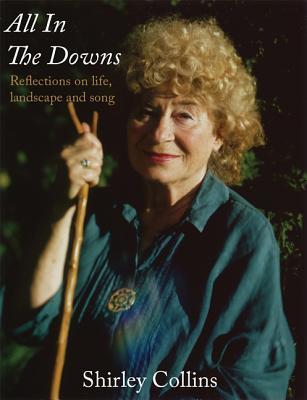
A memoir from one of Britain's legendary singers, folklorists, and music historians.
A legendary singer, folklorist, and music historian, Shirley Collins has been an integral part of the folk-music revival for more than sixty years. In her new memoir, All in the Downs, Collins tells the story of that lifelong relationship with English folksong—a dedication to artistic integrity that has guided her through the triumphs and tragedies of her life. All in the Downs combines elements of memoir—from her working-class origins in wartime Hastings to the bright lights of the 1950s folk revival in London—alongside reflections on the role traditional music and the English landscape have played in shaping her vision. From formative field recordings made with Alan Lomax in the United States to the “crowning glories” recorded with her sister Dolly on the Sussex Downs, she writes of the obstacles that led to her withdrawal from the spotlight and the redemption of a new artistic flourishing that continues today with her unexpected return to recording in 2016. Through it all, Shirley Collins has been guided and supported by three vital and inseparable loves: traditional English song, the people and landscape of her native Sussex, and an unwavering sense of artistic integrity. All in the Downs pays tribute to these passions, and in doing so, illustrates a way of life as old as England, that has all but vanished from this land.
Generously illustrated with rare archival material.
Shirley Collins is a renowned folk singer. She is the president of the English Folk Dance and Song Society in London. Her critically lauded album Lodestar, released in 2016, marked a triumphant return to performance after a thirty-year absence.
Note : this review is for my friend Raymond's folk magazine Stirrings. I know there aren't many English folk fans on Goodreads, but well, here it is anyway
***
The recipe for Shirley Collins’ music is two gallons of harrowing grief, three quarts of overwhelming melancholia and half a cupful of bucolic joyfulness. This intoxicating blend is dispensed quite dispassionately; her voice has the beauty and temperature of a long icicle, the one that's just about to snap and fall and penetrate the heart. Shirley Collins herself comes across as your own dear old mum, rambling more than somewhat about the houses she used to live in, and the flats she used to live in, and the noisy neighbours, and the lovely walks she used to take in the South Downs, and the day she met Jimi Hendrix.
That’s the thing – probably your mum didn’t meet Jimi Hendrix, and probably didn’t make six or so of the all time best folk albums including my all time favourite Anthems in Eden, and my all time second favourite Love, Death and the Lady (with the emphasis on Death).
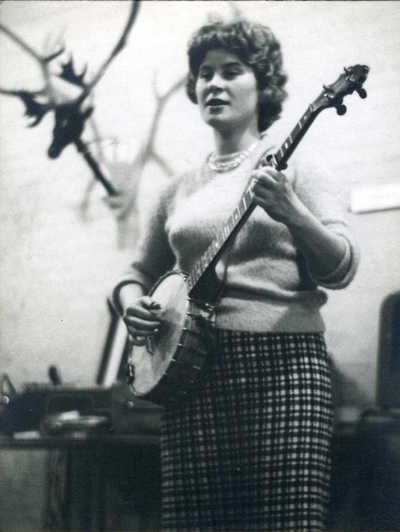
(Young Shirl)
Those who have followed Shirley over the years (not literally - well, not after the restraining order anyway) will not find too much new information in this meandering autobiography. Indeed seasoned Collinophiles might well groan aloud at the first chapter which slugs us in the solar plexus yet again with The Great Ashley Hutchings Betrayal, a tale we have been told in every other article and interview for over 30 years now. They had married in 1971 and after he philandered off into the sunset, the implication hovers over the rest of Shirley’s story that he was the cause of Shirley developing dysphonia, an affliction of the voice, the end of Shirley’s singing career. (Until it was remarkably revived in 2016 with the release of Lodestar.)
I’m uncomfortable with the way that Shirley’s life and career is displayed here through her male partners. Even though they were fairly remarkable, the first being Alan Lomax – she met him when she was 19 and he was 39. You can easily see how she would have been quite overwhelmed by this force of folk nature. Shirley wrote a whole book about the Lomax experience called America Over the Water, so here she skips onto the next guy which was Austin John Marshall. He doesn’t get a good press. They were ill-matched – he was a jazz fan and played jazz on the phonograph morning noon and night when he bothered to come home.
I grew more and more intolerant simply watching John listen to it – the snapping fingers, the nodding head, the twitching legs and feet, the almost religious fervour
They met in 1960, married in 1961 and parted in mutual relief in 1970. But look what this guy had done in that fabled decade :
- Persuaded Davy Graham and Shirley to make a (brilliant) album together
- Produced all of Shirley’s great 60s albums, including Anthems in Eden
- Produced the film Be Glad for the Song has no Ending all about the Incredible String band
- Filmed Jimi Hendrix before he was Jimi Hendrix
- Introduced Shirley Collins to Jimi Hendrix!
Shirley says :
For Jimi to come to our house was a thrill and a pleasure; he was handsome, playful, teasing, sweet and graceful. I have no photographs of this occasion (we didn’t own a camera, can you believe)
It might be worth noting that she’d just been to a Hendrix concert and found it "beautiful, exciting, and charged with danger. I sat gasping at the sounds he produced from his guitar and anxious about his teeth”. So Shirley’s instrumental taste was not confined to the portative flute organ played by her sister Dolly. Well, we knew that.
(middle Shirl)
All in the Downs zigzags its way through Shirley’s life charmingly, but there are so many things left unsaid. Such as, things about folk music. She has a proper go at Ewan MacColl ("pretentious and pompous") but hardly mentions any other folk revivalists other than in passing. I know now that she had a fondness for a particular puzzle printed every week in The Lady magazine, but I have no idea if she liked the work of Martin Carthy or any of the other great folk revival performers. And how about contrasting her own method of letting herself be an almost passive conduit for the songs, just the latest of several hundred unknown singers to be passing this song through the centuries, with other revivalist singers. Did she think they emoted too much?
And how about the odd circumstance that though she sang in as austere and unvarnished a manner as possible, she positively revelled in the most florid and unusual of arrangements for the songs? She had no problem with Davy Graham’s jazz guitar stylings, Dolly’s rococo organ arrangements; the full scale “natural orchestra” of Anthems in Eden; the full-on folk rock of No Roses…. She was all over the map musically. But of this adventurousness she breathes not one word.
A very great deal of the time we seem to be stuck in a tongue in cheek Alan Bennet monologue. Here she is saying goodbye to Alan Lomax:
I stood on the platform and waved a heartbroken goodbye until the train was out of sight. I didn’t expect to see him again. To cheer me up, Mum bought a box of chocolates and took me to a cinema in Leicester Square to see "Attila the Hun" starring Anthony Quin and Sophia Loren.
I would much rather have had her thoughts on what has become of folk music during her long life, what it means now that the oral tradition has been obliterated by recorded music, who have been her favourites, what were her Desert Island Discs, rather than more paragraphs about the cottage she found in 1987 in a lovely village in Sussex.
Whereas America Over the Water is an essential read for any folk fan, All in the Downs is for hard core Shirlophiles, and even those may be a little bemused.
Shirley Collins is one of my favorite folk-singers. A lot of her charm lies with how little ego she puts into her singing--I think you could charitably call her style inflexible, rigid, or unadorned. She believes herself to be a conduit for folk songs; injecting herself into the music anymore than she must would prevent her from being able to properly channel the songs of decades, and centuries, past. Tupac (stick with me here) once said of performing that 'we ain't even really rapping, we just letting our dead homies tell stories for us'--a sentiment I think Shirley agrees with completely. It must be noted that this is an autobiography very much for the fan who's already aware of many of the details of her life. In fact, the central drama of her life (being unable to sing for nearly forty years) is dealt with directly in all of perhaps two sentences. The astute among you might question what the point of an autobiography is then, if it's not going to tell the complete story. The principle reason it works is that Shirley just happens to be a very good writer who's lived a fascinating life. Her writing voice is engaging, she's rubbed shoulders with everyone from Prince Charles to Jimi Hendrix, and her sense of humor is as keen as her sense of heartbreak, which lends immense gravity to her stories. She's not a perfect guide to her life--some events are dealt with too swiftly, she occasionally falls into that old person trap of insisting that 'things were so much better back in my day' even if such comparisons are clearly complicated at best, and her writing often lacks connective tissue, so that the end result sometimes feels like reading a haphazard series of relatively unrelated anecdotes. (Why the editor didn't at least include some interchapter breaks is beyond me.) Despite its flaws, it worked wonderfully for me as a fan, introduced me to some new books and artists to look up, and occasionally shimmered with genuinely moving writing. And, my minor gripes with the editing aside, big props to the publisher Strange Attractor press, whose books, whether hardcover or paperback, are always gorgeously designed and sturdily put together.
This lovely lovely memoir takes up where Shirley's previous book America Across the Waters ends - and focuses more on Shirley's music career, her marriages, and her collaborations with sister Dolly Collins, culminating in her brilliant record Lodestar - released at the age of 80. What a comeback.
Along the way, there are beautiful walks, some tears, a few funny anecdotes, but mostly Shirley's love of music, folkways and the land.
A wonderful book if you love folk music but even if you don't, an inspiring read about art making and relevance. Here's to many many more, Miss Collins.
Shirley Collins has lived a life. One dedicated to the songs of the people. From and by the people. Songs that reach deep into the English landscape and the lives of those generations that have gone before. A folk chronicle of who we once were. And through these songs, who we still are. Fame hasn't necessarily brought Collins riches. No doubt she measures success by the response to her art.
if you're expecting a linear narrative and a full blown memoir, you may be in for a shock - these are reflections in the truest sense, rambling from topic to topic; but it is by far the most pleasant ramble and reading the book feels more like a conversation than anything else. I was hoping for a few more stories about her time in the Deep South with Alan Lomax, but since she's already written a whole book on that period of her life I don't mind too terribly that there weren't that many tales told. This is a true gem.
There can be no doubt that Shirley Collins is one of England's finest folk singers, as well as being a powerful advocate of traditional music, not just from England, but elsewhere in Britain and Ireland, as well as from other countries and cultures. Indeed, she has spent time in America and mainland Europe collecting folk songs alongside figures like Alan Lomax. But, though she does sometimes sing traditional songs from elsewhere, it is primarily the English tradition that interests her. She is also a strong advocate of Morris music and dancing. All this comes across in her moving, powerful, at times hilarious, at times profoundly sad, but always informative and never dull autobiography "All In the Downs".
She is a traditionalist, but one with an open mind. During the course of her long career, she has worked with many of the greats in most areas of folk music. Her work with her sister Dolly, who was a composer, arranger and played various instruments, presented some well-known folk songs in new arrangements as well as introducing more obscure songs. The list of those she has worked with reads like a Who's Who of folk music. They include Ewan MacColl, Peggy Seeger, the innovate guitarist Davy Graham (composer of the classic "Anji" and who mixed folk with Indian raga and American jazz), former husband Ashley Hutchings (founder member of three great folk institutions: Fairport Convention, Steeleye Span and the Albion Country Band), Peter Bellamy, Scottish psychedelic folk band Incredible String Band and others. Not bad for a traditionalist who has always eschewed the trappings of fame and who is as happy singing to a dozen people in a pub as she is performing in major venues.
She opens with the events that in the 1980s led to her losing her voice and being unable to sing for 30 years. Her description of being on stage and feeling like her throat had closed up is heartbreaking. The long, tragic loss of her most valuable possession - her singing voice - happened after divorcing her then husband, the serial adulterer Ashley Hutchings. But the story has a happy ending when she was helped by fellow musicians to regain her voice, resulting in 2016 with the release of arguably the greatest folk album of the 21st century thus far, the beautiful "Lodestar" (which has since been followed by more excellent albums). Her only regret is that her beloved sister, Dolly, was no longer around to see her renaissance.
She writes beautifully about her childhood, descriptions that are both nostalgic for times past but realistic about the deprivations of her childhood and youth. She also discusses her career, but modestly gives much of the credit to others. She writes about the joys and deprivations of touring, whether in small folk clubs or major venues. Some of her reminiscences are hilarious, others show the lack of respect given to touring musicians by event organisers. She discusses favourite songs, favourite singers and those who helped ensure the folk music legacy survived.
She also writes about others in the folk revival. In the main she avoids being too critical, but she also states it as she sees it. Ewan MacColl gets short shrift: she found him impatient and arrogant, refusing to listen to anyone else's views. She describes his singing as too dramatic. She also describes being invited to his room and finding him undressing as she walked in. She quickly left! She writes that she found Peggy Seeger to be a bit of a snob, something she felt was confirmed when in Peggy's own autobiography, the only reference to Shirley was to an unnamed back-up singer (Shirley was much more than that!). She suggests that Bob Dylan was being disrespectful when, after performing his set early in his career in London in 1963, he disappeared to the toilets to get stoned. She is critical of others too.
But there are those who she deeply respects: traditional singers like the Copper family, musicians like Peter Bellamy and Davy Graham, the folk band the Youngbloods and, perhaps most surprising of all, the Incredible String Band. Surprising because the LSD-influenced mystical contemporary folk music of Scottish singers, songwriters and musicians Mike Heron and Robin Williamson is a world away from Shirley's own musical influences. But she admires their honesty and support, and she and Dolly helped them with the creation of their masterpiece, the album "The Hangman's Beautiful Daughter". The only criticism she has of them is of their at the time excessive use of LSD: their musicianship was never in doubt.
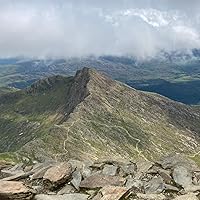
What also comes across is her love of the countryside and particularly of the Sussex downs. She describes experiencing the natural world in its infinite variety in all seasons and all weathers. She sees this rural world as a major influence on the music that originated from it.
I would recommend this book to everyone, whether like me you love folk music or whether you've never really understood its attraction. It is a lovely, heartwarming autobiography.
The best music often lies on the margins. Shirley Collins may not have the name recognition of Richard Thompson, Fairport Convention, or Steeleye Span. Indeed, she disappeared from the music scene for several decades before returning with some powerful albums in the last several years. But her songs (then and now) are among the best of British Folk and her passion for the history of Folk music and dance is impressive.
This book is a candid autobiography, but also a really beautiful reflection on place and family. Shirley takes you to the English countryside for long, romantic walks. Her reverence for its history and the grandeur of its nature is palpable.
I was told the book was a bit “rambling,” but I didn’t find it to be that. It is, however, detailed and personal. But that gave it its charm.
If you are interested in the history and origins of Folk music or in its revival in England in the 1960s and 70s, this is a wonderful read.
My method will be very simple. I will tell what I have loved; and, in this light, everything else will become evident and make itself well enough understood.
He was, however, Guy Debord; his book, while beautiful, is a labyrinthine tangle of philosophical quotations and drunken rumination.
But Debord's statement of purpose describes this book, perfectly. Shirley tells what she has loved— the old songs, the warm company, the rugged natural beauty of the Sussex Downs— with a detail and descriptive power that are at times overwhelming, and while the life she describes has its share of loss, of sorrow, and disappointment, she tells it nobly.
What a delight to finally read the life and times of this enchanting artist. And to discover why the 38 year silence. All these incredible song lyrics too: romantic and tragic , violent and real. And real is what is communicated in her singing: no style, no embellishments, no ego. Channeling words from hundreds of years ago, finding them afresh. There's a twinkle in the tale too, Ms.Collins always has a way of finding laughter along the path. I feel honoured to have met her briefly after one of her lectures at Cecil Sharp House and we both had on identical wristwatches.
Great to hear about her life and her stories. Her story seems to epitomize the hard and hand to mouth existence of folk singers and the joyous nature of it. Reading needs to be accompanied by the lady herself - Within Sounds- is the one referenced the most.
Outstanding memoir. Great depth of stories and details. Provides insight into a long career and passion for folk music. Well written and more enjoyable than I had anticipated.