

What do you think?

The Secret Life of the Forest
In any given year, millions of people visit one or more of the 154 national forests in the United States, not to mention the hundreds of thousands who spend some time in the private forests of the nation. All of them - hikers, hunters, fishermen, campers, and canoeists - are drawn to the woods for some special reason. Yet few of them see the forest as a whole, as the web of life it truly is. Here, from New York Times bestselling author Richard M. Ketchum, is the extraordinary story of forests and the trees that comprise them.
178 pages, Kindle Edition
First published January 1, 1970
About the author
Richard M. Ketchum
46 books42 followersA graduate of Yale, Richard Ketchum was a writer and editor who worked for the American Heritage Publishing Company from 1956 until 1974.
Ratings & Reviews
Friends & Following
Create a free account to discover what your friends think of this book!
Community Reviews
Displaying 1 - 14 of 14 reviews

June 27, 2012

Opening: Trees, like all other forms of life, trace their origins to the sea.
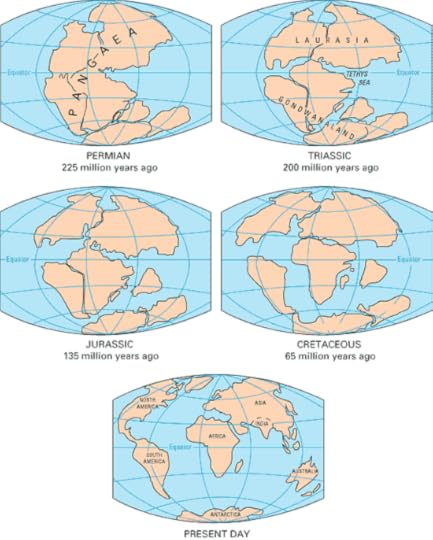
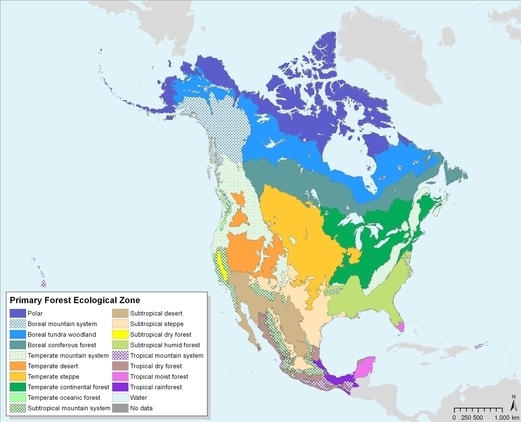
For someone who lives smack bang in a clearing with mixed forest on three sides I am, inevitably, a tree lover, plant watcher, gardener. For the most, this book is about the Pangean super-continent and it is only as the plate-tectonic cause continental shifts that the content veers more in favour of the western half of Laurasia - i.e. North America and Canada.
What have I learnt today children?:
Scorpions have always been a pest - a 370 million years old pest.
Dragonflies, who I rely on to lessen mosquito populations, 300 million
Star-nosed moles - who knew!?

3.5* Thanks Esther!

June 10, 2012
Gorgeous book.(Don't you just love the title?) The illustrators - Jack Kunz, Rudolf Freund, and Bernard Pertchik do an absolutely stunning job - you really need to see it for yourself. (My father owns this book but I could not wrest it from his hands - he's put it in the will, he claims.) For anyone who loves trees - you need to read this book!!! It is utterly fascinating - showing how trees work, drawing water up from the soil, how leaves work - different kinds of leaves - why leaves turn colour in the Fall - and on and on. I was amazed and awed. My 13 red cedars (60 ft. tall) have become even more beloved. A cautionary note: this is a book about the North American forest and trees - the U.S. primarily, Canada is more of an aside. (The subject matter is too broad to cover more than one continent, obviously, but the title does not specify.) However, the part about how trees work is global and could be enjoyed by anyone, no matter where you live. Highly recommended.

September 2, 2018
I read this in the Kindle edition. The book seems to offer everything you might want to know about trees, except how they manage to pump water and nutrients to the top; more than I wanted to know about forest management and the uses of wood. I did not find the illustrated tree profiles detailed enough to be useful for identification.

October 3, 2019
I guess I shouldn't have high expectations for popular science books from 1970. The Secret Life of the Forest is a decent ramble through North American forestry, with some charming popular science explanation of how plants work. But I wasn't aware how old it was when it was written, which explains the rather cavalier attitude towards the science of ecology and conservation. At it's best, this book has some delightful anecdotes about forests before the 20th century, but it fails to create any kind of coherent story, or even an outdated scientific rigor.
May 10, 2019
A quick overview of the life cycle of forests and forest biomes. It included discussions of environmental impacts of mismanagement of forests and how forests can be managed sustainably by timber companies. A few times the text seemed to be a lengthy description of material that would be better presented in a table of some kind (e.g. heights, life span and uses of a lot of different types of trees). In spite of some shortcomings in the text I learned some interesting things about forests and forestry.

June 12, 2017
Short, enjoyable read that is less about forests as a whole (which is what I anticipated) and more about trees, specifically North American trees. I think I'd have liked it a lot more if I knew that ahead of time, though--it's really interesting and I learned a lot from it!

April 22, 2018
This kind of seems ideal for writers trying to craft realistic fantasy ecosystems. It's such a short, shallow, readably-presented survey of North American forests and some of the ways geology affects growth, and the ways growth affects people (and vice versa). It's got a very "intro to biology" flavor to introducing How Trees Work, but it's not totally mindnumbing.
But I would definitely classify this book as more in the vein of "Trees: What Even Are They?" than a ponzi scheme introduction to becoming a druidic savant "reading" a forest. There are some bits about tree/undergrowth/animal interactions, but it's almost 100% from the tree's point of view.
But I would definitely classify this book as more in the vein of "Trees: What Even Are They?" than a ponzi scheme introduction to becoming a druidic savant "reading" a forest. There are some bits about tree/undergrowth/animal interactions, but it's almost 100% from the tree's point of view.

July 14, 2019
This was an interesting book. Hidden Life of Trees was written from a botanist's point of view, while this was more from an economist's point of view. He stated how they were managing the forests for lumber production and value than from the forest community view. I enjoyed the history of the forests in the U.S. and what it was like when the colonists began populating the continent. It was well written and kept my interest throughout.

July 10, 2019
Everything I'd forgotten about how trees live and much more I'm pretty sure I never knew. I found the section about the forests that covered much of North America when early European settlers arrived to be especially interesting. The book kinda made me want a forest of my own to manage and spend time with.
October 14, 2017
Great information
I will never again take a tree or forest for granted. This book is loaded with great info about the importance of trees to our ecosystem. An important read for anyone who cares about the environment.
I will never again take a tree or forest for granted. This book is loaded with great info about the importance of trees to our ecosystem. An important read for anyone who cares about the environment.

March 4, 2020
Fun read on the lives of forests. Not terribly technical, and exclusively about North American forests in particular. Nonetheless it was informative and provided a good high level picture of forestry - a subject I definitely want to learn more about now!

April 27, 2021
Warning ... this was first published in 1970 ... many fascinating discoveries since are important to the understanding of forests and forestry issues. I suggest passing on this one. I'm sure this was worthy of 5 stars in 1970. While I often prefer old to new a scientific book is not one 😉

July 21, 2019
Trees
All that you would ever want to know about trees. An interesting history of trees and of how humanity uses them.
All that you would ever want to know about trees. An interesting history of trees and of how humanity uses them.
May 22, 2024
Recommended in "The Mountain in the Sea"
Very barebone description of plants. Maybe for children?!
Very barebone description of plants. Maybe for children?!
Displaying 1 - 14 of 14 reviews