

What do you think?

Yami: The Autobiography of Yami Lester
This is Yami Lester's story: from stockman to stirrer. Beginning in the heart of the Western Desert, Yami tells of his early years learning the country and the Law from the Ones Who Know. Of his years as a stockman, learning his trade on the vast, unfenced cattle stations of the Centre. Of this years living in the world of white people. And of the childhood memories stirred by a voice on the radio - memories of the day when the ground shook and a black mist came up from the south and covered the camp. Of the sickness that followed, and the blindness that changed his life for ever. Yami's is a unique life of challenge and change, courage and humour. From the remote Centralian outback to the handback of Uluru, from bomb tests at Maralinga to the Royal Commission in London, Yami's memories are aout the making of modern Australian history.
- GenresBiography Memoir
206 pages, Paperback
First published January 1, 1993
Ratings & Reviews
Friends & Following
Create a free account to discover what your friends think of this book!
Community Reviews
Displaying 1 - 5 of 5 reviews
July 21, 2024
A unique perspective on uncommon experiences.

June 4, 2019
I read much of this book while on a 10-day visit to Darwin. An aboriginal woman on the Bathurst Island ferry complimented me on my choice of reading material. I found the book difficult to engage with at first. The unsettling effect of travel may have had a part in that, but I'm sure the book itself was also a part of my difficulty. It is peppered with Yankunytjatjara and Pitjantjatjara (ie. central Australian aboriginal) words, some of which I was slow to learn, though they are glossed at the end of each chapter. The book would be improved if there were a glossary for the entire book at the back, instead of chapter glossaries; for one thing, words learnt in early chapters were sometimes forgotten when I encountered them again in later chapters, and the only way to find them is to search the glossaries of all the preceding chapters. I have another gripe about publishing decisions, so I will mention it now: you will need a magnifying glass to read the maps; I don't know how it might be done better in paperback format, but there it is.
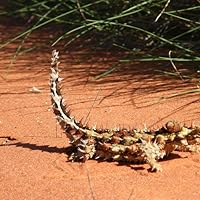
After a little prologue which mentions the black mist which caused his blindness, nothing more is said of that event till the end of the book. Yami Lester's story begins with a journey on foot in the bushland of central Australia, passing by the station where his white father (whom he never meets) is manager. Yami's mother and step-father live a semi-traditional life, taking jobs on stations from time to time, camping in the open, and hunting and gathering when on the move. The young Yami knows no English. The opening chapters are as much mythology as autobiography, introducing Yami's totem animals, njintaka (Perentie lizard) and njintjiri (a smaller lizard), and dreamtime (wapar) stories of the country through which the family passes. My own impatience with such stories, a tendency to see them as window-dressing, is I think as much culturally conditioned in me as the conditioned responses of people of any other culture; we can never entirely escape who we are. I struggled with more than just vocabulary, but as the narrative gathered pace I began to see that such beliefs formed an organic part of the outlook of Yami and of the people about whom he writes.
For me (with my cultural bias), the book comes alive when Yami himself starts work, as a boy, on cattle stations. Station life was rough (sometimes brutal, as when a group of intoxicated stockmen threw a young man they disliked on a campfire), and working conditions were extremely primitive. It struck me that he must have a remarkable memory for people, places, and incidents; I'm not at all sure that I could write the story of my own youth in so much detail. Yami gives credit to some who treated him with consideration, and remembers others as well who mistreated him. He expresses no rancour against white bosses as exploiters of indigenous people; all are seen as individuals behaving decently or otherwise towards himself and those he knows at first hand. He grew up in a time when Australian aboriginal people worked on stations for rations, before the time of equal wages that drove so many off their traditional lands because their presence was no longer an obvious economic benefit to station owners. Yami was motivated to work, he says, by the simple love of horse-riding, and for as long as it was a real prospect his only ambition was to be a stockman. I was appalled that the young Yami continued to work until his failing sight made it impossible, and only then was medical attention in Port Augusta sought for him.
To go blind is to be dependent, almost totally so in the beginning. Now try to imagine being at the same time transferred into an alien culture about which one knows almost nothing. Yami knew no English, he had never worn socks and underpants in his life, or lived in a house, and there was no prospect of returning to the life he had known. People were kind, and in the children's home he was initially placed with a boy who also spoke Yankunytjatjara, so he wasn't entirely isolated. He remembers with gratitude and affection a number of people, many of them church volunteers, who helped him in those dark days. There was social life and church activities; he learned guitar and sang in concerts, and started a "blind cricket" competition. He learned to read in Braille. He eventually married. For 14 years he worked making brooms at the Blind Institute in North Adelaide, and might have continued to do so for the remainder of his life. On a visit to his parents he spent the first 5 days unable to comprehend his mother tongue, and made a decision that he would never allow that to happen to him again. By maintaining his culture and language down the years, while immersed every day in English-language culture, he grew up astride two worlds. As a court and hospital interpreter he was at last in a position to earn a living away from the Blind Institute, an opportunity not available to many who did not share his disadvantages.
Yami's English, as it appears in this book, is not well crafted or perfectly grammatical. I don't know if there was a deliberate editorial decision to leave his prose in this unpolished state, or if the publishers (IAD [Institute of Aboriginal Development] Press) knew no better - I'm sorry if that sounds condescending - but the book is better for it; it's more authentic. There is an occasional Australian usage which I think might puzzle overseas readers. For instance, in Australian rural parlance a "killer" is object of the verb from which it is formed, not subject; it is a beast singled out for slaughter; a footnote is needed.
Yami Lester became involved in issues of Aboriginal advancement, has had dealings with a lot of people who have played important roles in changing the relationship between indigenous Australians and the rest of Australian society, and has held various offices of significance within Aboriginal organizations. He participated in a number of milestone events in the history of the movement towards Land Rights. He has been deeply engaged in issues of aboriginal health, education, and self-determination. He has lived a full life, and has made a significant contribution. If these aspects of Australian history interest you, then that on its own will make this book worth reading.
The event which marked his life more than any other, the British atomic testing at Emu and Maralinga, comes into focus at the end of the book. Yami could not have known at the time it happened that his blindness was the result of nuclear fallout from the tests, and it was only late in his life that the significance of the tests became apparent; he heard a British scientist speaking on the ABC, claiming that adequate steps had been taken to ensure that aboriginal people were removed from the area of the tests, and he alerted the media to the existence of people who would contradict this comfortable narrative. His action would lead eventually to a Royal Commission which would preoccupy the Australian press for several years. Holding this matter back till the end of the book shows a sophisticated sense of how best to tell a story, I think. This was the only part of Yami's life that I knew from the media before I started reading; I was expecting it to come up all through the middle of the book, and it didn't. Leaving this till the very last made a memorable impression on me, and I think it allowed Yami to tell the tale of his life without getting caught up in a narrative of himself as a victim.
I think this is a good book, and the story it tells is worth the telling.
After a little prologue which mentions the black mist which caused his blindness, nothing more is said of that event till the end of the book. Yami Lester's story begins with a journey on foot in the bushland of central Australia, passing by the station where his white father (whom he never meets) is manager. Yami's mother and step-father live a semi-traditional life, taking jobs on stations from time to time, camping in the open, and hunting and gathering when on the move. The young Yami knows no English. The opening chapters are as much mythology as autobiography, introducing Yami's totem animals, njintaka (Perentie lizard) and njintjiri (a smaller lizard), and dreamtime (wapar) stories of the country through which the family passes. My own impatience with such stories, a tendency to see them as window-dressing, is I think as much culturally conditioned in me as the conditioned responses of people of any other culture; we can never entirely escape who we are. I struggled with more than just vocabulary, but as the narrative gathered pace I began to see that such beliefs formed an organic part of the outlook of Yami and of the people about whom he writes.
For me (with my cultural bias), the book comes alive when Yami himself starts work, as a boy, on cattle stations. Station life was rough (sometimes brutal, as when a group of intoxicated stockmen threw a young man they disliked on a campfire), and working conditions were extremely primitive. It struck me that he must have a remarkable memory for people, places, and incidents; I'm not at all sure that I could write the story of my own youth in so much detail. Yami gives credit to some who treated him with consideration, and remembers others as well who mistreated him. He expresses no rancour against white bosses as exploiters of indigenous people; all are seen as individuals behaving decently or otherwise towards himself and those he knows at first hand. He grew up in a time when Australian aboriginal people worked on stations for rations, before the time of equal wages that drove so many off their traditional lands because their presence was no longer an obvious economic benefit to station owners. Yami was motivated to work, he says, by the simple love of horse-riding, and for as long as it was a real prospect his only ambition was to be a stockman. I was appalled that the young Yami continued to work until his failing sight made it impossible, and only then was medical attention in Port Augusta sought for him.
To go blind is to be dependent, almost totally so in the beginning. Now try to imagine being at the same time transferred into an alien culture about which one knows almost nothing. Yami knew no English, he had never worn socks and underpants in his life, or lived in a house, and there was no prospect of returning to the life he had known. People were kind, and in the children's home he was initially placed with a boy who also spoke Yankunytjatjara, so he wasn't entirely isolated. He remembers with gratitude and affection a number of people, many of them church volunteers, who helped him in those dark days. There was social life and church activities; he learned guitar and sang in concerts, and started a "blind cricket" competition. He learned to read in Braille. He eventually married. For 14 years he worked making brooms at the Blind Institute in North Adelaide, and might have continued to do so for the remainder of his life. On a visit to his parents he spent the first 5 days unable to comprehend his mother tongue, and made a decision that he would never allow that to happen to him again. By maintaining his culture and language down the years, while immersed every day in English-language culture, he grew up astride two worlds. As a court and hospital interpreter he was at last in a position to earn a living away from the Blind Institute, an opportunity not available to many who did not share his disadvantages.
Yami's English, as it appears in this book, is not well crafted or perfectly grammatical. I don't know if there was a deliberate editorial decision to leave his prose in this unpolished state, or if the publishers (IAD [Institute of Aboriginal Development] Press) knew no better - I'm sorry if that sounds condescending - but the book is better for it; it's more authentic. There is an occasional Australian usage which I think might puzzle overseas readers. For instance, in Australian rural parlance a "killer" is object of the verb from which it is formed, not subject; it is a beast singled out for slaughter; a footnote is needed.
Yami Lester became involved in issues of Aboriginal advancement, has had dealings with a lot of people who have played important roles in changing the relationship between indigenous Australians and the rest of Australian society, and has held various offices of significance within Aboriginal organizations. He participated in a number of milestone events in the history of the movement towards Land Rights. He has been deeply engaged in issues of aboriginal health, education, and self-determination. He has lived a full life, and has made a significant contribution. If these aspects of Australian history interest you, then that on its own will make this book worth reading.
The event which marked his life more than any other, the British atomic testing at Emu and Maralinga, comes into focus at the end of the book. Yami could not have known at the time it happened that his blindness was the result of nuclear fallout from the tests, and it was only late in his life that the significance of the tests became apparent; he heard a British scientist speaking on the ABC, claiming that adequate steps had been taken to ensure that aboriginal people were removed from the area of the tests, and he alerted the media to the existence of people who would contradict this comfortable narrative. His action would lead eventually to a Royal Commission which would preoccupy the Australian press for several years. Holding this matter back till the end of the book shows a sophisticated sense of how best to tell a story, I think. This was the only part of Yami's life that I knew from the media before I started reading; I was expecting it to come up all through the middle of the book, and it didn't. Leaving this till the very last made a memorable impression on me, and I think it allowed Yami to tell the tale of his life without getting caught up in a narrative of himself as a victim.
I think this is a good book, and the story it tells is worth the telling.

June 24, 2014
I really enjoyed this book! Yami Lester (b. c1949) is a Yankunytjatjara man from northern South Australia. According to Wikipedia, his most significant contribution to indigenous rights was helping gain recognition for the atomic tests at Maralinga and an acknowledgement for the Aboriginal people who had been affected. An important achievement that led to the McLelland Royal Commission in 1985 - but this most modest of men grants it a mere ten pages or so in his autobiography. The rest of his book is a vivid picture of his extraordinary life which reminded me of Albert Facey’s A Fortunate Life.
As a boy Yami lived a bush life in camps in the area around Coober Pedy. His family travelled around from station to station getting itinerant work, living on bush tucker when the rations ran out. At Mt Willoughby Station, the kids were warned off the rubbish dump by the Aboriginal women:
‘Awai! Your father’s going to hunt you away from there’. That was my white father, Dick Lander, the manager of Mt Willoughby Station. ‘You gotta come this way,’ the women said, ‘and we’ll give you some food.’ So we left the rubbish dump, but we didn’t go to the house, we walked to the creek close by and waited until they brought out some food that my father gave to them: eggs and cake and different food.
That was as close as I got to my white father. I would like to have known him. But we couldn’t have talked because I didn’t have any English. I just had my own language Yankunytjatjara. It would have been something, that, to have talked with him. Anyway, we did share something: he didn’t want me to go to the rubbish dump! (p. 3)
That short excerpt is an indication of the character of this most entertaining storyteller: not an ounce of self-pity and always ready to look for the best in any situation. He was soon to need both those traits to overcome the challenge that defined his life
As a boy Yami lived a bush life in camps in the area around Coober Pedy. His family travelled around from station to station getting itinerant work, living on bush tucker when the rations ran out. At Mt Willoughby Station, the kids were warned off the rubbish dump by the Aboriginal women:
‘Awai! Your father’s going to hunt you away from there’. That was my white father, Dick Lander, the manager of Mt Willoughby Station. ‘You gotta come this way,’ the women said, ‘and we’ll give you some food.’ So we left the rubbish dump, but we didn’t go to the house, we walked to the creek close by and waited until they brought out some food that my father gave to them: eggs and cake and different food.
That was as close as I got to my white father. I would like to have known him. But we couldn’t have talked because I didn’t have any English. I just had my own language Yankunytjatjara. It would have been something, that, to have talked with him. Anyway, we did share something: he didn’t want me to go to the rubbish dump! (p. 3)
That short excerpt is an indication of the character of this most entertaining storyteller: not an ounce of self-pity and always ready to look for the best in any situation. He was soon to need both those traits to overcome the challenge that defined his life

September 27, 2017
It was suggested that I read this because of my course in Indigenous Australians in environmental management and my interest in what our First Nation people have experienced. And let me tell you, I am so incredibly glad that I did. This story is just awe inspiring and fascinating. It not only entails part of our history, but also shows the strength, compassion and drive of people who have, quite frankly, not been treated as they should have been.
If you’re interested in Australian history, and more specifically, Indigenous history, this is certainly a book that is worth reading. I was kind of expecting a story that highlighted all of the many negative things that happened when white man decided to declare terra nullius, but this story was nothing like that. Yami’s love for the country and his people is clear. His experiences are told across the board and there is this really beautiful hope and care for the country and its people. All of its people.
The main reason that I decided to buy this story was because of Yami’s presence during the Maralinga bombings. What I didn’t realise was that he was instrumental in the fight to find out what truly happened there. Actually, he was very involved in a few moments in our past that I hadn’t expected – land rights movements, Indigenous education and health… he fought for a lot of things and, in many cases, he succeeded (or at least, he did mostly).
Yami takes you on an adventure through his life. Starting with the early years in central Australia and his work as a stockman, he took me on a journey through his life. One that I don’t think I’ll ever forget.
If you’re interested in Australian history, and more specifically, Indigenous history, this is certainly a book that is worth reading. I was kind of expecting a story that highlighted all of the many negative things that happened when white man decided to declare terra nullius, but this story was nothing like that. Yami’s love for the country and his people is clear. His experiences are told across the board and there is this really beautiful hope and care for the country and its people. All of its people.
The main reason that I decided to buy this story was because of Yami’s presence during the Maralinga bombings. What I didn’t realise was that he was instrumental in the fight to find out what truly happened there. Actually, he was very involved in a few moments in our past that I hadn’t expected – land rights movements, Indigenous education and health… he fought for a lot of things and, in many cases, he succeeded (or at least, he did mostly).
Yami takes you on an adventure through his life. Starting with the early years in central Australia and his work as a stockman, he took me on a journey through his life. One that I don’t think I’ll ever forget.
August 26, 2015
Every body should probably read this book!
Displaying 1 - 5 of 5 reviews