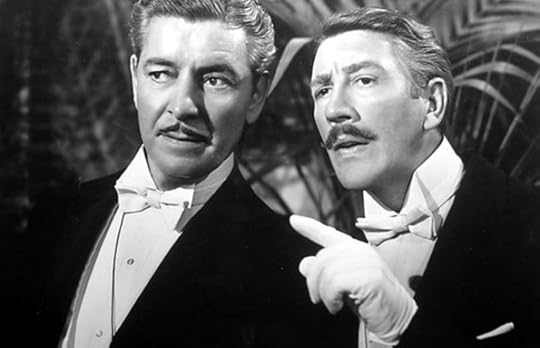
تقع الأحداث الرئيسية لهذه الرواية في آواخر القرن التاسع عشر وبداية القرن العشرين. بعدما هاجر جد الاسرة الأول منذ عدة قرون من إنجلترا الى أمريكا واستوطن مدينة بوسطن ومارس أحفاده التجارة هناك وكانت لهم سفن تسير عبر البحار وتأتى بالبضائع من افريقية ومن الصين فجمعوا وراء ذلك ثروات طائلة استغلتها الاسرة في بناء مصانع للنسيج تدر أرباحا خيالية.
فازت تلك القصة بجائزة البوليترز الأمريكية عام 1938 وضربت رقما قياسيا في عدد النسخ التي بيعت منها حين صدورها لأول مرة واستقبلها النقاد استقبالا حماسيا ووصفوها بأنها من احسن القصص التي تتغلغل في أغوار النفس الإنسانية وتعرض اسرارها في صدق وسخرية معا. كما أن هذه القصة حولت الى مسرحية اخرجتها مسارح بروداوى بنيويورك بنجاح منقطع النظير.
Pulitzer Prize for Novel in 1938 for The Late George Apley
John Phillips Marquand (November 10, 1893 – July 16, 1960) was an American writer. Originally best known for his Mr. Moto spy stories, he achieved popular success and critical respect for his satirical novels, winning a Pulitzer Prize for The Late George Apley in 1938. One of his abiding themes was the confining nature of life in America's upper class and among those who aspired to join it. Marquand treated those whose lives were bound by these unwritten codes with a characteristic mix of respect and satire.
By the mid-1930s he was a prolific and successful writer of fiction for slick magazines like the Saturday Evening Post. Some of these short stories were of an historical nature as had been Marquand's first two novels (The Unspeakable Gentleman and The Black Cargo). These would later be characterized by Marquand as “costume fiction”, of which he stated that an author “can only approximate (his characters) provided he has been steeped in the (relevant) tradition”. Marquand had abandoned “costume fiction” by the mid-1930s.
In the late-1930s, Marquand began producing a series of novels on the dilemmas of class, most centered on New England. The first of these, The Late George Apley (1937), a satire of Boston's upper class, won the Pulitzer Prize for the Novel in 1938. Other Marquand novels exploring New England and class themes include Wickford Point (1939), H.M. Pulham, Esquire (1941), and Point of No Return (1949). The last is especially notable for its satirical portrayal of Harvard anthropologist W. Lloyd Warner, whose Yankee City study attempted (and in Marquand's view, dismally failed) to describe and analyze the manners and mores of Marquand's Newburyport
This winner of the 1938 Pulitzer prize for fiction is a gently satirical and sociologically savvy portrait of George Apley, a Boston Brahmin born in the years immediately after the American Civil War. He is rich and wellborn, the product of a haughty and insular culture, yet he wins the reader's admiration by growing--incrementally, authentically--into a man able to face the challenges of the 20th century.
I tried to read this when I was in my twenties, thought it was the most boring thing I'd ever read. Now, in my eighties, I give it five stars. (Should be four and a half, but Goodreads doesn't seem to do things in halves) Does this book venerate the upper classes (esp Bostonian), or does it mock them? A little of each? I'd have to read more Marquand before I could check in on that. I laughed. Almost every page, I laughed. Surely this is an exercise in reading between the lines. And yet, the passages when Apley is old and mellowing out (not 100 percent) are almost moving. I remember my father talking about this book. Now I know why.
John P. Marquand's writing captured me right from the first page. His writing style read like a biography with the narrator being a close friend of the main character. The book is made up of letters by George Apley himself which are witty, humorous and sad. I really enjoyed the story. 🤗
This epistolary novel about the fictional mill baron George Apley and his inbred Boston social circle was just ok. Having visited Boston dozens of times and even lived there for a short six months, it was amusing to revisit parts of the city from one hundred years ago. Back then, the South End was going from respectable to the ghetto, presumably as POC were forced across the Mass Pike and newly built railways emanating from North Station away from the very white area from Huntington across Newbury and crossing Apley's own Beacon Street to the Charles River. When I lived there in the late 90s, it was going from borderline anxious with neighboring Roxbury to overpriced gay mecca in an interesting reversal of fortune.
The story of George is interesting, then, in the perspective of how America and Boston was changing from the post-Civil War 1870s when George was a spoiled boy headed to Harvard, clubs, and wealth, to the 30s after the Wall Street crash when he was a father, a grand-father, and a hater of modern corruption as he saw it was represented by Ernest Hemingway's The Sun Also Rises and D.H. Lawrence's Lady Chatterly's Lover. The tone is slightly humorous and relatively light as it is told by one of George's best friends by pulling out letters to and from George during his lifetime. It makes for easy, but not incredibly fascinating reading but is neither profound nor a particular masterpiece. And it has a bit of racism (or at least a laissez faire attitude towards racism when talking about POC) and the latent New England anti-Semitism (as when Apley commiserates with his friend in New York about the relative burden on whites represented by Jews and Irish of New York and Boston respectively.)
This book won the 1938 Pulitzer, but truly in retrospect, there were at least two major books that were FAR superior to this one, Steinbeck's stunning Of Mice and Men (although Steinbeck did get recognized two years later for the epic The Grapes of Wrath, and the absolute unrecognized masterpiece that year, Their Eyes Were Watching God. Both of these books feature far more pathos than Marquand's book as well as more humanity. Unfortunately, I think that the Pulitzer committee was likely filled with old white men who identified far more with the life story of an old white man than the struggles of poor whites or, more so, the tragedies of poor people of color.
My votable list of Pulitzer winners which I have read (only have the 40s, 50s, and 60s to finish!):
This was an unusual novel in several ways, especially given that on the surface it seemed very straight-forward. George Apley is born in 1866, just after the American Civil War, lives through the end of the 19th century and well into the beginning of the 20th. He is the son of the patriarch of one of the founding families of Boston and assumes that role himself when his father dies. The Apley’s are extremely wealthy. George’s father, Thomas, and then George graduated from Harvard and are in all the right clubs, both while in school and afterwards. The story is written as a memoir to be published on a limited basis for family members only, and is based on letters, mostly written by George but some written to him. George has every opportunity and advantage as a child and as a young man, as he prepares for the role for which he is intended. The beginning of the story is quite slow, and it is difficult to like George’s family or even George. There is a reason George admires English society because the elite class in Boston of which he is part resembles English nobility. To the credit of George and his family, they are committed to the welfare of their employees and to numerous charitable efforts.
The conventions of society and family in which George has been raised weigh on him and like many youths he pushes back, wanting something that is his own. George is expected to choose the role for which he is born, to measure up to the expectations that his father and the community have for him. Even if chooses the designated path, though, neither George’s father nor his uncle considers George a capable replacement for his father. As George matures, he works to resolve his inner conflicts while adapting to a world that is rapidly changing. That in the end we like and admire George is a surprise and a result of his very human qualities and failings.
Boy, did this book deserve the Pulitzer Prize (late 1930s). It is a picture of Boston society in the early 1900s. George Apley is the patriarch of an old family. The book is a social satire and written to picture society in transition -- but I was very sympathetic to George, liking him very much. His sense of duty was greater than his 'love of life,' but I see that as rather noble. I saw a wealthy class, very exclusive and ingrown, but they looked out for each other and also provided for the 'rejects' of society. They took great pride in their city and looked out for the people in ways we expect the government to do today. The book was largely letters George writes to his son, observing social changes and giving advise.
"Plese try to think carefully exactly what you want, before you spend it, because there is no satisfaction as great as spending wisely, and few annoyances as great as feeling that money has been wasted."
"Distrust the book which reads too easily because such writing appeals more to the senses than to the intellect. Hard reading exercises the mind."
"I believe that a large part of life consists of learning how to be unhappy without worrying too much about it."
"Learn to accept what you are as soon as possible, not arrogantly but philosophiclly."
I wasn't sure about this one at the outset, which I bought along with a couple of other books that qualified for group challenge categories. Admittedly, the initial chapters featuring his privileged youth weren't what I wanted to read; though they're realistically presented.
However, as he grows older, he mellows. In some ways he's quite libertarian involving personal lives, strongly opposed to Prohibition. George is loyal to his family and friends; moreover, a strong sense of civic duty as well as to employees. His opposition to social welfare programs, seeing it as the responsibility of the wealthy to fund charities and such, seems misguided rather than self-interested. There's a subplot that kicks in towards the end of the book that didn't work for me, along with the "let's get past this part" youth, holds back a full five stars.
Verdict: author succeeded well in using the epistolary format for us to see The Real George. Definitely deserved a Pulitzer, though a bit dated now than at the time when folks like George were within memory of many readers. Glad I read it.
Now THIS is an old paperback(rescued of course) - 1944 - and in pretty good shape. Pocket Books' 258th selection and first printed in the same year. I'll start today/tonight.
Read the "intro" last night. This book is a novel masquerading as a biography/memoir.
Got into it a bit last night and I have to say that I like this book a lot. The overall tone is a bit detached and ... Bostonian, but there are plenty of chuckles and also a bit of abrupt sadness as well. It seems to be a spot-on accounting of Boston blue-blood-ism in the late 19th and early 20th century. As for my own background, I spent the 10 1/2 years of my life as a middle-classer(my parents aspired to UPPER-middle class-dom) around Worcester. We went to Boston regularly but not often - our dentist was in Boston and I remember well driving through towns like Newton and Wellesley with their BIG houses. However, my own family had no claim to bluish blood. Those folks were a significant step higher up the ladder. We had a family friend/family that lived out in the countryside closer to Boston(Southboro? Grafton?) on an old farm. I remember riding in their big old Bentley(or was it a Rolls?). Phil Beals was the patriarch and I think he WAS of that Boston upper class stock: Groton and Harvard, patrician accent etc. Very nice fella! His family might have been mortified that he chose to work in provincial Worcester!
- The real-life location of the Apley Mills on the Merrimack would have likely been Lawrence or Lowell.
- A misprint! "are" instead of "and"
- I'm thinking of George as a kid showing up as a kid in a Prendergast painting of Nahant.
George's childhood is over with one life-threatening event - PHEW! - that reminded me of "Ordinary People" with a better outcome. Now it's on to Harvard. Or as he and his might say "Hahvud."
And now the Harvard years are done and George is being bullied by his family into giving up his unsuitable(Irish) true love. I gotta say it again - this is a really good book! Mr. Willing's narration is so ... detached and conservative, and yet ... we really GET it - that George's whole life is captive to his being a member of that very limited(in so many ways) bunch of Boston blue bloods. The edge of nastiness and despair is there. Poor George! Those folks are a bunch of narrow-minded bigots and babies. George's Mom treats George like a baby - controlling his life for him. Can we begin to ask if George's own character is positive or negative? We know he's going to give up the girl ... a coward whom the narrator will call courageous for doing his duty. The author makes certain apt assumptions about the attitudes of his readers!
Law school(Harvard of course) and marriage. Poor George is deep into the soup now. His in-laws make it clear that he also belongs to them now. On top of all that his uncle thinks him to be a lightweight - business-wise. He should've headed for California as soon as he got whiff of his intended(by his family) future! But ... he doesn't have enough guts? to step out on his own.
George's live continues have the air squeezed out of it by idiotic family business, expectations and squabbles. He gets the reputation for being a pushover because he tries to make everyone happy. His former childhood pal of a sister turns into a grasping thing-a-holic and his father's life winds down. Hard not to fell sorry for the guy. Funny to read about how Cape Ann became "degraded" by an influx of summer people from "away"(New York, Connecticut, New Jersey, etc.).
- The stuff battles reminded me of "The Spoils of Poynton"(the BBC mini-series)
- The are some similarities between this book and "Angle of Repose" - the looking back and trying to illuminate the life of an individual.
Past halfway now and George's life gets easier(in a way) after his father dies and leaves a HUGE estate. Something for everybody - the old man was a true patrician. George can't really live up to that and doesn't want to. What he wants is to be able to get AWAY from Boston, society, in-laws, obligations etc. - at least for a while - so he creates a beautiful wilderness camp in Maine. And it soon gets over-run by everything he's trying to escape, especially the family women, who don't take kindly to being "abandoned" in Boston by their menfolk. Everyone has a good time, but as for George ... he prefers the wilderness paradise he'd though he'd created. Oh well ... Anyway, I continue to appreciate the understated points that the skillful Mr. Marquand makes. His style is textbook urbanity. With the Pequod story he very nicely brings a more human dimension to his characters.
Gotta wrap this episodic book up soon I suppose. George's life goes on smoothly enough but he is not all that happy about it - who is! In addition to the history of Mr. A., the author is giving us a history of Boston and the role of the Brahmins as the 19th century closes and the 20th begins with such groups as the Irish taking on more political power and promoting a lot of graft and corrupt government. That's Boston for ya!
- In the middle of this book the pages are all screwed up and switched around. Never seen that before.
Now WWI approaches and George Apley sounds like a paranoid Tea Partier. He's getting worse(more narrow-minded) as he gets older: witness his repulsive advice to his son about avoiding being "different" and having "different" friends.
Slowly drawing to a close as George's life is seen to be increasingly limited and his concerns trivial. We feel sorry for the guy I suppose. The Stock Market crash and the Great Depression will be coming along. We'll see how George responds to that. Perhaps the author is stacking the deck a bit against George and his narrow-mindedness in order to make his points. It's working! In any case, George's middle age is proving to be a bit less interesting than his youth. And his youth wasn't all that fascinating to begin with.
Heading for the barn after last night with the aging of George and estrangement with his son yet to come. George lives in the past now, for all the present-day activity in his life. His son will prove to be more interested in the present and future and the changes he's undergone. Remember the saying: "How're you gonna keep 'em down on the farm after they've seen Paree?"? George's bafflement and resentment vis-a-vis social change is basically his own choice. His character was not strong enough for him to break away from a stultifying(yet deceptively "purposeful") life in Boston. I hope John's will be!
Still not quite finished after last night. This book's easy to read a bit at a time as there really is no plot to speak of. Next up: the Roaring 20's...
- The "son thing" and George's disappointment in John. My father(John/Jack) had great expectations(he was a Republican bigot) of both my brother and me and was bitterly disappointed by my older brother(another John and a liberal-progressive bleeding heart etc.) and me(also left-wing, but also a troubled "failure"). Then again, he was low-bottom drinker/smoker who nearly died in a gutter. He wanted us to "make HIM proud" as his own life was an insoluble(to him) disaster. Ah ... family!
- George doesn't "get" the war thing with John. For dad it's about glory, while John's the one who saw the horror and is grateful only to have survived(he was wounded).
- The social change thing and its effect on the family - much more mobility - Eleanor will be going far away soon - sad for George.
- George speak of his admiration and love for Thoreau - another indication of his discontent.
Finished last night with this quiet, satiric look at the "lost" life of a Boston Brahmin. George's open-mindedness vis-à-vis "Lady Chatterley's Lover" and his affinity for Thoreau and Emerson strongly hint of a livelier life not lived. Near the end we get a scene reminiscent of Brando's demises in the garden in "The Godfather"! This is a very fine book, though it's hard to see many people reading it these days. If they do it's likely because it won the Pulitzer.
- George is busy 'til the end - arranging all the details of his own funeral. One might say that he gave away WAY too much of his energy to that sort of thing. At the end George knew plenty of regret for what he may have missed in life by hiding out in his money and position(s) and marriage in Boston, but he did have a life. We all have out regrets ...
- I think there's a hint that one of George's problems was that too much of his life was circumscribed by women. Ken Kesey get's at this more directly in "One Flew ..." - what're gonna do? Maybe society is a creation primarily of women for the protection of women and children and maybe society is maintained by female control but, biologically speaking, the weaker and defenseless needed to be protected and nurtured. Men have to pay the price - or had to anyway. Modern cultures provide for more freedom and that's not always necessarily a good thing.
The subtitle for THE LATE GEORGE APLEY is A NOVEL IN THE FORM OF A MEMOIR, and so, rather than a traditional, and likely less effective, approach, author John Marquand makes use of supposed correspondence between the main character and his family and of public records to tell the biography of George Apley, a member of Boston aristocracy and Beacon Hill resident. The unnamed narrator, a professed friend of George's, gives a eulogy at one of the many clubs that George had been a member of--afterwards, George's son thanks him for the send-off, but with a simultaneous request that he collect George's correspondence together and give the family a picture of the man as he 'really' was.
The result is a gem. Sly and subtle, Marquand gives us not only a picture of Apley, but of an entire culture and generation, one that was fighting to stay relevant in the changing world, but one that was so stratified and petrified as to be unable to meet any of those changes with much success. But what is especially delightful about the novel is that Marquand is not ripping and destroying that culture--his barbs are rounded and it is the sort of gentle teasing and prodding one might give to one's grandparents. Marquand LIKED this society, although he was not blind to its foibles and idiosyncrasies. And as a representative of this group, George Apley is a good man, albeit frustrated and a bit naïve--aspects which Marquand imparts to the entire culture of the time, to the generation who came into their own prior to the first World War.
Yet even over and above the cultural satire, Marquand gives us a moving account of Apley--it's probably no coincidence that on the cover of the most recent edition, we see a man (presumably Apley) surrounded by a picture frame. Marquand does, to use that worn-out phrase, paint a picture of his character, one that is amazing in its depth, considering the technique used to bring it out.
GEORGE APLEY was written in 1937, and was the first serious novel that Marquand wrote, having been known before primarily as the author of the Mr. Moto series of mystery novels. Despite the date, the book--while firmly rooted in the conventions of its day--is not musty or stale at all, and I suspect most modern readers, were they to be made aware of it, would enjoy its clever and oh so subtle satire, as well as its depiction of a society that, I'm sure, in some ways still exists.
Many thanks to Amazon reviewer Allen Smalling for mentioning Marquand to me--that and a chance sighting of THE LATE GEORGE APLEY at a second hand store were the only reasons I picked this one up. It's a shame that Marquand's name is so little known nowadays--based on GEORGE APLEY, I look forward to reading the rest of his output. Highly recommended.
This book is meant to have us question our values, confront our traditions, and reexamine conventional views in an effort to sort out that which is still good and challenge that which is, classist, racist, elitist, or simply ignorant. It does this by revealing the life of the late George Apley, a Bostonian at the turn of the 19th/20th century. George believed himself to be a good and responsible man, a leading citizen, a philanthropist, a dutiful husband, and father. Within this fiction (both the book, and the George's aloof view of his life), the author reveals the hypocrisy in our behaviors when we: fool ourselves into believing we are trying to help others, when we are privately attempting to perpetuate our sense of self; suggest that we are working for the good of society, when we are posturing in order to distinguish ourselves from others; and lastly, when we seek to preserve tradition, when we are merely trying to insulate ourselves in a life that is comforting to us because we control, or at least are attempting to control it.
Unlike other distinguished and prize winning authors of social commentaries, this book doesn't replay as well in 2012 as do authors such as Twain, Wharton, Steinbeck, Cheever, Morrison, etc. Perhaps this is because the John Marquand writes with veiled fondness of his subject and its timeframe, or perhaps it is because Marquand never fully illuminates the effects of privilege on those less fortunate.
This was one of those flukes where I'm glad I hung in there, because I sure hated the first 50 (100?) pages. I definitely had it pegged as a waste-of-time Pulitzer. Instead, I found it a touching and sad exploration of how we can find ourselves becoming what we did not want to be, and the gradual yield to conformity. I still do not understand the reviews of 1937, which all rang with words like 'hilarious' and 'wickedly funny', because the satire here struck me as infinitely sad, but I guess they must be the product of their era.
Why doesn't the Library of America have a volume of John P Marquand novels? I remembered The Late George Apley as a very good book and this re-reading 50 years later confirms that. First-rate and not included in the definitive collection of American authors. That should be fixed.
I am reading The Late George Apley for a book club. Alas, this book club is somewhat dysfunctional. We don't meet very often, and when we do manage to meet, it is a frustrating exercise. We can't seem to get around to discussing the books because one member of the club blathers on about inane stuff. Blah blah blah. By the time we get around to meeting, I will probably have forgotten my impressions of this book and we won't talk about it much even when we do meet, so I'm going to record some thoughts here.
First off, I like epistolary novels. A lot. Years ago I read Clarissa (all 1500+ pages of it) and Pamela. So this writing style suits me.
I was not, however, initially enthusiastic about reading George Apley. It won a Pulitzer in 1938 and my husband read it in his quest to read all the Pulitzer prize winning novels. His review of it did not whet my appetite. Also the book club member who chose George Apley generally picks bad books. I have been pleasantly surprised though! I find myself chuckling, laughing or snorting in amusement about something on just about every page.
The narrator, Mr. Willing, is insufferable. He is a tragic combination of the Rev. Mr. Eager in a Room with a View and Mr. Collins in Pride and Prejudice. Sometime it seems like the letter he is commenting on, and the letter I just read, are two completely different documents. Like Mr. Eager, he is a terrible snob and seems completely clueless about his friend George. Here's a fun tidbit from Mr. Eager: "How wonderfully people rise in these days!" sighed Miss Bartlett, fingering a model of the leaning Tower of Pisa. "Generally," replied Mr. Eager, "one has only sympathy for their success. The desire for education and for social advance—in these things there is something not wholly vile.”
Mr. Collins is a master of the insincere compliment. He explains how he creates his compliments ``They arise chiefly from what is passing at the time, and though I sometimes amuse myself with suggesting and arranging such little elegant compliments as may be adapted to ordinary occasions, I always wish to give them as unstudied an air as possible.'' Most of these compliments are paid to Lady Catherine. George Apley is Willing's Lady Catherine. He manages to put a positive spin on Apley's every action and breath. I think he would have rolled his eyes at most of the comments Willing makes about him.
George Apley himself is much more likeable. If he weren’t pushed and bullied and squeezed into the box that his family seems to want to put him in, he would have become a kind and interesting person. He is totally and completely stifled. While in Europe he wrote “….I wished the I might be walking up that road entirely alone, away from everything I knew. I wished that I might be walking up it to see something by myself and for myself without guidance and without advice. I wonder, will I ever walk up an road alone?” He seems to have been endowed with a good sense of humor, sensitivity, kindness and individuality, but those qualities are getting slowly beaten out of him.
As to his family, they are as bad as Willing. The letters from his parents are somehow all about them, rather than about George. Any triumph he makes, they attribute to themselves. Something happens to his sister Jane and she seems to have been “put away” but it’s not clear what exactly transpired. Maybe she spoke to a person of the opposite sex who was not a member of their elevated sphere? Oh the horror.
The big question for me is if Apley manages to hold on to a bit of the qualities that are the most admirable to me, or does he become just another Boston robot. Based on the few letters Willing printed at the beginning of the memoir, the latter seems more likely. Sad. I can only hope the second half of the book will be as amusing as the first half. ------ Update: I just finished George Apley and the second half definitely lived up to the promise of the first half. Apley continued to struggle with his desire to strike out, try new things, to appreciate all the new things popping up in the early 20th century. He had a very strong sense of duty and tradition, the need for continuity. But he also had a sort of innocent spirit. Not sure how else to describe it. I found the second half more poignant than funny. It occurs to me that I am a bit like Apley, appreciative of and open to new ideas, but also clinging a bit to the past. We both lived during times of great change. When George looked back at his youth he saw a very different world, as do I. I understand his inner conflict. In the end it seemed like he came to terms with it. I was glad that he reconciled with his son. I wish the novel included more letters written by John. All in all, a surprisingly good read.
An excellent well crafted book. Primarily epistolary in style, it is a gentle satire about a Boston Brahmin at the turn of the century and his world both inner and outer. He was restrained, maintained, and finally contained by the society in which he was raised. But there were moments of doubt.
This is an epistolary novel of the life of the titled upper-crust WASP Bostonian as he experiences societal changes during the period from 1880 to the 1930s. The narrator is George’s friend Willing, who is charged with compiling a private family-only biography of George. Willing presents the story through a series of letters given to him by George’s son John, both from and to George, that present events and thoughts throughout this time period. Willig adds commentary between the various letters.
I found George Apley and the society he inhabited to be fairly interesting subjects. I enjoyed it whenever the WASP attitude toward the Irish Catholic influx during the period came up. To me, George was also a conflicted protagonist. George is revealed as a died-in-the woool traditional WASP who’s so stuffy at times you want to slap him. But he also has some surprising moments of liberal attitude that reveal him as a bit of a victim of the society he was born into. His conservative attitudes and decisions seem to reflect his choice to do his duty rather than his true personal preferences.
I did enjoy the read, although the alternating letter/commentary style affected the fluidity of the reading experience for me. The author’s writing is not difficult to read though and, as this is intended as satire, there is some very subtle humor. Overall, I found this a satisfying if uncompelling read. I rate it 3 stars
My copy is from the International Collectors Library, circa 1973, based on the 1937 manuscript and hard bound, 303 pages.
Bottom Line First: The late George Apley subtitled "A Novel in the Form of a Memoir," is a novel narrated by a longtime friend and local author Willing. It came as a surprise to me that this is considered a satire. There is at least one obviously funny chapter and throughout an under tone of drollery. If by satire you mean laugh out loud funny, this novel rarely made me smile. It is very subversive, ironic and given to ridicule. George Apley is the head of a very rich, traditional WASP to the Nth degree Boston family. He is at every turn too aware of and limited by the assumed duties of a Boston community leader to ever let himself or any family member be anything but what social leaders are supposed to be. This is a poor little rich kid who grows up to be a poor rich adult, chronicling the changes around him as well as his inability to take a role in these changes. So add to poor little rich kid, a hid bound , snob, stick in the mud. As unsympathetic as George Apley may seem, Marquand’s writing kept me wanting to stay in the story and see the world through the eyes of the Boston upper crust. Recommended: at its worst, The Late George Apley is a chance to enjoy good writing. Not a bad thing.
The author if still known for any writing it would be the Mr. Moto books about a crime solving Japanese detective and adventurer. George Apley helped Marquand to earn a Pulitzer prize and is considered the better of his several novels, usually comic about life among the rich Bostonians. John Marquand did not grow up rich, but he knew New England and via a scholarship he got to mix with ‘his betters’ at Harvard.
This is a story within a story. Willings is a fictional character, intimate of the now deceased George Apley and a fellow member of the Boston private club set. He is asked by Apley's son to tell the real story of his father. This story is told by re-printing a number of letters with added commentary by Willings. Depending on how you look at it the narration is telling a first person story related through a second person. Both the narrator and George are in agreement about the method and point of view of proper, responsible Bostonian gentlemen.
Marquand creates a believable and sympathetic cast of characters. There are always excuses for ours and condemnation of theirs and of course this is all quite correct. One can easily believe that this is a history of a vanishing romantic way of life even if it was one that was never open to outsiders or very free for those inside. Where I have my hesitations is that I am not sure how much I care to sympathize with people who, while living very well, impose problems on themselves. These are people with virtually unlimited opportunities to indulge themselves and a rabid fear of being perceived as being self-indulgent. And yes, they do indulge themselves.
I've never been a huge fan of biographies. So it was to my extreme dismay (!) that I discovered The Late George Apley, winner of the 1938 Pulitzer Prize for Fiction, was a fictionalized biography. Not to worry though, I ended up loving it!
The 'writer' (i.e. narrator) of this book is a man who was close friends with the late George Apley. When George dies, his children realize that they have never known him well, beyond the way they know him as a father. They asked the writer to prepare a biography, which was based on his own knowledge of Mr. Apley as well as interviews with his friends and family, and correspondence to and from Mr. Apley.
The resulting story was actually pretty interesting. Apley grew up as the son of a powerful New England family who were very concerned with convention and maintaining their place in society. In his teens and throughout the first few years of his 20s, Apley rebelled against his family's desires for him. However, in the end, he married the woman he was supposed to, and not the one he loved.
As time went on, Apley had children of his own and attempted to raise them the same way he was raised, apparently forgetting that he'd realized the class system was bullshit. Only in his later years did he begin to question his actions, and inactions, and to remember that he'd once felt the rules of his class to be dull, pointless, and no way to live your life.
Of course, his children also rebelled against his archaic ways and thought him to be a bit silly. And of course, his own son eventually embraced his responsibilities to his family and gave up on his own dreams.
I enjoyed the use of letters and news clippings and found this story to be told in a fairly unique and compelling way. I would have liked to know something more about the narrator though. There were hints throughout that made me think there would be some great unveiling at the end and we'd discover that it was actually his worst enemy writing it, or something equally interesting. In the end though, all we know is that a close friend to his family narrated the story of George Apley.
Poor George Apley - part of him wants to follow his heart, and not care what the rest of the world thinks of his choices; unfortunately, a larger part of him feels safer - and more righteous - following the rules set down by the society he has grown up in - upper-class Boston at the end of the 19th century. In this very enclosed world, there's not much room for maneuvering, and George generally finds it more comfortable to just make the same choices his ancestors have made,all in the name of doing his duty. But though he always does what he has been taught is "right", he is never really happy, and that is the main thing he wants for his children - happiness. He never realizes, however, that a different outcome might require different choices. Still, I couldn't help but like George; he does always try to be a good guy, even though sometimes he's being a pompous jerk. Published in the late 1930's, this book covers a period in history (1860's - 1930's) that encompassed huge changes in American society. This novel must have really resonated with people for whom this time span was within personal memory. Even now, though, I found the questions the book brings up are still relevant - is happiness to be found by being fiercely loyal to family and traditions, staying always within your comfort zone, never questioning the status quo too closely, or will it come by following your heart and pleasing yourself no matter who might be hurt, by constantly seeking out new experiences, new friends, and by constantly questioning everything that is familiar? Ultimately I think the book makes the case that happiness is probably achieved by mixing a little bit of both of those choices - family and independence, tradition and novelty. Which is what most reasonable people have probably figured out.
This was one of my top ten books of all time. I can't believe that this writer has mostly been forgotten. His sardonic wit and damning satirical viewpoint was remarkable. I feel like I have been the recipient of Mr. Apley's letters and I feel the same sort of pity that many characters in the book felt. It was brilliant. I loved it.
This was... fine. As with so many other winners on this list, the style in which it was written was interesting and unique, but I can't say that I was all that interested in hearing all about the life of a rich conservative white dude in the early 1900s.
John P. Marquand was an author who was critically and commercially successful during his lifetime, but since his death in 1960, he has not had a posthumous career revival. Marquand is probably best known for his series of spy novels featuring the Japanese agent Mr. Moto, and for his novel The Late George Apley, which won the 1937 Pulitzer Prize for Fiction.
When I came upon a reference to Marquand in the book F. Scott Fitzgerald on Authorship, I thought to myself, “I’ve heard of Marquand, but I don’t really know what he wrote.” I read his Wikipedia biography, and I was intrigued. Right away, I thought to myself that John P. Marquand and F. Scott Fitzgerald would have had a lot to talk about. (Marquand and Fitzgerald met at least once, in Paris during the 1920’s, but they never became close friends.) I wanted to read some of Marquand’s work, so I started with The Late George Apley. It did not disappoint.
Marquand’s early biography has a lot of similarities to Fitzgerald’s. Marquand graduated from Harvard in 1915. He then worked as a reporter. He saw active service in France during World War I. After the war, he worked as a reporter for the New York Tribune, and then at an advertising agency. In 1921, he became a full-time fiction writer. Fitzgerald would have graduated from Princeton in 1917, had he finished in four years. (Fitzgerald never finished his degree at Princeton.) He enlisted in the Army in 1917, but never saw active service—he was about to be sent overseas when the Armistice was signed. After the war, he tried to get a job as a reporter in New York City but settled for working at an advertising agency. In 1919, he became a full-time fiction writer. Fitzgerald’s publisher for his entire life was Scribners, and his editor there was Maxwell Perkins. Marquand published his first two novels with Scribners, where his editor was Maxwell Perkins. Marquand’s first two novels were published in 1922 and 1925, the same years that Fitzgerald published his second and third novels.
The Late George Apley is an exquisite work of satire. The framing device of the novel is that George Apley’s son has asked the narrator to write a biography of his father, a leading citizen of Boston. Marquand threads the needle perfectly, as his narrator/author takes us through the events of George Apley’s life, much of it reconstructed through primary sources such as letters. The narrator/author is a blowhard named Willing, which seemed to me to be a joke about how “willing” he is to always give Apley’s behavior the benefit of the doubt. It takes a special skill for a writer to write in the guise of a boring writer, and Marquand nails Willing’s dull, overexplanatory style.
George Apley was born in 1866 into one of Boston’s leading families. The Apleys run the Apley mills, which has provided their income for decades. However, it’s decided that George doesn’t quite have a head for business, so he goes to law school and obtains a cushy job. Just after college, Apley took the “Grand Tour” of Europe. I love the metaphor that Apley uses in writing about the trip in a letter: “It seems to me that all this time a part of Boston has been with me. I am a raisin in a slice of pie which has been conveyed from one plate to another. I have moved; I have seen plate after plate; but all the other raisins have been around me in the same relation to me as they were when we were all baked.” (p.102)
Many times during the novel George Apley expresses concern or dissatisfaction with the course his life is taking, but he seems unable or unwilling to fully break away from it.
I found this letter that Apley writes to his son to be quite hilarious:
“As you know, for a number of years I have been making a collection of Chinese bronzes. I have tried to inform myself fully about these things, and I have spent much time with wily Oriental dealers. I have not done this because I particularly like these bronzes...I have made this collection out of duty rather than out of predilection, from the conviction that everyone in a certain position owes it to the community to collect something.” (p.162-3)
It’s a noble goal to collect something and share it with the community, but rather ridiculous to collect something that you don’t actually get any pleasure from. Marquand is excellent at highlighting Apley’s somewhat misguided sense of duty.
Marquand also captures George Apley’s voice perfectly, highlighted by this letter written to his son John when John enters college that is both funny and sad:
“There is a great deal of talk about democracy. I thought there was something in it once but now I am not so sure...Do not try to be different from what you are because in the end you will find that you cannot be different. Learn to accept what you are as soon as possible, not arrogantly but philosophically.” (p.216-7)
George Apley has resigned himself to his position in life, but his position in life does not seem to fulfill him. He advises his son John not to have too much money in the bank and suggests to him “you start a collection of something, let us say of tapestries...I have found it very important to avoid criticism, and it does not look well to be extravagant.” (p.255) I found it quite humorous that George was suggesting that John start collecting something, but also sad how George feels this relentless pull and tug of status, of caring so much what other people think.
As America fights in World War I and then enters the glittering Jazz Age of the 1920’s, George Apley feels distinctly left behind. He begins a letter to John: “I wish there weren’t quite so many new ideas. Where do they come from?” (p.294) I suspect that many of us have felt that way at times.
Marquand pulls off a tricky feat in this novel—he is able to make you laugh at George Apley and also have sympathy for him. The Late George Apley launched Marquand as a serious novelist, and for the rest of his life his novels garnered critical acclaim as well as high sales.
The Late George Apley was the subject of much controversy in Boston after its release. Marquand said in an interview shortly after the novel’s publication: “Boston is the only city in America you could satirize. No other city has enough solidity, is complete enough...There are really only two things a writer can satirize in the American scene today. One of these is the small town, and Sinclair Lewis has done that in Main Street and Babbitt. The only other place static enough and finished enough to write a novel about is Boston.” (Marquand: An American Life, by Millicent Bell, p.252-3) Marquand makes an interesting point—that for a work of satire, you need a place with culture and customs that are fixed enough to sustain the satire.
The Late George Apley is an excellent novel that would appeal to fans of Edith Wharton and other novelists of manners.
Surprising novel that deseredly won the Pulizer Prize way back in 1938. It is ostensibly a private biography -- mostly of correspondence -- of George Apley, a Beacon Hill Bostonian and one of the elites. The time period covers the late 19th century to the 1930s. The purported author was a personal friend of Apley, and tries to write a biography that glosses over any faults and overstates Apley's accomplishments. Apley's son, however, forces the author to cover less savory aspects of Apley's life. The subtle humor that results from this tension drives the work to its inevitable end.
The Late George Apley is a nicely nuanced and sophisticated novel of social criticism which uses a microscope rather than a bludgeon. Written by John P. Marquand in 1937 and winning the Pulitzer Prize in fiction for 1938, I would certainly call it a minor-major American classic. Or possible a major-minor American classic.
In fiction I like well-wrought characterization much more than eventful plot lines. I like the plot failures to be things like an unsuccessfully brewed cup of tea and the triumphs to be the sighting of an unusual bird. The Late George Apley is a chronological biography/memoir. The novel’s subtitle is “A Novel in the Form of a Memoir.” George Apley is born to an extremely patrician Boston family in 1866 and dies in 1933, having resided in Beacon Hill on Mount Vernon Street. Isn’t that where Silas Lapham lived? Certainly the Apley family (who are entirely fictional) would have snubbed the Laphams.
According to an article in The New Yorker called “Martini-Age Victorian,” the great American firebrand, Upton Sinclair wrote of Apley that “I began to catch what I thought was a twinkle in the author’s eye…” And indeed there is although it might take you some pages to find the twinkle after the dutiful list of the great achievements of the Apley family. Their manners and money have proceeded in an orderly way for centuries. They relax by belonging to the correct clubs. George Apley is a bird-watcher, a collector of bronzes, and a lover of ceremony and charity of the right sorts. He worries about the squirrels who live in his attic but he does not want to kill them.
Stylistically, Marquand’s style here reminds me of Edith Wharton, who almost always had her tongue firmly in cheek. He is Anthony Trollope’s American cousin. His humor is subtle, however. Here is George Apley quoting the lessons from his mother about reading: “Distrust the book which reads too easily because such writing appeals more to the senses than to the intellect. Hard reading exercises the mind.”
Apley has two sisters. One, Jane, is “wrong”—and we don’t know why. Is she too feisty? Is she deranged? Is she a rebel? She is kept offstage with only rare mentions in the novel—perhaps a “madwoman in the attic”. Apley marries decorously and has a son and a daughter. Apley gives fifteen thousand dollars a year to the Waif’s Society and his eleemosynary instincts are broad. Yet at home, he lives modestly. He writes to his son: “It is the small things in life which count the most. There is nothing which pains me more than your jesting about small sums of money. I learned their importance very early from your Great-Uncle William. You must learn that there is a zest and genuine satisfaction in spending money properly as your Uncle William spent his. There is not much place in this world for personal gratification, nor is this particularly becoming to people of our position.”
On the other hand, his wife “has been collecting butter knives and she now has one of the best collections in the country.” “Quite remarkable,” Apley adds.
And yet—Apley marries not the young woman he loves, but a young woman from one of the best Back Bay families. Yet he is not quite as imperious as his own parents and barely protests when his son marries a divorcée and his daughter marries a journalist—from Lancaster, Pennsylvania.
When Apley’s son is an infant, his own father writes in praise: “He has everyone of your grandfather’s features and his manner of holding himself in his bassinet needs no comment from an unprejudiced observer.”
As George Apley makes his decorous progress through middle age, I found I liked him. He wore his stuffed shirt rumpled a bit and Marquand’s prose rolls about majestically with touches of humor. Apley, near death, writes to his son:
“Values shift elusively. When everything is totaled up we have evolved a fine variety of flushing toilets but not a very good world.”
Apley does read Lady Chatterley’s Lover and is impressed with its literary quality, but locks it away in a safe so his daughter will not see it.
I enjoyed this novel and would recommend it to those who like gentle humor, those who like character studies, those who like a finely nuanced dissection of society, those who like good writing. If you like Trollope, Edith Wharton, Barbara Pym, John Cheever, or Anne Tyler you might also enjoy this novel. If you like to read about a way of life that now seems remote or if you like to read about Boston, this will be a fine choice for you.
An engaging historical fictional biographical novel about an old school Boston gentleman, the fictional George Apley, written mostly in the form of letters and diaries. George is rich and well born and the product of a haughty and insular culture. George is born in 1866.
George inherited his father’s textile business, property and investments, allowing George to be a member of a number of charitable associations. He is a Republican, though he does not involve himself in politics. A man of good standing, morals and ethics. He strongly believes in mixing with like minded wealthy families and encourages his son and daughter to choose a partner from a similar background.
George finds that his son and daughter do not fit the old school mold, but to George’s credit he continues to communicate with them regularly. When his son decides to live and work in New York, George, whilst disappointed, continues to write to his son weekly over a number of years. (George would have had John work in his law firm and gained John admission to a number of associations).
An interesting account of the life of a rich old school Bostonian. The novel starts off slowly, however by the end I had gained a degree of empathy for George. A satisfying reading experience.
This book won the 1938 Pulitzer Prize for fiction.
Brilliant! It took me several pages to understand what I was reading. At first I thought I was reading a very dry fictional biogaraphy but it eventually dawned on me that this was actually a brilliant satire. The humor is so subtle and understated that, at first, I didn't pick up on it but once I did I enjoyed the book very much. It is the story of George Apley, a Boston blueblood, who grew up privileged and fully believed he deserved everything he got. The story is told by inserting numerous letters that are written to George and letters George has written to various people. (The best letters are the ones he writes to his son John).
A clever, subversive little book from the 1930's. Marquand lures his readers into thinking this is a book in praise of Boston Brahmin Apley and his way of life, and I'm sure many people, one hundred years ago, saw themselves positively in the early pages. Then Marquand slowly reveals his true purpose, hidden in the seemingly laudatory "memoir" by Apley's friend Willington. A fascinating look at this rarely-seen time period and this generation resisting the new century with every fiber of its being.
John P. Marquand won the Pulitzer Prize for The Late George Apley in 1938. This novel is structured much different than most books I have read. The story is told about George Apley's life from his childhood in Boston's elite society to his death in 1933. The story is narrated by a close friend and told through a series of letters written by George or his family members. This is how you get to know George and the characters in the story. The book gives an interesting perspective of how, precious the elite in Boston during the late 1800's to early 1900's thought of the their family image in society to protect themselves from criticism and preserve their social standing. This was an interesting read but not one of my favorite Pulitzers. I give it 3 stars.