

What do you think?

Vapaaehtoisena Auschwitziin
Vuonna 1940 Puolan maanalainen vastarintaliike halusi tietää, mitä vastikään avatussa Auschwitzin keskitysleirissä tapahtui. Puolan armeijan upseeri Witold Pilecki ilmoittautui vapaaehtoiseksi hengen-vaaralliseen tehtävään.
Pilecki hankkiutui saksalaisten pidättämäksi voidakseen raportoida leirin tapahtumista.. Hänestä tuli Auschwitzin vanki numero 4859.
Leiristä salakuljetetut Pileckin raportit kuuluvat varhaisimpiin silminnäkijäkuvauksiin, joita Auschwitzista liittoutuneille kantautui. Hän kertoo yksityiskohtaisesti leirin päivittäisen elämän kauheuksista, sotavankien teloituksista, kaasukammioiden rakentamisesta ja leiriin tuotujen juutalaisten joukkomurhasta.
Pilecki suoritti kaameaa tehtäväänsä kolme vuotta, kunnes pakeni leiriltä vuonna 1943.
Vuonna 1945 Pilecki kirjoitti laajan selonteon kaikesta siitä, mitä oli Auschwitzissa joutunut todistamaan. Puolan kommunistihallinto painoi Pileckin urotyön pimentoon kymmeniksi vuosiksi. Maailma sai hänen raporttinsa luettavakseen vasta 2012, kun se julkaistiin ensimmäisen kerran englanniksi.
Pilecki hankkiutui saksalaisten pidättämäksi voidakseen raportoida leirin tapahtumista.. Hänestä tuli Auschwitzin vanki numero 4859.
Leiristä salakuljetetut Pileckin raportit kuuluvat varhaisimpiin silminnäkijäkuvauksiin, joita Auschwitzista liittoutuneille kantautui. Hän kertoo yksityiskohtaisesti leirin päivittäisen elämän kauheuksista, sotavankien teloituksista, kaasukammioiden rakentamisesta ja leiriin tuotujen juutalaisten joukkomurhasta.
Pilecki suoritti kaameaa tehtäväänsä kolme vuotta, kunnes pakeni leiriltä vuonna 1943.
Vuonna 1945 Pilecki kirjoitti laajan selonteon kaikesta siitä, mitä oli Auschwitzissa joutunut todistamaan. Puolan kommunistihallinto painoi Pileckin urotyön pimentoon kymmeniksi vuosiksi. Maailma sai hänen raporttinsa luettavakseen vasta 2012, kun se julkaistiin ensimmäisen kerran englanniksi.
325 pages, Hardcover
First published January 1, 1945
About the author
Witold Pilecki
3 books13 followersDuring World War I, in 1918, Pilecki joined a ZHP Scout section of the Polish self-defense units under General Władysław Wejtko in the Wilno area. When his sector of the front was overrun by the Bolsheviks, his unit for a time conducted partisan warfare behind enemy lines. Pilecki then joined the regular Polish Army and took part in the Polish-Soviet War of 1919–1920, serving under Major Jerzy Dąbrowski. He fought in the Polish retreat from Kiev as part of a cavalry unit defending Grodno (in present-day Belarus). On 5 August 1920, he joined the 211th Uhlan Regiment and fought in the crucial Battle of Warsaw and at Rudniki Forest (Puszcza Rudnicka) and took part in the liberation of Wilno.He was twice awarded the Krzyż Walecznych (Cross of Valor) for gallantry.After the Polish-Soviet War ended in 1921 with the Peace of Riga, Pilecki passed his high-school graduation exams (matura) in Wilno and passed the exams for an non-commissioned officer position in the Polish Army. He also studied at the Stefan Batory University in Wilno and rebuilt his family estate, ruined during the war. He then took officer training courses.He was assigned to a cavalry regiment in 1926 as ensign, or the second lieutenant of the reserves. While in the reserves, he actively supported local paramilitary training activities. In the interbellum, he worked on his family's farm in the village of Sukurcze and was known as a social work activist and an amateur painter. On 7 April 1931, he married Maria Pilecka (1906 – 6 February 2002), née Ostrowska. They had two children, born in Wilno: Andrzej (16 January 1932) and Zofia (14 March 1933). In 1938, he received the Silver Cross of Merit for his involvement in the community and social work.
Ratings & Reviews
Friends & Following
Create a free account to discover what your friends think of this book!
Community Reviews
Displaying 1 - 30 of 152 reviews

November 2, 2016
Polish army officer Witold Pilecki went 'undercover' into Auschwitz. His account of what happened inside this most infamous of death camps will haunt you for the rest of your life. I can't even imagine how he felt surrounded by so much misery - and all the time knowing that you put yourself there. As this is a report by a trained military officer I think it will be of interest to anyone wanting to learn more about the day to day realities of Auschwitz.

December 30, 2018
UPDATE 1/28/19 ... one of the great pleasures in writing historical fiction is the opportunity to mix real and fictional characters. Deep in the woods near Auschwitz, my character Anna Gorska is about to meet Witold Pilecki, who has just escaped. I don't know what I'm going to write, but if I can capture anything close to the excitement I'm feeling about this encounter, I think it'll be worth reading.
***
This is an incredible story ... all the more so since it is true ... Witold Pilecki purposely joined a roundup in Warsaw in order to get inside Auschwitz. His objectives were to send out information about the camp and to prepare to take over the camp when the time came in the form of an order to parachute in arms or troops. He accomplished the first objective, but of course the Allies never attacked Auschwitz. Pilecki remained in Auschwitz from 1940 until April 1943 when he escaped.
a few excerpts ...
... In November 1940, I sent my first report to High Command in Warsaw through Second Lieutenant 6 [Tadeusz Burski] who had worked in Intelligence and who had been bought out of Auschwitz.
... I discovered a way to send letters to my family writing in Polish. A young friend of mine [name unknown], going to work in the town, had managed to make contact with the locals through whom I sent two letters to my family. My letters were sent on to [Home Army] High Command.
... A number of escape attempts led the camp authorities to decide to apply collective responsibility and (starting in the spring of ’41) ten inmates were shot for each successful escapee. The selection of ten men to die for one escapee was a difficult moment for the camp.
... “I have been inside for two years and seven months. I have had a job to do here. Lately I have had no instructions. Now the Germans have shipped out our best people with whom I’ve been working. I would have to start from scratch. I can see no further point in staying here. Therefore, I’m going to leave.” ... can one pick and choose when one wants to come to Auschwitz and when one wants to leave?” I replied: “One can.”
... (April 1943) ... Over the course of a night we were meant to finish five batches. We were to put the bread in the ovens five times and then take it out five times. … We were going to try to escape from the bakery after the second batch, for after the first one it would be too soon. Meanwhile the first, second, third and fourth batches came and went, and we still could not leave the bakery. ... the cards would have to fall so that at one given moment we would be near the door and out of the line of vision of both the SS men and the other bakers. ... Opportunities came and then went.
***
This is an incredible story ... all the more so since it is true ... Witold Pilecki purposely joined a roundup in Warsaw in order to get inside Auschwitz. His objectives were to send out information about the camp and to prepare to take over the camp when the time came in the form of an order to parachute in arms or troops. He accomplished the first objective, but of course the Allies never attacked Auschwitz. Pilecki remained in Auschwitz from 1940 until April 1943 when he escaped.
a few excerpts ...
... In November 1940, I sent my first report to High Command in Warsaw through Second Lieutenant 6 [Tadeusz Burski] who had worked in Intelligence and who had been bought out of Auschwitz.
... I discovered a way to send letters to my family writing in Polish. A young friend of mine [name unknown], going to work in the town, had managed to make contact with the locals through whom I sent two letters to my family. My letters were sent on to [Home Army] High Command.
... A number of escape attempts led the camp authorities to decide to apply collective responsibility and (starting in the spring of ’41) ten inmates were shot for each successful escapee. The selection of ten men to die for one escapee was a difficult moment for the camp.
... “I have been inside for two years and seven months. I have had a job to do here. Lately I have had no instructions. Now the Germans have shipped out our best people with whom I’ve been working. I would have to start from scratch. I can see no further point in staying here. Therefore, I’m going to leave.” ... can one pick and choose when one wants to come to Auschwitz and when one wants to leave?” I replied: “One can.”
... (April 1943) ... Over the course of a night we were meant to finish five batches. We were to put the bread in the ovens five times and then take it out five times. … We were going to try to escape from the bakery after the second batch, for after the first one it would be too soon. Meanwhile the first, second, third and fourth batches came and went, and we still could not leave the bakery. ... the cards would have to fall so that at one given moment we would be near the door and out of the line of vision of both the SS men and the other bakers. ... Opportunities came and then went.

July 24, 2012
This book is very easy to read because the writer Witold Pilecki used such clear writing since he was not writing a book but instead was writing a series of reports which have been gathered into this book . It is also one of the hardest books too read that I have ever picked up because he was writing so clearly about the day to day realities of Auschwitz, a place run by subhuman monsters with no code of ethics and no respect for other people.
This is a unique piece of history from the 20th century. Witold Pilecki was a decent, honorable man in the Polish military who literally walked into a Nazi roundup in Warsaw, Poland deliberately as part of the underground mission to smuggle out intelligence about this new and horrible concentration camp and to build a resistance movement and organization among the prisoners. Witold Pilecki walked the walk.
Beginning fall 1941, he smuggled intelligence reports out to the Allies, and witnessed the horrors such as wholesale slaughter of women and children, the building of the gas chambers, and the painful extermination of prisoners from both genders, all ages, all religions, all income levels, all nationalities.
Imagine seeing people killed by driving planks of wood through their guts. People killed by putting a shovel in their throat and standing in the shovel. People killed by driving a huge needle into their hearts. People sent into a gas chamber thinking they were there for a shower only to find poisonous gas being spewed into the room instead of water, gas that slowly suffocated them to death in panic and agony. There were medical experiments where women had so much radiation burns to their ovaries and uterus, they were burned to death internally. Imagine seeing all of this day by day for years.
Pilecki himself pondered this and wrote about how hard it was for those who did manage to get out to live normal lives. If you have seen what these people saw, how can you ever have patience with a teen girl who thinks it is the end of the world if she can't have a party or someone whining about prices of food (if you had only had a bit of bread and broth daily for years while being expected to do hard labor in subfreezing temperatures) or even whining about ordinary aches and pains in light of the horrors faced by inmates at Auschwitz and the other counts. Frankly, I would be ashamed to complain about anything at all after reading this book. Nothing that could happen to me could even begin to be something I could pity myself over after seeing what these people went through.
As a long time animal rescuer, I have to note that in the United States in the 21st century, the public animal control agencies and shelters murder innocent and defenseless dogs and cats by the very same methods used in Auschwitz- heartstick (stab in the heart with no anesthesia then throw on a pile of the dying to suffer in agony and die) and suffocation to death in panic and agony in gas chambers. We acknowledge that this is cruel and inhumane treatment yet subject animals to it daily for the crime of being unwanted by a human. We have not moved one inch past Auschwitz and we are no better than the cruel Nazis who subjected its prisoners to this treatment as long as we stand by and allow such a thing.
This was a report written to Pilecki's superiors in the Polish Army and they had asked for a clear and dispassionate report but as he said, he is human and dealing with heartbreaking cruelty and abuse. No normal human can be indifferent to such a thing.
Pilecki survived Auschwitz, in fact, he escaped, but he died too soon because the Soviets were just as bad as the Nazis and treated people the same way. He died as he had lived- trying to fight for the right and for justice. Prisoner 4859 (Pilecki) is my idea of a real man, my idea of a real hero. He went voluntarily where no one made him go and he made a difference.
I had to wait to read this book. Interlibrary loan would not send it since it was "too new" so I had to talk my local library into buying it and then wait for them to get it. It was well worth the wait.
The black and white photos included bring the people and places of the book to life.
A lifechanging read. Do read it. You will learn more about history and you will learn more about being human.I only wish I could give it 10 stars.
This is a unique piece of history from the 20th century. Witold Pilecki was a decent, honorable man in the Polish military who literally walked into a Nazi roundup in Warsaw, Poland deliberately as part of the underground mission to smuggle out intelligence about this new and horrible concentration camp and to build a resistance movement and organization among the prisoners. Witold Pilecki walked the walk.
Beginning fall 1941, he smuggled intelligence reports out to the Allies, and witnessed the horrors such as wholesale slaughter of women and children, the building of the gas chambers, and the painful extermination of prisoners from both genders, all ages, all religions, all income levels, all nationalities.
Imagine seeing people killed by driving planks of wood through their guts. People killed by putting a shovel in their throat and standing in the shovel. People killed by driving a huge needle into their hearts. People sent into a gas chamber thinking they were there for a shower only to find poisonous gas being spewed into the room instead of water, gas that slowly suffocated them to death in panic and agony. There were medical experiments where women had so much radiation burns to their ovaries and uterus, they were burned to death internally. Imagine seeing all of this day by day for years.
Pilecki himself pondered this and wrote about how hard it was for those who did manage to get out to live normal lives. If you have seen what these people saw, how can you ever have patience with a teen girl who thinks it is the end of the world if she can't have a party or someone whining about prices of food (if you had only had a bit of bread and broth daily for years while being expected to do hard labor in subfreezing temperatures) or even whining about ordinary aches and pains in light of the horrors faced by inmates at Auschwitz and the other counts. Frankly, I would be ashamed to complain about anything at all after reading this book. Nothing that could happen to me could even begin to be something I could pity myself over after seeing what these people went through.
As a long time animal rescuer, I have to note that in the United States in the 21st century, the public animal control agencies and shelters murder innocent and defenseless dogs and cats by the very same methods used in Auschwitz- heartstick (stab in the heart with no anesthesia then throw on a pile of the dying to suffer in agony and die) and suffocation to death in panic and agony in gas chambers. We acknowledge that this is cruel and inhumane treatment yet subject animals to it daily for the crime of being unwanted by a human. We have not moved one inch past Auschwitz and we are no better than the cruel Nazis who subjected its prisoners to this treatment as long as we stand by and allow such a thing.
This was a report written to Pilecki's superiors in the Polish Army and they had asked for a clear and dispassionate report but as he said, he is human and dealing with heartbreaking cruelty and abuse. No normal human can be indifferent to such a thing.
Pilecki survived Auschwitz, in fact, he escaped, but he died too soon because the Soviets were just as bad as the Nazis and treated people the same way. He died as he had lived- trying to fight for the right and for justice. Prisoner 4859 (Pilecki) is my idea of a real man, my idea of a real hero. He went voluntarily where no one made him go and he made a difference.
I had to wait to read this book. Interlibrary loan would not send it since it was "too new" so I had to talk my local library into buying it and then wait for them to get it. It was well worth the wait.
The black and white photos included bring the people and places of the book to life.
A lifechanging read. Do read it. You will learn more about history and you will learn more about being human.I only wish I could give it 10 stars.
August 9, 2012
"When God created the human being, God had in mind that we all should be like Captain Witold Pilecki.
"The Auschwitz Volunteer" is the single most extraordinary tale of heroism you will ever read.
To say that Witold Pilecki was a "man's man" is to understate the case considerably. We don't have words to adequately convey the kind of heroism Pilecki displayed. Language is a common possession and Pilecki was entirely uncommon. Witold Pilecki is one of the greatest heroes our species has produced. You're going to come away from this book wondering why Hollywood has not yet celebrated him. In fact that is a very good question to ask, and the answer reveals much about how stereotypes of Brute Polaks have been used to distort history.
"The Auschwitz Volunteer" belongs on the very short shelf of the classics of Holocaust literature, next to Anne Frank's "Diary of a Young Girl," Elie Wiesel's "Night," Primo Levi's "The Drowned and the Saved" and Tadeusz Borowski's "This Way to the Gas, Ladies and Gentlemen." Most people, including most teaching courses on the Holocaust at US universities, have never heard of Witold Pilecki. This is a scandal, one Polonia is duty-bound to correct. "The Auschwitz Volunteer" must be on the core syllabus of Holocaust study.
Many readers who should read this book will shrink from it. I want to assure readers that, the entire time you are reading, you know you are in the hands of a heroically good man who endured everything he endured because he was committed to a higher cause: serving humanity, his country, and his God. Indeed, in describing events in 1943, when he had been in Auschwitz since 1940, Pilecki wrote, "Above all, I was a believer." Pilecki described how his belief in God, and his commitment to service to Poland, got him through. Pilecki is proof that as low as humanity has sunk, the light shone in the darkness. When humanity scoured the depths of depravity, it also reached the heights of heroism. In this, Witold Pilecki is like Jan Karski, Maximilian Kolbe, Irena Sendler and thousands of other heroes, who, knowing the risk they were undertaking, defied Nazism.
Captain Witold Pilecki was a forty-something officer in the underground Polish resistance movement during World War II. He was in what would eventually coalesce into the Armia Krajowa, or Home Army. Pilecki came from a long history of Polish resistance: his grandfather had been exiled to Siberia, and Pilecki formed resistance groups as a youth, and fought against the Russians in 1920, being twice decorated. He fought again when the German Nazis invaded Poland on September 1, 1939, and again against the Russian Soviets when they invaded Poland on September 17, 1939. When open, armed struggle became impossible, Pilecki co-founded a group that eventually would become part of the Home Army.
In 1940, Pilecki volunteered to be imprisoned in Auschwitz. He did so to serve his country, and humanity. Pilecki was a prisoner in Auschwitz from 1940-43. The entire time he was there, he organized prisoners, gathered information, and planned to work for the Nazi defeat.
Pilecki's report is an eyewitness, journalistic account of everyday life in a concentration camp. The material is highly disturbing, of course, but it is also fascinating. Pilecki describes the tortures the Nazis and their minions resorted to, but he also describes moments when he felt happy because he was able to overcome some obstacle, including the spiritual obstacle of the temptation to succumb to despair. These moments truly are examples of the arguments about human nature that Viktor Frankl, another Auschwitz prisoner, made in his classic, "Man's Search for Meaning."
One objective fact follows another in Pilecki's account: accounts of torture and mass murder, how Auschwitz handled its mail, sewerage, and lice infestations. How male barbers reacted to shaving the bodies of women. How prisoners being sent to their deaths greeted their former comrades they passed on the way to execution.
Pilecki's report was written in 1945, before the world had assimilated the Holocaust, before that word was even widely used, before accurate tallies of the dead had been drawn up, before powerful forces began to dictate the approved World War II narrative. His report was written for military and humanitarian purposes. His style is journalistic. He strives to provide the facts, in an unemotional manner.
His humanity seeps through nevertheless. As Pilecki himself put it, "They have told me, 'The more you stick to the bare facts, the more valuable it all will be.' Well, here I go. But we were not made of stone. It sometimes seemed as if even a stone would have broken out in a sweat."
The book is not crafted to provide the rising suspense, climax, and denouement one gets from reading a modern American bestseller. There is no Hollywood ending.
All these features of Pilecki's report, which some will assess as drawbacks, are actually the great strengths of the book. Pilecki's writing is utterly raw. He writes as someone who is confronted with atrocity first-hand would write, before he had been to grief counseling, before he had been through the Post Traumatic Stress Disorder workshop, before a committee of academics went over his document with a fine-toothed comb in order to make sure that his treatment of demographics and statistics and religions and ethnicities meets the current guidelines of Political Correctness. This is what the Holocaust looked like to an Auschwitz prisoner, on the ground, watching it happen. This is not Hollywood's or even American academia's Holocaust.
The language is smooth and appropriately idiomatic. Garlinski is himself the son of an Auschwitz survivor. The book contains much supportive material to aid the reader. There are maps, many photographs of Pilecki and his family before, during and after the war, his underground comrades, his fellow prisoners and his Nazi tormentors, and Auschwitz.
"The Auschwitz Volunteer" is the single most extraordinary tale of heroism you will ever read.
To say that Witold Pilecki was a "man's man" is to understate the case considerably. We don't have words to adequately convey the kind of heroism Pilecki displayed. Language is a common possession and Pilecki was entirely uncommon. Witold Pilecki is one of the greatest heroes our species has produced. You're going to come away from this book wondering why Hollywood has not yet celebrated him. In fact that is a very good question to ask, and the answer reveals much about how stereotypes of Brute Polaks have been used to distort history.
"The Auschwitz Volunteer" belongs on the very short shelf of the classics of Holocaust literature, next to Anne Frank's "Diary of a Young Girl," Elie Wiesel's "Night," Primo Levi's "The Drowned and the Saved" and Tadeusz Borowski's "This Way to the Gas, Ladies and Gentlemen." Most people, including most teaching courses on the Holocaust at US universities, have never heard of Witold Pilecki. This is a scandal, one Polonia is duty-bound to correct. "The Auschwitz Volunteer" must be on the core syllabus of Holocaust study.
Many readers who should read this book will shrink from it. I want to assure readers that, the entire time you are reading, you know you are in the hands of a heroically good man who endured everything he endured because he was committed to a higher cause: serving humanity, his country, and his God. Indeed, in describing events in 1943, when he had been in Auschwitz since 1940, Pilecki wrote, "Above all, I was a believer." Pilecki described how his belief in God, and his commitment to service to Poland, got him through. Pilecki is proof that as low as humanity has sunk, the light shone in the darkness. When humanity scoured the depths of depravity, it also reached the heights of heroism. In this, Witold Pilecki is like Jan Karski, Maximilian Kolbe, Irena Sendler and thousands of other heroes, who, knowing the risk they were undertaking, defied Nazism.
Captain Witold Pilecki was a forty-something officer in the underground Polish resistance movement during World War II. He was in what would eventually coalesce into the Armia Krajowa, or Home Army. Pilecki came from a long history of Polish resistance: his grandfather had been exiled to Siberia, and Pilecki formed resistance groups as a youth, and fought against the Russians in 1920, being twice decorated. He fought again when the German Nazis invaded Poland on September 1, 1939, and again against the Russian Soviets when they invaded Poland on September 17, 1939. When open, armed struggle became impossible, Pilecki co-founded a group that eventually would become part of the Home Army.
In 1940, Pilecki volunteered to be imprisoned in Auschwitz. He did so to serve his country, and humanity. Pilecki was a prisoner in Auschwitz from 1940-43. The entire time he was there, he organized prisoners, gathered information, and planned to work for the Nazi defeat.
Pilecki's report is an eyewitness, journalistic account of everyday life in a concentration camp. The material is highly disturbing, of course, but it is also fascinating. Pilecki describes the tortures the Nazis and their minions resorted to, but he also describes moments when he felt happy because he was able to overcome some obstacle, including the spiritual obstacle of the temptation to succumb to despair. These moments truly are examples of the arguments about human nature that Viktor Frankl, another Auschwitz prisoner, made in his classic, "Man's Search for Meaning."
One objective fact follows another in Pilecki's account: accounts of torture and mass murder, how Auschwitz handled its mail, sewerage, and lice infestations. How male barbers reacted to shaving the bodies of women. How prisoners being sent to their deaths greeted their former comrades they passed on the way to execution.
Pilecki's report was written in 1945, before the world had assimilated the Holocaust, before that word was even widely used, before accurate tallies of the dead had been drawn up, before powerful forces began to dictate the approved World War II narrative. His report was written for military and humanitarian purposes. His style is journalistic. He strives to provide the facts, in an unemotional manner.
His humanity seeps through nevertheless. As Pilecki himself put it, "They have told me, 'The more you stick to the bare facts, the more valuable it all will be.' Well, here I go. But we were not made of stone. It sometimes seemed as if even a stone would have broken out in a sweat."
The book is not crafted to provide the rising suspense, climax, and denouement one gets from reading a modern American bestseller. There is no Hollywood ending.
All these features of Pilecki's report, which some will assess as drawbacks, are actually the great strengths of the book. Pilecki's writing is utterly raw. He writes as someone who is confronted with atrocity first-hand would write, before he had been to grief counseling, before he had been through the Post Traumatic Stress Disorder workshop, before a committee of academics went over his document with a fine-toothed comb in order to make sure that his treatment of demographics and statistics and religions and ethnicities meets the current guidelines of Political Correctness. This is what the Holocaust looked like to an Auschwitz prisoner, on the ground, watching it happen. This is not Hollywood's or even American academia's Holocaust.
The language is smooth and appropriately idiomatic. Garlinski is himself the son of an Auschwitz survivor. The book contains much supportive material to aid the reader. There are maps, many photographs of Pilecki and his family before, during and after the war, his underground comrades, his fellow prisoners and his Nazi tormentors, and Auschwitz.

August 26, 2015
I had never heard of Witold Pilecki, it's not something I was taught about at school. I've mentioned him to my friends and nobody had heard of him. I work at a school and mentioned him to the history teacher, she didn't know the name either. I find that quite shocking, one of the biggest heroes from WW2 and he is unknown by many.
Pilecki volunteered to get arrested and sent to Auschwitz and report back the goings on in there. He succeeded on gaining access and whilst there he built up an resistance network of over 150 prisoners. They kept themselves alive, they helped who they could, either with food, jobs or escape. They managed to create a radio and they also sent many reports to Warsaw describing what was happening and how many people were murdered. They managed all this while faced everyday with the possibility of death. Eventually things became too hot for Pilecki and after 2 1/2 years in Auschwitz he decided it was time to escape. The scenes described are predictably brutal but still it makes you ill just reading about what the victims went through.
When I finished the book I made the mistake of googling Pilecki to see how he enjoyed living his heroe's life after the war, amazingly soon after the war he was arrested by the Stalinist Secret Police and executed. It took many many years before he finally got the recognition he deserved.
Brilliant book that everybody should check out.
Blog review here. https://felcherman.wordpress.com/2018...
Pilecki volunteered to get arrested and sent to Auschwitz and report back the goings on in there. He succeeded on gaining access and whilst there he built up an resistance network of over 150 prisoners. They kept themselves alive, they helped who they could, either with food, jobs or escape. They managed to create a radio and they also sent many reports to Warsaw describing what was happening and how many people were murdered. They managed all this while faced everyday with the possibility of death. Eventually things became too hot for Pilecki and after 2 1/2 years in Auschwitz he decided it was time to escape. The scenes described are predictably brutal but still it makes you ill just reading about what the victims went through.
When I finished the book I made the mistake of googling Pilecki to see how he enjoyed living his heroe's life after the war, amazingly soon after the war he was arrested by the Stalinist Secret Police and executed. It took many many years before he finally got the recognition he deserved.
Brilliant book that everybody should check out.
Blog review here. https://felcherman.wordpress.com/2018...
August 26, 2015
I read the English edition a couple of years ago before visiting Auschwitz. You can get it online somewhere. I asked my guide about Pilecki and she was surprised I knew who he was because hardly anyone outside of Poland is aware of him. This is already beginning to change.
World War II is full of incredible, harrowing tales and this one is the most amazing story I know of. In a nutshell Pilecki was a member of the Secret Polish Army. With them he volunteered to get inside Auschwitz and came up with a plan to achieve this. His mission was to get inside using fake documents (I believe he was actually a Catholic), gather evidence of what was going on, organise a resistance, and then escape. This is when nobody was aware of what exactly was going on inside Auschwitz and people thought it to be a standard prison camp. Regardless Pilecki took this mission on and managed to get inside. He then spent some years there, fighting for his life and witnessing some of the most inhumane acts imaginable. He came close to dying numerous times.
While inside Pilecki was key to organising a resistance movement and even managed to report to the Polish Government which was in exile in Britain. If I remember rightly he did this with makeshift radio equipment. He finally devised an elaborate 'all or nothing' escape plan with two other inmates and pulled it off, making his way to Warsaw.
He wrote this very report which documents the day to day struggles inside Auschwitz. Be warned; it's heart breaking in parts. He later got it to the Polish authorities in Britain. However, they didn't believe what was going on and so they didn't act upon the information.
I should mention that this story should not be confused with The Man Who Broke into Auschwitz which is a different story altogether (large parts of which seem rather dubious). This story is historical fact:
http://www.nytimes.com/2012/06/24/boo...
Pilecki was posthumously awarded the Polish Government's highest decoration known as the Order of the White Eagle. He was later executed by the communists in the 1950s on spurious grounds.
Everyone should read this and visit Auschwitz at least once in their lives.
RIP Pilecki.
World War II is full of incredible, harrowing tales and this one is the most amazing story I know of. In a nutshell Pilecki was a member of the Secret Polish Army. With them he volunteered to get inside Auschwitz and came up with a plan to achieve this. His mission was to get inside using fake documents (I believe he was actually a Catholic), gather evidence of what was going on, organise a resistance, and then escape. This is when nobody was aware of what exactly was going on inside Auschwitz and people thought it to be a standard prison camp. Regardless Pilecki took this mission on and managed to get inside. He then spent some years there, fighting for his life and witnessing some of the most inhumane acts imaginable. He came close to dying numerous times.
While inside Pilecki was key to organising a resistance movement and even managed to report to the Polish Government which was in exile in Britain. If I remember rightly he did this with makeshift radio equipment. He finally devised an elaborate 'all or nothing' escape plan with two other inmates and pulled it off, making his way to Warsaw.
He wrote this very report which documents the day to day struggles inside Auschwitz. Be warned; it's heart breaking in parts. He later got it to the Polish authorities in Britain. However, they didn't believe what was going on and so they didn't act upon the information.
I should mention that this story should not be confused with The Man Who Broke into Auschwitz which is a different story altogether (large parts of which seem rather dubious). This story is historical fact:
http://www.nytimes.com/2012/06/24/boo...
Pilecki was posthumously awarded the Polish Government's highest decoration known as the Order of the White Eagle. He was later executed by the communists in the 1950s on spurious grounds.
Everyone should read this and visit Auschwitz at least once in their lives.
RIP Pilecki.

May 12, 2013
Witold Pilecki, married middle age father, volunteers to get himself arrested and sent to Auschwitz (September 1940) to be able to gather information for the Polish Underground & help organize the resistance within the camp.
This book is the English translation of his 1945 written report to the Polish High Command. Murdered by Russian Communists in 1948 his name was effectively purged from Polish history until after the fall of the Soviet Union.
This relatively unknown (in English at least) first hand report of Auschwitz deserves to be as famous as the works of Anne Frank, Primo Levi, etc.
This book is the English translation of his 1945 written report to the Polish High Command. Murdered by Russian Communists in 1948 his name was effectively purged from Polish history until after the fall of the Soviet Union.
This relatively unknown (in English at least) first hand report of Auschwitz deserves to be as famous as the works of Anne Frank, Primo Levi, etc.

September 21, 2013
This is perhaps, the most amazing book I have read on the Holocaust. Captain Witold Pilecki VOLUNTEERED to go to Auschwitz to organize rebellion and to ensure the world knew what atrocities were being perpetrated. Captain Pilecki is the definition of a hero.
A must read!
A must read!

February 16, 2013
The Auschwitz Volunteer is a newly available English translation of a report written by Witold Pilecki, a Polish military officer, in the late summer of 1945 about the 3 years he spent inside the Auschwitz concentration camp from 1940-1943. Auschwitz was young then: Pilecki was on the second transport of prisoners to what had been a Polish cavalry base converted by the Germans into a camp for Polish prisoners. When the first transport was sent, Pilecki volunteered to infiltrate the prison, organize resistance, and send out reports. His was the second group of prisoners to arrive.
As a military report this work is extremely well written. Advised to "stick to bare facts without any kind of commentary," he has created a memoir that reveals not only the horror of Auschwitz, but also the soul of this brave man. Through his eyes, we see the infamous camp develop and grow. We learn how he and others survived and organized, preparing for a revolt that never became a reality.
Right after writing this Polish narrative of World War II, Pilecki went back to Poland to carry out intelligence operations for the Allies and the Polish government in exile. Rather than becoming a war hero, he was arrested in May 1947, convicted of activities against the state, and killed by the Polish communist government. After decades of silence and ostracism, this important memoir has finally become available in English.
As a military report this work is extremely well written. Advised to "stick to bare facts without any kind of commentary," he has created a memoir that reveals not only the horror of Auschwitz, but also the soul of this brave man. Through his eyes, we see the infamous camp develop and grow. We learn how he and others survived and organized, preparing for a revolt that never became a reality.
Right after writing this Polish narrative of World War II, Pilecki went back to Poland to carry out intelligence operations for the Allies and the Polish government in exile. Rather than becoming a war hero, he was arrested in May 1947, convicted of activities against the state, and killed by the Polish communist government. After decades of silence and ostracism, this important memoir has finally become available in English.

January 3, 2013
Definitely worth reading. I borrowed this from the library and was horrified to find halfway through the book that someone had torn out a page. It was a page with a full page photograph, that much I could tell, and it's more of that someone would actually do that to a book - any book - than anything I "missed".
Regardless, the photos are amazing, as with any book of this nature. I just stare at the faces and try to imagine what they could have been thinking at that exact moment.
Pilecki's writing is a lot like that - only he gives you the insider knowledge in a lot of instances as to what he, and some others, were thinking at various times.
I can't begin to imagine doing the things Pilecki willingly did. When I think of Pilecki, and men and women like him, I realize that the men and women of today, including myself, are hardly capable of dealing with anything.
Several layout maps are included, along with multiple appendices. Appendix 1 is a glossary of terms, 2 is a list of positions and ranks, 3 is the people and places Pilecki mentions throughout the book, and so on. Basically, the information included within is formatted in such a way that if anything can't be seen right off the bat all you have to do is flip a few pages and you can easily find anything. Appendix 4 is an approximate timeline of Pilecki's movements and actions as told in his report. The index is nothing if not thorough. There are even 21 discussion questions in the back of the book.
The translator's introductory note and the publisher's note tell about the way Pilecki's report was turned into the book and it's worth reading. I agree with everything they did and did not to, as to changes, and am in awe of how they managed to bring this about in the manner they did.
The publisher's note includes a brief but interesting little lesson on the Polish language which helped me immensely when learning how certain names are pronounced. For instance, Witold Pilecki is pronounced VEE-told pee-LETS-kee. I appreciated this addition more than I can say. There is also a list of selected highlights from Pilecki's report included in the beginning of the book.
It's most definitely worth reading in my opinion. Personal accounts are among the most important when it comes to the Holocaust and World War II and I'm thankful for each and every single one.
Regardless, the photos are amazing, as with any book of this nature. I just stare at the faces and try to imagine what they could have been thinking at that exact moment.
Pilecki's writing is a lot like that - only he gives you the insider knowledge in a lot of instances as to what he, and some others, were thinking at various times.
I can't begin to imagine doing the things Pilecki willingly did. When I think of Pilecki, and men and women like him, I realize that the men and women of today, including myself, are hardly capable of dealing with anything.
Several layout maps are included, along with multiple appendices. Appendix 1 is a glossary of terms, 2 is a list of positions and ranks, 3 is the people and places Pilecki mentions throughout the book, and so on. Basically, the information included within is formatted in such a way that if anything can't be seen right off the bat all you have to do is flip a few pages and you can easily find anything. Appendix 4 is an approximate timeline of Pilecki's movements and actions as told in his report. The index is nothing if not thorough. There are even 21 discussion questions in the back of the book.
The translator's introductory note and the publisher's note tell about the way Pilecki's report was turned into the book and it's worth reading. I agree with everything they did and did not to, as to changes, and am in awe of how they managed to bring this about in the manner they did.
The publisher's note includes a brief but interesting little lesson on the Polish language which helped me immensely when learning how certain names are pronounced. For instance, Witold Pilecki is pronounced VEE-told pee-LETS-kee. I appreciated this addition more than I can say. There is also a list of selected highlights from Pilecki's report included in the beginning of the book.
It's most definitely worth reading in my opinion. Personal accounts are among the most important when it comes to the Holocaust and World War II and I'm thankful for each and every single one.

June 26, 2017
"Cosa può dire oggi l'umanità, quella stessa umanità che vuole mostrare un progresso culturale e personale e collocare il XX secolo molto più in alto dei secoli passati? Possiamo noi, dal XX secolo, guardare negli occhi i nostri progenitori e… assurdo… dimostrare di avere raggiunto un livello culturale più elevato? Ai giorni nostri un gruppo armato, rinunciando al 'velo' del passato, distrugge non solo un esercito nemico, ma intere nazioni e società inermi, usando i più recenti ritrovati della tecnica. Progresso della civiltà… certo! Progresso culturale? Non scherziamo. Ci siamo smarriti, amici miei, drammaticamente smarriti".
Libro documento che è molto simile a Se questo è un uomo - La tregua . Ma, mentre il capolavoro di Primo Levi è una narrazione della sua permanenza (passatemi il temine) all'interno del campo di concentramento di Auschwitz e della conseguente odissea in giro per l'Europa subito dopo la liberazione, questo è una testimonianza "in presa diretta" degli orrori visti e subiti da Witold Pilecki sempre all'interno del famigerato campo di concentramento. Tuttavia c'è una sostanziale differenza: Levi ad Auschwitz ci finì dopo essere stato catturato, Pilecki ci finì… volontariamente! Ebbene sì, sembra una cosa strana ed assurda, ma è la pura verità: Witold Pilecki, militare polacco, ha il compito di introdursi nel campo di concentramento (e per questo, durante un rastrellamento a Varsavia, si fa deliberatamente arrestare) e creare una fitta rete clandestina di prigionieri per prendere, appena sarebbe arrivato il via libera all'operazione, il controllo di Auschwitz… Purtroppo la storia ci ha già insegnato che quell'ordine non sarebbe mai arrivato!
Come ho detto prima, questo libro non è un romanzo ma è il rapporto, scritto in prima persona (una volta evaso e tornato libero) da Witold Pilecki, di tutto ciò che lui stesso ha visto, fatto e subito durante la sua prigionia ad Auschwitz. Tutto quanto vi è scritto è davvero sconvolgente, terribile e… nudo e crudo!
Libro che io vi consiglio senz'altro di leggere (per me andrebbe fatto girare anche nelle scuole) se amate i libri storici o i saggi; ma anche, e soprattutto… per non dimenticare!
[https://lastanzadiantonio.blogspot.co...]
Libro documento che è molto simile a Se questo è un uomo - La tregua . Ma, mentre il capolavoro di Primo Levi è una narrazione della sua permanenza (passatemi il temine) all'interno del campo di concentramento di Auschwitz e della conseguente odissea in giro per l'Europa subito dopo la liberazione, questo è una testimonianza "in presa diretta" degli orrori visti e subiti da Witold Pilecki sempre all'interno del famigerato campo di concentramento. Tuttavia c'è una sostanziale differenza: Levi ad Auschwitz ci finì dopo essere stato catturato, Pilecki ci finì… volontariamente! Ebbene sì, sembra una cosa strana ed assurda, ma è la pura verità: Witold Pilecki, militare polacco, ha il compito di introdursi nel campo di concentramento (e per questo, durante un rastrellamento a Varsavia, si fa deliberatamente arrestare) e creare una fitta rete clandestina di prigionieri per prendere, appena sarebbe arrivato il via libera all'operazione, il controllo di Auschwitz… Purtroppo la storia ci ha già insegnato che quell'ordine non sarebbe mai arrivato!
Come ho detto prima, questo libro non è un romanzo ma è il rapporto, scritto in prima persona (una volta evaso e tornato libero) da Witold Pilecki, di tutto ciò che lui stesso ha visto, fatto e subito durante la sua prigionia ad Auschwitz. Tutto quanto vi è scritto è davvero sconvolgente, terribile e… nudo e crudo!
Libro che io vi consiglio senz'altro di leggere (per me andrebbe fatto girare anche nelle scuole) se amate i libri storici o i saggi; ma anche, e soprattutto… per non dimenticare!
[https://lastanzadiantonio.blogspot.co...]

October 14, 2013
This book stands alone among the many accounts I've read of life and death in Auschwitz. Captain Pilecki did not intend it as a book, but as a military, intelligence report to the Polish Underground. It is a factual recounting of his life, observations, and work in Auschwitz in its earlier years. He tried not to editorialize, but as he stated, "We were not made out of...stone, though it sometimes seemed as if even a stone would have broken out in a sweat." Sometime his horror and his commentary had to spill out.
It is unique in that most other accounts I have read are of the later years, and all other people giving account were there as victims. Captain Pilecki volunteered by assuming another's name and getting picked up in a sweep. He was able to help organize a resistance within the camp that helped him and many others survive. With brutality and death all around him, he managed to maintain enough strength and perspective to increase the chances for prisoners' survival in the present and to continually prepare for the liberation he hoped would come from his fellow Poles.
It is unique in that most other accounts I have read are of the later years, and all other people giving account were there as victims. Captain Pilecki volunteered by assuming another's name and getting picked up in a sweep. He was able to help organize a resistance within the camp that helped him and many others survive. With brutality and death all around him, he managed to maintain enough strength and perspective to increase the chances for prisoners' survival in the present and to continually prepare for the liberation he hoped would come from his fellow Poles.

Currently Reading
December 2, 2012All the movies I've seen about the horrors of the German concentration camps did not prepare me for Pilecki's accounts of the brutality that occurred. One example: burying inmates headfirst in gravel pits and placing bets on how long their legs would continue waving in the air. This book is not for the squeamish. And that brings me to one of Pilecki's major observations about survival.
"The bitter truth," he writes, is that intellectuals have few survival skills. Many lacked the willpower to eat the food in the camps. Also, "They did not realize that they needed to conceal their professional pedigrees. . ." Snobs, who could not form friendships with men who possessed practical skills, "had to die."
.
I'm stopping on page 208. So many unimaginable atrocities.
Witold Pilecki . . . everyone should know the story of his courage.
"The bitter truth," he writes, is that intellectuals have few survival skills. Many lacked the willpower to eat the food in the camps. Also, "They did not realize that they needed to conceal their professional pedigrees. . ." Snobs, who could not form friendships with men who possessed practical skills, "had to die."
.
I'm stopping on page 208. So many unimaginable atrocities.
Witold Pilecki . . . everyone should know the story of his courage.

wishlist-nonfiction
March 16, 2018November 2, 2015
One of the proud republic of Poland's incredible heroes in a long history of resistance to domination by powerful neighbors. All of the handful of documented escapes from Auschwitz are amazing, but this one starts with the perhaps unique circumstance of the author's voluntary entry to the concentration camp with the aim of starting and building a resistance organization.
A vivid if somewhat breathless narrative accompanies by a large number of photographs and side narrative by the publishers and editors.
A vivid if somewhat breathless narrative accompanies by a large number of photographs and side narrative by the publishers and editors.
October 1, 2017
Did anybody know? Did anybody try to tell the world? Yes. The answer is "yes." Based upon reports Pilecki wrote, this work takes you inside the death camp and details the inner workings of the Nazi atrocities and how some were able to survive the brutality and horror, creating a network of resistance and support. Pilecki details both the depravity and the selflessness that can be contained within human beings. Not a book for the younger reader, but one that could supplement a study of World War II or European history for the high school or college student.

December 1, 2017
I'm conflicted about this book. If it is all true it is an amazing story, but I failed to understand the purpose of infiltrating Auschwitz and staying there for three years. I'm not sure what it achieved in the end.

November 15, 2012
Love it when the "little" man/woman, stands up and actually does what his conscience yells at him to do. One one side you have the Nazis who did exactly that and then You have the people described here. Its a heart wrenching book. And it took me a while to stop crying every time I thought about it and tryed to review it.
One of my heroes Michele Colucci alias Coluche once said: Bravery consists not in saying what you think, but in doing what you say. This is what the "few" did. Read it for yourself and let them unsung heroes not be forgotten!
One of my heroes Michele Colucci alias Coluche once said: Bravery consists not in saying what you think, but in doing what you say. This is what the "few" did. Read it for yourself and let them unsung heroes not be forgotten!

November 16, 2012
The text provides a view of Auschwitz that is rarely seen. Mr. Pilecki was in the camp early in its inception and he was there as a Pole and Catholic. As a member of the Polish army (and subsequent underground), he allowed himself to be arrested in order to build cells in the camp. This book is the third report her wrote detailing his experiences, and he was executed by Soviets before he had a chance to revise it in anyway. The style is raw and in diary form. Great supplemental material in intro and conclusion and end matter.

January 28, 2015
I have not read many stories on the Holocaust but I think this is one of the best ones. I chose this one because the thought of somebody volunteering to go to Auschwitz was mind-boggling. The author made the content very easy to read and so I found that I was able to finish this book very quickly. I will admit there were some parts where I had to take a little break due to the content. If you get stuck hug a puppy it'll make you feel better. :-)

October 13, 2015
Amazing and true story of the Polish hero who snuck into Auschwitz to prepare for the eventual uprising against the Nazis. He stayed in the camp for years, organizing a resistance. He eventually escaped to fight in the Warsaw Rising of 1944, survived the war and then came back to fight the communists, eventually losing his life to the Russians in 1949. An amazing and true story largely in his own words showing what it was really like.

January 20, 2021
This was truly a book that I find difficult to review.
Why? Firstly because the writer was a real and remarkable person; the events he describes and the scenes he witnessed really happened. A man who was loyal to his Country and to God above all else. Whom he would describe in his own words as "a good man."
But was the book enjoyable? Not at all.
I already knew a fair amount about Auschwitz and the Labour Camps turned Death Camps--
Pilecki spent so long there and gave his descriptions of the change over time; his arrival at the newly opened gates; his part in building Birkenau to meet the Nazi's demands for their growing camp; and the struggle of the outside world to understand what was going on; partly partly the inmates' own letters sometimes painted a "positive" picture of life there, depending on their relative circumstances and beliefs about their situation. Some on the outside described those who passed their time there as "skeletons" and mocked them as less than human
--but for some reason this account was particularly harrowing. I had to pause frequently because I felt so physically sick reading about the horrors, murders, evil.
The final two chapters detailing Wiltold and two friends' escape (spoiler) was so laughably delightful and exciting which was a glorious end.
Why? Firstly because the writer was a real and remarkable person; the events he describes and the scenes he witnessed really happened. A man who was loyal to his Country and to God above all else. Whom he would describe in his own words as "a good man."
But was the book enjoyable? Not at all.
I already knew a fair amount about Auschwitz and the Labour Camps turned Death Camps--
Pilecki spent so long there and gave his descriptions of the change over time; his arrival at the newly opened gates; his part in building Birkenau to meet the Nazi's demands for their growing camp; and the struggle of the outside world to understand what was going on; partly partly the inmates' own letters sometimes painted a "positive" picture of life there, depending on their relative circumstances and beliefs about their situation. Some on the outside described those who passed their time there as "skeletons" and mocked them as less than human
--but for some reason this account was particularly harrowing. I had to pause frequently because I felt so physically sick reading about the horrors, murders, evil.
The final two chapters detailing Wiltold and two friends' escape (spoiler) was so laughably delightful and exciting which was a glorious end.

June 11, 2018
I don’t think I’ve ever read a more difficult book. I found it almost impossible to encounter the horrifying, unimaginable misery that was within these pages. It isn’t because I’m not, I would say, pretty familiar with various depictions of tragic human suffering and even understanding that we can be sadistically cruel toward even the innocent, but that the normality of what was concentration camp life could have eluded my comprehension to the degree it did here. Witold, firstly, was an exceptional human being and his reports and experiences were, for the most part, clinically communicated with the aim of being completely objective. I think this might lend to the horror and an almost never ending string of sickening circumstances we humans can impose on our brothers. One image Witold left me with will haunt me forever. I am amazed anyone survived the days doled out to those interred there.
A few of the others scenes gave me spiritual chills possibly because of the strangely detached presentation. Witold was in the ranks that day when a simple catholic priest in another block offered to take a fellow prisoner’s place in a selection. That priest is now known as St Maximilian Kolbe. Witold also relayed the strangeness of a scene he and other workers encountered when walking out to a work field an encountering an image of our Lady that remained unnoticed, presumably by the guards, but Witold noted that the image never remained unspoiled despite rough and extreme weather. He notes such things but it comes across almost as a passing strange wonder.
This reading is a remarkable testament to his heroic endurance and strength of character. I did manage to finish it, but I could only read very small portions at a time. I felt bad about wanting to quit it because he described such awfulness that I could not even read about from the safety of this present day. I don’t know, perhaps I find it scarily worrisome that we can find a way to justify our actions to such an extent that we could even torture our fellow human because we have found that we are either too weak to make a stand and therefore can find ways to justify our cowardice, or that we are able to justify the extinguishing of life for “some greater good.” I shudder to think of it even now.
A few of the others scenes gave me spiritual chills possibly because of the strangely detached presentation. Witold was in the ranks that day when a simple catholic priest in another block offered to take a fellow prisoner’s place in a selection. That priest is now known as St Maximilian Kolbe. Witold also relayed the strangeness of a scene he and other workers encountered when walking out to a work field an encountering an image of our Lady that remained unnoticed, presumably by the guards, but Witold noted that the image never remained unspoiled despite rough and extreme weather. He notes such things but it comes across almost as a passing strange wonder.
This reading is a remarkable testament to his heroic endurance and strength of character. I did manage to finish it, but I could only read very small portions at a time. I felt bad about wanting to quit it because he described such awfulness that I could not even read about from the safety of this present day. I don’t know, perhaps I find it scarily worrisome that we can find a way to justify our actions to such an extent that we could even torture our fellow human because we have found that we are either too weak to make a stand and therefore can find ways to justify our cowardice, or that we are able to justify the extinguishing of life for “some greater good.” I shudder to think of it even now.

August 30, 2012
In a world where we’re so used to fictional superheroes, it’s hard to imagine there were ever any real ones; if anyone living or dead ever deserved to be called a superhero, it’s Witold Pilecki.
He’s like William Wallace, James Bond, Rambo and MacGyver rolled into one.
He was fighting Russia in the trenches in 1919-1920, and setting up secret armies against the Nazis and the Soviets in the late 1930s. He chose to go into Auschwitz and later just decided to leave, surviving being shot at several times during his escape. He built up a secret army in Auschwitz ready to take over the camp at a moment’s notice, but got frustrated that no forces outside would give the signal or air support.
He was there at the Warsaw Uprising and later, when he could have kept out of trouble in London like the Polish government-in-exile, he went back to Poland to try and undermine the Russians again. After he was arrested by the Communist secret police and tried, they sentenced him to death three times (presumably once wouldn’t have been enough of a challenge for him).
I knew his story already and I’d previously read a poor-quality translation of Pilecki’s report, so I knew what events to expect. Even so, the incidents described by Pilecki are brutal and still disturbing even after all this time. It’s strange reading a first-hand account of the timeline of Nazi policy after reading about it from other sources outside the camps.
Pilecki’s writing style isn’t as dry and clinical as some have suggested. He does occasionally break off to reflect on the contrast between (relatively) normal life outside the camp and the conditions inside; he sometimes digresses to describe the natural flora and fauna and the passing of seasons. There are even moments of gallows humour: the prisoners cultivated infected lice and put them in SS uniforms; and he takes great pleasure in describing some of the bizarre escapes that preceded his.
The translation here is very good but also retains Polish and German words where they're deemed important, with plenty of footnotes and translations.
The book also includes maps and photographs of places and people mentioned in the report.
He’s like William Wallace, James Bond, Rambo and MacGyver rolled into one.
He was fighting Russia in the trenches in 1919-1920, and setting up secret armies against the Nazis and the Soviets in the late 1930s. He chose to go into Auschwitz and later just decided to leave, surviving being shot at several times during his escape. He built up a secret army in Auschwitz ready to take over the camp at a moment’s notice, but got frustrated that no forces outside would give the signal or air support.
He was there at the Warsaw Uprising and later, when he could have kept out of trouble in London like the Polish government-in-exile, he went back to Poland to try and undermine the Russians again. After he was arrested by the Communist secret police and tried, they sentenced him to death three times (presumably once wouldn’t have been enough of a challenge for him).
I knew his story already and I’d previously read a poor-quality translation of Pilecki’s report, so I knew what events to expect. Even so, the incidents described by Pilecki are brutal and still disturbing even after all this time. It’s strange reading a first-hand account of the timeline of Nazi policy after reading about it from other sources outside the camps.
Pilecki’s writing style isn’t as dry and clinical as some have suggested. He does occasionally break off to reflect on the contrast between (relatively) normal life outside the camp and the conditions inside; he sometimes digresses to describe the natural flora and fauna and the passing of seasons. There are even moments of gallows humour: the prisoners cultivated infected lice and put them in SS uniforms; and he takes great pleasure in describing some of the bizarre escapes that preceded his.
The translation here is very good but also retains Polish and German words where they're deemed important, with plenty of footnotes and translations.
The book also includes maps and photographs of places and people mentioned in the report.

June 26, 2022
When I think about Вітольд Пілецький, I always feel a lot of pain. Somehow his story is one of the most impressive and heartbreaking for me, and this is among thousands of other stories of heroism, courage, and self-sacrifice we know from World War Two. I think that he was an amazing personality, and this is very obvious even from his photographs. I confirmed it again for myself after reading this book.
“Рапорт Вітольда” is indeed partly “a report” where Вітольд Пілецький tells in detail about what was going on in Auschwitz during his stay there (1940-43), as well as about his underground work with other prisoners. However, you may read it as normal memoirs, because his writing is very lively and personal, and very often much more emotional and detailed than any “report” would require.
Вітольд Пілецький wrote it in 1943, shortly after he fled Auschwitz, while he secretly stayed in Warsaw, which was still occupied by the Nazis as you remember. So you can only wonder how disciplined and bright he was, being able to write such a thorough book in these conditions so quickly, still participating in other underground activities of the Polish Resistance and its preparations for the Warsaw uprising.
It was one of the first accounts about the transformation of Auschwitz from a labor/detention camp into a death camp, the construction and first uses of gas chambers and crematoria for industrialized mass murders of people, the beginning of these mass murders after the arrival of Soviet POWs and Jews deported from all the Europe, “medical” experiments (sterilization of prisoners, etc.), and many other aspects of total dehumanization of prisoners in the camp. Sure, Вітольд Пілецький was constantly sending outside shorter messages about the situation in Auschwitz even during his stay there, so the Polish government-in-exile in London and all the Allies were already informed about everything even when he was still in the camp, but this report was a comrehensive description of everything together, signed by other members of the Polish underground.
Of course, there is nothing in this report that we already do not know now, but it was a mind-blowing insight for 1943, and it was a serious investigation by a highly committed, well-informed, and very intelligent Polish officer, not just some random witness of random horrors.
What is still striking for us now there is how disgusting and apparently “spontaneous” all this was. We tend to talk about the Nazis and mass murders organized by them as some “high-tech industrialized machine of death” where people were killed as “efficiently” as possible on an unbelievable scale. You start to imagine that the Nazis were cold-blooded super-humans, and that the Holocaust was a well-oiled conveyor of death, planned and constructed by the best engineers and scientists. However, Вітольд Пілецький describes how gradually the Nazis were inventing and establishing this “high-tech industrialized machine of death” after trying so many other methods of killing, including the most vulgar and primitive ones. Reading his story, you understand that there was nothing “super-human” there. It was just a bunch of people killing other people with complete impunity, and all they could do is to invent new and new methods of killing even more people.
Can you believe it that the first publication of “Witold’s Report” took place only in 2000, 55 years after the war? Yeah, Вітольд Пілецький was forgotten/forbidden in Soviet-occupied Poland. All this story feels incredibly recent.
“У Польській Народній Республіці будь-яка інформація про досягнення і долю Пілецького заборонялася цензурою. Головна військова прокуратура в 1990 році ініціювала перегляд процесу групи Вітольда Пілецького. Спочатку передбачалась реабілітація, однак Тадеуш Плужанський домігся анулювання вироку. Оголошення вироку недійсним відбулось 1 жовтня 1990 року.
Посмертно Вітольда Пілецького нагороджено Командорським хрестом Ордена відродження Польщі (пол. Order Odrodzenia Polski) (1995). У 2002 році проти колишнього прокурора Чеслава Лапинського, який звинувачував ротмістра в процесі, Інститутом національної пам’яті Польщі було складено акт звинувачення. Винесення вироку не відбулося через смерть Лапинського у 2004 році.
30 липня 2006 року Президент Польщі Лех Качинський відзначив посмертно Вітольда Пілецького Орденом Білого орла.
7 травня 2008 року Сенат Польщі ухвалив постанову про відновлення в колективній пам’яті поляків героїчної особистості ротмістра Вітольда Пілецького (Monitor Polski 2008 nr 38 poz. 333). Цією постановою сенатори вшанували 60-у річницю смерті героя Другої світової війни. Після 1990 р. багато осіб та установ взяло участь у вшануванні його пам’яті. У своїй книзі «Six Faces of Courage» британський історик професор Майкель Фут (англ. Michael Foot) відніс Вітольда Пілецького до когорти шести найвідважніших героїв Другої світової війни.”
The most excruciating part of Вітольд Пілецький’s biography is, of course, the fact that he voluntarily spent 2.5 years in the most lethal Nazi concentration camp, the notorious Auschwitz, and not only survived there but organized successfully an underground resistance movement there and left the camp exactly when he deemed it necessary for him and his mission, and after Auschwitz, he was imprisoned by the Nazis again, as a Polish POW officer after his fight in the Warsaw uprising, but was helpless in the hands of the Soviets and was eventually killed by them… This is one of the most eloquent answer to the question “who was worse, the Nazis or the Soviets.” Again, even his photographs from Auschwitz and from the Soviet prison are showing you the difference: he looks like a proud and optimistic person in Auschwitz and completely broken, beaten to a pulp in the hands of the Soviets. Still proud and dignified but bitter, without any hope now, already understanding that he will be killed after all these tortures, and that there is definitely no way out from there.
Вітольд Пілецький also confirmed it himself: (from the foreword to the book) “Співробітники служби безпеки заарештували Пілецького 8 травня 1947 року. Його одразу ж піддали жорстокому допитові під особистим наглядом полковника Юзефа Ружанського – начальника слідчого департаменту Міністерства громадської безпеки (Ministerstwo Bezpieczeństwa Publicznego, MBP). В одній з перерв у слуханнях виснажений Пілецький прошепотів дружині: «Аушвіц – ніщо проти цього».”
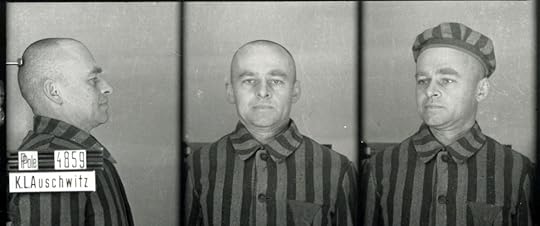
Witold Pilecki as an Auschwitz prisoner, in the hands of the Nazis, 1940:
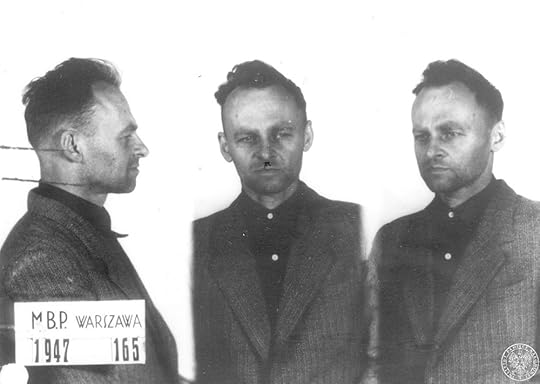
Witold Pilecki in Mokotów Prison, Warsaw, in the hands of the Soviets, 1947:
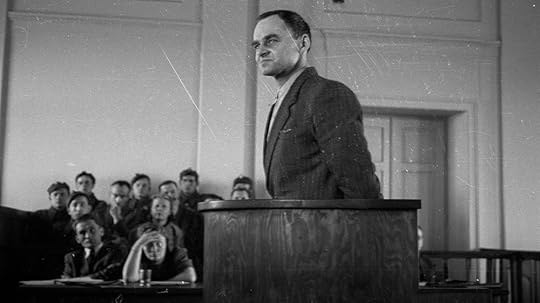
During his “trial” after which he was executed:
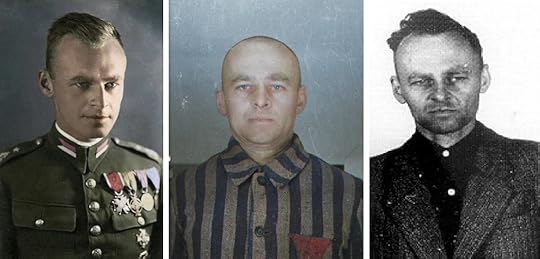
We, Ukrainians, had a lot of our own heroes but I always, always feel jealous of the Poles because they had Вітольд Пілецький.
(The book was published in Ukraine in 2018 but it is already impossible to buy it now. There are legally free e-books of “Witold’s Report” on the Internet: in Polish, in English, in Ukrainian — published by “Еврейский Мир Украины” or published by “Національний історико-меморіальний заповідник «Бабин Яр»” and an audiobook in Ukrainian recorded by “Радіо Культура”.)
“Рапорт Вітольда” is indeed partly “a report” where Вітольд Пілецький tells in detail about what was going on in Auschwitz during his stay there (1940-43), as well as about his underground work with other prisoners. However, you may read it as normal memoirs, because his writing is very lively and personal, and very often much more emotional and detailed than any “report” would require.
Вітольд Пілецький wrote it in 1943, shortly after he fled Auschwitz, while he secretly stayed in Warsaw, which was still occupied by the Nazis as you remember. So you can only wonder how disciplined and bright he was, being able to write such a thorough book in these conditions so quickly, still participating in other underground activities of the Polish Resistance and its preparations for the Warsaw uprising.
It was one of the first accounts about the transformation of Auschwitz from a labor/detention camp into a death camp, the construction and first uses of gas chambers and crematoria for industrialized mass murders of people, the beginning of these mass murders after the arrival of Soviet POWs and Jews deported from all the Europe, “medical” experiments (sterilization of prisoners, etc.), and many other aspects of total dehumanization of prisoners in the camp. Sure, Вітольд Пілецький was constantly sending outside shorter messages about the situation in Auschwitz even during his stay there, so the Polish government-in-exile in London and all the Allies were already informed about everything even when he was still in the camp, but this report was a comrehensive description of everything together, signed by other members of the Polish underground.
Of course, there is nothing in this report that we already do not know now, but it was a mind-blowing insight for 1943, and it was a serious investigation by a highly committed, well-informed, and very intelligent Polish officer, not just some random witness of random horrors.
What is still striking for us now there is how disgusting and apparently “spontaneous” all this was. We tend to talk about the Nazis and mass murders organized by them as some “high-tech industrialized machine of death” where people were killed as “efficiently” as possible on an unbelievable scale. You start to imagine that the Nazis were cold-blooded super-humans, and that the Holocaust was a well-oiled conveyor of death, planned and constructed by the best engineers and scientists. However, Вітольд Пілецький describes how gradually the Nazis were inventing and establishing this “high-tech industrialized machine of death” after trying so many other methods of killing, including the most vulgar and primitive ones. Reading his story, you understand that there was nothing “super-human” there. It was just a bunch of people killing other people with complete impunity, and all they could do is to invent new and new methods of killing even more people.
Can you believe it that the first publication of “Witold’s Report” took place only in 2000, 55 years after the war? Yeah, Вітольд Пілецький was forgotten/forbidden in Soviet-occupied Poland. All this story feels incredibly recent.
“У Польській Народній Республіці будь-яка інформація про досягнення і долю Пілецького заборонялася цензурою. Головна військова прокуратура в 1990 році ініціювала перегляд процесу групи Вітольда Пілецького. Спочатку передбачалась реабілітація, однак Тадеуш Плужанський домігся анулювання вироку. Оголошення вироку недійсним відбулось 1 жовтня 1990 року.
Посмертно Вітольда Пілецького нагороджено Командорським хрестом Ордена відродження Польщі (пол. Order Odrodzenia Polski) (1995). У 2002 році проти колишнього прокурора Чеслава Лапинського, який звинувачував ротмістра в процесі, Інститутом національної пам’яті Польщі було складено акт звинувачення. Винесення вироку не відбулося через смерть Лапинського у 2004 році.
30 липня 2006 року Президент Польщі Лех Качинський відзначив посмертно Вітольда Пілецького Орденом Білого орла.
7 травня 2008 року Сенат Польщі ухвалив постанову про відновлення в колективній пам’яті поляків героїчної особистості ротмістра Вітольда Пілецького (Monitor Polski 2008 nr 38 poz. 333). Цією постановою сенатори вшанували 60-у річницю смерті героя Другої світової війни. Після 1990 р. багато осіб та установ взяло участь у вшануванні його пам’яті. У своїй книзі «Six Faces of Courage» британський історик професор Майкель Фут (англ. Michael Foot) відніс Вітольда Пілецького до когорти шести найвідважніших героїв Другої світової війни.”
The most excruciating part of Вітольд Пілецький’s biography is, of course, the fact that he voluntarily spent 2.5 years in the most lethal Nazi concentration camp, the notorious Auschwitz, and not only survived there but organized successfully an underground resistance movement there and left the camp exactly when he deemed it necessary for him and his mission, and after Auschwitz, he was imprisoned by the Nazis again, as a Polish POW officer after his fight in the Warsaw uprising, but was helpless in the hands of the Soviets and was eventually killed by them… This is one of the most eloquent answer to the question “who was worse, the Nazis or the Soviets.” Again, even his photographs from Auschwitz and from the Soviet prison are showing you the difference: he looks like a proud and optimistic person in Auschwitz and completely broken, beaten to a pulp in the hands of the Soviets. Still proud and dignified but bitter, without any hope now, already understanding that he will be killed after all these tortures, and that there is definitely no way out from there.
Вітольд Пілецький also confirmed it himself: (from the foreword to the book) “Співробітники служби безпеки заарештували Пілецького 8 травня 1947 року. Його одразу ж піддали жорстокому допитові під особистим наглядом полковника Юзефа Ружанського – начальника слідчого департаменту Міністерства громадської безпеки (Ministerstwo Bezpieczeństwa Publicznego, MBP). В одній з перерв у слуханнях виснажений Пілецький прошепотів дружині: «Аушвіц – ніщо проти цього».”
Witold Pilecki as an Auschwitz prisoner, in the hands of the Nazis, 1940:
Witold Pilecki in Mokotów Prison, Warsaw, in the hands of the Soviets, 1947:
During his “trial” after which he was executed:
We, Ukrainians, had a lot of our own heroes but I always, always feel jealous of the Poles because they had Вітольд Пілецький.
(The book was published in Ukraine in 2018 but it is already impossible to buy it now. There are legally free e-books of “Witold’s Report” on the Internet: in Polish, in English, in Ukrainian — published by “Еврейский Мир Украины” or published by “Національний історико-меморіальний заповідник «Бабин Яр»” and an audiobook in Ukrainian recorded by “Радіо Культура”.)

January 8, 2017
Witold Pilecki is probably the only person who went to a German concentration camp voluntarily. His report is for everyone, who'd like to learn more about the daily life (and daily death) in Auschwitz. If you don't want to read about atrocities though, don't read this book. There are always new horrible ways of muder and torture, throughout the book.
The only positive thing about this true story is the fact, that even in such deadly conditions, organizing and working together could improve the living situation of many Poles. (Not Jews, unfortunately.) The inmates worked together to get better jobs, better food, to survive typhus, to not be chosen to be murdered, and also to escape. By cooperating and sending reports about the conditions in the camp, they also got to stop the beatings by the kapos, reduce the numbers of roll calls, and get better food.
Story-wise, it's very captivating. But it's incredibly, and absurdly tragic, that Pilecki went through all that he describes in the book, as well as the ingenuous escape from Auschwitz, just to be killed by Soviets after war.
The only positive thing about this true story is the fact, that even in such deadly conditions, organizing and working together could improve the living situation of many Poles. (Not Jews, unfortunately.) The inmates worked together to get better jobs, better food, to survive typhus, to not be chosen to be murdered, and also to escape. By cooperating and sending reports about the conditions in the camp, they also got to stop the beatings by the kapos, reduce the numbers of roll calls, and get better food.
Story-wise, it's very captivating. But it's incredibly, and absurdly tragic, that Pilecki went through all that he describes in the book, as well as the ingenuous escape from Auschwitz, just to be killed by Soviets after war.

May 14, 2012
This was a book that was recommended by one of the book blogs I follow. It was interesting to see how Auschwitz was started and how it transformed over about three years. It was heartbreaking to realize all that was happening in that camp and the cruelty of others. It makes me want to learn more about the Polish resistance during the war, so maybe that's where I'll go next. The writing, although written some time after escaping the camp, tells the story well. There isn't a lot of flowery writing, and sometimes the author only slightly covers something before moving on to something else. It surprised me all that he remembered and told.
August 17, 2013
My son and I visited the Holocaust Museum in DC last summer, and I wanted to do some more reading about it. I found this one just looking through the shelves in our public library, and glad that I did. Without mentioning any spoilers, it’s a survivor’s story of 32-months in Auschwitz from 1940 to 1943 and how he was able to survive. Keep in mind that the conditions there were very difficult and it contains very graphic accounts of cruel torture and killing. It is quite a read and will leave you with lots to think about.
October 17, 2013
Excellent book. This is actually a report that Pilecki sent to his superiors after he had been in Auschwitz - having managed to get himself arrested and taken there voluntarily to report on the conditions. He was one of the early inmates. This is written in a matter-of-fact style which makes it even more heartrending. I can't understand how people can be so evil...
It was impossible to put this book down once I had started it. It shows the horror of Auschwitz from the very beginning. I can't understand how people can be so evil...
It was impossible to put this book down once I had started it. It shows the horror of Auschwitz from the very beginning. I can't understand how people can be so evil...

September 2, 2014
O livro "O Voluntário de Auschwitz" é um livro cru. Que mostra do que a raça humana é capaz quando se une para mal, mas que também mostra do que é capaz quando se une para o bem.
Witold Pilecki deve ser homenageado pela força e coragem que teve para se entregar aos alemães e para ter ido para o campo de concentração de forma voluntária. Passou lá vários anos que se tornaram cada vez piores e fugiu na altura certa. Um homem de coragem que não merecia morrer da forma que morreu.
Witold Pilecki deve ser homenageado pela força e coragem que teve para se entregar aos alemães e para ter ido para o campo de concentração de forma voluntária. Passou lá vários anos que se tornaram cada vez piores e fugiu na altura certa. Um homem de coragem que não merecia morrer da forma que morreu.
Displaying 1 - 30 of 152 reviews