Discover what kind of stunning spaces for creative work you can build in your own home no matter your budget with this inspirational DIY guide.Art, craft and all things homemade have never been more popular and the trend for working from home continues apace. But it can be tricky to carve out a space in your house that lets you indulge your passion or earn a living from your creativity. Studio and study spaces are special places—full of creative spirit and practical potential—and there’s never been a greater demand for a book that shows you how to carve out a corner that allows you to not only practice your craft, but inspires and facilitates the very work you create.Real-life case studies from seven different countries, ranging from crafters, writers, designers and artists, show readers just what can be achieved on every budget. Many of the studio owners featured have a dedicated and ever-expanding social media following, including fashion designers Kiel James Patrick and Sarah Vickers, woodworker Ariele Alasko, designer Sarah Sherman Samuel, fine artist Lisa Congdon and decor blogger Holly Becker.Detailed chapters outline the vital pieces needed to create a functioning and inspirational studio space, while also taking an in-depth look into different styles of studios for craft and creative activities. With Studio, Sally Coulthard shows you that spaces for creativity can be easy to make, look beautiful, and fitted into any home.Praise for Studio“A visual feast of a sourcebook . . . features real-life home offices to inspire even the most spatially challenged of us.” —Fabric magazine“A fantastic and inspiring volume.” —Holly Becker“A lovely peek into lots of different creative studios, from potters to knitters, textile designers to fine artist, and every one is a delight.” —The Women’s Room“Working from home has never been so stylish.” —Ham & High
After studying Archaeology & Anthropology at Oxford University, best-selling author and designer Sally Coulthard has spent the last twenty years designing, making and writing about homes, craft and outdoor spaces. She sees no boundary between the rules that govern good interior design and those which are needed to craft a spectacular studio or glorious garden.
Keen to make good design accessible, she’s written over twenty books about restoring houses, designing interiors and outdoor living. From garden styles to craftsmanship, creating workspaces to building sheds, Sally’s books inspire, encourage and equip readers to take on projects of their own.
Sally is a passionate advocate of rural living and regularly writes about nature and her experiences of smallholding deep in North Yorkshire countryside, including her ‘Good Life in Country’ column for Country Living magazine.
This is a nice look at artists and makers studio spaces. I enjoyed looking at all their bits and bobs, this confirmed my suspicions that all artistic people collect stuff and save bits and pieces just in case they come in handy. I do suspect these workshops had a right sort out and spruce up before the photos were taken, the clutter was extremely ordered clutter, but interesting none the less. I hoped reading this would encourage me to clear my workshop out and do something productive but sadly it didn't quite work that miracle. A nice distraction and peer in to people's studios.
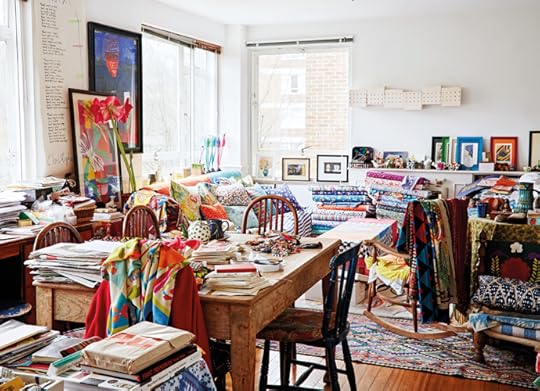
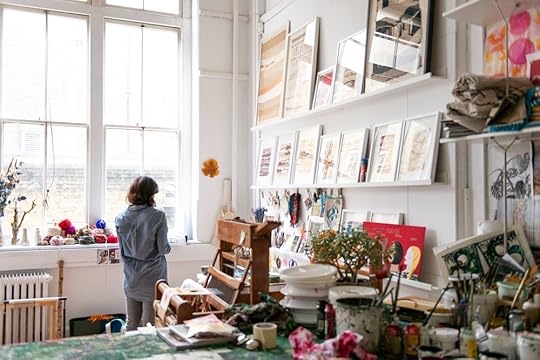
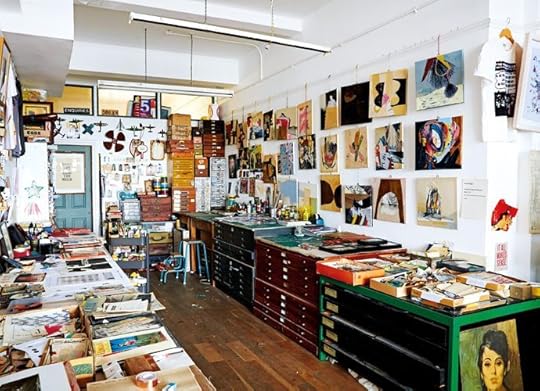
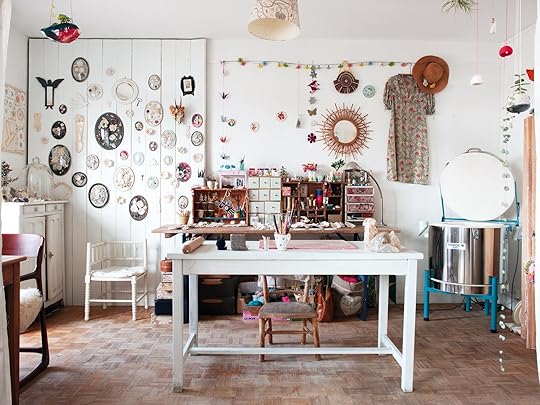
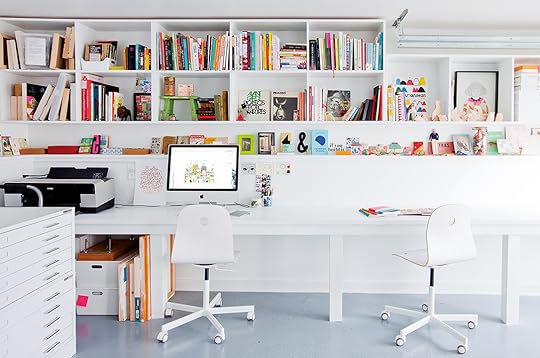
Studio is a book about helping artists create a perfect studio to fit their needs. The book is divided into three parts. Part One shows different types of inspirational studios based on a specific design aesthetic. So, for example, within Part One there is a section called "Bright," where three artists with bright studios are featured. Other design styles featured are Mono(chromatic), Natural, Industrial, and Collected. And after each section, there is a two-page spread offering tips on how to achieve each "look."
Part Two features more gorgeous studios and offers even more organizational and decorating tips, this time based on type of art. So the spaces featured are studios for artists in Crafts (e.g., woodworking and ceramics); Fashion and Textiles (e.g., textile designer); Fine Art, Illustration, and Graphic Design; Writing, Blogging, and Photography; and Workshops and Upcycling (e.g., stage set designer).
Part Three is less about drooling over other artists's studios and more about creating your own. It shares practical advice on how to organize, use, design, light, and live in your space.
I'm ashamed to say that I was ambivalent about reading this book at first. I don't know, I just wasn't that excited about it. But, wow, Studio surprised me. First of all, it's gorgeous. Even if you just put this book on your coffee table, you won't be disappointed. But more than that, this book has reminded me how important it is to have a pleasant and well-tuned workspace--not only so you can be the best creator you can be, but also because it helps give your art legitimacy. Author Sally Coulthard says, "A studio isn't just a building or a room, it's an acknowledgment that what you are doing is important enough to deserve its own space." Holy smokes. Wow. Yes. And she goes on to say, "Give yourself permission to have a studio. If you do anything creative, you need a space that supports your passion." Well, shoot. Okay, I will.
This ended up being one of those books like Big Magic: Creative Living Beyond Fear, where, after I read it, I realized that 1) I am a legitimate artist, damn it!, and 2) I need space, both mentally and physically, to CREATE. Reading Studio was a mini wake-up call, an unexpected plea from my artistic self for some creative space. I may have begun reading this book with an attitude of meh, but I finished it feeling energized, excited, and motivated to be a better artist.
I've always dreamed about having a creative space, I'm glad I now have one, but sometimes when I'm writing or creating art, I find myself in a dull, no productivity zone, and I find that I always reach for my mobile or a book such as this gem to get inspired by other creatives.
I think decor is very important in creating beauty, I love to see what a creative soul deems beautiful, how they surround themselves with items that help them to create, I do the same thing.
This book is truly beautiful and it's chaptered into sections like bloggers spaces, artists spaces, jewelry studios, sculpting studios, and so on... some places appealed to me more than others, which is expected, I liked the book so much that I wanted more places, and more artists to share their sanctuary (as I think of my own).
I picked this book up because I was interested in specific practical choices that creative people made to make their studios more functional or to solve problems for their work. This book is mostly about aesthetic inspiration. Lots of pretty stuff, but not what I was looking for.
I am not an Ikea person and when deciding to decorate a room I always find myself wondering what I should put in/leave out in my space.
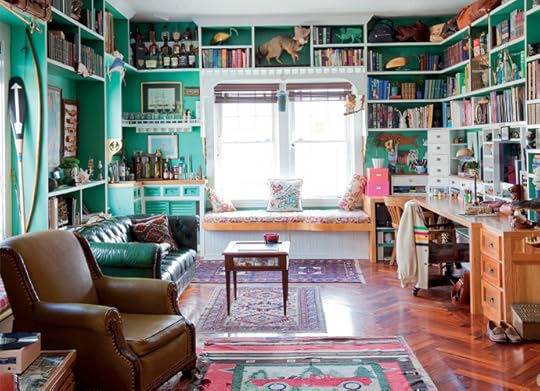
Studio gives you endless ideas; a kind of organized chaos, art and muse, furniture and fantasy. I love the felted animal heads mounted on the walls, the texture of tapestries, the old wooden card catalogue and the muti-use furniture. There is no shortage of imagination here and use of recycling is envious.
I challenge everyone to not find one space that they love, will steal an idea from and/or find inspiring.
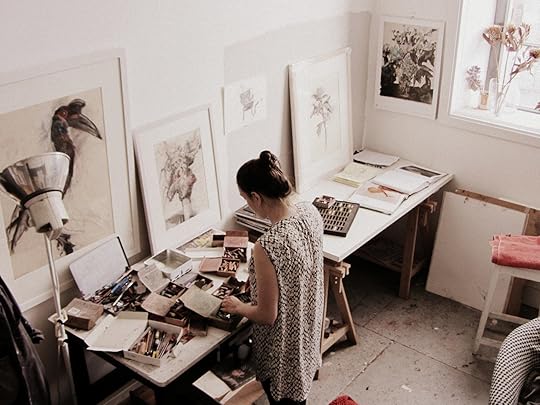
For me, this was the kind of coffee-table book that benefited from reading the text thoroughly in order to fully appreciate it. As I initially flicked through the pages I felt a small pang of disappointment since I'd hoped that it might've featured more fine/visual artists' studios (painters, printmakers, sculptors, and the like). So, a bit anticlimactic in that regard.
At any rate, this book incorporates a broad view of the term 'studio', showcasing a wide variety of workspaces and practices (stretching the term to include industrial workshops, home offices, showrooms etc.). It was only through reading the description of each space that I was better able to appreciate the purpose and utilisation behind them. Furthermore, the author does provide many practical and insightful thoughts and ideas on what a studio is, and how it might best function. But still, the artist in me was left wanting more.
Dream studios, practical studios ,working and dreaming studios - for all types of artists - so much fun, so much inspiration all in one book with an international flair. I garnered new ideas for arranging and re-arranging my supplies in both my art studio and my quilting studio. I liked the idea of new items, repurposed and antique and scavenged items - all making appearances in this book. Also brief cameos of artists in their studios - all sorts of artists- painters, writers, bloggers, textile artists, photographers, craftsman with an assortment of space.
Inspirational for both setting up working studios, and acting as an armchair visitor to artists' studios. Would like to have seen new images rather than some of the duplications.
Disclaimer: I was provided with a review copy from the publisher. All opinions are entirely honest.
This book strikes a balance between being informative and aspirational. Even if you don't have sufficient space or funds for a dedicated studio, the author has included so much practical advice you'll start to look at the space you do have quite differently, and can probably create a special place that supports your passion.
The large hardcover edition has three sections. In the first, Sally covers Studio Inspiration - decor ideas and styles that will suit all tastes and reflect your creativity. In the second section, Sally looks a the different ways your studio space needs to be used based on spatial and equipment requirements of your Studio Work. Finally, Studio Elements looks at all sorts of practical choices and considerations.
"If this book inspires you to be creative and make a space where you can express yourself, that's the best result I could hope for."