

What do you think?
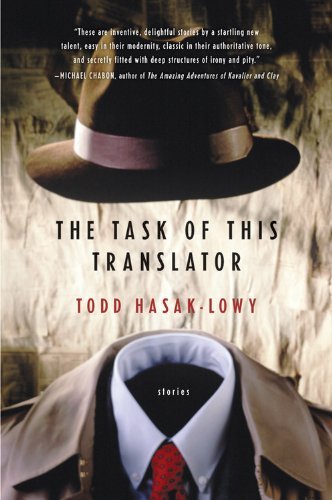
The Task Of This Translator: A Brilliant Satirical Debut – Funny Literary Short Stories
Stylistically daring, morally perplexing, and outrageously funny, Todd Hasak-Lowy's The Task of This Translator marks the debut of a writer of extraordinary talent. In these seven stories, Hasak-Lowy finds entry into daunting matters such as genocide and obesity through the absurd experiences of a series of unlikely protagonists.
A journalist sets out to write an investigative piece on a dieting company that uses bodyguards to protect overeaters from themselves but loses his bearings when he becomes a client and is paired up with a bodyguard of his own. In the coffee shop of Israel's Holocaust memorial museum, a stale pastry triggers a brawl between an American tourist and the Israeli cashier. A man misplaces his wallet shortly before a nuclear exchange between India and Pakistan. An unwilling and mostly unqualified slacker finds himself cast into the role of translator for the bitter reunion of a family torn apart years earlier by unspecified brutality.
A standout story collection, The Task of This Translator is funny, intricate, and deeply human.
A journalist sets out to write an investigative piece on a dieting company that uses bodyguards to protect overeaters from themselves but loses his bearings when he becomes a client and is paired up with a bodyguard of his own. In the coffee shop of Israel's Holocaust memorial museum, a stale pastry triggers a brawl between an American tourist and the Israeli cashier. A man misplaces his wallet shortly before a nuclear exchange between India and Pakistan. An unwilling and mostly unqualified slacker finds himself cast into the role of translator for the bitter reunion of a family torn apart years earlier by unspecified brutality.
A standout story collection, The Task of This Translator is funny, intricate, and deeply human.
- GenresShort StoriesFiction
272 pages, Paperback
First published January 1, 2005
About the author
Todd Hasak-Lowy
27 books46 followersVERY SHORT BIO:
My name is Todd, and I’ve been writing books for about fifteen years. I started writing books for adults, but now I write books for kids and teenagers, too. My most recent book is a middle-grade novel called 33 MINUTES. I’ve also published a short story collection THE TASK OF THIS TRANSLATOR and the novel CAPTIVES. In addition to writing fiction, I teach creative writing. I live in Evanston, Illinois (just outside Chicago), with my wife, two daughters, a dog, and two cats.
MUCH LONGER AND NOT NECESSARILY INTERESTING BIO:
I was born in Detroit and raised in its suburbs. I’m the second of three brothers. All of us were born in May. Other than my immediate family, the most important part of my childhood was going to Camp Tavor in Three Rivers, Michigan. Tavor is part of a Labor-Zionist youth movement called Habonim-Dror. After high school I spent a year in Israel living on a kibbutz (sort of a collective farm). I worked in irrigation.
I attended the University of Michigan as an undergrad. I majored in Near Eastern and North African Studies. I knew by around age 20 that I wanted to become a professor, and I knew that I wanted to study Israel and the Middle East. But it took me a while to decide which field or discipline I wanted to pursue.
I wound up settling on Comparative Literature. I attended the University of California, Berkeley for graduate school, where I started in 1994. There I studied Hebrew and Arabic literature, though by the time I was writing my dissertation I was only working on Hebrew literature. The weird thing about being at Berkeley, especially at first, was that I really had no idea how to study literature. My major at Michigan had been interdisciplinary, with an emphasis on history. I had always loved reading novels, but had never done so with much systematic instruction. Suddenly I was attending arguably the top school for studying literature in the world, and I was lost. My first few semesters at Berkeley, were, needless to say, difficult.
But when I started making sense of fiction (and narrative in general), the payoff was huge. I still remember, sitting in my younger brother’s apartment (both my brothers moved to San Francisco around the time I moved to Berkeley), reading some comic or graphic novel that was clearly in the tradition of R. Crumb or Harvey Pekar. I was amazed how the author was able to represent an entire imagined world, and that this world was utterly specific and alive, and that the author was creating all this through some remarkable combination of decisions, techniques, ideas, etc.
I guess that may have been an epiphany of sorts. It was definitely, for me, a before and after moment. I suddenly realized in some way, Oh, this [this=writing stories] is really interesting, and somehow no longer 100% mysterious, and so maybe I could do it. I had always had a creative impulse (one that largely manifested itself from a young age with my behaving like a clown), but I never had a form or a medium to work in. Now I sensed I may have found one. I started writing a few months later, with the help of two novels (Nicholson Baker’s The Mezzanine and Yaakov Shabtai’s Past Continuous). These two works, each in its own way, offered me very particular models for forging my own prose. My voice as a writer, such as it is, came out almost fully formed right away. Sometimes you get lucky.
During the second half of graduate school (graduate school lasted a LONG time, eight years), I worked on my dissertation and—when I had both time and inspiration—wrote short stories on the side. In other words, most of the time I wasn’t writing fiction. I was fortunate to be put in touch with Simon Lipskar, who agreed to become my agent after seeing a few of my early stories. He helped me slowly put together a collection.
In 2002, I relocated with my wife and daughter to Gainesville, Florida, because I got a job teaching Hebrew language and literature
My name is Todd, and I’ve been writing books for about fifteen years. I started writing books for adults, but now I write books for kids and teenagers, too. My most recent book is a middle-grade novel called 33 MINUTES. I’ve also published a short story collection THE TASK OF THIS TRANSLATOR and the novel CAPTIVES. In addition to writing fiction, I teach creative writing. I live in Evanston, Illinois (just outside Chicago), with my wife, two daughters, a dog, and two cats.
MUCH LONGER AND NOT NECESSARILY INTERESTING BIO:
I was born in Detroit and raised in its suburbs. I’m the second of three brothers. All of us were born in May. Other than my immediate family, the most important part of my childhood was going to Camp Tavor in Three Rivers, Michigan. Tavor is part of a Labor-Zionist youth movement called Habonim-Dror. After high school I spent a year in Israel living on a kibbutz (sort of a collective farm). I worked in irrigation.
I attended the University of Michigan as an undergrad. I majored in Near Eastern and North African Studies. I knew by around age 20 that I wanted to become a professor, and I knew that I wanted to study Israel and the Middle East. But it took me a while to decide which field or discipline I wanted to pursue.
I wound up settling on Comparative Literature. I attended the University of California, Berkeley for graduate school, where I started in 1994. There I studied Hebrew and Arabic literature, though by the time I was writing my dissertation I was only working on Hebrew literature. The weird thing about being at Berkeley, especially at first, was that I really had no idea how to study literature. My major at Michigan had been interdisciplinary, with an emphasis on history. I had always loved reading novels, but had never done so with much systematic instruction. Suddenly I was attending arguably the top school for studying literature in the world, and I was lost. My first few semesters at Berkeley, were, needless to say, difficult.
But when I started making sense of fiction (and narrative in general), the payoff was huge. I still remember, sitting in my younger brother’s apartment (both my brothers moved to San Francisco around the time I moved to Berkeley), reading some comic or graphic novel that was clearly in the tradition of R. Crumb or Harvey Pekar. I was amazed how the author was able to represent an entire imagined world, and that this world was utterly specific and alive, and that the author was creating all this through some remarkable combination of decisions, techniques, ideas, etc.
I guess that may have been an epiphany of sorts. It was definitely, for me, a before and after moment. I suddenly realized in some way, Oh, this [this=writing stories] is really interesting, and somehow no longer 100% mysterious, and so maybe I could do it. I had always had a creative impulse (one that largely manifested itself from a young age with my behaving like a clown), but I never had a form or a medium to work in. Now I sensed I may have found one. I started writing a few months later, with the help of two novels (Nicholson Baker’s The Mezzanine and Yaakov Shabtai’s Past Continuous). These two works, each in its own way, offered me very particular models for forging my own prose. My voice as a writer, such as it is, came out almost fully formed right away. Sometimes you get lucky.
During the second half of graduate school (graduate school lasted a LONG time, eight years), I worked on my dissertation and—when I had both time and inspiration—wrote short stories on the side. In other words, most of the time I wasn’t writing fiction. I was fortunate to be put in touch with Simon Lipskar, who agreed to become my agent after seeing a few of my early stories. He helped me slowly put together a collection.
In 2002, I relocated with my wife and daughter to Gainesville, Florida, because I got a job teaching Hebrew language and literature
Ratings & Reviews
Friends & Following
Create a free account to discover what your friends think of this book!
Community Reviews
Displaying 1 - 20 of 20 reviews

August 30, 2007
Indulge me for a second. We're going to play a game of literary differentiation. I'll post a few passages from a book below, and you tell me if the passage was written by Todd Hasak-Lowy or David Foster Wallace, author of Infinite Jest.
Ready?
1. Keep in mind that that the guy asking most of the questions sweats a great deal, as in constantly, as in he would cause the makeup/sweat artist for Gatorade ads to fear for his or her job. He sweats so much he long ago stopped paying it much notice, so the sweat simply flows, runs, he perspires freely, wetting his collar, undershirts, tie, even his jacket, which he has kept on for this meeting knowing too well what the sight of wet spots under his arm extending well past his elbows would do to this potential employee.
2. Keith's father died of a heart attack at 2:58 A.M. on a Tuesday morning, so it was officially Wednesday, though in Keith's father's mind it was still Tuesday because he hadn't yet gone to sleep, ot hadn't yet been able to fall asleep, though he had briefly tried a couple hours before he died.
3. I'm hungry. I say to myself, over and over, that word "peckish." I consider the etymology of the term. Does it, like "gnawing hunger," express the way hunger tirelessly tells you you're hungry? Because I am. Hungry, I mean. I got up too early, I underate at lunch. And I'm bored. Whether Ron likes it or not, I'm getting a snack at the break. A naughty snack.
Okay...the answers: All three of these passages were written by Todd Hasak-Lowy. If, for those of you who have read David Foster Wallace before, were compelled to guess "David Foster Wallace" for any of the preceding passages, I want you to know that I understand. I gazed at the author photo for a short time trying to determine if maybe the handsome young man staring back at me might be David Foster Wallace in disguise. I experimented with anagrams of David Foster Wallace to see if any combination led to Todd Hasak-Lowy (they didn't, the "H" presents problems). It seems that these two writers are, in fact, two different people, but you wouldn't know it to read their work.
I enjoyed this book a great deal, being a fan of Wallace myself, and I actually felt slighted when it was over with. I wanted more. I was actually disappointed that the book had ended.
It's a book of short stories, seven of them to be exact. All of them are funny and thought-provoking. But none of them get bogged down in the things that make Wallace's work difficult for some people to read. Footnotes, anyone?
The stories ran the gamut in tone and subject matter. The first one ("On the Grounds of the Complex Commemorating the Nazis' Treatment of the Jews")is a particular highlight, in which a stale pastry in the coffee shop of Israel's Holocaust memorial museum causes a nasty brawl between an American tourist and the Israeli cashier. There's another ("Willpower, Inc.") about a weight loss program in which the obese are teamed up with bodyguards who are trained and instructed to beat the hell out of you if you eat more than your share. There's also the story about a man whose own cures for his own insomnia eventually kill him ("How Keith's Dad Died"). My personal favorite ("The End of Larry's Wallet") starts out as a man's frantic attempts to locate his missing wallet, but eventually descends into a post-modern explanation as to why this story isn't working out like it should.
If you like David Foster Wallace, then read this book. You'll enjoy it a great deal.
Ready?
1. Keep in mind that that the guy asking most of the questions sweats a great deal, as in constantly, as in he would cause the makeup/sweat artist for Gatorade ads to fear for his or her job. He sweats so much he long ago stopped paying it much notice, so the sweat simply flows, runs, he perspires freely, wetting his collar, undershirts, tie, even his jacket, which he has kept on for this meeting knowing too well what the sight of wet spots under his arm extending well past his elbows would do to this potential employee.
2. Keith's father died of a heart attack at 2:58 A.M. on a Tuesday morning, so it was officially Wednesday, though in Keith's father's mind it was still Tuesday because he hadn't yet gone to sleep, ot hadn't yet been able to fall asleep, though he had briefly tried a couple hours before he died.
3. I'm hungry. I say to myself, over and over, that word "peckish." I consider the etymology of the term. Does it, like "gnawing hunger," express the way hunger tirelessly tells you you're hungry? Because I am. Hungry, I mean. I got up too early, I underate at lunch. And I'm bored. Whether Ron likes it or not, I'm getting a snack at the break. A naughty snack.
Okay...the answers: All three of these passages were written by Todd Hasak-Lowy. If, for those of you who have read David Foster Wallace before, were compelled to guess "David Foster Wallace" for any of the preceding passages, I want you to know that I understand. I gazed at the author photo for a short time trying to determine if maybe the handsome young man staring back at me might be David Foster Wallace in disguise. I experimented with anagrams of David Foster Wallace to see if any combination led to Todd Hasak-Lowy (they didn't, the "H" presents problems). It seems that these two writers are, in fact, two different people, but you wouldn't know it to read their work.
I enjoyed this book a great deal, being a fan of Wallace myself, and I actually felt slighted when it was over with. I wanted more. I was actually disappointed that the book had ended.
It's a book of short stories, seven of them to be exact. All of them are funny and thought-provoking. But none of them get bogged down in the things that make Wallace's work difficult for some people to read. Footnotes, anyone?
The stories ran the gamut in tone and subject matter. The first one ("On the Grounds of the Complex Commemorating the Nazis' Treatment of the Jews")is a particular highlight, in which a stale pastry in the coffee shop of Israel's Holocaust memorial museum causes a nasty brawl between an American tourist and the Israeli cashier. There's another ("Willpower, Inc.") about a weight loss program in which the obese are teamed up with bodyguards who are trained and instructed to beat the hell out of you if you eat more than your share. There's also the story about a man whose own cures for his own insomnia eventually kill him ("How Keith's Dad Died"). My personal favorite ("The End of Larry's Wallet") starts out as a man's frantic attempts to locate his missing wallet, but eventually descends into a post-modern explanation as to why this story isn't working out like it should.
If you like David Foster Wallace, then read this book. You'll enjoy it a great deal.

May 20, 2007
I like this book. I am giving it 5 stars.
I read this book in the basement of a house in Jersey City, New Jersey.
I was alone but I grinned a lot and read a lot of it at one time.
I read this book in the basement of a house in Jersey City, New Jersey.
I was alone but I grinned a lot and read a lot of it at one time.
June 6, 2008
i like "will power, inc." esp. the part where the man is eating other people's dessert and his 'guardian' grabs his wrist and makes him drop the spoon.
i also like the interview story where the interviewer asks the interviewee what the university trained him to say when answering the questions. it made me think 'what if everytime i interviewed for a job, i told the absolute truth; would i ever get a job?" like people are so used to those little lies that the truth is shocking, kind of.
i also like the interview story where the interviewer asks the interviewee what the university trained him to say when answering the questions. it made me think 'what if everytime i interviewed for a job, i told the absolute truth; would i ever get a job?" like people are so used to those little lies that the truth is shocking, kind of.

January 27, 2011
One of the most interesting collections of short stories I've read in a long time. It took a while to get Hasak'Lowy's bleak, black sense of humor, but once I did I went quickly from story to story -- unusual for me in short story collections.
September 1, 2010
Hasak-Lowy's wit and imagination are right in line with the sort of stories I enjoy reading. Very smart. Very funny.

September 4, 2011
באחרית הדבר למהדורה העברית, כותב טוד חזק - לואי:
"הרבה לפני 11 בספטמבר 2001 וכל הטרגדיות שבאו בעקבות היום ההוא - שאפילו פה, אפילו בפרוורים המשגשגים והרגועים לכאורה, שהמצב האמיתי שונה מכפי שנדמה; שמתחת לפני השטח מתקיים עולם אחר, עולם מסובך ובהול, עולם שבכוחה של הספרות לחשוף. פעמים הרגשתי - קשה לדעת אם הדבר אפשרי - שאיני אלא סופר עברי שכותב על ארצות הברית באנגלית." (252)
ובכך למעשה, הוא מסכם את הסיפורים המבריקים שמאוגדים בספר: חשיפה איטית ומשכנעת של עולם אחר, מסובך ובהול.
ברגיל, אני לא ששה לקרוא סיפורים קצרים. הכותב צריך להיות בעל יכולות וירטואוזיות כדי להוציא תחת ידו סיפור עם פואנטה שגם יספק את הקורא. מלאכת הסיפור הקצר כל כך דחוסה, שאינה משאירה מקום לטעויות גסות או אף קלות.
לכן, הייתי ממליצה לכם לדלג על הסיפור השלישי בקובץ "סופו של הארנק של לארי". אני חושבת שבקובץ שבו כל סיפור מתעלה על השני, אין מקום לסיפור בינוני.
ולמי שיש זמן רק לסיפור אחד, הייתי ממליצה לקרוא את "כח רצון בע"מ". בו היכולות של חזק - לואי מזוקקות לכדי שלמות משעשעת, אירונית ומרתקת.
או אולי את "שבט הריידרז", שאני פשוט חייבת להביא לכם ציטוט קטן מתוכו:
"לוסי, או לו-לו, כפי שכינה אותה טי-דוג, לבשה מכנסי ג`ינס שחורים שחתכו במותינה, וחולצת כותנה צהובה עם פרנזים על השרוולים. רוב כפתוריה של החולצה לא היו רכוסים, וכדי להסתיר את שדיה היא לבשה גופיה צמודה, שלא נבדלה משמעותית בגזרתה או באריג שלה מזו של טי -דוג. אבל בניגוד לחזה הצר והרזה של טי-דוג - שלא הצליח למלא אפילו את גופיתו הזעומה - לוסי ושדיה הטביעו רושם עז על גופייתה. הרושם הזה לא היה מוגבל לחולצה עצמה, מאחר שהודות להיקף שדיה ולמפתח הצוואר של גופייתה, לא החזייה ולא הגופייה ולא חולצת הכותנה הצליחו להסתיר נתח של ממש מכל אחד משדיה. אין זה פשוט לאמוד את כמות הציצי הגלויה, בהתחשב בהיות הציצים הללו תלת מימדיים." (185 -186)
צריך לבוא עם ראש פתוח לקריאת הקובץ. הסיפורים אינם סטנדרטים. הם אנושיים אבל לעיתים יש בהם תפנית חדה, לפעמים הם מציבים בפני הקורא מראה מחרידה ומעוותת שזורקת אותו למציאות הפרטית והאומללה שבה הוא חי.
אבל הקריאה בו מתגמלת בצורות ראויות לציון חריג כשמדובר בסיפורים קצרים.
אני כבר חסרת סבלנות לקריאת הספר הבא שלו.
"משימתו של המתרגם הזה", טוד חזק-לואי
הוצאת זמורה ביתן, 2008, 253 עמ`
"הרבה לפני 11 בספטמבר 2001 וכל הטרגדיות שבאו בעקבות היום ההוא - שאפילו פה, אפילו בפרוורים המשגשגים והרגועים לכאורה, שהמצב האמיתי שונה מכפי שנדמה; שמתחת לפני השטח מתקיים עולם אחר, עולם מסובך ובהול, עולם שבכוחה של הספרות לחשוף. פעמים הרגשתי - קשה לדעת אם הדבר אפשרי - שאיני אלא סופר עברי שכותב על ארצות הברית באנגלית." (252)
ובכך למעשה, הוא מסכם את הסיפורים המבריקים שמאוגדים בספר: חשיפה איטית ומשכנעת של עולם אחר, מסובך ובהול.
ברגיל, אני לא ששה לקרוא סיפורים קצרים. הכותב צריך להיות בעל יכולות וירטואוזיות כדי להוציא תחת ידו סיפור עם פואנטה שגם יספק את הקורא. מלאכת הסיפור הקצר כל כך דחוסה, שאינה משאירה מקום לטעויות גסות או אף קלות.
לכן, הייתי ממליצה לכם לדלג על הסיפור השלישי בקובץ "סופו של הארנק של לארי". אני חושבת שבקובץ שבו כל סיפור מתעלה על השני, אין מקום לסיפור בינוני.
ולמי שיש זמן רק לסיפור אחד, הייתי ממליצה לקרוא את "כח רצון בע"מ". בו היכולות של חזק - לואי מזוקקות לכדי שלמות משעשעת, אירונית ומרתקת.
או אולי את "שבט הריידרז", שאני פשוט חייבת להביא לכם ציטוט קטן מתוכו:
"לוסי, או לו-לו, כפי שכינה אותה טי-דוג, לבשה מכנסי ג`ינס שחורים שחתכו במותינה, וחולצת כותנה צהובה עם פרנזים על השרוולים. רוב כפתוריה של החולצה לא היו רכוסים, וכדי להסתיר את שדיה היא לבשה גופיה צמודה, שלא נבדלה משמעותית בגזרתה או באריג שלה מזו של טי -דוג. אבל בניגוד לחזה הצר והרזה של טי-דוג - שלא הצליח למלא אפילו את גופיתו הזעומה - לוסי ושדיה הטביעו רושם עז על גופייתה. הרושם הזה לא היה מוגבל לחולצה עצמה, מאחר שהודות להיקף שדיה ולמפתח הצוואר של גופייתה, לא החזייה ולא הגופייה ולא חולצת הכותנה הצליחו להסתיר נתח של ממש מכל אחד משדיה. אין זה פשוט לאמוד את כמות הציצי הגלויה, בהתחשב בהיות הציצים הללו תלת מימדיים." (185 -186)
צריך לבוא עם ראש פתוח לקריאת הקובץ. הסיפורים אינם סטנדרטים. הם אנושיים אבל לעיתים יש בהם תפנית חדה, לפעמים הם מציבים בפני הקורא מראה מחרידה ומעוותת שזורקת אותו למציאות הפרטית והאומללה שבה הוא חי.
אבל הקריאה בו מתגמלת בצורות ראויות לציון חריג כשמדובר בסיפורים קצרים.
אני כבר חסרת סבלנות לקריאת הספר הבא שלו.
"משימתו של המתרגם הזה", טוד חזק-לואי
הוצאת זמורה ביתן, 2008, 253 עמ`

December 17, 2014
I had such varied feelings about the stories in this collection that I had to break it down and rate them individually. Overall average rating: 3.28 - despite a few truly good stories, the duds dragged down my rating.
On the Grounds of the Complex Commemorating the Nazis' Treatment of the Jews: 2 stars. I'm not even sure why this story was put in the collection, except it lends to the pervasive theme of violent Israelis that ties together this little collection. A rocky start to an otherwise fairly strong collection.
Will Power, Inc.: 4.5 stars. One of my favorites in this collection. Entertains the concept of a company who hires out body guards to keep their clients from overeating. I think even more could have been done with this idea, though.
The End of Larry's Wallet: 4 stars. An odd tale that juxtaposes the dissolution of a man's life with nuclear conflict. Slightly silly meta-narrative.
The Interview: 5 stars. A hilarious take on the traditional interview. I laughed aloud.
The Task of This Translator: 3.5 stars. The titular story really was not the strongest, but it was pretty amusing.
Raider Nation: 2.5 stars. A strange acquaintance between a socially awkward grad student and "thug" type ends oddly. I was not particularly entertained.
How Keith's Dad Died: 1.5 stars. This collection started and ended on pretty bad notes for me. I was really enjoying it in the middle and then it started to go downhill again. It definitely hit rock bottom in this overly wordy and ultimately boring story. The first and last stories in this collection could easily be skipped.
On the Grounds of the Complex Commemorating the Nazis' Treatment of the Jews: 2 stars. I'm not even sure why this story was put in the collection, except it lends to the pervasive theme of violent Israelis that ties together this little collection. A rocky start to an otherwise fairly strong collection.
Will Power, Inc.: 4.5 stars. One of my favorites in this collection. Entertains the concept of a company who hires out body guards to keep their clients from overeating. I think even more could have been done with this idea, though.
The End of Larry's Wallet: 4 stars. An odd tale that juxtaposes the dissolution of a man's life with nuclear conflict. Slightly silly meta-narrative.
The Interview: 5 stars. A hilarious take on the traditional interview. I laughed aloud.
The Task of This Translator: 3.5 stars. The titular story really was not the strongest, but it was pretty amusing.
Raider Nation: 2.5 stars. A strange acquaintance between a socially awkward grad student and "thug" type ends oddly. I was not particularly entertained.
How Keith's Dad Died: 1.5 stars. This collection started and ended on pretty bad notes for me. I was really enjoying it in the middle and then it started to go downhill again. It definitely hit rock bottom in this overly wordy and ultimately boring story. The first and last stories in this collection could easily be skipped.

Read
August 31, 2012Musing on connection and alienation, Hasak-Lowy often forces his characters into wild circumstances and contortions. In the title story a nebbish serves reluctantly as the translator for a warring family, but manages to broker an unexpected truce. In another story a journalist investigates a diet company that goes to extremes to control overeaters, and finds himself sucked in as a client. Hasak-Lowy's humor is sardonic and his interest in detail is exhaustive, sometimes reminiscent of David Foster Wallace's. In my favorite story of the seven, a frictive job interview morphs into something like a cross between a competitive therapy session and a mutual confessional. Hasak-Lowy lives in Evanston. (Jeff B., Reader's Services)

November 6, 2013
I'm sure Hasak Lowy has been compared to David Foster Wallace. There is something about his subject matter and his obsessive rhythm that bring DFW to mind. But with DFW you soon realize that you are reading the writing of someone who is slightly demented, who may be going off the rails, and you realize that there is a risk in following him where he seems to be going.
Hasak Lowy is a little more calculating, which makes his stories a little less scary. They are, however, thoroughly enjoyable. ESPECIALLY for anyone who has been a graduate student at Berkeley during the heyday of Marxist literary theory.
Hasak Lowy is a little more calculating, which makes his stories a little less scary. They are, however, thoroughly enjoyable. ESPECIALLY for anyone who has been a graduate student at Berkeley during the heyday of Marxist literary theory.

March 24, 2009
This book made me sad because it came thisclose to true greatness...and blew it. Each short story started with an amazing concept and the beginning actually made my heart beat faster - then he blew it. To make sure, I asked the much-smarter than me friend (there is more than one to choose from, of course, but this one also reads very very fast) and she agreed. We thought we could give our hearts to this book, and then it let us down. I am not sure it is not better to start out mediocre and fulfill the expectation than to raise them so high, only to have them dashed.

July 6, 2011
The stories are very enjoyable--I recommend to anyone who likes Michael Chabon or postmodern fiction. I love the former but don't have strong feelings about the latter, and so I got to the end of a few of the stories and felt like I'd missed something. That being said, with the exception of The End of Larry's Wallet, I blasted through all of the stories and found myself laughing quite frequently.

December 15, 2016
I hate the concept of reviewing a book I haven't actually finished, but I couldn't finish this. The stories have interesting premises and the writing is almost fun, but the smugness and naval gazing and repetitive construction/thematic elements/being smug was just too much. I somehow both liked the stories I read enough that I almost gave this book a three and had to stop reading it because I hated it, so... compromise, I guess.

October 5, 2007
I enjoyed these stories very much. I picked up my copy in a used bookstore because the title caught my eye. I used to not like short stories, but this book helped me fall in love with them all over again.
Read
December 18, 2010These were quite insightful short stories, well written, with a touch of humor. The title story was excellent - about a reluctant student translator thrown into a alarming situation, touching and thought provoking.
August 16, 2007
fantastic short stories! i've been waiting for more from this excellent writer.


March 24, 2011
I just finished this book and loved every second of it.

June 29, 2023
7 racconti, uno stile linguistico singolare nel raccogliere la vita come fosse un meccanismo a cui l'essere umano si assoggetta. Senza possedere profondità psicologica la vita dei protagonisti viene raccontata come una combinazione necessaria di eventi a cui si è consegnati, sempre sull'orlo del ridicolo o dello stravagante.

April 15, 2026
Racconti. Non l'ho neanche finito
Displaying 1 - 20 of 20 reviews