This is the first of two books in which Cornelius Grove reveals the differences in societal values that explain why East Asian students always gain much higher scores on the international comparative tests than American students. While Grove’s second book explores schools in East Asia, “The Drive to Learn” explores HOMES there, i.e., the ways in which parents instill in young children a determination to excel in academic learning.
At the beginning of this accessible, short book (138 text pages), Grove shares the conclusion he arrived at through reading multiple research reports: In relation to American children, East Asian children are “more receptive” to classroom learning.
The first seven chapters offer a step-by-step explanation of why East Asian children are comparatively more receptive to learning in classrooms. The reasons are grounded in the characteristics of East Asian culture, which Grove explains in terms of psychology, sociology, and history. Among the many topics discussed are intrinsic vs. extrinsic motivation, passive vs. active parenting, and the assumptions made about newborns.
Next, two chapters reveal the mindsets and practices of East Asian parents that support their children’s academic learning, after which a third chapter asks, “So What Should We Do?” A final chapter addresses the questions of who is responsible for a student’s learning and why East Asians are believed to lack creativity.
East Asian children’s drive to learn in school is stronger that the comparable drive in American children. The difference is a deeply ingrained set of values that respects and craves the type of knowledge acquired through academic study. Through modeling, high expectations, and active academic support, East Asian parents pass along these values to their children.
Don't miss Cornelius Grove's blog, "Pleasures & Perils of Writing Non-Fiction."
Have you ever heard of anyone who’s an “ethnologist”? That’s what I am. Ethnology is a discipline whose practitioners compare the values and ways of life in two or more societies to come up with insights about effective living for the people of those societies, and for others as well. Literally, ethnology means “ethnic group study” (ethnos + ology).
I’m an ethnologist of education. I compare child-rearing and schooling within a variety of societies to gain insights into effective ways of bringing up children to become productive, responsible adults. My principal raw materials are the research findings of anthropologists of childhood and others who explore homes and schools around the world.
Does this all seem too scholarly for you? Please know that I’m determined to write books that are engaging and readily understandable. I actually have friends who read all my draft chapters and point out where I haven’t been 100% clear. And my books are quite short; the longest one (not including appendices, notes, etc.) is only 195 pages. My goal is to make anthropologists’ fascinating and insightful research findings accessible for regular folks.
● THE APTITUDE MYTH. For this book, I relied on the findings of historians. I wanted to know why many Americans came to believe that a child’s grades in school are very largely a reflection of their inborn intelligence (aptitude). 178 text pages. www.theaptitudemyth.info
● THE DRIVE TO LEARN. I was curious why East Asian children are better students than their American peers. I found two reasons. The first is discussed in this book: it’s about how East Asian parents raise their children at home. 116 text pages. www.thedrivetolearn.info.
● A MIRROR FOR AMERICANS. This book discusses the other reason why East Asian children are superior students: it’s about how they are taught in East Asian preschools and primary schools (up to grade 5). 126 text pages. www.amirrorforamericans.info.
● HOW OTHER CHILDREN LEARN. I explore five traditional (pre-modern) societies in which there are few schools or none at all, focusing on how parents enable their offspring to mature into productive, responsible adults. Described is child-raising among African hunter-gatherers, high Andes herders, Navajos of our Southwest, and villagers of the Middle East and of India. 195 text pages. www.howotherchildrenlearn.info.
This book was provided to me by the publisher in exchange for an honest review.
Around this time last year I was teaching my first college course on campus. We’d been getting an influx of international students, but this was the first time I had so many East Asians in my class. They sat next to each other and behaved similarly in class — quiet but attentive. I found myself questioning the clear differences between them and my American students. Were they self-conscious about speaking English? Did I not interest them as a teacher? How come they never raised their hands to answer questions? It was because of questions like these that I jumped at the chance to review The Drive To Learn: What the East Asian Experience Tells Us about Raising Students Who Excel by Cornelius N. Grove.
Grove’s mission has been to explain to Americans the historical and cultural reasons for their children’s comparatively mediocre performance in schools. In The Aptitude Myth (2013), he revealed the deep historical origins of Americans’ belief that a child’s inborn ability, rather than his effort, determines his level of school performance. And now in The Drive to Learn, Dr. Grove is revealing the deep cultural reasons why our children’s learning in school is consistently below world-class standards. (Read more about the author at TheDriveToLearn.info)
The Drive To Learn includes 9 discovery steps that each begin with a question such as: “Why do American Students Learn Less Than East Asian Students?” or “What Can We Gain from Western Reports about Student Learning in East Asia?”. Grove discovers each answer by consulting anthropological research findings, with each answer raising a fresh question. The new question is then asked at the beginning of the next chapter, and so forth.
After examining the different ways East Asians approach learning, he explains how we can begin parenting with Guān (to be in charge of, to manage, to control) and the seven commitments we can make to our children.
This book was short, interesting, and very easy to read. Grove supports his answers with 100+ references. He also provides an annotated bibliography at TheDriveToLearn.info, where he further highlights fifteen as highly recommended. The Drive To Learn helped answer the questions I had about my East Asian students and then some.
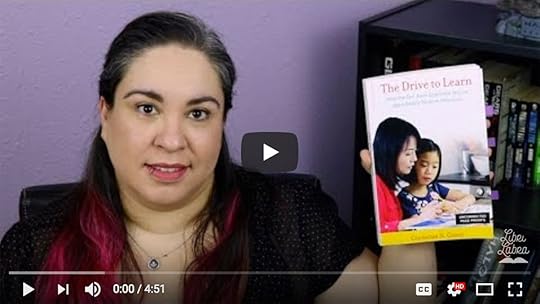
For additional thoughts, please check out my video review:
I decided to read this book solely for the sake of curiosity, as I am neither a parent or involved in the field of education. Though far from a page turner I still found the book rather interesting.
Cornelius N. Grove, the author, spends the bulk of his time delving into causes of the differences in drive to learn between East Asian and American (western) students. Each chapter poses a question related to the differences in learning and study. The author then delves into extensive resources both scientific and more mainstream to find the answer to his questions. Although the information presented is not directly applicable n my life, I really enjoyed delving into the many facets that lead to a child's learning behavior. I also enjoyed the glimpses into cultures half a world away and learning about the differences in our viewpoints. This book, in my humble opinion, is a worthwhile rea.
I thank the publisher and author for the copy of this book I received in a goodreads giveaway.
This book was provided to me by the publisher in exchange for an honest review.
I thought this was a thought provoking book and illuminating. I learned how Asian parents consider themselves their child's tutor/teacher as well and considered how this would work in our society. Clearly, it works.