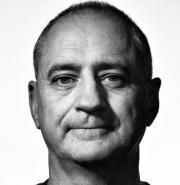
An intimate biography of Richard Avedon, the legendary fashion and portrait photographer who "helped define America's image of style, beauty and culture" (The New York Times), by his longtime collaborator and business partner Norma Stevens and award-winning author Steven M. L. Aronson.
Richard Avedon was arguably the world's most famous photographer--as artistically influential as he was commercially successful. Over six richly productive decades, he created landmark advertising campaigns, iconic fashion photographs (as the star photographer for Harper's Bazaar andthen Vogue), groundbreaking books, and unforgettable portraits of everyone who was anyone. He also went on the road to find and photograph remarkable uncelebrated faces, with an eye toward constructing a grand composite picture of America.
Avedon dazzled even his most dazzling subjects. He possessed a mystique so unique it was itself a kind of genius--everyone fell under his spell. But the Richard Avedon the world saw was perhaps his greatest creation: he relentlessly curated his reputation and controlled his image, managing to remain, for all his exposure, among the most private of celebrities.
No one knew him better than did Norma Stevens, who for thirty years was his business partner andclosest confidant. In Avedon: Something Personal--equal parts memoir, biography, and oral history, including an intimate portrait of the legendary Avedon studio--Stevens and co-author Steven M. L. Aronson masterfully trace Avedon's life from his birth to his death, in 2004, at the age of eighty-one, while at work in Texas for The New Yorker (whose first-ever staff photographer he had become in 1992).
The book contains startlingly candid reminiscences by Mike Nichols, Calvin Klein, Claude Picasso, Renata Adler, Brooke Shields, David Remnick, Naomi Campbell, Twyla Tharp, Jerry Hall, Mikhail Baryshnikov, Bruce Weber, Cindy Crawford, Donatella Versace, Jann Wenner, and Isabella Rossellini, among dozens of others.
Avedon: Something Personal is the confiding, compelling full story of a man who for half a century was an enormous influence on both high and popular culture, on both fashion and art--to this day he remains the only artist to have had not one but two retrospectives at the Metropolitan Museum of Art during his lifetime. Not unlike Richard Avedon's own defining portraits, the book delivers the person beneath the surface, with all his contradictions and complexities, and in all his touching humanity.
You know the six degrees thing? I'm connected by only two degrees. His favourite male model, was very close to my grandparents, and was my doctor. He came from a well-off background, but put himself through medical school by becoming a very successful model who did Vogue, New York, London and Paris on the strength of his looks and the fact he owned his own tailored suits. (He was later an Olympic yachtsman and in his 80s remains stunningly handsome).
Avedon photographed everyone who was anyone politically and in the arts, but said, "I've photographed just about everyone in the world, but what I hope to do is photograph people of accomplishment, not celebrity, and help define the difference". He elevated fashion photography to a genuine fine art with his iconic Dovima with elephants.
One anecdote that me laugh was when Jackie Kennedy, one-upped Avedon in her often spiteful, way. Avedon had done the iconic pictures of the Kennedys which established them as a beautiful and close First Family and had invited 'the Jackie' for the opening of a show, tempting her in all ways to get her there. She didn't turn up, she went to see the show on the day the museum was closed. She knew she was being used for publicity and no one used Jackie (unless they paid).
The book is otherwise boring and very precious to read. Steven M.L. Aronson, his friend for 40 years and Norma Stevens, Avedon's studio manager for 30 years, have canonised Avedon, who himself said, "There is no truth, no history - there is only the way the story is told." . and there is no criticism of him at all, only praise from a million sources, all of whom are named every time they say something complimentary. Or get photographed. Or turn up to a party. Or to an exhibition. I'm not denying the artistry of Avedon's wonderful photographs especially when he left fashion for art, but the book tastes like a bowl of sugar with added saccharine all stirred up with honey. My teeth ache.
The dazzling character and creative genius of Richard Avedon (1923-2004) was captured in this informative and remarkable biography by Norma Stevens (with editor Steven Aronson). After Avedon’s grand arrival in her NYC apartment at a dinner party in 1974, Stevens began working for him as his executive assistant and remained in employment until his death. Stevens was among Avedon’s closest confidants, and provided the details to verify her stories. The Avedon Foundation and Avedon’s only son dispute some of Stevens claims, which isn’t surprising. In many ways this biography seems to be written in part as a memoir, documenting Steven’s very long relationship with Avedon.
Avedon was a highly energetic, enthusiastic and extraordinary individual during his adult life. After his parents divorced, his father abandoned the family and moved out of state. Avedon, already a world renowned fashion photographer, provided financial support for several family members; which would include his son and eventually his son’s former wives and children. Avedon’s sister Louise was admitted to Rockland State Hospital. Avedon was concerned about publicity over the book “The Snake Pit” (1948) that detailed the horror and mistreatment of psychiatric patients at Rockland. Louise remained there with caring staff and frequent visits from her mother until her death in 1968. Avedon faced a life altering change in his own life after a heart attack (1974). This medical crisis prompted him to reconnect and photograph his terminally ill father-- the photographs were published and exhibited at the Metropolitan Art Museum.
Avedon’s career as one of the world’s greatest fashion and portrait photographer lasted for decades. Working with the top models in the industry, he was noted for taking some of the last photographs of Marilyn Monroe. Unfortunately, his book “Nothing Personal” (1965) ended up in the bargain bins, causing Avedon great distress. Avedon was known for teaching and mentoring his assistants that worked with him in his studio and on location, eventually he sent his assistants on their way, fully supporting individual career changes. He also taught classes and workshops. Avedon, quite a showman, loved to entertain-- and frequently cooked “magnificent” meals for guests at his apartment.
Avedon often said he was “married to his work”—he was extremely discreet about his sexual orientation, and didn’t want to be labeled or publically known as “the gay professional photographer.” Avedon had a son with his second wife Evelyn Franklin (m.1951-2004) the couple lived apart for decades and never divorced. Avedon never disputed the rumor mill of speculation—he truly loved and enjoyed the company of the world’s most beautiful women and models. The love of his life was not his wife, as Stevens shared numerous details regarding Avedon’s personal life and sexual preference, names were included. This part of the book was respectfully written, as readers gained a deeper insight of Avedon as a devoted family man and patriarch.
This is the first significant biography of Avedon since his death, and without a doubt Avedon revealed details about his life with Stevens to be shared later with fans and followers. Stevens was a devoted loyal friend, and at times the book appeared to be overly sentimental. Long lists of names were dropped that included a list of doctors in his address book. This seemed so unnecessary, and these parts can easily be skimmed over. Numerous paragraphs and fascinating excerpts were added from celebrities and others. After reading this extensive 722 page biography, the life, work, and complexities of Richard Avedon were possible to understand as never before. Great photos included. **With thanks to the Seattle Public Library.
When he was still only in his 30s, the influential and iconic photographer Richard Avedon provided the inspiration for Fred Astaire’s character, Dick Avery, in the 1957 movie “Funny Face.” In fact, Avedon’s deliberately overexposed portrait of Audrey Hepburn — disembodied nose, lips, eyes and eyebrows — appears in the film’s title sequence, which he designed.
Yet Avedon himself managed, over the course of his six-decade career, to become immensely famous but not overexposed. When he died in 2004, his New York Times obituary explained that despite his work’s widespread recognition in both high fashion and high art, Avedon personally “remained relatively insulated from the world, spending much of his working life in the white confines of his studio, where he could maintain control.”
Thus, it’s a delight to learn more about the man behind the camera in the new book “Avedon: Something Personal,” co-written by Norma Stevens, his studio director from 1976 until Avedon’s death in 2004, and the writer Steven M.L. Aronson. “How many people can say they were never for a minute bored with their job?” Stevens asks. If you like tales of obsessive perfectionism and mercurial extravagance, then you'll never be bored with this lavishly illustrated verbal portrait of one of the 20th century’s photographic masters.
The book opens with the momentous phone call when Avedon invites Stevens — a successful advertising copywriter — to be his studio director, and she, in spite of her misgivings, agrees. “We’re going to make a lot of money together and have a lot of fun,” he promises. Over the 30 years of what Stevens describes as “our business marriage,” Dick, as she calls him, involves her intimately in every move of consequence that he makes as an artist and a businessman.
Given his temperamental and tempestuous nature, their time together has its stratospheric highs and stormy lows, and it’s a credit to the book that it includes this range. Around the turn of the 21st century when the two of them are flying home from Qatar where they'd done “the most exotic and lucrative private commission” of his career photographing “the private menagerie of endangered species belonging to a movie-star-handsome, art-and-photography-collecting billionaire sheikh,” Avedon floats the notion that Stevens will one day write a book about his life. Even as she demurs, he insists: “Only don't be kind — I don't want a tribute, I want a portrait, and the best portrait is always the truth. Make me into an Avedon.” Here, by revealing him in all his brilliance and narcissism, his determination and insecurity, she does just that.
Intimate and dishy in its conversational tone, the book makes you feel as though you are nose to nose trading stories with a vivacious confidant, your most fabulous friend telling you unabashed and juicy truths.
Part oral history, part memoir, part biography, this roomy account fills in the renowned white space surrounding Avedon, a man who curated his reputation as carefully as he did his output, remaining relentlessly private even as he revealed the era’s most incandescent personalities in Harper’s Bazaar, Vogue, The New Yorker and more.
Notably, this book gives these luminaries — including Renata Adler, Mike Nichols, Naomi Campbell, Veruschka and Twyla Tharp — the chance to speak illuminatingly on the man who captured them on film. It’s a saucy meandering from anecdote to anecdote, the pace set by the steady thump of name-dropping.
Avedon’s own 1993 “Autobiography,” consisting of 284 images, turned out to be vastly more visual than literary, so this opportunity to hear about his elegance and glamour, his confrontation and constraint, fills a considerable gap in our understanding of the artist. In particular, with its documentation of his long-term relationship with a younger lawyer, Robert J. Reicher, the book settles the question of Avedon’s closeted homosexuality, even citing this secret as a factor in his enduring workaholism. When his affair with Reicher ended, Avedon was “only in his sixties, yet never again did he enjoy a physical relationship with another human being,” declaring, “For me, work is an equally ardent form of arousal — it’s photography that gets me up in the morning.”
The book draws its epigraph from the artist Walter Sickert: “Star-Quality: it can shine, on peacock days, like a plume of luck above your genius.” Star-quality, arguably, is easy to spot, but harder to define; however, by the end of these 720 sumptuous pages, Stevens and Aronson have telescoped Avedon’s star into much clearer view.
Norma Stevens and a Stephen M L Aronsen were coworkers of Richard Avedon. Norma has been his Personal Director since 1976. They tell the story of Avedon’s life focusing mainly on his work since he didn’t really have much of a personal one. He was married twice, the first marriage became the basis of the movie Funny Face, and had a son with the second, but he was gay and preferred to work. The book is mainly sectioned by photo shoots he did, such as the Vietnam War, Vogue, Calvin Klein etc. People who worked on those shoots are interviewed also. A very pleasant and interesting book about an artist according to his friends. I enjoyed reading this very much.
This is a book for die-hard Avedon fans, not to be picked up for mere curiosity. Ms. Stevens does a fine job of bringing Avedon to life, and her love for him permeates it, but I wish she’d pared down the endless remembrances of the master by his myriad interns and lowly assistants–all of whom had a love/hate relationship with him–that drags on endlessly, way toooooo many. She also has celebrities, models and well-known people in the art world comment and these are a bit more interesting, we all like a little gossip, don’t we? But sometimes these become interminable. They do serve to fill in the blanks on such a complex individual.m We learn that Avedon was a walking contradiction. He was talented. He was insecure. He as cruel. He was kind. He was generous. He was cheap. He was abusive. He was loving. He was a pill-popper. He was gay. He was straight. But one thing is undeniable: He was a genius. I loved this quote. David Remnick, one of the interviewees, said, “If you attached a jumper cable to Richard Avedon he could have powered a small Midwestern city.” A wonderful book, I really enjoyed it and recommend it to all photography lovers.
A bloated, celebrity-name-dropping, gossipy bio that seems more concerned with burnishing Avedon’s image as a great “personality” than explaining his photographic genius, his business acumen, or his personal life. Superficial and inconsequential.
I'm a professional fashion photographer with an Art History degree. I *adore* Avedon. I owe so much of my creative and professional life to him. Hell, we *have* an Avedon. So it kills me to not give this book five stars.
This is not a book for professional photographers or art historians. This is a book for "civilians", for those who still see fashion as glamourous and fun, because they're not knee-deep in the s*** of it.
It's a fun read. It is. If anyone should have written this book, it was Stevens, his longtime second-in-command who knew him so, so well. It is full of anecdotes, some full of love, some full of frustration, and some just plain catty and dramatic (just like him, it wouls seem). In a way, the book is written in a way to parallel who he was as a *person*, so I'm walking away from this with a good sense of Avedon the man, which is fairly unusual, since so many biographies are written from an academic, objective standpoint because the writer is so detached from the subject.
But this is not an *educational* read. I have almost no sense of Avedon the artist. You don't get to be AVEDON overnight. No mention of how he learned any kind of studio technique, even though he worked with dozens of assistants? How did he even acquire his first assistants, when he was first starting out? No mention of how he discovered/acquired the equipment he favored, just that he used that equipment for decades? Why? I don't need an instruction manual on how to shoot like him, but there's so much more to the story here than Stevens reveals. Maybe that's the point--there's supposed to be more to Avedon than he ever revealed, even to his closest confidants, but without the confirmation that those inner depths are there, it just paints him--and his work--as superficial. In my heart, I want to believe it's not, but...
Well, finally finish this book. I’ve been busy, and the book is quite long . For me what he had done his power is black and whites. I saw them when I was a kid and immediately grab me they had motion they had life. That’s something that was not common in fashion at the time. Years later became photographer . When he was preparing for his Met exhibit all those photographs were being printed at Modernage. I used to work there and I used to see Gideon every day, early in the morning till late in the day printing all those fabulous photographs. Most of the time actually tearing them up because, for one photograph they were in numerable prints made and remade and remade. That time Photoshop was the biggest Lab in NYC . Making photographs was quite a different method that it is today. Those images were burnt and dodged in 1000 different places. The test print look like a puzzle with circles and crosses all over word to make it darker work to make it lighter how to keep back what to do it was quite a process. So those big prints were really a work of art. I actually only saw him twice at the lab while all that was being printed. The rest of the time it was his staff that was doing the printing.
I think the book was a little bit long, barb he had a long life and the long career. He was one of the big ones and there will never be another one like him. He changed fashion photography.
As the title implies, this is a very personal account of the life and work of Richard Avedon, written by his Studio Director from 1976 until his death in 2004. In addition to her accounts of his life, both personal and professional, there are many contributions from those he photographed, those who worked for him, clients, fellow photographers, friends and family. I particularly enjoyed behind the scenes accounts of some of his most iconic photographs, and where some of his favorite models are today.
What a fascinating person Avedon was. I knew before reading this book that he struggled to be known for his portraiture and artistry, rather than simply as a fashion photographer. There is no question that he was not only an artist, but a genius as well. For that matter, his fashion photography was Art.
So far this book is amazing for the detail and memories kept intact. Half way through (and it must be read in bites) he seems to be a narcissist - almost text-book. And a genius at what he did. His photographs are some of the best ever taken. As a narcissist - he also excels. Self-centered, vain, self-righteous, convinced of his own superiority and because of all this he is. not very good with relationships of any kind. Sexual confusion or yearnings that caused a lifetime of "is he?". However he also nurtured (well sort of) other incredible talent along the way. Obsessed by his own talent - driven by it and I am only about 300 pp into a 600 page book. It weighs a lot.
This is a great read if you are interested in Richard Avedon’s life. It is probably too long if you don’t care about Avedon or his portraiture, but as a great fan, I enjoyed the light Norma Stevens’ unique vantage point – she was Avedon’s business partner and right-hand person for “almost three decades" – sheds on his life and work.
Regarding the truth: I cannot ascertain what aspects were sensationalized or dramatized, or straight-up untrue based on the author’s eyewitness account. But her style feels immensely honest. Maybe that’s her gift; I believe most of what was written in the book is true. The startling reveal that Richard Avedon had an entertainment lawyer as a homosexual partner is entirely plausible, with plenty of anecdotal evidence to support it, and she even reveals his full name at the end of the book.
Stevens is a talented writer, and many aspects of the book betray her skill as an authentic and intelligent narrator. The toe-to-toe comparison between Richard Avedon and Irving Penn was exceptionally funny and accurate, worthy of an art critic's insight. Richard Avedon’s compulsive obsession over his short stature – which was noted by multiple observers – was entirely believable and funny in a mocking way. Examples of Avedon's unique flair of self-assured arrogance, combined with a razor sharp wit and legendary impatience, was a repeated highlight of the book.
As somebody who has always wanted to know more about Avedon, I found the book provided so much detail and left me wanting to know even more.
The perspectives brought in by people who had associations with Avedon – his assistants, models, friends, magazine people, famous writers (including a particularly candid and rousing passage by David Remnick) – felt unadulterated and pure, the perfect kind of material for a recapitulative biography. A few of the passages by fashion people were on the tedious side, but the others, especially from his assistants, were great fun to read. (You could imagine the intensity of the studio shoots, as Avedon wasn't hesitant to physically molest his assistants if they were too slow or behaved indecently in his eyes.)
There is however a lingering sense that Avedon was successful, maybe too successful in the eyes of Stevens. She is, after all, part of the Avedon machine whose goal was to make as much cash as possible. The book is scant on details regarding payments received by the Avedon studio. Some deals are mentioned, but these are only the very big ones that seem too out-of-this world, like a handsome private commission from a wealthy Saudi sheik or the Versace campaigns. Stevens repeatedly says that Avedon's work "pulled", or were good investments for the advertisers, but leaves details scant about this kind of magistral power.
The one aspects of the book I wished was longer was Avedon’s "In The American West" project. That, to me, was his greatest contribution to photography. Certainly many aspects of this section were hilarious, like how Avedon utterly failed to acquire an attractive young waitress to sit for his camera. I wanted to know even more. This was probably a good thing, in terms of veracity, as Stevens was in New York the whole time tending to the daily affairs of the studio.
I learned so much from the book that to share in a review, it would practically require me to get you to read to book if I went into the details.
At the end of the book, I gathered that Dick Avedon had more going for him than just being a photographer. He used photography in effect to effectuate a celebrity status. To him, life was a great show, New York City was the center of the world, and he wanted of all things to be the star in a cast of luminaries, including politicians, actors, and writers. His medium was a requisite part of his path to becoming an unstoppable force of personality and cult. He used language in exquisite ways to create the kind of heightened tension with viewers and art critics. He was a great teaser. Most of all, he created a visual signature – a pure white backdrop, large-format borders, and a very psychologically-active face, embalmed in an enormous 8x10" sheet of film – that became his loudest contribution to the medium.
Avedon’s interest in being an “Art” photographer further supports my theory that his greatest ambitions was purely showmanship. He was very good at making money with commercial work, but he got tired of that and saw the possibility of museum exhibitions as the ultimate act of showmanship. Museums could attract crowds and heighten the perception of his persona in ways that commercial work was plainly too limited. Naturally, he saw Art as the logical next step in his pursuit for social status.
That is not to say he was not a good photographer. He was among the most creative photographers and commanded a team that could execute on creative ideas better than any other. The best example was the story of his bee portrait. He had his publicity team float newspaper ads across multiple states in search of the perfect model. He got a bevy of replies but honed in on one man, who was by no coincidence an albino, and found an entomologist to work out the details of bee behavior. He flew himself and his assistant out to Davis, California for the shot. And the work stands to this day as one of the most daring, absorbing portraits ever shot on film.
Avedon’s was reluctant to handle the technical details of his photography. His assistant all agreed that Avedon never bothered to step foot in the darkroom after it was built. Avedon in a sense was more a commander of the ship, giving orders to a crew which may have been more technically savvy than himself. There is a quote somewhere in the book where Avedon self-assuredly declares that technical matters are not important as long as you can pay somebody to do it. That’s easy to say if you are a business mogul who can afford such luxuries. Most photographers are limited to their own techniques and equipments. But this was tremendously insightful, as the narrator claims that Avedon once admitted later in his career that one of his best retouchers was the unsung lynchpin of his life's work as a photographer. (In one sentence, Stevens writes, "Dick called Bob his Rembrandt.")
As in most things in life, the higher up you go, the more you delegate work to others. Avedon had no issue letting his assistants do the physical work of photography, such as during an extended assignment to India to photograph prominent religious figures, which is acceptable as long as Avedon is the creative decision-maker.
But to me, the greatest secret is not his lifelong reluctance to reveal his sexuality, but Avedon’s life-long affair with theatre. (Let’s say now that there is no reason Norma Stevens would make any of this up). More than anything else that got Avedon roused, like his intense love of food, recipes, and business dealings, theater probably suggests that Avedon valued shows and “high drama” more than anything else in life. He took his friends to the theater whenever possible, including his partner. I have never met anybody who loved theater as much as Avedon. I think it was Avedon’s knowledge of theater – an understanding of dialogue, tension, and unresolved conflict – that helped him craft his own personal story, making him an unstoppable force in 20th century photography. With this book, you get the sense that Dick Avedon was an intensely lovable asshole, a ruthless slave-driver to his assistants, a celebrity-slash-artist and irrepressible social climber in the New York City of the 20th century.
Not sure why there's so much hostility towards this book. As a long-time fan of Avedon's work, I think the book captures his life and personality very well. True enough, it's not a 'complete portrait' of Avedon - for someone as guarded as him, such a book will likely never exist. And it's true that there's a lot of celebrity name-dropping, but that was the world Avedon moved in.
My favorite things were:
-Learning about his tough childhood. I never knew he had such a difficult father and poor upbringing. It helps explain why he needed so much attention and adoration from people as an adult, and also his relentless pursuit of financial success. -Stories from his assistants, who come across as quite truthful and not 'hero-worshipping' at all. -The chapter about the rivalry between Irving Penn and Avedon. I'd always assumed they must have butted heads, but this is the first time to read about it in such detail.
Not so favorite things:
-I'm a BIG fan of Avedon, but even for me, this book is LONG. There's almost too much material. You feel thankful to Norma Stevens for assembling it, but almost suffer an Avedon-overdose, too. -Not as many photos as I would have liked. I understand that this isn't a 'photo book,' but a few more would have balanced out the book better.
Overall, this is definitely a good book to pick up if you're interested in Avedon. It's also one of the few comprehensive biography-style books about a famous photographer. Now I just hope that someone writes a similar book about Irving Penn!
As a portrait photographer, I found this a thoroughly enjoyable read. The book is entertaining if you have an interest in Richard Avedon's work or personal life. It's choke-full of humor and vignettes that made me laugh out loud more times than I could count. Avedon carved a path in photographic history unrivaled, and this book tells us how he achieved it and what went on behind the scenes.
I truly enjoyed reading Avedon's biography. It's very detailed and brings back his extraordinary persona to life. I am a great admirer of his work, so to me, every story about him, his upbringing, friends, passions, and inspiration was very interesting. This book is a memoir not only of Avedon but of an era and a document of fashion. As Isabella Rossellini would say we could divide fashion before and after Avedon. And, I am nostalgic about fashion before Avedon's death.
Conclusion is that he was an exciting, courageous, and deeply artistic person. He knew how to charm people and manage his career. He didn't want to be seen only as a fashion photographer, which he wasn't. He had many art projects over the years.
I hope that Norma Stevens did him justice since there are so many personal and intimate things. To justify that, she wrote that Avedon would appreciate his portrait being real and truthful. But I must say that's not the main story of the book. It's more about worshipping Richard Avedon. So if you do, this is a book for you!:)
I don’t understand some of the criticism that distorted this book’s intent and structure when it was first published. Yes the authors talk about Avedon’s bisexuality but that is just one chapter in a mammoth memoir/oral history co-written by the photographer’s longtime studio manager. She shows us how there was very little separation between Avedon’s personal and private lives. Judging by the initial press reaction to the book I had no idea that it is packed with interviews with friends and coworkers ranging from Renata Adler to Mike Nichols. We see the incredible kindness & generosity of the artist but also the toughness and occasional vindictiveness. The book takes us through his fashion work as well as the extraordinary ‘In The American West’ project. It is amazing to see that such an incredibly busy man was also capable of maintaining very close friendships throughout his life. The book is a must read for anyone interested in Avedon or contemporary photography.
Fascinating read. Loved all of the interviews with assistants. That was the most interesting part of the book. The assistants stayed along time with him -- very interesting details of how the studio was run -- and his process. I now see him as a much kinder person than I had originally thought him to be. Sad to think that sort of business model for creating imagery no longer exists. Digital killed the magic of image making. It was an amazing time when so many people were involved in the process.
Richard Avedon ha sido mi mayor inspiración en fotografia desde hace mas de 12 años, cuando decidí iniciar una carrera profesional en fotografía, después de haber sido un fotografo amateur por una década mas.
Siempre admiré cada una de las fotos y trataba de pensar cuales eran las historias detras de cada una de ellas. Como se le ocurrió a Avedon el movimiento, o el gesto o la puesta en escena de cada una de sus imágenes?
Esta biografía es Larga, muy larga, y me tomó un par de meses terminarla por esta misma razón. Pero me entretuvo en gran parte. Creo que el libro podría ser unas 200 paginas mas corto, y eso lo haíia espectacular.
I enjoyed this book even though it wasn't a 'Richard Avedon' book if you know what I mean. It was put together by Norma his trusted aide and through the eyes of others that were 'close' to him. He was a closed book really. Norma touches on the issues with his only son but doesn't go anywhere so you are left hanging as to what has happened. Still a good read.
Fascinating, but readers not interested in photography or fashion magazines might find it tedious, especially the interview transcripts of assistants. They do go on! Still, I found pearls of insight to the man (and gossip) in their stories.
Okay, they say you are supposed to separate the artist from his work, since the work might be really good but the artist not so much. Alas, I just can't do it with this guy. I did some additional research while reading this book and the information made me choke. So, I gave up.