

What do you think?

Brexit
In June 2016, the United Kingdom shocked the world by voting to leave the European Union. As this book reveals, the historic vote for Brexit marked the culmination of trends in domestic politics and in the UK's relationship with the EU that have been building over many years. Drawing on a wealth of survey evidence collected over more than ten years, this book explains why most people decided to ignore much of the national and international community and vote for Brexit. Drawing on past research on voting in major referendums in Europe and elsewhere, a team of leading academic experts analyse changes in the UK's party system that were catalysts for the referendum vote, including the rise of the UK Independence Party (UKIP), the dynamics of public opinion during an unforgettable and divisive referendum campaign, the factors that influenced how people voted and the likely economic and political impact of this historic decision.
274 pages, Paperback
Published April 20, 2017
Ratings & Reviews
Friends & Following
Create a free account to discover what your friends think of this book!
Community Reviews
Displaying 1 - 10 of 10 reviews

reviews-of-books-i-didnt-read
June 18, 2019Update :
well, take two (below) didn't happen, and take one has gone off in a wild tangent like a skiier being pursued by an avalanche.
Instead of a no confidence motion Corbyn decided to propose a Bill to force Bojo to ask for an extension to Brexit beyond 31 October.
This he has sworn on the grave of his parents (who are still alive) never NEVER to do.
The blighters in the Commons have today passed this bill - now it goes to the House of Geriatrics to be confirmed.
Twenty-one Tories voted for this pernicious bill, so they have been chucked out of the Conservative Party for disloyalty.
These traitors to Boris include the guy who five weeks ago was Chancellor of the Exchequer and - oh yes - the grandson of Sir Winston Churchill. Traitors both!
Now, in the other part of the forest of madness Corbyn has been baying like a wild wolf on a crag for an election for many moons. And now Bojo says - "I call for an election immediately!" and Corbyn is now saying - NO! You can't have one!!
There is an explanation for this but it's too exhausting to write down.
My favourite insult out of many from the debates today was said by Boris after Jeremy talked about the problems of a trade deal with the USA -
“There’s only one chlorinated chicken that I can see in this house, and he’s on that bench.”
He also called the Leader of Her Majesty's Loyal Opposition "a big girl's blouse".
It's all good fun.
****************************
This is just for my British friends here, I’m fairly sure no one else will be interested.
Britain is in the middle of a genuine crisis – one tv presenter said “They’ll be studying the year 2019 in British politics for the next 200 years – THIS is what it’s like to be living through HISTORY!” Rather overdramatic, but it could be true.
Two very different scenarios seem the most likely, so here they are. On 1st November I will check which one was right.
THE FUTURE, TAKE ONE
Boris Johnson wins Tory leadership
Boris goes off to Europe to renegotiate Theresa May's hated Deal
They tell him the same as they told Theresa May (“this is the deal, there is no other deal, which bit didn’t you understand?”)
He comes back & says "the blighters didn't listen to me, ME, the great Bojo, now we must leave without a deal"
Corbyn puts down a no confidence motion
Ten or so Tories vote against their own government to stop the zombie apocalypse that is no deal
No confidence motion passes, government falls
General election
Brexit Party takes so many votes from Tories that
Corbyn (the antisemitic Marxist, that Corbyn) is elected PRIME MINISTER!
The crystal ball clouds over….. what happens next? I don’t know.
THE FUTURE, TAKE TWO
Boris Johnson wins Tory leadership
Boris goes off to Europe to negotiate
Gets a couple of tweaks to The Deal including replacing the word “backstop” with a euphemism in Greek
Overwhelmed by the force of Bojo's winning ways parliament grovels at his very feet & passes his bill
Brexit attained
Brexit Party self immolates. Nigel Farage prostrates ("O Master!")
At next general election Bojo trounces Corbyn (by this time in a zimmer frame) and wins vast majority
Bojo crowned Churchill the Second in televised ceremony in Westminster Abbey
Street parties spontaneously erupt
Sir Paul McCartney's song "Let it Bojo" is No 1 in 16 countries
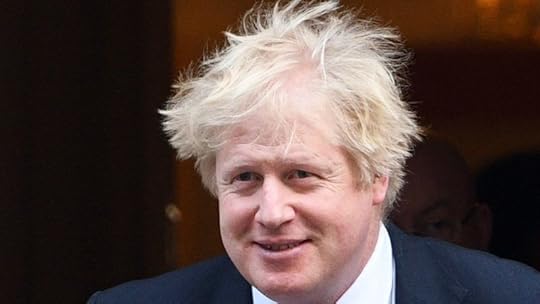
well, take two (below) didn't happen, and take one has gone off in a wild tangent like a skiier being pursued by an avalanche.
Instead of a no confidence motion Corbyn decided to propose a Bill to force Bojo to ask for an extension to Brexit beyond 31 October.
This he has sworn on the grave of his parents (who are still alive) never NEVER to do.
The blighters in the Commons have today passed this bill - now it goes to the House of Geriatrics to be confirmed.
Twenty-one Tories voted for this pernicious bill, so they have been chucked out of the Conservative Party for disloyalty.
These traitors to Boris include the guy who five weeks ago was Chancellor of the Exchequer and - oh yes - the grandson of Sir Winston Churchill. Traitors both!
Now, in the other part of the forest of madness Corbyn has been baying like a wild wolf on a crag for an election for many moons. And now Bojo says - "I call for an election immediately!" and Corbyn is now saying - NO! You can't have one!!
There is an explanation for this but it's too exhausting to write down.
My favourite insult out of many from the debates today was said by Boris after Jeremy talked about the problems of a trade deal with the USA -
“There’s only one chlorinated chicken that I can see in this house, and he’s on that bench.”
He also called the Leader of Her Majesty's Loyal Opposition "a big girl's blouse".
It's all good fun.
****************************
This is just for my British friends here, I’m fairly sure no one else will be interested.
Britain is in the middle of a genuine crisis – one tv presenter said “They’ll be studying the year 2019 in British politics for the next 200 years – THIS is what it’s like to be living through HISTORY!” Rather overdramatic, but it could be true.
Two very different scenarios seem the most likely, so here they are. On 1st November I will check which one was right.
THE FUTURE, TAKE ONE
Boris Johnson wins Tory leadership
Boris goes off to Europe to renegotiate Theresa May's hated Deal
They tell him the same as they told Theresa May (“this is the deal, there is no other deal, which bit didn’t you understand?”)
He comes back & says "the blighters didn't listen to me, ME, the great Bojo, now we must leave without a deal"
Corbyn puts down a no confidence motion
Ten or so Tories vote against their own government to stop the zombie apocalypse that is no deal
No confidence motion passes, government falls
General election
Brexit Party takes so many votes from Tories that
Corbyn (the antisemitic Marxist, that Corbyn) is elected PRIME MINISTER!
The crystal ball clouds over….. what happens next? I don’t know.
THE FUTURE, TAKE TWO
Boris Johnson wins Tory leadership
Boris goes off to Europe to negotiate
Gets a couple of tweaks to The Deal including replacing the word “backstop” with a euphemism in Greek
Overwhelmed by the force of Bojo's winning ways parliament grovels at his very feet & passes his bill
Brexit attained
Brexit Party self immolates. Nigel Farage prostrates ("O Master!")
At next general election Bojo trounces Corbyn (by this time in a zimmer frame) and wins vast majority
Bojo crowned Churchill the Second in televised ceremony in Westminster Abbey
Street parties spontaneously erupt
Sir Paul McCartney's song "Let it Bojo" is No 1 in 16 countries
July 2, 2017
The 23 June 2016 referendum decision for Britain to leave the European Union was a pivotal moment and one that confounded the overwhelming majority of media commentators, pollsters and academics who concluded that Remain would win, given the weight of advice to that effect from national and international figures and organizations (including the Prime Minister, most of his Cabinet, a large majority of MPs, the CBI, the World Bank and the IMF), in addition to the dire warnings of the consequences of leaving, emanating from the likes of George Osborne (talk of a “DIY recession” and a “punishment budget”) and Barack Obama (saying that a Britain outside the EU would have to go to the “back of the queue” in any trade negotiations with the US).
‘Brexit’ by Harold D. Clarke, Matthew Goodwin and Paul Whiteley seeks to explain why Leave won, to analyze whether the result should have come as such a surprise, and to examine the likely consequences of Britain’s departure.
This last ambition is particularly tricky as looking into the future is always difficult but especially so when one lives in such fast-moving times and thus some statements - such as Anand Menon’s “lingering uncertainty” in the Prologue, over where UKIP voters “might go should they decide to withdraw their support” - have already been rendered dated.
When one hears from its social scientist authors that this volume’s USP is that it is “the first to draw on longitudinal aggregate- and individual-level survey data to examine the drivers of support for leaving the EU in a more holistic fashion” than rival volumes, specifically making use of the Essex Continuous Monitoring Surveys (ECMS) and a November 2014-January 2015 survey of nearly 15,000 UKIP members, then one might understandably fear an abstruse text periodically punctuated by opaque tables. ‘Brexit’ is, in fact, surprisingly readable, if you can cope with tables with titles such as ‘Individual-Level Logistic Regression Models of Voting for UKIP in the 2014 European Parliament Election and 2015 General Election’.
The best feature of the book is the way in which it is able to meld statistical analysis of grass-roots changes in sentiment with an appreciation of the impact of the actions of the principal political actors, for example showing the EU Referendum to be merely the last in a long list of moves which reveal David - “I’m a winner” - Cameron to have been an habitual political gambler.
Boris Johnson understandably receives considerable attention as he crucially represented a popular figurehead for the Leave campaign for those squeamish about aligning themselves with Farage, although we’re mistakenly told that Boris announced his decision to join the Leave campaign “immediately after Cameron had announced the date of the referendum” when in fact - as mentioned elsewhere in the book - he did not do so until the following day.
Several of the authors’ conclusions – such as that whilst “the 2016 campaign may have changed some people’s minds and motivated them to cast a ballot, when it came to … whether to vote for Brexit, some key attitudes had been in place for a long time” or that most of those who joined UKIP “were elderly, white men who mainly became politically active because of their strong desire to leave the EU and reduce immigration” – are hardly very surprising, although there’s obviously some merit in having the seemingly self-evident statistically underpinned.
Other conclusions are fairly inconclusive (“even if everyone who was eligible to vote had gone to the polls, there is a distinct possibility that Remain could still have been defeated”) or even close to contradictory (“strong public concern over the large numbers of immigrants entering the country was front and central to Leave securing victory” versus “no one single factor … shaped how people thought about EU membership”).
Most contentious, however, in my opinion, is the statement that “while UKIP was propelled into the mainstream by public opposition towards the country’s EU membership, there have also been other sources of support for the party” including “the people’s negative judgements about how respective Governments have managed the economy, the NHS and immigration”.
Surely UKIP supporters tend - or at least tended - to see virtually everything through the lens of EU membership (or immigration), believing that departure from the EU provided the solution to all the UK’s difficulties? That is certainly the charge commonly levelled at their representatives, whilst the view that their raison d'être has largely disappeared with the success of the Leave campaign and the triggering of Article 50 largely explains their emasculation at the local government elections of 4 May 2017. Thus if most UKIP supporters at the time with which this book is concerned did not really see the economy, the NHS and immigration as issues separate from EU membership it is a rather artificial exercise to treat these issues as discrete when seeking to explain UKIP support.
To sum up, on first appearance ‘Brexit’ is like a plane with a very sturdy undercarriage, which should enable it to resist buffeting and take an impressive payload into the air with great ease. It’ll certainly take the reader from A to B quite efficiently but it never soars quite so high or flies quite as smoothly as its basic design promises.
‘Brexit’ by Harold D. Clarke, Matthew Goodwin and Paul Whiteley seeks to explain why Leave won, to analyze whether the result should have come as such a surprise, and to examine the likely consequences of Britain’s departure.
This last ambition is particularly tricky as looking into the future is always difficult but especially so when one lives in such fast-moving times and thus some statements - such as Anand Menon’s “lingering uncertainty” in the Prologue, over where UKIP voters “might go should they decide to withdraw their support” - have already been rendered dated.
When one hears from its social scientist authors that this volume’s USP is that it is “the first to draw on longitudinal aggregate- and individual-level survey data to examine the drivers of support for leaving the EU in a more holistic fashion” than rival volumes, specifically making use of the Essex Continuous Monitoring Surveys (ECMS) and a November 2014-January 2015 survey of nearly 15,000 UKIP members, then one might understandably fear an abstruse text periodically punctuated by opaque tables. ‘Brexit’ is, in fact, surprisingly readable, if you can cope with tables with titles such as ‘Individual-Level Logistic Regression Models of Voting for UKIP in the 2014 European Parliament Election and 2015 General Election’.
The best feature of the book is the way in which it is able to meld statistical analysis of grass-roots changes in sentiment with an appreciation of the impact of the actions of the principal political actors, for example showing the EU Referendum to be merely the last in a long list of moves which reveal David - “I’m a winner” - Cameron to have been an habitual political gambler.
Boris Johnson understandably receives considerable attention as he crucially represented a popular figurehead for the Leave campaign for those squeamish about aligning themselves with Farage, although we’re mistakenly told that Boris announced his decision to join the Leave campaign “immediately after Cameron had announced the date of the referendum” when in fact - as mentioned elsewhere in the book - he did not do so until the following day.
Several of the authors’ conclusions – such as that whilst “the 2016 campaign may have changed some people’s minds and motivated them to cast a ballot, when it came to … whether to vote for Brexit, some key attitudes had been in place for a long time” or that most of those who joined UKIP “were elderly, white men who mainly became politically active because of their strong desire to leave the EU and reduce immigration” – are hardly very surprising, although there’s obviously some merit in having the seemingly self-evident statistically underpinned.
Other conclusions are fairly inconclusive (“even if everyone who was eligible to vote had gone to the polls, there is a distinct possibility that Remain could still have been defeated”) or even close to contradictory (“strong public concern over the large numbers of immigrants entering the country was front and central to Leave securing victory” versus “no one single factor … shaped how people thought about EU membership”).
Most contentious, however, in my opinion, is the statement that “while UKIP was propelled into the mainstream by public opposition towards the country’s EU membership, there have also been other sources of support for the party” including “the people’s negative judgements about how respective Governments have managed the economy, the NHS and immigration”.
Surely UKIP supporters tend - or at least tended - to see virtually everything through the lens of EU membership (or immigration), believing that departure from the EU provided the solution to all the UK’s difficulties? That is certainly the charge commonly levelled at their representatives, whilst the view that their raison d'être has largely disappeared with the success of the Leave campaign and the triggering of Article 50 largely explains their emasculation at the local government elections of 4 May 2017. Thus if most UKIP supporters at the time with which this book is concerned did not really see the economy, the NHS and immigration as issues separate from EU membership it is a rather artificial exercise to treat these issues as discrete when seeking to explain UKIP support.
To sum up, on first appearance ‘Brexit’ is like a plane with a very sturdy undercarriage, which should enable it to resist buffeting and take an impressive payload into the air with great ease. It’ll certainly take the reader from A to B quite efficiently but it never soars quite so high or flies quite as smoothly as its basic design promises.
August 29, 2017
Thank you to the publishers for providing an ARC of the book through NetGalley.
This was so interesting! Brexit dominated Britain for a long time during the campaign and it was really interesting to see it from an academic perspective. This book looks back to the previous European vote and the change in opinion between then and now. It focuses on the rise of UKIP and the fear of immigration within the country at large, and the view of national identity. It was very interesting that when polled, compared to UKIP voters, the average person had a very similar view on immigration and different ethnicities.
This was so interesting! Brexit dominated Britain for a long time during the campaign and it was really interesting to see it from an academic perspective. This book looks back to the previous European vote and the change in opinion between then and now. It focuses on the rise of UKIP and the fear of immigration within the country at large, and the view of national identity. It was very interesting that when polled, compared to UKIP voters, the average person had a very similar view on immigration and different ethnicities.

June 5, 2017
An insightful analysis of the reasons for Brexit, using recent survey data as well as reviewing the history of Britons' attitudes towards the EU since they joined in 1973. As a more in-depth analysis than media reports at the time, it suggests that Brexit wasn't in fact as much of a surprise as general opinion would have thought. Since the beginning of Britain's membership in the "Common Market", the country has experienced fluctuations in public opinion about being a part of the EU, and recent surveying suggests national identities played a large role in both Leave and Remain votes (evident in the discrepancy between the Scottish votes for Remain and the English and Welsh votes for Leave). UKIP and it's voters make up a large part of the book's analysis, as well as a broader study of attitudes towards immigration in Europe as a whole. The sobering reality is that the unfavourable attitudes on immigration, refugees and 'human capital' generally attributed to the 'deplorable' UKIP voters is in fact widespread across all voters in the UK, and indeed in Europe as a whole. This may just be the beginning of the end; the EU band-aid is struggling to hold together the deep wounds within Europe.
My thanks to Cambridge University Press and NetGalley for providing me with a free copy of this book for review purposes.
My thanks to Cambridge University Press and NetGalley for providing me with a free copy of this book for review purposes.

December 1, 2019
An excellent analysis of the empirical trends which led to the Brexit vote, presented with remarkable clarity, rigour and politically neutrality. In the later sections of the book the authors put forward an intriguing case that membership of the EU hasn't benefited the UK in terms of economic growth. Indeed, according to the data the authors present, the EU hasn't benefited any member-state in terms of either growth or the quality of governance, with the exception of the Warsaw Pact countries which were due to 'catch up' with Western Europe anyway. Of course, the argument that the EU hasn't created benefits doesn't negate the argument that leaving the EU won't be harmful in all sorts of ways, but it provides a much-needed antidote to the superficial commentary in the media.

June 15, 2018
This is a superb piece of scholarship that convincingly explains with great detail who the Leave voters were, where they came from, and the different evolutions that British euroscepticism had gone through before the Referendum. Its analysis of the two campaigns is also very interesting, although the chapter on the consequences of Brexit should be revisited now that another general election has happened and that the negotiations and the possible outcomes are clearer.

May 13, 2018
A well written book that covers in significant detail why Great Britain chose to leave the European union. It is not just Clarke's work but the work of a few academics who discuss changes in the political system and parties that led to the vote turning out the way it did. If you are interested in the subject, I highly recommend!

May 17, 2021
This book provides an unbiased blow by blow account of the events that led to the 2016 Brexit referendum. Some of the chapters are purely statistical while many divulging details of co-efficient used for the analysis. Do not be put off by this. If you don’t know why Brexit happened, this is thr place to start. If you don’t know how it happened, this is the place to start.

May 1, 2024
Ended up unintentionally reading this entire book for an essay I am currently writing..?

October 3, 2024
Really fucking boring
Displaying 1 - 10 of 10 reviews