

What do you think?

Neue Einblicke in das Kunsthistorische Museum Wien
Meisterwerke der Kunst neu erzählt
Eros und Gewalt, Zeit und Rituale, Details und Geschichten
Eros und Gewalt, Zeit und Rituale, Details und Geschichten
- GenresNonfictionArt
231 pages, Paperback
Published January 1, 2016
About the author
Philipp Blom
51 books208 followersPhilipp Blom is a German novelist who currently lives and works in Vienna, Austria. He is best known for his novel, The Simmons Papers (1995). His 2007 novel, Luxor has not yet been translated into English. He is a professional historian who studied at Vienna and Oxford with a focus on eighteenth-century intellectual history. His academic works include: To Have and to Hold: An Intimate History of Collectors and Collecting; Encyclopédie, and The Vertigo Years: Change and Culture in the West, 1900-1914. He is also the author of The Wines of Austria.
Ratings & Reviews
Friends & Following
Create a free account to discover what your friends think of this book!
Community Reviews
Displaying 1 - 5 of 5 reviews

October 18, 2018
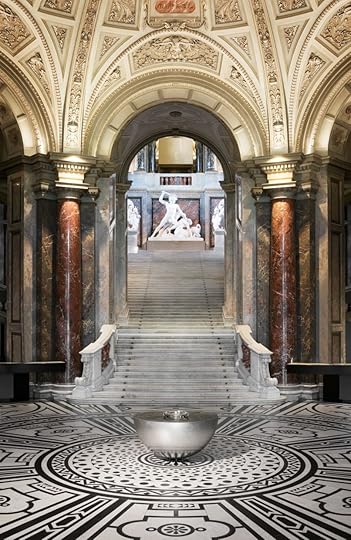
This is my second read. It is a very entertaining preview of the Kunst. I first read it when I went to Vienna to visit the Bruegel exhibition at the end of 2018, and now I have picked it up because I am returning there for the Sabine Haag, to whose Lecture I listened this Summer in a Congress in the Prado, presents museums of the kind of the KHM as books that tell us how the world was conceived in earlier times. We need however to prepare ourselves in a mental (spiritual?) way before we can read what the preserved objects can tell us.
Before this I had read Blom’s The Vertigo Years: Europe 1900-1914 and would like to read Buckley’s Christina, Queen of Sweden: The Restless Life of a European Eccentric. In this book they make a very original presentation and selection of the art works and what they could be telling us. They have divided their account into eight chapters or themes. In each the authors have selected about 10-20 pieces and written a short text on each one of them, selecting also a sub-theme for each work selected. I have selected just one piece out of their own selection
1. EYES
No wonder this theme comes first. For don’t all these works depend on the act of seeing, what the artist saw and what we see.

This work captured my eyes. We dealt in detail in the reading of the Metamorphoses on the Medusa theme. The gaze can be mortal. If Medusa looked at you, she could turn you into stone. Perseus then used his highly polished shield to freeze her and then strike her.
2. EROS
Plenty of Eros in art, in particular of the late Renaissance and Baroque period, schools richly represented in the KHM.
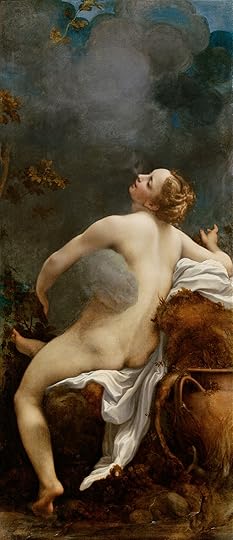
My very favourite is Correggio’s Jupiter and Io, painting that used to belong to King Philip II but which had fascinated his nephew Rudolph, who was educated in the Spanish court. Rudolph grew to become an eccentric collector and, after protracted nagging, succeeded in convincing his uncle to give the painting to him. With regret I look at it, thinking it could be closer to home but then, it also gives me the excuse to come to visit beautiful Vienna.
3. DETAILS
As the authors remind us, the Devil is in the detail, and a simple detail can completely alter the meaning of anything.
From this section I chose David Teniers’s Archduke Leopold Wilhelm in his Brussels Gallery, from 1650.The Sale of the Late King's Goods: Charles I and His Art Collection
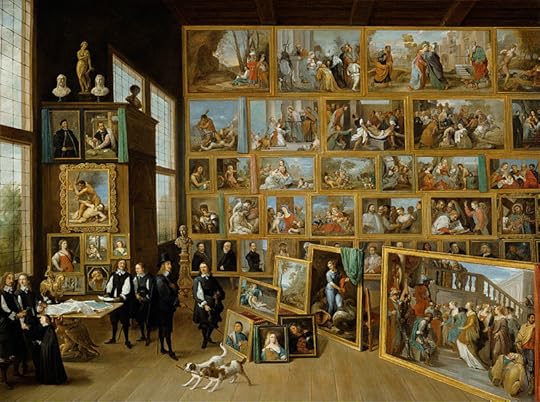
There are several of these and a fascinating explanation of their origins is in the book , and since these paintings were a mixture of a visual catalogue and a carte de visite, the viewer can play the highly entertaining game of trying to identify the paintings portrayed, and which of those are in the KHM anyway – many.
4. DISCOVERIES
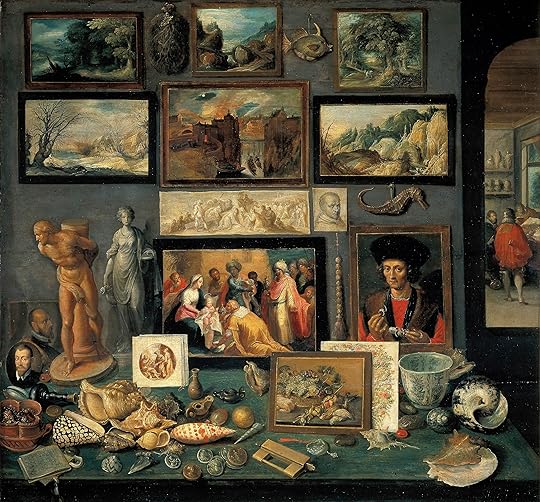
In this section a painting new to me drew my attention, Frans II Francken Kunst und Raritätenkammer. It will certainly stay in my mind. As the authors say, it can be read like a book, in which each object is like an object that contribute to draw the portrait of a collector and intellectual – its owner. Or maybe the meaning of the painting is like the lock on the foreground that needs to be opened.
5. VIOLENCE
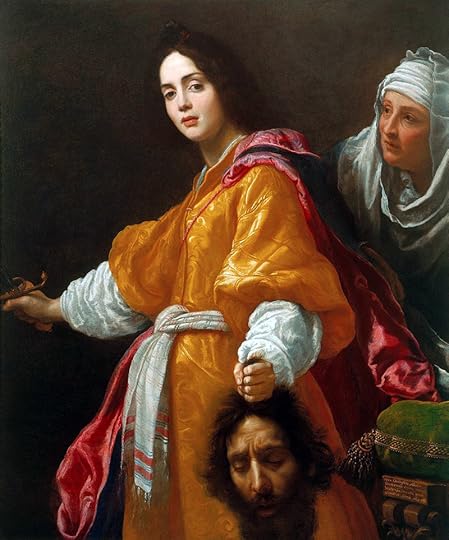
For this theme it is very tempting to choose Caravaggio’s David and Holofernes, considering I am visiting the museum to see the Caravaggio and Bernini exhibition, but instead I chose Judith, by Cristofano Allori. The features and expression of Judith capture me. Why is she looking at me that way? What is she thinking?
6. TIME
Impossible not to select the Vermeer – The Art of Painting. And if the woman is posing with allegorical pretentions, and not just as any allegorical figure but possibly as Clio, the muse of history, then, the choice is easy.
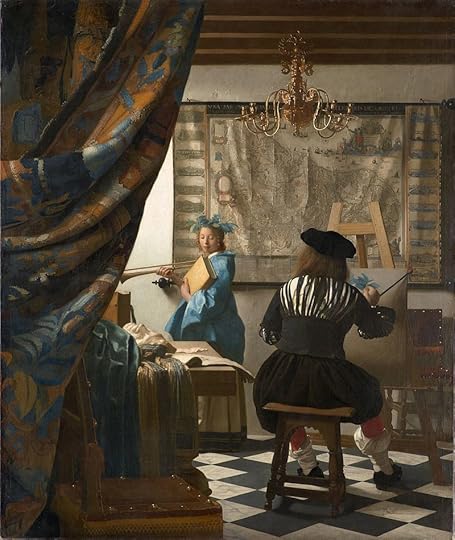
Is this an instant (we children of photography think easily in short time frames) or a painting that will hopefully last an eternity? The objects on the table and the books and the maps at least indicate a ‘longue durée’.
7. RITUAL
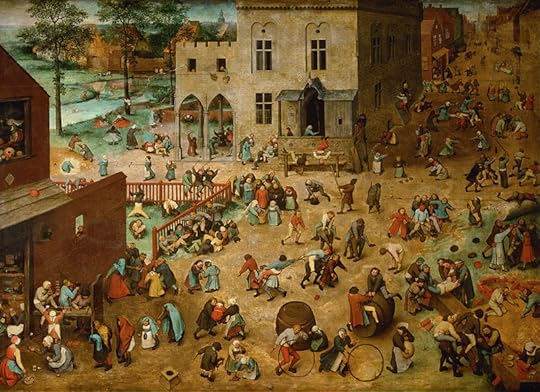
There are plenty of interesting candidates given that the KHM also houses objects, but I am very tempted by the playful ritual collected by Pieter Bruegel in his Children’s Games, and since the first time I read this book was when I visited Vienna for the Bruegel exhibition, then this pick is all the more apt.
8. STORIES
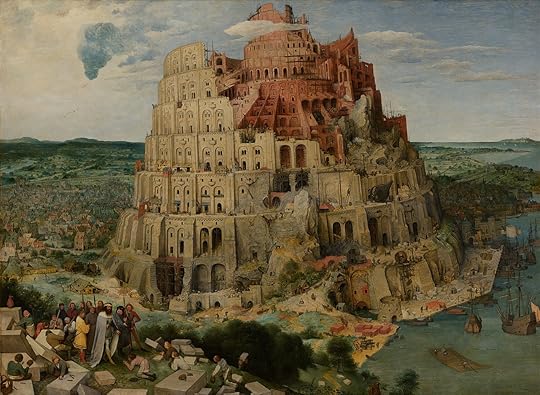
And even if stories are really the matter of books, they are also of painting. One of the best stories is how languages separated making it more difficult for all of us to exchange stories – yet another Bruegel, his Babel Tower!
While reading this I kept thinking that the authors must have had a wonderful time selecting their pieces and jotting down the thoughts that came to their minds while observing the art. I have tried to emulate them somewhat while writing this review.

December 5, 2024
Dit prachtige museumboekwerk (231 bladzijden, dus geen werkje) is uitstekend te lezen zonder het museum bezocht te hebben. De verhalen bij de kunstwerken zijn interessant, eigentijds en soms zelfs grappig.
Ook de foto’s ook prima. Zo hoef je niet voor de neus van andere bezoekers te staan fotograferen. Vele minutenlang, op tenen staand en denkend dat je alleen op de wereld bent. Dat laatste is natuurlijk ook de reden dat je zoveel fotografeert! Er zijn echt geen mensen, die dat al voor je hebben gedaan en het waarschijnlijk beter kunnen.
NB. De Babylonische leeuw (blz 99) stond ook op de voorkant van een boekje van Paolo Coelho dat ik in de boekenkast van een Weens hotel. Het maakt niks uit voor het museumboek natuurlijk, maar het is leuk om iets te herkennen.
Ook de foto’s ook prima. Zo hoef je niet voor de neus van andere bezoekers te staan fotograferen. Vele minutenlang, op tenen staand en denkend dat je alleen op de wereld bent. Dat laatste is natuurlijk ook de reden dat je zoveel fotografeert! Er zijn echt geen mensen, die dat al voor je hebben gedaan en het waarschijnlijk beter kunnen.
NB. De Babylonische leeuw (blz 99) stond ook op de voorkant van een boekje van Paolo Coelho dat ik in de boekenkast van een Weens hotel. Het maakt niks uit voor het museumboek natuurlijk, maar het is leuk om iets te herkennen.

August 27, 2025
Found this unique book while visiting the fabulous art collection at the Kunsthistorisches Museum in Vienna. Blom and Buckley, novelists and non-fiction authors who are “art enthusiasts", bring a fresh perspective to reviewing particular paintings, sculptures and antiquities on a variety of themes. They choose to group art according to such themes as eyes, details, violence, rituals and stories. Many all-stars of the art world are represented including works by Titian, Raphael, Rubens, Caravaggio, and Bruegel. Three of my favorite paintings on this visit are “Ecce Homo” Titian’s masterpiece of the Savior, Pilate and a largely disinterested crowd; Caravaggio’s majestic “Madonna of the Rosary” soaring nearly 12 feet high; and the stories that are told in the “Tower of Babel” by Bruegel. If in Vienna set aside a few hours to be amazed at this museum.

April 12, 2026
My selections from each chapter
1-Eyes
Peter Paul Rubens-The Head of Medusa
2- Eros
Jakob Auer- Apollo und Daphne
Correggio - Jupiter and Io
Tiziano Vecellio - Danae
3-Details
Maria van Oosterwijck- Vanitas Still Life
4-Discoveries
Juriaen van Streeck- Still Life with Nautilus Gobley and Ginger Pot
5-Violence
Cristofano Allori- Judith with the Head of Holofernes
6-Time
Johannes Vermeer - The Art of Painting
Lucas Cranach the Elder - Paradise
7-Rituals
Lar-Protector of Joy
8- Stories
Pieter Bruegel- The Tower of Babel
1-Eyes
Peter Paul Rubens-The Head of Medusa
2- Eros
Jakob Auer- Apollo und Daphne
Correggio - Jupiter and Io
Tiziano Vecellio - Danae
3-Details
Maria van Oosterwijck- Vanitas Still Life
4-Discoveries
Juriaen van Streeck- Still Life with Nautilus Gobley and Ginger Pot
5-Violence
Cristofano Allori- Judith with the Head of Holofernes
6-Time
Johannes Vermeer - The Art of Painting
Lucas Cranach the Elder - Paradise
7-Rituals
Lar-Protector of Joy
8- Stories
Pieter Bruegel- The Tower of Babel

December 25, 2025
Not sure why you’d have this if you haven’t been to the museum. If you’ve just been round (hopefully you had at least a day), it’s a worthwhile souvenir. It picks out some of the more famous pieces and for each gives a bit of historical context and a rather literary reaction. I enjoyed it.
Displaying 1 - 5 of 5 reviews