This novel traces the life experiences of a once highly successful woman who falls prey to electroshock and subsequently struggles to piece back together her life. Naomi suffers enormous memory loss; additionally, an estrangement from her family of origin that she has no way to wrap her mind around. The novel begins with her wandering the corridor of St. Patricks-St Andrews Mental Health Centre (St. Pukes) faced with the seemingly impossible challenge of coming to terms with the damage done her, as well uncovering the hidden details of her life. It moves back and forth between a relatively happy childhood in the legendary north-end Winnipeg of the mid-1900s and post-ECT adulthood in Toronto. An exceptionally kind man named Ger who befriends Naomi comes to suspect that important pieces of the puzzle of what befell her lurk beneath the surface of writing in a binder of hers, which comes to be known as Black Binder Number Three. What Naomi progressively comes to do, often with Ger's help and just as often with the help of a very different and eerily similar sister named Rose, is find ways to do justice to her life and to the various people in it. Filled with a vast array of colourful and insightful characters from a variety of communities—Toronto¹s Kensington Market of the 1970s, the 1970's trans community, north-end Winnipeg Jewry, and the ingenious and frequently hilarious mad community—this novel sensitizes us to the horror of electroshock, takes us to new levels in our understanding of what it means to be human, and, in the process, leads us to question the very concept of normalcy.
"Bonnie Burstow's The Other Mrs. Smith is a first rate, emotionally powerful novel. Her writing is vivid and personal, spiced with pungent Jewish expressions. The scenes with Winnipeg's North End have a life-like, photographic intensity, also important social history. The portrayal of Jewish family relatives is very personally involving, and some of the psychiatric inmates are so sharply sketched, they bring back my own early memories."
—Don Weitz , Toronto psychiatric survivor, social justice activist, and co-editor of Shrink-Resistant
"Forced electroshock left me bereft of my life's purpose, until I spoke out. Though the testimonial facts of the struggle up from brain damage are mine and those of other survivors, this powerful story and the sheer artistry of its handling is all Bonnie. A gem of a novel and a "must-read.""
—Connie Neil, author of Aftershock: Raised Consciousness Crumbles SHAM Psychiatric System
"Burstow's writing style is clear, stark, and informative, allowing the abundance of characters the space to become fully animated. She moves the reader back and forth in time metaphorically strengthening our ability to consider the history of electroshock. Read it to meet the characters and be in these rich Canadian locales. I encourage you to read it to consider how we can better the human condition."
—Spencer J. Harrison, artist, activist, educator at OCAD University
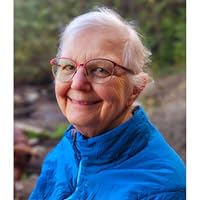
Bonnie Burstow was a Canadian psychotherapist, author, and anti-psychiatry scholar. She was a professor in the Ontario Institute for Studies in Education (OISE) at the University of Toronto.
3.5 stars rounded up to 4. The book started out great: a woman comes out of the fog of electroshock therapy (ECT) in the 70's in Toronto having had 7 years of her life erased. She doesn't really know who she is, where she is (institutionalized in Toronto), that she is married, has a daughter, and the list goes on. Her recovery, aided by her twin sister in Winnipeg, her mother, and her husband's ex-wife Gerald (yes, that's right) is an amazing journey to read. I found the last part of the book a little too emotional (on the syrupy side, not on the dramatic, intense side) to enjoy, but overall, this is an epic novel in scope and reach and reveals the ugly side of psychiatry.
This is an artfully crafted novel and a real page-turner! I’m knee deep into this novel and I am already pretty amazed at how an accomplished academic professional such as Bonnie Burstow can shift gears into such rich and poetic prose that draws the reader into a collection of original characters that I somehow feel like I’ve known for a long time. I was hooked within the first few pages. Written primarily from the perspective of an electroshock survivor, the novel offers us a beautiful and tragic view of one brilliant woman’s life story shifting between her time living in two major Canadian cities; Winnipeg and Canada. She moves us back and forth through time, offering readers a strong female protagonist’s unique perspective through a sobering account with such grace and tenderness that it speaks to the paradox of what it means to be human. There are lessons here for everyone—the perfect Christmas for the feminist on your list this year or for anyone who loves a great Canadian novel. I'm looking forward to finishing it!
I gave this story 5 stars because it revealed universal struggle that combined with courage leads to healing and the resurgence of pursuit of a new level of justice. This book exudes transformation at personal social and universal levels and leaves us vowing to do more in whatever way presents itself to us.
excellent se.mi- Autobiographical As for a life of tidal energy we willingly use a lot more than an ocean of data , allowing forgiveness to be reinvented in the past year ,she was committed to Magill Hospital in the early 70's for post partum depression symptoms of the most incorrect and difficult situation requiring E.C.T. Therapy a life unlinked is noticeably more regrettable and heartbroken to the point where she was released on the conditions she not make herself to be reunited with her family members who give her life a changed perspective ?
This entire review has been hidden because of spoilers.