Originally told around the fireside, this rich and varied collection of tales chosen from all the regions of Britain has a powerful immediacy. Alan Garner has selected the tales for their strength and imagery and they are ideal for reading aloud.
Alan Garner OBE (born 17 October 1934) is an English novelist who is best known for his children's fantasy novels and his retellings of traditional British folk tales. His work is firmly rooted in the landscape, history and folklore of his native county of Cheshire, North West England, being set in the region and making use of the native Cheshire dialect.
Born into a working-class family in Congleton, Cheshire, Garner grew up around the nearby town of Alderley Edge, and spent much of his youth in the wooded area known locally as 'The Edge', where he gained an early interest in the folklore of the region. Studying at Manchester Grammar School and then Oxford University, in 1957 he moved to the nearby village of Blackden, where he bought and renovated an Early Modern building known as Toad Hall. His first novel, The Weirdstone of Brisingamen, was published in 1960. A children's fantasy novel set on the Edge, it incorporated elements of local folklore in its plot and characters. Garner completed a sequel, The Moon of Gomrath (1963), but left the third book of the trilogy he had envisioned. Instead he produced a string of further fantasy novels, Elidor (1965), The Owl Service (1967) and Red Shift (1973).
Turning away from fantasy as a genre, Garner produced The Stone Book Quartet (1979), a series of four short novellas detailing a day in the life of four generations of his family. He also published a series of British folk tales which he had rewritten in a series of books entitled Alan Garner's Fairy Tales of Gold (1979), Alan Garner's Book of British Fairy Tales (1984) and A Bag of Moonshine (1986). In his subsequent novels, Strandloper (1996) and Thursbitch (2003), he continued writing tales revolving around Cheshire, although without the fantasy elements which had characterised his earlier work. In 2012, he finally published a third book in the Weirdstone trilogy.
Garner's stated goal here was to accurately give the 'feel' of an orally told tale to a reading audience. Most of the stories here are adapted from 19th-century collections of folklore, which, I believe, in many cases transcribed, word-for-word, what rural British tale-tellers said.
Garner says that such literal transcriptions can miss an essential element, since performance is a large part of storytelling. However, he also regards with disdain many modern retellings of fairytales with their 'subversive agendas.' (Hey, I tend to like those, but hey...)
I believe he succeeds in his goal. Reading these stories, you definitely get the feel of an elderly person in some village pub, telling a story... the story can sometimes be rather random, and even at times, not make much logical sense... but it's got a certain something that 'cleaned up' versions of a similar tale do not.
Most of these stories are not wholly familiar, but they all have familiar elements.
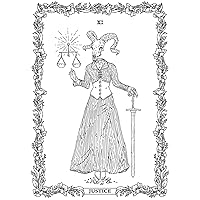
Very interesting read; a must for anyone interested in fairy tales and folklore. The woodcut illustrations are also beautiful.
Garner has edited just as many, if not more, collections of folk tales than he has written novels. This is probably the best. Garner takes an original, academic text and alters it very slightly to make it more readable without losing anything, seemingly quite a tricky job as of course Garners standards of authenticity are so high. We can see in these stories versions of what in other cultures is Rumpelstiltskin and Cinderella as well as many stories I have not come across before. Like the other Garner collections some don't make a lot of sense or have any point but some are highly enjoyable and the ratio here is probably better than in the other books. Also well worth mentioning are the striking illustrations by Derek Collard, in which he's really grasped the spirit of of the book
A fascinating rendition of traditional fairy tales from Britain, compiled to preserve them as best recalled by a well remembered collector from his youth. His father, we are told passed along only a portion of stories he himself learned over his life. In addition, the use of dialect adds to the telling, particularly in the audio version, inviting both reader and listener into a lost society where ritual language pervades the rich-country life of the people.
For writers, we benefit from a lesson in voice and a magical glamour of telling tales designed to compel far more than passive compliance. Enter if you dare, but be prepared to enter distant lands where early Britain casts its own spell across the last remnants of traditional life among country folk.
If you have a mind, and can brave the trauma of country life in traditional Britain, then cast your lots into these waters, and await your discovery, await your ending.
Four Stars for the telling and voice, with appreciation for the glamour from which I remain, unable to evade my ‘wyrd’ or to dispel the same…
love Alan Garner. The Owl Service was always one of my favourites. These fairy tales are from all over the UK. I remember my classes being in awe of the stories from all over their country. He talks about oral traditions and how important it is to keep these alive.
I read folklore on a fairly regular basis amd this book was at many points deeply co fusing for me. The writing style was interesting and if it had of been the transcripted version of an oral retelling that would be one thing. However if the author was just writing these stories straight up and this writing style was meant to minus speech they at least in my opinion failed miserably at that attempt.
As I own a version of this book from when it was first published there's wonderfully doen illustrations inside amd rhey were my favorite part of the book.
The other thing besides the writing style that negatively effected my reading experience was the fact that there is utterly no organization to the stories and they are just completely random. Not aphebetclly bot by theme or even region of origin there's just nothing and it made it very difficult to get through this book. There are times when the no organization thing can go well for a folklore book but given what a mess the writing already was it only served to make a bad situation worse.
This is a beautiful book, loved the illustrations and the tone of the stories, intended to be transcriptions of oral tales, is fantastic. The overall reading experience was not as enjoyable for me as his Collected Folk Tales though, as preserving the oral tradition means narrative flow and coherence are second to the poetical aspects.
WHAT DID I JUST READ? This book was enjoyable but overall, I was plain lost. The writing style was interesting to say the least. A lot of sentences didn't roll off the tongue which tripped me up and distracted me from the story.
I struggled with these. Some read better than others but some I felt quite slow moving. As with all of Alan Garner's writing there can be a real menace behind some of the imagery that can really haunt you after you have finished. I'm glad I read it but wouldn't read again
I like Alan Garner although I haven't read his more recent adult titles. I stumbled across this 1984 title while researching fairy tales and found it a curious read. Garner attempted, with some success, to recreate the original dialect of the tellers. I applaud this, although at times it made the stories hard to follow. Does "I'm going out to spotch my fortune" mean "search"? I think so, but I am not sure. At times I find it a little difficult to sort out the king's son from the prince in more than one story.
These are not the most familiar versions, either. "Tom Tit Tot" is, for example, but "Rumpelstiltskin," but there is no baby and no gold. "Jack and the Green Lady" will remind the reader of "Jack and the Beanstalk," but no beanstalk. The tone for most is generally darker--as are the stories in general. "Gold Tree and Silver Tree" is a version of "Snow White," but the malevolent and murderous is not the stepmother: it is the mother. There are suggestions of the homoerotic, as in "The Black Horse" when the hero "looked behind him to and there was the finest man he had ever set eyes upon" (133). Another example is in "The Castle of Melvale, when Jack encounters "one of the finest young gentlemen you would wish to see" (150). Was this left out from one retelling to the next or censored or could it be once one could appreciate beauty without it having to meet sexual attraction? That it didn't matter so much once upon a time? I wonder.
Or, is that "There were fiery dragons in those days; but it isn't the same world now. The world is turned over since, like you turned it over with a space" (112)? I would recommend this book to those who love fairy tales after they've read Grimm and others considered canonical, just to get grounded first.
This combination of revised folklore from Britain in days of yore, with some of the freakiest, scariest, most vibrant and lively woodcut-and-ink illustrations I've seen in some time, would make a welcome addition to the libraries of homes with kids, especially if reading aloud is a favored pastime of the family. The stories are written specifically to be read aloud, even memorized and recited, so as to continue a swiftly vanishing oral tradition.
That said, I'm not actually that into the stories themselves, nor the style of writing that Garner uses to retell them, and I won't be making this acquisition for myself. Nonetheless, I can see that it might have great appeal to other audiences, and honestly, the illustrations really are amazing and are worth checking out the book if you find it, just to look at the pictures. I know that if I'd seen this as a child, it would have given me extreme nightmares (on the other hand, Tenniel's Alice's Adventures through the Looking-Glass illustrations gave me nightmares as a kid, so YMMV).
I wanted to read his complete fairy tales, but this was all that my library had.
This collection has twenty-one stories. A couple of them I liked a lot, others were boring and dull, but over all they were pretty good to read, and easy to get into. Can't wait to get my hands on his complete.
Really great collection of stories beautifully told. Alan Garner tells these stories so well, he so obviously has a real understanding and respect for the oral folktales they come from. Thoroughly recommend this book. Though these stories are for adults perhaps, very dark stuff to be reading to children these days.