Jump to ratings and reviews
Rate this book

Kapıların Dışında: Hiçbir Tiyatronun Oynamak, Hiçbir Seyircinin Görmek İstemediği Oyun

Rate this book
Kapıların Dışında, savaştan dönen Beckmann’ın hikâyesini anlatır. Ölülerin diyarından tesadüfen geri dönebilenlerden biridir o. Fakat ne eşi ne evi ne de ülkesi bıraktığı gibidir. Şimdi her yer enkaz, herkes kaypaktır ve Beckmann nihilist bir tavırla ölümü arzular.

İkinci Dünya Savaşı’nın toplumda yarattığı yıkıcı etkileri ele alan “yıkıntı edebiyatı”nın, Heinrich Böll’le beraber en önemli temsilcilerinden biri olan Wolfgang Borchert, nasyonal sosyalizmin ahlaki ve fiziksel kurbanlarından biridir. Büyük yankı uyandıran Kapıların Dışında, yazarın tek oyunudur ve ölümünden bir gün sonra sahnelenmiştir.

120 pages, Paperback

First published February 13, 1947

115 people are currently reading
4167 people want to read

About the author

Wolfgang Borchert

128 books126 followers
German author and playwright whose work was affected by his experience of dictatorship and his service in the Wehrmacht during the Second World War. His work is among the best examples of the Trümmerliteratur movement in post-World War II Germany. His most famous work is the drama "Draußen vor der Tür (The Man Outside)", which he wrote in the first days after World War II. In his works he never makes compromises in questions of humanity and humanism. He is one of the most popular authors of the German postwar period, and today his work is often read in German schools.

Ratings & Reviews

What do you think?
Rate this book

Friends & Following

Create a free account to discover what your friends think of this book!

Community Reviews

5 stars
2,762 (41%)
4 stars
2,357 (35%)
3 stars
1,150 (17%)
2 stars
345 (5%)
1 star
116 (1%)
Displaying 1 - 30 of 331 reviews
Profile Image for Greg.
1,128 reviews2,147 followers
January 27, 2011
I'd never heard of Wolfgang Borchert until about a week before Christmas when a European Couple in their twenties came into the store and were asking for books by Ingeborg Bachmann, Max Frisch and a couple of other authors that I like and who are sort of obscure. They then asked for The Man Outside, a book by an author I'd never heard of, but going by the worn torn cover, the German name and that these two young Europeans seemed to have some similar reading tastes as me, I ordered the book in to the store. And once it arrived I ordered a copy from the library because I'm being difficult about buying (new) books lately.

A quick biography of Borchert. He died when he was twenty-six and a half years old. When he was nineteen he was arrested by the gestapo and shortly afterwards released. He became a bookseller, and then tried to become an actor but his acting career was sidelined when he got drafted into the German army in 1941. He was sent to the Russian Front where he contracted hepatitis from a cut and was then arrested when his superior officers thought he was trying to evade military service. It didn't help that he was also writing very honest letters home about the horrors of the war. Something the German Army didn't like being advertised to the home front. For the letters and the cut he was placed in solitary confinement for a couple of months and then sent back to the front to prove himself a good German. After getting frostbite a few times and having more trouble with hepatitis he was released from the army. Soon afterwards he was arrested by the Nazi's again, this time for parodying Goebbels. He was sentenced to another nine months in solitary confinement and upon his release he was sent to the Western front. His company surrendered to the French when the war was over and Borchert managed to escape from the French while being transported to a POW camp. He made it home to find out a year later that the hepatitis had severely damaged his liver and that he would probably die within a year. He lived for almost another two years, spending the last year of his life in a sanatorium. During the time after his medical death sentence was given to him and his death he focused on writing.

This book is selection of the work he produced in the last two years of his brief life.

I don't need to think long to come up with things that suck and really I don't need to add any more to my mental list, but now I have another one. Borchert dying at the age of 26.

This book is so good. And the guy was basically just a high school graduate who lived a pretty bleak and shitty life with little time to 'hone' the craft of writing. I can imagine that his mature work would have been absolutely devastating to read. Of course it is also possible that if he hadn't been told he had only a year to live he might never have become a writer, he might have focused on acting, he might have let the experiences of the war drift into the haziness of memory and gone on to live a full life without any literary output.

Everytime I think that the person writing the stories and one play in this book was between twenty four and twenty six I'm amazed. And jealous.

Predictably the stories (and play, I'm going to stop saying and play, just remember that the play is the title of the book, but the majority of the book are short stories, but saying stories and play is cumbersome, just like this aside) are about the war, either during on the Russian front, in prison, or in the cities after the war. They are from a perspective I don't think I've read before. A German soldier immediately following the war.

His stories generally are populated in a world similar to the one found in Fassbinder's post-war movies, I'm thinking the Ali, Fear Eats the Soul type Fassbinder. A bleak post-war world of broken men and women struggling to get by amidst shortages and the mental trauma of living through first the Nazi's and then having their cities blown to pieces by Allied bombers. It's a world where a small child guards the rubble of his house with a stick to chase away the rats so they don't eat his dead brother whose body is still trapped inside. And where women sleep with men for their cigarettes because it helps keep the hunger at bay.

A story follows a veteran who is haunted by the fifty seven men of his company who all died, with him being the only survivor. Along with the fifty seven Germans haunting his waking life there are also the eighty six Russians he helped kill one night with a single machine gun. His stories have many haunted characters in them, people trying to come to terms with the guilt they feel for surviving the war. The stories are filled with characters engulfed in sorrow and despair who want to end it all but also want to embrace living. It's almost like the famous Beckett line, "I can't go on, I must go on", or the Camus quote "In the midst of the darkest winter I found within myself an invincible summer".

You can hear the author screaming under the words he's putting down for posterity about the horrors of what he has experienced that through it all he wants to live.

He tells the reader that dying is the easy way out. It's only through living that the world can be made possibly into a better place.

As the stories move on chronologically the tone shifts and his sentiments about the war become clearer and anger begins to be noticeable. His last 'story', written shortly before he died is a polemic against future wars. In it he exhorts all of the everyday people to say no and not offer their support to the next wars. He points to the people who would be soldiers, who would build tanks, sew uniforms, teach the young the honor of fighting for the Fatherland, who would willing let their sons go off to war to say no, not just to save individual lives but to save all of humanity. This piece is the most emotional in the collection, and it's in a way the most immature, or at least angry, it's sort of like a 1940's Crass song but it's a stirring conclusion to the collection of this very brief literary life.
Profile Image for Radioread.
126 reviews122 followers
January 2, 2019
Benim adım Wolfgang Borchert. Bir kitapçıydım, bir oyuncuydum. Dünyadan bu işleri görüp geçmem gerekirken ben insanların, insanlığın ölümünü gördüm. Ölmeyi başaramayanların cehennemini gördüm. Binden fazla gün.

Savaşa karşı sesini yükseltenlerin cezası ağır olur. Beni hemen içeri attılar. Hemen çıkarmadılar, ölümcül hastalıkların içime iyice yerleşmesini sağladılar. Sonra yeniden savaşa, yeniden hapse… Benden geriye hiçbir şey kalmayana dek sürdü bu.

Benim adım Wolfgang Borchert. Benimle birlikte biten savaştan sonra içeriden çıktım, dışarıya girdim; Almanya’daki tüm kapıların dışına. Kitapların çoğu yanıp kül olmuştu. Tiyatroların çoğu harabeydi. Madem öyleydi, kendi oyunlarımı var edip oynamalı, kendi kitaplarımı yazmalıydım. Hepi topu iki yılım vardı zaten.

Öyküler yazdım. Farklıydılar. Cephenin en kötü siperlerinde zamansız kaldırılan beyaz bayraklar gibiydi etkileri. Kimse görmedi, yaylım ateşi devam etti.

Şiirler yazdım. Küçük bir deniz feneri olmak istedim gecede.

Bir manifesto yazdım. Daha doğrusu basit bir uyarı. Dünyanın her yerindeki işçilere, patronlara, sanatçılara, babalara, annelere; eğer onlara bir şekilde savaşa hizmet etmeleri emredilirse, yapacakları tek şeyin yüksek sesle ve kesin bir dille ''hayır!'' demek olduğunu söyledim.

Bir oyun yazdım çalakalem (hastalıklarım ilerliyor, zamanım giderek daralıyordu), onu hiçbir tiyatronun oynamak, hiçbir seyircinin görmek istemeyeceği bir oyun olarak gördüm. Ama yazmak zorundaydım Kapıların Dışında’yı.

Benim adım Wolfgang Borchert. Savaşta savaşamadım, barışta barışamadım kimseyle. Tüm savaş artıkları gibi çok yorgundum. 26 yaşında öldüm ve nihayet dinlenebildim. Kitaplarımın kısa bir süre sonra basıldığını, oyunumun pek çok salonda sahnelenmeye başladığını yaşarken göremedim.


Profile Image for Oguz Akturk.
290 reviews735 followers
September 18, 2022
YouTube kanalımda Wolfgang Borchert'in hayatını ve kitaplarını kronolojik okuma önerimle birlikte yorumladım:
https://youtu.be/yAaaSmtCYn0

"İnsanın her gün yaptığı en iyi şey intihar etmemeye karar vermektir." Albert Camus

Camus haklıydı. Beckmann'ı da görmemişlerdi. Belki de sırf benim gibi 25 yaşında, miyop ve dalga geçilen bir gözlüğü olduğu için. Görmezden gelmişlerdi. Savaş toplumlarında herkesin kapısı kapalı kalmak zorundaydı. İnsan, Kapıların Dışında cevapsız kalıp intihar etmeden yaşamayı öğrenmeliydi. Savaş insanın üstüne sürülen bir görünmezlik kremiydi.

İnsanlar artık Allah'a değil ölüme ve öldürmeye inanıyordu o yıllarda. Kıble savaştı. Savaşın kahramanları da sıcak evlerinde rahat bir şekilde yaşamlarını sürdüren komutanlar. Putun ölüm olduğu yerde komutanlar savaş peygamberleriydi. Arkalarında bıraktıkları cesetler ise tarihte bir nicelikten fazlası olmayı başaramadı.

Sorumluluklar vardı. Ama yine de gülmeliydiniz. Çünkü atmosferiniz olan halk gülmenizi, keyifli olmanızı, yaşamdan keyif almanızı ve neşeli görünmenizi isterdi. Sevincin militaristleştiği yerde insanın içini yiyip bitiren kederler ve yadsınmış sorumluluklar ordusu antimilitarizm olarak belirlenmişti rütbece üstünler tarafından.

İntihar edip kolayca bu yaşam yükünden kurtulmak varken neyi bekliyordunuz?
Sahi, Virginia Woolf'un bir bildiği mi vardı?
Sylvia Plath'ın bir bildiği mi vardı?
Stefan Zweig'ın bir bildiği mi vardı?
"Yaşamak istemem artık aranızda" diyen Yavuz Çetin'in bir bildiği mi vardı?
Zebercet'in bir bildiği mi vardı?
Herkes intihar etmek için neyi beklerdi?

Hayat tamamıyla bir savaştı hem. Bu yaşam savaşında Kapıların Dışında, gerçeğin yadsındığı, soruların cevapsız kaldığı, kapıların insanın yüzüne teker teker vurulduğu, yaşamanın anlamsız hale geldiği o ince sınırdaki anlam arayışıydı. Fakat nafile. Cevapsız kalmak için yaşayan insanın cevap arayışı da bir fiyaskodan ibaretti. Yıkım edebiyatının varlığında inşa edilen mutlu hayatlar tamamen sahte bir silüetler ordusuydu.

Eh, Rimbaud da zaten dememiş miydi,
"Dayanılmaz olan tek şey, hiçbir şeyin dayanılmaz olmamasıdır." diye? Her şeye dayanılır, anam babam kardeşçiğim. Her şeye.
Profile Image for Pia G..
438 reviews145 followers
April 1, 2022
"ben dışarıda, kapıların dışındayım, yine dışında. dün gece kapıların dışındaydım. bugün yine dışında. ben daima kapıların dışındayım. ve kapılar kapalı. oysa ben ayakları külçe gibi ve yorgun bir insanım. açlıktan karnı guruldayan bir insan. gecenin ayazında kanı donan bir insan."
Profile Image for Özgür Daş.
98 reviews
June 15, 2017
'Yıkım Edebiyatı' (Trümmerliteratur) dendiğinde benim aklıma ilk Wolfgang Borchert gelir. Borchert de Raymond Radiguet gibi erken kaybedilen değerlerden. 20 yaşında savaşa alınan, savaş/Nazi karşıtlığı nedeniyle kısa ömrünün iki yıla yakın zamanını hapishanelerde geçiren Borchert, yaşadığı 26 yıla sığdırdığı şiirler, öyküler ve savaş karşıtı edebiyatın en önemli yapıtlarından biri olan "Kapıların Dışında" oyunuyla 20. yüzyıl edebiyatının en özel isimlerinden biri olmuştur.

Borchert, bu tek perdelik oyununda savaşın kendisi üzerinde sebep olduğu yıkımı ve acıları savaşta çavuş olarak yer alan Beckmann üzerinden anlatıyor. Savaşın sona ermesiyle evine dönen Beckmann için hiçbir şey eskisi gibi değildir, artık 'Kapıların Dışında'dır. Borchert oyunda her şeye rağmen iyi insanların olduğunu düşünmeye çalışıyor fakat savaş çılgınlığının neden olduğu kâbustan bir türlü uyanamıyor/(inanamıyor iyi kavramına) bu yüzden, ölümü yaşamaya devam ettiği acılara yeğliyor her seferinde:

"ÖTEKİ. Gel, Beckmann, devam et.
BECKMANN. Devam mı? Hep aşağıya doğru, öyle mi, aşağıya doğru! À bas, der Fransızlar. Meğer ölmek ne kadar iyiymiş, ölüm hiç de dayanılmaz bir şey değil sanırım. Ölüme dayanamadığı için geri gelmiş tek kişi yok ki. Belki de çok hoş, ölüm; belki de hayattan daha hoş. Belki de.."

(s. 45)

Yürek burkar Borchert:

"BECKMANN. (Candan.) Pencereleriniz dışardan öyle sıcak ki! Böyle pencerelerden bakmak nasıl oluyor, hele bir daha göreyim dedim. Ama içerden bakmak, içerden. Geceleri aydınlık, sıcak pencerelere karşı açıkta, dışarda olmak, ne demektir bilir misiniz?"
(s. 20)

"... Onlar bize ihanet ettiler. Kalleşçe ihanet ettiler. Biz daha küçücüktük, harblere girdiler. Biz biraz büyüdük, bize harblerden söz açtılar. Coşkundular. Onlar daima coşkundular. Biz daha da büyüyünce onlar bizim için de bir harb düşündüler. Sonra da bizi bu harbe yolladılar. Onlar coşkundular. Daima coşkundular. İçlerinden hiçbiri bize nereye gittiğimizi söylemedi. Hiçbiri bize cehenneme gidiyorsunuz demedi. Ne gezer, hiçbiri. Onlar marşlar çaldılar, Langemarck zaferini kutladılar. Divan-ı harbler kurdular, istilâ plânları hazırladılar. Kahramanlıklar için şarkılar, madalyalar yaptılar. Böylesine coşkundular. Derken harb patladı. Bizi cepheye sürdüler. Bize hiçbir şey söylemediler. Yalnız, görelim sizi dediler. Gösterin kendinizi, yiğitler! Onlar bize bu şekilde ihanet ettiler. Kalleşçe ihanet ettiler. Şimdi onlar kapılarını kapamış, evlerinde oturuyorlar. Sayın müsteşar, sayın direktör, sayın yargıç, sayın başhekim. Şimdi bizi harbe gönderenler sanki onlar değil. Hayır, hiçbiri. Şimdi onlar hepsi kapılarını kapamış, evlerinde oturuyorlar. Onlar kapılarını sımsıkı kapadılar. Bizler kapıların dışında kaldık. Onlar kürsülerinden, koltuklarından doğru parmaklarıyla bizi gösteriyorlar. Onlar bize bu şekilde ihanet ettiler. Kalleşçesine ihanet ettiler. Onlar şimdi öldürdüklerinin önünden hissiz geçip giderler, kollarını sallıyarak kayıtsız geçip giderler."
(s. 55)

EK:

Borchert'in naif ve melankolik sesi aynı zamanda cesurdur, ünlü manifestosu:

'Hayır de' Manifestosu

"Sen. Makinenin başındaki adam, atölyedeki adam. Yarın sana su boruları ve yemek kapları yapmayı bırakıp miğferler ve mitralyözler yapmanı emrederlerse, yapacağın bir tek şey var: HAYIR de!
Hayır de!
"Sen. Tezgâhın arkasındaki kız, büroda çalışan kız. Yarın sana el bombalarını doldurmanı ve keskin nişancı tüfeklerine dürbün takmanı emrederlerse, yapacağın bir tek şey var: HAYIR de!
"Sen. Fabrika sahibi. Yarın sana talk pudrası ve kakao yerine barut satmanı emrederlerse, yapacağın bir tek şey var: HAYIR de!
"Sen. Laboratuvardaki araştırmacı. Yarın sana eski yaşamı yok edecek yeni bir ölüm keşfetmeni emrederlerse, yapacağın bir tek şey var: HAYIR de!
"Sen. Odasındaki şair. Yarın sana aşk şarkılarını bir yana bırakıp nefret şarkıları söylemeni emrederlerse, yapacağın bir tek şey var: HAYIR de!
"Sen. Hastanın başındaki hekim. Yarın sana cepheye gönderilecekler için sağlam raporu yazmanı emrederlerse, yapacağın bir tek şey var: HAYIR de!
"Sen. Kürsüdeki rahip. Yarın sana cinayeti kutsamanı ve savaşa övgüler yağdırmanı emrederlerse, yapacağın bir tek şey var: HAYIR de!
"Sen. Gemideki kaptan. Yarın sana buğday taşımayı bırakıp tank ve top taşımanı emrederlerse, yapacağın bir tek şey var: HAYIR de!
"Sen. Havaalanındaki pilot. Yarın sana kentlerin tepesine yakıp yok eden bombalar yağdırmanı emrederlerse, yapacağın bir tek şey var: HAYIR de!
"Sen. Dikiş masasının başındaki terzi. Yarın sana asker üniformaları dikmeye başlamanı emrederlerse, yapacağın bir tek şey var: HAYIR de!
"Sen. Cüppesinin içindeki yargıç. Yarın sana askerî mahkemeye gitmeni emrederlerse, yapacağın bir tek şey var: HAYIR de!
"Sen. Tren istasyonundaki. Yarın sana cephane ve asker taşıyan trenlerin kalkması için sinyal vermeni emrederlerse, yapacağın bir tek şey var: HAYIR de!
"Sen. Köydeki. Sen. Kentteki. Yarın askere alma belgeleriyle kapına dikilirlerse, yapacağın bir tek şey var: HAYIR de!
"Sen. Normandiya'daki ana, Ukrayna'daki ana. Sen, San Francisco'daki ve Londra'daki ana. Sen, Huang Ho ve Mississippi kıyılarındaki ana. Sen, Nepal'deki, Hamburg'daki, Kahire'deki, Oslo'daki ana. Yeryüzünün dört bir yanındaki analar, dünyanın tüm anaları, yarın size askerî hastanelerde hemşirelik yapacak, yeni savaşlarda savaşacak çocuklar doğurmanızı emrederlerse, yapacağınız bir tek şey var: HAYIR deyin! Analar, HAYIR deyin!
"Çünkü hayır demezseniz, analar, eğer hayır demezseniz, işte o zaman:
"Pus çökmüş, gürültülü liman kentlerinde iniltiler çıkaran koca gemiler suskunluğa bürünecekler ve su almış dev mamut kadavraları gibi, rıhtımların yosun ve midye bağlamış, ölgün, ıssız duvarları önünde miskin miskin yalpalayacaklar; daha önce ışıltılar saçan o görkemli gövdelerden, bir balık mezarlığı gibi, çürük, sayrı, ölü kokular yayılacak...
"Tramvaylar, iç karartıcı, aynalı kuş kafesleri gibi eğrilip bükülecekler ve bombaların açtığı çukurlarla kaplı, yitik sokaklardaki damları delik deşik barakaların ardında, teller ve rayların şaşkın çelik iskeletlerinin yanı başında, patlamış taç yaprakları gibi öylece uzanacaklar...
"Çamur rengi, ağır, kurşun gibi bir sessizlik ortalıkta kol gezecek; tüm oburluğuyla büyüyerek, okullara, üniversitelere, tiyatrolara, spor alanlarına, çocuk bahçelerine ürkünç, açgözlü ve önlenemez bir biçimde çöreklenecek...
Bunların hepsi olacak...
"Altın sarısı, sulu üzümler bakımsız yamaçlarda çürüyecek, pirinçler kıraç topraklarda kuruyacak, patatesler sürülmüş tarlalarda donacak, ölü sığırların kaskatı kesilmiş bacakları ters çevrilmiş süt sağma tabureleri gibi göğe dikilecek...
"Enstitülerde, büyük hekimlerin dahice buluşları çürüyüp küf tutacak...
"Son un çuvalları, son çilek reçeli kavanozları, balkabakları ve vişne suları mutfaklarda, odalarda, kilerlerde, soğuk hava depolarında ve ambarlarda bozulup heba olacak; devrilmiş masaların altındaki, paramparça tabaklardaki ekmekler küf bağlayacak, erimiş tereyağlar arap sabunu gibi kokacak; tarlalardaki ekinler, paslanmış sabanların yanı başında bozguna uğramış bir ordu gibi boyunlarını bükecekler; fabrikaların çimenle örtülü tüten bacaları un ufak olacak...
"Sonra, deşilmiş bağırsakları ve zehirlenmiş ciğerleriyle son insan, ışıldayan güneşin ve yanıp sönen takımyıldızların altında bir başına dolanıp duracak; bir deri bir kemik kalmış, çılgına dönmüş son insan uçsuz bucaksız mezarlar, dev beton blokların soğuk putları ve ıssız kentler arasında yalnız başına bir küfür gibi dolanırken şu korkunç soruyu soracak: NEDEN? Ve bu soru bozkırlarda hiç duyulmadan yitip gidecek, yıkıntılar arasında sürüklenip kiliselerin molozları arasında yok olacak, girilmez yeraltı sığınaklarına çarpıp parçalanacak. Son hayvan-insanın son hayvansı çığlığı hiç duyulmadan, hiç yanıtlanmadan kan göllerinde boğulacak...
"Bunların hepsi olacak, yarın, belki bu gece, eğer... eğer... eğer... HAYIR demezseniz!"


Borchert tüm benliğiyle insanlığın savaşa karşı ağıtıdır.
Profile Image for Matt.
752 reviews625 followers
March 6, 2018

- Wie alt sind Sie denn?

– Fünfundzwanzig

– Was haben Sie denn so bis jetzt gemacht?

– Nichts. Krieg: Gehungert. Gefroren. Geschossen: Krieg. Sonst nichts.

– Sonst nichts? Na, und was ist das? Reifen Sie auf dem Schlachtfeld des Lebens, mein Freund. Lernen Sie die Welt kennen, dann kommen sie wieder. Werden Sie jemand!


Upsetting & loud — timeless (unfortunately). Reading this play caused me headache and dizziness. I’ll read it again.

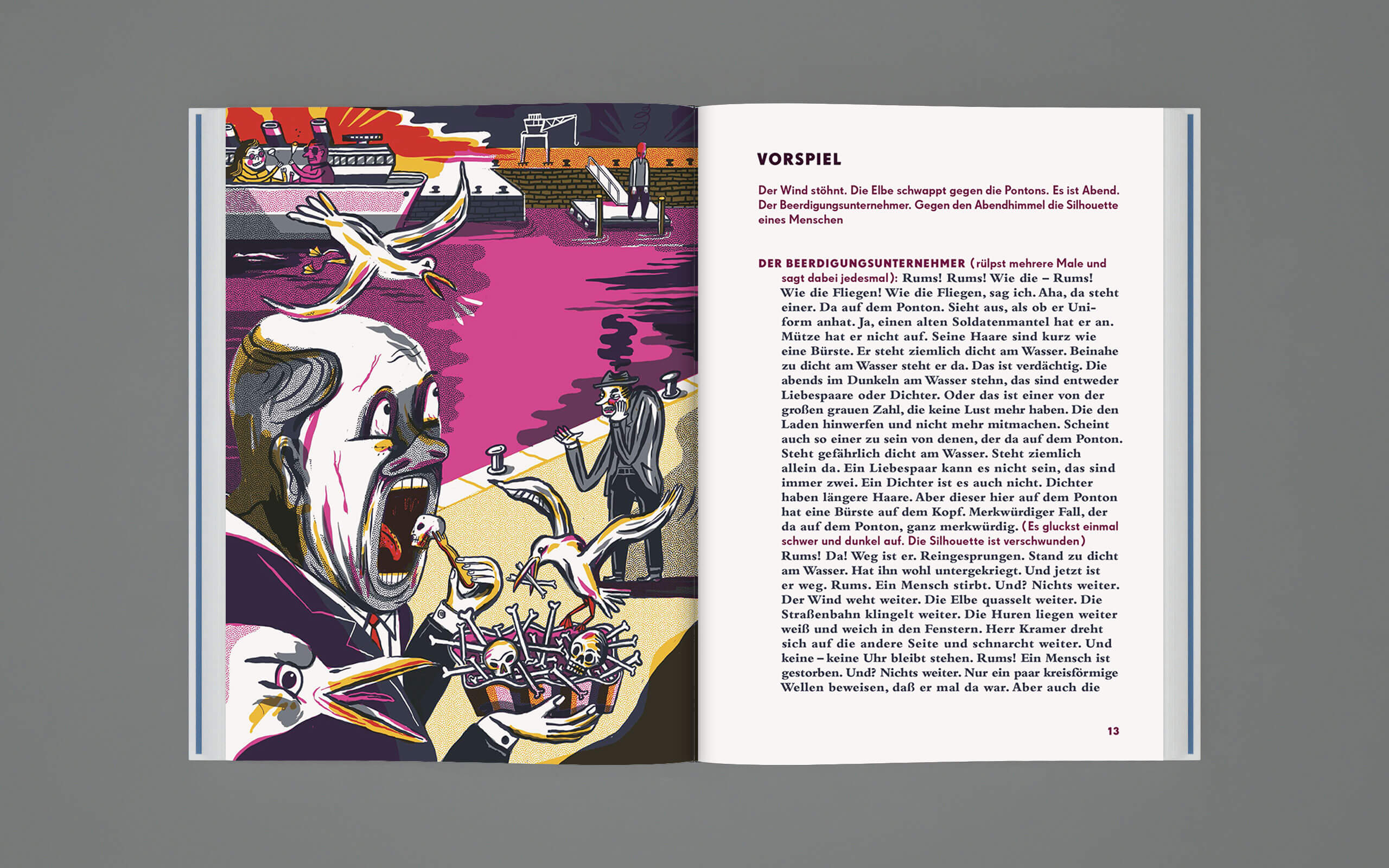
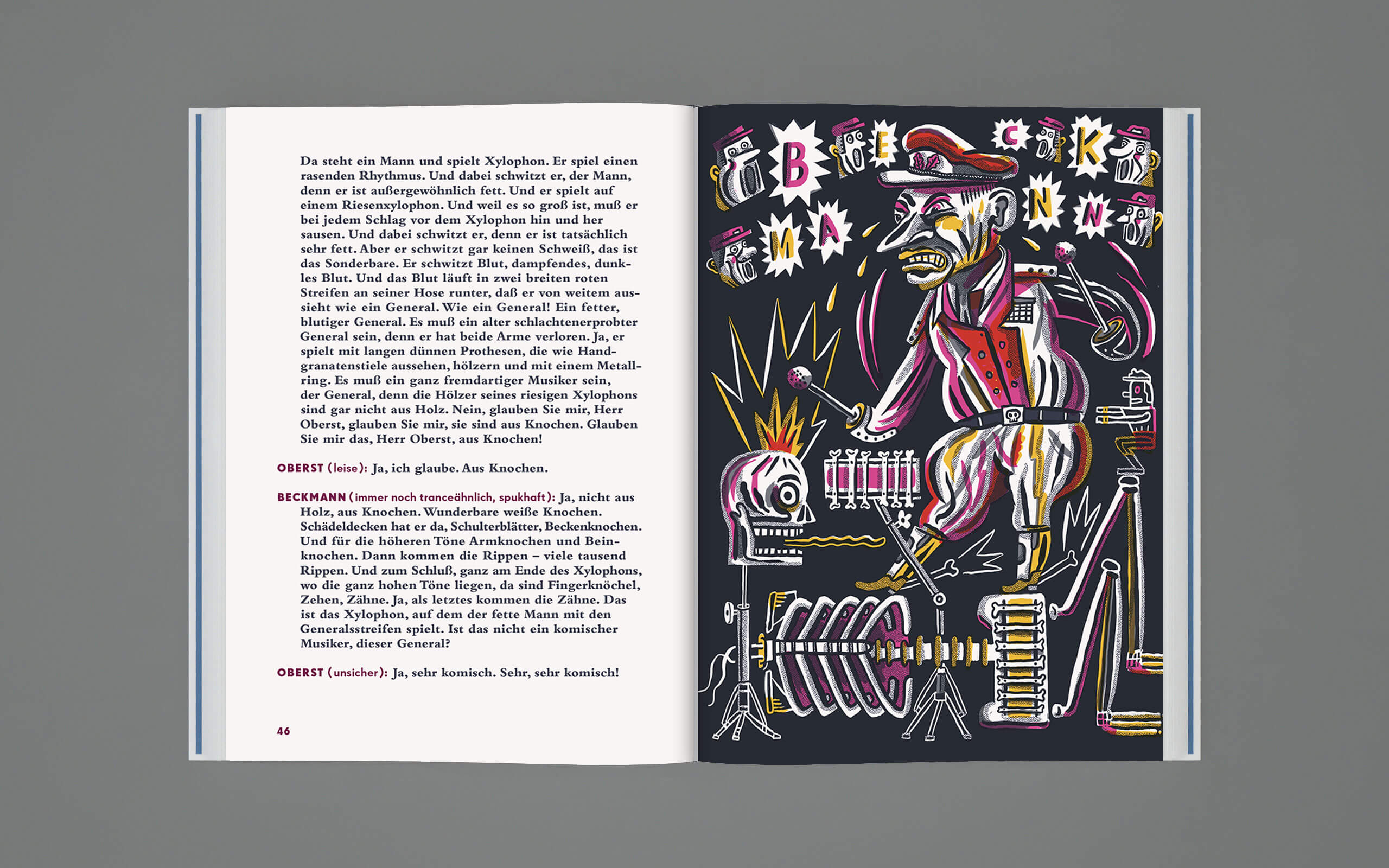
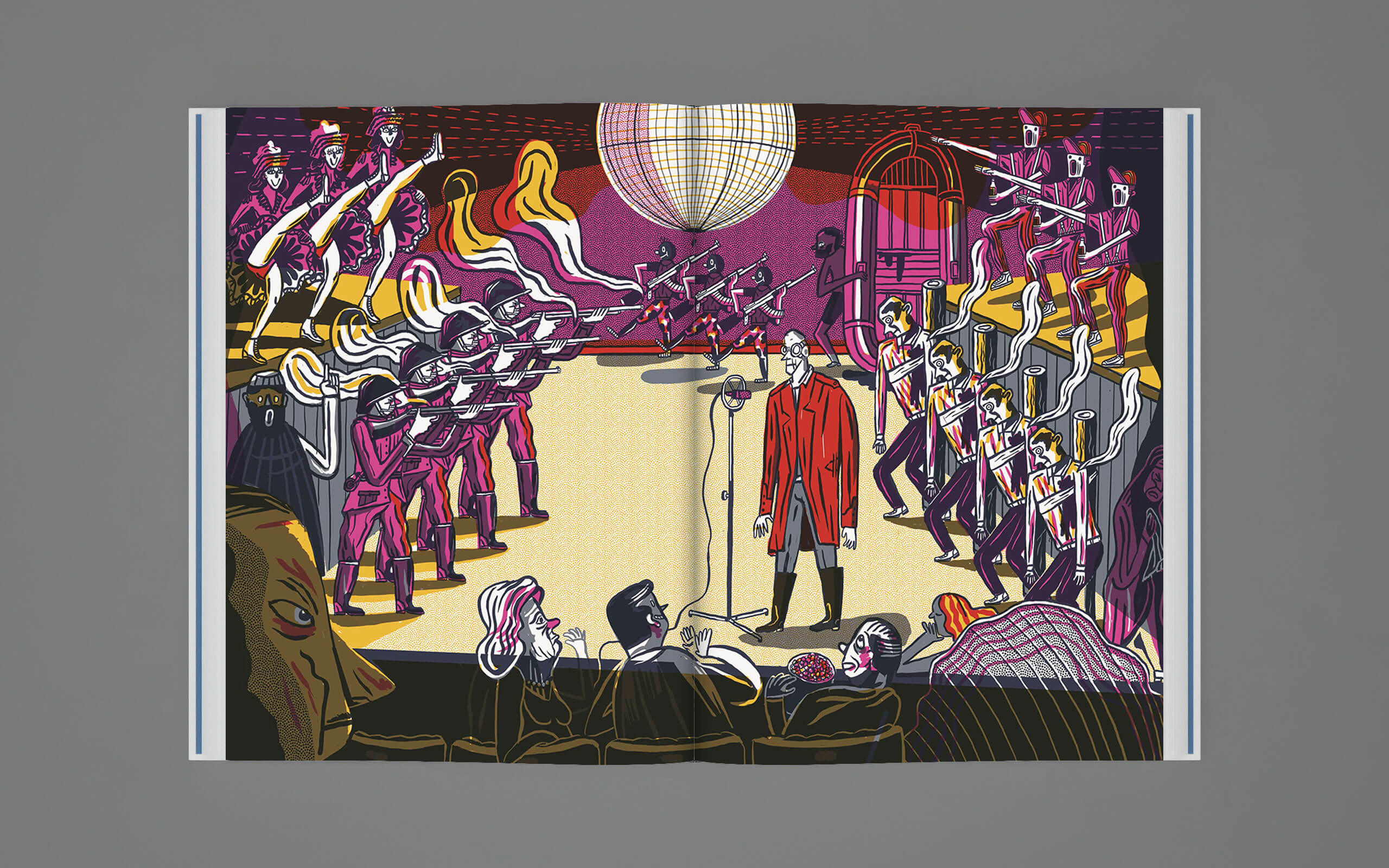
This special edition (Walde & Graf, 2017) contains 30+ mostly full-page illustrations by Jakob Hinrichs and these make it even more upsetting and louder.


Creative Commons License
This work is licensed under a Creative Commons Attribution-NonCommercial-ShareAlike 3.0 Unported License.
Profile Image for Greg.
561 reviews143 followers
July 22, 2022
Ich weiß, es ist schwer, mir zuzuhören und mit mir zu fühlen.

(I know it’s difficult to listen to me and to feel with me.)
Wolfgang Borchert made me feel that way from beginning to end of this short, yet seemingly interminably long, anthology of a play and short stories. It was as if I were privy—which seems like the wrong word, as does forced—to witness a long, desperate, inconsolable primal scream. Borchert’s howl is about the injustice of war, or more precisely, the injustice of being forced to fight, witness and survive the horrors of war. I took it in with short gulps of reading and needed a break between each piece.

Heinrich Böll wrote the afterword to this short collection, explaining why, whether one likes Borchert’s writing or not, he should interest us. Borchert was approaching his twelfth birthday when Hitler came to power. At twenty he was sentenced to death for writing a letter that a Nazi court deemed a threat to the state. He spent six weeks in solitary confinement awaiting his execution before he was pardoned and sent to the front. In his twenty-fourth year, he was jailed for telling an anti-Nazi joke (I wish I knew what the joke was). On November 20, 1947 he died from the damage that war, exposure to the elements, and hunger had done to his health. In his last two years, as Böll sums up, “he wrote…as someone in a race with death would write.” I would assume, given the facts of his life, that Borchert was not particularly well-, or certainly not widely-, read, which makes his emotional output even more remarkable. So even if one does not like his writing, his backstory should give him some slack.

Borchert is most known for his play Draußen vor der Tür.* It has been, for years, a staple in German classrooms. That’s easy to understand. It is a play that condemns war, but doesn’t assign blame about the causes of the particular war it addresses. It can be read as being neither from the political right or left. Focusing on the “German-ness” of the story would miss the point. This is a play that applies to any war. A soldier from Peloponnesus, Alexandria, Agincourt, Waterloo, Gettysburg, the Transvaal, Gallipolli, Vietnam, Iraq, or Gaza would have been able to relate to it.

The plot, if one can call it one at all, is about a soldier who returns to Hamburg after the war. He tries to commit suicide by drowning in the Elbe, but the river throws him back. He returns to find his wife living with his best friend. His parents—his father was an anti-Semitic Nazi sympathizer—are dead and a cold, heartless woman now lives in their house. A young girl with delusions finds him to be a comical figure but frivolously imagines that he could take the place of her fallen lover. A former mentor, a theater director, feigns amnesia when confronted with his support of sending his students to war. And his former commanding officer disavows any responsibility during his command. In each case, the returning soldier—dressed in rags and looking comical in his prescription glasses that are made to fit under a gas mask—is unable to cross the barriers to reenter society. He is literally left “outside the door,” there is no room for him in this new era.

Many would consider the style to be avant-garde, but I see it more in the tradition of classical Greek Theater. Most of the parts can be read as extended monologues of character types rather than dialogues between individuals. Indeed, I could see this play staged with the characters wearing ancient Greek masks; they represent parts of their society, not individuals.

All but one of the short stories portray end-of-war related themes—alienation of returning soldiers, survival among the rats, barely coping with hunger. The most emotionally touching is a Christmas story of a young couple with a new born baby who warm themselves with stolen wood to heat the stove in the middle of their hovel. Instead of being visited by the three kings, they share the heat of their stove with three returning soldiers in rags: one bearing a cardboard box, one bearing a canvas sack, and one who has lost his hands in the frost of Russia. Some of the stories could have used an editor—but who would be able to edit the last words written by a dying man? The sense of tragedy and loss as well as the betrayal by those who were once the foundations of his society is almost too much for the reader to bear. But bear witness we must.
Wir sind die Generation ohne Bindung und ohne Tiefe. Unsere Tiefe ist der Abgrund. Wir sind die Generation ohne Glück, ohne Heimat und ohne Abschied. Unsere Sonne ist schmal, unsere Liebe grausam und unsere Jugend ist ohne Jugend. Und wir sind die Generation ohne Grenze, ohne Hemmung und Behütung—ausgestoßen aus dem Laufgitter des Kindseins in eine Welt, die die uns bereitet, die uns darum verachten.

(We are the generation without bonds and without depth. Our depth is the abyss. We are the generation without luck, without a home or without a proper parting. Our sun is narrow, our love dreadful and our youth is without youth. And we are the generation without limits, without scruples or secrets—locked out of the children’s playpens that prepare us for the world, and for that we are despised.)
* The translation in English, The Man Outside, loses too much of the “outside the door” symbolism and diminishes, in my view, what Borchert intended. Imagine desperately trying to get on the other side of a door and knowing you will never make it.
Profile Image for Şafak Akyazıcı.
134 reviews55 followers
January 16, 2023
Bayılllldımmm!!!!
Beckham cepheden döndükten sonra evine gider, kapıda aile isimlerinin yazılı olduğu plakayı göremez. Kapıyı çalar, Bayan Kramer’dir artık evin yeni sahibi, anne babasının gazı açıp intihar ettiklerini ve sonrasında “o hava gazı ile biz tam bir ay yemek pişirirdik” dediği o sahne aklımdan çıkmıyor bir türlü. Böyle aklımda kalan, beni etkileyen o kadar çok paragraf var ki kitapta.
***
Okumadım da temposu bir dakika düşmeyen oyunu izledim sanki. Sahne anbean gözümün önünde. Nefisti!
Neredeyse kitabın sonunda kalkıp ayakta alkışlayacaktım Wolfgang Borchert’i, Beckmam’i ve tüm ekibi…

Profile Image for Bjorn.
987 reviews188 followers
April 25, 2013
Helmet off helmet off – we have lost!

Wolfgang Borchert was one of millions of Germans who fought in WWII. Not for Hitler, for national socialism, or for Germany; for Germany, he'd written plays against the nazis, which earned him a one-way trip to the front (it's easier to have your enemies take care of dissidents).

When he came back home, the war was over, Hitler was dead and Wolfgang himself wasn't far behind. Four years of bullet wounds (some allegedly self-inflected), field hospitals, sickness, jail and POW camps had finished him. So he sat down and started writing again. He wrote about fighting in a war he didn't believe in, where schoolboy fantasies about honour turned out to mean mass graves. He wrote about coming home to a country in both material and moral ruins, where everybody seemed to just want to pretend the last 10 years never happened. He wrote about a Europe that had marched straight into a meat grinder shouting happy slogans. He wrote as quickly as he could; everything old had been obliterated by the war, something new had to come, and he knew he wouldn't be around to see it.

We don’t need poets with good grammar. We lack patience for good grammar. We need those with the hot feeling that’s been sobbed hoarse. Who call a tree tree and a woman woman and say yes and say no: loud and distinctly and threefold and without a subjunctive.

There are several editions of Borchert's work. This one, The Man Outside, collects roughly a dozen of his short stories and the titular play, literature that runs gasping for breath along a knife's edge between furious polemics and horrified sentimentality and somehow manages to never fall off to either side. A direct, frenzied prose that occasionally simmers down into dreamlike, elegic pieces like "The Bread" and "The Rats Sleep At Night" and become completely heartrending.

In Borchert's stories, soldiers stumble down the street of once-again peaceful Germany with their heads full of machine-gun fire and the number of people they had killed. Boys sit in bombed-out buildings, keeping constant vigil so the rats don't eat their little brother buried under the rubble. Decades-old marriages threaten to crash over something as trivial as a piece of bread. Prisoners risk their lives for just a glimpse of a wildflower. And above all there's a narrator who at times seems to have endless sympathy and pity for his co-sufferers, and at other times drop all pretenses of telling a story and just yells at the reader: this is what we are. This is what we did, all of us. There are no attempts at setting it in some ideological or political perspective, all ideologies and politics got massacred in the war, there's just the now, the ground zero, where they need to start again.

Say NO! Say NO! Say NO!

Borchert isn't subtle. He doesn't have time for subtle. He has an incredible raw talent and had he lived, he might have looked back on these early stories today and thought of them as punkishly charming but a little too black and white, but that would never happen and he knew it, so he just needs to get it all down on paper.

Wolfgang Borchert died in 1947, 26 years old. The day after his death saw the first performance of "The Man Outside", the aforementioned play that makes up the centrepiece of the collection, with the subtitle "a play no theatre wants to perform and no audience wants to see." In this, a lone soldier returns to Germany after three years in a Siberian POW camp. His name is Beckmann - just Beckmann, everyone's forgotten his first name; he's never been anything but a soldier. He has no initiative of his own; he's never done anything but take orders. He still wears a uniform; he's never owned any civvies. And now they tell him that's all over, there's no need to feel bad about it, you only did your duty, here, have a schnapps and let's sing Alte Kameraden, why do you keep looking at us like that? But his parents, faithful nazis, are both dead. His wife found someone else. His general refuses to understand why he feels guilty about all the dead. With nowhere to go, nobody to listen, he tries to drown himself in the Elbe, but even Death won't have him. And so he stands there as the curtain falls, one of millions along dozens of riverbanks in a Europe that doesn't know where to go and finds no answers in 2000 years of civilization and millions of dead:

Go on, answer me!
Why won't you say anything? Why?
Won't anybody answer me?
Anybody?
Won't anybody, anybody answer me?


And the voice echoes.
Profile Image for Veronika.
Author 1 book154 followers
March 14, 2020
Es fühlt sich unangemessen an zu diesem Werk überhaupt eine Rezension zu schreiben.
Es ist so viszeral und so roh, und es fühlt sich an, als ob man eine Stunde lang von dem Autor angeschrien wird (so lange habe ich etwa gebraucht, um es zu lesen), während er einen Nervenzusammenbruch hat und weinend vor einem zusammensinkt. Und genauso fühlt man sich danach - erschöpft, erschlagen und den Tränen nah.

Er ist der erste Mensch, der so auf diesen Krieg reagiert hat, wie ich reagiert hätte und der nicht versucht sein Trauma zu verdrängen und wegzuschieben, wegzurationalisieren, zu bagatellisieren, wie die meisten anderen Menschen dieser Generation, die ich kennengelernt habe. Er fordert ein, dass es zur Kenntnis genommen wird und Gott, wie gut kann ich mir vorstellen wie er da abgeprallt ist an der Teflonbeschichtung der Deutschen mit ihrem preußischen Arbeitsethos. Wir bauen auf, wir schauen nach vorne, wir schauen nicht zurück, jammern hilft nicht, darüber muss man wirklich nicht reden. Doch. Doch, man muss, und Borchert zwingt einen.

Am Verdrängen wäre er erstickt, denke ich.
So viel Qual kann man nicht verdrängen.
Endlich hat es jemand mal ausgesprochen, rausgeschrien, diesen ganzen Wahnsinn, der da passiert ist und der auch danach noch passiert ist. Es ist eine Geschichte wie ein Hammer, der einem über den Kopf geschlagen wird und die einem verweigert dass man wieder unter die gemütliche Decke der Verdrängung klettert. Eine Geschichte, die bitternötig war, und die ich gerne einigen Menschen über den Kopf gehauen hätte, damit sie endlich aufhören mit dem wegschieben, wegleugnen, verdrängen und verschweigen.
Profile Image for Leah.
527 reviews70 followers
July 21, 2019
Anders. Deprimierend. Auf die gute Art und Weise.

(Nebenbemerkung: Meine Ausgabe hat noch ein Nachwort von Böll, der hofft, dass "Zwanzigjährige" dieses Buch in den Händen halten. Da fiel mir auf: Stimmt, ich bin 23... in dem Alter war Borchert vielleicht gerade in Haft wegen seiner Briefe von der Front.
Außerdem erwähnt Böll, dass das Buch für den Preis eines Kinobesuchs zu kaufen ist. 4,80 DM. Man, Kino war ja damals richtig günstig. Good, old times.)
Profile Image for Jonathan.
1,009 reviews1,229 followers
September 25, 2018
Some variable quality here, but the good stuff is exceptionally good. Here is an example:


THE KITCHEN CLOCK

ALREADY from a distance they saw him coming towards them, for he looked odd. He had an old face, but from the way he walked one realized that he was only twenty. He sat down with his old face beside them on the bench. And then he showed them what he was carrying in his hand.
That was our kitchen clock, he said and looked at them all one after another, sitting on the bench in the sun. Yes, I found it. It was left over.
He held a round plate-white kitchen clock in front of him and stroked the blue-painted numbers with his finger.
It's of no particular value, he said apologetically, I know that, of course. And it's not particularly beautiful either. It's only like a plate—I mean the white enamel. But the blue numbers do look quite pretty, it seems to me. Of course, the hands are only tin. And they don't go now. No. It's broken inside, that's certain. But it still looks like it used to. Even if it doesn't go any more.
With his fingertip he made a careful circle round the edge of the plate-like clock. And he said softly: And it was left over.
The people sitting on the bench in the sun did not look at him. One man looked at his shoes and the woman looked into her pram. Then somebody said:
You've lost everything, have you?
Yes, yes, he said happily, just think, every single thing ! Only this here, only this is left. And he lifted up the clock again, as though the others had not yet seen it.
But it won't go any more, said the woman.
No, no, it won't. It's broken, I know that. But otherwise it's just as it always was: white and blue. And again he showed them his clock. And the most wonderful thing, he went on excitedly, 1 haven't told you yet at all. The most wonderful thing is still to come: Just think, it stopped at half past two. Of all times at halfpast two, just think.
Then it must have been half past two when your house was hit, said the man and pushed his lower lip forward importantly. I've often heard that. When the bombs drop, the clocks stop. It’s because of the blast.
He looked at his clock with a superior shake of the head. No, my dear sir, no, there you're mistaken. The bombs have nothing to do with it. You mustn't keep talking about bombs. No. At half past two there was something quite different, only you don't know what. That's the joke, of course, that it stopped just at half past two. And not at a quarter past four or at seven. For at half past two I always used to come home. At night, I mean. Nearly always at half past two. That's just the joke.
He looked at the others, but they had taken their eyes off him. He did not find them. So he nodded at his clock: Naturally I was hungry then, you see ? And I used to go straight to the kitchen. And then it was nearly always half past two. And then, then my mother would come. It didn't matter how quietly I opened the door, she always heard me. And while I was looking for something to eat in the dark kitchen, the light would suddenly go on. And then she'd be standing there in her woollen jacket and red shawl. And barefoot. Always barefoot. And our kitchen was tiled, at that. And she'd screw up her eyes because the light was so bright. Because of course she'd just been asleep. It was night, of course.
So late again, she'd say then. She never said more. Just: So late again. And then she'd hot up my supper and watch me eating. Rubbing her feet together all the time, because the tiles were so cold. She never put her shoes on at night. And she'd sit with me until I'd eaten my fill. And I would hear her putting the plates away again, when I'd already put the light out in my room. Every night was like that. And mostly at half past two. I felt it quite as a matter of course that she should make me a meal in the kitchen at half past two in the morning. I took it quite for granted. She always did it. And she never said more than: So late again. But she said it every time. And I thought it could never stop. It was so much a matter of course to me. All that. It had always been like that.
For a breathless second it was quite still on the bench. Then he said softly: And now? He looked at the others. But he did not find them. So he said to the clock, softly into its white-blue round face: Now, now I know that it was paradise. Real paradise.
It was quite still on the bench. Then the woman asked: And your family?
He smiled at her, embarrassed: Ah, you mean my parents? Yes, they're gone, too. Everything's gone. Everything, imagine it. Everything gone.
Then he lifted up the clock again and laughed. He laughed: Only this here. It's left over. And the most wonderful thing is that it stopped at exactly half past two. Exactly half past two.
Then he said nothing more. But his face was quite old. And the man sitting next to him looked at his shoes. But he didn't see his shoes. He kept thinking of the word "paradise".
Profile Image for Aydan.
22 reviews1 follower
January 16, 2023
Borchert’in 26 yasinda ve sadece bir haftada tamamladigi muhtesem tiyatro eseri.

Savastan dönen ancak hiçbir seyi ve hic kimseyi biraktigi gibi bulamayan Beckmann’in tüm kapilarin disinda kaldigi hikayesi,gencecik yasina bir ömür, pek cok aci, hastalik ve savas sigdirmis Borchert’in cigligi.Tanriyla yüzlesip hesap sorma kismi o kadar aci o kadar gercek ve o kadar hakliydi ki donüp dönüp tekrar okudum.

Mutlaka okuyun.

“Kahramanlıklar için şarkılar, madalyalar yaptılar. Böylesine coşkundular. Derken harp patladı. Bizi cepheye sürdüler. Bize hiçbir şey söylemediler. Yalnız, görelim sizi, dediler. Gösterin kendinizi, yiğitler! Onlar bize bu şekilde ihanet ettiler. Kalleşçe ihanet ettiler. Simdi onlar kapılarını kapamış, evlerinde oturuyorlar. Sayın müsteşar, sayın direktör, sayın yargıç, sayın başhekim. Simdi bizi harbe gönderenler sanki onlar değil. Hayir, hiçbiri. Simdi onlar hepsi kapılarını kapamış, evlerinde oturuyorlar. Onlar kapılarını sımsıkı kapadılar. bizler kapıların dışında kaldık.”
Profile Image for Carduelis.
195 reviews
June 16, 2025
Kapıların dışında, savaş sonrası yıkım edebiyatının önemli tiyatro eserlerinden biri. Oyunun başkahramanı Beckmann, savaşın en sert ve yıkıcı yüzüyle karşılaşmış bir asker. Savaşın ardından yurduna döndüğünde, geride bıraktığı hiçbir şeyi yerli yerinde bulamıyor; ne vatanını, ne evini, ne de sevdiklerini...

Karşılaştığı bu boşluk, yaşadığı travma öyle derin ki, sıkça "Keşke savaşta ölseydim" düşüncesiyle hayatta kalmanın kendisi için bir tür cezaya dönüştüğünü ifade ediyor.

Eser, Beckmann'ın yaşadığı derin hayal kırıklığını etkileyici bir biçimde aktarıyor ve onun başına gelenler, yalnızca kişisel bir felaket değil, aynı zamanda toplumun savaş sonrasında dışladığı, unuttuğu, görmezden geldiği yüz binlerce insanın trajedisini ifade ediyor. Bu metinde Beckmann, bir birey olmaktan çıkıyor; savaşın ardından toplumsal hafızanın ve vicdanın dışında bırakılmış "ortak bir figürle" binlerce kişinin sembolü oluyor.

Kapıların Dışında, kısa olmasına rağmen savaşın insan ruhunda bıraktığı tahribatı ve toplumun bu yaraları sarma konusundaki yetersizliğini çarpıcı şekilde aktarıyor. Eser kısa, ama bir günde bitirilecek bir metin değil bence; dikkatle, sindirilerek okunmalı. Çünkü bu tiyatro metnindeki her satır, hem bireysel hem toplumsal bir çöküşün izlerini taşıyor.
Çeviri muhteşem; hem anlamı hem duyguyu çok iyi veriyor.

Herkese keyifli okumalar.

Benden kurtulamazsın. Benim binlerce çehrem var. Ben herkesin tanıdığı sesim. Ben her zaman var olan ötekiyim. Öteki, cevap veren. Sen ağlarken gülen. Sen yorgunken dürten. Dürten, gizli kalan, bir vicdan gibi tedirgin edenim ben. Kötüde iyiyi, en koyu karanlıklarda lambayı gören iyimserim ben. İnanan, gülen, sevenim ben! Topallayarak da olsa yürüyüp gidenim ben. Sen hayır derken evet diyenim ben! Ben evet diyenim! Ben...syf35

bu ismi mezar der gibi söylerken; cinayet der gibi, köpek der gibi; bu adam benim adımı kıyamet der gibi, boğuk, tehditli, üzgün söylerken, sen bana, "Yaşamaya devam et!" diyorsun ha? Ben dışarıda, kapıların dışındayım, yine dışında. Dün gece kapıların dışındaydım. Bugün yine dışında. Ben daima kapıların dışındayım. Ve kapılar kapalı. Oysa ben ayakları külçe gibi ve yorgun bir insanım. Açlıktan karnı guruldayan bir insan. Gecenin ayazında kanı donan bir insan. Tek ayaklıysa boyuna ismimi söylüyor. Geceleri gözüme artık uyku girmiyor. Ben nereye gidebilirim, yahu? Bırak da geçeyim!syf49

Bu kapı bizim kapımız. Bu kapının ardında mutfak kapısı gırç gırç eder, bu kapının ardında saat, o kısık sesiyle geri gelmez dakikaları kazır. Bu kapının ardında ben, tersine çevrilmiş bir iskemleye oturup yarış oyunu oynadım. Bu kapının ardında babam öksürür. Bu kapının ardında gevşemiş musluk, fıs fıs su kaçırır; mutfaktaki döşeme çinileri, annem sağa sola bastıkça yerlerinden oynar. Bu kapı bizim kapımız. Bu kapının ardında ölümsüz bir yumaktan bir hayat sağılır.syf79

Hepsinde aynı kayıtsız, korkunç çehre. Hepsinde laf dedin mi gırla, ama bir kerecik olsun evet demelerini iste, hepsi dut yemiş bülbüle döner. Eh, ne çare, böyledir bu insanlar. Hem de korkaktırlar. Onlar bize ihanet ettiler. Kalleşçe ihanet ettiler. Biz daha küçücüktük, harplere girdiler. Biz biraz büyüdük, bize harplerden söz açtılar. Coşkundular. Onlar daima coşkundular. Biz daha da büyüyünce onlar bizim için de bir harp düşündüler. Sonra da bizi bu harbe yolladılar. Onlar coşkundular. Daima coşkundular. İçlerinden hiçbiri bize nereye gittiğimizi söylemedi. Hiçbiri bize cehenneme gidiyorsunuz demedi. Ne gezer, hiçbiri.syf109
Profile Image for Fact100.
483 reviews39 followers
July 3, 2024
"Gerçeği öldürdüler, ve bütün kapılar kapalı."

İkinci Dünya Savaşı'nın yarattığı ahlaki ve fiziki yıkımı, topluma olan etkilerini ve oluşan fiziksel ve psikolojik enkazı eserlerin özüne yerleştiren yıkıntı edebiyatının en önemli temsilcilerinden birisi Wolfgang Borchert.

"Bu kalp, sesi kısılana kadar bağırdı da çığlığını hiç kimse duymadı."

Zorla savaşa alınan, tedavi göremeyen ve hor görülmüş bir sanatçı Borchert. Sadece 26 yaşındayken, ömrü oyununun sergilendiğini görmeye bile yetemeden hayatını kaybeden Borchert'in tek oyunu olan "Kapıların Ardında", Behçet Necatigil'in güzel Türkçesiyle bizlerle buluşuyor.

İkinci Dünya Savaşı ve nasyonal sosyalizmin hayat ve topluma olan yıkıcı etkilerinin yanı sıra savaşmak durumunda kalanlarda bıraktığı hasarı da evine dönmeye çalışan ve ölmeye özlem duyan bir ölünün gözünden aktaran eser, insanın kendi evindeyken de kapıların dışında kalabileceğini vurguluyor.

“İnsanın karnı tok, sırtı pek oldu mu, başkalarının yoksulluklarını okuması, merhamete gelip iç çekmesi ne kadar da tatlıdır.”

Eve dönememe ve değişimlerin alışıldık olan şeyleri yok etmesi eğilimi temalarının nihilist bir perspektifle anlatıldığı "Kapıların Dışında", tarafı ne olursa olsun, savaşın "insan" üzerinde bıraktığı etkiyi deneyimlemek ve bugüne dönük bir ders çıkarabilmek adına sanatsal bir fırsat.

Entropiye karşı elimizde kalan en etkin mücadelenin sanat ve empati olduğuna inanıyorum.

Bu etkileyici eseri, unutmamak, ilerlemek ve kapıları yok etmek için insancıl bir umudu olan tüm yetişkin kitapseverlere tavsiye ederim.
Profile Image for Renklikalem.
535 reviews172 followers
October 20, 2021
sanirim ilk defa bir oyun metni okudum ya da ilk defa bu kadar carpici, boyle yogun hissettiren bir oyun okudum demeliyim. aslinda bir seyler yazmaya baslamadan once belki de en basta cevirmenin adini anmaliyiz.
1952’de milli egitim bakanligi tercume burosu’na yazdigi bir mektupla oyunun turkce cevirisini yapmayi isteyen behcet necatigil’in ruhu sad olsun. siirleriyle sevdigim kadar edebiyatci ve cevirmen kimligiyle de mest oldum. kitabin basinda @aysesarisayin in harika bir onsozu var. ben mektuplarla ve donemin yazismalariyla anlatilan kitabin ceviri hikayesini de o donem icin ayrica dikkat cekici buldum.

oyunu cok begendim. kisa, sade ama cok carpici. bazi kisimlarda nefesimin kesildigini hissettim. acikcasi metni okumaya basladigimda tiyatro oyunu oldugu icin kurguya girip giremeyecegime iliskin ciddi tereddutlerim vardi. karakterlerin bu kadar canli, kurgunun gorsel yonunun boyle guclu ve duygunun bu kadar yogun olabilecegini hic dusunmezdim.

ilk cumleden son cumleye tum karakterlerin ve tabii borchert’in oldukca sakin ama kelimenin tam anlamiyla bizi sarsarak anlattigi bu hikayeyi okumanizi israrla tavsiye ederim.
Profile Image for Erkan.
285 reviews64 followers
December 10, 2020
Savaşın insanlar üzerindeki tahribatını oldukça etkileyici şekilde anlatan bir oyun. Daha önce hiç bu türde bir kitap okudum mu hatırlamıyorum, pek de tercih etmem açıkçası. Ama çok beğendim. Bu oyunu sahnede izlemeyi de çok isterdim. Oyundaki vurucu diyalogları ve Beckmann'ın uzun, iç parçalayıcı tiradlarını izlemek.. Savaşlar hiç bitmiyor sadece şekil değiştiriyor. Topla tüfekle yapılan bir yana insanların birbirlerinin bencilliğine, vurdumduymazlığına karşı verdiği savaşlar bitecek gibi de görünmüyor.
Profile Image for Melek .
411 reviews13 followers
January 7, 2023
Yazar Wolfgang Borchert, İkinci Dünya Savaşı’nda Rusya Cephesi’nde zorlu şartlarda askerlik yapmıştır. Savaş sırasında ağır derecede yaralanma ve hastalanma yaşamasına rağmen Nazi fikirlerine karşı olduğu için savaş bitene dek durmadan cepheye yollanmış birisi. Savaştan sonra ise sadece iki yıl yaşayabilmiş başarılı bir yazar.

Beckmann ise yazarın Kapıların Dışında oyununun baş karakteri. Beckmann Sibirya cephesinde üç sene geçirmiş, arkadaşlarının ölümünü görmüş ama tüm bunlara evine dönebilmenin umudu ile dayanabilmiş 24 yaşında bir asker, bir genç, bir Alman. Oyun Beckmann’ın ülkesine dönmesi ile birlikte gördüklerini , yaşadıklarını anlatıyor.

Kendi açımdan kitap, dünya ile olan derdini çok net bir şekilde anlattığı için başarılı bulduğum bir oyundu. Okurken tüylerim sık sık diken oldu, gözlerim doldu ve anlatılan gerçekliğin altında kaldım. Duygu ve düşüncelerimi tam olarak toparlayamayacağım bir etkisi oldu kitabın.

Savaşın gerçekleri üzerine bir okuma yapmak isteyen herkese bu oyunu öneririm.

Kitabın harika Önsöz’leri için de Ayşe Sarısayın ve Behçet Necatigil’e saygılarımı sunuyorum. Bu harika kirap Behçet Necatigil’siz belki de hiçbir zaman Türkçe’ye kazandırılamayacaktı.
Profile Image for Aylin.
176 reviews65 followers
November 20, 2021
Genç yaşta savaşmaya zorlanan gençliğin isyanına bir ses olan yazarın, cephede yaşadıklarını değil de, savaştan döndüğünde geride kalanların onları kapı dışında bırakmasını anlatıyor olması, oyunu benim için bu güne kadar okuduğum yıkıntı edebiyatı eserlerinden ayrı bir yere konumlandırdı.

II. Dünya Savaşı’nda Rusya cephesinde ağır yaralanan ve cephede yakalandığı hastalıkların neticesinde 26 yaşında ölen Wolfgang Borchert bu oyununda özetle “harpten dönenleri böyle karşılamayın” diyor…
Profile Image for Anna Catharina.
626 reviews60 followers
February 3, 2021
Ja, Wahrheit! Mit der Wahrheit hat die Kunst doch nichts zu tun! Mit der Wahrheit kommen Sie nicht weit. Damit machen Sie sich nur unbeliebt. Wo kämen wir hin, wenn alle Leute plötzlich die Wahrheit sagen wollten! Wer will denn heute etwas von der Wahrheit wissen?

Vieles in "Draußen vor der Tür" wirkt auf mich aktueller denn je. Die innere Zerrissenheit, die Isolation des Einzelnen, der Verlust gesellschaftlicher Normen, der hohle äußere Schein, das Auseinandertriften der sozialen Schichten. Und selbst wenn ich das Buch "nur" als Geschichte der Rückkehr eines Soldaten und Kriegsgefangenen lese, berührt es mich unglaublich, es hat mich verstört, ergriffen, beunruhigt, gefesselt, aufgerüttelt und erschüttert. Von der ersten bis zur letzten Seite/Zeile ein Meisterwerk.
Profile Image for Begüm.
195 reviews1 follower
March 18, 2021
Tüylerim diken diken! Hayatımda hiç bu kadar etkileyici bir tiyatro okumamıştım. Muazzam bir eser. Umarım bir gün sahnede izleyebilme şansına erişirim.
Profile Image for Flybyreader.
716 reviews212 followers
December 15, 2021
“Aşağıda insanların kulakları tıkalı, yukarıda Tanrı'nın! Tanrı uyuyor, bizse yaşamaya devam ediyoruz.”

Kısa ancak yoğun ve sembollerle dolu bir 2. Dünya Savaşı tiyatrosu. Ancak ilginç olan savaşı değil savaş sonrası eve dönüşü anlatıyor. Oyunda savaşı binbir zorlukla atlatıp evine dönmeye çalışan bir askerin aslında hiçbir şeyi bıraktığı gibi bulamadığını anlatıyor. Savaştan sağ dönmek aslında bir şey ifade etmez, geride kalanlar hayatlarına devam etmiştir ve o hayatta artık ona yer yoktur. Sevdiği kadın başkasıyladır, iş arar bulamaz, anne babası kederden rahmetli olmuştur, bütün kapılar bir bir yüzüne kapanır, o her zaman kapıların dışında kalır. Ölmek ister nehir bile geri tükürür onu kabul etmez.
Bu kitabın en önemli değerlerinden biri çevirisinin şair Behçet Necatigil tarafından yapılmış olması. İkinci dünya savaşını da görmüş şair özel bir talepte bulunarak bu tiyatro oyununu Türkçeye kazandırmak ister, kabul edilir. Çeviri ve önsöz bitip de basıma gönderildiğinde antimilitarist olarak değerlendirilir ve çeviriyi geri çekmesi beklenir. Bunu da yapan şairin bu kıymetli çevirisi birkaç yıl toz tutar ardından ilgilenen başka yayınevi çıkar, binbir zorluk sonrasında basılır, sahneye adapte edilir ve oynanır. Yine antimilitarist görülüp yasaklanır, tam bir kıymeti bilinmez. Aslında o da kapıların dışında bir adamdır, bir türlü kabul ettiremez eserini. Tuhaf bir Türkiye gerçeği hikayesi de var burada, bazı şeylerin pek değişmediğini gösteren. Can Yayınları’nın bu baskısında Necatigil’in yazdığı orijinal önsözüne ek olarak kızı tarafından çevirinin geçirdiği bütün bu trajik süreçleri anlattığı ikinci bir önsöz daha bulunuyor ki bence bu kitabın kendisi kadar kıymetli bir hikaye.
Kalbe dokunan, zihinde derin bir iz bırakan ve çetrefilli bir yolculuk sonrasında elimizde ulaşan özel bir eser, kesinlikle okunmalı.
Profile Image for Aleksandra.
221 reviews65 followers
January 1, 2025
A haunting description of a man‘s post-war physical and mental state; truly disturbing to be honest


One of the sentence, from the very beginning of the book stuck with me - when Beckmann says: 'Ich bringe ihm die Verantwortung zurück. Ich gebe ihm die Toten zurück.'
(roughly translated, since I had read this in German: 'I will take responsibility back to him. I give him the dead back.')


The chills I felt from reading this, just-


Oof-


Within this novel, the absolutely dominating feelings are that of grief, sorrow and guilt -> once you start reading, you will understand where it is coming from (I don‘t want to give any examples from the book, in order to avoid revealing any spoilers)


The emotionally loaded heaviness can be felt throughout the whole book, which is gradually intensified as the end is approaching


I really do feel undeserving of commenting anything further, to be honest, but please do check this novel out😅


We should all keep in mind the atrocities humankind is capable of inflicting (weather they have already been committed or not *yet*) - but also, on the other hand, our ability and strength to survive them.

Sometimes it seems to me, that we are yet to start learning from our past mistakes regarding certain historical events, since similar versions of them have not only been circulating, but have rather been repeating themselves, over and over again
Profile Image for emily rose.
425 reviews27 followers
December 27, 2020
"Einer von denen, die nach Hause kommen und die dann doch nicht nach Hause kommen, weil für sie kein Zuhause mehr da ist."
("One of those who come home but don't really come home because they don't have a home anymore.")

"Draußen vor der Tür" is a drama about Beckmann, a soldier that just returned from the second WW.
Beckmann has lost everything because of the war and that's why he tries to kill himself at the beginning of the book (but doesn't succeed).
During the story we see his constant struggle of wanting to stay alive and then not really wanting to be alive because of all he's lost.
It's one of those books that make you really sad because of how accurate and real something like this was for a lot of people.

I actually had to read this book for school and wasn't really excited for it. I'm normally not a huge fan of these books so it was a really nice surprise that I liked this so much.

4/5 stars
Profile Image for Radwa.
309 reviews2 followers
April 19, 2022
يعود الجندي بيكمان إلى بلاده بعد انتهاء الحرب ولكن لا يجد أمامه سوى الأبواب المغلقة
فيبقى واقفا وهو متعب في الخارج أمام الباب

الحوار ممتع جدا
لكن غير مقبول إطلاقا تشخيص الإله في صورة شيخ عجوز والتحدث إليه بانه لا يعبأ ولا يمكنه فعل شئ

لكن تبقى المسرحية من أهم الأعمال المنددة بالحروب
Profile Image for Youssef.
121 reviews42 followers
July 31, 2025
"خمسة فصول رمادية مطيرة!
الفصل الأول: سماء رمادية. أحدهم يؤلم المرء.
الفصل الثاني: سماء رمادية. المرء أيضاً يؤلم آخر.
الفصل الثالث: تظلم السماء، وتمطر.
الفصل الرابع: تتكاثف الظلمة. المرء يرى باباً.
الفصل الخامس: الدنيا ليل، ليل عميق السواد، والباب
مغلق المرء يقف في العراء. في العراء، أمام الباب."
Profile Image for suse.
6 reviews4 followers
December 1, 2007
incredibly powerful and depressing play on a veteran's psychological despair after his return home. regardless of the war and site (here it's wwII in germany), a book that's relevant in any country and year.
Profile Image for Emre.
290 reviews41 followers
June 4, 2018
'Ölüler cevap vermez. Tanrı cevap vermez. Gelgelelim, yaşayanlar, yaşayanlar soruyorlar. Her gece soruyorlar, Binbaşım. Yatağımda uyanmış yatarken geliyor ve soruyorlar. Kadınlar, Binbaşım, yaslı üzgün kadınlar. Ağarmış saçları, katı çatlak elleriyle yaşlı kadınlar. Issız, özlemli gözleriyle genç kadınlar. Çocuklar, Binbaşım, çocuklar, pek çok küçük çocuk. Karanlıkların içinden sesleniyorlar: Beckmann Çavuş, babam nerede, Beckmann Çavuş? Beckmann Çavuş, kocamı ne yaptınız? Beckmann Çavuş, oğlum nerede, ağabeyim nerede, Beckmann Çavuş, nişanlım nerede, Beckmann Çavuş? Beckmann Çavuş, nerede? Nerede? Nerede? Ortalık ağarana kadar hep böyle fısıldaşıyorlar. Yalnız on bir kadın, Binbaşım, benimkilerin sayısı yalnız on bir. Ya sizinkiler ne kadar, Binbaşım? Bin mi? İki bin mi? İyi uyuyor musunuz, Binbaşım? İki bine ek olarak şu benim on bir kişinin sorumluluğunu da size verirsem ne kaybedersiniz ki! Uyuyabiliyor musunuz, Binbaşım? Geceleri iki bin hayaletle? Uyumayı bırakın, yaşayabiliyor musunuz, haykırmadan bir dakika yaşayabiliyor musunuz? Binbaşım, Binbaşım, geceleri iyi uyuyor musunuz? Evet mi? O halde sizin için mesele yok, o halde eh ben de uyuyabilirim, eğer lütfeder de sorumluluğu geri alırsanız. O zaman nihayet gönlüm rahat uyuyabilirim belki. Gönül rahatı, budur mesele, evet, gönül rahatı, Binbaşım! Ondan sonra: uyumak! Allahım! Sf:61

'Gerçek de orta malı bir orospu gibidir. Orospuyu hepimiz tanırız da sokak ortasında karşılaşmaktan çekiniriz. Münasebetlerimiz gizli olmalıdır, gece vakti! Gündüzleri boz bulanık, kaba ve çirkindir; orospu ve gerçek. Hatta bazıları ömürleri boyunca hazmedemezler bunu.' Sf:77

'Doğru, sen sadece göz yumdun! Çocuk haykırır, bombalar patlarken sen kulaklarını tıkadın. Bombalar patlarken sen nerelerdeydin, Allah Baba? Yoksa benim keşif kolumdan on bir er eksilirken mi gösterdin babalığını? On bir erin lafı mı olur, Allah Baba, sen orada da yoktun, Allah Baba! Bu on bir kişi o ıssız ormanda elbette feryat ettiler, ama sen yoktun orada, ne çare yoktun, Allah Baba! Babalığını Stalingrad'da mı gösterdin, Allah Baba, Stalingrad'da mı? Ha! Bizlere sen ne zaman babalık ettin ki, Allah Baba, ne zaman? Biz ne haldeyiz, sen bunu kendine ne zaman dert edindin, Allah Baba?' Sf:93
Displaying 1 - 30 of 331 reviews

Can't find what you're looking for?

Get help and learn more about the design.