

What do you think?

Destroying Yemen: What Chaos in Arabia Tells Us about the World
Since March 2015, a Saudi-led international coalition of forces—supported by Britain and the United States—has waged devastating war in Yemen. Largely ignored by the world’s media, the resulting humanitarian disaster and full-scale famine threatens millions. Destroying Yemen offers the first in-depth historical account of the transnational origins of this war, placing it in the illuminating context of Yemen’s relationship with major powers since the Cold War. Bringing new sources and a deep understanding to bear on Yemen’s profound, unwitting implication in international affairs, this explosive book ultimately tells an even larger story of today’s political economy of global capitalism, development, and the war on terror as disparate actors intersect in Arabia.
312 pages, Paperback
First published January 4, 2018
Ratings & Reviews
Friends & Following
Create a free account to discover what your friends think of this book!
Community Reviews
Displaying 1 - 10 of 10 reviews

Want to Read
July 27, 2018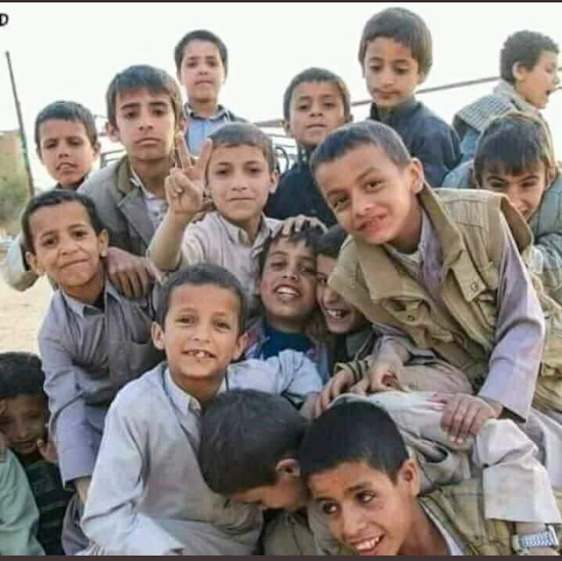
...
Been contemplating this image the past few days. Honestly, they're just so precious.
Killed on August 9 2018, along with dozens of others, when Saudi Arabia dropped a bomb on their school bus while they were on a field trip. The bomb appears to have come from an American arms company. Throughout the war, the US has provided the Saudi coalition with crucial diplomatic and military aid. This continued in the wake of last week's tragedy. If you can stomach it, here's a video of a State Department official smirking like a pig, deflecting, making excuses in the wake of the massacre https://twitter.com/YemenEdge/status/...
Imagine if it was your job to come up with some reason why a bunch of cute little kids deserved to be killed. That's US foreign policy. The people cowardly and corrupt enough to do this are the ones who rise and gain power.
'Is your money that good?'
*
I believe this is the only book yet written in English about the US-backed war on Yemen. To even realize that there is an ongoing war on Yemen practically requires a research project in today's media climate.
Thousands killed directly, the largest cholera epidemic ever recorded, and quite likely the largest famine anywhere in the world in the 21st century. Out of a total population of about 28 million, the UN has said 8.5 million are at risk of starving to death, with an estimated additional 10 million facing starvation by the end of the year if the fighting continues. Saudi Arabia and the United Arab Emirates continue bombing civilian targets and infrastructure while imposing a suffocating air and naval blockade on the country. The US keeps selling them weapons and giving diplomatic cover, as well as sharing intelligence and providing mid-air refueling to their fighter jets.
You might think this would be the biggest story in the world. Given that the US has facilitated this catastrophe every step of the way, you might think it would be a boon to journalists professionally committed to trashing the Trump administration. The president is enabling genocide. What could possibly be worse than that? And yet... In the past year, #Resistance powerhouse MSNBC did 455 segments on Stormy Daniels and ZERO on Yemen.
https://www.salon.com/2018/07/25/msnb...
…
Theories for why MSNBC is ignoring it
-Obama started the war, giving Saudi Arabia the greenlight in 2015; the liberal elite had a good year to train themselves not to care
-Covering it just doesn't guarantee very good ratings, not like a porn star and the pretend Russian menace
- The Saudi/UAE lobby spends billions on propaganda, and have been successful in shaping the narrative around Yemen
-The people who run MSNBC are cowardly, racist pieces of shit who just honestly don't care if the US is inflicting slow, painful death on millions of brown kids in the Middle East

May 9, 2022
This book gets a lot right, but I think it's a little too cynical, or perhaps not cynical enough. Isa Blumi's critique of the current war in Yemen is probably the closest to my view of any book that I've read. He rightly (in my view) sees the coalition war launched in 2015 as a Saudi and Emirati invasion. The book is filled with telling details on Gulf monarchy business deals and IMF skulduggery that are left out of other accounts. His telling of Yemen's modern history is refreshingly impassioned, and is making a large contribution to my own video projects on Yemen. But in the end I found the book unsatisfying.
The sordid details of foreign treatment of Yemen over the past century are largely right. It's a sad, disappointing story. International business definitely has worked hard to profit from Yemen, and fold it into world capitalism's preferred ways of doing business. But I think the over-arching story isn't as simple as what Blumi is telling us. This is where the "too cynical/not cynical enough" thing comes in. He may have denied this at some point in the book, but the overwhelming impression I get is that the author sees some kind of coherent centuries-long Western conspiracy to crush Yemen. All I see is greed and stupidity. Blumi suggests that the world financial system is in such dire straits that it needs to figure out how to exploit the resources of Yemen to keep the party that is late capitalism going. This strikes me as ridiculous.
The Saudi and Emirati invasion is evil. The US and UK military industrial complexes are profiting obscenely over the corpses of starved and exploded Yemeni children. It's also true that the brain-dead IMF attempted to impose the same "Washington Consensus" solutions on Yemen during a 2012-2014 power transition that it attempts to impose everywhere else. These solutions were desperately inappropriate for Yemen, and helped to bring about the civil war that excused the Gulf invasion. All of these things are true, but the author of this book attempts to knit them together into a coherent narrative that he asserts rather than documents. All of these disparate events are supposedly part of the same coherent, neoliberal plot to get the Yemeni public to participate more deeply in the global economy. I don't buy it. I don't see it, and I've been looking at Yemen pretty closely for half a decade now. The IMF treated Tunisia, a country long picked over by global capital, in an identically idiotic way.
I don't think the US demanded the Saudi invasion of Yemen because of New York Bankers. I think that the US allowed the Saudi invasion because New York Bankers were barely aware that Yemen exists. This strikes me as darker and sadder than a devious plot to get at Yemen's economy. There just isn't enough economy in Yemen for the US to care about it one way or the other. The book provides a lot of great detail on deals that added to my understanding of the UAE's involvement in the conflict. But Blumi fails to draw the connections back to "global capital" in ways that make his two century story make sense. While I don't believe he misrepresented any details of Yemeni history in the book, the narrative he wants to serve occasionally makes his portrayals of historic figures seem a little ridiculous. He depicts the Yemeni Imams who ran the country from the 1920s to 1970 as anti-capitalist heroes standing up for Yemeni freedom. The other 6 books of Yemeni history I've read point out that widespread malnutrition and occasional mass starvation was a feature of the Imamate years. But that doesn't come up in Blumi's narrative.
In one way I'm grateful to this full throated left-wing account. As an adolescent I saw myself as more of a conservative, and I still see myself that way. After two horrific Republican presidents, and the 2008 financial crisis, I have had to concede that the left has a better understanding of the world than I did on many, many fronts. I often wonder, am I turning into a leftist? But a full-throated leftist book like this assures me I am not. This book features a lot of great reporting and history, but the full critique of capitalism it presents strikes me as more of a conspiracy theory or a fairly tale than a true representation of reality.
The sordid details of foreign treatment of Yemen over the past century are largely right. It's a sad, disappointing story. International business definitely has worked hard to profit from Yemen, and fold it into world capitalism's preferred ways of doing business. But I think the over-arching story isn't as simple as what Blumi is telling us. This is where the "too cynical/not cynical enough" thing comes in. He may have denied this at some point in the book, but the overwhelming impression I get is that the author sees some kind of coherent centuries-long Western conspiracy to crush Yemen. All I see is greed and stupidity. Blumi suggests that the world financial system is in such dire straits that it needs to figure out how to exploit the resources of Yemen to keep the party that is late capitalism going. This strikes me as ridiculous.
The Saudi and Emirati invasion is evil. The US and UK military industrial complexes are profiting obscenely over the corpses of starved and exploded Yemeni children. It's also true that the brain-dead IMF attempted to impose the same "Washington Consensus" solutions on Yemen during a 2012-2014 power transition that it attempts to impose everywhere else. These solutions were desperately inappropriate for Yemen, and helped to bring about the civil war that excused the Gulf invasion. All of these things are true, but the author of this book attempts to knit them together into a coherent narrative that he asserts rather than documents. All of these disparate events are supposedly part of the same coherent, neoliberal plot to get the Yemeni public to participate more deeply in the global economy. I don't buy it. I don't see it, and I've been looking at Yemen pretty closely for half a decade now. The IMF treated Tunisia, a country long picked over by global capital, in an identically idiotic way.
I don't think the US demanded the Saudi invasion of Yemen because of New York Bankers. I think that the US allowed the Saudi invasion because New York Bankers were barely aware that Yemen exists. This strikes me as darker and sadder than a devious plot to get at Yemen's economy. There just isn't enough economy in Yemen for the US to care about it one way or the other. The book provides a lot of great detail on deals that added to my understanding of the UAE's involvement in the conflict. But Blumi fails to draw the connections back to "global capital" in ways that make his two century story make sense. While I don't believe he misrepresented any details of Yemeni history in the book, the narrative he wants to serve occasionally makes his portrayals of historic figures seem a little ridiculous. He depicts the Yemeni Imams who ran the country from the 1920s to 1970 as anti-capitalist heroes standing up for Yemeni freedom. The other 6 books of Yemeni history I've read point out that widespread malnutrition and occasional mass starvation was a feature of the Imamate years. But that doesn't come up in Blumi's narrative.
In one way I'm grateful to this full throated left-wing account. As an adolescent I saw myself as more of a conservative, and I still see myself that way. After two horrific Republican presidents, and the 2008 financial crisis, I have had to concede that the left has a better understanding of the world than I did on many, many fronts. I often wonder, am I turning into a leftist? But a full-throated leftist book like this assures me I am not. This book features a lot of great reporting and history, but the full critique of capitalism it presents strikes me as more of a conspiracy theory or a fairly tale than a true representation of reality.

September 27, 2021
This book I'm very ambivalent on, as it has its very highs and lows. The book is a general account of the role of Yemen in international politics and the reverse - the role of international politics in Yemen, often looking at these reflective interactions. I think it's an useful, if limited approach.
In my opinion, the heart-stone and best part of the book are chapter 3 and 4 discussing the "Yemen Arab Republic" supported by Egypt militarily, enforcing modernisation, i.e. integration into the capitalist world-system; it makes a good case to reconsider, imo, what 'modernisation' fundamentally means, and general 'nation-building' approach vis-a-vis its international role. Very useful for considering e.g. Afghanistan, imo, both under Soviets and US.
The book, sadly, leaves just after 2014, which is unfortunate, as I wished to learn more about AnsurAllah/Houthi movement, which it often hints at, but then does not really explain much about the Yemen Civil War - what the book seeks to explain, ostensibly.
Furthermore, the author takes a very conspiracist view of things, often looking at secret intentions, plots, etc. in ways which leave me skeptical, as well as talking about an abstract 'empire' which is affecting Yemen (defined as the "system of economic, political, and cultural domination that has reigned supreme since the conclusion of World War II", p. 9). This may help explain why the author on his twitter page spends much time spreading 'left-wing' covid denialism.
Furthermore, the author uses an extremely polemical language which helps get in the way of the book strongly, as he often spends time shittalking MSM, idiotic modernists, etc. instead of going more into the weeds of all of it, unfortunately.
Nonetheless, I found it quite interesting and worth reading - but very much has its faults.
In my opinion, the heart-stone and best part of the book are chapter 3 and 4 discussing the "Yemen Arab Republic" supported by Egypt militarily, enforcing modernisation, i.e. integration into the capitalist world-system; it makes a good case to reconsider, imo, what 'modernisation' fundamentally means, and general 'nation-building' approach vis-a-vis its international role. Very useful for considering e.g. Afghanistan, imo, both under Soviets and US.
The book, sadly, leaves just after 2014, which is unfortunate, as I wished to learn more about AnsurAllah/Houthi movement, which it often hints at, but then does not really explain much about the Yemen Civil War - what the book seeks to explain, ostensibly.
Furthermore, the author takes a very conspiracist view of things, often looking at secret intentions, plots, etc. in ways which leave me skeptical, as well as talking about an abstract 'empire' which is affecting Yemen (defined as the "system of economic, political, and cultural domination that has reigned supreme since the conclusion of World War II", p. 9). This may help explain why the author on his twitter page spends much time spreading 'left-wing' covid denialism.
Furthermore, the author uses an extremely polemical language which helps get in the way of the book strongly, as he often spends time shittalking MSM, idiotic modernists, etc. instead of going more into the weeds of all of it, unfortunately.
Nonetheless, I found it quite interesting and worth reading - but very much has its faults.
January 15, 2025
I struggle with this book. On the one hand Blumi does a decent job particularly in the second half detailing the various parties and their interests in Yemen and the stake they have in its incorporation into the global economy. He has certainly done his homework and effectively sketches out the various power brokers in Yemen that have shaped its relationship with the "outside" world. But there is a populist strain running through this book that is too crude to take seriously after a certain point. I'm not necessarily allergic to these kind of arguments and would be more inclined to entertain it if I had gotten some sort of warning beforehand and if I was not presented this book as the "left" guide to Yemen. He seems to dismiss *any* sort of regional or global framework in service of his anti-"globalist" agenda. He rejects land reform and even *nationalization* as some sort of instrument of globalist tyranny or what have you. Again he presents all this as subversiveness but anti-Nasserism is extremely fashionable in the academy (ironically, given Blumi's posture, especially in the Trump era, on anti-populist anti-"strongman" grounds). There has to be some sort of limiting principle - "globalization" does not preclude the possibility of any genuine mode of international relations based on solidarity and mutual respect. After all was Nasser's support of the FLN some cynical globalist ploy? He is trying to nuance his way out of the fact that he is technically taking the side of US-Saudi-Israeli backed royalists but on "leftist" grounds and overplays his hand. Continuing on this thread, there is plenty of antipathy towards programs based on national development and industrial policy of the 60s variety among various international and multilateral institutions. Conversely these institutions frequently fetishize the localist "small is beautiful" schemes he celebrates. He seems to acknowledge this, to some extent, later in the book but sees it as "co-option". Ok, but why are the programs he is dismissive of pushed by progressive governments like the Ba'ath or Nasser as vehicles for globalization necessarily "globalist" why is the fact that these were eventually used as the means by which to incorporate Yemen into the world order necessary features of these kind of politics but his localist religious schemes aren't or are only contingently so (assuming his rendering of the history in terms of where blame lies is correct - his mendacity frankly calls into question his reliability as a narrator)? South Yemen implemented many of the policies Nasserists did but he barely gives them any attention in this entire story. The whole point of properly situated progressive development politics (and I can appreciate his desire to problematize such politics as they do, even in their noblest form, have their conceptual and practical limitations) are to reconstitute the existing world order in a way that makes a genuine non-exploitative one possible. This book, when it didn't make me mad, did make me think and I can appreciate the fact that he really does try to center Yemen in his telling (and is thoroughly political-economic in its orientation) but i think it makes the story much too narrow and though I can understand why a Yemeni might see the idea of internationalism as some kind of sick joke given how badly the world has treated it particularly since 2011 the fact that it is AnsarAllah itself that has stood so honorably in defense of Gaza that shows that the word still has meaning and is in fact something we all could learn to appreciate.
January 21, 2018
The low rating might reflect more on me than it does this book. I started it a few weeks ago, then had to put aside, and when I came back to it .... I had trouble remembering much of what I'd already read and had trouble retaining much that I was new to reading. This might be a case where an interrupted read crippled my ability to get much out of it.
But you know what? Maybe the rating is fair. The fact that I couldn't retain much really isn't much of a point in the book's favor. Also, while the title makes it seem like the book's focus is the current war in Yemen, it's really a history of Yemen over the last century. So the first 80% of the book felt like a prologue to me.
Also, the book came off as too damn strident for anyone's good. For a sample, take this paragraph on page 200: "There are no mass rallies in the world's major cities today protesting the destruction of Yemen in part because of the normalization of new gathered via very controlled sites. `Alternative' media too have been compromised, following `news cycles' impervious to the silenced screams of areas of the world that strategically demand no attention. Why Yemen must remain off the headlines is only possible to explain over the course of a larger book, but it is clear that Yemen and its continued subordination to service global financial interests suffices to account for the silencing of any discussion of it."
I mean.... I'm a lefty by nature and I all on board with a good anti-capitalist rant, but that rant has to be good. Who wrote this - Oliver Stone? Why the scare quotes on the phrase news cycle -- and how does that hurt Yemen getting media attention? What's even meant by alternative media? Twitter? If so, how has that been silenced? But these criticisms are just looking at the details, when the problem with the above is the big picture. There is a clear mindset that if the world isn't horrified by what's going on in Yemen, it's because *THEY* don't want you to be so? Uh,.... really? Isn't there always some wars going on that people aren't paying attention to? Isn't it always the case that people only care about the war when they feel it's in their interest to do so? There's just something so overblown and conspiratorial about the above -- well, it's no wonder I already used by Oliver Stone slam already in this paragraph.
But you know what? Maybe the rating is fair. The fact that I couldn't retain much really isn't much of a point in the book's favor. Also, while the title makes it seem like the book's focus is the current war in Yemen, it's really a history of Yemen over the last century. So the first 80% of the book felt like a prologue to me.
Also, the book came off as too damn strident for anyone's good. For a sample, take this paragraph on page 200: "There are no mass rallies in the world's major cities today protesting the destruction of Yemen in part because of the normalization of new gathered via very controlled sites. `Alternative' media too have been compromised, following `news cycles' impervious to the silenced screams of areas of the world that strategically demand no attention. Why Yemen must remain off the headlines is only possible to explain over the course of a larger book, but it is clear that Yemen and its continued subordination to service global financial interests suffices to account for the silencing of any discussion of it."
I mean.... I'm a lefty by nature and I all on board with a good anti-capitalist rant, but that rant has to be good. Who wrote this - Oliver Stone? Why the scare quotes on the phrase news cycle -- and how does that hurt Yemen getting media attention? What's even meant by alternative media? Twitter? If so, how has that been silenced? But these criticisms are just looking at the details, when the problem with the above is the big picture. There is a clear mindset that if the world isn't horrified by what's going on in Yemen, it's because *THEY* don't want you to be so? Uh,.... really? Isn't there always some wars going on that people aren't paying attention to? Isn't it always the case that people only care about the war when they feel it's in their interest to do so? There's just something so overblown and conspiratorial about the above -- well, it's no wonder I already used by Oliver Stone slam already in this paragraph.

March 3, 2020
This is a very informative book, but I had some problems with it.
First off, it assumes the reader already has quite a bit of knowledge about Yemen's history, which unfortunately I do not (that's why I was reading this book!). The book is more about imperialism and the external powers - global and regional - and their meddling to determine Yemen's fate. As a result, major events in Yemen's history like the assassination of Imam Yayha are given only one line, and other events like Egypt's military intervention in Yemen, complete with chemical weapons use and other horrendous things, are mentioned in passing. He talks more about WHY Nasser's Egypt invaded and less about what actually happened there.
Also, the terminology the author uses is very confusing. Because he uses different terms for the same thing, you get confused about what he is talking about. For example: at one point in Yemen's history, the southern part of Yemen was under British control and called the Protectorate of Aden. Aden is also the name of a major port city in Yemen. The author will describe the Protectorate as simply "Aden," and you don't know which he is talking about. He will also describe North Yemen as simply "Yemen," leading to confusion about whether he's talking about Yemen as a whole, or just that part of it.
In one sentence he will describe Yemen's neighbor to the north as the Kingdom of Saudi Arabia, in the next abbreviated as KSA. He does this for so many actors in the region that it becomes confusing.
The book also has very few maps. I actually had to print out a map of North & South Yemen and tuck it into the book for my own reference; readers shouldn't have to do that.
I think that Isa Blumi is a talented researcher and author, but this book could have benefited from a better editor. I can't tell if this book was intended for academics or for a general readership audience.
I eventually gave up on the book about 2/3 into it. I will come back to it once I've read more about Yemen's history from other sources and perhaps then I can follow it easier.
First off, it assumes the reader already has quite a bit of knowledge about Yemen's history, which unfortunately I do not (that's why I was reading this book!). The book is more about imperialism and the external powers - global and regional - and their meddling to determine Yemen's fate. As a result, major events in Yemen's history like the assassination of Imam Yayha are given only one line, and other events like Egypt's military intervention in Yemen, complete with chemical weapons use and other horrendous things, are mentioned in passing. He talks more about WHY Nasser's Egypt invaded and less about what actually happened there.
Also, the terminology the author uses is very confusing. Because he uses different terms for the same thing, you get confused about what he is talking about. For example: at one point in Yemen's history, the southern part of Yemen was under British control and called the Protectorate of Aden. Aden is also the name of a major port city in Yemen. The author will describe the Protectorate as simply "Aden," and you don't know which he is talking about. He will also describe North Yemen as simply "Yemen," leading to confusion about whether he's talking about Yemen as a whole, or just that part of it.
In one sentence he will describe Yemen's neighbor to the north as the Kingdom of Saudi Arabia, in the next abbreviated as KSA. He does this for so many actors in the region that it becomes confusing.
The book also has very few maps. I actually had to print out a map of North & South Yemen and tuck it into the book for my own reference; readers shouldn't have to do that.
I think that Isa Blumi is a talented researcher and author, but this book could have benefited from a better editor. I can't tell if this book was intended for academics or for a general readership audience.
I eventually gave up on the book about 2/3 into it. I will come back to it once I've read more about Yemen's history from other sources and perhaps then I can follow it easier.

April 30, 2020
A tour de force of a historically grounded, politically motivated writer who is sensitive to the people involved, and yet has a command of international economic and political structures to the point where they can clearly and plainly articulate the motives of multinational actors.
This is a great read. I picked it up to try to figure out why American media ignores our horrible actions in Yemen, and yet can't stop covering Syria. What's the difference? Well, Blumi explains this quite clearly by providing an incredibly dense, detailed, and fast paced account of the history of Yemen, or more appropriately, the history of the lust that Western Europe and the United States have had for Yemen's exploitation.
The current war's origins are well explained, and the book relies both on primary and other scholarly sources, both foundational and recent, and a good mix of journalistic, political, and historical.
I was sad to finally read in the last 10 pages that the media coverage question would require another, separate book, but I'm ready to read it. The only drawback to this book is that it is hard to read. It's heavy. It's dark. And it doesn't end well. It's a chronicle of evil that so-called peace organizations, and organizations that are supposed to help with development, are mere fronts for carving up the world to enrich wealthy people.
The bright spot is the intensity of Yemen's people, and yet through all of this, there is still a bit of hope. With oil prices so low, this war matters now more than ever to the future of the Middle East and who will retain power, and who will fall. Worth a look!
This is a great read. I picked it up to try to figure out why American media ignores our horrible actions in Yemen, and yet can't stop covering Syria. What's the difference? Well, Blumi explains this quite clearly by providing an incredibly dense, detailed, and fast paced account of the history of Yemen, or more appropriately, the history of the lust that Western Europe and the United States have had for Yemen's exploitation.
The current war's origins are well explained, and the book relies both on primary and other scholarly sources, both foundational and recent, and a good mix of journalistic, political, and historical.
I was sad to finally read in the last 10 pages that the media coverage question would require another, separate book, but I'm ready to read it. The only drawback to this book is that it is hard to read. It's heavy. It's dark. And it doesn't end well. It's a chronicle of evil that so-called peace organizations, and organizations that are supposed to help with development, are mere fronts for carving up the world to enrich wealthy people.
The bright spot is the intensity of Yemen's people, and yet through all of this, there is still a bit of hope. With oil prices so low, this war matters now more than ever to the future of the Middle East and who will retain power, and who will fall. Worth a look!
November 17, 2020
I found this book difficult to read. The body of the publication seems to be a little disjointed and skips about adding dashes of rhetoric, and a repetition of arguments throughout. The notes add some more substance to the arguments providing example of the generalisation the author makes.
I also found his use of the term “empire” irritating and seems to be used as an escape from the need for a deeper analysis.
I have sympathy for his general argument but the writing style is rather annoying.
I also found his use of the term “empire” irritating and seems to be used as an escape from the need for a deeper analysis.
I have sympathy for his general argument but the writing style is rather annoying.
April 19, 2022
Great concept and great ideas. However the execution could be better. His language was sometimes overly complex and it seems that you needed a prior in Yemeni history to understand some of the things. He also focused mostly on northern Yemen but that makes sense considering that's where the conflict is mainly focused. However the book is brilliantly researched and I think he captures the situation in Yemen in a very well rounded way.

November 2, 2025
"The "they are at war with themselves" trope continuously repeated in various media and academic circles ultimately obfuscates who are guilty, laying blame on eighty percent of a country's population currently being starved to death." - Isa Blumi
I must admit: my image of Yemen's war also contained this idea of "they are at war with themselves." Unfortunately, that was the result of my limited historical knowledge of the subject. For that reason, I'm glad this book opened my eyes. Blumi's central argument is very clear: Yemen, historically a wealthy and culturally rich region, has been destabilized by modernization efforts - driven by foreign powers - aimed at integrating the country into the global financial system (capitalism). Problematic for these external actors, however, was the resistance of the Yemenis themselves. Traditional Yemen refused to become a plaything of global superpowers such as the United States, the United Kingdom, Saudi Arabia, and Qatar, and sought to preserve its own cultural and economic ways.
As such, Blumi’s work is highly informative. However, I do think the story Blumi tries to tell can be difficult to follow at times.
All in all, I would conclude: a very interesting and thought-provoking work on Yemen.
I must admit: my image of Yemen's war also contained this idea of "they are at war with themselves." Unfortunately, that was the result of my limited historical knowledge of the subject. For that reason, I'm glad this book opened my eyes. Blumi's central argument is very clear: Yemen, historically a wealthy and culturally rich region, has been destabilized by modernization efforts - driven by foreign powers - aimed at integrating the country into the global financial system (capitalism). Problematic for these external actors, however, was the resistance of the Yemenis themselves. Traditional Yemen refused to become a plaything of global superpowers such as the United States, the United Kingdom, Saudi Arabia, and Qatar, and sought to preserve its own cultural and economic ways.
As such, Blumi’s work is highly informative. However, I do think the story Blumi tries to tell can be difficult to follow at times.
All in all, I would conclude: a very interesting and thought-provoking work on Yemen.
Displaying 1 - 10 of 10 reviews