

What do you think?

Psychopompos: un romance
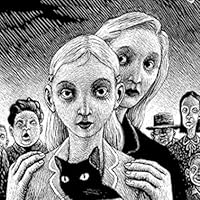
A FEARED AND HATED LORD AND LADYIn a remote village in pre-revolutionary France, the peasant children are wasting away and dying, and no one knows why. Many fear the reclusive and disliked Sieur and Dame De Blois, long rumored to be sorcerers and shapeshifters, may be responsible. When finally a heartbroken mother seizes an axe to fight back, the increasing conflict between peasant and aristocrat comes to its ultimate and deadly conclusion.
This is H.P. Lovecraft's epic poem, a short story told in verse, displaying his signature blend of expressive language and vivid, gothic imagery.
This is H.P. Lovecraft's epic poem, a short story told in verse, displaying his signature blend of expressive language and vivid, gothic imagery.
64 pages, Paperback
About the author
H.P. Lovecraft
6,615 books19.8k followersHoward Phillips Lovecraft, of Providence, Rhode Island, was an American author of horror, fantasy and science fiction.
Lovecraft's major inspiration and invention was cosmic horror: life is incomprehensible to human minds and the universe is fundamentally alien. Those who genuinely reason, like his protagonists, gamble with sanity. Lovecraft has developed a cult following for his Cthulhu Mythos, a series of loosely interconnected fictions featuring a pantheon of human-nullifying entities, as well as the Necronomicon, a fictional grimoire of magical rites and forbidden lore. His works were deeply pessimistic and cynical, challenging the values of the Enlightenment, Romanticism and Christianity. Lovecraft's protagonists usually achieve the mirror-opposite of traditional gnosis and mysticism by momentarily glimpsing the horror of ultimate reality.
Although Lovecraft's readership was limited during his life, his reputation has grown over the decades. He is now commonly regarded as one of the most influential horror writers of the 20th Century, exerting widespread and indirect influence, and frequently compared to Edgar Allan Poe.
See also Howard Phillips Lovecraft.
— Wikipedia
Lovecraft's major inspiration and invention was cosmic horror: life is incomprehensible to human minds and the universe is fundamentally alien. Those who genuinely reason, like his protagonists, gamble with sanity. Lovecraft has developed a cult following for his Cthulhu Mythos, a series of loosely interconnected fictions featuring a pantheon of human-nullifying entities, as well as the Necronomicon, a fictional grimoire of magical rites and forbidden lore. His works were deeply pessimistic and cynical, challenging the values of the Enlightenment, Romanticism and Christianity. Lovecraft's protagonists usually achieve the mirror-opposite of traditional gnosis and mysticism by momentarily glimpsing the horror of ultimate reality.
Although Lovecraft's readership was limited during his life, his reputation has grown over the decades. He is now commonly regarded as one of the most influential horror writers of the 20th Century, exerting widespread and indirect influence, and frequently compared to Edgar Allan Poe.
See also Howard Phillips Lovecraft.
— Wikipedia
Ratings & Reviews
Friends & Following
Create a free account to discover what your friends think of this book!
Community Reviews
Displaying 1 - 13 of 13 reviews

May 29, 2019
4,5
Y así vivían los dos —les pasa a muchos otros—
evitando el gentío, recluidos en sí mismos,
desdeñando las dudas que abrigaban sus siervos
y pidiendo una cosa: ¡que los dejaran solos!
Para entender la importancia de “Psychopompos” tal vez sea importante arrojar algo de luz sobre el contexto en el que se creó la obra. Lovecraft volvía a escribir ficción tras casi una década; las razones eran variadas, pero lo realmente importante es que, para entonces, Lovecraft no sabía muy bien hacia dónde orientar su obra. Es el periodo de la escritura de “Dagon” y “La tumba” pequeñas ficciones donde flotan preguntas e ideas que, o bien serían descartadas, o bien culminarían en obras cumbres del terror. Esta obra recuerda a las ficciones de Poe, sí, pero también a los precedentes del padre del terror. Porque Lovecraft con 28 años conocía la literatura gótica en profundidad, más de lo que los simples mortales llegaremos a conocer. En su más tierna adolescencia había leído a más autores góticos de los que conozcáis, algunos ganapanes reconocidos y valorados hasta nuestros tiempos y otros talentosos poetas olvidados. Lovecraft, con todo ese bagaje y sus amargas experiencias vitales, creó este poema largo.
La historia está narrada por una vieja curtida en leyendas pero ignorante de la verdad tras los fenómenos paranormales. La historia trata sobre la caída de los De Blois, una pareja de nobles franceses afincados en un castillo, rechazados por el pueblo por su asociación a la brujería e intencionada exclusión social. Si De Blois y su mujer eran malvados nunca se sabe, pues la gracia del relato es esa. Ciertos sucesos paranormales son asociados a los nobles franceses y las desapariciones de estos dos ponen de manifiesto que los de Blois eran seguramente la mano ejecutora del mal. Pero, repito, esto nunca se esclarece.
La dualidad de la historia de los De Blois y las potentes imágenes, a veces de corte místico, que genera en los momentos más importantes son dos aspectos que han hecho que valore positivamente el poema. El estilo dieciochesco en la métrica y lenguaje no me molesta en Psychopompos, de hecho, le pega a la historia.
Es una historia bastante distinta a lo que Lovecraft escribiría después, pues faltaba solo un año para que Lord Dunsany tambaleara los pilares de su "oscuro" mundo. Pero es curioso y fascinante lo diferente que es del relato que escribió un año antes, “Dagon”. Me parece hasta cierto punto tierno cómo Lovecraft probaba enfoques y temas, como el niño que tiene miedo de dar su primer beso... Lovecraft siempre se esforzó por hacer cosas de calidad sin que se perdiera su esencia por el camino. Aunque amigos cercanos le dijeran que era demasiado barroco o escribía con un estilo pasado de moda, él se limitaba a suavizarlo, alegando a que "no podía cambiarlo". Hasta los relatos donde ejerce de negro o ghostwritter tienen impresa la huella de su alma. Él siempre lo llevaba todo a lo personal, siempre se implicaba emocionalmente.
Este hombre fue, es y será mi héroe.
You're so Art deco...
Y así vivían los dos —les pasa a muchos otros—
evitando el gentío, recluidos en sí mismos,
desdeñando las dudas que abrigaban sus siervos
y pidiendo una cosa: ¡que los dejaran solos!
Para entender la importancia de “Psychopompos” tal vez sea importante arrojar algo de luz sobre el contexto en el que se creó la obra. Lovecraft volvía a escribir ficción tras casi una década; las razones eran variadas, pero lo realmente importante es que, para entonces, Lovecraft no sabía muy bien hacia dónde orientar su obra. Es el periodo de la escritura de “Dagon” y “La tumba” pequeñas ficciones donde flotan preguntas e ideas que, o bien serían descartadas, o bien culminarían en obras cumbres del terror. Esta obra recuerda a las ficciones de Poe, sí, pero también a los precedentes del padre del terror. Porque Lovecraft con 28 años conocía la literatura gótica en profundidad, más de lo que los simples mortales llegaremos a conocer. En su más tierna adolescencia había leído a más autores góticos de los que conozcáis, algunos ganapanes reconocidos y valorados hasta nuestros tiempos y otros talentosos poetas olvidados. Lovecraft, con todo ese bagaje y sus amargas experiencias vitales, creó este poema largo.
La historia está narrada por una vieja curtida en leyendas pero ignorante de la verdad tras los fenómenos paranormales. La historia trata sobre la caída de los De Blois, una pareja de nobles franceses afincados en un castillo, rechazados por el pueblo por su asociación a la brujería e intencionada exclusión social. Si De Blois y su mujer eran malvados nunca se sabe, pues la gracia del relato es esa. Ciertos sucesos paranormales son asociados a los nobles franceses y las desapariciones de estos dos ponen de manifiesto que los de Blois eran seguramente la mano ejecutora del mal. Pero, repito, esto nunca se esclarece.
La dualidad de la historia de los De Blois y las potentes imágenes, a veces de corte místico, que genera en los momentos más importantes son dos aspectos que han hecho que valore positivamente el poema. El estilo dieciochesco en la métrica y lenguaje no me molesta en Psychopompos, de hecho, le pega a la historia.
Es una historia bastante distinta a lo que Lovecraft escribiría después, pues faltaba solo un año para que Lord Dunsany tambaleara los pilares de su "oscuro" mundo. Pero es curioso y fascinante lo diferente que es del relato que escribió un año antes, “Dagon”. Me parece hasta cierto punto tierno cómo Lovecraft probaba enfoques y temas, como el niño que tiene miedo de dar su primer beso... Lovecraft siempre se esforzó por hacer cosas de calidad sin que se perdiera su esencia por el camino. Aunque amigos cercanos le dijeran que era demasiado barroco o escribía con un estilo pasado de moda, él se limitaba a suavizarlo, alegando a que "no podía cambiarlo". Hasta los relatos donde ejerce de negro o ghostwritter tienen impresa la huella de su alma. Él siempre lo llevaba todo a lo personal, siempre se implicaba emocionalmente.
Este hombre fue, es y será mi héroe.
You're so Art deco...

April 7, 2021
Come dice il sottotitolo
quest0 è un racconto in rime.
Leggendolo, anzi io l'ho ascoltato in italiano dal bel canale youtube di libriinpillole, purtroppo molte rime si sono perse nella traduzione, ma l'aver pensato a questa forma mi è parso un divertente diversivo.
La storia è come consueto alle novelle di Lovecraft tetra, funerea e inquietante, non delude mai ;).
Qui il testo in inglese di
Psychopompos
quest0 è un racconto in rime.
Leggendolo, anzi io l'ho ascoltato in italiano dal bel canale youtube di libriinpillole, purtroppo molte rime si sono perse nella traduzione, ma l'aver pensato a questa forma mi è parso un divertente diversivo.
La storia è come consueto alle novelle di Lovecraft tetra, funerea e inquietante, non delude mai ;).
Qui il testo in inglese di
Psychopompos

November 1, 2022
Bloomin’ Readathon, spider space: read a dark book
I wanted to start the readathon easy to keep myself motivated so I read this very short book composed of a long-form poem by Lovecraft. He’s one of the masters of horror and the poem follows a town in which a creepy (perhaps supernatural?) couple live, so of course it fit perfectly with the prompt.
The poem was okay, it’s not the kind of lovecraftian horror, it is a lot more classic, but I think it’s kind of charming because of that. I didn’t like Lovecraft when I’ve read him in the past, mostly because of his writing and privileged world view, but I think reading him without translation (the copy I have is bilingual, and it’s also really pretty, includes the original manuscript and everything) made the experience more enjoyable. I wouldn’t outright recommend it but compared to my previous thoughts on Lovecraft this is progress.
(Perdón por escribir en inglés)
I wanted to start the readathon easy to keep myself motivated so I read this very short book composed of a long-form poem by Lovecraft. He’s one of the masters of horror and the poem follows a town in which a creepy (perhaps supernatural?) couple live, so of course it fit perfectly with the prompt.
The poem was okay, it’s not the kind of lovecraftian horror, it is a lot more classic, but I think it’s kind of charming because of that. I didn’t like Lovecraft when I’ve read him in the past, mostly because of his writing and privileged world view, but I think reading him without translation (the copy I have is bilingual, and it’s also really pretty, includes the original manuscript and everything) made the experience more enjoyable. I wouldn’t outright recommend it but compared to my previous thoughts on Lovecraft this is progress.
(Perdón por escribir en inglés)


September 7, 2019
The title means “Conveyer of souls [i.e., to Hades],” a somewhat peculiar title for a poem about werewolves. The story concerns Sieur and Dame de Blois, who seem merely to be reclusive nobles but are in fact werewolves. When a citizen kills Dame de Blois (in the form of a snake), the Sieur besieges the house of his wife’s murderer with a band of other wolves, but he is himself killed. HPL apparently was influenced by Winifred Virginia Jackson’s poem “Insomnia” ( Conservative, October 1916) in the two quatrains that open the poem. The final two lines as originally written —“For Sieur de Blois (the old wife’s tale is through)/Was lost eternally to mortal view”—were changed at the instigation of John Ravenor Bullen of the Transatlantic Circulator, who maintained that “through” as used here was impermissibly colloquial (see MW156). HPL included the work in lists of his fiction.

May 26, 2020
Psychopompos: A Tale in Rhyme; not a fan of this rhyming format. It feels more like a writing exercise than a well written short story. Not for me. Audible edition narrated by Gilbert Jackson.

February 22, 2017
Again I was not a fan. Not at all.
May 30, 2025
teeming with gothic extravagance. awesome in the old sense. carteresque. kind of hazy plot-wise but i like that.

February 26, 2023
"Soy quien aúlla en las noches,
soy quien gime en la nieve,
quien no ve luz y asciende
de la tierra a galope.
Llevo el carro de la Muerte,
tengo alas de pavor;
mi aliento es la galerna,
frío y muertos, mis presas".
Las dos primeras estrofas del romance escrito por el estadounidense Howard Philips Howard (1890-1937) ya nos anuncian que estamos ante una obra atípica en su trayectoria, pero no por ello menos atractiva. El escritor de Providence nos va dejando en este poema primerizo de lo que convertiría un reguero de semillas, de pistas, de lo que luego se convertiría en su irrepetible horror cósmico.
Quizá lo de atípico no sea lo más correcto porque sabemos que el autor del Necronomicón tuvo varias etapas en su escritura (gótica, onírica, mitos de Ctulthu) y este pequeño texto pertenece claramente a la primera.
Sus páginas denotan la huella de Walter Scott, de Edgar Allan Poe y de toda la literatura gótica. Sigue punto por punto todas las características de un cuento gótico pero, en sus esquinas, en la atmósfera, en los silencios, en su estilo, ya están germinando brotes de todo lo que vendrá.
Un libro absolutamente delicioso y para coleccionistas.
soy quien gime en la nieve,
quien no ve luz y asciende
de la tierra a galope.
Llevo el carro de la Muerte,
tengo alas de pavor;
mi aliento es la galerna,
frío y muertos, mis presas".
Las dos primeras estrofas del romance escrito por el estadounidense Howard Philips Howard (1890-1937) ya nos anuncian que estamos ante una obra atípica en su trayectoria, pero no por ello menos atractiva. El escritor de Providence nos va dejando en este poema primerizo de lo que convertiría un reguero de semillas, de pistas, de lo que luego se convertiría en su irrepetible horror cósmico.
Quizá lo de atípico no sea lo más correcto porque sabemos que el autor del Necronomicón tuvo varias etapas en su escritura (gótica, onírica, mitos de Ctulthu) y este pequeño texto pertenece claramente a la primera.
Sus páginas denotan la huella de Walter Scott, de Edgar Allan Poe y de toda la literatura gótica. Sigue punto por punto todas las características de un cuento gótico pero, en sus esquinas, en la atmósfera, en los silencios, en su estilo, ya están germinando brotes de todo lo que vendrá.
Un libro absolutamente delicioso y para coleccionistas.

November 9, 2018
La primera vez que lo leí no puse una reseña, pero ahora que tuve la oportunidad de leerlo de nuevo puedo decir que la edición es excelente, desde el empastado, hasta la tipografía y el maquetado, bonus al incluir el facsímil del relato-poema escrito en máquina de escribir por Lovecraft. Ahora en cuanto al contenido, aunque fue escrito en una etapa temprana, y cuando aún no surgían los Mitos de Cthulhu, ya podemos notar características propias del estilo de Lovecraft, a pesar de que el relato tiene mucha influencia del estilo de Poe. Tampoco es uno de los mejores cuentos que escribió, pero agradezco una pequeña narración de terror gótico siempre. Por último, es una edición bilingüe y creo que el trabajo de traducción al español es excelente, lo cual es en sí debió ser un trabajo arduo, gracias al estilo del inglés arcaico que usó Lovecraft aquí
September 7, 2019
The title means “Conveyer of souls [i.e., to Hades],” a somewhat peculiar title for a poem about werewolves. The story concerns Sieur and Dame de Blois, who seem merely to be reclusive nobles but are in fact werewolves. When a citizen kills Dame de Blois (in the form of a snake), the Sieur besieges the house of his wife’s murderer with a band of other wolves, but he is himself killed. HPL apparently was influenced by Winifred Virginia Jackson’s poem “Insomnia” ( Conservative, October 1916) in the two quatrains that open the poem. The final two lines as originally written —“For Sieur de Blois (the old wife’s tale is through)/Was lost eternally to mortal view”—were changed at the instigation of John Ravenor Bullen of the Transatlantic Circulator, who maintained that “through” as used here was impermissibly colloquial (see MW156). HPL included the work in lists of his fiction.

February 1, 2021
Pyschopompos is very good with oyster stuffing and an elderberry glaze.

November 3, 2023
Different but enjoyable!
Displaying 1 - 13 of 13 reviews