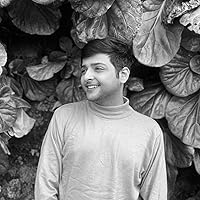
Geetanjali Shree गीताजंली क्ष्री (She was known as Geentanjali Pandey, and she took her mother's first name Shree as her last name) (born 1957) is a Hindi novelist and short story writer based in New Delhi, India. She is the author of several short stories and three novels. Mai was short listed for the Crossword Book Award in 2001. She has also written a critical work on Premchand.
Her first story, Bel Patra (1987) was published in the literary magazine Hans and was followed by a collection of short stories Anugoonj (1991)
The English translation of her novel Mai catapulted her into fame. The novel is about three generations of women and the men around them, in a North Indian middle-class family. Mai is translated into Serbian, Korean and German. It has been translated into English by Nita Kumar, who was awarded the Sahitya Akademi award for the translation. It has been also translated into Urdu by Bashir Unwan with preface by Intizar Hussain. Furthermore, it has been translated into other languages: into French by Annie Montaut, into German by Reinhold Schein...
Her second novel Hamara Shahar Us Baras set loosely after the incidents of Babri Masjid demolition.
I found this book my last day in Arizona, while sneaking in a final visit to the library sale shelves during my walk from Mom's house to cross the border and get to my hotel. I have recently reviewed the other two print books I bought the same day, and two good ones out of three really isn't too bad for $1.25, right?
Mai was the most thought-provoking , fascinating, and yet confusing of the three books. I have a very superficial knowledge of the culture and traditions of life in India, so I was completely lost whenever food was mentioned, and it took me many chapters to sort out the characters our narrator talked about. Dada, Dadi, Buba, Bua, Phupha, Subodh, Bhondi, Hardeyi.....who are all these people? I worked out the relationships bit by bit, and then got a surprise in the beginning of chapter 10 when the narrator spells it all out herself. I have in my notes that 'Chapter 10 and Chapter 11 are the most powerful so far'. They felt different, as if the author had stopped for a time and when she started again she had more confidence in her storytelling powers.
The narrator, Sunaina, is the daughter of the house. Mai was the mother. Since the daughter is telling the story, we see the entire family through her eyes, but especially the mother, who Sunaina sees as a lost being, abused, weak, imprisoned in her house, ruled over by the husband and his parents. Sunaina and her brother decide early in their childhood that it is their mission in life to rescue mai, to force her to become what they want her to be. But is that what mai wants? Is mai really as weak as she is depicted? Or is she strong in a different sort of way? What secrets are there in her past that have influenced the person she is during the years of the story? Will our narrator ever actually see and understand who her mother truly is?
Sunaina said that mai was an example for her of what not to be. Which is sad, because mai had a strength of character that allowed her to survive and even prosper to an extent in what surely was not the life she would have chosen for herself. And she was much more in control of things than the daughter could ever see.
But then, mothers and daughters rarely truly understand each other. For many mothers, a daughter is merely a reflection in the mirror ~~ 'you like books because I do, you like music because I do'. And for many daughters, a mother is someone to escape from in order to live life as they choose, not as the mother chooses. At some point in all mother-daughter relationships, each woman needs to see the other as a person on her own. Before our mothers were mothers, they were whole people all by themselves. We did not make them complete, we just made them mothers. How did our arrival change their lives? What sacrifices did they make for us?
There is a 44 page afterword here, but there is no notation about who wrote it. I am guessing it was the translator. This book was first published in Hindi 1997, and this translation came out in 2000. If anyone should come across this same edition, be sure not to skip the afterword. It will help explain many questions and will open up new ways to see the story, making it relate not only to this particular family but to India itself. I plan to re-read this book someday, and when I do, I will begin with the afterword to refresh my memory and be prepared to see the bigger picture. And perhaps understand Mai and her daughter a bit more.
The Mai of the novel is a put upon, confined, almost silent women ruled over by her in-laws, Dada and Dadi and only slightly less so by her husband Babu. Her two children Subodh and Sunaina- the latter of whom narrates the novel- are determined to rescue Mai from what they see as her oppression and this is the focus of the novel.
However, despite being bent over from the chores she does every day, despite her silence and submission to her elders, always putting others needs before her own, even Sunaina questions whether Mai is as weak as she and her brother think. She stands up for her children again and again for example, and subtly manipulates their father so that they can follow the paths they choose. As Sunaina, says at the end, ‘Mai suffered. She pulled her fire inside. But do you understand, mai had a fire too; she was not hollow, she had a fire? We had seen her suffer only for others but did not see her suffering from her own fire.’
The writing and characterization are really strong especially that of the food that Mai is eternally making but the constant focus on ‘rescuing’ their mother becomes repetitive which lessened my enjoyment of the novel. There is a very detailed and enlightening ‘introduction’ (afterword) at the end of this edition -where such material should always be to my mind - by the translator Nita Kumar which really aids in the understanding and appreciation of the book and even addresses the difficulties of translating from Hindi to English. It’s made me want to go back and reread the novel some day with everything she discussed in mind.
Kurzmeinung: Eine sehr angenehme Lektüre, da die Autorin eine Erzählerin alter Schule ist. Obsession Mutter Patriarchalische Strukturen und übergroße Gastfreundschaft gehen in dem erzählten Indien Shrees Hand in Hand. Die Frauen machen die Arbeit, die Männer arbeiten zwar „draußen“ in der Welt auch und sorgen für den finanziellen Rahmen, aber zuhause lassen sie sich bedienen wie Paschas. Trotzdem haben auch die Frauen, wenn sie geschickt sind, ihre Freiräume und wissen, sie zu nutzen. Und wenn jeder seine Rolle ausfüllt ohne zu Jammern und zu Klagen existiert Familie als konfliktfreie Zone. Die Geschwister Suna und Suboth wachsen in einer patriarchalischen traditionellen indischen Großfamilie der Oberklasse auf und genießen eine behütete Kindheit. Die Großeltern sind noch ganz im alten Kastendenken verankert und eigentlich Großgrundbesitzer, obwohl sie aus ideologischen Gründen das Eigentum an Grund und Boden aufgegeben haben und nur noch Nutznießer dessen sind. Die Elterngeneration ist schon etwas lockerer, aber vor allem Frauen werden in ihren Möglichkeiten noch immer, genau wie „ganz früher“ beschränkt und haben keinerlei gesellschaftliche Außenwirkung. Ihre Rolle ist eine dienende. Mitspracherechte gibt es keine. Die Geschwister Suna und Suboth müssen sich im schwierigen Stadium der beginnenden Moderne zurechtfinden, obwohl ihre Wurzeln tief in der autoritären Tradition haften. Tiefer als es ihnen lieb ist und tiefer als es ihnen immer bewusst ist. Suna erzählt im Rückblick von ihrer Mutter und dem Leben „damals“, als alles noch intakt war und dennoch so unvollkommen schien. Es überkommt sie Melancholie und Heimweh, wenn sie schildert, wie der gesamte Haushalt sich um die Zubereitung von indischem Essen drehte, sie fühlt sich schuldig, wenn sie an den Überfluss denkt, der herrschte und den sie als Kind nicht zu würdigen wusste. Und sie ist von Schuldgefühlen geplagt, weil sie ihre Mutter nur an Äußerlichkeiten festmachte und ihr inneres Wesen nicht erkannte.
Der Kommentar: Greetanjali Shree erzählt uns, dass ein „Mutterkomplex“ kein allein europäisches Ding ist. An Müttern arbeiten Töchter sich ab. Söhne auch, aber anders. Egal wo, egal in welcher Gesellschaftsstruktur, eben auch in patriarchalischen, ist das Mutterbild problematisch. Wie sollte es anders sein? Man muss sich abnabeln und will sich gleichzeitig solidarisch zeigen oder sich sogar identifizieren. In dieser Gemengelage muss es zwangsläufig zu inneren Konflikten kommen. Es geht gar nicht anders. Und wenn die Töchter erwachsen sind und die Mutter womöglich nicht mehr lebt, entdecken die Töchter, dass ihre Mutter in ihrem Innern überlebt hat. Das merkt auch Suna. Es ist sowohl der ganz normale Generationenkonflikt wie auch die alles verändernde Moderne, die auch vor Indien nicht Halt macht, zart in Shrees Roman eingebettet. Die Sprache Shrees ist wie ein ruhiger Fluss, entspannend, fließend, niemals langweilig. Phrasenlos. „Mai“ ist auch eine Hommage an eine behütete Kindheit, an eine perfekte Zeit, wie es die Kindheit eigentlich immer sein sollte, diese Perfektion bekommt naturgemäss Risse, je erwachsener man wird: Man hinterfragt Autorität, Schicksal und Gegebenheit. Im besten Falle wird man politisch. Soweit aber gehen bei Shree die Protagonisten nicht, sie bleiben im Privaten. Dass wir ganz im Privaten bleiben und uns manchmal sogar im Symbolischen verlieren, ist das Einzige, was ich dem Roman wirklich vorwerfen könnte. Gegen Ende hin wird Shree unkonkreter und wechselt vom praktischen Erzählen ins Schein-Philosophische; die konkrete Erzählung löst sich in Trauerarbeit auf.
Fazit: „Mai“ ist Erzählung einer typischen Kindheit im traditionellen Indien auf der Schwelle zur Moderne. Es ist auch die Erzählung von einer Mutterobsession; faszinierend, weil in einer fremden Kultur dennoch ganz ähnliche Probleme stecken wie überall in der Welt. Es ist auch eine, in Ansätzen, Auseinandersetzung mit der Rolle der Frau in der indischen Gesellschaft. Insgesamt habe ich diese Erzählung wirklich gerne gehabt.
ಅಮ್ಮ, ಇಬ್ಬರು ಮಕ್ಕಳ ನೆನಪಿನ ಅಮ್ಮ, ಅವರ ಕುಟುಂಬ ,ಅಜ್ಜ ಅಜ್ಜಿ ,ಅಪ್ಪ ..ಮಧ್ಯಮ ವರ್ಗದ ಭಾರತೀಯ ಕುಟುಂಬದ ಸಾಮಾಜಿಕ ಕಾದಂಬರಿ. ಗೀತಾಂಜಲಿ ಶ್ರೀಯವರ ಕಥೆಗಲ್ಲವಾದರೂ ಗದ್ಯದ ಸುಂದರತೆಗೆ ಓದಬೇಕು.
कुछ पल के लिए कहानी का हिस्सा हो जाना , कभी कभी बिलकुल बारीकी से समझ पाना , कहानी और सच में अंतर थोड़ा धुंधला जाता है । ऐसा ही कुछ मुझे यह क़िताब पढ़ते लगा । इसको खतम किए बिना कुछ और करना या पढ़ना मुश्किल हो गया था ।
Mai was the debut novel of Geetanjali Shree, the prolific hindi writer who won International Booker lately for her book रेत समाधि (Tomb of Sand). I tried reading the latter but could not as found it too complex for my taste and as was relinquishing it to the bottom rack of my bookshelf, someone recommended माई to me and am so thankful for the same.
Invisibility Cloak is something that’s not purely fictional. Women, especially housewives wear it all the time, remaining invisible and yet indispensable. And while they might be indispensable, when it comes to annals, it is not women who feature in the family tree or record books. They are conveniently omitted.
Mai is the story of not one but three women, stuck in their own whirlpools of so called traditions and legacy. But the core is built around ‘Mai’ mother of Sunaina, the narrator. It is the quest of two siblings to first mentally and then physically rescue their Mai from the shadows of age old doctrines and dogmas. It is about how Mai is present everywhere and still not present in true sense. How she is the undercurrent and still an extra nerve. It is the story of a mother who does not want her children to become like her because in her own children’s words - “She always had a weak spine. The doctors however just confirmed it much later”
Why I loved this book was because only a prodigy can weave a story around just one central character in a way that while the name is repeated hundreds of times in the same narrative, everytime it either lays one brick above the prior or lays foundation of an entirely different color of personality. Author has done justice to Mai as a daughter would, or even a son should.
Geetanjali Shree’s debut novel MAI is a beautiful and mature novel. The emotions of the narrator and the protagonists get conveyed across to the reader’s heart and mind in one swift stroke and make a permanent mark for sure. ‘Motherhood’, as is evident from the title, is the central theme. The resilience of motherhood and the potency of silence are two elements in the novel that remain deeply intertwined. Women, both in the forefront and from behind the ‘purdah’ in this narrative, seem to be making the cogs of the machinery move. While some of them choose to think never about themselves just as individuals but as part of the family they have been destined to take care of—the mothers, some others—the daughters—choose to exist in their own right and become ‘free’ from this nameless, collective existence. Some others choose to play as the hands of patriarchy, implementing its oppressions against womankind. The novel poses thought-provoking questions like: ‘What kind of a person a mother is?’ and ‘Is this mother’s life enough?’ Neither the author, narrator, nor the protagonists answer these questions for you. It is for the reader to understand and analyze for the self.
I have read her Booker-winning novel and I have immense respect and admiration for Shree's craft. Reading her debut made me realise where the craft of such intricate writing comes from. This 1993-novel follows the life of a mother as seen through the eyes of a daughter. Sunaina is coming of age and she writes about her mother. She writes about Mai as the bent woman, a woman who is bent under the duress of domestic work, bent under the commanding voice of the husband, in-laws, and to the constant demands of her children. We follow Sunaina's sharp observations of the role of her mother woven intricately into the broader web of the familial relations. I was astounded and moved by the many observation Sunaina makes through this emotionally moving prose. The sentences and style carry the weight of guilt, helplessness and anger as Sunaina grows up watching her reduce. With her brother, she constantly asserts the need to save Mai, rescue her of the bent existence, and give her the life she's been deprived of. I felt anger course through me as I read this book and felt the rage in the perpetual silence of Mai. So many lives, so many stories gone astray with the many silences structures make women carry as they keep being imprisoned in one role after the other. There were times I wanted to stop reading the book. Not because it was a trauma porn. It is because the helplessness that rose in as it did in Sunaina and Subodh in their attempts to help Mai. I will remember this book. And I hope more readers read this book of Shree where such analysis goes on to show the kind of literature that exists when reads translated works of fiction from India.
So much to think about in this slither of a novel . Mai is Mother , Wife , Daughter in Law and mainly silent in this conservative Northern Indian Hindu household . Written from the perspective of her educated daughter the theme moves from one exploring her many subjugations by her husband and in laws to a deeper reflection on the relationship between captive and gaoler . While it's clear to her vocally militant children that Mai needs to be rescued it's less clear than Mai wants this . Has Mai become so institutionalised by her subjugation that she is beyond beyond help or has she found power in being the silent engine of the household ? What happens when those in charge of her die ?
The novel manages to explore the centuries old trope of women who , under the yoke of the patriarchy , transcend their oppression . By retreating into silence and exhibiting a persistent resistance to any extraordinary choices beyond her designated role she gains stature , strength and deep fulfillment. Oh ,and it's tender and funny at times .
"Mai" is Sunaina's Mai. A dutiful daughter-in-law, an uncomplaining wife, a loving mother. Mai's back is permanently bent from having to serve everyone. Mai never seems to have an opinion of her own, nor does anyone know her name. She is just Mai. Someone who, her children in their infinite wisdom have decided, needs saving. But does she really? She never seems to have anything to say, but isn't silence itself a rebellion? Her children think Mai is weak and spineless, but could it be that Mai has chosen to remain behind purdah, while encouraging her daughter to move out of it. Could what her children perceive as oppression actually be a sign of Mai's immense strength? Geetanjali Shree's debut novel forces you to look at mother-daughter relationships in a different way. Why do children see their mothers only as a mother- might they not be individuals much beyond that one role?
पूरी कहानी के दौरान मैं बस यही सोचती रही की सुनैना और सुबोध ने कभी रज्जो को जानने की कोशिश क्यों नही करी? ऐसा क्या था की माई के रिश्तेदार कभी मिलने नहीं आते और जब आए तो उनके सास ससुर ने बखेड़ा खड़ा दिया। लेकिन फिर बात वही है की माई के पूरे जीवन को जिस नजरिए से बच्चे देखते हैं वह रह जाती है। बच्चों ने ये तो देखा की माई और बाबू उन्हें अंग्रेजी सिखाना चाहते हैं। आगे बढ़ाना चाहते हैं। यह भी देखा की बाबू कुछ कहते नहीं।
The point of the entire book in perspective was how a kid perceives their mother, who bent in her body while bending for the family. However, the kids (in particular Subodh mostly because he's a man) didn't take note of the fact that it's their mother who is providing them with freedom. Once you sit with this book. A lot of questions arise and I wish Sunaina tried to dig deeper in her mother's (maai) life.
This is the story of 3 generations of women (grandmother, mother and daughter) as narrated by the daughter. Set is an old Zamindar family in small town UP, the book started pretty strong but lost the grip after mid way. There is a interesting central premise that you wait for to come to fruition but it never really does. To add to that, the narration feels repetitive and more of tell, less of show.
To some extent, the writing reminded me of That Long Silence by Shashi Deshpande in how the narrative weaves across time boundaries and goes back and forth. One of those books that promise to revel more of themselves if and when you read them again.
I was seven when my family shifted to the new bungalow which my father built in 1940. It was a big house with multiple rooms, one for my grandfather, one for my grandmother, one for my parents and then ofcourse for me: a small one overlooking terrace at the end of a long verandah that extended the whole length of the house. All rooms opened out to verandah on each opposite side. The inner verandah looked over a courtyard which had a utility area on one side and the generous bathroom and the servant room on the other. The house was surrounded by a huge plot with garden, fountain, a garrage for cars with rooms for driver and his family and one for chowkidar. Gardener had a small jhonpadi in the garden. On Hanuman Jayanti, gardner and his friends gathered at night and sang Tulsidas 's choupais including Hanuman chalisa with dholak the whole night. My grandmother sat in an easy chair in the inner verandah which had a straight vision of kitchen at the end. My mother -mai used to be doing something in the kitchen. My grandfather was a quiet man fond of reading and listening to news on AIR . My father called Babu by my grand father and motabhai by me went to the mill at nine in the morning, returning for meal at exactly 12.30, my grandfather 's lunchtime and left again at 3. Dinner was at sharp 8. Geetanjali 's Mai brought out my childhood vividly like a movie I was watching before my eyes. As if I knew all the corners and nooks of this house. The similarity ends there. My mother was no "Mai" and my father no "Babu" Geetanjali 's "Mai" is an engrossing narration of a family with members of various characters. Her portrayal of each member is etched in such details to bring them alive and play before your eyes. "Mai" represents Indian womanhood of half a century back, suffering without complaining, carrying on duties as if destined and orderained by God. Geetanjali Shree exhibits mastery over characterization that lifts the plot to a cinematographic experience. Wish, the chapters had not gone on and on without adding to the story of "Mai" until it started being melodramatic.
A mother/mai/amma/ma or the many other names across the country is used to describe the most integral person in an Indian family. Domestic life which is centred around a women or more specifically the mother is the main theme of Geetanjali Shree's debut novel 'Mai'. Shree attempts to examine the identity of being a mother and the various impressions a mai creates. She weaves a powerful tail of a women who sacrifices her own identity for her children to flower beyond her. Whether this action truly constitutes as a sacrifice becomes the core plot of the book.
However, as interesting the discussions were, I don't know whether the novel classifies as a novel or just an essay. Ultimately that is the fatal flaw of the book, is in its wish to explore the identity of a mother - it ignores the whole convention of a novel becoming an essay. I personally felt that the novel may have been more poignant if Shree focused on the message being implicitly mentioned through the plot rather than the message overshadowing the plot.
The beginning of the book focusing on Sunaina's childhood were effective at this convention. However, the ending where so many characters are sacrificed due to the message: Sunaina only having male friends/influences because it serves the focus on women's duties, Subodh never feeling fully realised beyond being angry and having numerous girlfriends, Characters like Ahsan and Vikram being mentioned only to elicit reactions on patriarchy.
I feel that to give the book a fair chance it is pertinent that I read this in its native language 'Hindi'. However, the english translation by Nita Kumari is what this review is about and this is my feelings on the book.
This entire review has been hidden because of spoilers.
माई कहानी है औरतों की । कई पीढ़ियों की औरतें, पर्दे में रहने वाली औरतें, पर्दे से बाहर औरते और इनके बीच वाली पीढ़ी;जो दोनों तरह खिचती गई उसकी कहानी है माई। उत्तर प्रदेश के एक छोटे से क़स्बे में बसे एक सवर्ण ज़मींदार घर की बेटी द्वारा सुनाई गई यह कहानी। कहानी की नायिका है उसकी मां जो उस पूरे घर की धुरी है। माँ जो अनवरत काम करती रहती, जो सबके नखरों और फ़रमाइशों को उठाती । बिना किसी अपेक्षा या उम्मीद के, सिर्फ़ प्यार बाँटती
माई के बच्चों को माई की बहुत चिंता थी। ये पीढ़ी सारे रीति रिवाजों की जंजीरों को तोड़कर आज़ाद होना चाहती थी। माँ सीढ़ी बनी सबको निकालने के लिये । बच्चे निकले अपनी मन की करने लेकिन बार बार माई की चिंता खींच लाती उन्हें वापस । बेटी की लड़ाई अलग होती है। वह अपने अंदर की माँ से भी लड़ रही होती है। इस द्वंद्व को लेखिका ने बहुत अच्छे से दिखाया है।
यह उपन्यास बदलते समय के साथ बदलते समाज की ओर इंगित करता है। मध्यम वर्गीय भारत की उम्मीदों और बंदिशों की ऊहापोह हर घर की कहानी है। उत्तर प्रदेश के लहलहाते बाग बग़ीचे, यहाँ की रंगीन बोली, रीति रिवाज, पूजा पाठ इत्यादि का बहुत सुंदर वर्णन है। बेटी को अनेक बंधनों के बावजूद उसका घर उसे अपनी तरफ़ खींचता था। आखिरकार वह कहीं की न हो पाई, वापस अपने घर आई अपनी माँ के पास। बहुत बाद में उसे समझ में आया कि माँ का चरित्र ही उसका बल था।
All I can say here is that this novel is the paradigm of motherhood and the characters (other than the central one, Mai) represents patriarchal conformity, how deprivation and control impact a household despite the extended support of power, thus depicting the trajectory of an Indian family.
Throughout the story Mai is portrayed being submissive and to an extent where the author faintly questions the existence of Mai as an individual, who she was before being married providing no definite answers. However, to encounter a complete reciprocal of perceived behaviour is what the author has done with utmost honesty and reliability. There are certain instances in the novel which reiterates that Mai despite lacking individualism had the maximum influence over her children, defy gender norms and she is able to preserve the relationship despite the distance.
The daily affairs of the household do raise the empirical and logical issues here but in my personal opinion, Relevancy and Retrospection are the key words to derive unto the sensitivity of this novel.
Time and again I see ancient Hindu culture being portrayed as monstrous. Nowadays that is a mantra for success. No one dares to venture into the Islamic horrors of sex slavery or what one wife experiences while sharing her husband with 3 other wives. Somehow that is sacrosanct. Or somehow people are fearful of losing their necks. Hinduism which once upon a time had 'Swayamwar' sadly is in a bad shape today because of back-to-back islamic and Christian invasions (british colonization). No author talks about how the Abrahamic religions brought India to doom.
Keep beating the dead horse Geetanjali ma'am. as long as you get feted, nothing else matters.
It's a glimpse of a woman's life, from may be one generation ago, located mostly in east India. Many of the mannerisms are so typical and identifiable...E. g. when the man says to his wife Karwadijiye when he actually means kardijiye. The writing brings sights, sounds, smells and tastes of the home alive. Home as much as mai play a central role in the life of the narrator and her brother. Mai's character is complex: on the face of it docile, harassed... But she has her way and influences her children strongly... Beautiful story, poignantly written. Loved the book.
This entire review has been hidden because of spoilers.
I found Geetanjali Shree's Mai: Silently Mother to be a unique story because of its different take on family relationships, feminism, patriarchy, and the other subtle elements controlling the daily lives of the characters. The main thing I admire about the novel is its simple storytelling though the topics were quite complicated. The upheavals in the protagonist, Mai's, or the mother's character were quite interesting to me as well. I think more such stories should come up so that we, as readers, can see the world from a new perspective.
यह कथा माई की है - दादा दादी की बहु, बाबू की पत्नी और सुबोध तथा सुनी की माई। रज्जो की तो बस दो एक झलक भर है। माई को बचाने की लगातार कोशिश, पर रज्जो से लगभग पूरी तरह बेपरवाह। कौन किसको बचाता या बचा पाता है, इतना ही तो है ये सारा किस्सा।
To live in a South Asian country means to grow up with an absolute idea of a mother. A mother is always giving, nurturing, sacrificing and working. Her day begins and ends with looking after the household.
In context with India, this notion also seems to be defined by the structures of caste and class.
Although an opinion of her position, based upon the ideas imbedded in conscience, takes on different interpretations when seen broadly from the lenses of patriarchy or feminism.
With the former, it is more of a responsibility or duty that is taken for granted and in many cases not even given a second thought. In the case of latter, it might be considered as oppression in some situations, where the mothers are deliberately subjugated into drudgery of family grind by the patriarchal structure.
Mai by Geentajali Shree presents to us the complexities brought about by the conflict between both of these ideas in a domestic realm. However more than that it compels us to think when we talk of a mother, exactly whose opinions are being discussed and whether we also explore it from the point of view of the mother herself.
Sunaina and Subodh, the siblings, think the world about their mother and are devastated by what they comprehend to be the situation they find their mother in. They wish to rescue her from the fetters of patriarchy. What they do not see or wish to see is the actual woman behind the purdah.
The book presents to us a nuanced description of the dynamics of generational sensibilities in a small town Indian household and compels us to retreat and take a closer look. We may be surprised by what we find.
It is a must read for anyone interested in the subject of mother.
story about a mother who is devoted to her family but kids think that she is being suppressed and want to release her from that situation. i found it little confusing.. .. daughter first take Biology, why did she leave that - no reason given , then does MA , then painting, Subodh jab marji entry kar kleta hai..there are some loose ends also, who was purohit ka beta , who was the guy nana introduced to sunaina..
i read her famous tomb of stand.. it was good,. she has a distinct style of writing .. so thought of reading one more..
it was a good read. A bit repetitive at times but that may be an artifact of the translation. Made me think about my own mother and how similar yet different she is from Mai