Of all the tomes published on the centenary of the Russian Revolution, none will reckon with a key part of the story: what if the revolutionaries' dreams had come true, instead of being dashed? Yet, no tale of the Russian Revolution is complete without asking 'what if ...?'
Lenin Lives! lays out a narrative account of how history might have happened differently if Lenin had lived long enough to see the global spread of the Russian Revolution to Western Europe and the USA. In one alternative world, instead of the grim authoritarian and autarkic states of the East, socialist revolution in the world's most advanced economies ushers in an era of global peace, progress and prosperity, with global federations substituting for nation-states and international organisations. In keeping with the hopes of European revolutionaries of the time, the early achievement of socialism leads to a drastic improvement in human progress, economic growth, democracy and freedom at the global level.
A remarkable little book. It achieves in a little over one hundred pages several feats: an enthralling science-fiction narrative, a work of serious historical analysis, a convincing theoretical defence - and exposition of - of counter-factual history, and an inspiring advocacy of the humanistic imperative of Communism.
The main section of the book is a reconstruction of a possible alternative history. This is no wish-fulfilment exercise -- though we would be lying to ourselves to say it does not also stimulate our political-romantic senses; several passages sent a shiver down my spine. It carefully teases out the potentialities of that moment at the end of the First World War when the Revolution might have gone global. That the disaster of Socialism in One Country and the subsequent history of actually existing socialism would have been averted if the Revolution had spread to the most advanced countries is convincingly argued.
Crucially, the imagined narrative is interspersed with historical facts and contemporary reflections from political actors at the time, such that the imagined timeline of the 1920s is entirely plausible. We can feel between our fingertips the future that humanity was so close to achieving, and that it so deserved. This transforms the narrative into something utterly removed from conventional counterfactual history. Instead, it helps us think through history and historical possibility -- what might have happened and what actually did happen. One is left with a deep appreciation of the catastrophe of the actual 20th Century; we truly live in the worst possible world that could have emerged from the destruction of the First World War.
Perhaps what most distinguishes this book are the clever, funny and deeply humanistic observations on a future past; these regularly left me beaming. A socialist United States eventually encompassing all of the Americas, turning Manifest Destiny real and liberatory. A pathetic, alcoholic Churchill retiring in Canada, having achieved nothing. Fascism stillborn. Lenin himself ending up a much more marginal figure, superseded by much greater revolutionary feats. Afrofuturism arriving early, complete with spaceports on the African continent. Ayn Rand a libertarian loser read only by other libertarian losers...like today, but much less successful. These aperçus combine to make the book unputdownable.
If this does not ultimately impress upon you the imperative of moving forward, beyond a redundant, hugely destructive and wasteful form of human organisation, nothing will.
In this thought-provoking and entertaining book, the author goes back to 1917 to reimagine the Russian Revolution and its results to explore how we have ended up with the world we have today. He suggests what might have happened, what could have happened, if the Revolution had panned out differently and spread to other countries. We could have had a world without Fascism, without WWII, and with socialism rather than capitalism the prevalent form of government. I enjoyed reading this counter-factual exploration but I fear I am not qualified to pass judgement on whether any of it could indeed have come to pass and whether our world would actually have been the better for it. Who knows? But it’s interesting to speculate, for sure.
Lenin Lives!: Reimagining the Russian Revolution 1917-2017 by Philip Cunliffe is a reimagining of world history. Cunliffe is Senior Lecturer in Politics and International Relations at the University of Kent, which he joined in 2009. He has written widely on a variety of political issues ranging from Balkan politics to Brexit, with a particular focus on international efforts to manage violent conflict since the end of the Cold War.
Communism is something that is really never going to die out completely. Factually, it never really existed outside of writing. Marxism or Communism does not equal Leninism, Stalinism, Maoism, or what the Kim Dynasty practices in North Korea. Lenin changed the worker's revolt to a peasant revolt and finding the peasants unable to govern themselves he created a single party dictatorship. Stalin escalated and created a totalitarian state. Things never went the way Marx wrote. The rest of the twentieth century became a battle between "communist" dictatorships and capitalism with its right wing dictatorships. Much time and effort were spent on establishing and defending right wing dictatorships and condemning those on the left. The people living in these dictatorships would be hard pressed to find a real difference between the two.
Cunliffe's alternative history is like many. There are plenty of what ifs and almosts that are given new life. The key points that I was looking for in this book were the development of Marxism as intended and how that would come about and secondly, seeing Marxism developed in industrialized societies. Cunliffe's alternative history does start with the Russian revolution but spreads quickly through Europe, the Middle East, and Asia (with China leading the way).
Lenin Lives! keeps the key point in most alternative history's alive, that is World War I. That war is the tipping point of history. Without it, empires and monarchies grow. The high cost of the First World War put heavy economic pressure on the great powers from which they would not recover. The war also turned many against governments and against the capitalists who profited from the war. Workers and others were as radicalized as they were when the Communist Manifesto warned of the "Specter over Europe."
Compromise seems to be the biggest hindrance to worldwide communism. Workers and unions compromised as they did in the 19th century with capitalists. There was good among the compromises shorter work weeks, vacations, and the creation of leisure. Later health care was included in some countries. Compromise moves both ways. Today hard earned benefits are quickly disappearing. What if unions took charge. What if strikes forced the governments to capitulate.
There are many "what ifs" in this book and being able to pick and redirect history into something you desire. There are many places where small changes could have had large impacts. Groups and people in leadership positions would need the highest degree of integrity not to slip into totalitarianism. The benefits of the global spread of communism would have been many including no WWII, no arms race, expansion of science and art in war world without war. The Wilsonian or Liberal theory also would have done much the same. Countries that trade together don't go to war with each other. Democracies do not go to war against other democracies. Most governments that come to power do so with some support from the people there. There is always a dream of a better life.
Although I enjoyed Cunliffe's theories and historical paths it is much like the little rhyme, "if ifs and buts were candy and nuts, every day would be Christmas." The speculative history seems much like something the communists might have produced to lead the population into the future. Marx made no predictions of the future but Lenin and the Communist Party did. Although well written this is a book someone on the left would enjoy mainly because it gives the wanted outcome.
I spent 20 minutes writing a review of this on my iPhone, which forever disappeared in a mistaken press of the finger as soon as I finished writing it. A moment of silence, please.
The first two chapters of this book explore misconceptions of Marx and Engel's writings, mainly around their supposed teleological view of historical development, their perception of capitalism and the bourgeoisie, and their theoretical relationship to liberalism. Though short, Cunliffe navigates the theory in this section with confidence and lucidity, making it a worthwhile read on its own.
The final two chapters constitute the meat of the book; a counterfactual history of the 20th century centred around a contingent moment with the potential to radically alter the course of world history: what if the German socialist revolution at the close of WW1 succeeded? The successful establishment of a German socialist republic at the end of WW1 would create a contiguous link of worker governments across Central and Eastern Europe, connecting to the Russian Bolsheviks through the short-lived Soviet Hungary. In a best-case-scenario chain of events, Cunliffe outlines a 20th century in which successful worker revolts inspire further successful worker revolts, culminating in a materially plentiful, technologically advanced, culturally thriving, spiritually meaningful classless developed world by the end of the century. Cunliffe makes a point to claim that many of the 20th century's greatest atrocities - fascism, Stalinism, Maoism, colonial and post-colonial wars - spawned from the failure of socialism to spread through the imperial cores of Europe. A worker government in the industrial powerhouse of Germany could have intergrated the agricultural powerhouse of Russia into a prosperous, rapidly developing socialist core, avoiding the twisted, isolated and necessarily authoritarian socialism of the Stalin era.
The book could be improved by fleshing out the counterfactual section of the book. Explorations of how and why certain events could have swung another would have been beneficial. Nonetheless, the vision of a potential world free of chains was a salve to my tiring cynicism. Recommended for left and left-leaning people interested in the creation of a better world.
An interesting counter-factual, imagining how the world might have been had the Communist Revolutions been done properly! The writer is firmly on the side of the workers in this counter-factual, and considers the world we have ended up with as the 'worst of all possible worlds'. In particular, the failure of workers revolutions of the early 20th Century to both avoid the militarism of the Great War (of which communists were fiercely opposed, understanding that it served only the purposes of the ruling classes, whist sacrificing a generation of workers to the meat-grinder), and to take advantage of the powerful engine of capitalism as a force to empower working people, rather than a means of secreting ever more of the wealth generated by nations into the greedy hands of the very few fatally poisoned the nascent workers' paradises that Marx and Engels imagined. Socialism was intended to replace oligarchic rule in the industrial powerhouses. In Germany, in Britain and in the United States. From these engines, it could spread to the world. Instead, backward agrarian Russia was the birthplace of the workers state. This fatal flaw, and the ravages of the civil war after the Great War gave the world the viscious repression of Stalin. The very unattractive nature of the supposed workers' paradise made it easy for workers' movements in the West to be controlled and subjugated. We did get so close though. Fear of communism, the alternate paradigm caused the post-WWII West to adopt much of the trappings of socialism, bringing their populations increasingly higher living standards, and more equal distribution of the fruits of labour. Sadly, progress ended with the collapse of the Soviet Union. The bad guys won. It has been rape and pillage ever since. Now the richest man in the world gives unashamed Nazi salutes having just paid to have an incompetent grifter regurgitated as Felon-in-Chief of the disUnited States of America. There will be pain and suffering for all before the arc of justice swings back toward the betterment of life for all.
Philip Cunliffe’s ‘Lenin Lives! Reimagining the Russian Revolution 1917-2017’ is an exercise in counter-factual or virtual history. As that exclamation mark implies, Cunliffe is excited by the prospect of imagining what might have happened had Lenin lived to see Russia’s Bolshevik revolution inspire similar revolutions globally: producing an alternative history in which, among other things, there is no Stalinism, fascism, or Second World War.
Key to Cunfliffe’s fantasy is the success of the so-called German Revolution led by Liebknecht and Luxemburg. He admits that the response of the Allies to the overthrow of the Weimar Republic and Germany going Red would be a full-scale invasion of Germany but suggests that this would fail because “German national resistance would undoubtedly only stiffen the deeper imperial armies penetrated into Germany” and because not even Wilson “could turn a war against German occupation into a war to occupy Germany”.
If one turns from the counter-factual to the actual, for a moment, this ignores the terms of the Armistice, under which Germany had had to surrender 2,500 heavy and 2,500 field-guns; 25,000 machine guns, 3,000 trench mortars, 1,700 military aircraft, 5,000 motor lorries, 5,000 locomotives, 150,000 wagons and control of the railways of Alsace-Lorraine as well as evacuating the left bank of the Rhine so that it and key bridgeheads on the right bank could be occupied by Allied troops. It is difficult to imagine Germany, even if it had been politically united, being able to mount a successful resistance under these circumstances, and thus Cunliffe’s elaborate house of cards would collapse before it had hardly begun.
Counter-factual history has its place and Marxist counter-factual history certainly has novelty value but when it flies so blindly in the face of the facts, as here, it becomes more an exercise in wishful than historical thinking.
This ambitious and original premise is done a poor service in this speculative history. The author's rigid and hyper-pessimistic attitude towards the entirety of the 20th century take this work of fiction from narrative and world-building to historical analysis and philosophy.
The book is decided into three sections, in which the contractual history is only a single section, and the rest an esoteric and predictively orthodox Marxist analysis. This even bleeds into the counterfactual history, which glosses over such imperialist atrocities as colonialism and racism, warps Trotsky's theory of permeant revolution to a eurocentric process, and completely falls into stagism in regards to third world socialism, something Trotsky (the authors ideological base as a member of the platypus society) would have dismissed as petty national chauvinism.
This book had so much potential, but the author's rigid understanding of Marxism, the Russian revolution, and world revolution, make this tome a reminder of what it takes to build a better world, sadly this is through omission rather than anything else. to erase the fight against racism and support for socialism in the colonial world is to erase the essence of liberation in Marx's work.
Finally in regards to the alternate history itself, nor much is gained in reading this book. the broad and vague narrative is an attempt at broad social history that does not pan out. The author's ability to jump from all corners of the globe is at the costs of great detail and explanation of revolutions in the most important and populous countries on the planet. the ease in which counter revolution is crushed as a second thought globally makes the narrative unbelievable and sterile.
A lot of us have wondered how the world would be different if German socialists had taken power at the tail end of the First World War. This book seriously attempts to grapple with such a counterfactual; despite the name, Cunliffe presents Lenin as a rather marginal figure in this alternative history, upstaged by the far more significant revolutions taking place in the West. The author has a deep grasp of American and British political economy, and I particularly enjoyed his coverage of Debs's Socialist Party and class analysis of the Democratic and Republican parties as the twin wings of capital. India and China, and to a lesser extent Vietnam, receive extensive coverage as well, with decolonization proceeding much more peacefully and a Shanghai-based Chinese Communist Party exerting greater influence along the coasts (with the conspicuous absence of Mao, who never would have risen to power had the urban cadres not been wiped out by the Kuomintang in 1927).
More analysis than narrative, which in ways plays against the genre's usual focus as a vacation in words; here the counterhistorical illustrates the best-case program and lets the effects be romanticized rather than illustrating best-case effects and letting the program be romanticized. It's certainly a breath of fresh air by genre standards, pulling few punches about mistakes which were made compared to the typical "what if those weren't mistakes", but there are places where it only follows by preponderance, and as a whole it's definitely more a historical essay than speculative fiction to lose yourself in.
Of special note, though, is the author's talent for delivering barbs - his assessment of a certain breed of newspaper columnist is probably the sickest burn I've heard without drum machine backing.
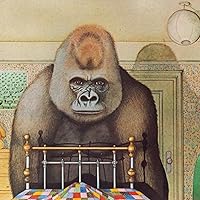
I thoroughly enjoyed this short book. Starting with the cover which is excellent, Cunliffe's book exceeds expectations even if it is a bit surprising. I expected more of a novel which would be a fictional biography of Lenin had he not died when he did. However, it was much more so a description of a possible alternative history had the Russian Revolution sparked the European communist revolution as well and how that would have changed history for the better.
I follow Cunliffe on Twitter and have also listened to the Bungacast which he's a part quite regularly. Being familiar with him I also get some of his references to contemporary political opponents on the left and why he would rather see his brand of Marxism. It's both informative and filled with irony and humor at times which makes it a lovely read.
Author spends too much time trying to separate himself from the reactionary writers of alternative history to really write a good alternative history. It's ultimately a short "what if" than an engaging speculative novel.
Genuinely funny book, mostly for its drive by attacks on so many historical figures with outsize reputations because of the regrettable Twentieth Century. Eleanor Roosevelt discovering that she rather enjoyed talking about other people was my personal favourite.
This is a fantastically entertaining counter-factual history. Cunliffe embeds a political and social history of Europe since the Russian revolution in a kind of joyful speculative fiction. In parts it's literally science fiction. It ought really to be a Netflix series. In fact, I feel sure that Cunliffe has been in talks already. Cillian Murphy for Lenin. Not Kenneth Branagh please.