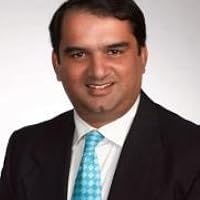
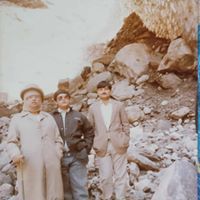
Bhagat Ram Talwar, a Hindu Pathan from the Northwest Frontier Province of British India, was the only quintuple spy of World War II, spying for Britain, Italy, Germany, Japan and the USSR. His exploits and the people he worked with were truly remarkable. His spying missions saw him walk back and forth 24 times from Peshawar to Kabul eluding capture and certain death. He fooled the Germans so successfully that they gave him £ 2.5 million, in today’s money, and awarded him the Iron Cross. His British spymaster was Peter Fleming, the brother of Ian Fleming, creator of James Bond. Fleming, operating from the gardens of the Viceroy’s House in wartime Delhi, gave him the code name Silver. Talwar became a spy after he helped Subhas Chandra Bose escape India via Kabul. Bose was seeking help from Germany and Japan to free India and never discovered that Talwar was betraying him to the British. Talwar settled in UP after India won independence; he died of natural causes in 1983.
Based on research in previously classified files of the Indian, British, Russian and other governments, The Indian Spy tells for the first time the full story of the most extraordinary agent of World War II.
About Mihir Bose Award-winning journalist and author Mihir Bose writes and broadcasts on social and historical issues and sport for outlets including the BBC, the Guardian, Financial Times, Evening Standard and Irish Times. He has written more than fifty books on sport, including football and cricket, and history, such as Bollywood, India and the extraordinary WW2 quintuple agent Silver. The subjects of his many biographies include Michael Grade, Moeen Ali and the Indian nationalist Subhas Bose (no relation). Mihir was the BBC’s first sports editor and first non-white editor. He was chief sports news correspondent at the Daily Telegraph and worked for the Sunday Times for 20 years. His honorary doctorate from Loughborough University was awarded for his outstanding contribution to journalism and the promotion of equality. Mihir is a member of the English Heritage Blue Plaques Panel and former chairman of the Reform Club. He and his wife Caroline live in London. He has a daughter, Indira.
It's a unique feeling when you realise your friend's granddad is the protagonist of this book and this is the rare literature available on him to the common man (don't gloat if you have access to secret archives like the author). The only spy to be working for 5 countries and for himself so I'd say 6 stakeholders during world war 2 along the corridors of Kabul. This book is a collation of research material pulled from various archives and the protagonists memoir to string together a story based on academic merit. From that perspective , it's fascinating to read how he operated the levers with the Italians, Germans, Russians, British and the Japanese as the single conduit for spy ops in India. Though it gets repetitive and meanders as I guess different sources are collated to highlight the same operational protocols. The Indian James Bond - coincidental that his British handler was Peter Fleming, elder brother of Ian Fleming - creator of James Bond. Facts and figures are fascinating, but I missed was the soul of the spy which I believe is tough to recreate without meeting the protagonist. All those tense moments when things don't go according to plan, all we know is he came up with something smart and survived. That heat of the moment is missing in this story. But a fabulous find on the little known Indians who played a big role on the world stage.
Too much of backstory provided for everything and every character which I felt unnecessary ( because I only chose this book to read to know about Indian spy silver about his beginning, journey and end) and made me feel bored to death ( so far I’ve read 45 books but the amount of irritation this book gave me is unforgettable). This is definitely not an easy to read book and definitely not understandable because of all the stories mixed. May be it is my mistake to choose this book hoping to know about a specific person, instead I should’ve gone for silver’s memoir. I wouldn’t recommend this book to the beginners who just started/want to read non fiction. Either this book is really not understandable or it is too advanced material for people like me, I can’t say. I gave 1 rating for obvious reason because I did not enjoyed reading it and did not felt like recommend this to anyone I know.
Well researched and brilliantly written, this book is about Bhagat Ram Talwar (Codename: Silver) and his journey of being a spy during World War II. This unusual true story is of Silver working with the Italians, German, Russians, the British and the Japanese - the only Quintuple agent during World War II.
Fortuitously thrust into a role of a agent who helped Subhas Chandra Bose escape India to Germany through Russia and then working up his way to work for the Italians as a Spy agent, Silver worked his way using his intelligence and quick wit working his way to work with the five Allied and Axis powers. A great read if you are interested in Spy stories and World war II and how it shaped Indian and world history.
The book is written well but drags about 2/3 into the book but overall the narrative is quite tight with several references to Silver Biography and meticulously researched archival letters and telegrams.
The story of Bhagat Ram Talwar, famous for his role as the organiser of Netaji Subhas Chandra Bose's escape through Peshawar and Kabul to the Soviet Union en route to Germany in January 1941, is given the infamy he deserves in India through this book. Talwar was a communist, belonging to the Kirti Kisan Party (a minor communist outfit, but the main communist entity in Punjab); this was well-known to Netaji, but most left-wingers were happy to let Subhas Bose lead the 'United Front' of the left in India as long as the Soviets and Germans were friends (as they were via the Ribbentrop-Molotov Pact). Netaji, leading the revolutionary movement against Britain's occupation of India, often had to align with forces whose loyalty to him was tenuous at best. Bhagat Ram and Uttam Chand Malhotra were two such people who were enormously valuable in January-February 1941, but later betrayed Netaji and the broader cause of Indian freedom.
Once Germany attacked the Soviet Union, the communists in India followed the Soviet command to become loyalists of the British. Bhagat Ram Talwar became a British agent (spy), working closely with Peter Fleming, head of Britain's "D Division" intelligence operation, based out of New Delhi's Viceroy's House (now Rashtrapati Bhavan) from late-1942 until the end of the war. Peter was a well-known writer himself, and the brother of Ian Fleming, the author of the James Bond novels. As a Pathan (albeit a Hindu) from Ghalla Dher in NWFP, Talwar was invaluable to the British and Soviet Russia as a spy operating mainly from Kabul (to which he made 12 trips meticulously reported by author Mihir Bose, who is quick to point out he is no relative of Subhas's -- and not particularly sympathetic to his cause either).
Through that time, Bhagat Ram (called 'Silver' throughout the book, as that was his British code-name) was pretending to be an agent of the Italians, Germans and (by late-1944) Japanese, successfully deceiving them to pass their intelligence on to the British. That his elder brother had been executed for an attempt to assassinate the British governor of Punjab gave Bhagat Ram the perfect revolutionary cover to continue his treacherous career. The Germans were duped throughout the war, the Japanese toward the end -- when Netaji's well-planned intelligence operation run by NG Swami was effectively thwarted by Bhagat Ram's flow of intelligence information to his boss Peter Fleming, resulting in the killing or capture of dozens of the INA's intelligence operatives soon after they arrived on Indian soil.
Mihir Bose is a British sports journalist, who has gradually branched into writing books on business and history (with a penchant for spy stories, including conjectures about those closest to Netaji who might have betrayed him, as laid out in his fine 1982 biography of Netaji Subhas, the 2004 edition of which I have reviewed for Goodreads). The main trouble with this book is that it is written from the British perspective, with Silver treated as a heroic figure who deserves a British medal for his service to that empire. But the author does point out that, in January-February 1946, Britain's empire (which all its leaders had expected to last a thousand years) was brought down by the revolutionary upsurge that followed the INA trials, and particularly the spread of anti-British feeling to the Royal Indian Air Force and Royal Indian Navy, leading to Attlee's promise on 20th February 1946 that Britain would leave India no later than 30 June 1948.
But the story of Netaji Subhas and the INA is incidental to the book, except for the photographs, which heavily focus on it as obvious publicity material. In several of the photo captions, "Chandra Bose" is the person mentioned -- a rather bizarre way for the author to distance himself from Netaji Subhas, who he has previously written a biography of. The book reads like a spy thriller, which of course it is -- except that it is a real-life one. That Bhagat Ram Talwar had no qualms about betraying his nation is clear. He did it with such gumption that he attended an International Netaji Conference in 1973, and brazenly lied his way through it, despite being confronted by a genuine Netaji follower, Santimoy Ganguli, who had worked with Talwar in 1941-42 but been betrayed to the British by him, and thence imprisoned. Talwar took ample fees from Germany, Italy and later Japan, giving most of that quickly to the Soviets or the British, and then doing the latter's bidding.
The book is worth reading, simply because it exposes this despicable traitor. To the British, he may have been a hero, albeit a covert one. His German handler, Witzel, remained convinced that (even after he learnt of Talwar's treachery) that Bhagat Ram was ultimately a freedom fighter. He was profoundly mistaken. We in India must call a spade a spade -- and a traitor the traitor that he was.
Book : The Indian Spy - The True Story of the Most Remarkable Secret Agent of World War II Writer : Mihir Bose Publication : Aleph ISBN : 9789386021588 Price : ₹599 Page Count : 350 Reading Period : July 12, 2020 - July 31, 2020
Bhagat Ram Talwar - A member of Kirti Kisan Party and later of the undivided Communist Party of India, guide and associate of Subhas Chandra Bose as he went from Peshawar to Kabul during his legendary escape from India and a patriot, with his father taking part in Congress led movements and his brother a martyr because of his revolutionary activities.
However, was he only that all?
This book has the potential of turning upside down many of what we consider as hard, cold facts, and stupefying us beyond belief. If the writer and his information is to be believed, Bhagat Ram deceived the Italians, the Germans, the Japanese as well as his own countrymen as well as eminent historians for a staggering 42 years, from the start of his spying career in 1941 during WWII till his death in unclear circumstances in 1983, all by embarking on the route to become the only quintuple spy in the history of the war, serving the Italians, the Germans, the Soviets, the British and the Japanese. It was his services under Peter Fleming of the British 'D' Division that foiled the espionage activities of the INA in India, resulting in the capture of many INA agents, some of whom became double agents while others were executed. Given the codename 'Silver' by Peter, he fed misinformation into the Axis intelligence, which in many cases turned the tide of the war and disrupted Subhas Bose's attempts to encourage rebellion in India.
Was Bhagat Ram really 'Silver'? It is hard to believe. This question is expected to create hard furious debate.
Did we really honour a traitor for 42 years, and even till now?
Interesting read, although not quite what I had expected. I was given to understand that this was going to be the story of an Indian who served the country during the freedom; instead it seems our spy was merely a self serving con artist who simply bluffed all sides to make money for himself. That's was frankly a let down. Also the book gets repetitive and descriptive without there seemingly any direction to the narrative. The book could have done a better job of tying Silver's work to the overall context of the war.
It's not a terrible book. The only problems I had with the book are the fact that it's a very repetitive book and I didn't quite understand the plot either for there were many grammar mistakes in the book made by the author. i had to read the wiki just to follow along. I don't recommend to read this book.
A great story. An almost unreal non-fictional character.
Makes for a truly enriching read, however the book could have done with some good editing as a lot of the info is repetitive and could be condensed. Drags somewhat in the middle, but definitely worth taking the pain of reaching the later chapters and finishing the book.
A fascinating true story about a truly fascinating character. Almost a ripping yarn but real which makes it all the more interesting. With the back drop of a WW2 there is much to understand about events and loyalties that were not the black and white of our British Empire-centric history. Well written and very readable. (Purchased at Kitab Khana, Mumbai, India)
Very poorly edited... The story is very interesting but you leave interest as soon as half way through the book... Needs better editing and a shorter version
Well researched it keeps you hooked till the end. It's basically a History book but told in the manner of story. Very important reading to understand communist and how they function.
The Indian Spy by Mihir Bose... A brilliant narrative of the Quintuple agent Silver (Bagath Ram Talwar) quite an in depth analysis and research behind the entire story line... Some of the incidents would have seemed to be unreal in yester years but in the present technological world with so much information in the digital world, it is close to reality.
A fackinating story of a remarkable man who was Bhagataram Talwar ,turned Rehmat Khan,Silver.Eventhough ,not much educated,but master of deception ,without any prior training for it,in the modern era of sophistication ,did his job with sheer determination ,earnest zeel to liberate his mother land from crutches of imperial power .The most astonishing journey ,with Mohd.Ziyauddin-- Subhash Chandra Bose,in jan.1941 without any knowledge to travel from North West frontier to Kabul sheer dedication .Has got definite place in the history of Netaji.Koddos to Mihir Sen for his exhaustive , journalistic endeavor with luck to find the original historical papers in rubble.Great job .
It is a sort of comedy of errors! Two persons ,clearly desperate, to contact the Russian Ambassador of Afghanistan- neglecting the January frost bite of Kabul landed themselves in all sorts of trouble. First they discussed among themselves at length how to evade the notice of patrolling Afghan policeman in front of the Russian embassy. The short, lean man from the duo was after finding a person from the embassy who is Russian –hand him a letter meant for the Ambassador. But in reality it proved out to be a tricky job- first day he encountered a person and told him in Dari- a version of the local Persian language that he wanted to hand a letter to the Ambassador. The person assumed him to be a local Afghan and avoided him. The second day he encountered two women who were not even bothered to speak at him. Is it a scene from a Charlie Chaplin movie sequence? It is not exactly so! Full story at https://jayasreesown.wordpress.com/20...