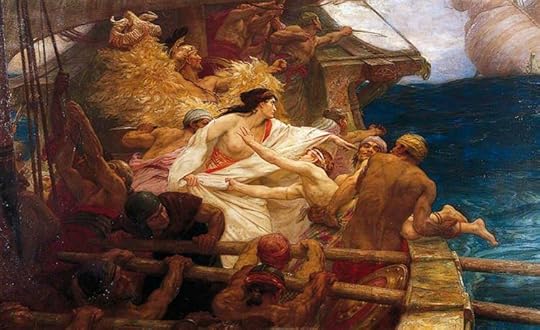
In brilliant poetic prose Bright Air Black brings us aboard the ship Argo for its epic return journey across the Black Sea from Persia’s Colchis – as Medea flees her home and father with Jason, the Argonauts, and the Golden Fleece. Vann’s reimagining of this ancient tale offers a thrilling, realist alternative to the long-held notions of Medea as monster or sorceress. We witness with dramatic urgency Medea’s humanity, her Bronze Age roots and position in Greek society, her love affair with Jason, and her tragic demise.
Atmospheric and spellbinding, Bright Air Black is an indispensable, fresh and provocative take on one of our earliest texts and the most intimate and corporeal version of Medea’s story ever told.
Published in 19 languages, David Vann’s internationally-bestselling books have won 15 prizes, including best foreign novel in France and Spain and, most recently, the $50,000 St. Francis College Literary Prize 2013, and appeared on 70 Best Books of the Year lists in a dozen countries. He has written for the Atlantic Monthly, Esquire, Outside, Men’s Health, Men’s Journal, The Sunday Times, The Observer, The Guardian, The Sunday Telegraph, The Financial Times, Elle UK, Esquire UK, Esquire Russia, National Geographic Adventure, Writer’s Digest, McSweeney’s, and other magazines and newspapers. A former Guggenheim fellow, National Endowment for the Arts fellow, Wallace Stegner fellow, and John L’Heureux fellow, he is currently a Professor at the University of Warwick in England and Honorary Professor at the University of Franche-Comté in France.
David Vann retells the story of Medea in Bright Air Black by blending Apollonius of Rhodes' Argonautica with Euripides’ tragic play. Knowing the Euripides play helped me to see how Vann built compassion around Medea, and how an intelligent, willful woman ruled by buffoons might be pushed to the brink of taboo. That doesn’t mean Vann dilutes her monstrousness: his prose is a sensual feast of the ugly, and his attraction to Medea is no surprise. I could see each section unfold as if on stage, the audience enveloped in the dark, electric charge, yet kept at a safe distance to observe. Told in third person present tense only from Medea’s perspective, I had the odd sensation of spying on lives from the shadows, faces made eerie by an upward light.
Reading a string of Greek plays before this novel also helped me to acclimate to the style, which the author emulates well: it is a story best savored. Vann plays with the undisputed power of the gods in his version, twisting creative manipulation into an ancient form of self-marketing and showmanship. The two other Vann books I’ve read, Aquarium, and the collection, Legend of a Suicide, have a steady march forward, whereas here the action felt more like a dynamic stillness. Of the few Greek retellings I’ve read, all offer more interiority than the originals, and that goes a long way for me. Vann’s treatment felt less full than either of Madeline Miller’s books, but more so than Colm Tóibín’s, House of Names (just a difference of style, I’d recommend all four), but this was the most atmospheric of the bunch. That said, I found all three – The Song of Achilles, Circe, and House of Names – easier than this. As for Vann, both Aquarium and Legend of a Suicide felt more accessible and immediate than Bright Air Black, although all three are immersive. And Bright Air Black features orgies, dismemberment, and more than one brush with cannibalism – so, there’s that.
Another suggestion is to read this with the right buddy. Mark got me to slow down, savor, ask questions, and exchange research. There’s no question he made this a fuller and more fun experience for me. If his dance card isn’t full, grab him!
"Bright Air Black"..... requires a life preserve jacket while reading! A Lightweight polyethylene foam coated vest with a polyester shell will give you the protection needed to hit the waters with Medea, daughter of Aeetes, granddaughter of Helios, and priestess of Hekate. You'll take a mini - ( haha....mini my ass) - nature boat ride with a few other characters as well. Jason and his Argonauts, Argo and 'The Golden Fleece', and the Greek Gods will keep you company. Do not plan on breathing - - there are no get-out-of-Jail free pass cards.....but you get one pass 'go' to stand-up-and-stretch card before beginning Book Two.
David Vann wrote one hell of an amazing LONG WINDED - Dark - violent - modern Greek Mythology tale that is more BLACK than BLACK. The writing is so hypnotic- awesomely mesmerizing - and shockingly brilliant. How is it possible to write this interesting and creative? Sure - it's not easy to read ( or breath - as I already told you) ....but the EXPERIENCE is worth it!!!
A little dark..... Sample excerpt: "Medea takes a piece of her brother, a thigh, heavy and tough, muscled, and licks blood from it, dark and thick. She spits, licks and spits again and again, three times to atone. Mouth filled with the taste of her family's blood, and she throws this piece of Helios into the waves. She has ripped out all their hearts, she knows. Her father's crew crippled to see him made smaller. She will humble him until there's nothing left, until his men don't know why they're rowing. They will collect the pieces of the son and wonder that demigods call fall so easily."
As the ship keeps drifting in the wind, every stretch of water is black and unfamiliar. Medea misses her brother ( misses him whole and alive), and she is with strangers. She worries that since Jason - her lover - feels nothing for her brother....what can he possibly feel for her? Her father's ship is receding, fading deeper into the night. Medea wishes she could make her family whole again... help her father, put her brother back together again- breathe life into him-- but if she were to help -- she would feel "chained". "She will not be a slave". "She will feel this need to help her father and she will not help him. She will grieve her brother and kneel his remains and throw the next piece overboard when the time comes. She will not be mastered. If it is natural to be a slave, she will be unnatural."
Medea doesn't believe in God's, she believes in power....."you have to be descended from God, this is the same thing". "Slaying her brother, destroying her father. These are acts of God, acts that inspire fear and form myth. God's do what cannot be done. And a women can become a god more easily because she is not allowed anything."
Medea has a strange relationship with Jason. Pretty much the way she thinks of him is that he has no vision, no plans except to fuck and try not to be killed. She wants to sail with Jason to Iolcus.. ( Jason's hometown), but she doesn't want him or anyone to control her. A feminist after my own heart! Jason is to bring the Golden Fleece, the dark sheepskin, back home from the land of Colchis....an almost impossible mission. His father Pelias secretly wishes he will be slain-as he worried Jason wanted revenge against him. Medea's fate is locked to Jason's. She betrayed her father and butchered her brother for that fleece. And Jason is political but too young and too pleased with himself and 'his' fleece. He is too hungry to be praised and loved.
GREAT STORYTELLING ...PHENOMENAL PROSE...by a ridiculously gifted author!!!!!
Highly recommended for a wild experience.... You're only bound by the elements: water, fire, air, earth, and blood.... where it is Deep... Darker...with melting hues and shadows everywhere-- Men are not buried in the ground, but in the air-- strung from trees in unmanned ox hides.
Enjoy the chilly twisty ride!!!! I did!
Thank You Grove Atlantic, NetGalley, and David Vann ( you rock)
Born to destroy kings, born to reshape the world, born to horrify and break and remake, born to endure and never to be erased. Hekate Medea, more than god and more than woman, alive now, in the time of origin.
Bright Air Black is a lyrical ode to the rage and power and will of one woman, Medea. Spirited from the pages of Greek mythology and Euripides' Medea, David Vann's Medea is a fierce, mostly fearless princess and priestess, as much in love with Jason as desperately seeking her own dominion to rule, her own decisions and choices to make, her own power to exercise as she sees fit, who teeters in darkness and madness when the threats of enslavement or subordination arise. Book I is dedicated to the escape of the Minyae (Argonauts) and the pursuit by Medea's father Aeetes, as she ruminates on what she has done (murder her brother and put pieces of him calculatingly into the sea to halt her fathers pursuit) and what she would and will do for Jason and for her own freedom and ascension, and their arrival at Jason's home of Iolcos. Book II brings us to her most powerful and desperate time, her trickery to ensure the death of Pelias so Jason can reclaim his rightful throne, his failure to act and their removal to Corinth, Jason's withdrawal of love and protection for her and their children, and the entrance of Glauce, usurper of Jason's heart and need for conquest. Her revenge upon Jason is not without horrible pain and loss for Medea as well, and her split second decision to murder her sons is no less agonizing than in Euripides' tragedy. This is a novel concerned with agency, freedom, loyalty, power, and immortality, what it means to be remembered in your own time and all times and why and how that occurs. Though it's not perfect, I found this to be a singular, powerful, haunting and gorgeous read, and gave it 5 stars.
Jason would erase Medea. Use her to claim a victory, to claim dominion over barbarian lands, use her to bear children, his heirs, of royal lineage on both sides, then cast her away to be forgotten. She knows he would do this, and this is what she must make impossible. She clings to him now, suspended over the deck, lost in pleasure, but she won't forget.
This is another retelling of an ancient tale, and the second I've read this month after Colm Toibin's House of Names. What makes Bright Air Black stand out is who is telling it and how it's being told. Everything is from a third person perspective centered on Medea, and it's all told in present tense. Many individual lines are these short bursts with uneven rhythm and tempo, a bit strange at first until you realize you're pulled into the web of Medea's thoughts, instincts, emotions. And she is both base and wise, human but something more, so her stream of consciousness and torrent of feelings are mirrored in Vann's prose. This is a read to submit to and submerge beneath, best to read in one sitting to get your bearings and then dive in. And it's not overly long, but it is oppressively dark and sinister and sad, which can make it difficult to turn the page and move inexorably to the ending we all know is coming, even Medea to an extent, though she does what she can to avert it, empower herself, and occasionally believe in her love for Jason though she believes in her own strength and will more. The writing is clipped but charged, little lightning bolts of description and dialogue. And there are small breaks between scenes, but no real chapters other than the Book I and II split. We are borne upon Medea's mind and action as she is borne upon the Argo, and just as her days and nights seem endless, so too does the writing stretch and flow. It makes for a very unique reading experience that once I was into, I could not interrupt, though I can see how the style may not work for everyone.
She would be a wrath much larger. She would decimate all. And she wonders why this is. Rage, but others feel rage. The difference in her is that nothing will hold her back. She will do what is monstrous, because monstrous is only the absence of a lie, the great lie if what we are to each other, wife and husband, daughter and father, sister and brother, subject and king. In the absence of that lie, a great freedom, any action possible.
It's interesting that when I first heard the tale of Jason and the Argonauts, or Jason and the Golden Fleece, Medea is a secondary character, a helper to Jason and desperately in love with him, only to go mad when he puts her aside and enact terrible wrongs upon him. But for Euripides, and now for Vann, Medea is central, important in her own right, owed for being the true deliverer of the Argonauts safely home from their quest, yet despised and feared and not celebrated by any of them, including Jason. And in Bright Air Black we see some of it is of her own doing: playing up her devotion to Hekate, spitting blood at the men, belittling and swearing at most of them during the journey. This comes out of her need for freedom and desire for domination, but also fear of slavery, of servitude, of being made less than what she is and turned simply into a woman, to be dismissed and downtrodden and disposed of at the whim of a man, be it her father, brother, Pelias, Creon, or Jason. She sees them value and worship gods for these unbelievable actions, so she takes them in hand and is her own god to imbue fear and deference in them. She's complex and always has been, a primal force of nature, a maelstrom of emotion, but also has in her the same basic qualities we all have in ourselves. There's also a proto-feminist message here, as Medea refuses to be enslaved by her societal or natural instincts to suborn herself to the will of men. She's tested by those impulses as they flee her father and she is tempted to bring her brother back to life and rebuild their family, and again as Jason is ready to put her aside and she questions if she should submit, go easy, for the sake of her children be spurned and cast out. She will not be mastered. If it is natural to be a slave, she will be unnatural. Medea's darkness is of human origin, and she is partially pushed into malice and cruelty by those forces that would see her bound and restrained. And as Vann has us seeing the world of the Greeks through her perspective, we are able to empathize with her emotions, if not always her actions.
If enough people repeat the stories for long enough, Jason will become something that cannot die, but he also will have been erased, because the actions are too large and impersonal. The stories will reveal nothing about the real man that lived. Medea would have something more personal, something remembered and caught and frozen that can only be her, some moment none can fully understand or forget.
Vann's words about Medea's views about herself and her husband are ultimately proved accurate: in the modern age Jason is remembered as a sort of hero, lesser than those that followed, but without real connection to his character, and in myth he dies alone and unloved and forsaken, crushed under the dilapidated Argo. And Vann gives us a Jason who is young, willful, capricious, knowing less about power than his wife and never truly desiring to rule. Meanwhile Medea lives on, in myth and modern scholarship and now in David Vann's meditative novel Bright Air Black, feared and abhorred and remembered for her actions against her own children and her dark power, but also understood, contemplated, allotted complexity of character and motive. She is feared for her powers, but also underestimated many times over for being a woman, which proves that those men who become her enemies are taken unawares by their adversary, even and especially Jason. Vann's retelling is worthy of the source material, in substance and especially in style. I'd give this 4.5 stars overall, rounding up to 5. It's not a perfect read: I felt the ending was a bit too abrupt, with little delving into a Medea's psyche after committing fillicide, and I would have preferred less time spent on the Argo to get more from Medea in Iolcos or Corinth or even Athens (that phase of her life does not appear). But overall, I thought this was well done, extremely unique, a most worthy retelling and a beautiful piece of art. I highly recommended for enthusiasts of Greek mythology, with an understanding that you are getting a contemporary spin on an old tale done in an epic, lyrical style, and that the overall feeling is black as night and may take you to your own dark places while reading it.
-received as an ARC via Netgalley, in exchange for an honest review, thanks to Grove Atlantic
Earlier this year, I read the hugely popular Circe, named for a demi-goddess who becomes a witch. A witch who sometimes turns men into pigs. Once, in a fit of jealousy, she turned a nymph into a hideous multi-headed swamp beast. Reading this reminded me that Greek mythology isn't pretty.
Well, Bright Air Black makes Circe look like a child's bedtime story. Medea, niece of Circe, priestess of Hekate, is the witch to rule all witches. Shakespeare's weird sisters have NOTHING on her. Eye of newt? Please. Medea puts balls of king into her cauldron. Medea stands naked in a hot, steaming room, tending to her gory soup, thinking of the time she chopped up her brother and then lay next to his rotting parts on the ship as her father followed in furious, close pursuit. All the while she has her eye on the prize: to be subject to no one, especially a man.
While Circe is baroque in its readable, elegant prose, Vann's novel is more poetically charged. Many a sentence would alert the grammar police, but it doesn't much matter. Somehow this distinctive, lyrical voice suits the grim premise.
I believe this story was told with a lot of love - that is, Vann does his utmost to 'humanise' Euripedes' Medea in an effort to sculpt her into a woman of three dimensions. There is more to her than a heartless, power-hungry monster. She's a woman who rages against the patriarchal machine, against a history that erases females after they serve their biological function. However, Vann can't help but also show in equally vivid dimensions how little compunction she has to strike with violence in order to get what she wants. While it is thrilling to watch Medea's wild, witchy ways, this ruthlessness doesn't make her much different from the male power figures she resents so much.
Besides power, the next most important thing to Medea is Jason. Jason is the weakest part of this story for me. It doesn't quite compute that such a single-minded, independent woman would need a man so desperately. Especially when Jason is so bland a character as he is depicted here, so blank a face. Vann crafts such a loving portrait of Medea that he neglects her husband, and as a result, I want him swatted away like the fly he is. I never understood why this strong and complex woman would sacrifice everything for such a man.
Maybe though, that is what feeds her black rage. Her desire to dominate being drowned in her own dominating love. Perhaps it is not the result that is so important as the struggle, the scream.
This is a particularly savage book. It's written in blood, reeks with the stench of death, echoes with the wails of the damned.
She will not be mastered. If it is natural to be a slave, she will be unnatural.
Vann’s telling of his story of Jason and Medea begins aboard the Argo, with Medea’s father in pursuit.
She has ripped out all their hearts, she knows. Her father’s crew crippled to see him made smaller. She will humble him until there’s nothing left, until his men don’t know why they’re rowing. They will collect the pieces of the son and wonder that demigods can fall so easily.
Vann’s Medea is fiery, a quick-tempered, passionate, feisty descendant of gods and royalty. A sorceress. She falls in love with Jason, leaves her home to travel with him on the Argo to his home, Iolcos, where they will marry and then rule – it is Jason’s birthright.
The prose is spellbinding. Vann has such a way with weaving his spell around horrifying scenes with some of the most gorgeous, crafted imagery. Violent, dark and disturbing, Medea is, as Jason says to her, rage personified, and when her rage is unleashed… well, hell hath no fury like a sorceress scorned.
Be prepared to read this when you aren’t pressed for time. With very few breaks built in, it’s a bit more difficult to find a place to stop – but don’t let that stop you from reading this, because the truth is, you won’t want to stop.
Pub Date: 7 Mar 2017
Many thanks for the ARC provided by Grove Atlantic / Grove Press, Black Cat
I knew I was going to get a retelling of Medea from her point of view during the quest of The Golden Fleece and after, with Jason, but I wasn't quite prepared for just how beautiful the lines of the text were. I mean, getting it all from the PoV of Medea was a pretty awesome treat, all by itself, and found myself fully in her camp despite all the awful things she does, but what really caught my attention, even more, was the prose.
This is some true mythopoetical realism, yo.
I will admit that there were some parts during the first half of the text that could have been improved, at least making the text more accessible those who haven't studied up on the old legends and the plays, for so much of the action has already happened right when the prose opens up. I'm not going to complain too much, however, because even though it assumes the audience is conversant with the legend, it doesn't really matter after a certain amount of time.
Yes, we know Medea is a bad-ass, willing to tear the world down to prevent her slide into slavery. She's a beast willing to rend to keep herself out of chains.
I particularly love how the author managed to turn someone like this into a heroic figure even more than half the time, and even when she's doing her most evil deeds, I feel for her and want to cheer her on.
That's a real feat.
Is this niche? Or does this have all the feel of Big Magical Realism for Mainstream? I don't know, but it could certainly go either way. :) I enjoyed it very much, too.
Update 2/3/17:
After some deep reflection, I had to change the rating from a four to a five star. The language keeps with me after all this time and the shape of the story keeps getting better. The aftertaste, so to speak. :)
It has NOTHING (much) to do with complaints from other reviewers (Trish). I do this on my own (mostly).
If I was to rate this book purely based on its language it would be a five star book, hands down. David Vann really knows how to write the most amazing sentences. Some paragraphs were just breathtakingly beautiful in a truly unique way. He mixes short, fragmented sentences with longer more elaborate ones and the result is absolutely stunning. There were so many instances where I had to pause reading just to appreciate the sheer genius of his expression and I am beyond impressed with this.
If you don't know the classic Medea myth, the following paragraphs will be full of spoilers.
In this retelling of the Medea myth, Vann creates a brilliantly dark atmosphere and a relentlessly compelling narrative structure. We follow Medea from the moment she leaves Colchis, having just dismembered her brother, to the moment she is most famous for - killing her twin children. From the very beginning the book is relentless, there is never a good moment to stop reading and take a breath. Medea is full of rage, raging against everything and everyone, and this rage is felt throughout the book. She is never soft, never weak, even in her love for her children she is demanding and intense and even frightening. Medea is one of my favourite characters of all time and I love that Vann lets her be angry, lets her rage, and lets her be unsympathetic in her desire to never be erased from her time and from the history that follows, she is dark and mean and it is in her nature to be that way.
However, where this book did feel a bit flat for me was in its depiction of Medea's and Jason's relationship. This relationship is at the core of this story and for all that importance, it never made sense. She leaves everything behind for him (even if leaving her father's world had other reasons as well) and I just never got a sense of why she would do this. Jason is a bit too much of a non-entity overall, he is not strong enough as a character to be a convincing counterpoint for her rage. Still, this is a minor complaint and it might very well have been a conscious decision to make him so bland a character. The writing is just so very brilliant to make up for any perceived lack of character development. I mean just look at this paragraph:
Medea is without words, without thought. She has unstrung the world, pulled some vital thread and unraveled all. Nothing to do now but hold her breath and find out whether a new world re-forms.
____ I received an arc of this book curtesy of NetGalley and Grove Atlantic in exchange for an honest review. Thanks for that!
I gobbled up David Vann’s Halibut on the Moon, so I was keen to read another Vann without delay – enter Bright Air Black. This is a retelling of the story of Jason and the Argonauts with the monstrous Medea taking centre stage.
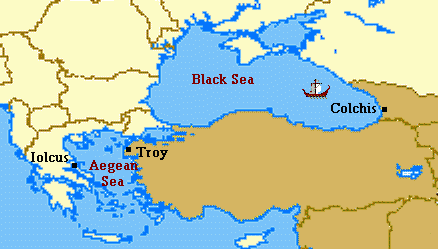
This book only describes part of this story – we are in 1300 BCE and are fleeing Colchis, a city on the coast of the Black Sea. We are on board the Argo with Jason and the boys, and Medea has chopped up (yes…..) her brother and is throwing parts of him into the sea so her father’s (King Aeetes) pursuit of them is held-up as he retrieves chunks of his son from the water. They are in possession of the Golden Fleece which, all going well, will be presented to King Pelias in Iolcus, Greece and will give Jason the throne. Sounds easy right?
Vann’s writing here is sublime. The way he describes the seas, skies and the journey is immersive. If you read this, do not rush – this is to be read slowly. If you do that you wont regret it.
Medea on the stern where her brother's remains have fused to the wood, dried and shrunken and infested with white maggots I was fascinated by the fact Medea’s decomposing brother was referred to on numerous occasions.
The fracas involving the dissection of Medea’s brother. I did not think it would look this disorderly – but when I think about it, her brother probably wasn’t compliant.
Anyway, I am obsessing about this scene again. So, Medea is the star of this show, Vann depicted this character in such a clever way, there were times I could not stand the woman witch, but there were periods – I felt for her, sympathy even. But even after feeling sorry for her, Vann would make her do something monstrous and I would be back to despising her!!!
There is a lot of violence here, a few surprises – particularly for readers like me who are not familiar with the story, so for me – the ending was a real SHOCK!! To get the most out of this, I found the need to finish a few chapters and then go on-line and read up about some of the characters who dropped in. Looking up maps of this part of Jason’s journey was interesting too.
There are some very, very memorable scenes – like lads with olive oil having fun, Medea riding a corpse, and who can forget the chewing of a fresh testicle. I am so glad I made a David Vann shelf on GR – as this is now my second addition to it, and it will not be my last.
I am not giving this 5-stars for two reasons (1) Jason’s character was not developed at all – one would assume this is intentional by Vann (because he knows what he's doing) but fleshing out Jason a bit more would’ve been nice and (2) I enjoyed Halibut on the Moon a little more. I have just discovered, one of my favourite men from antiquity, Seneca – wrote a play about Medea, so I must look for that. I am finally getting to understand what this Greek Mythology game is all about, this would be my 3rd or 4th Mythology book – so I think I have my ‘eye-in’ and I will be reading more as it is so fascinating, explicit, violent and good fun.
Even though I gave the book 4-stars, this was a 5-star experience all due to my buddy reader - La Profesora - Jennifer. I did learn a lot about this story from my Buddy Reader as she has read far more mythology than I have, we also had some good laughs and lively exchanges – so thanks heaps Jennifer!
Bright Air Black requires and rewards rapt attention. Like every other Vann novel the writing is a unique mix of poetry and viscera. There is really no one else who writes like this. There is no one else who could have so deeply imagined Medea murdering her brother on the deck of Jason's ship, as she flees with Jason from her father's wrath. The moment where she cuts her brother's throat, which she does without hesitation but while looking into his eyes, loving him, is moving and also very disturbing. Chapters later she scrapes her brother's remains from where they have congealed on the deck, and Vann's meticulous care in describing this scene would be remarkable all on its own, but these scenes and their remarkableness just keep coming, one following another.
I don't think the style is similar but in its revivification of an ancient and familiar story it reminds me of The Gospel According to Jesus Christ by Saramago.
David Vann retells the story of fabled Medea. Anyone not knowing the myth should read it first (or at least google it) before reading this book and my review because there will be spoilers.
Medea is the most famous daughter of Colchis, supposedly some kind of witch, who killed her own brother and chopped his body to pieces, to help Jason getting away with the golden fleece (which he was only able to steal because she helped him). Later, after being betrayed by Jason, she kills their sons in revenge. As with most of the ancient stories featuring women in leading roles, the story was about the monstrosities Medea committed and the male hero who had to endure her. This retelling, however, shines light at what made her do all the things she did.
We start with Medea already being on the Argo (Jason's ship) after getting the fleece. She chops her brother's body to pieces and throws those pieces into the sea to gain the favour of Hekate, goddess of darkness, in order to escape her raging father (in actuality she doesn't know if there is a goddess but knows that her father will always stop the ship to retrieve the body part, slowing him down). The whole motivation for her to cast her lot in with Jason was that she wanted to be free. Young and naive, she believed in Jason's love and that they could end up happy together (or at least that she'd be free). Interesting is that the author touched upon another half-myth, stating that there had been many golden fleece in ancient Greece, but that only one became famous because of how it was stolen and because of the stories being told (how stories get exaggerated over time). So begins the troublesome journey of doomed Medea and no matter what she has to do, the reader knows that she, ultimately, is a victim of circumstances. Because in this ancient world, daughters had to have sex with their fathers if those fathers were kings, they were slaves to get slapped or whipped or raped and given away as if they had no actual value. Medea refuses to be such a slave.
Her refusal to bend to society's norms back then dooms her from the start. But she is strong. And full of rage (more rage with each new betrayal). And smart. It was interesting to see how the author made her be "just a woman" instead of an actual witch. All the mythic things she did, she did through cunning, making a lot up as she went (giving the Argonauts visions by feeding them mushrooms for example, knowing that she was only safe from rape if they feared her - yup, you read that right: right at the beginning, Jason wouldn't have saved her from rape, a regular Prince Charming). I liked that. It grounded Medea, made her more real.
Her trials, then, were heartbreaking and absolutely realistic. Jason only wanting fame, being weak and not very bright, belittling her, treating her no better than her father had, using her whenever it suits him - right up until he casts her and his two sons they have aside for a younger bride (another pretty princess) as soon as Medea had delivered him from the last bad place they had to endure. So she poisons Jason's new wife and her father (who feared Medea and was therefore cruel to her) and plans to escape, but (realistically again) things go wrong. She refuses to leave her children behind so when the palace guards close in on them, she rather kills her children herself (more quickly and more merciful than what they'd have to expect). The act is so unbelievable that the guards turn away so she cannot even find solace in death herself.
Yes, Medea commits monstrous acts but since we know about what leads to every act, we can absolutely see why she did these things, that she had to do these things and can therefore feel empathy rather than judgement. At least I could. The author, thus, succeeded in telling the real story of a real women.
What makes this retelling so utterly beautiful and almost unbelievably fantastic is the prose. I've never read anything like it. The book is only divided into two sections (first the flight, then 6 years after Jason and Medea become slaves leading to their childrens' deaths), no chapters. The lines flow so elegantly, so rhythmically, that chapters would have been ugly interruptions, since one doesn't want to stop reading. Every line was intricate and conveyed so much feeling that I could quote more than half the book.
I received a copy from Netgalley in exchange for an honest review, but will definitely buy the hardcopy of this book. I'm in love.
Bright Air Black is lyrical retelling of the story of Jason and Medea, drawing on elements from the Argonautica and Euripides' Medea to craft a tale that's at once unique and familiar. Book I of David Vann's novel begins in medias res: Medea has just killed her brother, and is helping the Argonauts flee from her father Aeetes, which she reflects on as they sail from her home in Colchis to Jason's home in Iolcus, having obtained the Golden Fleece. Book II follows Medea as she assists in Jason's ascent to power, before the novel finally culminates in the story's famously tragic and violent conclusion.
Vann's Medea is instantly recognizable as the notorious, vengeful priestess that we know from the classics, rage personified. But rather than resting on this archetype, Vann goes further. Here Medea's rage isn't only portrayed, but thoroughly examined. Bright Air Black is more analysis than portrait as Vann deconstructs Medea, rationalizing her, humanizing her.
Being a feminist and being a fan of classical literature are two facets of my life which are at odds more often than not. So when I read modern retellings, I'm really looking for female characters to be afforded the same depth and quality of narrative voice as their male counterparts have been through the ages. In this regard, Bright Air Black is a resounding success. Violent, vindictive, impenitent, Medea seems more villain than hero. And yet. Driven by a singular desire for agency, Medea is rendered sympathetic by Vann, almost hauntingly so.
Reading Vann's prose is a bit like being suffocated, or being submerged under water. Meditative and contemplative but also characterized by a pervasive darkness, this is a story that's both grotesque and spellbinding. The fragmented sentences take some getting used to, and this style undoubtedly won't appeal to everyone. Admittedly I tend to be wary of novels which deal in experimental prose, because more often than not, there's just no reason aside from showcasing the author's skill. I didn't find that was the case here. I was quickly entranced by the rhythmic cadence of Medea's thoughts, which break like waves crashing relentlessly through this narrative. This is a rare example of poetic prose where form and content complement one another masterfully; Medea's character is inextricably tied to this terse and fragmentary style of writing. Very few authors could pull this off, but Vann does so with aplomb.
Usually a 5 star rating from me means 'everyone read this book immediately.' However, I do get the feeling that this may be a little too niche to recommend to the world at large. I'd highly recommend reading Euripides' Medea or at least reading up on the myth before starting this. It's not that the story isn't sufficiently self-contained in these pages, but as an interpretation which is more character driven than plot driven, it's probably not an ideal starting point.
I do want to stress that Bright Air Black is far from perfect. The pacing is uneven, far too much time is spent on the voyage from Colchis, the ending is abrupt. But these imperfections seem almost appropriate, in a way, because this is a tour de force, electrically charged work whose strength lies in its unapologetically tense and frantic approach. This is ultimately a bold and fearless examination of agency, power, and one woman's rage. Medea, destroyer of kings.
I received a copy of this book from Netgalley in exchange for an honest review. Thank you Netgalley, Grove Atlantic, and David Vann.
Some months ago I read Christa Wolf's excellent version of 'Medea', so I was interested in reading David Vann's re-working of the Medea myth.
In this book, Vann is retelling the story of Medea and Jason (of Jason and the Argonauts), very much from the point of view of Medea; but told in the third person and the present tense. We are privy to her thoughts and her memories.
Vann's writing is extremely vivid. He spares the reader little, which means that I found several sections of the book too brutal and gory to enjoy reading. However, his poetic language enlivens the reading of this book, especially with the descriptions relating to nature and to the sea.
The section that I was most impressed with, was that describing the meeting of Jason and Pelias, and the subsequent events.
I appreciate that David Vann has worked hard with this book, but the style and level of descriptive detail of so many violent events doesn't appeal to me. I much preferred the Christa Woolf version of this story.
Thank you to Grove Atlantic and to NetGalley for an ARC.
Bright Air Black by David Vann is a lyrical masterpiece. Based on Euripides’ classical Greek play Medea, Vann’s re-telling of Medea’s story is dark, brilliant, and hypnotic. Two notes of caution, however. First, some familiarity with the story of Medea and Jason is necessary prior to reading the novel. And second, this is not a novel for the faint of heart. Vann spares none of the gory details of Medea’s horrific actions in all of their blood-curdling madness.
The novel opens with Medea on the deck of the Argo tossing chunks of her brother’s body (a brother she murdered and dismembered) into the sea to delay capture by Aeetes, her father. Aeetes rages at his daughter each time he has to slow his ship to gather the bits and pieces of his son’s body to give him a proper burial. As horrifying as this opening scene is, it is just the beginning of a series of Medea’s violent and bone-chilling deeds.
Since the story is told from Medea’s point of view, we are sucked into her vortex of demonic rage. We watch as she scurries in the night to collect roots, plants, spiders, termites, salamanders, a scorpion, and mushrooms that induce hallucinations. She concocts a brew for Jason and his men using this potpourri, forces them to drink it, and proceeds to terrify them into submitting to her demands. We listen as she manipulates the daughters of Pelias into believing she can restore their father’s youth if they chop him into pieces, bite into his testicles, and throw his butchered body into her cauldron. We watch with horror and fascination as each of her schemes comes to fruition.
Our perception of the world through Medea’s filter forces us to understand what motivates her to do the things she does. Medea rages at a world that marginalizes her because she is a woman and a foreigner and, therefore, deemed a “barbarian” by the misogynistic, male-dominated, xenophobic Greek society. She repudiates her designation as “Other”, viewing men with absolute contempt and seizing every opportunity to lash out and ridicule them. Her hunger for power prompts her to destroy anyone in her way. More than anything else, she wants control over her life, the ability to decide her destiny. She abhors submission of any sort and murders her two children rather than surrender control of them to Kreon’s soldiers. Her many references to Hatshepsut, the female Egyptian Pharaoh who ruled Egypt independent of any man, reflect her desire to reign as king. But because she knows Greek culture will not accommodate for a female ruler, Medea has to rely on Jason to help her get what she wants. She is complex, fierce, calculating, demonic, manipulative, and a brilliant strategist who leaves nothing to chance.
Medea’s internal machinations are captured by David Vann’s writing style—a style both mesmerizing and lyrical. Most sentences are in fragments with fleeting images. They surge in short, choppy spurts. Many are stripped of definite articles and verbs. There is very little direct dialogue and no quotation marks. The effect is jarring, the impact powerful. The style borders on stream of consciousness, thrusting us in different directions as we try to navigate the maze of Medea’s thought patterns and emotions.
It’s important to note that Medea is not the only character capable of brutality and murder. We are told Aeetes hangs corpses on trees; Pelias murders his brother and nephew to seize control of the throne. He also tortures and enslaves Jason and Medea for six years until Medea obtains their release through her gruesome machinations. But because these are powerful men, they act with impunity. Medea’s conduct suggests if it is acceptable for men to behave as monsters then it should be acceptable for women to do the same. She hammers her point by perpetrating her crimes in particularly graphic and brutal ways. For example, she not only decapitates her brother, she smears his blood, licks it, and spits it out in full view of Jason and his crew. As with her male counterparts, Medea’s goal is to instill fear and absolute obedience.
Euripides’ Medea and David Vann’s Bright Air Black can be seen as cautionary tales in that they share a common theme about possible consequences of “Othering.” They suggest that if a people is consistently “othered;” marginalized; discriminated against; denied rights available to others; stripped of voice and agency; labeled foreigners, savages, monsters; some of these people may one day rise up screaming revenge. And if that revenge is ever manifested, it may take a form that is brutal, monstrous, and designed to make us reel in shock and horror.
This is a stunning novel in its haunting depiction of the internal machinations of a dark, complex, maniacal, and brilliant female in Greek mythology. Some may sympathize with Medea and understand her rage while condemning her actions. Others may turn away in disgust. But whatever one thinks of her, David Vann’s Medea is a character not soon to be forgotten.
Violent. Bloody. Primitive. A sort of male excuse to set Guardians of the Galaxy in Ancient Greece, devoid of the humour.
Not poetry, as there is only one emotion - fear.
And Medea - neither a woman, priestess, witch or ghost more like a cross between Putin and Erdogan.
Update folks: I knew I'd encountered the same level of mindless violence somewhere else - "Assassin's Creed" - one of my son's "Games" - same plot (minimal plot) - hack to pieces whoever crosses your path etc. etc. etc. etc. etc.........
“One of the men comes to the stern near Medea to fish in last light. A rough net weighted with stones…. He… flings the net overboard, beautiful pattern in flight, a practiced throw, the stones swirling out a perfect circle just as they hit the water… The surface becomes silver, opaque, molten, as if the sea could be reforged every day, great ingot of tin melted down each night, this fisherman casting his net to capture impurities”
Bright Air Black is the fifth novel by American author, David Vann, and is a retelling of the story of Medea. Vann begins his story with Medea, Jason and the Argonauts fleeing Colchis on the Argo, Golden Fleece in their possession, her father Aeetes in pursuit, Medea throwing pieces of her murdered brother Aspyrtus overboard to delay her father’s progress.
Their flight from Colchis to Iolcus, taking the daring step of sailing at night, is fraught with danger, both from Aeetes and the elements: “Fear living in close. In the hull and mast that might break, in the rudders, in the air that somewhere holds land, but mostly in the water. Rock and every creature unknown. No limit to the size of what can grow below. All animals on land known but always something new coming from the depths”
The sailors are wary of Medea, priestess of Hekate, rightly so, but her power over them holds no sway once they reach Iolcus and meet Pelias, the king Jason intends to usurp. Her grandfather may be Helios the sun, but Vann presents the infamous Medea, magical and monstrous, as a wholly human woman, if a determined, intelligent, tenacious and vengeful one.
Vann’s descriptive prose, as always, is stunning: “The sail no inanimate thing. Terrible in high wind, rigid and merciless and powerful beyond imagining, a thing of fear and will. But even now, in lighter winds, filled with desire, a restlessness, capable even of regret and sorrow, falling along an edge, hunching down, refilling but not entirely, some cost to the past. Only with no air, when it hangs fully slack, does it seem like linen. At all other times, this is impossible to believe”, and his personal experience with sailing is apparent on every page.
Vann’s evocative title comes from Euripides’s Medea; the beautiful cover shows the type of ship that Argo would have been; his interpretation of this legend from over three thousand years ago is powerful, enthralling and atmospheric.
Strange that Vann’s most straightforward tribute to Greek tragedy should result in his least resonant and cathartic novel. This is a retelling of the myth of the witch Medea, best known via Euripides’ fifth-century B.C. play. The novel opens in medias res and is full of references to gods and other legendary figures; if it’s been a while since you studied Greek mythology, you may well need a refresher course. Atavistic glorying in gore is a trademark of Vann’s work, but there’s an extra layer of nihilism here. The almost complete contextlessness will likely be difficult for today’s readers, while the style—which starts off lyrical but quickly grows repetitive—and the echoing of stereotypes of Medea as (in Jason’s words) a “bitter woman, butcher, [and] barbarian” are problematic as well.
See my full review, including a discussion of this novel in the context of Vann’s previous work, on the Pittsburgh Post-Gazette website.
Hace tiempo que no me pierdo un solo libro escrito por David Vann. Me encanta todo lo que ha escrito, la brutalidad despiadada de su prosa, las tensas y escalofriantes relaciones familiares que describe. Con “Negra la brisa lluent” (¿en castellano “Negra la brisa reluciente”?) Vann sale de su zona de confort y, con una voz impresionista, atrevida, exigente e intensa, reconstruye el mito clásico de Medea, que mató a su hermano, traicionó a su familia y abandonó su hogar por amor a Jasón. Aunque en un principio puede resultar algo complicado entrar en la historia, y no será de gusto de todo el mundo, una vez conecté con la historia en seguida me di cuenta que estaba ante una maravilla literaria que nos descubre una Medea ambiciosa, salvaje, apasionada, sensual e inolvidable. Es una verdadera lástima que Literatura Random House no se haya animado a traducirlo al castellano.
‘Vann’s prose is as pure as a gulp of water from an Alaskan stream.' Financial Times
‘[Vann] is the real thing—a mature, risk-taking and fantastically adept fiction writer who dares go to the darkest places, explore their most appalling corners.' Observer
‘One of the most exciting writers at work today.’ Australian
‘One of the most darkly talented and unsettling writers working today.’ Guardian
‘Vann is a brave writer, daring to write about and depict things that most other authors would baulk at, but that’s what makes him so good—that unflinching eye for the darkness you could potentially find in any of us, given the wrong chain of events.’ Independent
‘David Vann has been one of the most thrilling discoveries of the past decade or so.’ Stephen Romei
‘David Vann’s work has a spare, parable-like quality…[he] writes with deft control and a gift for prose propelled as effortlessly as a school of fish.’ Financial Times
‘David Vann is surely one of the most powerful writers working today.’ New Zealand Herald
‘Vann’s provocative prose is filled with a sense of wonder and beauty, even when the lives he describes are tragic.’ LA Times
‘Aquarium feels like a soft thing lined with blood: a small, resolutely inward-looking book, full or ornate sentences with a darkness that frequently makes you want to squint and flinch as you turn the pages.’ Guardian
‘The story is a familiar one, but David Vann breathes new life into the tale, taking the reader deep into Medea’s psyche. Atmospheric and poetic.’ Nicki J. Markus
‘Sensual and violent, often simultaneously, Vann’s novel evokes the primal force of women’s power.’ Booklist
‘Vann gives us a fresh slant on an early myth, an up-close and in-depth character study. From the outset, his drama unfolds in prose that is both atmospheric and electrifying…Medea’s story is one of the bleakest of all the Greek tragedies. Vann sums it up succinctly: “Unnatural, all that is human.” But the tale is also one of great power and intensity. Bright Air Black possesses the same potency. Its dark energy shocks us and shakes, yet it is impossible to pull away.’ Australian
‘Van’s retelling promises to get to the heart of Medea’s character. Vann is an author often highly praised for the quality of his prose, and Bright Air Black will hopefully see that trend continue. This is definitely one for readers with a love of Greek mythology, but also those that just enjoy great writing.’ AU Review
‘Bright Air Black is like a virus. It has infected me. I dream the world of this book, I feel it under my skin and in my blood. If you have not read David Vann’s books then race out and do it now. I doubt he has written a faltering word. If you are a brave reader, unafraid of the dark places in your own soul, start your journey here with Bright Air Black.’ Krissy Kneen
‘What Vann does quite remarkably is to give you new emotional perspectives…A remarkable writing style, it’s lyrical, like a great drumbeat going through the book.’ Radio NZ
‘Vann’s treatment of Medea has all the gore and poetry of McCarthy’s Blood Meridian…While the finale is well known, there are enough surprises in Vann’s revision to maintain interest, and the story of Medea continues to resonate, as its longevity suggests, in our contemporary moment.’ Saturday Paper
‘Dark, visceral, lyrical, sinister, sad: David Vann’s hypnotic reimagining of Greek mythology’s famously fiendish Medea is masterful—the expressive style is bizarre but brilliant. This is a book for lovers of poetry, Greek mythology, or for anyone who likes their prose offbeat, magical, or unclassifiable.’ Readings
‘Vann is one of the most thrilling writers to emerge in the past decade. For me his autobiographical novella Legend of a Suicide and successors such as Goat Mountain are the peaks of Vann’s work so far, but Bright Air Black is right up there with them.’ Australian
‘Vann’s prose conveys with striking immediacy a world where the real and the phantasmagorical, the human and the divine, are intricately entwined…His evocation of a barbaric world lingers long in the reader’s imagination.’ Canberra Times
‘Van’s choppy sentences are full of urgency and action, and the blood-soaked narrative never lacks momentum. Despite Medea’s many acts of barbarity, Vann succeeds in creating a degree of sympathy for a women defiant to the end.’ Big Issue
‘I was hooked from the arresting first page, swept along by the shimmering language and visceral images, and I found myself thinking anew about this ancient tragedy long after I finished the book…A powerful and rewarding read.’ Good Reading
‘Bright Air Black is a poetic fever dream, beautiful and unflinchingly primal. A vivid and forceful retelling of Medea's famous story.’ Madeline Miller
‘Vann’s writing is poetic in style and the Medea of Bright Air Black is wild, powerful and primitive, echoing the earlier cinematic vision of Pier Paolo Pasolini.’ Sydney Review of Books
‘For those who feel Game of Thrones isn’t savage enough, this may be the adventure for you.’ NZ Listener
‘Vann makes reading a gladiator sport…Rage boils on every page with all the intensity of Medea’s cauldron. He writes in short jagged prose, which echoes the brutality of the content, the harshness and shortness of life, yet his poetic language is simultaneously incandescent.’ Otago Daily Times
‘Vann is an agile writer, almost aggressively adventurous with fiction as a form. Ambitious, and challenging, this novel is just what you would expect from him.’ Overland
‘Powerful.’ Australian Financial Review, 18 Best Books of 2017
Medea, destroyer of kings. The story of Medea here begins on-board the Argo, where the Argonauts having stolen the Golden Fleece, are being chased by Medea’s father. The rest is a well-known story, but this time our author chose a mesmerizing poetic prose to describe the horrendous events surrounding the Medea myth.
This is an exceptionally violent Medea, one that dislikes men, but falls in love with Jason, who is portrayed as an ambitious but lazy leader, simply because he doesn’t grasp the chance to rule when Medea opens all doors for him. A man who prefers to seek shelter in another city, where king Kreon is an old friend of his father’s, and who, eventually, arranges a marriage between Jason and his daughter, Glauce. And where does Medea fit in all this? Nowhere, because she is a foreign sorceress, a barbarian wife (and not even an official one), a daughter who betrayed her father for her lover, a sister who slaughtered her brother into pieces. She is not to be trusted. Medea is not just full of rage, she is rage personified, or as Jason puts it: “All you are is rage”. But this is a rage caused by injustice, not only the venom of the woman who is set aside by a younger, prettier and wealthier bride. This aspect of the fable can be interpreted in many ways, from the political to the feminist to the theological view, but I wouldn’t want to waste your time; Is Medea the victim of a patriarchal society, which forces its man-made rules to anyone and destroys lives? Would she murder her children, were she a man? More Trier, than Pasolini, this Medea is covered in dust, dirt, blood and lethal substances. She curses, swears, spits blood, but she caresses her children like there is no tomorrow. Yet this oeuvre manages to remain atmospheric and spell-binding and, for my part, this is a great achievement.
I should note that the style is difficult to cope in the beginning, but it simply needs its time to get flowing and once you pass the first chapters, it gets increasingly interesting. I agree with other reviewers that the sea-voyage part is a bit boring and the action is lifted once the crew arrives in Iolcos. I also found the ending a bit abrupt, I would like to see the events unfolding after the filicide. However the scene of the filicide itself was absolutely heart-wrenching. A great read, an absolute twist of the ancient lore and a modern and refreshing take on one of the most famous literary heroines of the Western canon.
Many thanks to Grove Atlantic and NetGalley for providing a copy of this great book in exchange for an honest review.
Considering Medea was one of my all-time favorite reads from my Ancient and Medieval Cultures class in college, I had high hopes for this one. Alas, it didn’t pan out. Bright Air Black is set before Medea and Jason have children but after Jason has secured the Golden Fleece. Medea’s father, King Aeëtes, is in pursuit of them and in an attempt to slow him down Medea sacrifices her brother, dismembers him, and tosses pieces of him overboard knowing that her father will stop to collect each and every piece.
The writing is both difficult to read and impossible to put down due to the long-winded narrative style. The chapters are few and far between as well as any actual dialogue making this a monotonous yet grotesque read. At times it was like Hannibal meets mythology.
‘Medea takes a piece of her brother, a thigh, heavy and tough, muscled, and licks blood from it, dark and thick. She spits, licks and spits again and again, three times to atone. Mouth filled with the taste of her family’s blood, and she throws this piece of Helios into the waves.’
Then after she threw the thigh overboard and her father has recovered it:
‘Her brother gone. She misses him there, far away, in his father’s arms, and yet most of him is here. She kneels in him still.’
Then there was a scene of a man leaning overboard to take a shit and Medea describes how it fouls the air due to lack of wind. I’m sure she ran out of body parts to toss overboard and the men wouldn’t spend the entire book shitting over the side of the boat, but there just wasn’t enough to captivate me in this retelling of one of my favorite Greek myths.
I received this book for free from Netgalley in exchange for an honest review. This does not affect my opinion of the book or the content of my review.
I almost didn't read this because I didn't find the subject matter very interesting, but I did because of the author's last two books, and I found it captivating. I wasn't that familiar with the source material so didn't know what to expect from the plot, and have enjoyed afterwards reading about Jason and Medea and the Argonauts and the Golden Fleece, as well as following along the journey as best I could on the map. But it's really the writing of course that I liked so much. I don't think there's any author I read who can create such intense and compelling moments of horror, done with such beauty in the words. In all 3 books of his there were sections like this, which make my heart race just thinking about them now.
A sharp, intense, and beautiful book. The layers of attention to Medea's complex character were exceptional, and lent a great deal to my overall understanding of the story (as well as to classical mythology more generally, actually) --- a winner, completely. Also Medea is a fucking kaweeeeen
Tras haber estudiado Filología Clásica, no me había encontrado aún una ficción que tomara un personaje mitológico/mito y construyera algo auténtico y con valor literario. Jamás olvidaré a esta Medea, la que siempre he pensado en mí.
Okay, so full disclosure? I haven't actually read Medea and don't really know the story apart from the fact that there's a lot of killing and... stuff. But I figured that in a retelling of the play, it wouldn't matter too much, and I'd soon pick up an understanding of what was going on.
Wrong.
Right from the start we are thrown into the action, and I'm honestly still not too sure about what was happening. I think they're fleeing Medea's father, but then she's wallowing in the gore of her dismembered brother, and yeah, okay, maybe I should have at least Wikipedia'd the play to understand what actually happens in the myth. But still, I kept trying to persevere with the idea that maybe everything would sort itself out and be explained.
Wrong again.
What made this book so inaccessible to me was the writing. Vann wrote in a completely different style to anything I've read before, and one of the only ways I can think to describe it is like it was attempting to be poetry. You know the style - short sentences filled with metaphors, flowingly blunt descriptions, meanings that don't really make sense, and dialogue with no actual speech marks. Sentences were confusing. I was struggling to wade through what honestly felt like a foreign language. Admittedly, sometimes a writing style and language similar to this can work and be really effective. Not in this case.
I think I'm the wrong person for this book. Maybe it's because I don't have the pre-knowledge seemingly required, or maybe it's that I just don't have the headspace to sit down and give this the attention it probably deserves. Either way, unfortunately it is just not a novel for me.
Bright Air Black is a retelling of the myth of Jason and the Argonauts, but it's actually mostly about Medea, since it focuses on her point of view. It's always nice to see authors give voices to female characters who were either villainized or completely voiceless.
Medea from this book is not represented in a positive light, though. She is a ruthless sorceress. She is murderous and she desires power. But that's not all that she is. Medea is also in search of herself and her place in the world, and she is scared of failure. Despite the horrible things she does, it’s impossible not to sympathise with her, at least a little bit. Her story is bloody, but it's also tragic.
The writing style is absolutely amazing. It's mystical, with many references to gods who never appear in person, but remain present all the time. There are so many wonderful passages, and clever, beautiful quotes. The style suits the character of Medea perfectly - it holds so many truths, many emotions, but also a lot of violence. I love how Medea’s desire to rule, to be powerful and independent, is weaved through every paragraph, as well as her ability to see things more clearly than the others, even when she seems mad. This parapraph, I think, describes her perfectly:
"Why the constant desire to kill and dominate? Even in herself, relentless, a need to conquer. She would make all cower on the ground before her, every man in every land."
If you want to read an interesting retelling of a myth from Greek mythology, I'd definitely recommend this book. I think all mythology lovers would appreciate it.
I enjoyed this one, to a point. The premise and storytelling itself were splendid and unexpected - I had quite forgotten what this book was about by the time I opened it, so the fact that it is what it is surprised me.
I feel like, even though the prose and imagery were outstanding, that this book could use a couple of things to spiff it up though. It could definitely be served well with chapters - even if they're short, staccato chapters instead of long winding ones. The inability to put down the book not because I wanted to not put it down but because of the fact I couldn't find a place to stop was a downside. My second problem lies with the sentence structure - chopped sentences are good to use when driving a point home, but every paragraph having several is more of a headache.
I'll definitely be interesting in reading more from this author in the future.
Crua i bella versió de Medea per part de Vann, amb la seva forma tràgica i visceral de narrar-nos les interaccions personals dintre dels nuclis familiars... Tota una gran tragèdia grega restant-li tota la màgia mitològica i amb una bona dosis de realitat, crua realitat. Una impecable edició (Periscopi, com sempre) i traducció (de Yannick García).
Malgrat una prosa poètica molt neta i unes frases super ben articulades, LI FALTA UN BULL A L’ESCRIPTOR. Diu que és feminista i que ha llegit a Adrienne Rich, en serio? Aquesta versió de Medea (un dels meus mites preferits) és tot el contrari. L’animalitza, posa unes escenes repugnants sobre el sexe, horrible tot. No aporta res.
Em sap greu fer una mala ressenya però m’ha indignat.