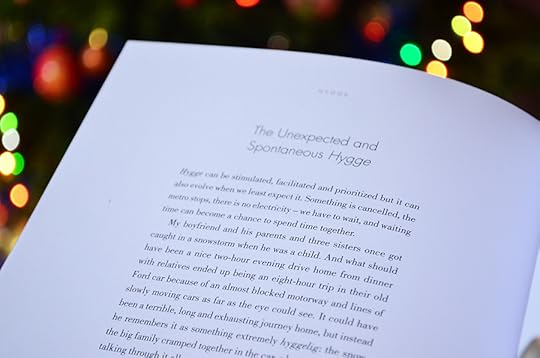
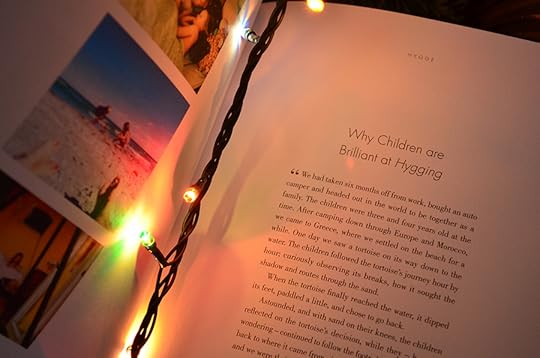
Such an interesting, enjoyable book! Dare I say it was a hygge-book? (There are about a million hygge compound words in Denmark, indexed in a useful glossary at the end of this book, and the author encourages you to make up your own hygge words!)
Here are some notes I took while reading, because I definitely want to remember the lessons of this book:
- What is hygge? Hygge is not ecstatic, momentary happiness, but a kind of everyday happiness that contributes to a general contentedness in the long run
- when guests step inside, try and sense where they are mentally and what they need. If they've come in from the cold, offer them a blanket. Ask if they would like to choose a cup, if we're going to have something warm to drink. Then they may end up having a favourite cup at your place, and that helps them feel at home.
- it prizes home culture over cafe culture (but hygge is definitely pub culture too!)
- hygge is the glue that holds Danish families together
- Hygge is not exclusively Scandinavian but it definitely fits in with the larger Scandinavian ethos and values system and culture of community, the social welfare state, and inclusiveness (also because Scandinavians believe when the basic needs are met, and you have the security that comes with knowing there's a social safety net, there is more room for one to explore the social, creative and personal elements of one's life - and it is easier for hygge to thrive),
- At schools in Denmark: "Don't forget to have some potter-time." Means walking around with little effort or purpose, winding down, seeing that hygge can simply hide within a pair of slippers
- You can't force hygge! But you can coax it, and set up patterns and thoughts that make hygge a natural part of your day
- Hygge isn't necessarily communal, it can be solitary too (curled up on a couch reading for example)
- The book includes recipes for hygge, like like rodgrod med flode (summer compote from summer berries), potato sandwiches (on open-faced rye bread), thick pancakes, morning rolls, oatmeal with caramel sauce, apple and roasted almonds (from Grod's famous creator, Lasse Skjonning Andersen), snobrod (twisted rolls made over the embers of a fire, like bannock, but sweetened with sugar and cardamom), and elderflower cordial
- the Danes are the second highest sweet-eating nation in Europe, and that's mostly because hygge is associated with drinking and eating (but not necessarily eating broccoli florets!)
- Hygge lives in the contrast between the cold outdoors and the cosy, warm indoors of your home
- Making your home hygge - Hygge grows out of a sincerity in the things you surround yourself with. When you put thoughtfulness into how and why you have chosen to surround yourself with particular furniture, objects, art, flowers, knick-knacks, then you relax.
- Interior design and hygge -> materials play a big role here. Wood, paper, linens, wools, metals, ceramics and stoneware are a part of Scandinavian style DNA.
- Have a hyggekrog --> a hygge nook in your house that is cosy. For me, that would be the corner of my couch with tons of pillows (all in different materials like faux fur, knit, etc) and soft blankets, perfect to curl up in with a book or something good on Netflix
- In the bedroom --> make space for your special routines - a place for your book, your glass of water, your jewellery.
- Denmark uses the most candles of all EU countries (because hygge is closely associated with candlelight!)
- a Danish DJ and legendary radio host gives a hygge playlist of 10 songs that automatically and in a subtle way put you in a hyggelig mood
- Don't be afraid of the cliche of souvenirs - if a mini version of the Eiffel Tower reminds you of an unforgettable trip to Paris, bring it back with you and enjoy the memories seeing it provokes.
- A whole section at the back of the book looks at all the hygge compound words (and there are a TON, you really get the sense of just how massive a cultural mindset hygge is in Denmark based on all the words they've created with hygge in it). I love this word, hyggesyg, hugge-sickness. When you have to stay home from work sick, but not so sick you have to lie down in pain. So, walking around at home, with slippers and warm socks on, watching films and eating nice things, but not well enough to go to work.
- Julehygge --> Christmas hygge.
- it is interesting to see that while people in the West have suddenly become quite preoccupied with achieving hygge as anything Scandinavian is ridiculously trendy, people in Denmark might see the concept differently. Apparently the political left wing criticizes hygge for being alientating, introvert and fearful of cultures outside of Scandinavian. The political right wing criticizes hygge for being a barrier to ambition, intensity, and growth, and that too much hygge is bad for productivity and effectiveness.
- The book does wonder if hygge "works" best in homogenous populations like Denmark, and how it can sometimes be seen as introverted and exclusionary.It can also be challenged by society's focus on efficiency and multi-tasking, as well as the rise of social media in our lives.
- This made me laugh --> "There are trends in today's society that threaten hygge. Thousands of Danes are suddenly running marathons, a niche sport that was reserved for a few eager fools in the old days and was never intended to become a popular sport. If the health wave continues to roar, hygge will face an uphill struggle."
- More on social media --> "Social media takes time away from time that could be spent together as a family, are disruptive to the presence of our children and can be sources of conflict."
- But this book makes the case for podcasts, saying that listening to something instead of taking in knowledge and entertainment visually demands more presence, and thus better conditions for hygge.
- Conclusion: Why is hygge important? Hygge moments are the small everyday moments that make you happy. Having a word for it makes you aware that they are right in front of your eyes.