

What do you think?

Namibia #2
Namibia, volume 2
London, 1949. Onefoggy night, Rosie Lanesees her son Brian on the banks of the Thames.Only he died four months earlier; and when she comes near him, he crumbles intodust. An incident strikingly similar to Kathy's own encounter with Göring in Namibia.Pushing on with her investigation, the young British agent will have to contendwith bloodcurdling phenomena – monstrous insects, accelerated aging – as muchas the hostility of local Nazi sympathisers.
48 pages, Hardcover
First published November 5, 2010
About the author
Rodolphe
385 books21 followersRodolphe Daniel Jacquette (1948–2026), known professionally as Rodolphe, was a French comics writer. A recipient of the Jacques-Lob Prize, he was best known for his work on the series Comanche, Kenya, Amazonia, Namibia, Cliff Burton and Das Reich. He made six comic albums in collaboration with the illustrator Griffo, the last of which was Chagrin from 2026.
Ratings & Reviews
Friends & Following
Create a free account to discover what your friends think of this book!
Community Reviews
Displaying 1 - 12 of 12 reviews

May 27, 2022
"When those apparitions were approached or touched, they immediately turned to dust."

Rudolphe's graphic novel, Namibia, Episode 2, continues to follow investigators on the trail of Herman Göring and giant insects. Reports around the world indicate that others who have died appear near their graves and then turn to dust. What is the connection? An old mine in Namibia might hold the answers. Namibia had more mystery and more surprises. 3.25 stars
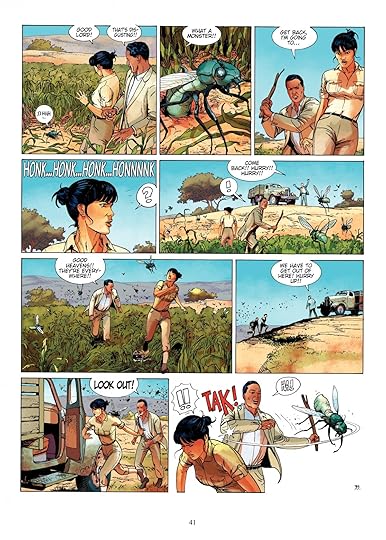
Rudolphe's graphic novel, Namibia, Episode 2, continues to follow investigators on the trail of Herman Göring and giant insects. Reports around the world indicate that others who have died appear near their graves and then turn to dust. What is the connection? An old mine in Namibia might hold the answers. Namibia had more mystery and more surprises. 3.25 stars

October 23, 2022
This is a strange story. A weird secret base. Giant ants. Uncanny duplicates. What is going on? After reading this, you probably won't know, but it keeps you turning the pages.

October 5, 2016
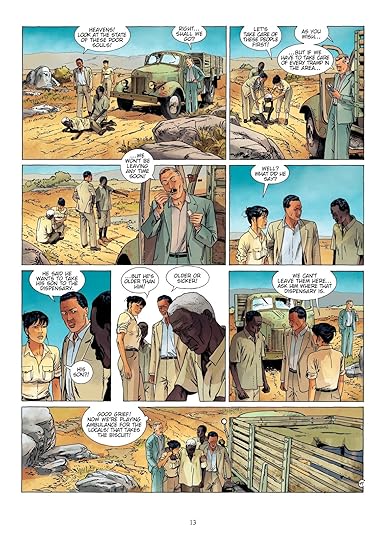
Kathy Austin, the British agent, has just confronted what appears to be Hermann Göring in a small out-of-the way Namibian bar, with shocking consequences. Now she, and her two companions are attempting to piece together exactly what it is they have witnessed so far, but as they do so they come across a middle-aged man helping a very elderly person across the road, accept the middle-aged man claims he is with his son. Kate insists they are taken to the nearby dispensary where they discover more of the same incidents. Unknown to Kate, they’re being watched, and when they later chance upon a large cemetery with Hermann Göring’s grave – and his body in place – events take another strange turn.
Meanwhile, in London, similar bizarre circumstances to those of Göring’s supposed appearance have been reported, so the decision is made to send a specialist unmarked military unit out to support Kate and investigate a secure compound. However, this time, Kate may have gone too far.
Although the outlandish extinct creatures have, to date, been missing from this sequel to the Kenya series, we’re getting plenty of giant insects, other-worldly technology and a deepening mystery. Perhaps it’s the unique setting of 1940s’ Africa but the sense of dislocation between the period and the science fiction promise of the series makes the enigma all the richer. After all, there are no throwbacks to popular culture for Kate to call upon. Marchal is exemplary in his mimicking of Leo’s art style, so much so that it’s very easy to overlook his contribution altogether. The book’s ability to capture a sense of time and place, while teasing something so futuristic and alien, and without detracting from either, makes for an enticing read.
Meanwhile, in London, similar bizarre circumstances to those of Göring’s supposed appearance have been reported, so the decision is made to send a specialist unmarked military unit out to support Kate and investigate a secure compound. However, this time, Kate may have gone too far.
Although the outlandish extinct creatures have, to date, been missing from this sequel to the Kenya series, we’re getting plenty of giant insects, other-worldly technology and a deepening mystery. Perhaps it’s the unique setting of 1940s’ Africa but the sense of dislocation between the period and the science fiction promise of the series makes the enigma all the richer. After all, there are no throwbacks to popular culture for Kate to call upon. Marchal is exemplary in his mimicking of Leo’s art style, so much so that it’s very easy to overlook his contribution altogether. The book’s ability to capture a sense of time and place, while teasing something so futuristic and alien, and without detracting from either, makes for an enticing read.
May 26, 2024
Good for B1 level to understand. There were some news words but can manage .
The graphics were nice . The way the shading was used to show the time zone and location switch between UK sections and Namibia sections was brilliant.
Have to get my hands on the remaining episodes. Thank you alliance française library for having these in your collection
The graphics were nice . The way the shading was used to show the time zone and location switch between UK sections and Namibia sections was brilliant.
Have to get my hands on the remaining episodes. Thank you alliance française library for having these in your collection

July 18, 2018
The plot thickens!
July 16, 2019
A good mystery/adventure story. Unfortunately, our library only has volumes 1-3 of this series.

September 20, 2019
...e il mistero si infittisce, come in un film di James Bond 😏
January 5, 2021
Quite good mystery...

November 12, 2021
Weird goings-on on Namibia involve giant insects and resurrected Nazis. Nice art and an intriguing storyline.

July 22, 2022
See episode one for comments. This happens then that happens but we’re not getting anywhere …

July 24, 2020
Still fun, but part of it felt like a mid-series slump. I'll read the next volume, but I find a weird Herman Goering doppelganger running around Namibia to be less compelling than the man himself.

March 1, 2019
The mystery of Hermann Göring's presence in Namibia in 1949 (as introduced in
Episode 1
intensifies, and so does the mystery of the giant insects. British secret agent, Kathy Austin, Major Bowles and Robert McDonald continue the investigation, while encountering the local Nazi contingent.
Another interesting instalment, which furthers the narrative.
Another interesting instalment, which furthers the narrative.
Displaying 1 - 12 of 12 reviews