This is the first collection of strange stories by contemporary writer Mark Samuels. The themes that thread through these nine accomplished stories are drawn from the great tradition of the twentieth-century weird tale, and they are suffused with a distinctly cosmopolitan, European feel. Mark Samuels writes about the fundamental fears of modern life, especially the effects of isolation and the dislocation that city dwellers can experience in their inhospitable, man-made environment. H.P. Lovecraft wrote about entities beyond human comprehension that might be summoned from beyond the stars, but did he ever consider that they would feel quite at home in the sodium glare of some run-down inner-city? When one of Samuels’s characters stands alone looking up at the vast, illimitable darkness of space, the reader is forced to wonder if there is much difference between the hopeless emptiness of eternity and the bleak interstices between the concrete and steel of their daily life?
Contents: • The White Hands • The Grandmaster’s Final Game • Mannequins in Aspects of Terror • Apartment 205 • The Impasse • Colony • Vrolyck • The Search for Kruptos • Black as Darkness
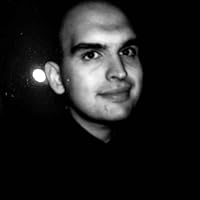
Mark Samuels (1967-2023) was a British writer of weird and fantastic fiction in the tradition of Arthur Machen and H. P. Lovecraft. Born in deepest Clapham, South London, he was first published in 1988, and his short stories often focus on detailing a shadowy world in which his protagonists gradually discover terrifying and rapturous vistas lurking behind modernity. His work has been highly praised by the likes of Thomas Ligotti and Ramsey Campbell and has appeared in prestigious anthologies of horror and weird fiction on both sides of the Atlantic.
a collection of short stories by cult favorite Mark Samuels. the author writes in the Weird Fiction vein, so there is a wonderfully old-fashioned feel to the writing, an emphasis on unknowable and often vaguely cosmic horror, and an admirable preference for subtlety and ambiguity over palpable, visceral horror.
I found it to be disappointing. competently and efficiently written, but it just didn't resonate with me much. still, Samuels clearly has talent. he can really set a stage and his imagery is well-rendered. "Mannequins in Aspects of Terror" had particularly memorable images: an abandoned office building filled with exceedingly creepy tableaux of various doomed, tormented figures was worthy of some good shudders. the sheer weirdness on display will stick with me. unfortunately the predictable ending left me shrugging.
I enjoyed the meta qualities of the first and last stories, how they engaged with both written and filmed horrors, and how the two stories connected... but I also found them to be somewhat uninspired. the final image in the last story of the collection - a celluloid ghost coming to get the protagonist - made me snicker.
I thought "Search for Kruptos" - a surreal story detailing the search for a unique book - had a surprisingly tasteless ending that unnecessarily links everything to the Holocaust. again the imagery was superb, all of those wintry vistas and streets full of abandoned books, but the story itself... eh and then ugh.
"The Impasse" intriguingly juggles both Kafka and Ligotti with its inescapable mazes and bleak office horror, but I wanted more. the story felt half-baked and the ending rather cheap. in general for most of the stories, I wanted more, more. more resonance and more layers because these purposely obscure horrors often wound up feeling facile. I would have liked more development of the protagonists, more depth to them, so that I could have experienced some frisson of horror at their eventual dooms. the could-have-been excellent "Colony" - about a strange man's attraction to a strange neighborhood - in particular could have used more in the way of understanding who this protagonist actually is. I'm a big admirer of ambiguity in my horror, and in general, but I usually need something to connect to or at least somewhat understand if I'm going to remain interested. if I can't have careful characterization or intriguing (and sustained) themes, then all I'm left with is the prose. although Samuels' prose is quite proficient and his imagery has a memorable clarity... the writing itself is not particularly distinctive. great images but little style: it feels odd critiquing a talented author with that phrase, but that pretty much sums it up.
my favorite was "Vrolyck" - a fun and creepy tale about a very peculiar person and their very peculiar plans for the world. it had the collection's most substantial characters and a compellingly strange cosmic threat. pretty enjoyable, but again, I was let down by an uninteresting ending.
I'm feeling lazy tonight so this is basically an updated post I made in the great Goodreads group Literary Horror.
If you're longing for Ligotti or pining for Poe, you should add Mark Samuels to your list of Most Desirable Authors. The works in this volume are dark surrealism at its brooding best. These are stories I wish I had written. Though one of them is more of a mood piece than a story, the remainder have enough plot to interest the most demanding page turner, while the rich prose will please the most discerning reader. All of them are thick with atmosphere - gray, lonely, and sinister. These stories are full of mystic tomes, a'la Lovecraft. In fact, one story, "The Search for Kruptos," partially takes place in a city full of books. Sounds enticing to a book lover, no? No! Oh, please, no, don't go there! You may end up asking yourself if you really want to keep reading at all after finishing Kruptos. "Black as Darkness" will have you fidgeting when you next view any number of experimental movies or, indeed, any movie done in monochrome. "The Impasse" is what Kafka would have written on a bad PCP trip. "Vrolyck" is one of the most intriguing of the bunch. With it, Samuels might have invented a new sub-sub-sub genre of "pseudo-meta-fictional-quasi-autobiographical-horrific-surreal-dark fantasy". You'll know what I mean when you read it. And you should read it. All of it. But beware: Once you've read The White Hands and Other Weird Tales, there's no going back. From that point on, you'll hesitate whenever you reach out to read a book, put a black-and-white movie in the DVD player, or see a mysterious bit of graffiti against a slum wall. And you should hesitate. In fact, you should just withdraw into a shell and not peek out. Ever. Don't trust anything!
Well... after much debate about whether or not I should buy the paperback or really hard to find hardback edition of WHITE HANDS AND OTHER WEIRD TALES (WHoWT), I decided to really indulge and buy the limited edition costly hardback version. It was worth every penny.
I had heard many outstanding things about Mark Samuels, and in terms of my weird fiction reading of contemporary authors, Samuels represented one of the few authors I had not yet read but really should have by now. Well, I have now finished up this debut collection and feel that these outstanding stories really meet the hype that I have gotten from other weird fiction readers.
Not a single clunker in this collection... but some that really stand out. Since being introduced to the horror fiction of Fritz Leiber via John Pelan's most outstanding collections published through Midnight House, I have really come to appreciate the dread mood building and evocation of horror in the urban setting.
In WHoWT, many of the stories did have an urban setting which juxtaposed quite nicely when Samuels would pull the rug out from under the reader, revealing a bizarre or cosmic layer of reality underneath the banal urban landscape. This kind of fantastic switcheroo on the reader was quite evident in "The Impasse", which happened to be one of my favorite stories in the collection.
Getting back to Leiber though, I found many elements within "Mannequins in Aspects of Terror" to be highly reminiscent of Leiber's "Black Glass"... a tale in which we find the main character ascending a skyscraper, only to find himself in another world or dimension. Similarly, in "Mannequins", we find our main character oddly transfixed by the city's monument to urban decay and more than willing to explore a bizarre art exhibition contained therein.
One key theme explored by Samuels that nicely manifests itself in many of the stories is the idea that perhaps our reality is not really our own but one that has been created or dreamt up by the dead or perhaps other external cosmic forces. This theme is most evident in "The Apartment", which I really enjoyed and found to be quite harrowing.
One other theme that I found in this collection that really struck a chord with me is the insidious effect of language or written word on our reality and consciousness. We find these themes wonderfully examined in both "Kruptos" and "Vrolyk".
I have to say that even the weakest story, "The Grand master's Final Game", was one that certainly kept me captivated and provided a clever twist in the end.
This was an easy 5 star rating and for those of you that really need to be introduced to this fantastic author of the modern weird tale, you can still find a very affordable paperback copy of Samuels' debut collection at Tartarus Press.
I first encountered this writer in the Vandermeer's anthology _The Weird_.
The print copies of _The White Hands and Other Weird Tales_ on sale from Amazon are pricey; but the ebook price is quite reasonable. Later, I found out that one can buy a print version directly from the publisher at a reasonable price too.
All these stories move at a brisk pace, are written in one of the _clearest_ prose styles I have ever read, and are influenced by the greats in the field such as Machen, Borges, Ligotti.
I got a kick out of the story "The Grandmaster's Final Game", for I am a chess aficionado. In this story, a priest who had left competitive chess, and is grandmaster of the game, has a chess showdown against an evil spirit who was once a chess opponent of the priest. Mark Samuels knows chess, for example the chess opening played in this story is one the major openings played today, not some stupid opening move such as h3.
Some stories show the influence of Ligotti, for example in "Apartment 205" the narrator discovers, and becomes embroiled in, the occult practices of a neighbor. In "Mannequins in Aspect of Terror" the narrator visits a strange art exhibit of horrible looking mannequins....and I won't say further. In "Vrolyck" the narrator is himself interested in, and writes, weird fiction. He meets a woman at a cafe and shows her a story he wrote; this story is like a virus, in that it replicates itself to others with deleterious consequences.
Because I enjoyed this book, I recently got Samuels' other book _The Man Who Collected Machen_. Some stories in this book also use the idea of contagion as a metaphor. I will probably get around to writing a review of that book.
The stories in this book:
The White Hands The Grandmaster’s Final Game Mannequins in Aspects of Terror Apartment 205 The Impasse Colony Vrolyck The Search for Kruptos Black as Darkness
Another one of these modern weird horror writers apparently very highly regarded so I had been on the look out for some of his work for a while now. Then I spotted this Tartarus reprint of his first collection and I jumped at the chance to see what he was like. I was not disappointed.
I breezed through this collection very quickly, not only because it is quite short, but because it was an absolute pleasure to read. This guy really has pinned down the essential essence of the classic weird tale, paying a healthy respect to the classics without seeming pastiche.
White visages, as well as featuring in the title story, are also a recurring theme throughout the book. The white mannequins in "Mannequins in Aspects of Terror", the ghostly white images of the dead in the mirrors in "Apartment 205" and the white paint in which the protagonist paints himself to cover up his skin condition in "Vrolyk".
Also a recurring theme is the self-regarding study of the genre itself; the weird tale. Several of the characters in the stories are writers or artists intent on defining and creating the truly weird and horrific.
"'I believe,' Muswell once said, 'that mental isolation is the essence of weird fiction. Isolation when confronted with disease, with madness, with horror and with death. These are the reverberations of the infinity that torments us.'" (from "The White Hands")
There was not a bad story in the whole collection. Further proof, if proof were needed, of how the weird horror genre is thriving today as never before.
Impeccably written debut collection with a somehow subtle and menacing undercurrent running through each and every line. The imagery is stunning throughout, though some of the endings did feel a little flat. Four or five of these stories were republished in the Best Of collection published by Hippocampus Press (The Age Of Decayed Futurity) including "Mannequins in Aspects of Terror", "The White Hands", "Apartment 205", and probably my favorite, "Vrolyck". Two more I'd've included in that Best Of from this collection are "The Impasse" and "Colony". Really enjoyed this one and looking forward to reading more of his work.
Primer libro que leo de Mark Samuels, y seguro que no será el último. Este autor escribe ficción extraña y terror, del estilo de Thomas Ligotti. Su prosa es muy buena, clara y fluida, que no simple, con un estilo conciso, manejando en algunos casos profundas ideas filosóficas. Es un escritor que no se avergüenza de sus influencias, y salen mencionadas en algunas ocasiones. Machen, Lovecraft, Poe, M.R. James. No trata ideas excesivamente originales, pero es un placer leer estos relatos.
The White Hands. De mejor manera no se puede empezar una antología. Un académico decide escribir un trabajo sobre Lilith Blake, una autora totalmente olvidada, oscura y de cierto culto. Para ello se encontrará con Muswell, gran experto en Blake, que además tiene material inédito.
The Grandmaster's Final Game. Un extraño decide hacerle una confesión al Reverendo Mooney. Dicho personaje fue un gran jugador de ajedrez, al igual que Mooney. Gran relato, sobre todo hacia el final.
Mannequins in Aspects of Terror. El narrador, solitario y melancólico, está obsesionado con una torre de oficinas abandonada que contempla desde su despacho. Hasta que decide investigar. Muy bien ambientado.
Apartment 205. Un vecino pide ayuda al protagonista, que resulta vive en el mismo pasillo de apartamentos. Relato de una obsesión, esta vez por el contenido del apartamento del título.
The Impasse. El protagonista comienza un nuevo trabajo en la Organización Ulymas. Ya desde el inicio comienza la extrañeza, con edificios deteriorados y empleados extraños y ensimismados. Y poco a poco se vuelve más extraño.
Colony. El protagonista narra su obsesión por los caminantes nocturnos, sobre todo de cierta parte sombría y desolada de la ciudad.
Vrolyck. El más lovecraftiano de los relatos tiene como protagonista a un insomne que se encuentra con una mujer, que también sufre de insomnio, en una cafetería.
The Search for Kruptos. El protagonista, estudiante de metafísica, se obsesiona con un autor maldito, Thomas Ariel, y su obra maestra, Kruptos. Estamos en plena Segunda Guerra Mundial, y el protagonista decide viajar por media Europa hasta llegar a la ciudad de Kanswilloch, donde cree hallará pistas de esta mítica obra.
Black as Darkness. Un anciano recibe un paquete de su mejor amigo, con el que riñó hace poco. Posteriormente, la narración pasa al punto de vista de este amigo, y a una cinta de video maldita. Buena manera de terminar la recopilación.
A great new classic in the weird tale. Well written and filled with terrifying imagery. Minus a point since its obvious that Samuels is working through his influences (especially Thomas Ligotti, but also Borges,Machen,Ballard, M.P. Shiel, and Lovecraft), but these stories(or tales) are so well written they seem like well crafted tributes rather than pale imitations and he has good chance of being regarded with those names at this rate.
So, so good and worthy of classic status. I had flashbacks to Poe, Ballard and Borges while drifting through these eminently readable dark nightmares. Add these to your queue for next year's October or for dipping into your Kindle whenever you're in the mood for some expertly and beautifully crafted macabre.
An amazing collection form an author that I was avoiding for quite some time (for reasons unrelated to literature). If you like Thomas Ligotti then this book is definitely for you.
Mark Samuels continúa revelandoseme como uno de los mejores escritores de terror o weird actuales. Una lástima su deceso porque lo considero el alumno más aventajado de Ligotti y eso que he leído unos cuantos. Algunos de los relatos de est libro ya los había leído en la fabulosa antología de Valdemar así que paso a reseñar los que no aparecen en esta:
La partida final del gran maestro(****): Un párroco que una vez venció a un malvado sujeto en una partida de ajedrez se las tendrá que ver de nuevo con ese ser a petición de un fiel en apuros.
Colonia(*): Un tipo compra una casa en un barrio donde la gente camina como zombies. Poco más.
La búsqueda de Kruptos(*****): Un hombre se embarca en la búsqueda de un manuscrito elaborado por un extraño escritor y atraviesa la Francia nazi para llegar a un pueblo fantasma lleno de nieve, castillos y libros por doquier. Ambientación lovecraftiana espectacular y final desconcertante. Se me hizo corto, el mejor.
Negro como la oscuridad(***): Un hombre encuentra una vieja cinta de vídeo con un film que se creía perdido y donde la actriz protagonista es una antigua amante que después del visionado volverá de la tumba para vengarse. Pasable.
I first stumbled upon Mark Samuels when I read his story A Gentleman From Mexico in the Book of Cthulhu II. I found the story showcased an easy, confident writing style and it really made an imprint on me. Afterwards I ordered copies of his two in-print collections: The White Hands and Other Weird Tales and The Man Who Collected Machen and Other Weird Tales (I also recently ordered a copy of Glyphotech, a short collection from PS Publishing that is now out of print).
It took me a couple months before I cracked open The White Hands, but it only took me a couple days to zip through it. When I started I was wondering if the stories were going to be nearly as good as A Gentleman From Mexico, and as I finished I scolded myself for waiting so long before reading Mark Samuels.
The stories within are all exemplars of weird fiction. Samuels writes clear and concise, and is not shy about showing his influences. I knew going into this one that Lovecraft and Machen were influences on Samuels, but I was pleasantly surprised to find that some of the stories within echoed Thomas Ligotti's bleak, nihilistic style of horror.
The collection opens with The White Hands, a tale that reads like pure, classic weird horror. An academic decides to study a near-forgotten author named Lilith Blake, whose fiction is extraordinarily dark and bleak. He must use the collection of a former professor named Muswell, a hardcore Blake enthusiast. The story is an excellent opener, and reading about the protagonist's growing obsession with Blake's work is good fun. Following this story is The Grandmaster's Final Game. An enchanted chess set brings about a rematch between a priest and a wicked former opponent. The story starts off strong and keeps going right up until the finish.
The middle section of the book are the tales that to me are most reminiscent of Thomas Ligotti's work. Mannequins in Aspects of Terror is a creepy urban tale. Mannequins are creepy anyway, and Samuels takes it to a whole new level with this story, set in a mostly abandoned office tower which becomes a place of fixation for the narrator. Apartment 205 is another tale concerning a character who becomes enchanted and obsessed, only this time it's a certain room in a neighboring apartment which keeps drawing him in. Another tale with dark, pessimistic undertones, the story just gets creepier and creepier. The Impasse, one of my favorite stories of the collection, is 100% Ligottian corporate horror. The story is surreal from the start, and details a mans first day on the job at a strange firm. Events get stranger and stranger as the story goes on, and a feeling of hopelessness pervades throughout the story. The next story continues the theme of obsession, and similar to The Impasse it has a surreal feel early on that continues throughout. The protagonist of The Colony becomes enamored with a run-down, shady part of town that he stumbles across. He finds himself attracted to the bleakness of not only the place, but the denizens he encounters on his nightly jaunts. He decides to move into the desolate neighborhood, and the places pull on him intensifies further, culminating in a terrifying conclusion.
Although the previous four tales are the ones that seem to be the most influenced by Ligotti, the tale that follows reads like a Ligotti/Lovecraft mashup. Vrolyck follows a misanthropic insomniac who is more than he lets on. He meets a woman also suffering from insomnia in a cafe, which sends events spiraling. The tone is Ligotti but the plot is Lovecraft, making for quite a brilliant story.
The Search For Kruptos is yet again another tale dealing with obsession. The protagonist is a student who becomes obsessed with finding Kruptos, the unpublished magnum opus of an exiled author from days of old. The story takes place during the second World War, and although dealing with the idea of worlds in between dreaming and waking has a jarring ending that threw me off.
And finally, Black as Darkness brings readers full circle, as references to characters in the first story create a sense of a bigger picture. The tale follows two old men who have been lifelong friends, and what happens when a mysterious, bootlegged video tape shows up and dirty secrets are aired, leading to yet another bleak ending.
In conclusion, The White Hands and Others is a brilliant early collection. Readers of weird horror will find much familiarity here, although the voice is Mr. Samuels's own. I can't imagine any fans of the weird being disappointed in this collection, and I even find it hard to bring criticism against it myself. This book should be a welcome addition to any bookshelf, and since it's an in-print paperback from Tartarus Press (a wonderful publisher) it can be easily found online.
Originally appeared on my blog, The Arkham Digest.
I began reading this book in June 2017 because it was the monthly selection for the Literary Horror group I am a member of. The collection is comprised of nine short stories. I read the first six approximately a month apart each during the last half of 2017. Then I picked up the book again and read the last three stories in October 2019. My overall impression is that the work is so-so. It's often slow, and a lot of work to get through, the main reason why, no doubt, it has taken me so long to read the collection.
I ought to like the book a great deal. I moderate the Weird Fiction group here at GoodReads, and I know that Mark Samuels is considered a great modern writer of Weird Fiction. Samuels does indeed make constant reference throughout his stories to many great Weird authors. I find myself in consistent agreement with his tastes and opinions of these authors' abilities and shortcomings. I am particularly impressed that he gives Vernon Lee her due when so many others have overlooked her contributions. Samuels the author and I then have a great deal in terms of common interests and tastes regarding Weird Fiction.
Nevertheless, his stories, and that's what I ultimately am here to review, at least the stories in this collection, all have problems, one of them particularly serious problems. I give three of them a four-star rating, four a three-star rating, one of them two stars, and another just one star.
The four-star stories were "The White Hands," "Vrolyck," and "Black as Darkness." The two failures were "Mannequins in Aspects of Terror," and "The Search for Kruptos."
The first story in the collection, "The White Hands" was fun because it mentioned so many of my favorite authors. I also liked many aspects of the story, the taking dictation from a dead Victorian author who was and is still very sexy, how the protagonist acted like he was going to do as requested of him, but never had any intention of doing so reminded me of how I would act (or wish to) towards someone so undeserving. There were a lot of nice touches like this in revealing character through situation rather than statement. I think Samuels never managed to come up with a good way to conclude the story and made a sort of confusing botch of it at the end. Still it was a fun ride up to that point.
One has to read a long way to get to the next really good story, but for this science fiction lover Samuels finally hit paydirt with "Vrolyck". I loved the concept of alien first contact and maybe alien scouting for invasion theme. It never gets old, and here it even comes with horror and weird twists. Again though, the ending never quite manages to do justice to the situation presented. The protagonist died--the end--is not a satisfactory conclusion to anything. A statement about what the life meant has to be made somehow in the story. Samuels knows this and attempted it. I just wasn't satisfied with the result.
The last story, "Black as Darkness" took a second reading to grow on me. Maybe that was because I read it the first time immediately after having become irritated by reading the penultimate story. Warning: don't read the last two stories one after another. They're the worst and best in the collection, in that order. "Black as Darkness" starts extremely slowly, and after the first few pages you might find yourself wondering why Samuels thinks you should find these old geezers' lives the least bit interesting. But then, cherchez la femme, and all is forgiven. It's the old lovers' triangle story, but this time Samuels is throwing in some wonderful twists on the theme, twists that wouldn't be possible if not writing from a speculative fiction vantage. This was the right story to end the collection with. It's the only one that has a great, completely satisfactory ending. As a black and white as well as foreign film buff, I love the references to the art Samuels threw in. They were much more convincing than the chess references Samuels so botched in the second story. If it were not for the slow start and five times too many references to the high temperature that day, this story could have been five stars.
I was going to discuss the two story failures now, and how they fail, but changed my mind. I'll just mention why for me "The Search for Kruptos" failed and draw some general conclusions from that. The story is about a Jew dying in a Nazi death camp. That scenario is so incredibly sad and shaming for the entire human race that I believe it's never going to be anything but painful to be reminded of, at least among people of conscience and good will. It's simply too horrific and tragic for even the fiction field of horror to begin to hope to deal with. But here comes Samuels rushing in where angels would fear to in order to try to spin a senseless death as the achievement of some sort of metaphysical epiphany instead. Samuels fails, of course, but not only because no solace is possible, or ever should even be attempted to be drawn from such injustice, but even worse (from a writing standpoint) Samuels is completely fuzzy and unclear about how the metaphysical enlightenment occurs, what the mechanism is, or in this case even what the relationship truly is between the event and the protagonist. All we have is a horrible, muddled, failure of a story, one with no dialogue and interminable passages of description to boot, that fail to explain the main point adequately enough to understand it on any level. Failures get my two star rating--usually there's something somewhere that can be appreciated--offensive failures like this one get my one-star.
The storytelling failure of Samuels just mentioned--not the taste (or sensitivity) failure--is one that plagues all but the last of the stories in this collection. The situation he raises is of great interest. So are the original, highly creative, clever twists he always comes up with. But invariably something goes awry at some point in the story and it goes somewhere no possible logic could have taken it thus leaving basic questions raised by the situation unanswered or unclear. Now this happens sometimes in some ways in Weird writings, but experienced authors make certain things ambiguous intentionally to create certain artistic effects. In Samuels' writing it's too clear that it's all accidental. That's not Weird--it's problematic writing skills. I love Samuels' ideas, what he's writing about, the situations he raises, his breadth and diversity of scope, but in this collection I don't see that he has the skills developed yet to adequately handle what he has brought forth so that he can bring events to a satisfying or even meaningful conclusion.
This is a fairly short book, coming in at a mere 137 pages. But it's also consistently good throughout. Coming from Tartarus Press I expected no less.
The biggest indicator of a good story collection is my urge to continue on with it, and that was quite strong here. All of these stories were fun reads, even that weren't up to the standard of the best. A few did disappoint me slightly as being a bit predictable, hence the reason I can't quite give this book a perfect rating.
The White Hands - This was a re-read for me, having originally found this story in the Vandermeer's "The Weird" anthology. I think I enjoyed it even more this time, its got a pitch-perfect atmosphere and setting. A man investigating an obscure horror author becomes mixed up with a man who has written some of her stories for her, from the grave.
The Grandmaster’s Final Game - This story isn't as good as the first one, but it's a decent weird tale. A man begs a priest for aid after he is cursed by a chess-players spirit.
Mannequins in Aspects of Terror - This is an excellent story, and it brought Ligotti to mind a couple times. It's creepy, with a very unsettling theme overall. One of the best in the book. A man fascinated by an abandoned office tower learns it's architect is planning a sort of horror show there.
Apartment 205 - This is an above average "haunted room" story. A medical student in Paris becomes obsessed with a nearby apartment where occult rituals took place.
The Impasse - This was an excellent corporate horror story. It reminds me a bit of the work of Borges, and Ligotti's corporate horror tales. A man begins work at an organization which makes absurd copyright claims, but there's something far more sinister going on.
Colony - I could see where this story might disappoint some at the end, but I really loved it. I love the whole setting and feel of it, it reminds me of some of Lovecraft's early, atmospheric short works. A man moves into a desolate, depressing neighborhood because he is drawn to it's atmosphere.
Vrolyck - Very creative story, original idea that is well-handled I thought. A man uses his own weird fiction stories to allow an alien race to take over people's minds.
The Search for Kruptos - Another story with shades of Borges in it and another story where I especially loved the setting and mood. This story was one of the more memorable ones. A student travels through war-ravaged Europe to a frozen village to discover what became of an obscure, infamous metaphysician.
Black as Darkness - This one is half-mystery tale and goes toward the bottom of the totem pole, still a decent story and I love weird tales which are about old films. Two life-long friends' old disagreement over a woman pops up when an obscure film she appeared in resurfaces.
Thanks to the Kindle app on my phone, I finally managed to read a copy of this book. I think I still prefer The Man Who Collected Machen, as the scope of those stories seemed somehow larger, but this was an almost equally fantastic volume of modern weird fiction, and was as enthralling as I'd come to expect. High points include the title story (which I'd already read in The Weird), "Mannequins in Aspects of Terror," and "Black as Darkness."
If you like weird/horror stories, you should give this book a try. Maybe not all the stories are memorable, but all of the were well written, original and scary enough to send a little shiver down my spine. A short collection highly readable and enjoyable.
This is a collection I have returned to many times since it’s initial publication by Tartarus Press in 2004 and is seen (rightly in my opinion) as one of the great modern volumes of weird fiction. This edition is newly re-issued by Zagava as part of their ongoing program to bring all of Samuels work back into print.
As a debut collection it (unsurprisingly) lays down markers (and characters) for subsequent exploration in later books, but the major one being the pain of life itself. Samuels is often compared to Thomas Ligotti in this respect, and if you like the latter then you will probably enjoy this volume, although (again as perhaps expected for a debut volume) the Samuels influences are a little more visible, Poe, Lovecraft, Machen and (especially) Borges.
Poe’s ‘Berenice’ springs to mind in the titular tale which introduces which involves a researcher and his growing obsession with a dead decadent writer Lilith Blake and her legacy. Although set in the present it has a definite nineteenth-century feel to it, perhaps partly due to its Highgate location. It might (not) be co-incidental, but Highgate is also the scene for the final tale in the book, which involves another aspect of desire and a retribution. A stranger neighbourhood is that around Ravel Street a district which has a peculiar life (or death) of its own, outside the mainstream. Alienation or immersion in an alien in(or un)human environment is a common theme in the volume, from the Lovecraftian tale ‘Apartment 205’ through to the sinister pointlessness of the activities of the Ulymas Organisation (‘The Impasse’) to the office tower block (‘Mannequins In Aspects Of Terror’). In all of these stories, the protagonist becomes enmeshed in actions over which he seemingly loses control and ‘redemption’ is in very short supply. Books and literature are, on the surface, escapes from such horrors, but as already seen in ‘The White Hands’, such activities can be as confining as they are revealing. Both physical location and bookish escape/obsession combine in ‘Apartment 205’ but is ultimately realised in the bleak (and Borges influenced) ’The Search for Kruptos’, this latter a difficult (and controversial) tale to pull off.
All the stories in the book are good, some excellent, and if you are looking to explore the Samuels oeuvre this volume is probably the place to start. The book itself is large format and looks and feels very nice to handle. I am not desperately bowled over by Joseph Dawson's illustrations but do like his wraparound cover illustration a lot. Whichever edition you might prefer it is an essential purchase.
Samuels was a member of the original Arthur Machen Society in the 1990s, and a strong part of the body that follows that, The Friends of Arthur Machen. Poe and Lovecraft were a big influences on his writing also. His stories are usually set in a crumbling and strange setting, withered and even diseased. It’s not surprising therefore that his stories are harsh and bleak, dark to an extreme. He died in 2023 at the young age of 56, with his reputation as a writer of weird fiction as high as it ever was.
His style of writing is clear and concise, occasionally dropping hints of his influencers intentionally. The collection opens strongly, with the title piece; an academic decides to study a near-forgotten author named Lilith Blake, whose fiction is extraordinarily dark and bleak.
Another highlight is Mannequins in Aspects of Terror, is a disturbing urban tale set in an abandoned office tower with which the narrator becomes fixated.
Also, The Impasse, a tale of corporate horror with a sense of the surreal giving it the feel of the TV series Severance. It details the first day on work of a man at a very odd company’s offices.
sorry but this is such laborious Ligottian Tale pastiche its hard to get through. all the best bits map nearly one-to-one onto their inspirations lol. a story called "mannequins in aspects of terror" that opens "The office tower had long fascinated me"??? — are u kidding me buddy
Entretenida colección de relatos de lo extraño, escrita con gusto pero sin rastros de genio, ni de la maestría estilística que muchos le atribuyen. El libro es variado, aunque detecto dos leit motivs.
El primero es la transformación. La mayoría de las historias derivan en procesos de metamorfosis, en los que algo (un personaje, un lugar) es absorbido por otro algo y. más o menos, se convierten en lo mismo. El tema se repite tanto que termina haciendo previsibles cuentos muy diferentes. Además, el recurso apenas muestra profundidad o análisis de la condición humana; el autor lo usa más que nada como recurso narrativo, como obsesión personal incontrolable que no sabe de dónde viene ni adónde va. Es posible que se pueda rascar algo pero, de ser así, queda oculto tras una literatura bastante superficial.
El segundo es la falta de originalidad, el constante recuerdo de lo que otros han escrito antes. Es cierto que la consistencia de Mark Samuels (no hay relato malo y no hay relato muy bueno) termina dotando al libro de una relativa personalidad propia, si bien parece que le cuesta hacer algo nuevo. El primer cuento, 'The White Hands', es el mejor ejemplo. Tiene un clímax excelente (los clímax son uno de los puntos fuertes de Samuels), pero no deja de ser un revival de un estilo anticuado de terror, consciente hasta tal punto de serlo que cita a los autores que lo inspiran. Nunca he sido fan del revival como divertimento, quizá otros lo disfruten. Otra influencia, de hecho más apropiación de una literatura ajena que simple influencia, es la de Thomas Ligotti, citada por muchos comentaristas. La sombra de Ligotti se vuelve más presente conforme avanza el libro, aunque solo en los escenarios y en los tipos de argumentos porque apenas hay ecos de su potente existencialismo, ni de su estilo radical. Es decir, Samuels escribe en el "subgénero Ligotti", quedándose con sus motivos sin reproducir su dolor, por incapacidad o por falta de coraje para mirar al abismo y escribir lo que ha visto. Por último, también hay rastros de un Clive Barker bastante descafeinado, de nuevo solo en los argumentos. En resumen, se puede considerar a Samuels como representante de pleno derecho de la clase media del relato de terror / weird contemporáneo, al mismo nivel que otros que muchos consideran maestros; yo me tengo por algo exigente a la hora de repartir carnets de genio en la literatura de género y me contento con no sentirme idiota ni sentir que pierdo el tiempo ante una colección de relatos, y en este sentido Mark Samuels cumple.
¿Hay relatos excelentes en 'The White Hands and Other Weird Tales'? No lo creo. Pero yo tengo un método para saber cuáles son los mejores relatos de una colección. Al día siguiente de terminarla, me pregunto directamente cuáles recuerdo mejor, y los dos o tres que me vienen corriendo a la mente son los que considero mejores; también suelo echar un vistazo al índice o una última hojeada rápida, por si algo importante se me había olvidado entre la cantidad. No es infalible, pero repitiendo la operación años después o tras una segunda lectura, la respuesta a "¿cuáles son los mejores?" suele ser la misma.
Así que, siguiendo este pseudométodo de crítica literaria, ¿cuáles son los mejores relatos en 'The White Hands'? Quizá 'The Impasse' es el más potente, un terror corporativo que, por una vez en la obra, consigue transmitir profundidad metafísica. 'Mannequins in Aspects of Terror' también elabora un escenario oscuro e intenso, memorable por momentos, aunque disminuye su fuerza algo que afecta a muchos otros relatos de Samuels: el síndrome del espectador, es decir, el personaje principal cuenta lo que va viendo, la mayor parte del tiempo no es tanto una historia que le ocurre, y esto tiende a diluir la tensión y el interés de lo escrito. No siempre, claro; pero Samuels no es maestro y lograr el éxito en este tipo de relatos es propio de maestros. Otros cuentos tienen elementos muy logrados, pero no apoyados por una historia por completo interesante o consistente: los encuentros ante los reflejos espectrales en 'Apartment 205', excelente muestra del subgénero de terror con espejos (¿lo habrá leído el director de la maravillosa 'Oculus'?); el sugerente barrio de 'Colony', perdido en un relato blandito; la idea (desperdiciada) de un relato-virus en 'Vrolyck'; o la emocionante referencia a la Segunda Guerra Mundial en 'The Search for Kruptos', poniéndola en un contexto en el que muestra que la vida para muchas personas siguió su curso lejos de grandes batallas o genocidios, relato por otro lado echado a perder por un final que vulgariza este hallazgo y que, en todo caso, anula el interés de lo narrado.
Se lee rápido y es disfrutable, pero muestra a un autor todavía por explotar y del que no queda claro si tiene potencial (valentía) suficiente para ser grande.
Mark samuels es uno de esos autores que salen a colacion cuando se habla de terror actual deudor de Lovecraft o Machen. Y ciertamente hay buenas razones para ello, aunque también hay bastante relato claramente influenciado por Ligotti y Kafka.
Es una edición inglesa de Tartarus press y supuso su primera recopilación de historias. Francamente recomendable. Tiene inspiraciones bastante evidentes en la obra de Thomas Ligotti, pero con bastante mas énfasis en los medios de expresión (cine, libros...) y tiene un toque algo mas moralista en algún relato (rollo bien vs mal) o religioso.
Eso si, es pesimista completo. El libro está repleto de personajes que pierden su identidad, sociedades opresivas y destructivas, conclusiones sin esperanza alguna, etc...
The White Hands - Interesante relato sobre la influencia de una antigua escritora de terror. 3.5/5 The Grandmaster's Final Game - Una partida de ajedrez que pone a prueba la fe de un sacerdote. 4/5 Mannequins in Aspects of Terror - Gran desarrollo, si bien resulta un poco obvio ya tanto maniquí. 3.5/5 Apartment 205 - Uno de los mejores relatos que he leido últimamente, sobre la malsana influencia de determinados conocimientos y lo ilusorio de la existencia. 5/5 The Impasse - Horror corporativo de primer nivel, con toques muy Kafka. 4.5/5 Colony - Terror urbano en una zona abandonada de la ciudad, donde almas en pena parecen vagar sin rumbo. 3.5/5 Vrolyck - No es un mal relato y tiene una idea inicial muy potente, pero las explicaciones finales me dejaron un tanto frio. 2.5/5 The Search for Kruptos - La búsqueda existencial de un hombre, persiguiendo el rastro de un maldito autor y su libro Kruptos. Muy bien. 4/5 Black as Darkness - No es el mejor relato pero esta pequeña historia de dos amigos es sorprendentemente efectiva, y hasta tiene una referencia al primer relato del libro. Buena forma de cerrarlo.3.5/5
Casi todos son relatos bastante cortos. 130 páginas de lectura bastante ágil, dentro de la densidad que suponen su temas.
“The White Hands” ✭✭✭✭½ “The Grandmaster’s Final Game” ✭✭✭ “Mannequins in Aspects of Terror” ✭✭✭ “Apartment 205” ✭✭✭✭½ “The Impasse” ✭✭✭ “Colony” ✭✭½ “Vrolyck” ✭✭✭ “The Search for Kruptos” ✭✭✭½ “Black As Darkness” ✭✭✭½
Quote: ”We are all of us lost in the vast and endless night that is ourselves. We wander, hopelessly and eternally abandoned, through our own secret chambers of hell. Just as shadows are devoured by the night so our souls cry out for their source.”
Writing in a fine weird fiction tradition of Arthur Machen, Algernon Blackwood, H.P.Lovecraft and alike, contemporary weird fiction author Mark Samuels stands out as a writer who dares to continue obscure ideas of dark literature albeit putting these in modern, recent settings - and innovative plots. I am actually excited to read the rest of his works...
Interesting detail: the colour “yellow” appears quite a few times in the book. It seems like it became a sort of tradition within weird literature to include the colour “yellow” in weird stories, even though this inclusion is done with a certain subtlety, not in any obvious way. A homage to classics, “The King in Yellow”? Perhaps. The cover of the book is also yellowish, but so are other books of Tartarus publishing house, which - surprise surprise - specializes in publishing weird literature.
Individual story ratings:
★★★★★ (excellent) * The White Hands * Mannequins in Aspects of Terror * Apartment 205 * Colony * Vrolyck * The Search for Kruptos * Black as Darkness
★★★★☆ (good) * The Grandmaster’s Final Game * The Impasse
Fantastic set of stories that aren't pastiches yet take about the best elements from authors like Poe, Lovecraft and Ligotti mixing them with Samuel's own originality. Samuels is a very skillful writer avoiding the mistakes of his predecessors like being too abstract, lacking satisfying conclusions or relying on "undescribable" entities. He writes clearly but artfully and his tone has that creepy intellectual clinical tone so familiar to weird fiction. Nonetheless Samuels brings his own twist to that voice because his narrators dabble in interesting subjects like metaphysics, language, dreams, hypnotism, telepathy, etc.
Samuels is comfortable and deft at using the decaying landscape for atmosphere setting; the spiritualist/gothic feeling to unsettle and disorient; and brings some fresh ideas to cosmic horror. A very satisfying collection well worth the read.