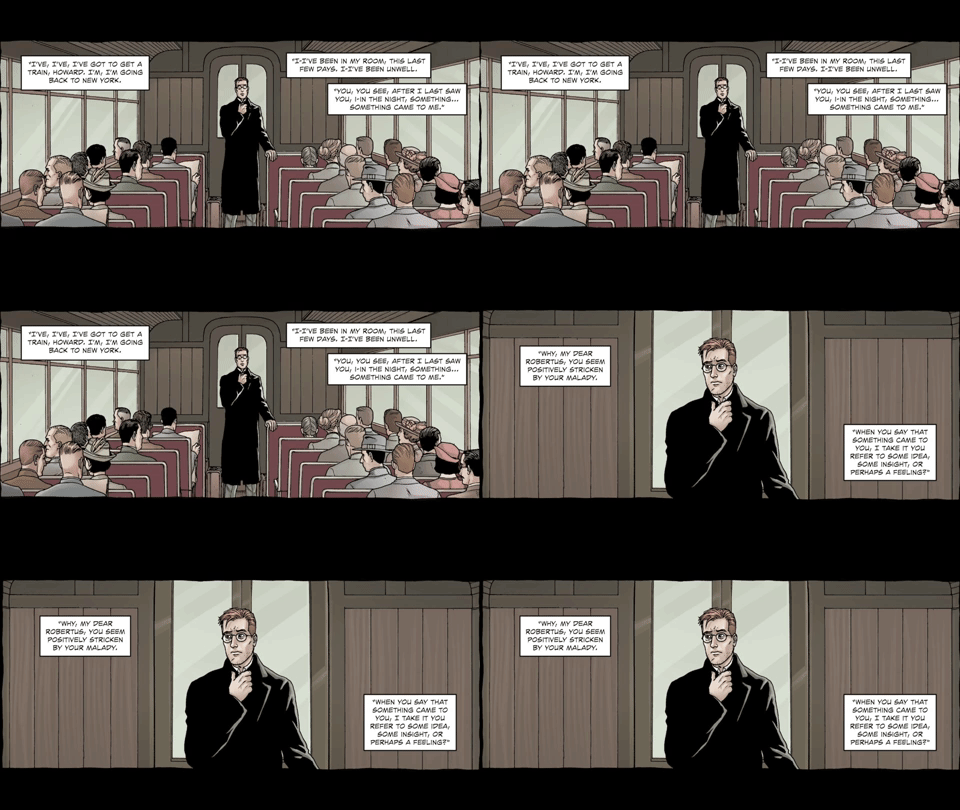
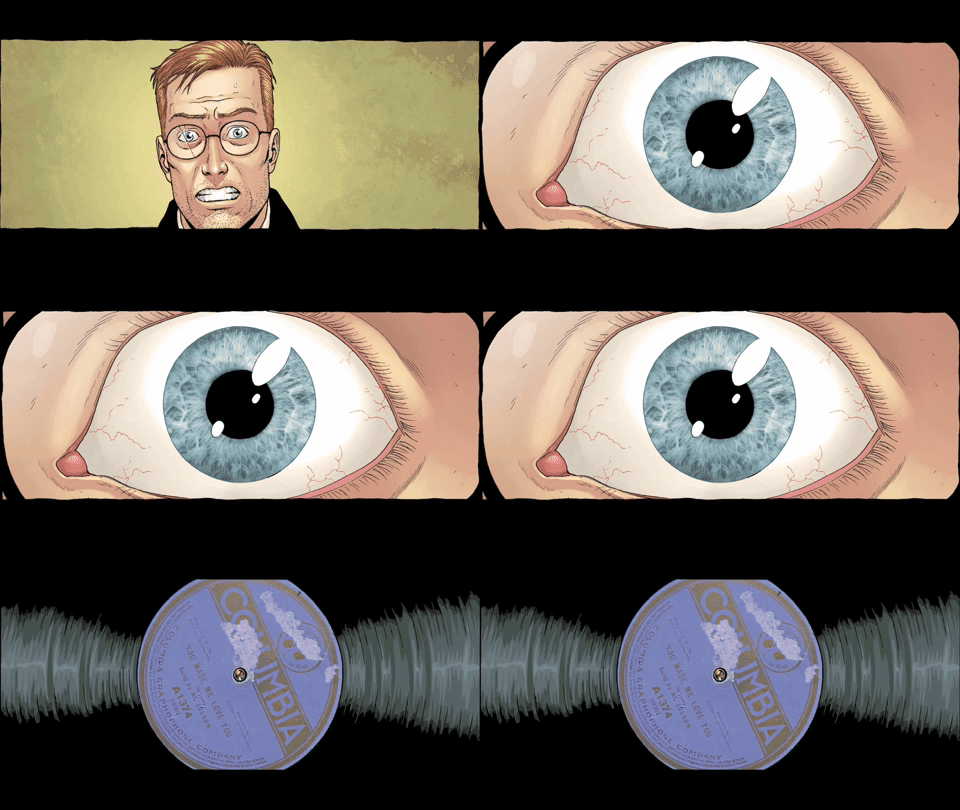
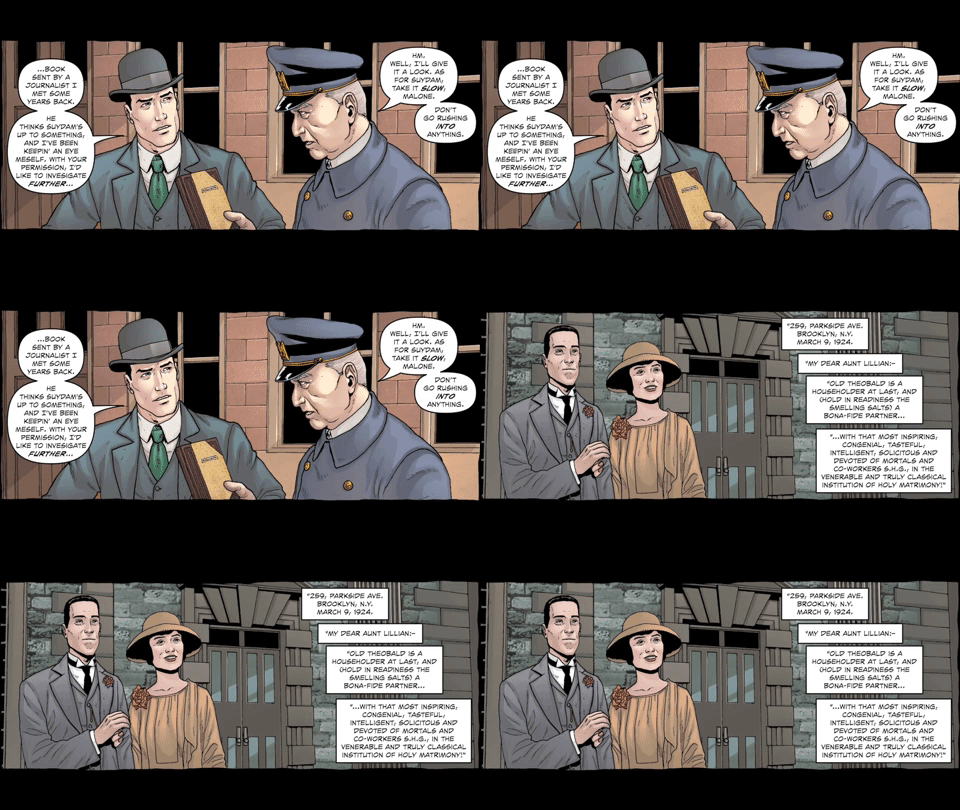
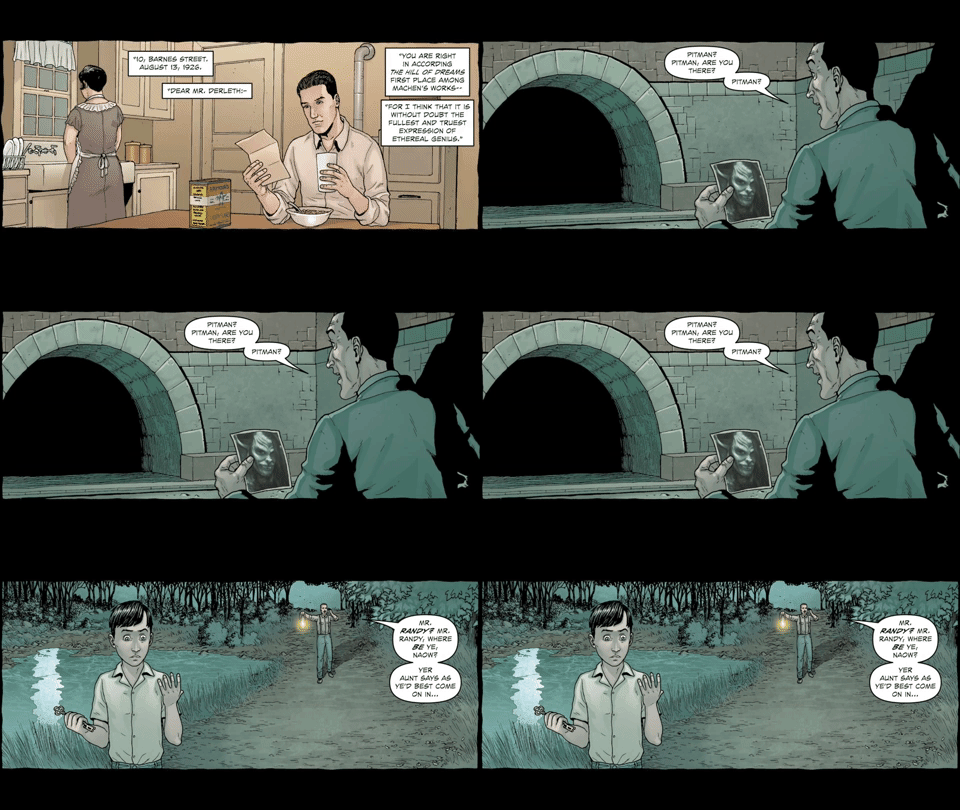
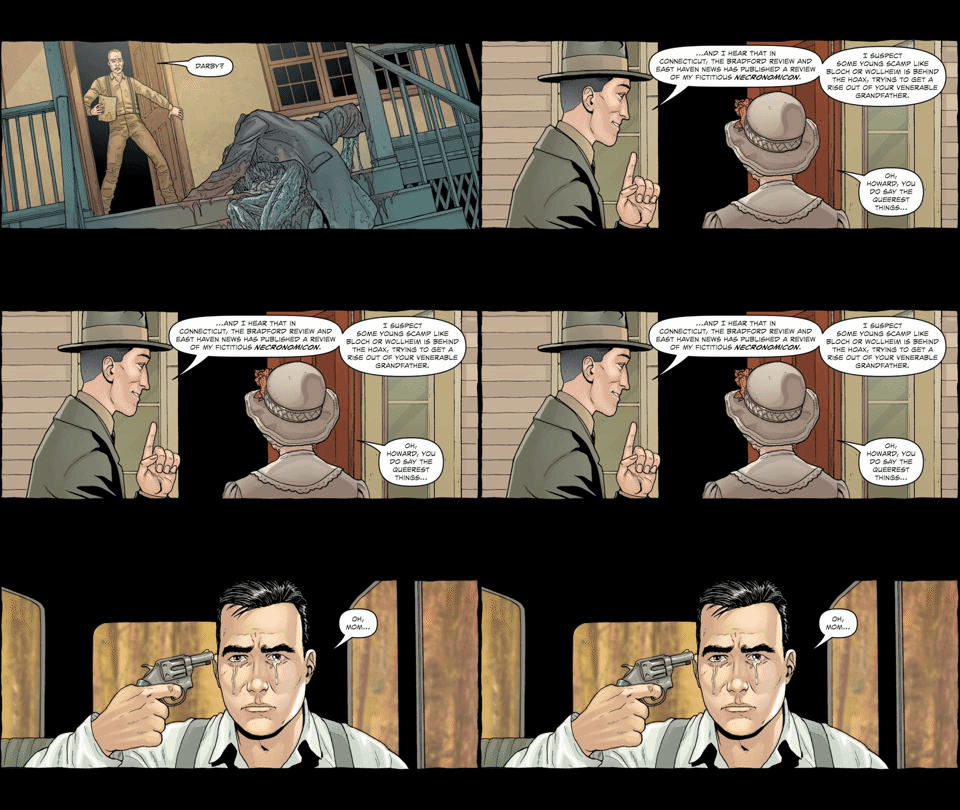
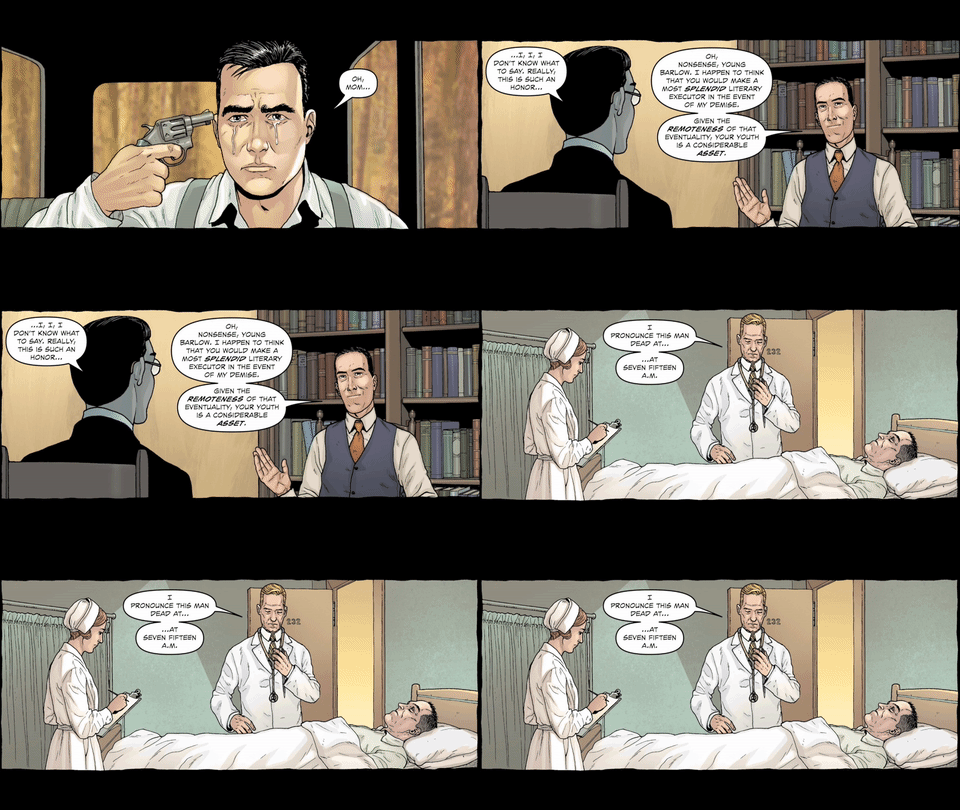
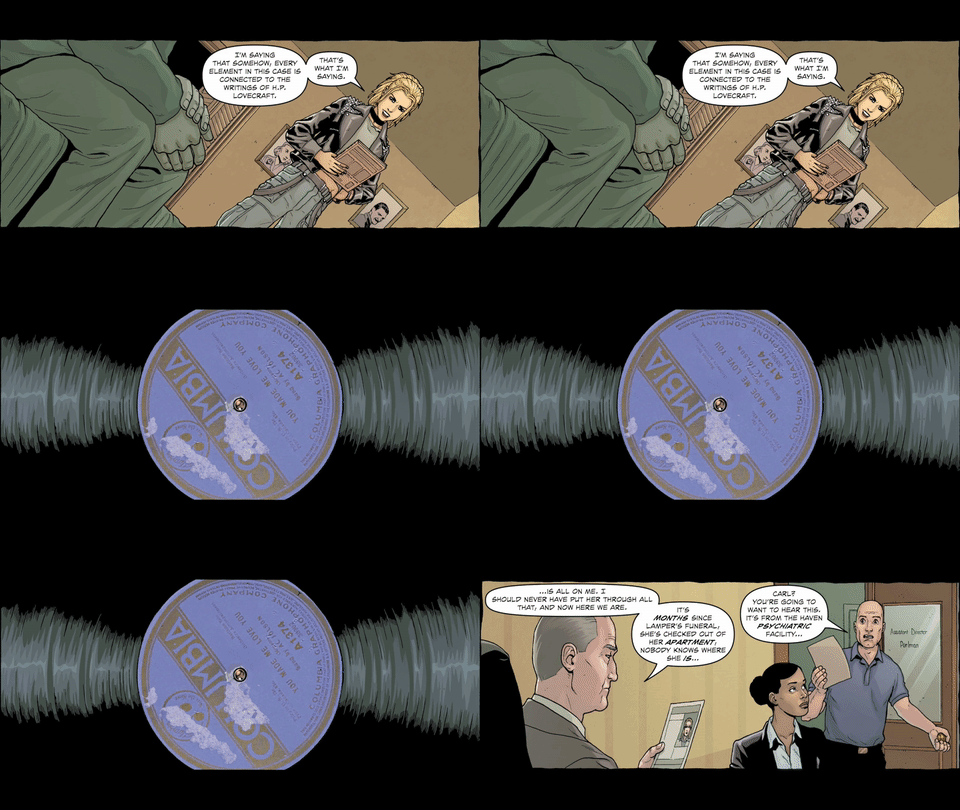
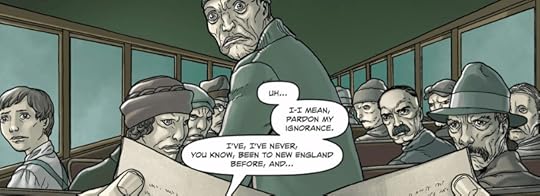
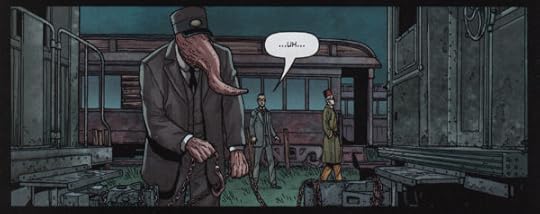
“Провидіння” є квінтесенцією творчості Алана Мура і новий, можливо недосяжний, стандарт переосмислення творів Г.Ф. Лавкрафта. І водночас це одна з найприскіпливіших робіт Мура, в якій майстерний письменник контролював кожну йоту історії та візуальної складової. Результатом став шедевр, подібний до його інших визначних творів – “Із Пекла”, “Вартові” та інщі.
У “Провидінні” Мур деконструює все надбання, концепції та міфи Лавкрафта, переосмислюючи його творчість у ретельно досліджених рамках американської історії. Провидіння є одночасно продовженням та приквелом Неономікону та починається в 1919 році у котлі расової та сексуальної нетерпимості, яка визначила ту епоху на східному узбережжі Америки, та бездоганно поєднує мітичні бачення Г.Ф.Л.
За графічну складову знову відповідає Джейсен Барровз, чия майстерність і деталізація рисунку допомагає нам зануритися у містичні події того часу, просякнуті потойбічними жахами та магією.
Українське колекційне видання “Провидіння” Алана Мура та Джейсена Барровза складається із трьох томів збільшеного формату, доповнених десятками сторінок додаткових ілюстрацій та альтернативних обкладинок.
Alan Moore is an English writer most famous for his influential work in comics, including the acclaimed graphic novels Watchmen, V for Vendetta and From Hell. He has also written a novel, Voice of the Fire, and performs "workings" (one-off performance art/spoken word pieces) with The Moon and Serpent Grand Egyptian Theatre of Marvels, some of which have been released on CD.
As a comics writer, Moore is notable for being one of the first writers to apply literary and formalist sensibilities to the mainstream of the medium. As well as including challenging subject matter and adult themes, he brings a wide range of influences to his work, from the literary–authors such as William S. Burroughs, Thomas Pynchon, Robert Anton Wilson and Iain Sinclair; New Wave science fiction writers such as Michael Moorcock; horror writers such as Clive Barker; to the cinematic–filmmakers such as Nicolas Roeg. Influences within comics include Will Eisner, Harvey Kurtzman, Jack Kirby and Bryan Talbot.
A masterpiece. And I mean the whole series, now completed, with a soul-crushing finish.
Providence is a 12 issue comics series, now being compiled into three hardcover books, and I expect eventually into one hardcover volume. Last year I said that the first book (first four issues) was the best comic I had read of 2016, and I am certain now that the entire series is among the best comics of 2017. Do I say this all the time? Nope. I have said something similar thus far twice previously this year, as of June 23, 2017, about Roughneck by Jeff Lemire and My Favorite Thing is Monsters, by Emil Ferris. My three favorite comics of the year, so far. Three texts that couldn’t be more different, and yet all excellent in their own ways. And epic in scope in their own ways.
In Providence the main character, Robert Black, is a young journalist hoping to turn novelist in 1919. It’s New England, it’s Lovecraft (meaning he is always commenting on Lovecraft stories and ideas), and it’s a specific time in American history. Black is both Jewish and gay. He keeps a Commonplace Book as he travels, researches, reads, recording ideas for stories, for plot, for themes, even as he experiences things. It’s a writer’s journal, the pages of which alternate with the comic itself. It’s a commentary on the events of the story we are reading, as with Watchmen where there are texts that parallel and comment on the main story. Black is also us, we are readers, we are learning to read the world.
Black is interested in (Moore’s fictional) Sous Le Monde, a story that he understands to have inspired The King in Yellow by Robert Chambers, an actual collection of horror stories that came out in 1895. Chambers claimed that when some people read his stories they went mad, some even committing suicide. Lovecraft read Chambers’s horror stories in 1927 and folded them into his Chthulu mythos. Sous Le Monde is, by the way, French for Underworld, a perfect place for horror. Yellow is in Chambers’s and Lovecraft’s mythos the color of horror. Oh, and in this volume Black’s lover Jonathan (Lillian is the cover name for him) commits suicide. Let’s just say it all goes downhill from there.
Providence is a horror comic work of literature that is an homage to H.P. Lovecraft’s world and works, taking place both within the world Lovecraft lived in and the worlds, the Chthulu mythos, he made in and through his texts. It is, like many of Moore’s works, intertextual, urging readers to read Lovecraft’s and others’s texts to understand his, to research what he has researched, to join him on his many-layered quest, into obscure secret societies, the horror writing of the late nineteenth century, the occult, in fact many of the things in Lovecraft that are central to his own understanding of the world. The whole thing is like so many of Moore’s works, incredibly ambitious, technically dizzying, disturbing, scary, and finally impressive, if a little overwhelming. It is better if you have read a bunch of Lovecraft, but you don’t have to to do be disturbed and freaked out by it. The art of Jacen Burrows is amazing. Refined, elegant, just really well done. And not for everyone. I will read it again, with the three volumes of Moore’s Neonomicon, when the hardcover of Providence comes out.
And so Alan Moore’s meandering and flummoxing mash note to HP Lovecraft, Providence, comes to an awkward, unsatisfying and confusing end in Act Three. Watch in dismay as Robert Black continues to tediously research his book on New England folklore until he doesn’t and then the world sort of ends! Oh my god, what a load of pretentious bollocks!
I really don’t understand the love for this series. But then I’m not an Alan Moore fanboy so perhaps therein lies the problem! There’s barely any story here. Black wanders a landscape filled with Lovecraft references before pointlessly meeting the writer himself and then basically disappears for no reason!
I’m not sure if anyone knows how HP Lovecraft actually spoke but Moore gives him the most wanky speaking style possible here, having him make grandiloquent exclamations and calling old people young and vice versa for no reason. “Why, my dear Robertus! Please be afforded ingress to my meagre sanctuary. I trust my young granddaughter here has not already wearied you with her girlish entreaties?” Gah - it’s so annoying!
When he’s not referencing Lovecraft’s stories Moore’s referencing his own as Providence links in with previous Lovecraftian comics The Courtyard and Neonomicon for the finale to no real effect (and, before some pedant chimes in, yes I know Alan Moore didn’t write The Courtyard comic, just the short story it was based on). I call it ineffective not just because reading them beforehand adds no greater understanding to this book but also because I have no idea what any of it meant or what he’s trying to say - Lovecraft was a messenger for otherworldly creatures whose work was misunderstood as fiction? Ok, so what? Moore is far too cryptic and inaccessible making it impossible to care about anything happening here. It’s not even entertaining to enjoy on a surface level.
Jacen Burrows’ art is excellent though. The layouts are appealing, the linework is very skilful, and I liked how he took advantage of the wide panels to throw in sneaky background details and heighten the atmospheric weirdness. I’ve always found artists’ interpretations of Lovecraft’s work far more compelling than the original stories they’re inspired by and Burrows’ visuals here are vastly more fascinating and creepy than anything I’ve read by the author himself.
Though I’m disappointed with them more often than not, I’ll always be drawn to Lovecraftian comics like Providence because I love horror and I would like to see the vast potential in his stories realised if someone who can write came along to reinterpret Lovecraft’s work. As it is, while it started well enough, the series failed to develop into something coherent or interesting. Outside of the Lovecraft and Moore fandoms, Providence definitely isn’t worth bothering with - a very overrated comic with its head stuck firmly up its bum!
The thing is, I feel like that I don't deserve to review this high-caliber literary piece. Alan Moore has once again truly crafted a haunting and genuinely good story in graphic medium. Providence may not be a comics for all readers, but reading this from start to end is definitely an experience which is both grotesquely unique and horrifyingly beautiful.
Providence Act 3 concludes Robert Black's excursion in search of the occult and mystical, in the end discovering way, way more than what he could handle. Without really spoiling too much, I can say that the last act leads to a deliverance from the waking world, revolving around an abundant number of Lovecraftian elements.
Reading Providence is a truly unique experience.
There is a significant number of pages where my mind really meanders away from the main material, partly because I cannot comprehend both the dialogue and lore and partly because I want to experience more of the subtle horror that surrounds our (naive) main character. Yes, there are parts of this graphic novel that I find hard to understand, but thanks to expositions and the Alan Moore trademark afternotes, Providence has slowly found a way to creep into my veins and thought.
For maximum delight and complete experience especially in the last chapter, I advise that you read Alan Moore's The Courtyard and Neonomicon first, then Providence. These titles are definitely a good addition to your bookshelf.
Jacen Burrows deserves a round of applause too. His artistic knack for use of subdued colors, wild abstractions and shiny gore makes Burrows a perfect partner of Moore in this genre of horror. I hope this guy draws stories of other stellar writers like Jason Aaron, Scott Snyder and Rick Remender.
Providence is a must-read for Alan Moore fans or H.P. Lovecraft aficionados. This guy may have its ups and downs in the world of graphic literature, but this certainly is one of his many home runs.
Damn you, Alan Moore! Some parts of this shall remain with me forever, in my dreams and nightmares.
This is just the Watchmen of all horror graphic novels, Jacen Barrows is Steve Dillon reborn and that ending "In the Mouth of Madness" style was just a blast lefting me speechless.
An hell of a ride and now I really have to re-read all 3 volumes together with Neonomicon as soon as possible.
A must read for all fans of H. P. Lovecraft and the Cthulhu Mythos.
Alan Moore’s graphic novel series Providence is, it turns out in Act 3, both a prequel and a sequel to his graphic novel “Neonomicon”.
Both an overview of H.P. Lovecraft’s work and a cosmic horror story in its own right, “Providence” tells the story of Robert Black, a journalist who uncovers a secret history of the United States in his travels throughout New England, one that he realizes—-too little, too late—-will have untold consequences for the future of humanity on Earth. Unless, of course, he can stop it all before the End of Everything.
Tying together loose ends and answering unanswered questions from “Neonomicon”, the third and final volume of Providence is a brilliant, terrifying, and subtly beautiful examination of the nightmarish qualities and otherworldly uniqueness of Lovecraft’s writings.
Throughout the series, Moore has cleverly included references to many of the authors and works that inspired Lovecraft himself—-including Edgar Allan Poe, Robert Chambers, and Lord Dunsany—as well as the authors who he later inspired—-such as Robert Howard and August Derleth. He even, humorously, incorporates S. T. Joshi (the contemporary preeminent Lovecraft scholar) as a character within the story.
Moore is highly critical of Lovecraft’s work and philosophies, and rightly so (Lovecraft was a virulent racist and misogynist, and his prose style was seriously lacking), but he appreciates the impact that Lovecraft has had on the modern horror genre and the wonderfully weird concepts that abound in his stories.
This is a terrific graphic novel series for any fan of Lovecraft.
Providence is definitely a beautiful piece of work, it is strikingly detailed and I'm sure makes perfect sense in insane universe of Cthulhu Mythos reimagined by Moore and Burrows. It also brilliantly works as an illustrated guidebook for the literary New England and it has the cutest and really precise depiction H.P.Lovecraft himself. But lord is it wordy and dreary! What we get basically is the pictorial summary of Lovecraft's essential works merged with the closure for Neonomicon comic in the last couple of issues (no endless pornography here, though). As a fan of the former and a hater of the latter, I didn't enjoy most of it. One cannot but admit the amount of work done by authors; still UNGODLY WORDY! Couldn't stop thinking of my favourite comic about H.P. I like to call it "The Sandwich Horror".
El trabajo que realiza Moore en esta obra es fantástico, pero no le cae la quinta estrella por algunos motivos que creo importantes. Primero que es una obra que no se puede disfrutar sin ser conocedor de las historias de Lovecraft. No es que no la disfrutes en su totalidad, es que considero que sin tener ni idea de la mitología Lovecraftiana tiene que ser una historia caótica y a ratos aburrida. Echo en falta unos apéndices finales para ayudar a encajar todas las piezas que ha utilizado el autor, como si que pasa en From Hell, por ejemplo.
Me siento culpable de haberle dado solo 4 estrellas a los dos volúmenes anteriores. Toda la obra merece 5 estrellas.
Apoteósica conclusión de toda la cosmogonía Lovecraftiana.
Llevando todo a sus últimas consecuencias... Y transformando la realidad para siempre.
(Mención especial para un momento específico en el capítulo 9, cuando Lovecraft visita a su mamá en el psiquiátrico... Sentí horrible... Dolor por alguien que conoces y quieres y está sufriendo...)
I liked the final act, but probably not as much as I should have. I know it ties into The Courtyard and Neomomicon, but really it just got so weird and far out I got a little lost. The world is thrust into a Lovecraftian apocalypse when all manner of creatures and elder gods show up in modern times. This volume does leap ahead from 1919 to now, and I think something was lost in the fast jump cut.
Overall not bad, I suppose this was meant to be one of those dark endings you sometimes see in horror, but it just wasn't what I was expecting after all the build up. Then again, if it had been what I expected I suppose that would have made it predictable.
Overall this was a real treat for Lovecraft fans (or even non-fans just familiar with his work) and the art was superb. Jacen Burrows is incredibly underrated as an artist.
If you have any interest in Lovecraft, really positive or negative, you should read this series.
For the most part, Providence Act 3 is a vastly superior book to its predecessor. Yes, we continue to get the Lovecraftian homages, here "From Beyond" (#9) and "The Whisperer in Darkness" (#10). But Moore finally goes beyond that, creating some interesting narratives of the sort that we've been waiting two books for.
First, we get the introduction of Lovecraft as a character, which brings in interesting metatextuality, both in how Lovecraft got the ideas for his stories and for the part he places in them.
Second, we get a great timelag in the last two issues that paints Robert Black's story onto a much larger canvas.
Unfortunately, this volume continues to have big problems too. The horrible, unreadable text dumps fortunately end with #10, but then the rest of Providence turns out to be a sequel to ... some other comic (Neonomicon, as it happens, which I'd avoided because of its graphic rapey-rapeyness). So, don't expect those issues to make full sense.
Which is a pretty crappy end to an extensive 12-issue series.
El mayor problema de este cómic es que la experiencia de alguien que conozca la obra del genio de Providence es muy distinta a la de alguien que no. En el primer caso, es una experiencia casi religiosa. En el otro, puede ser frustrante, pesada e insatisfactoria.
Con Watchmen, el autor buscaba reinventar una narrativa infravalorada como era la de los cómics de superhéroes. En Providence, no solo ha conseguido hacer lo mismo con la ficción weird de Lovecraft, sino que ha alcanzado otros niveles. La complejidad milimétrica de la obra es tan enfermiza que se siente orgánica. El grado de horror supera al que pensaba que era su culmen en Neonomicón. La documentación que hay detrás, y como se adapta a las diversas tramas, es sublime. En cada viñeta, la "dirección" de las escenas y los diálogos funcionan como dos relojes perfectamente sincronizados. Me suele ser difícil decir lo siguiente, pero...
En su deambular por Nueva Inglaterra Moore introduce por fin a Lovecraft y termina de cerrar la conexión entre Providence y los mitos. Fiel a su modus operandi, ata cada retazo e invita a una relectura para que los más olvidadizos y menos observadores descubramos los pequeños detalles sepultados por la mala memoria y el tiempo pasado entre la lectura de cada tomo. El rush final, que además conecta la historia con Neonomicón, realza el sentido hipersticioso de los relatos de Lovecraft y profundiza en el carácter metamítico de Providence. También es cierto que, más allá del frenético y caleidoscópico penúltimo acto, muchas veces éste es un tebeo de gente hablando y hablando y hablando sin narrar demasiado. Pero esta nueva recreación de la cultura popular me ha merecido la pena.
Amazing! I really didn't know how they'd make it to portray the unspeakable horrors of Lovecraft in the page--I seem to remember HPL often describing things as "indescribable", a nice cop-out that doesn't work on comic books--and it didn't disappoint at all. The first two issues escalate the terror in the same way the previous ones have done--here, Robert's common book is key, more meta than ever. I truly loved this thorough the series, how Robert Black describes the workings of a horror story while unknowingly becoming the centre of one and checking all of the boxes himself. It does make him appear sort of clueless half the time, until you understand that this is his way to cope with all of this. Until he cannot do it any more. The third issue I wouldn't have understood (or I would have missed more than half the nuances and secret nods) without https://factsprovidence.wordpress.com/. And then the four issue is the one that delivers, the one you need to have read Neonomicon for, and the one that brings it all together. They truly pulled it off: the dream-like horror of the Lovecraft universe is increased by the simple fact that humans stop perceiving things as weird, and accept them as they are. How this makes everything worse, I don't know, but it definitely does.
Well, Alan Moore’s Lovecraft epic did improve. But I’m still unconvinced it needed 12 lengthy issues. There really was an awful lot of the protagonist, who to me was always Nice Lovecraft*, wandering around New England getting into vaguely Cthulhoid scrapes he didn’t entirely grasp. A friend pointed out the comic overtones to much of it, and yes, at times it could get a bit ‘Oh no! Nyarlathotep is coming round for tea and a Deep One’s just eaten my trousers!’…but while Jacen Burrows' art is definitely reminiscent of Steve Dillon’s, he’s seldom shown Dillon’s knack for getting a laugh. And then after each of the first ten issues, you’d get the backmatter, which with one entertaining exception would be Nice Lovecraft’s diary wherein he hammered home the point of the story by recounting his own partial understanding of events, changed a few names of guys he’d fancied to emphasise that it was a bad time for being gay, and then came up with a few sketchy ideas for what we know as Cthulhu Mythos stories subsequently to be written by Actual Lovecraft, whom he eventually meets. Oh, and all of the Mythos elements had the serial numbers filed off, which I know is standard in comics when you want a Superman analogue or whatever, but makes less sense with public domain stuff like the Necronomicon and such; the final issue went some way to explaining this (after all, the place names are different in our world and Lovecraft’s fictional one too), but even then, wasn’t the whole point of the weird elements that they’re survivals from the other pole of the world, from when what now seems real was dream and vice versa**? Now sure, there were a few nicely creepy scenes along the way, but I kept running into the same problem: why? What’s the point of all this? The penultimate issue finally moved things up a gear and started to give us an answer with a vertiginous recap of the 20th century. It made for genuinely queasy reading, like zooming through the same phantasmagoric fairground ride over again, seeing how deeply Lovecraft had ended up woven into the culture, and made me hope for a similarly powerful finale. Which I suppose we sort of got, but as much as anything the last issue seemed to be about tying a nice bow on to the previous Moore/Burrows Lovecraft riffs, The Courtyard and Neonomicon, and spelling out what had mostly worked fine when left implicit there. I’m quite prepared to admit that I may be missing some extra level which a reread would bring out, but there are plenty of other Moore comics I’m keener to reread than Providence, so for now I’ll simply have to admit that most of it wasn’t quite my thing.
*The name ‘Robert Black’, then. Some of the other names, like Joshi, were deliberate nods to figures in HPL’s orbit. But this…it’s too far from Robert Bloch, and Bloch is too marginal to the Mythos, to quite work as a reference. Yet at the same time, they’re close enough to be an awkward distraction if they’re not one. Combine that with my general name-weakness and Nice Lovecraft he remains. **And does this in turn mean that once the stars are right and the Old Ones have returned, in the sunken cities of the Deep Ones and the cold expanses of Yuggoth, they’ll be haunted by stories of ‘hardworking families’ and ‘Tesco’?
A mostly excellent, mind-bending conclusion to an otherwise slow-burn series. Finally all the little pieces (with a few exceptions) start to gel together, driving poor, hapless Robert Black towards his weird, Lovecraftian fate, whether he likes it or not.
As with a lot of Alan Moore's recent work, this becomes deeply meta by its conclusion, which I count as a plus in this case. As Providence has essentially acted as a giant, story-driven piece of Lovecraft criticism, seeing all of its ideas and propositions about the nature of dreams and fiction and fandom grow into a giant, visual metaphor felt very satisfying. While this series has frequently seemed plodding and like not much was happening, this volume really hammers home that a lot was actually going on the whole time (particularly in regards to the Commonplace Book entries at the end of each chapter, which I'm now glad I didn't skip, despite their density).
That said, this finale isn't perfect. For starters, you absolutely must read Neonomicon before this. That book can be upsetting and exploitative, but truly you will not understand anything going on by the end of this book if you haven't also read that one. I do think it's worth it to check it out, as well.
And a bigger problem is just the lack of finality in regards to certain characters, particularly Robert Black, the main protagonist for the previous 8 chapters. While this volume does technically conclude his journey, it does so in a way that I felt abandoned him as a character, using him more as a plot device than an actual human being. And while I do appreciate Moore's larger point he's making, I don't think he had to sacrifice Black's character arc in the process. After reading seemingly 10 million pages of Black's Commonplace Book entries, I felt like I knew him very well, and I wanted a more satisfying end to his story. Maybe that's not what Lovecraft would've done, but who cares? Lovecraft isn't writing this book, he's a character in it.
In the grand scheme of things, though, I'm very glad I read this series. I'm not a massive Lovecraft head, and I still enjoyed all the subtle nods and the feeling of interconnectedness Moore crafted throughout Providence. If you're a fan of ethereal horror at all, I really recommend this. It's weird and scary while simultaneously having a lot to say, and that feels pretty rare in comics lately.
Chegamos à parte final desta saga de Alan Moore e Jacen Burrows que homenageia a obra de H. P. Lovecraft. Das três partes que compõem os volumes publicados aqui pela Panini Comics, este é o volume com menos sustos, suspenses e bizarrices. Ao menos foi o que para mim pareceu. O que menos me causou impacto. Isso também porque as obras de Alan Moore em quadrinhos cada vez têm se tornado mais herméticas a ponto de exigir que o leitor entenda todas as referências obscuras que ele usa para bem usufruir de suas obras em quadrinhos. Assim, este terceiro volume contém uma miríade assombrosa de referências. Eu, que li algumas obras de Lovecraft consegui captar algumas, muitas estão lá, mas me passam. Nesse volume, o protagonista Robert Black se encontra não apenas com H. P. Lovecraft em Providence, mas com Robert Chambers, autor de O Rei de Amarelo, e Robert E. Howard, criador de Conan, para citar pouquíssimas, mas as maiores referências neste volume. O que poderia colaborar com nossa interpretação enquanto leitores seria um trabalho editorial minucioso e dedicado por parte da Panini, com a confecção de notas explicativas. Contudo, esse é um tipo de trabalho que a Panini não se dá e nem se dispõe a pagar por ele. Assim, metade da graça de ler Providence, para um leitor não familiarizado com as obras lovecraftianas se perde.
"If I'm reading this right, our dreams and our world are two extremes of a bi-polar reality, that can flip from one state to the other. It shifted in our favour aeons ago, commencing human history. Ever since, interests from the displaced reality have tried to shift it back." "S-So... our dreams are a vanquished country, and it's trying to overthrow us?"
So, I didn't realize that Providence was a sequel prequel to Neonomicon , instead of just a prequel. This book makes no sense whatsoever without the other one, so I stopped and read that. And then I wondered why the hell Moore didn't just leave it alone at the one book. Because really Robert Black's long meander through his final days is totally superfluous and fatuous. Also, the cosmic horror apparently really does come down to sex, which makes Moore seem prude and vaguely homophobic. Would not read again.
A magnificent work of recursive horror, examining the Cthulhu mythos as massive a condition, as any religion. It is also very entertaining as a work of fiction, alone...
Goddamn. This might be Alan Moore's greatest work, which is saying something from the author of From Hell, Killing Joke, League of Extraordinary Gentleman, and Watchmen. Especially considering the Neonomicon.
I only tolerated Neonomicon because I already had Providence 1 & 2 volumes under my belt, but even so, you see why Grant Morrison said: “We know Alan Moore isn’t a misogynist but fuck, he’s obsessed with rape.”--because there is a LOT of rape in Neonomicon, like a third of the book, and I still think that the pages (so many pages) lingered a bit too long on that. And there's no real looking away in Neonomicon--you have Nazi cop and a 40 lb box of rape, so I do ultimately agree with this review: http://www.comicbookgrrrl.com/2011/12...
Especially what she says here: "The rape scene in Neonomicon is disgusting, debased and horrifying. To call it a "scene" is misleading; the horror goes on for pages and pages. Brears is reduced to a thing, merely there for the occultists pleasure, and by proxy, for the readers pleasure too. It's women in comics taken to the ultimate level, showing exactly how women in comics are regarded by other characters (and perhaps readers), and pointers are even left for readers to latch on to and in some way excuse the horrific assault. She's a recovering sex-addict; she cooperates with her rapist in order to escape; she doesn't seem overly traumatised afterwards; it's almost as if every bit of rape apologism is being thrown in there alongside the rape itself, daring people to try and excuse it.
This comic is sick and wrong and horrible, and you are supposed to feel ill reading it. There's no softening here, no letting the reader look away. This is what happens to women in comics – they are viewed, they are used, and they are punished."
It's still a bit complicated with the final volume of Providence, since this wraps up what happened in 1919 and then returns to the present day of Neonomicon, and what happens after that rape, and I think it's still somewhat fucked up in how it handles that, but at least the aftershocks still reverberate--it's a minor/major plot point. The rape ultimately doesn't matter so much, because the FBI agent doesn't care--her mind is almost gone, totally influenced by the creature growing within her but while she might not care, well it involves everybody else since helloooo end of the world with her baby. However, the end of Providence almost redeems Neonomicon, because it's not entirely gratuitous anymore and if I hadn't read Neonomicon then very little of the final half of Providence would make sense.
Super recommend reading Providence 1 & 2, then Neonomicon, and then Providence 3 (I didn't intend that order, since Neonomicon came out first, but I'm very glad I did because I would have given up on this series entirely and you don't lose anything by saving it for 3rd). What does bother me is how basically every panel is a jewel, and I hope the artist Jacen Burrows illustrates everything Moore writes from here on out, because the artwork is jawdropping at parts and simply perfect--there are layers and layers of illusions and references in panels, the cursive diary entries are amazing--vast amounts of genius stuffed into each page--which makes me begrudge the multitude of rape scenes in Neonomicon because it took up space that could have been used to flesh out the other stuff happening in the background.
Setting aside all of the above complications though--and I'm probably not selling this book very well--this is a masterpiece and one of the best comics I have ever read. We've been following the VERY clueless writer Robert Black as he researches the Stella Sapiente cult, which came to the U.S. in 1652, going to various New England towns (Athol, Salem, Manchester, Boston), and FINALLY realizes just what he has gotten himself into (and yeah, rape features somewhat into his awakening, though he's alllllmost repressed that memory). When Black does finally put the pieces together (and this series is great in showing just how much he misses and how much he understands), the payoff is completely worth it.
Thumbs up for the website above--because when I finished this--there were a few panels I had no clue what was happening, so found the perfect annotation connection Borges and Burroughs and innumerable references in the final two issues that I puzzled over.
(Zero spoiler review) 3.75/5 So, another Alan Moore story experienced, and the list of his titles I haven't read grows ever thinner. That said, for all the mastery of the craft Moore has at his disposal, this isn't one I'll list amongst his absolute best. And whilst this one did come through at a clutch and pull something commendable out in the end, before that point, the same old formula evidenced throughout each previous issue of new character, new location, dialogue info dump, move on had well and truly grown stale. Because it's Moore, and the man is an undoubted pro, even his lesser works still consume and defecate the vast majority of the competition, but heavy lies the crown, and Moore's crown is the heaviest out there. No, I still couldn't bring myself to read the dozens of pages of prose sprinkled between the comics. Perhaps I'll return to it one day, although given how ponderous the story proper could be, I can't see myself lining up for hours more of it. This slight tendency towards navel gazing is a little too prominent here, and takes a great six issue story, drags it out and waters it down a touch too much for my liking. Look at The Neoomicon as an example, even though that story follows a far more traditional narrative structure. Providence would have made for a better read had it leant closer to The Neonomicon. And whilst I couldn't claim to be head over heels with Burrows' art, Providence is absolutely the best I've seen from him, with the final issue really showing the man's undoubted talent. Still think the Avatar washed out, muddy colour style doesn't help him any, though. It's (often) excruciatingly slow burn and unconventional style of horror won't be to everyone's liking, although as with all of Moore's works, should undoubtedly be experienced at some point, but definitely doesn't crack the top five and I really hoped it would. 3.75/5
Interesting, but not nearly as good as it should have been. Moore's pastiche of Lovecraftian references doesn't really add up to much, ultimately. Where volumes like The Courtyard and Neonomicon were actually weird and otherworldly and scary, this one just sort of peters out. Kind of a 'meh conclusion to the ultimate apocalypse.
the poor protagonist travels to and flees from setting to setting, his reality unraveling as interlopers From Beyond manipulate his goals. he shall hook up with a surprisingly fetching Charles Dexter Ward, but sadly such exercise shall only serve to inspire the Haunter of the Dark to come a'calling. all's well that end's well as our hero ends it all and our world ends as well, as Moore concludes his Neonomicon and the history of human life itself. Happy 1st Birthday, baby Cthulhu! 'Tis the dawning of the Age of Aquarius...
Things wrap up in this one and I wish it was more satisfying. It leads into both THE COURTYARD and NEONOMICON, and I wish I had read those more recently to better appreciate this. That said, it's still good stuff, it just didn't wow me as much as I hoped. Could be high expectations. It did convince me that I really have to dive into HP Lovecraft and read the work that's inspired all this stuff.
Esta serie completa la reinterpretación de los Mitos de Cthulhu de los autores: los diez primeros números (en la edición americana original) son un prólogo a Alan Moore's The Courtyard y los dos últimos un epílogo a Neonomicon. Quien quisiera un arco argumental cerrado podría terminar la lectura en el décimo porque incluir los dos últimos bajo el epígrafe Providence parece una decisión editorial. Si bien es cierto que aparecen personajes exclusivos de las andanzas de Robert Black por Nueva Inglaterra en 1919, también lo es que aparecen otros de las otras obras mencionadas, que ocurren en los tiempos actuales.
En definitiva, todo es confuso si no se leen las tres obras, ya sea en orden lógico o en el de publicación.
El estilo del dibujo de Burrows me gusta mucho y me recuerda al de Steve Dillon, que me marcó en Preacher. Y Moore sigue siendo uno de mis guionistas preferidos, pero tiene una fijación con el sexo desde que publicó Lost Girls y me produce rechazo cultural porque opino que, en este caso, las escenas sexuales son gratuitas la mayoría del tiempo.
Pero hablemos de Panini Comics: publica una edición maravillosa en tapa dura y papel satinado grueso sin revisar el producto final. Los dos primeros tomos tienen bocadillos y otros textos en italiano porque no han pegado encima la traducción al castellano; el primero está en la primera página de la obra y desluce mucho.
Por otra parte, hay malas decisiones de traducción desde el inglés. Durante gran parte de la obra se hacen juegos de palabras entre el nombre del periódico para el que trabaja el protagonista y el rol que desempeña en la historia, que solo tienen sentido si ambos vocablos están en el mismo idioma. ¿Y qué decisión se toma? ¡Dejar uno en inglés y otro en castellano! Quiero achacarla a que, probablemente, la persona encargada de la traducción solo tenía el texto en bruto y nada del contexto, tal y como se traducen los subtítulos de los videojuegos (con el resultado conocido).
Finalmente, tras cada uno de los diez números originales hay varias páginas del diario del protagonista con sus reflexiones sobre lo vivido. Para hacerlas realistas, la tipografía imita la escritura a mano, pero nadie revisó si incluía todos los caracteres necesarios para el texto traducido (la respuesta es no), así que cuando tocarían los que no forman parte de la tipografía nos encontramos huecos en blanco donde debería aparecer una letra escrita a mano.
Por todas estas razones, recomiendo que adquieran o lean esta obra en la edición original, porque como está muy bien pero Panini tuvo demasiada prisa y poco mimo.
I find myself still a bit haunted by the finale to Alan Moore's spectacular trilogy, "Providence". In this third part we get plunged not only back into the chaos of our protagonist's head, we get slammed down into the fantasy lands dreamed up by HP Lovecraft after taking what, in retrospect, was a leisurely stroll, with some ass-fucking detours, through Providence, talking amiably with our deluded, bigoted, eccentric writer of great horror tales, Howard Lovecraft in all his very-grey flesh. The words Moore chooses to insert in Lovecraft's mouth feel so true and authentic that I felt as if I needed to search through the collections of Lovecraft's prose and letters to be convinced that they were indeed lifted from words he'd written or spoke, but in the end, it does not matter. This is a magnificent undertaking that was pulled off with immense imagination and skill. Where other writers would devote the last act to wrapping things up so what we read makes some sort of sense, or simply ending it the way Lovecraft would, with a man going insane or developing a condition that will lead to death - and sure, the latter may be somewhat true, but what Moore does with this traditional Lovecraft ending is breathtaking, and with the help of Jacen Burrow's demented and beautiful artwork, the reader truly lands in a new realm that's rendered to feel as if we've entered some sort of eternal coma/Disneyland with Lovecraft's works replacing Mickey and co. Alan Moore loves his intertextual allusions and fun, and this book is no exception: putting aside Lovecraft, in the journal entries, Moore writes just as well as Thomas Ligotti on what makes a horror story work and what makes it crumble. Throughout these journal entries we are treated to musings on consciousness, death, writing, madness, imagination, creativity, and the list goes on. The way this series has been presented has been nothing short of a treat and I have to thank Moore for once again dragging me into a world I'll never forget and can't imagine having lived without.
A truly incredible and thought-provoking read. Docked it a star because the climax is...puzzling...in structure, as befits a reconfiguring of the Lovecraft mythos, but...still. Mind-bending, twisting, and widening.
And for all its focus on mystery and horror, this is, as so often is the case with Alan Moore, a story about story. About the way words are a kind of magic that reshapes the world. It's not a new notion, but Moore's take is less...touchy-feely than the usual treatment. If words can change the world for the better, they can surely change it for the worse, too. It's a difficult notion to contemplate, but one that's hard to argue with once we're willing to ascribe positive power to them.
While Neonomicon was still a reasonably accessible, exciting but grotesque comic, the following 'Providence' is much harder to grasp, extremely ambitious (even for someone like Alan Moore). The three hardcovers (12 issues) demand a lot from the reader. I could read for more than an hour in most issues, mainly because of the written pages. The fact that I am not a connoisseur of both the work and the life of H.P. Lovecraft makes it all harder to digest, especially since practically every page is full of references to the work/life of HPL. I have been under the spell of Providence for over two weeks, even though I didn't understand everything. This is probably the "hardest" comic I've ever read. Nothing but admiration for Jacen Burrows' artwork!!!! This must have been an extreme challenge and he passed this with flying colors.
Tal vez le puede a Moore el ansia de querer cuadrar el círculo en este acto final, al que se asoman no pocos de los grandes mitos de los ciclos lovecraftianos, y donde se palpa el ansia por ofrecer una respuesta en la que quepa todo, incluso el porqué de nuestra fascinación por los Mitos desde su propia concepción. La empresa era grande, y el resultado tan extraordinario como personal. Nunca le pedimos menos a Moore, ¿verdad? Encaje o no el resultado en los esquemas preconcebidos que cada uno pudiéramos tener sobre los Mitos, creo que es indiscutible el carácter emancipador, renovador y revulsivo de Providence como nueva piedra angular de unos Ciclos que, casi desde el principio, se negaron a ser propiedad de nadie.



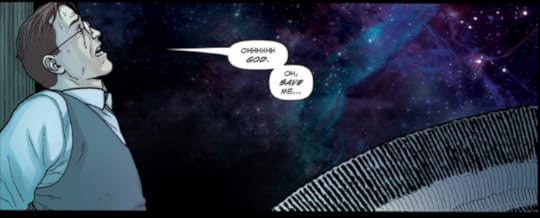 Reading Providence is a truly unique experience.