

What do you think?

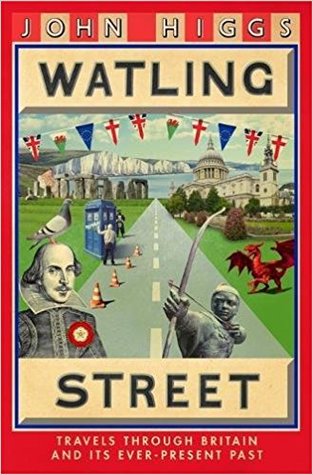
Watling Street: Travels Through Britain and Its Ever-Present Past
A journey along one of Britain's oldest roads, from Dover to Anglesey, in search of the hidden history that makes us who we are today.
Long ago a path was created by the passage of feet tramping through endless forests. Gradually that path became a track, and the track became a road. It connected the White Cliffs of Dover to the Druid groves of the Welsh island of Anglesey, across a land that was first called Albion then Britain, Mercia and eventually England and Wales. Armies from Rome arrived and straightened this 444 kilometres of meandering track, which in the Dark Ages gained the name Watling Street. Today, this ancient road goes by many different names: the A2, the A5 and the M6 Toll. It is a palimpsest that is always being rewritten.
Watling Street is a road of witches and ghosts, of queens and highwaymen, of history and myth, of Chaucer, Dickens and James Bond. Along this route Boudicca met her end, the Battle of Bosworth changed royal history, Bletchley Park code breakers cracked Nazi transmissions and Capability Brown remodelled the English landscape.
The myriad people who use this road every day might think it unremarkable, but, as John Higgs shows, it hides its secrets in plain sight. Watling Street is not just the story of a route across our island, but an acutely observed, unexpected exploration of Britain and who we are today, told with wit and flair, and an unerring eye for the curious and surprising.
Long ago a path was created by the passage of feet tramping through endless forests. Gradually that path became a track, and the track became a road. It connected the White Cliffs of Dover to the Druid groves of the Welsh island of Anglesey, across a land that was first called Albion then Britain, Mercia and eventually England and Wales. Armies from Rome arrived and straightened this 444 kilometres of meandering track, which in the Dark Ages gained the name Watling Street. Today, this ancient road goes by many different names: the A2, the A5 and the M6 Toll. It is a palimpsest that is always being rewritten.
Watling Street is a road of witches and ghosts, of queens and highwaymen, of history and myth, of Chaucer, Dickens and James Bond. Along this route Boudicca met her end, the Battle of Bosworth changed royal history, Bletchley Park code breakers cracked Nazi transmissions and Capability Brown remodelled the English landscape.
The myriad people who use this road every day might think it unremarkable, but, as John Higgs shows, it hides its secrets in plain sight. Watling Street is not just the story of a route across our island, but an acutely observed, unexpected exploration of Britain and who we are today, told with wit and flair, and an unerring eye for the curious and surprising.
372 pages, Hardcover
Published July 13, 2017
Ratings & Reviews
Friends & Following
Create a free account to discover what your friends think of this book!
Community Reviews
Displaying 1 - 30 of 110 reviews

June 10, 2017
In this book, author John Higgs embarks on a journey down Watling Street – a route older than recorded history - which takes him from Dover to North Wales. This book begins on the day of the referendum and Brexit inhabits the pages, with musings on national identity and nationalism pervading much of the text. This is a mix of history, culture and politics as well as being a travel book, which examines the way history intrudes upon the present. So, although much of Watling Street may be an ancient route, but the motorways that Higgs drives down are modern (although, as Higgs says, British drivers do not happily accept the straight roads built by either the Romans or modelled on German autobahns and so are now constructed with a little inbuilt meandering).
Higgs takes us from the white cliffs of Dover to Anglesey, via Canterbury, Kent, London, St Albans, Dunstable, Bletchley Park, Northampton, Rugby and Bosworth Field. Along the way he introduces us to interesting characters – from local guides to historical figures, such as Thomas Becket, Dick Turpin and Dickens. It is hard to find another book which manages to link Dickens with Rod Hull and Emu, but Higgs manages to do so and is both informative and amusing. It is hard to travel anywhere in England without coming across a place of historical significance, but Watling Street is, indeed, a good choice as it is linked to so many places of importance, and Higgs is good company on the journey.
Higgs takes us from the white cliffs of Dover to Anglesey, via Canterbury, Kent, London, St Albans, Dunstable, Bletchley Park, Northampton, Rugby and Bosworth Field. Along the way he introduces us to interesting characters – from local guides to historical figures, such as Thomas Becket, Dick Turpin and Dickens. It is hard to find another book which manages to link Dickens with Rod Hull and Emu, but Higgs manages to do so and is both informative and amusing. It is hard to travel anywhere in England without coming across a place of historical significance, but Watling Street is, indeed, a good choice as it is linked to so many places of importance, and Higgs is good company on the journey.

May 26, 2017
Having loved The KLF: Chaos, Magic and the Band Who Burned a Million Pounds and Stranger than we can Imagine: Making Sense of the Twentieth Century I was keen to read more writing by John Higgs. This sense of anticipation was further heightened when I had the good fortune to listen to him (alongside Alan Moore and Iain Sinclair) at an event themed around this book Watling Street: Travels Through Britain and Its Ever-Present Past.
Brexit looms large over Watling Street: Travels Through Britain and Its Ever-Present Past, early on in the book John Higgs explains how:
Our sense of national identity is is fearful and troubled in these days of uncertainty, austerity and blame, and we are going to have to go in deep if we want to cure this division.
We are seeking a better sense of national identity. Not one that is imposed on us by the state, monarchy or military, but one which bubbles naturally out of the land - an identity that is welcoming, not insular; magical rather than boorish; creative rather than triumphant. It is out there, waiting for us, and if we head out of the front door and follow that road, we will find it. It is an identity fit for those who would live nowhere else in the world, but who wince at jingoism and flag-waving. It should not make anyone proud to be British; it should make them delighted to be British.
What's not to love about that?
Watling Street: Travels Through Britain and Its Ever-Present Past is exactly the kind of book I love. Higgs is the master of disparate, quirky, unexpected and interesting connections. As he makes his journey along Watling Street, one of Britain's oldest roads, travelling from Dover to Anglesey, he uncovers a hidden history, or histories to be more accurate. Part of his thesis is that if we don't like the narrative we are given we can find numerous alternatives, such is the rich history and culture of these islands.
Watling Street is a road of witches and ghosts, of queens and highwaymen, of history and myth, of Chaucer, Dickens and James Bond. Along this route Boudicca met her end, the Battle of Bosworth changed royal history, Bletchley Park code breakers cracked Nazi transmissions and Capability Brown remodelled the English landscape.
The myriad people who use this road every day might think it unremarkable, but, as John Higgs shows, it hides its secrets in plain sight. Watling Street is not just the story of a route across our island, but an acutely observed, unexpected exploration of Britain and who we are today, told with wit and flair, and an unerring eye for the curious and surprising.
Having finished this book, and thoroughly enjoyed it, I now feel compelled to make a similar journey along a remarkable and inspiring route that connects the White Cliffs of Dover to the ancient Druid stronghold of the Welsh island of Anglesey. See you on the road.
4/5
Brexit looms large over Watling Street: Travels Through Britain and Its Ever-Present Past, early on in the book John Higgs explains how:
Our sense of national identity is is fearful and troubled in these days of uncertainty, austerity and blame, and we are going to have to go in deep if we want to cure this division.
We are seeking a better sense of national identity. Not one that is imposed on us by the state, monarchy or military, but one which bubbles naturally out of the land - an identity that is welcoming, not insular; magical rather than boorish; creative rather than triumphant. It is out there, waiting for us, and if we head out of the front door and follow that road, we will find it. It is an identity fit for those who would live nowhere else in the world, but who wince at jingoism and flag-waving. It should not make anyone proud to be British; it should make them delighted to be British.
What's not to love about that?
Watling Street: Travels Through Britain and Its Ever-Present Past is exactly the kind of book I love. Higgs is the master of disparate, quirky, unexpected and interesting connections. As he makes his journey along Watling Street, one of Britain's oldest roads, travelling from Dover to Anglesey, he uncovers a hidden history, or histories to be more accurate. Part of his thesis is that if we don't like the narrative we are given we can find numerous alternatives, such is the rich history and culture of these islands.
Watling Street is a road of witches and ghosts, of queens and highwaymen, of history and myth, of Chaucer, Dickens and James Bond. Along this route Boudicca met her end, the Battle of Bosworth changed royal history, Bletchley Park code breakers cracked Nazi transmissions and Capability Brown remodelled the English landscape.
The myriad people who use this road every day might think it unremarkable, but, as John Higgs shows, it hides its secrets in plain sight. Watling Street is not just the story of a route across our island, but an acutely observed, unexpected exploration of Britain and who we are today, told with wit and flair, and an unerring eye for the curious and surprising.
Having finished this book, and thoroughly enjoyed it, I now feel compelled to make a similar journey along a remarkable and inspiring route that connects the White Cliffs of Dover to the ancient Druid stronghold of the Welsh island of Anglesey. See you on the road.
4/5

October 10, 2017
It is easy to be complacent about the amount of history we have on this little island of ours. The layers are draped over our landscapes and towns and if you know where to look, the past is startlingly visible. Some of our roads go back to before Roman times, and these have become historical sites in their own right. These include Ermine Street and Icknield Way, the Ridgeway and of course one of Britain's oldest roads, Watling Street. This trackway can be still travelled along in its modern incarnations as motorways and A roads and reaches in a huge logarithmic arc from Dover to Anglesey.
As the path became a trackway the name of the land it passed through changed names. Invaders came and turned it into a road whilst making it straighter and at some point in the distant past, it gained a name; Watling Street. It has seen a lot of history in its time, it is the place that spelt the end to Boudicca, it has heard the chatter of machines decoding secrets and seen the landscape surrounding it change as people have sculpted it to their needs. It has seen myths and legends created and destroyed, and had the lowest in the land to the Royal bloodline travel along its route.
Nowadays it is the same as every other road, with its grey asphalt, pale lines and unnecessary amounts of road furniture, but it still carries people to places that they need to go to. As Higgs travels along it, he peels back the layers that have made us who we are, goes to the significant milestones of history along the route and contemplates how this one road can be a metaphor for who we are and who we may become in this post-Brexit age. It is a difficult book to pigeonhole too, partly history book, partly polemical, a smattering of personal memoir and a draught of nostalgia is probably the best way of describing this. He writes with enthusiasm about the places and people that he encounters on his journey with the odd funny anecdote and sharp wit. However, there is more to this book than that, it is an insightful guide to the current state of the nation and our present psyche. Higgs doesn’t have all the answers, but it is a whimsical look at our country.
As the path became a trackway the name of the land it passed through changed names. Invaders came and turned it into a road whilst making it straighter and at some point in the distant past, it gained a name; Watling Street. It has seen a lot of history in its time, it is the place that spelt the end to Boudicca, it has heard the chatter of machines decoding secrets and seen the landscape surrounding it change as people have sculpted it to their needs. It has seen myths and legends created and destroyed, and had the lowest in the land to the Royal bloodline travel along its route.
Nowadays it is the same as every other road, with its grey asphalt, pale lines and unnecessary amounts of road furniture, but it still carries people to places that they need to go to. As Higgs travels along it, he peels back the layers that have made us who we are, goes to the significant milestones of history along the route and contemplates how this one road can be a metaphor for who we are and who we may become in this post-Brexit age. It is a difficult book to pigeonhole too, partly history book, partly polemical, a smattering of personal memoir and a draught of nostalgia is probably the best way of describing this. He writes with enthusiasm about the places and people that he encounters on his journey with the odd funny anecdote and sharp wit. However, there is more to this book than that, it is an insightful guide to the current state of the nation and our present psyche. Higgs doesn’t have all the answers, but it is a whimsical look at our country.

June 5, 2017
If you're British, you'll be well acquainted with the type of tv programme that follows a 'celebrity' on a journey. Whether it be Julia Bradbury or Tony Robinson or Alex Polizzi, they all follow a fairly similar model. Along the way, the presenters meet up with various locals with a story to tell or an activity that requires the presenter's amused participation. These characters may be totally unrepresentative of the local environment and may add nothing to the story of the journey. They are there for entertainment value.
Welcome to Watling Street! The first and last couple of chapters were reasonably interesting but the whole journey, if it was made at all, is simply an excuse for spending time with other people or telling stories that are all too familiar to most of us, e.g. Rugby school, Bletchley Park. Mixed in with this random assortment of history bites is a dabble into pub politics and musings on the meaning of nationalism. The author promises at the beginning that he will not stray more than 5 miles from Watling Street but he goes off on tangents constantly such that the geographical distance is immaterial.
I wanted to read this book as I enjoy a good journey with a good travel writer. This doesn't fall into this category. I'm not sure how it should be categorised really. It will also be out dated very quickly as while Brexit is the topic of the moment, two or three years down the line I don't think we'll care.
With thanks to NetGalley and Orion Publishing for an ARC.
Welcome to Watling Street! The first and last couple of chapters were reasonably interesting but the whole journey, if it was made at all, is simply an excuse for spending time with other people or telling stories that are all too familiar to most of us, e.g. Rugby school, Bletchley Park. Mixed in with this random assortment of history bites is a dabble into pub politics and musings on the meaning of nationalism. The author promises at the beginning that he will not stray more than 5 miles from Watling Street but he goes off on tangents constantly such that the geographical distance is immaterial.
I wanted to read this book as I enjoy a good journey with a good travel writer. This doesn't fall into this category. I'm not sure how it should be categorised really. It will also be out dated very quickly as while Brexit is the topic of the moment, two or three years down the line I don't think we'll care.
With thanks to NetGalley and Orion Publishing for an ARC.

Read
June 27, 2019An uncategorisable, odd sort of book. The author basically takes Watling Street--one of the four ancient roads that cross the country, this one running from the Channel coast into Wales--as a springboard to discuss Britain, Brexit, various writers and artists, local history, myths, and anything else that crosses his mind. It's basically an explanation of what the author calls the British noosphere (the sphere of human thought, as opposed to eg the biosphere) and also an excuse just to ramble on and tell some good stories.
I enjoyed it, taken for what it was (discursive stroll not directed journey). Lots of interesting nuggets and my copy is heavily dog eared with things to follow up. That said, it's very much a book for people within said noosphere. A local book for local people. I liked it, but then, I live just off Watling Street, so I would.
I enjoyed it, taken for what it was (discursive stroll not directed journey). Lots of interesting nuggets and my copy is heavily dog eared with things to follow up. That said, it's very much a book for people within said noosphere. A local book for local people. I liked it, but then, I live just off Watling Street, so I would.

Read
May 30, 2017Higgs is best known for his astounding KLF biography; its follow up, on the 20th century, was obviously hampered by having a less interesting and significant topic, but still an extremely good read. This time out he’s prodding at the fraught topic of British (or perhaps English – this will be a recurring theme) national identity in the wake of the Brexit referendum. Which he addresses by following one of our oldest roads, in a manner he compares to a surgical incision:
"The surgeon wields her scalpel in a well-chosen line at times of illness or disease, because sometimes you have to go inside the body to fix the problem. Our sense of national identity is fearful and troubled in these days of uncertainty, austerity and blame, and we are going to have to go in deep if we want to cure this division. At least a neat line will leave less of a scar.
We are seeking a better sense of national identity. Not one that is imposed on us by the state, monarchy or military, but one which bubbles naturally out of the land – an identity that is welcoming, not insular; magical rather than boorish; creative rather than triumphant. It is out there, waiting for us, and if we head out of the front door and follow the road, we will find it. It is an identity fit for those would live nowhere else in the world, but who wince at jingoism and flag-waving. It should not make anyone proud to be British ; it should make them delighted to be British.”
So far, so Higgs: light shed on the universal by an apparently whimsical choice of the particular. And I can’t deny he’s chosen a route with plenty of interesting material; it ticks plenty of my boxes by taking us through Powell & Pressburger’s Canterbury, up Shooter’s Hill with the debatable death of Steve Moore, and past the London Stone to Bletchley Park (where the obligatory genuflection to Alan Turing is complemented and complicated by a look at the still little-known pioneer Tommy Flowers). A stop in Northampton, site of the land’s lost omphalos, is obviously the occasion for a tour with Alan Moore, of whom Higgs makes the very sound point that perhaps his pronouncements on the state of modern culture are so gloomy precisely because he’s the one person who, when he looks at 21st century culture, doesn’t see Alan Moore there. Then too there is the note that all those snobs and cranks who can’t believe a Midlands lad with little formal education could have written the works of Shakespeare should probably consider what another Midlands lad with little formal education has managed more recently, and with full proof of authorship.
From Northampton Higgs continues across the Welsh border – occasion to discuss borders in general – to the road’s end, where disappointingly it rather peters out. But the logic of the quest and the geography convinces him, plausibly, that Anglesey is the end-point proper – once the spiritual heart of Albion, whose razing by the Romans turned the tide in their war against Boudicca which ended, of course, with the Battle of Watling Street.
And of course, because Higgs is Higgs, his self-imposed limit of never going more than five miles from the road has cracks all over the place. Tom Brown journeyed to Rugby on Watling Street, which is reason enough to compare his journey to Harry Potter, but the wider subject of school stories and the leap to Kanye West…well, they’re interesting, so why not? Similarly the way Bletchley’s pivotal wartime role enables a discussion of the differences between the book and TV series of The Man in the High Castle, which themselves mirror a philosophical divide within the book. Or the comparisons of Blake to Jack Kirby, a man who to the best of my knowledge has no direct Watling Street connection whatsoever. This is how associative thought works; it’s only cheating if you don’t buy it.
But despite all this good stuff, there’s an occasional worry that Higgs might be trying for a crossover hit here. And obviously I wouldn’t begrudge him the success, and heavens know we could do with more of the populace reading John Higgs, especially at this fractious time. But when he starts bringing his family along on days out, when we start getting a bit more about his own background…some of it enlightens, but other bits make me wonder if a voice (external or internal) was saying ‘The mass market needs something a bit more personal, John’. And for all Higgs’ undoubted breadth of knowledge, there are odd glitches. He makes a valid point about the pragmatic British fudge in which the nation indulged upon discovering a republic wasn’t working, but in so doing seems to imply that he’s unaware of the brief restoration of the French monarchy. When he says, apropos of cock threshing (look it up, or rather don’t) that “It took some time, but all games or sports based around killing or maiming animals for pleasure are now illegal in the UK”…well, really? What about shooting and fishing? And while he makes a perfectly sound observation regarding the way in which the point of Robin Hood is undermined by making him a knight or lord, and has something interesting in suggesting that the same happened when the enigmatic Doctor was made a Time Lord, he then suggests Skyfall showed the same process being applied to Bond. And, for all that Skyfall is a godawful travesty of everything I want from James Bond, that isn’t among its flaws; the posh background was definitely there right back to the Fleming originals. At other times, the issue is more an overemphasis on the particular without wider comparison: yes, ‘Welsh' and ‘Cymraeg’ may be synonyms which in another sense are antonyms - ’them’ and ‘us' – but isn’t this always the way with names for your own tribe and others? I think it was Pratchett who observed that if only some people occasionally met other people and started calling them ’some other people’ instead of ’not the people’, the world might be a nicer place.
Still, this occasional hint of Bill Bryson – or worse, Mark Mason – certainly isn't enough to derail things entirely. Higgs remains one of our most original and inspiring thinkers, and there’s much food for thought here. His key points may seem trite in summary – that the noosphere, the realm of ideas, is just as vital as the ecosphere and can indeed impact on it in all sorts of ways; that divisions which seemed at least as insoluble as Leave versus Remain have been dealt with before, generally by a new synthesis which moves beyond them (such as York and Lancaster resolved in the Tudor rose, which was particularly bold given the whole rose symbolism was only applied retroactively). At least once, there’s even cause for hope in a detail where the book has been overtaken by events: Higgs discusses land value tax as a progressive idea suspiciously absent from British debate, but now it’s in the Labour manifesto. It could have done with another editorial pass – and indeed, I read a Netgalley ARC so it may yet get one – but this remains at the very least a bold starting point for a necessary debate which elsewhere seems not to be progressing much past name-calling.
"The surgeon wields her scalpel in a well-chosen line at times of illness or disease, because sometimes you have to go inside the body to fix the problem. Our sense of national identity is fearful and troubled in these days of uncertainty, austerity and blame, and we are going to have to go in deep if we want to cure this division. At least a neat line will leave less of a scar.
We are seeking a better sense of national identity. Not one that is imposed on us by the state, monarchy or military, but one which bubbles naturally out of the land – an identity that is welcoming, not insular; magical rather than boorish; creative rather than triumphant. It is out there, waiting for us, and if we head out of the front door and follow the road, we will find it. It is an identity fit for those would live nowhere else in the world, but who wince at jingoism and flag-waving. It should not make anyone proud to be British ; it should make them delighted to be British.”
So far, so Higgs: light shed on the universal by an apparently whimsical choice of the particular. And I can’t deny he’s chosen a route with plenty of interesting material; it ticks plenty of my boxes by taking us through Powell & Pressburger’s Canterbury, up Shooter’s Hill with the debatable death of Steve Moore, and past the London Stone to Bletchley Park (where the obligatory genuflection to Alan Turing is complemented and complicated by a look at the still little-known pioneer Tommy Flowers). A stop in Northampton, site of the land’s lost omphalos, is obviously the occasion for a tour with Alan Moore, of whom Higgs makes the very sound point that perhaps his pronouncements on the state of modern culture are so gloomy precisely because he’s the one person who, when he looks at 21st century culture, doesn’t see Alan Moore there. Then too there is the note that all those snobs and cranks who can’t believe a Midlands lad with little formal education could have written the works of Shakespeare should probably consider what another Midlands lad with little formal education has managed more recently, and with full proof of authorship.
From Northampton Higgs continues across the Welsh border – occasion to discuss borders in general – to the road’s end, where disappointingly it rather peters out. But the logic of the quest and the geography convinces him, plausibly, that Anglesey is the end-point proper – once the spiritual heart of Albion, whose razing by the Romans turned the tide in their war against Boudicca which ended, of course, with the Battle of Watling Street.
And of course, because Higgs is Higgs, his self-imposed limit of never going more than five miles from the road has cracks all over the place. Tom Brown journeyed to Rugby on Watling Street, which is reason enough to compare his journey to Harry Potter, but the wider subject of school stories and the leap to Kanye West…well, they’re interesting, so why not? Similarly the way Bletchley’s pivotal wartime role enables a discussion of the differences between the book and TV series of The Man in the High Castle, which themselves mirror a philosophical divide within the book. Or the comparisons of Blake to Jack Kirby, a man who to the best of my knowledge has no direct Watling Street connection whatsoever. This is how associative thought works; it’s only cheating if you don’t buy it.
But despite all this good stuff, there’s an occasional worry that Higgs might be trying for a crossover hit here. And obviously I wouldn’t begrudge him the success, and heavens know we could do with more of the populace reading John Higgs, especially at this fractious time. But when he starts bringing his family along on days out, when we start getting a bit more about his own background…some of it enlightens, but other bits make me wonder if a voice (external or internal) was saying ‘The mass market needs something a bit more personal, John’. And for all Higgs’ undoubted breadth of knowledge, there are odd glitches. He makes a valid point about the pragmatic British fudge in which the nation indulged upon discovering a republic wasn’t working, but in so doing seems to imply that he’s unaware of the brief restoration of the French monarchy. When he says, apropos of cock threshing (look it up, or rather don’t) that “It took some time, but all games or sports based around killing or maiming animals for pleasure are now illegal in the UK”…well, really? What about shooting and fishing? And while he makes a perfectly sound observation regarding the way in which the point of Robin Hood is undermined by making him a knight or lord, and has something interesting in suggesting that the same happened when the enigmatic Doctor was made a Time Lord, he then suggests Skyfall showed the same process being applied to Bond. And, for all that Skyfall is a godawful travesty of everything I want from James Bond, that isn’t among its flaws; the posh background was definitely there right back to the Fleming originals. At other times, the issue is more an overemphasis on the particular without wider comparison: yes, ‘Welsh' and ‘Cymraeg’ may be synonyms which in another sense are antonyms - ’them’ and ‘us' – but isn’t this always the way with names for your own tribe and others? I think it was Pratchett who observed that if only some people occasionally met other people and started calling them ’some other people’ instead of ’not the people’, the world might be a nicer place.
Still, this occasional hint of Bill Bryson – or worse, Mark Mason – certainly isn't enough to derail things entirely. Higgs remains one of our most original and inspiring thinkers, and there’s much food for thought here. His key points may seem trite in summary – that the noosphere, the realm of ideas, is just as vital as the ecosphere and can indeed impact on it in all sorts of ways; that divisions which seemed at least as insoluble as Leave versus Remain have been dealt with before, generally by a new synthesis which moves beyond them (such as York and Lancaster resolved in the Tudor rose, which was particularly bold given the whole rose symbolism was only applied retroactively). At least once, there’s even cause for hope in a detail where the book has been overtaken by events: Higgs discusses land value tax as a progressive idea suspiciously absent from British debate, but now it’s in the Labour manifesto. It could have done with another editorial pass – and indeed, I read a Netgalley ARC so it may yet get one – but this remains at the very least a bold starting point for a necessary debate which elsewhere seems not to be progressing much past name-calling.

September 1, 2017
Ostensibly the story of the Roman/pre-Roman road from Dover to Anglesey, which the author travels and which, coincidentally, mirrors his own story: born near Rugby, close by the road and brought up in north Wales in similar proximity to it. But it is much, much more. I learnt so much from this treasure chest of knowledge which thrills and stimulates the old grey matter. Inspirational writing which finds the pulse and mystical heart of England/Wales past, present and possible future.
It isn't perfect, there are some mistakes in the text but mine is a bound proof copy, apparently unchecked and “not for sale or quotation”. I'll therefore assume that these were corrected in time for publication. I won this, only my second win, in a G.R, giveaway. 4.5*s rounded up for sheer joyous originality, entertainment and for the inspired cover.
I loved it and can highly recommend it to anyone with a shred of interest in England/Wales – its history, spirit, mythology……….
It isn't perfect, there are some mistakes in the text but mine is a bound proof copy, apparently unchecked and “not for sale or quotation”. I'll therefore assume that these were corrected in time for publication. I won this, only my second win, in a G.R, giveaway. 4.5*s rounded up for sheer joyous originality, entertainment and for the inspired cover.
I loved it and can highly recommend it to anyone with a shred of interest in England/Wales – its history, spirit, mythology……….

July 20, 2017
I guess one good thing had to come out of Brexit. I sometimes find pyschogeography a bit much, but John Higgs is a relaxed and generous guide who gives space to his interviewees and the stories he finds and unravels his thesis – that the British noosphere is rich enough and both strong and nebulous enough for all of us – lightly and elegantly.
It is the only good thing to come out of Brexit, though.
It is the only good thing to come out of Brexit, though.

June 26, 2017
Watling Street: Travels Through Britain and Its Ever-Present Past
One of the best books that I have ever had the pleasure of reading.
It's one of those books that you will want to read many times and becomes a permanent feature on your book shelf.
Highly recommended. Absolutely loved this book.
Thank you Goodreads for a copy of this wonderful book.
One of the best books that I have ever had the pleasure of reading.
It's one of those books that you will want to read many times and becomes a permanent feature on your book shelf.
Highly recommended. Absolutely loved this book.
Thank you Goodreads for a copy of this wonderful book.

May 30, 2017
thanks to netgalley and the publishers for a free copy in return for an open and honest review.
This book takes us on a journey on the prehistoric route of Watling Street travelling from Dover to Holyhead in Wales on whats loosely the modern A2 and A5 roads but feel its more a journey of history and cultures which make a cross section of this nation through the places on this famous road from the first Briton to the spiritual home of Canterbury as it heads towards the capital city of London and through the heartlands of Mercian Midlands where we encounter the myths of highwaymen, outlaws,rugby ,medieval football and modern day cartoons as the road heads towards the Welsh marches with Viriconium (modern day Wroxeter) on the banks of the River Severn towards Wales and Telford's remodelling of the old road to improve travel to and from the port of Holyhead.
Overall enjoyed the book as it was informative and you felt as though you were travelling along this road too taking in the culture, history and the noosphere of everything being the collective even if this is different for everyone though.
This book takes us on a journey on the prehistoric route of Watling Street travelling from Dover to Holyhead in Wales on whats loosely the modern A2 and A5 roads but feel its more a journey of history and cultures which make a cross section of this nation through the places on this famous road from the first Briton to the spiritual home of Canterbury as it heads towards the capital city of London and through the heartlands of Mercian Midlands where we encounter the myths of highwaymen, outlaws,rugby ,medieval football and modern day cartoons as the road heads towards the Welsh marches with Viriconium (modern day Wroxeter) on the banks of the River Severn towards Wales and Telford's remodelling of the old road to improve travel to and from the port of Holyhead.
Overall enjoyed the book as it was informative and you felt as though you were travelling along this road too taking in the culture, history and the noosphere of everything being the collective even if this is different for everyone though.

January 6, 2019
This was a gift given on the basis that I live near Watling Street and appreciate history, and so logically might enjoy a book on the history of Watling Street. Firstly, to correct this misapprehension, the book is not really about Watling Street. Higgs is writing a book about British identity following the EU referendum result, and Watling Street is a handy metaphor for him to base his exploration on. While there is some history in the book, this is largely because history is important to Higgs' concept of British identity, and it certainly should not be considered to be about the history of Watling Street in any scholarly sense. What it is is a series of reflections on British characteristics, myths and legends from various points along Watling Street, anecdotes from Higgs' friends and family, and arguments for Higgs' spiritual, cultural and political views. The tension between what the book actually is and what I thought it was meant to be is at least part of why it left me with a poor taste, which isn't exactly fair, but there you are.
Despite Higgs insisting he will stray no further than 5 miles from Watling Street, this is a wide-ranging book, with no rigid limits. It could easily have been a directionless catastrophe, but Higgs is evidently a talented writer, and he keeps everything on track and vaguely entertaining throughout, carefully orchestrating his chapters so that the underlying moral he wants to discuss emerges without struggle from the snippet of myth he is retelling or inventing. He grounds the remote and grandiose with modern detail, mixes history with stories of family days out, and sings the praises of living saints like Alan Moore.
Lots of the content I had no trouble with, but I think that only serves to make the troublesome bits stand out. Higgs talks a lot about class struggle, in a way that makes far more of it than I have ever observed -- and in the particular middle-class way that seems to express solidarity for the irreproachable ordinary working class, whilst (apparently) wandering the country looking for interesting colour to write about, without ever having to worry about getting someone to cover your shift at Gregg's. He also drops a lot of 'spirituality' references, implying that he half-believes in everything from moon goddesses to prophetic dreams to legionnaire ghosts on the M6 Toll Road. Towards the end, he solidifies this aspect of his personality in one line about various origin myths for the codename '007': "A foggy uncertainty is better than an empty void". Higgs would prefer that we make up something, rather than accept what we can actually know.
Not genuinely enlightening on the subject of Watling Street, or indeed on many other subjects -- Higgs corrects a couple of inaccuracies he is aware of in the things he retells, but I doubt he caught them all. As entertainment, it has a bit of value. So far as British identity, I'm not really sold. Higgs' vision seems a shade too pacifistic to square with our history (or indeed modern culture), and a bit too left-wing to sit with a lot of actual public opinion on topics like the EU or the Royals, or to square with the consistent Conservative victories in England. There is a little too much wishing in his description, I think.

May 6, 2019
I thoroughly enjoyed this. Not the classic journey, looking at the contemporary landscape but the history that lies beneath, literally in some cases. Higgs has splendid insight and uses the journey to dip into the things that interest him, from the London stone to Alan Moore. Brexit runs throughout the book as the history of these islands, and the people who live here, is unpicked. He never explicitly states a position on the all consuming problem of our times (at least for the UK), but he does highlight many pertinent issues without drawing conclusions. I am sure it would reinforce opinions of both parties rather that persuade. Irrespective of the context, I learnt so much about the ancient history of Britain as well as more recent times. He took me to places I'd never considered and that was most welcome. A book to revisit.

May 29, 2017
I've just spent a thoroughly enjoyable weekend ambling along Watling Street in the company of John Higgs, and it's a journey I can heartily recommend.
Part travelogue, part social history, Higgs views the history of the United Kingdom through the prism of one of its most well-known ancient roads. Meandering from the tip of Kent to North Wales via the nation's capital, market towns and some of England's most green and pleasant land, Watling Street has been the setting for some of history's most notable events. Higgs recounts many of them, retold in an engrossing and lively manner, but it's the tales of the everyday of times long past which truly lend this engaging tome a rich resonance and texture. It's true to say that real history is not necessarily about kings and queens, but about the millions of men and women who have gone before; their everyday struggles and joys, so much like our own. They are given a starring role here.
Higgs wears his social conscience on his sleeve, and his thoughtful comments on nationalism in particular are both timely and accurate. His witty delivery is warm yet informative, his knowledge and research worn lightly; he resurrects the ghosts of the past effortlessly and vividly, rendering them as alive and vital as the living, breathing characters he encounters on his travels.
Watling Street is an irresistible prospect for anyone who relishes British history at its most vibrant and fascinating. Absorbing and rewarding, it even achieves the impossible; it makes Milton Keynes sound like a fascinating destination, albeit only on one specific morning a year. Quite a feat!
A must-read, and the perfect accompaniment to your own summer travels this year.
My sincere thanks to the publisher and NetGalley for the ARC given in exchange for an honest review.
Part travelogue, part social history, Higgs views the history of the United Kingdom through the prism of one of its most well-known ancient roads. Meandering from the tip of Kent to North Wales via the nation's capital, market towns and some of England's most green and pleasant land, Watling Street has been the setting for some of history's most notable events. Higgs recounts many of them, retold in an engrossing and lively manner, but it's the tales of the everyday of times long past which truly lend this engaging tome a rich resonance and texture. It's true to say that real history is not necessarily about kings and queens, but about the millions of men and women who have gone before; their everyday struggles and joys, so much like our own. They are given a starring role here.
Higgs wears his social conscience on his sleeve, and his thoughtful comments on nationalism in particular are both timely and accurate. His witty delivery is warm yet informative, his knowledge and research worn lightly; he resurrects the ghosts of the past effortlessly and vividly, rendering them as alive and vital as the living, breathing characters he encounters on his travels.
Watling Street is an irresistible prospect for anyone who relishes British history at its most vibrant and fascinating. Absorbing and rewarding, it even achieves the impossible; it makes Milton Keynes sound like a fascinating destination, albeit only on one specific morning a year. Quite a feat!
A must-read, and the perfect accompaniment to your own summer travels this year.
My sincere thanks to the publisher and NetGalley for the ARC given in exchange for an honest review.

December 9, 2019
John Higgs says Britain is a "divided island [which] has lost a workable sense of identity". He journeys along Watling Street in an attempt to understand that division and because, "when you lose something, you retrace your steps until you find it again."
In "Watling Street: Travels Through Britain and Its Ever-Present Past" Higgs explores some of the quintessential myths and histories that feed into a sense of British nationality: the White Cliffs, Thomas Becket, Dick Turpin, bawdy humour, the sport of rugby, Merlin, Boudica. By the end of the book, we realise that some ideas of identity are shared by some British citizens, others by others, but not all by everyone, whether they live in the UK or not.
Whichever stories give you a sense of national identity, Higgs warns against the idea of national pride which tends towards nationalism. A sense of national identity, "should not make anyone proud to be British; it should make them delighted to be British."
In "Watling Street: Travels Through Britain and Its Ever-Present Past" Higgs explores some of the quintessential myths and histories that feed into a sense of British nationality: the White Cliffs, Thomas Becket, Dick Turpin, bawdy humour, the sport of rugby, Merlin, Boudica. By the end of the book, we realise that some ideas of identity are shared by some British citizens, others by others, but not all by everyone, whether they live in the UK or not.
Whichever stories give you a sense of national identity, Higgs warns against the idea of national pride which tends towards nationalism. A sense of national identity, "should not make anyone proud to be British; it should make them delighted to be British."
January 12, 2023
Philosophical and full of history & myths, really ended it.
This entire review has been hidden because of spoilers.

April 26, 2023
I love books like this, full of fascinating information and stories well told.

February 10, 2019
Higgs' opening statement that he does not think anyone should be proud to be British, rather they should be delighted to be British, resonated with some of the personal anxiety I have with patriotism and national identity.
Watling Street explores the noosphere - the realm of consciousness - by looking at stories, fictional, non-fictional, and the many fuzzy in betweens along the route of this millennia old path from the south of England to the North of Wales.
This book was written at the time of Brexit - at a time when a reclamation of sovereignty of Britishness was demanded for by a large proportion of the population (not the majority). Higgs shows the complexity in what it means to be British, that this id an ever shifting concept which means different things to different people at different times.
I enjoyed learning more about my homelands - learning quirks of the English language, assembled from Norse, Celtic, Saxon and Norman tongues. I learnt about St. Alban - Britain's first Christian martyr- and about badass highwaywomen. And it made me re-appreciate the vast cultural wealth that we have in this country. The book ends reflecting on the idea that we have never been so divided as a nation and how this is actually not the case at all - the United Kingdom is already in four pieces. We had a civil war. Catholics and Protestants have been in conflict over the souls of our countries for centuries.
Ending his book, Higgs says "the story of Britain is the story of the people on this island. It follows that if someone is on this island, then they are part of that story."
I thoroughly enjoyed this book and would recommend it to anyone who is interested on British history and what it means today, and how it turns that effects our Britishnessness.
Watling Street explores the noosphere - the realm of consciousness - by looking at stories, fictional, non-fictional, and the many fuzzy in betweens along the route of this millennia old path from the south of England to the North of Wales.
This book was written at the time of Brexit - at a time when a reclamation of sovereignty of Britishness was demanded for by a large proportion of the population (not the majority). Higgs shows the complexity in what it means to be British, that this id an ever shifting concept which means different things to different people at different times.
I enjoyed learning more about my homelands - learning quirks of the English language, assembled from Norse, Celtic, Saxon and Norman tongues. I learnt about St. Alban - Britain's first Christian martyr- and about badass highwaywomen. And it made me re-appreciate the vast cultural wealth that we have in this country. The book ends reflecting on the idea that we have never been so divided as a nation and how this is actually not the case at all - the United Kingdom is already in four pieces. We had a civil war. Catholics and Protestants have been in conflict over the souls of our countries for centuries.
Ending his book, Higgs says "the story of Britain is the story of the people on this island. It follows that if someone is on this island, then they are part of that story."
I thoroughly enjoyed this book and would recommend it to anyone who is interested on British history and what it means today, and how it turns that effects our Britishnessness.

March 24, 2019
Travelogues generally have a theme, a gimmick or a hook that the writer hangs their hat on. In “Watling Street”, the author and cultural historian John Higgs sets out to tell the story of Britain by traversing the titular path, built by the Romans almost two millenniums ago, that runs from Dover on the south-eastern tip of England to the isle of Anglesey in the north-western corner of Wales. Written mostly in the aftermath of the Brexit referendum, “Watling Street” is an attempt by Higgs to make sense of Britain’s rich - albeit disordered and unpredictable – history, and a quest to “seek a better sense of national identity”. Higgs is far from a little Englander, however, and the national identity he tries to sketch out is not one that might be “imposed on us by the state, monarchy or military, but one which bubbles naturally out of the land - an identity that is welcoming, not insular; magical rather than boorish; creative rather than triumphant”.
That’s the hook of “Watling Street” anyway, but it is one that John Higgs frequently strays from – both geographically and thematically – during the course of his travels. He meanders on and off his chosen route, taking in such emblematically British locations as the white cliffs of Dover, the ring roads and roundabouts of Milton Keynes, the boarded-up shops of Dunstable, and that “Cathedral of Gentrification”, Borough Market in South London. Along the way, Higgs weaves such seemingly disparate characters as Dick Turpin, St. George, Rod Hull and Emu, and Geoffrey Chaucer into his tapestry of Britishness.
Much like the highway it is named after, “Watling Street” swerves all over the place, regularly firing off on tangents that, on the face of it, are unconnected to the authors’ stated intent of understanding British identity. This could potentially make “Watling Street” a frustrating and disjointed read if it wasn’t for the fact that John Higgs is such an engaging travel companion. He is whimsical rather than pretentious, playful rather than pious, always ready with a surprising connection or allusion. Readers looking for a comprehensive history of Britain or an in-depth state-of-the-nation analysis might be disappointed by “Watling Street”. But, it does offer a tremendous insight into the British character, not least when Higgs draws the parallels between the London Rioters of 2011 and the anti-EU voters in the 2016 referendum, both motivated by a nihilistic desire to burn it all down and to “smash what we currently have without any thought for what would come later”.
That’s the hook of “Watling Street” anyway, but it is one that John Higgs frequently strays from – both geographically and thematically – during the course of his travels. He meanders on and off his chosen route, taking in such emblematically British locations as the white cliffs of Dover, the ring roads and roundabouts of Milton Keynes, the boarded-up shops of Dunstable, and that “Cathedral of Gentrification”, Borough Market in South London. Along the way, Higgs weaves such seemingly disparate characters as Dick Turpin, St. George, Rod Hull and Emu, and Geoffrey Chaucer into his tapestry of Britishness.
Much like the highway it is named after, “Watling Street” swerves all over the place, regularly firing off on tangents that, on the face of it, are unconnected to the authors’ stated intent of understanding British identity. This could potentially make “Watling Street” a frustrating and disjointed read if it wasn’t for the fact that John Higgs is such an engaging travel companion. He is whimsical rather than pretentious, playful rather than pious, always ready with a surprising connection or allusion. Readers looking for a comprehensive history of Britain or an in-depth state-of-the-nation analysis might be disappointed by “Watling Street”. But, it does offer a tremendous insight into the British character, not least when Higgs draws the parallels between the London Rioters of 2011 and the anti-EU voters in the 2016 referendum, both motivated by a nihilistic desire to burn it all down and to “smash what we currently have without any thought for what would come later”.

February 25, 2024
I found it like sharing a walk with a knowledgeable friend; the information flowed, but it didn't feel like a lesson instead I ended more informed about many things I never knew I wanted to know about - excellent.

October 15, 2024
Watling Street is the Roman (and some of it pre-Roman) road that runs from Dover, on the south coast, to Anglesey, in North Wales, its course often the modern A2 south of London, and the A5 north of it. As it passes St Albans, it runs only nine miles from where I grew up, and I remember it well from my childhood, both in ‘the flesh’ and poring over its weirdly straight course, so different from all the other wiggly roads, in maps.
Higgs traverses the length of it, but not in one go, not in geographical sequence (though the book is organised in geographical sequence), and in a car, meaning that this book doesn’t have the adventure aspect that some seeming-similar books have (for example, The Great North Road by Steve Silk), or really that of a physical journey either.
Higgs ruminates on anything that seems to come to mind en-route, by process of association, drawing unexpected connections between disparate topics. Watling Street is mostly a frame to hang these ruminations on. What they add up to, in their diversity of subject matter, says something about the state of Britain today and makes the observation that we can “See the past alive in the present.”
Published in 2017, Higgs’s book is poised on the brink of Brexit, and this is a preoccupation throughout, but the diverse stories and occasional rants from places along the route are usually interesting and thought-provoking. Here are some of them: WW2 tunnels (Dover), Thomas Beckett (Canterbury), Chaucer, the Canterbury Tales, Miss Haversham and Rod Hull (Canterbury to London), The Tyburn Tree and the London Stone (London), St Alban (St Albans), highwaymen (and women) and the collapse of the British high street (Dunstable), WW2 code breaking (Bletchley Park), Alan Moore (Northampton), rugby, Rugby School and private education (Rugby), Capability Brown and land ownership (Weston Park), and Brexit (all sections).
Higgs is an engaging writer, talks about interesting stuff, and does his research. I enjoyed this book, and learned a few things ‘along the way’ as well.
Higgs traverses the length of it, but not in one go, not in geographical sequence (though the book is organised in geographical sequence), and in a car, meaning that this book doesn’t have the adventure aspect that some seeming-similar books have (for example, The Great North Road by Steve Silk), or really that of a physical journey either.
Higgs ruminates on anything that seems to come to mind en-route, by process of association, drawing unexpected connections between disparate topics. Watling Street is mostly a frame to hang these ruminations on. What they add up to, in their diversity of subject matter, says something about the state of Britain today and makes the observation that we can “See the past alive in the present.”
Published in 2017, Higgs’s book is poised on the brink of Brexit, and this is a preoccupation throughout, but the diverse stories and occasional rants from places along the route are usually interesting and thought-provoking. Here are some of them: WW2 tunnels (Dover), Thomas Beckett (Canterbury), Chaucer, the Canterbury Tales, Miss Haversham and Rod Hull (Canterbury to London), The Tyburn Tree and the London Stone (London), St Alban (St Albans), highwaymen (and women) and the collapse of the British high street (Dunstable), WW2 code breaking (Bletchley Park), Alan Moore (Northampton), rugby, Rugby School and private education (Rugby), Capability Brown and land ownership (Weston Park), and Brexit (all sections).
Higgs is an engaging writer, talks about interesting stuff, and does his research. I enjoyed this book, and learned a few things ‘along the way’ as well.

October 13, 2017
Although this book is described as a mixture of history and travelogue, it is not a coherent history and the author did not make a continuous, or even contiguous, journey along Watling Street stopping off to visit places and talk to people along the way, in the manner of Morton, Orwell or Priestley. He has visited many places along the route at various times and made some journeys along the rest and he has met some very interesting people who live on or near the road over the years, including two of the foremost comic authors ever to add ink to paper.
There are snippets of history, but the focus is more along the lines of Sellers and Yeatman; it is the history we think we know which dominates and there is a strong current of myth-building. It is primarily a meditation on the EU Referendum and national identity, so myths are important and his point is a serious one, despite the occasional flights of fancy. The choice of a road is inspired, because it is ancient and permanent and ever-changing, and it once marked a deep division in the country.
These are his thoughts around the questions raised by that divisive referendum and they will not resonate or correspond with everyone else's, but they make for a thought-provoking and fascinating read.
There are snippets of history, but the focus is more along the lines of Sellers and Yeatman; it is the history we think we know which dominates and there is a strong current of myth-building. It is primarily a meditation on the EU Referendum and national identity, so myths are important and his point is a serious one, despite the occasional flights of fancy. The choice of a road is inspired, because it is ancient and permanent and ever-changing, and it once marked a deep division in the country.
These are his thoughts around the questions raised by that divisive referendum and they will not resonate or correspond with everyone else's, but they make for a thought-provoking and fascinating read.

February 16, 2021
John Higgs is the perfect guide for this wonderful quirky tour of Watling Street, the prehistoric track that ran from Dover to Anglesey. In the intervening years, parts of Watling Street have been paved by the Romans, become market high streets, and been made into major modern highways, but the course of it persists. Along the way, Higgs offers history, trivia, social commentary, and meet-ups with local characters, including the author Alan Moore (in Northampton). Higgs has occasion to discuss James Bond, Thomas Becket, a medieval burial ground (visited on Halloween), Tyburn gallows (near today's Marble Arch in London), a sad shopping mall, Bletchley Park codebreakers, the game of rugby, Merlin, and Brexit, and that's just for a start. Chatty, witty, and occasionally philosophical. There are a few books of nonfiction that seem to have been written especially for me, usually full of charmingly written anecdotes with a unifying theme plus some thoughtful context (examples I've read recently: The Address Book, The Library Book), and this is one. Perfect Christmas gift 2020 from Michael and Rebecca. Recommended for Anglophiles, travelers, map people, history buffs.

March 2, 2021
https://nwhyte.livejournal.com/3609612.html
I had a phase when I was about nine or ten of looking at the maps of England and tracing the paths of the Roman roads - perhaps a little envious that there aren't any in Ireland. (Now I live within a brisk walk of several Gallo-Roman tumuli.)
Higgs does what I've always wanted to do, and frames a series of historical and cultural snapshots along the length of Watling Street, the Roman road that goes from Dover through Canterbury, London, and St Albans, passes near Bletchley Park and Northampton, and then through Wroxeter to Holyhead. It's all interesting and some of it is glorious, for instance his tour of Northampton as portrayed in Alan Moore's Jerusalem, guided by Alan Moore himself and one of Moore's greatest fans. He comes at it from an unapologetically left, counter-cultural perspective, a welcome refresher that interest in your own country's culture and history belongs to all parts of the political spectrum. Lots of nuggets here, especially commending the bits on London and Bletchley Park, but it's all good.
I had a phase when I was about nine or ten of looking at the maps of England and tracing the paths of the Roman roads - perhaps a little envious that there aren't any in Ireland. (Now I live within a brisk walk of several Gallo-Roman tumuli.)
Higgs does what I've always wanted to do, and frames a series of historical and cultural snapshots along the length of Watling Street, the Roman road that goes from Dover through Canterbury, London, and St Albans, passes near Bletchley Park and Northampton, and then through Wroxeter to Holyhead. It's all interesting and some of it is glorious, for instance his tour of Northampton as portrayed in Alan Moore's Jerusalem, guided by Alan Moore himself and one of Moore's greatest fans. He comes at it from an unapologetically left, counter-cultural perspective, a welcome refresher that interest in your own country's culture and history belongs to all parts of the political spectrum. Lots of nuggets here, especially commending the bits on London and Bletchley Park, but it's all good.
April 12, 2019
Fascinating partly for the history and geography of this special road (which I live very close to, hence my buying the book). Some lovely and moving descriptions and food for thought about our connections to our deep past. At times the price of this is some overlong spiritual woo in need of an edit, but mostly it hits the spot. Will definitely check out some of his other books too.

December 14, 2018
Thoroughly enjoyed this book and could have wished it longer. Heavily concentrated around the southern end of Darling Street and his acquaintances near it, it definitely became less informative further away from London. That said, it was a thought provoking book in parts, and not a travel journal.
November 3, 2022
I was given this book as a present and I quickly suspected that it was a hint by my nearest and dearest that I should get out more, such as down to the pub on quiz night. With its title, I expected an history of the old Roman road with lots of relevant details about its building and the signal events that occurred around it. Details I certainly got, but the author is not an historian nor a travel writer. He is a journalist, and so he has written a meandering text focussing on the lesser known, the eccentric and unusual, the odd and the frankly whacko, whose connection with Watling Street often seems vague. What the adventures of Hereward-the-Wake in Saxon times Norfolk has to do with it is anyone’s guess.
It is all nevertheless good stuff for quiz night at the pub, and he asks some interesting questions although without providing any answers. He begins by pointing out the Watling Street began in pre-Roman times as a trading route stretching from Dover to Anglesey, without explaining why such a major route was useful. He begins in Milton Keynes whose main street, Midsummer Boulevard, was built to point in the direction of the sunrise at the summer solstice, and he asks why Stonehenge a good few miles away has some 20000 people lining up to see that signal event while Midsummer Boulevard remains deserted. He concludes that it has something to do with the age of the place.
He continues his account of his journey along Wattling Street by going back to Dover, and deals briefly with Brexit before moving on to Chaucer’s Canterbury Tales and the murder of Becket. He takes an opportunity to engage with an ex-Royal Mail employee who became a protesting fixture outside Parliament, and discusses with him the nature of spirituality. Moving on towards London he discourses on Dickens and the restoration of the monarchy after the Civil War, before wondering why the Romans always built roads in straight lines. He then discusses mind-training with a ‘self-willed therapeutic schizophrenic’ writer. It is all a bit Clive James, really.
Arriving in London he meets a man who became possessed by the spirits of hundreds of medieval prostitutes, muses on the London Stone (me neither), wanders over to Marble Arch and Tyburn, before heading off to St Albans and St George who is, among his other qualifications, the patron saint of syphilis. Why a disease should need a patron saint is not explained, but I did tell you there was lots of good stuff for quiz night at the pub, didn’t I?
On to Dunstable whose absence of any contemporary consequence is belied by its history of highwaymen and women, most of whom seem to have been cross-dressers. Bletchley Park follows and the true story is revealed of who really invented the modern electronic computer (hint: it was a post office technician named Tommy Flowers), which of course leads to a discourse on the Chinese divination philosophy I Ching (what else?). In Northampton he meets a prescient writer who shows him where the industrial revolution really started, and outside Rugby he observes a bout of the totally anarchic Atherstone ball game. Battles and battlefields are mentioned, particularly Wattling Street, Bosworth and Naseby, and the observation is made that no English family has sat on the throne of England since 1066. We’ve had the Normans (French), Plantagenets (ditto), Tudors (Welsh), Stuarts (Scottish), William of Orange (Dutch), Hanoverians (German) and the Saxe-Coburg-Gothas (also German but finally becoming English in 1917, hooray!). Finally, we cross into Wales and the end of Wattling Street at Caernarfon, or possibly Anglesey.
‘Wattling Street’ is a meandering romp through selected bits of English history taken in no particular order. It is light, flippant, disparaging, even maudlin at times, but always entertaining. There is no need to read it all in one sitting; it is more the sort of book to take on a train journey where one is expecting frequent interruption. Have no fear that you will lose the thread of it because there isn’t one, aside from the leitmotif of the road of the title. And if you finish it before your journey’s end, you might leave it on the seat for the next traveller while hoping you don’t meet them later at the same pub quiz night.
It is all nevertheless good stuff for quiz night at the pub, and he asks some interesting questions although without providing any answers. He begins by pointing out the Watling Street began in pre-Roman times as a trading route stretching from Dover to Anglesey, without explaining why such a major route was useful. He begins in Milton Keynes whose main street, Midsummer Boulevard, was built to point in the direction of the sunrise at the summer solstice, and he asks why Stonehenge a good few miles away has some 20000 people lining up to see that signal event while Midsummer Boulevard remains deserted. He concludes that it has something to do with the age of the place.
He continues his account of his journey along Wattling Street by going back to Dover, and deals briefly with Brexit before moving on to Chaucer’s Canterbury Tales and the murder of Becket. He takes an opportunity to engage with an ex-Royal Mail employee who became a protesting fixture outside Parliament, and discusses with him the nature of spirituality. Moving on towards London he discourses on Dickens and the restoration of the monarchy after the Civil War, before wondering why the Romans always built roads in straight lines. He then discusses mind-training with a ‘self-willed therapeutic schizophrenic’ writer. It is all a bit Clive James, really.
Arriving in London he meets a man who became possessed by the spirits of hundreds of medieval prostitutes, muses on the London Stone (me neither), wanders over to Marble Arch and Tyburn, before heading off to St Albans and St George who is, among his other qualifications, the patron saint of syphilis. Why a disease should need a patron saint is not explained, but I did tell you there was lots of good stuff for quiz night at the pub, didn’t I?
On to Dunstable whose absence of any contemporary consequence is belied by its history of highwaymen and women, most of whom seem to have been cross-dressers. Bletchley Park follows and the true story is revealed of who really invented the modern electronic computer (hint: it was a post office technician named Tommy Flowers), which of course leads to a discourse on the Chinese divination philosophy I Ching (what else?). In Northampton he meets a prescient writer who shows him where the industrial revolution really started, and outside Rugby he observes a bout of the totally anarchic Atherstone ball game. Battles and battlefields are mentioned, particularly Wattling Street, Bosworth and Naseby, and the observation is made that no English family has sat on the throne of England since 1066. We’ve had the Normans (French), Plantagenets (ditto), Tudors (Welsh), Stuarts (Scottish), William of Orange (Dutch), Hanoverians (German) and the Saxe-Coburg-Gothas (also German but finally becoming English in 1917, hooray!). Finally, we cross into Wales and the end of Wattling Street at Caernarfon, or possibly Anglesey.
‘Wattling Street’ is a meandering romp through selected bits of English history taken in no particular order. It is light, flippant, disparaging, even maudlin at times, but always entertaining. There is no need to read it all in one sitting; it is more the sort of book to take on a train journey where one is expecting frequent interruption. Have no fear that you will lose the thread of it because there isn’t one, aside from the leitmotif of the road of the title. And if you finish it before your journey’s end, you might leave it on the seat for the next traveller while hoping you don’t meet them later at the same pub quiz night.
September 6, 2023
Watling Road was a path which predated the Roman invasion of England. It runs from the Dover Cliffs though London to Holyhead on the Western Coast of Wales. Most of the route still exists as a road, although under many different names but parts of the route are still called Watling Street. This is John Higgs Watling Street travelog.
He wrote it in 2019 just as Brexit was being voted in. The issue hangs over everything. Higgs cares about the history that Watling Street is soaked in. He loves stories of old battles and notable eccentrics from hundreds of years ago and the patient city archeology that unearths the ancient patterns.
Greil Marcus wrote a book about "Old Weird America". This is a book about a much older and weirder Britian. Higgs is fascinated by the survival and mutations of old legends, stories and myths into modern day. Alan Moore, one of the founders of modern graphic novels and a world class eccentric, is one of his guides. Steven Moore, no relation, is another. Steven was a writer and friend of Allan and was a dramatically odd guy. Both Moores were fascinated by the survival of ancient Pagan life into modern England.
Higgs is not a mystical writer. He is extremely practical. He observes and describes these old legends and those who still live them with respect but with a healthy dose of skepticism. He visits Rugby, the school, to trace the history of Rugby, the sport. He tells the story of the oldest pub in London. He attends several ragtag ceremonies by modern day pagans.
He also gets in a few rants of his own. English Public Schools should be abolished. The concentration of land ownership in England is a major obstacle to real democracy.
The book is fun. He weaves in stories of his parents and growing up and stories of his partner and their children. He veers off into interesting tangents. He has an excellent comment on P. K. Dick's novel, "The Man In The High Castle" and why the Netflix series based on it could not capture the message of the book. He also has fun with the question of the origin of "007" as the number for James Bond.
This is a smart curious guy wandering around a country he loves weaving in all kinds of interesting stuff. Excellent.
Vocabulary Word
"Cephalophore"- The depiction of a martyred saint carrying their decapitated head. (This was a common trope in martyrology. The challenge for the painter was whether to put the halo hovering over the neck or hovering over the decapitated head being carried by the saint. Either way looked odd.)
He wrote it in 2019 just as Brexit was being voted in. The issue hangs over everything. Higgs cares about the history that Watling Street is soaked in. He loves stories of old battles and notable eccentrics from hundreds of years ago and the patient city archeology that unearths the ancient patterns.
Greil Marcus wrote a book about "Old Weird America". This is a book about a much older and weirder Britian. Higgs is fascinated by the survival and mutations of old legends, stories and myths into modern day. Alan Moore, one of the founders of modern graphic novels and a world class eccentric, is one of his guides. Steven Moore, no relation, is another. Steven was a writer and friend of Allan and was a dramatically odd guy. Both Moores were fascinated by the survival of ancient Pagan life into modern England.
Higgs is not a mystical writer. He is extremely practical. He observes and describes these old legends and those who still live them with respect but with a healthy dose of skepticism. He visits Rugby, the school, to trace the history of Rugby, the sport. He tells the story of the oldest pub in London. He attends several ragtag ceremonies by modern day pagans.
He also gets in a few rants of his own. English Public Schools should be abolished. The concentration of land ownership in England is a major obstacle to real democracy.
The book is fun. He weaves in stories of his parents and growing up and stories of his partner and their children. He veers off into interesting tangents. He has an excellent comment on P. K. Dick's novel, "The Man In The High Castle" and why the Netflix series based on it could not capture the message of the book. He also has fun with the question of the origin of "007" as the number for James Bond.
This is a smart curious guy wandering around a country he loves weaving in all kinds of interesting stuff. Excellent.
Vocabulary Word
"Cephalophore"- The depiction of a martyred saint carrying their decapitated head. (This was a common trope in martyrology. The challenge for the painter was whether to put the halo hovering over the neck or hovering over the decapitated head being carried by the saint. Either way looked odd.)
February 26, 2019
As I live near Watling Street, and my aunt actually lives on it, (though a long way further up!) I was fascinated by the title of this book.
John Higgs takes us on a fascinating journey, never farther than five miles from this famous Roman Road. Originally, it was one of the King's Highways, where crimes committed on it were policed by the king's laws rather than local ones. This shows how important it was.
John takes us from Dover (where Watling Street actually starts), through London and out the other side, stopping for a protracted period to tell us about the Winchester Geese (nothing to do with Winchester, Hampshire - these were the South Bank prostitutes whose brothels were part of the income of the Bishop of Winchester!)
After a rather pagan time celebrating the Geese, he heads out to Dunstable (I never knew what its name meant - it was where a famous highwayman, Dunne, was found to have stabled his horse) and through Milton Keynes, solar temple extraordinaire, and so on further north.
The facts and the detours are fascinating, but I suspect John spent a bit too long being seduced by those Geese. Anyway, 82% through my Kindle version, we still hadn't got into Wales. Then suddenly we're at Llanfairpwllgwyngyllgogerychwyrndrobwllllantysiliogogogoch, which John is so proud of being able to say that he includes it in full about three times in one paragraph (that's another 1% of my Kindle book!) I must admit, I laughed out loud when I read the local car dealer's sign (Llanfairpwllgwyngyllgogerychwyrndrobwllllantysiliogogogoch Volvo). If only it had been a Mitsubishi dealership. Try saying it yourself. I wonder how the garage receptionist answers the phone . . .
Anyway, John's quirky sense of humour, and some of the weird and wonderful people he meets, comic book writers and so on enliven this book and make it a rather different travelogue. I shall not travel on the A5, or look at Midsummer Boulevard in Milton Keynes, in the same light again.
John Higgs takes us on a fascinating journey, never farther than five miles from this famous Roman Road. Originally, it was one of the King's Highways, where crimes committed on it were policed by the king's laws rather than local ones. This shows how important it was.
John takes us from Dover (where Watling Street actually starts), through London and out the other side, stopping for a protracted period to tell us about the Winchester Geese (nothing to do with Winchester, Hampshire - these were the South Bank prostitutes whose brothels were part of the income of the Bishop of Winchester!)
After a rather pagan time celebrating the Geese, he heads out to Dunstable (I never knew what its name meant - it was where a famous highwayman, Dunne, was found to have stabled his horse) and through Milton Keynes, solar temple extraordinaire, and so on further north.
The facts and the detours are fascinating, but I suspect John spent a bit too long being seduced by those Geese. Anyway, 82% through my Kindle version, we still hadn't got into Wales. Then suddenly we're at Llanfairpwllgwyngyllgogerychwyrndrobwllllantysiliogogogoch, which John is so proud of being able to say that he includes it in full about three times in one paragraph (that's another 1% of my Kindle book!) I must admit, I laughed out loud when I read the local car dealer's sign (Llanfairpwllgwyngyllgogerychwyrndrobwllllantysiliogogogoch Volvo). If only it had been a Mitsubishi dealership. Try saying it yourself. I wonder how the garage receptionist answers the phone . . .
Anyway, John's quirky sense of humour, and some of the weird and wonderful people he meets, comic book writers and so on enliven this book and make it a rather different travelogue. I shall not travel on the A5, or look at Midsummer Boulevard in Milton Keynes, in the same light again.

Read
September 27, 2024This is my 3rd John Higgs book in the last year, but I’m going back in time; Watling Street includes some themes that he covers again from a different perspective in Love and Let Die (the many possible origins of the ‘007’ number) and The Future Starts Here. In all 3 books he is interested in the nature and ‘health’ (culturally, psychologically, politically) of the British people, through history, anecdote, but mostly through stories.
In The Future he refers to a pervasive ‘circumambient mythos’ that we live in, or within, and Watling Street has a similar concept of the ‘noosphere’, which exists separately from the physical geosphere & biosphere and contains the culture and the stories of a people, i.e. what makes us who we are. It’s probably fair to say that no other country can offer more history that our small collection of rocks!
Higgs does his best to look at the past and present through a number themes, historical events and legends as he wanders along a supposed route of the Watling Street from Dover to Holyhead, although the last bit is a somewhat creative extensive from Druidic pre-Roman times. There are some fascinating little essays on diverse topics, such as; sport (Rugby and pre-rules football); highwaymen (and women); the comic writing of Alan Moore; Bletchley Park; Capability Brown; Milton Keynes; the Civil War etc. etc. He also uses the trip as a personal journey of reconnection to some of the places in his life, and soul-searching about the recent [at the time] Brexit vote. The intervening years have not happened as either the Leavers or Brexiters might have imagined, both good and bad. This is always the danger of this type of prophesising, although not part of this book specifically, Higgs does more crystal-ball gazing in ‘The Future .’ As Higgs might say, the noosphere and zeitgeist continues to evolve, outliving and confounding us all.
The nature of this type of book - in my opinion - is that it’s fun and informative, but tends to leave a broad impression rather than [this reader] retaining specific knowledge.
In The Future he refers to a pervasive ‘circumambient mythos’ that we live in, or within, and Watling Street has a similar concept of the ‘noosphere’, which exists separately from the physical geosphere & biosphere and contains the culture and the stories of a people, i.e. what makes us who we are. It’s probably fair to say that no other country can offer more history that our small collection of rocks!
Higgs does his best to look at the past and present through a number themes, historical events and legends as he wanders along a supposed route of the Watling Street from Dover to Holyhead, although the last bit is a somewhat creative extensive from Druidic pre-Roman times. There are some fascinating little essays on diverse topics, such as; sport (Rugby and pre-rules football); highwaymen (and women); the comic writing of Alan Moore; Bletchley Park; Capability Brown; Milton Keynes; the Civil War etc. etc. He also uses the trip as a personal journey of reconnection to some of the places in his life, and soul-searching about the recent [at the time] Brexit vote. The intervening years have not happened as either the Leavers or Brexiters might have imagined, both good and bad. This is always the danger of this type of prophesising, although not part of this book specifically, Higgs does more crystal-ball gazing in ‘The Future .’ As Higgs might say, the noosphere and zeitgeist continues to evolve, outliving and confounding us all.
The nature of this type of book - in my opinion - is that it’s fun and informative, but tends to leave a broad impression rather than [this reader] retaining specific knowledge.

June 8, 2017
Watling Street is a charming and readable history book that combines British history, popular culture, and observations on modern society, all centred around the ancient road from Dover to Anglesey. Chapters follow the road up along the A2, the A5, and the M6 toll to pinpoint specific locations and match them with historical fact and anecdote. Higgs links in his own travels on and around Watling Street, from a family trip to Bletchley Park to stories about his childhood. What results is an eclectic book that blends older and modern history, references pop culture from classic literature to recent music, and remarks upon the state of the nation in the post-EU referendum time.
The introduction about Milton Keynes will immediately draw in anyone who has ever visited or lived in that infamously grid-shaped concrete hub. Indeed, the book’s particular audience is likely to be anyone who lives or regularly visits places along the road, as there is a certain excitement on finding familiar locations and their history told in Higgs’ warm and interesting style. Some of the historical stories and figures will probably be well-known to many readers, but the way that Higgs connects these with physical location and with modern references and ideals adds a different twist. He explores and questions ideas and definitions of Britain, turning what could sound from its summary like an uncomfortably nationalistic book into one that priorities the variation in the country and wonders how Brexit will affect visions of Britain like Higgs’ own.
Watling Street is part popular history and part light-hearted state of the nation book, with personal anecdotes from Alan Moore sitting alongside information on how Romans built their roads.
The introduction about Milton Keynes will immediately draw in anyone who has ever visited or lived in that infamously grid-shaped concrete hub. Indeed, the book’s particular audience is likely to be anyone who lives or regularly visits places along the road, as there is a certain excitement on finding familiar locations and their history told in Higgs’ warm and interesting style. Some of the historical stories and figures will probably be well-known to many readers, but the way that Higgs connects these with physical location and with modern references and ideals adds a different twist. He explores and questions ideas and definitions of Britain, turning what could sound from its summary like an uncomfortably nationalistic book into one that priorities the variation in the country and wonders how Brexit will affect visions of Britain like Higgs’ own.
Watling Street is part popular history and part light-hearted state of the nation book, with personal anecdotes from Alan Moore sitting alongside information on how Romans built their roads.
Displaying 1 - 30 of 110 reviews