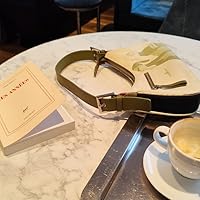
El inmortal es el título de un cuento escrito por el escritor argentino Jorge Luis Borges. Se publicó por primera vez en 1947, en la revista Anales de Buenos Aires, y dos años después apareció de nuevo en el volumen El aleph, de la editorial Losada. A través de múltiples referencias culturales, el relato reflexiona en torno a las paradojas de orden metafísico que tendrían que afrontar los hombres si algún día alcanzaran la inmortalidad.
Jorge Francisco Isidoro Luis Borges Acevedo was an Argentine short-story writer, essayist, poet and translator regarded as a key figure in Spanish-language and international literature. His best-known works, Ficciones (transl. Fictions) and El Aleph (transl. The Aleph), published in the 1940s, are collections of short stories exploring motifs such as dreams, labyrinths, chance, infinity, archives, mirrors, fictional writers and mythology. Borges's works have contributed to philosophical literature and the fantasy genre, and have had a major influence on the magic realist movement in 20th century Latin American literature. Born in Buenos Aires, Borges later moved with his family to Switzerland in 1914, where he studied at the Collège de Genève. The family travelled widely in Europe, including Spain. On his return to Argentina in 1921, Borges began publishing his poems and essays in surrealist literary journals. He also worked as a librarian and public lecturer. In 1955, he was appointed director of the National Public Library and professor of English Literature at the University of Buenos Aires. He became completely blind by the age of 55. Scholars have suggested that his progressive blindness helped him to create innovative literary symbols through imagination. By the 1960s, his work was translated and published widely in the United States and Europe. Borges himself was fluent in several languages. In 1961, he came to international attention when he received the first Formentor Prize, which he shared with Samuel Beckett. In 1971, he won the Jerusalem Prize. His international reputation was consolidated in the 1960s, aided by the growing number of English translations, the Latin American Boom, and by the success of Gabriel García Márquez's One Hundred Years of Solitude. He dedicated his final work, The Conspirators, to the city of Geneva, Switzerland. Writer and essayist J.M. Coetzee said of him: "He, more than anyone, renovated the language of fiction and thus opened the way to a remarkable generation of Spanish-American novelists."
Великий Борхес показал нам ценность смерти. Только конечность жизни придает ей ценность, заставляет людей торопиться оставить в этой жизни след, вырастить детей, посадить пресловутое дерево и построить дом. Смерть придает ценность отношениям. Смерть придает жизни смысл, ибо если индивид бессмертен, то ему не нужна ни еда, ни одежда, ничего . «Иудеи, христиане и мусульмане исповедуют бессмертие, но то, как они почитают свое первое, земное существование, доказывает, что верят они только в него, а все остальные, бесчисленные, предназначены лишь для того, чтобы награждать или наказывать за то, первое.»
Действительно, восхитительно тонко подмечено неверие в бессмертие любой из конфессий, поскольку практически все люди, за исключением безумных или приближенных к святости отшельников и аскетов, предпочитают на земле иметь те или иные блага земные, даже «рискуя» своими грехами заполучить вечные муки. Слово «рискуя» заложено в кавычки только из доказательства Борхеса, что люди верят только в первую, земную жизнь.
«Жизнь Бессмертного пуста; кроме человека, все живые существа бессмертны, ибо не знают о смерти; а чувствовать себя Бессмертным – божественно, ужасно, непостижимо уму.»
Бессмертие, на мой взгляд, лишь частично уподобляет Бессмертных божественному, поскольку у них отсутствует способность создания чуда, из ничего, пустоты создать материю.
«Никто никем не является. Единственный бессмертный – все человечество. Концепция мира, как системы строгих соответствий сделала бессмертных неподвластных жалости».
Но почему? Потому что если человек бессмертен, то его не лишить жизни, главной ценности. Не совсем понятно, почему вечные или даже кратковременные муки бессмертие превращает в ничто. Выходит из концепции бесконечности времени, что муки рано или поздно кончатся? Это для мук, у которых есть конец. А у вечных мук? Здесь возникает интересная мысль, что жизнь – сама по себе наслаждение, радость бытия, как говорится. Что же в концепции бессмертия вечные муки? Бессмертная жизнь?
Вместо еды наслаждением становится размышление. Почему? Потому что человек больше не может умереть от голода. Если размышлять таким образом, то бессмертный не может умереть ни от какой причины – ни болезни, ни несчастного случая, ни убийства, никакой причины.
Смерть (или память о смерти) наполняет людей возвышенными чувствами и делает жизнь ценной. Ощущая себя существами недолговечными, люди и ведут себя соответственно; каждое совершаемое деяние может оказаться последним; нет лица, чьи черты не сотрутся, подобно лицам, являющимся во сне. Все у смертных имеет ценность – невозвратимую и роковую. У Бессмертных же, напротив, всякий поступок (и всякая мысль) – лишь отголосок других, которые уже случались в затерявшемся далеке прошлого, или точное предвестие тех, что в будущем станут повторяться и повторяться до умопомрачения. Нет ничего, что бы не казалось отражением, блуждающим меж никогда не устающих зеркал. Ничто не случается однажды, ничто не ценно своей невозвратностью. Печаль, грусть, освященная обычаями скорбь не властны над Бессмертными.
То есть только смерть, конечность бытия делает человека человеком, делает его цивилизованным, чувствующим, любящим, но также делает его порочным из-за жажды благ. То есть наша цивилизация стала тем, что она себя из себя представляет только из-за осознания смерти.
We have all experienced different dimensions in our life, to name just three: waking, deep sleep and dreaming. Yet when it comes to describing or imagining the afterlife, I’ve read very few accounts postulating how awareness could shift between various levels; rather, life (or lack of life) after death tends to be portrayed as an uninterrupted hum all at one frequency, the three major frequencies:
1) awareness within a specific form, like a light body ;
2) formless awareness, that is, our consciousness merging with undifferentiated oneness, an ocean of universal consciousness;
3) complete obliteration without a trace of conscious awareness.
Why is this? Why can’t we think in terms of alternating between various frequencies or modes of awareness, perhaps even with an occasional shift into oblivion? And these questions are compounded if we also think of our bodily existence on Planet Earth continuing forever, that is, if we, in effect, become part of the race of The Immortals. Welcome to the world created in this Borges tale.
FRAMEWORK A narrator, a man we can envision as having much in common with Jorge Luis Borges, provides a verbatim transcription of a document a French princess purchased in an old London bookshop after a conversation she had with the grubby old bookdealer in various languages: French, English, Spanish, Portuguese.
Ah, that extraordinary document. As we learn, the princess walked out of the shop with Alexander Pope's rendering of Homer’s Iliad in six volumes and later found this rare document on The City of the Immortals squeezed in the pages.
Oh, yes, vintage Borges: the narrator isn’t claiming to invent the story; quite the contrary, he's sharing a story contained in a rare document.
NARRATOR OF THE IMMORTALS The document’s narrator provides us with his backstory: he's an officer in the Roman army in Egypt, part of the Roman legions that have recently defeated Egyptian forces. However, since he himself didn’t participate in any of the bloody combat, he's inspired to embark on an adventure through the deserts in quest of the secret City of the Immortals.
Interesting to note: the narrator is an adventurous soldier, hale, hearty, a bold leader of men and lover of the god Mars. In many ways, he functions as the complete opposite, the alter ego, to the frail, bookish, solitary Borges.
THE SPARK Here's how it all began: one day a stranger, exhausted, covered in blood, rides into the Roman camp and, prior to dropping dead that very evening, speaks of how he is searching for the river that purifies men of death. He goes on to say beyond the river lies the City of the Immortals, a city filled with bulwarks, amphitheaters and temples.
With the inclusion of amphitheaters as part of his description of the City of the Immortals, we are given a direct signal that what is contained within its walls shares a common culture with the Greco-Roman world.
Anyway, the stranger’s words fire the narrator's spirit and imagination - thus, primed for an astonishing discovery, off he goes with two hundred soldiers under his command, soldiers provided complements of a high-ranking military commander.
GOING SOLO As the narrator informs us, the first part of the journey proves harrowing, grueling and strenuous beyond endurance - most of his men are either driven mad or die, while others, attempting desertion, face torture or crucifixion. Also in this initial phase, the seekers cross lands and deserts inhabited by fantastic tribes, including the Troglodytes who “devour serpents and lack all verbal commerce.”
Events reach such a pitch he's informed by a soldier loyal to his cause that the remaining men wish to avenge the crucifixion of one of their comrades and plan to kill him. The narrator subsequently flees camp with several soldiers but disaster hits: in the fury of blinding desert whirlwinds he quickly gets separated - from now on, he is on his own.
TURNING POINT Our narrator wanders for days in the desert, forever scorched by the sun and parched by thirst until his living nightmare shifts and somehow he finds himself bound hands behind his back and lying in a stone niche the size of a grave on the slope of a mountain. There’s a stream running at the foot of this mountain and beyond the stream he beholds the dazzling structures of - miracle of miracles, the City of the Immortals.
Marcus Flaminius Rufus (yes, at this point the narrator lets us know his name) can also see numerous holes riddling the mountain and valley and from these holes emerge grey skinned naked men with scraggly beards, men he recognizes as belonging to the race of Troglodytes.
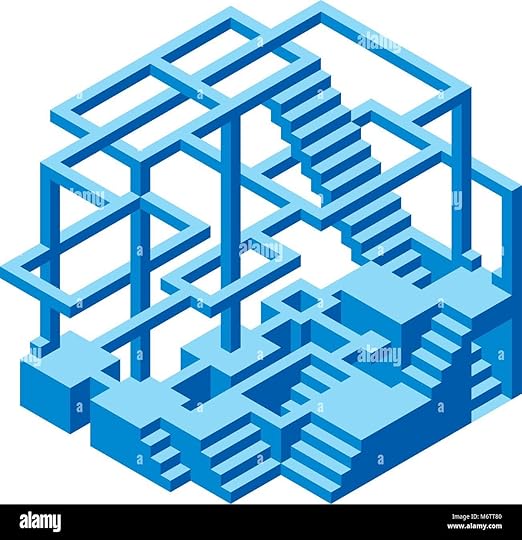
INITIAL EXPLORATION After many days and having finally freed himself from his bonds, Marcus enters the City of the Immortals. Soon after he explores the periphery, we read, “The force of the day drove me to seek refuge in a cavern; toward the rear there was a pit, and out of the pit, out of the gloom below, rose a ladder. I descended the ladder and made my way through a chaos of squalid galleries to a vast, indistinct circular chamber. Nine doors opened into that cellar-like place; eight led to a maze that returned deceitfully, to the same chamber; the ninth led through another maze to a second circular chamber identical to the first.”
Anybody familiar with Jorge Luis Borges will recognized recurrent themes: mazes, caverns, ladders, doors, circular chambers.
FURTHER EXPLORATION Having spent what appears an eternity underground, Marcus spots a series of metal rungs on a wall leading to a circle of sky. He climbs the ladder, sobbing with tears of joy, until he emerges into a type of small plaza within the brilliant City.
Marcus senses the city's antiquity and wanders along staircases and inlaid floors of a labyrinthine palace thinking how all what he sees is the work of the gods or, more accurately, gods who have died or, even, perhaps, since much of the architecture appears to lack any trace of practical purpose, gods who went mad.
“I had made my way through a dark maze, but it was the bright City of the Immortals that terrified and repelled me.” And this is only the beginning: as Marcus further discovers, there are revelations even more astonishing, including the shocking true identity of one of those Troglodytes.
UNIVERSAL QUESTIONS The second half of the tale takes a decidedly philosophical turn and, in the spirit of this Borges classic, I will conclude with a series of question posed either directly or indirectly by the narrator:
• How does memory relate to immortality? Is the erasure of our memory the first step in achieving immortality?
• Likewise, how does time relate to immortality and is the erasure of time a critical step in experiencing immortality?
• If we were to experience a state free of memory and time in this life, through powerful hallucinogens, deep meditation or otherwise, have we achieved a kind of immortality, at least for a time?
• What part does ecstasy and bliss play in the state or experience of immortality?
• How far does the consequences of our action extend? To a subsequent rebirth or afterlife in another state?
• How much weight should we give to history or a specific epoch of history? To our own personal history? How much of history is so much smoke and mirrors?
• What role does transformation on any level, physical, mental, artistic, spiritual, play in our life?
“Nadie, es alguien. Un solo hombre inmortal es todos los hombres. Cómo Cornelio Agripa, soy dios, soy héroe, soy filósofo y demonio, soy el mundo. Todo lo cual es una fatigosa manera de decir que no soy nada”.
Me encanta Borges porque leerlo es como recibir un masaje en el cerebro, lo estimula al hacerlo visualizar conceptos que no nos caben, como la eternidad, lo paradójico, la misma mente humana, el lenguaje, lo cíclico. Bello relato, buen plot twist, hermosa prosa, intelectualmente estimulante.
Maybe it’s because they were part of the same literary movement, but it’s incredible how much Borges reminds me of Umberto Eco and Italo Calvino.
In this short story, a found manuscript depicts a man who narrates his decision to find the city where immortals live. After a long trip between many cultures of the world he gets stuck in a labyrithine city (modelled after the Piranesi prisons) and later on finds his objective.
In his beautiful mastery of language, Borges brings forth his thoughts on immortality and the relative uniqueness of umanity. I don’t know if I got all the entire meaning of the story, it was a bit too philosophical for me maybe, but I certainly enjoyed the trip.
Hace un mes y un día, Sofía se refirió a este cuento en las palabras de la misa de mi papá. “La historia es compleja, pero la moraleja es sencilla: la muerte no es un castigo. Es el límite indispensable que otorga valor, belleza y significado a nuestra existencia”.
A poco más de un mes de su partida, esta lección me es todavía como una luz que alcanzó a ver al final del túnel, pero que, sin embargo, no he alcanzado. La vislumbró a lo lejos. La entiendo. Pronto, la podré alcanzar.
A poco más de un mes, la muerte no me hace un maldito sentido. La vida no me parece justa. La palabra “resignación” me parece una patada en el estómago. Se queda un inmenso “hubiera” que no existe.
En respuesta a Juan, que a partir de ahora (espero) será de las algunas personas que len lo que escribo y les interesa lo que leo, como a mí me interesa lo suyo, pienso que como siempre, tiene razón. “La muerte no nos pertenece, es algo que no nos pasa” y en cierta medida es cierto: nuestra muerte no nos pertenece, nosotros, ante la muerte, dejamos de existir. A quien le pertenece es a los demás. A quienes debemos entender de la muerte el sentido que tiene la vida. Así, a mi papá no le pertenece su muerte, no así le perteneció aquella de sus padres. A nosotros, nos pertenece la suya, en toda medida en la que encontremos en ella, el contraste que implica la vida.
En el inmortal, como adelantó Sofía, el lenguaje, la escritura, el movimiento, la arquitectura y el deseo de dejar huella desaparecen. El pasado, el presente, el futuro, pierden noción del tiempo. La belleza, el arte, la emoción, carecen de sentido. Así, creo que la enseñanza de la muerte nos deja entrever que la vida se trata de contrastes: que no hay resiliencia sin dificultad; no hay felicidad sin tristeza; no hay agradecimiento sin sacrificio. La muerte nos enseña que la vida es finita. Que los límites existen.
Alguna vez en clase de música la profesora dijo que el ritmo, la cadencia, el tono formaban un límite indispensable de la composición musical. Que, ante un universo infinito, no podría existir la creación. Limitarte a un instrumento, una cadencia, un ritmo, una escala, es lo que a cualquier artista le permite crear. Los límites, curiosamente, dan las herramientas de la creación.
La muerte como límite indispensable de la vida, en la lección a la que llegan Sofía y Juan tiene un mensaje inequívoco: que el propósito de la vida es vivirla, gozarla, bailarla y gritarla. Hasta que en la muerte, el significado de nuestra vida retumbe en las paredes de aquellos, a quienes pertenecerá nuestra muerte.
The story of one Marco Flaminio Rufo, a Roman military tribune, as he reaches and uncovers the lost City of the Immortals, last dwelling and home of the imperishable. Impossible mazes, inscrutable troglodytes and the clandestine secrets of time and eternal life.
One of the few rare exceptions when Borges is both readable AND interesting. This was mostly ok, nearing 3 stars even, right until just about the end when he goes, as usual, absurdly nonsensical, explaining things that can't be explained and unloading a truckload of obscure, possibly non-existent references, that can only muddle more than clarify, leaving me one final impression that I, in truth, really didn't understand a thing, which is, in all honesty, probably true.
La historia de un Marco Flaminio Rufo, tribuno militar romano, mientras llega y descubre la Ciudad perdida de los Inmortales, último hogar y morada de los imperecederos. Laberintos imposibles, trogloditas inescrutables y los clandestinoz secretos del tiempo y la vida eterna.
Una de las pocas raras excepciones en las que Borges es a la vez leible E interesante. Esto estuvo mayormente bien, incluso acercándose a las 3 estrellas, justo casi hasta el final, cuando se vuelve, como siempre, absurdamente sin sentido, explicando cosas que no se pueden explicar y descargando un montón de referencias oscuras, posiblemente inexistentes, que solo pueden confundir más que aclarar, dejándome una última impresión de que realmente en verdad no entendí nada, lo cual, con toda honestidad, probablemente sea cierto.
----------------------------------------------- NOTA PERSONAL: [1968] [14p] [Ficción] [2.5] [No Recomendable] -----------------------------------------------
Es el primero cuento que leo de este autor y en verdad me encantó, en dónde te hace reflexionar sobre que sucedería si alcanzarás la inmortalidad y en mi opinión perdería la magia de esto que llamamos vida ya que la muerte nos establece un límite de tiempo que aveces se corta de manera abrupta y hace que aprovechemos ese periodo de tiempo y se disfrute de manera intensa.La historia narra los viaje de un hombre interesado en la ciudad de los mortales y que en cada travesía descubría retos nuevos y obstáculos que lo hicieron reflexionar sobre su meta pero a medida que avanzaba encontró lo que ya consideraba perdido. En verdad es fascinante, le comparto un pequeño fragmento..
El pensamiento más fugaz obedece a un dibujo invisible y puede coronar, o inaugurar, una forma secreta. Sé de quienes obraban el mal para que en los siglos futuros resultara el bien, o hubiera resultado en los ya pretéritos... Encarados así, todos nuestros actos son justos, pero también son indiferentes. No hay méritos morales o intelectuales. Homero compuso la Odisea; postulado un plazo infinito, con infinitas circunstancias y cambios, lo imposible es no componer, siquiera una vez, la Odisea. Nadie es alguien, un solo hombre inmortal es todos los hombres. Como Cornelio Agrippa, soy dios, soy héroe, soy filósofo, soy demonio y soy mundo, lo cual es una fatigosa manera de decir que no soy......
¿No les pasa que ciertos autores, después de leerlos, destruyen por completo tus ganas de escribir por los magníficos que son sus relatos? Bueno, en la línea anterior acabo de definir mi relación con Borges. Sus cuentos son magníficos, narrativos pero también estadísticos; no buscan verdades; sino la reflexión del manuscrito. Invitan a la lectura activa así como a la búsqueda de preguntas y respuestas...
DICHO LO ANTERIOR ¿QUÉ ESTÁS ESPERANDO PARA LEER ESTE CUENTO TAN MARAVILLOSO?
"Homerus maakte de Odyssee; als we uitgaan van een oneindig tijdsbestek, met een oneindig aantal omstandigheden en veranderingen, is het onmogelijk niet op z'n minst één keer de Odyssee te maken. Niemand is iemand, een enkel onsterfelijk mens is alle mensen. Net als Cornelius Agrippa ben ik god, ben ik held, ben ik filosoof, ben ik duivel en ben ik wereld, wat een vermoeiende manier is om te zeggen dat ik niet ben."
The diary of a a Roman tribune is found in an old book in 1929. It describes how he encounters a wounded man who tells him of the City of Immortals, and how he journeys to find it. When he does, he meets Homer who is an Immortal. He lives with them for centuries until they scatter to find the power to reverse their immortality.
This is one of Borges better stories as it has character and action in the context of a big idea. There is enough mystery to keep the reader guessing, and it ends in a satisfying way as the whole idea comes together.
Excelente libro, me gusta como describe que el tiempo como pierde sentido, como la memoria juega un papel fundamental y es lo que hace que seamos quienes somos.
Un soldado romano decide buscar una legendaria ciudad donde los hombres viven para siempre. Tras cruzar desiertos y enfrentar grandes peligros, encuentra el lugar, pero lo que halla no es la gloria que esperaba. En vez de un paraíso, descubre una ciudad extraña y ruinosa habitada por seres que parecen haber perdido la razón y el habla.
Apreciación personal: Este relato nos plantea el dilema de que si vivir para siempre sería realmente una bendición o una pesadilla. La historia sigue a un soldado romano que busca un río mágico para volverse inmortal, pero al encontrarlo, descubre que la eternidad no es como la imaginaba. El punto principal de Borges es que la "muerte le da sentido a la vida". Como sabemos que nuestro tiempo es limitado, cada decisión y cada momento son valiosos. En cambio, para alguien que vive para siempre, nada es especial porque tiene todo el tiempo del mundo para hacer y deshacer. El autor sugiere que, en la inmortalidad, las personas pierden su personalidad y se vuelven indiferentes a todo. A través de una ciudad extraña y sin lógica, el relato nos muestra que el exceso de tiempo termina por borrar quiénes somos. Al final, el mensaje es profundo pero claro: lo que nos hace humanos es nuestra "fragilidad". Ser mortales es lo que nos permite ser únicos y disfrutar de la belleza del mundo.
While the story itself is incredibly dense for its length and boasts a myriad of intriguing concepts, one thing not to be overlooked is the clear basis for the description of the city found in Piranesi's Carceri.
¿Que harías si consiguieses ser inmortal? Este pequeño cuento de Borges nos narra cómo la brevedad de la vida es lo que hace que esta tenga sentido.
"Cada acción que realizas puede ser la última". Me gusta la visión que se le da al hecho de saber que la inmortalidad, más que felicidad, lo que trae es una ausencia total de emociones.
Cuando ya has vivido cada experiencia centenares o miles de veces, nada consigue estimular tu ansia por volver a experimentarla. Es precisamente porque sabemos que nuestro tiempo en esta vida es limitado por lo que sentimos felicidad, tristeza, euforia, dolor y todo el espectro de sentimientos y emociones que hacen que te sientas vivo.
"In my view, the Wheel conceived by certain religions in Hindustan is much more plausible; on that Wheel, which has neither end nor beginning, each life is the effect of the previous life and engenderer of the next, yet no one life determines the whole.... Taught by centuries of living, the republic of immortal men had achieved a perfection of tolerance, almost of disdain. They knew that over an infinitely long span of time, all things happen to all men. As reward for his past and future virtues, every man merited every kindness-yet also every betrayal, as reward for his past and future iniquities."
Lindo cuento para pensar sobre las sensibilidades del sujeto ligadas a nuestra constante choque con la modernidad. Mi profesora de filosofía me lo recomendó para pensar en las formas de vida nos perderíamos en búsqueda de la inmortalidad. Interesante para pensar teniendo en cuenta la ambición de los tecnócratas de hoy por la vida eterna. Seríamos un animal insaciable o simplemente caeríamos en la locura de lo interminable 🤔