It's a dark and scary world. Pans are tabid. Blood, guts, and gore are the norm. Welcome to the horror genre. Horror classics have been scaring people for years. Nowadays, who doesn't know about Stephen King, Anne Rice, and Dean Koontz? Profiled in a special section, the Big Three have turned horror into best-sellers. For all the horror fans that haunt your library, this is the must-have guide. Readers' advisors and reference librarians will appreciate the key tools provided to expand upon this genre, including listings of top books, authors, and award winners within eleven horror subgenres - like mummies, biomedical, monsters, and splatterpunk. Clear descriptions of characteristics within subgenres are provided throughout. To further help you engage new renders, expert horror mavens Spratford and Clausen draw a savvy connection between film and horror as a potent reminder that the scariest movies have been adapted from novels. Their classic and contemporary recommendations like Rebecca, The Shining, and Rosemary's Baby reinforce activities between readers' advisors and library programming and open up the (cellar) door for further patron involvement. Readers' advisors and referen
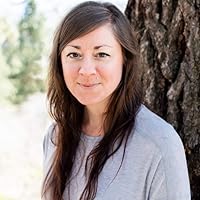
Becky Spratford [MLIS] is a Librarian in Illinois specializing in serving patrons ages 13 and up. She trains library staff all over the world on how to match books with readers through the local public library. She runs the critically acclaimed RA training blog RA for All. She writes reviews for Booklist and a Horror review column for Library Journal. Becky is a 24 year locally elected Library Trustee [still serving], a former Board member for the Reaching Across Illinois Library System, and currently on the Executive Board of the Illinois Library Association. Known for her work with Horror readers, Becky is the author of three text books for library workers, most recently, The Reader’s Advisory Guide to Horror, Third Edition [ALA Editions, 2021] and the forthcoming Why I Love Horror [Saga Press, September, 2025]. She is on the Shirley Jackson Award Advisory Board and is a proud member of the Horror Writers Association, currently serving as the Association’s Secretary and Co-Chair of their Library Committee. You can follow Becky on Bluesky @raforall.bsky.social
I really enjoyed this book too by the author. Of course there were parallels and connections to her first guide on horror. But she did very well in describing the evolution of horror, its treatment in literature and film and the history of the genre. You'll get all the horror appeal factors and intriguing chapters on classic tales of terror, ghosts & haunted houses, mummies, zombies & golems, Dracula, werewolves and animals of terror, maniacs and other monsters, black magic, witches, warlock and the occult, demonic possession, scientific and biomedical horror, psychological horror, splatterpunk and extreme horror. At the end the author gives you many resources where to find horror, major publishers, screenshot and a summing up of the big three (King, Koontz and Rice). Well, with this review I feel like the announcer of the Titty Twister Bar in From Dusk Till Dawn... Here you'll find every piece of horror you ever wished for. Highly recommended!
The Horror Readers’ Advisory is a thorough introduction to the genre and a solid resource for those seeking to branch out into it’s sub-genres. Spratford and Clausen begin with the classics and even touch on the nitty gritty leaving no stoned unturned for those that are interested. This book comes highly recommended to readers that are looking for new material and to be spooked!
The ALA Readers' Advisory Series are all written by different people (understandably), which makes for very uneven reading. The romance advisory was written as a defense of the genre, a calling for people to be unashamed of reading romance. Ultimately, I came out with a good understanding of the genre, and several books to read. This horror advisory reads more like several essays on subgenres.
The writing is more academic than conversational, and the separation of the subgenres did not work properly. The authors discuss overlap, but did not format the book in a way to handle the overlap. Books that belong in more than one subgenre receive an annotation in one genre and a note in the other, but there is no consistency in which section gets the annotations (Either whichever comes first in reading the book, or which one is more prevalent in the book would have been acceptable to me). Some books that should have been in more than one category weren't, which would have been fine were the authors consistent with books only being in one. There was no cross-referencing within the text so it was not easy to see that a book under monsters is also under splatterpunk. (Believe me, suggesting a splatterpunk book to someone unawares is bad news.)
The annotations and descriptions did not make me want to step outside of my comfort zone in my own reading, nor were they extensive enough for me to use without doing some of my own research into the books. All in all, I'm not sure that my view of horror was changed at all. Perhaps someone who has never read any horror would benefit more from this book, it is both an easy reference and a quick read straight through. This book has it's purposes for a library, they just didn't suit mine.
This is a pretty succinct overview of the horror genre and I would probably consider it useful overall. The breaking down of subgenres was great, despite some overlap and unclean breaks. It does seem to me though that the authors had a few authors they generally stuck to, and while it's true that Anne Rice might be a safe bet for vampires or another author may be good for ghost stories, I'd be a little more interested in seeing some authors that aren't recommended as frequently. I was also a little surprised to see them break down everything pre-Carrie into a singular "classics" section. Are The Castle of Otranto and Rebecca both classics? Well sure, but they're classics in rather different ways. There is a lot of 18th and 19th century horror out there that deserves its own section from the 20th century (which also deserves some specialized attention). I know they were just trying to separate "classics" from modern works, but it worked out a bit awkwardly.
This slender volume by Becky S. Spratford and Tammy H. Clausen is a great overview for librarians on the horror genre. Often disdained by librarians as being "trashy," Spratford and Clausen do a good job of picking out the qualities of these novels that appeal to readers without any trash-talk. They've also put together a great starter list for each sub-genre of horror - including old stand-bys, and throwing in a few that might be new to most readers.
A terrific source for librarians, non-librarians can use it to get some good ideas of where to go next for the next big thrill (of course, you can always ask your local reference librarian too - they like to help with this kind of thing!!).
So it's largely a librarian's intro to horror, but it was a bit interesting. There were brief descriptions of the different subgenres of horror along with examples of books that can be found in each subgenre.
BUT! There are no killer tomatoes! (At least, not in what I read. I confess I skimmed a little.) I feel gypped.